India is all set to soon host a national security advisor (NSA) level regional conference in New Delhi on Afghanistan.
This will be the first-of-its-kind dialogue to be hosted by India.
The tentative dates of the proposed in-person dialogue are 10-11 November.
It has been learnt that the conference will be in a format similar to the regional security conference held earlier in Iran in 2019.
Those invited to the NSA-level meeting include countries in the neighbourhood of Afghanistan- Russia, China, Tajikistan and Uzbekistan.
It is learnt that that invite has also been extended to Pakistan’s NSA Moeed Yusuf, although there is no official confirmation on the conference and invitation yet, it is learnt that preparations are underway.
India, a big player in the region, has been planning to hold a conference on Afghanistan earlier but the move was first derailed due to the Covid-19 pandemic and later due to the takeover of Kabul by the Taliban in August 2021.
Meanwhile, India will also be sending high ranking officials to the Moscow Format dialogue scheduled on October 20, where representatives of the Taliban will also be sitting across the table.
Terrorism, humanitarian assistance to Afghans and recognition of the Taliban-led regime are key issues India will likely to add to the agenda of the talks.
India has also expressed its willingness to extend humanitarian assistance to Afghans, who are staring at a food and economic crisis coupled with harsh winters ahead.
If Pakistan agrees to attend the NSA-level conference, it would mark the first visit by incumbent NSA Yusuf to India.
New Delhi has been accusing Pakistan of aiding and abetting anti-India terror forces in Afghanistan.
HÀ NỘI — Prime Minister Phạm Minh Chính said that Việt Nam is extremely keen to develop renewable energy sources.
He made the remarks in a videotaped speech at the 4th International Forum “Russian Energy Week” held in Moscow from October 13-15, 2021, at the invitation of the leaders and Government of the Russian Federation.
In his speech, the Prime Minister emphasised the important role of the Russian Federation in the global energy industry, helping to maintain stability and balance in the international energy market.
PM Chính said that “Russian Energy Week” contributes to strengthening dialogue and cooperation between countries, especially public-private cooperation in developing the energy industry in an effective and sustainable way for the common good of nations and all mankind.
He noted that as a country with the leading economic growth rate in ASEAN but strongly affected by climate change, Việt Nam is well aware of the importance of increasing the proportion of renewable energy associated with economical, efficient and sustainable use of energy.
Việt Nam is developing a national electricity development plan for the 2021-2030 period, with a vision to 2045, with three major orientations.
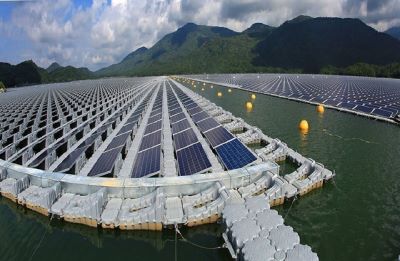
Accordingly, Việt Nam promotes the diversification of energy sources, focusing on developing clean and renewable energy sources. To achieve these goals, the country has issued many mechanisms to encourage the development of wind power, biomass power, electricity from solid waste and solar power.
For fossil energy sources, there is a gradual reduction plan and almost no new coal-fired power plants are developed. It is expected to strongly develop gas thermal power, including thermal power using domestic gas and liquefied petroleum gas (LNG).
Việt Nam will also increase energy efficiency and savings, actively implementing the Paris Agreement on climate change, and has developed a national programme on economical and efficient use of energy for the 2019-2030 period.
PM Chính said that Việt Nam always treasures its traditional friendship with Russia, in which energy cooperation has been very effective between the two countries for decades, while mentioning that many large energy projects in Việt Nam bear the mark of friendship and cooperation between the two countries such as Hoà Bình Hydropower Plant and Uông Bí Thermal Power Plant.
He said oil and gas cooperation is an important pillar of the Việt Nam – Russia Comprehensive Strategic Partnership, with many joint ventures and projects continuing to operate effectively in both Viet Nam and Russia.
These successes are the premise for Việt Nam and the Russian Federation to expand cooperation in the fields of new energy, renewable energy, green and clean energy, he said.
In the context that the world is suffering from the impacts of the COVID-19 pandemic, climate change and the decline of natural resources, PM Chính once again emphasised the need for a global approach that is inclusive, equitable and mutually beneficial.
The strengthening of international cooperation between countries plays a very important role in ensuring energy security, sustainable development, minimising the impact on the environment and for the common interests of the international community, he said.
Chính said that Việt Nam will continue to improve its institutions, policies and laws to support the development of the energy industry; encouraging the promotion of public – private cooperation mechanisms; continue to create favourable conditions for businesses of the Russian Federation and other countries to invest and do business in the energy field in the country.
“Russian Energy Week” is an important energy event, organised based on the initiative of the Russian Government since 2017 to discuss development issues and international cooperation in the energy field.
This year’s forum, with the theme “World Energy: Transformation for Development”, attracted the participation of more than 1,000 Russian and international delegates, including leaders of many countries, international organisations and leading energy corporations from around the world. Russian President Vladimir Putin also delivered a speech at the forum. — VNS
For the first time in 15 years, the Economy, Trade and Industry Ministry will revise its targets for the energy-saving performance of household air conditioners, The Yomiuri Shimbun has learned.
Scheduled for next fiscal year, the revisions will require manufacturers to save about 30% more energy than the current level by fiscal 2027.
Heaters and air conditioners account for about 30% of energy consumption in the household sector. By promoting energy-saving efforts, the ministry will make more progress toward decarbonization.
It also hopes that the revisions will boost sales of Japanese makers’ high-performance air conditioners in overseas markets.
Under the so-called top runner method, the product with the best energy-saving performance is set as the target for each item. Manufacturers must make their products meet the targets over a certain period of time. Since the revision of the Rationalizing Energy Use Law in 1998, this method has been applied to air conditioners and passenger cars, and currently covers 32 items.
The government is aiming to achieve net-zero greenhouse gas emissions by 2050 and has set a goal of reducing greenhouse gas emissions by 46% from the fiscal 2013 level by fiscal 2030. It is aiming to expand the use of renewable energy sources such as solar power and wind power, but there are still many issues to be addressed, such as the lack of suitable sites to build such facilities.
Under these circumstances, energy-saving efforts can reduce electricity consumption and curb thermal power generation, which produces a large amount of carbon dioxide.
A draft of the government’s new basic energy plan, to be approved by the Cabinet at the end of October, includes a plan to reduce electricity demand in fiscal 2030 by more than 10% from the fiscal 2013 level by promoting energy-saving measures. Saving energy while using air conditioners is one of the pillars of the plan.
The targets currently in place for air conditioners were set when they were revised in 2006 as goals for fiscal 2010. However, subsequent revisions have been postponed due to factors including the 2011 Great East Japan Earthquake.
Currently, almost all air conditioners sold domestically have achieved the fiscal 2010 targets.
In recent years, manufacturers have been focusing on the development of new functions using AI to distinguish their products, in addition to energy-saving performance. They have little incentive to actively develop new energy-saving technologies, so the ministry is establishing new targets.
From fiscal 2027 forward, the ministry will be authorized to publicize company names or impose fines if manufacturers do not comply with advisories or orders to meet the targets.
The envisaged revision in fiscal 2022 will include a five-year grace period for manufacturers to develop technologies.
About 10 million air conditioners a year are shipped in Japan, and the number has been on an upward trend in recent years. About three air conditioners are installed in each household, and their average longevity is about 13 years, meaning they are replaced more frequently than TVs and refrigerators.
Promoting decarbonization has become a global trend. China’s share of the global market for household air conditioners has been growing, but if Japanese manufacturers take the lead in energy-saving technologies, there are hopes this will expand overseas demand for Japanese products.
Thousands of camels have been guided to better pastures for the coming winter recently, marching in a long line through Changma town in Yumen county of Jiuquan, Gansu province.
There are two types of camel pasture: summer and winter. As pasture grasses die off in autumn, the camels have to be transferred to their winter pasture.
Many camels can be seen during the migration. [Photo by Zhou Xin/For chinadaily.com.cn]
In recent years, Changma has developed camel husbandry, and there are now more than 3,000 of the animals in the town.
Many camels can be seen during the migration. [Photo by Zhou Xin/For chinadaily.com.cn]Many camels can be seen during the migration. [Photo by Zhou Xin/For chinadaily.com.cn]Many camels can be seen during the migration. [Photo by Zhou Xin/For chinadaily.com.cn]
The pandemic has hit the fashion industry hard. As the government encourages everyone to stay at home to remain safe, people have less need for new clothes, bags, shoes and other fashion items – which has resulted in plummeting sales.
“Between March and July, a lot of [fashion] events were cancelled,” Ali Charisma, national chairman of the Indonesian Fashion Chamber (IFC), one of the largest fashion associations in Indonesia, told The Jakarta Post. “Many of our members experienced a sharp drop in their sales, of around 60%,” Ali added.
When all the shops and malls in Surabaya, East Java, were closed, Aldrie Indrayana, a fashion designer from the city, also experienced a drop in sales of his menswear brand Aldré.
“My collections have cutting-edge designs,” Aldrie explained. “My customers usually like to try them on before deciding to buy. When all the shops and malls were closed, my sales dropped down to 50%.”
Fashion designers are not the only ones in trouble. As fashion is a highly labor-intensive industry, small-scale producers such as batik artisans and traditional textile weavers have also struggled to survive.
“Many [of] my suppliers confided that they had lost 100% of their source of income during the pandemic,” Riri Rengganis, a fashion designer from Bandung, West Java, said.
Riri buys her textiles directly from traditional batik artisans and weavers in Baduy, Cirebon, Pekalongan, Klaten, Kupang, Sumba, Yogyakarta and many other parts of Indonesia.
“Most of [the batik artisans and traditional textile weavers] don’t understand the internet and solely depend on direct sales to tourists and fashion designers,” Riri added. “But during the pandemic, tourists were not allowed to come and fashion designers were not buying new supplies.”
Riri herself has also experienced an 80% drop in sales during the pandemic.
A silver lining
Every cloud has a silver lining. During a meeting held by the Trade Ministry in Jakarta early this year, Ali became acquainted with representatives of the Indonesian Diaspora Business Council (IDBC).
The IDBC is a non-profit organization that fosters trade and business connections between Indonesia and the countries where diaspora reside.
After a short discussion, the IDBC agreed to promote products by Indonesian fashion designers and help them go global. On Aug. 12, they signed a Memorandum of Understanding (MoU) that cemented their collaboration.
“This collaboration opens doors of opportunities for both our organizations,” Fify Manan, chairwoman of the IDBC, said during the MoU signing ceremony on Zoom on Aug. 12. “There are over 12 million [in the] Indonesian diaspora across the globe now. Together, we can achieve a lot for Indonesian fashion.”
IDBC tradelink
One of the facilities that the diaspora organization provides for IFC members and their partners is the IDBC Tradelink. The website is both a platform that showcases Indonesian products, as well as a business directory of Indonesian fashion designers and entrepreneurs.
“At the moment, we’re still focusing on Indonesian fashion and food and beverage products (on the IDBC Tradelink),” Astrid Vasile, IDBC vice president, said.
Through the MoU, the IDBC has appointed the IFC as the curator for the Indonesian fashion designers to be featured on the IDBC Tradelink.
“We’ve carefully curated the list of designers, so that only those that are reputable and ready to export will be featured on the IDBC Tradelink,” Ali said.
So far, approximately 30 Indonesian fashion designers have been featured on the website. All of them showcase photos of their collections, a brief profile of their business, their website and contact details.
“The IDBC Tradelink is like a shop’s windows,” Diski Naim, IDBC Australia deputy regional director who developed the online platform, said. The “Indonesian diaspora and buyers can see Indonesian fashion products on the website, read their profiles and contact them directly if they want to buy.”
This website is also easily accessible on mobile phones.
As both the IDBC and the IFC are non-profit organizations, all these services are provided to eligible fashion designers for free.
“I think the IDBC Tradelink will be very helpful for both Indonesian designers and diasporas,” Aldrie said.
“I used to live abroad and had a hard time finding batik or tenun [weaved] attire to attend formal functions,” the designer, who studied fashion at The Fashion Institute in Sydney and Central Saint Martins in London,” said. “Back then, I had to ask my friends and relatives to find these attires for me. They had to buy, pack and send them to me. It was a lot of hassle. With this platform, [the] Indonesian diaspora can easily browse the collections of Indonesian fashion designers and contact them directly if they see anything that they like.”
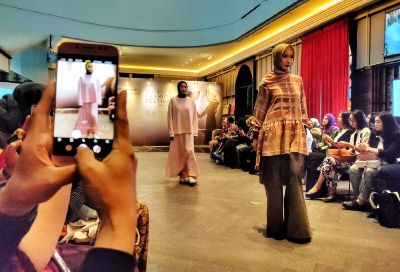
In addition to the business directory, the IDBC Tradelink also features events held by the IFC and featuring IFC designers, such as the upcoming Indonesia Sharia Economic Festival (ISEF) on Oct. 25 – 30 and Muslim Fashion Festival (Muffest) early next year.
“Approximately 30 IFC designers will showcase their collections during ISEF,” Ali Charisma said.
A discussion forum
Besides a business directory and a platform for promotion, the IDBC Tradelink also offers a discussion forum, in which Indonesian fashion designers and the diaspora may exchange information.
“Indonesian diasporas, for example, can give hints of what’s currently trending in their country, as well as their import regulations,” Astrid said. “And all the discussions will be held in Indonesian, which is our mother tongue. So, it’ll be very convenient for both [Indonesian fashion designers and diasporas].”
Astrid, who owns a construction business in Perth, Australia, has resided in the country for 23 years. She is also the founder and executive chair of Australia-Indonesia Businesswomen’s Network (AIBN).
A useful tip from Astrid based on the Indonesia – Australia Comprehensive Economic Partnership Agreement (IA-CEPA), was that almost all products, including fashion, coming from Indonesia enjoy free import tariffs.
“It’s an interesting fact to know for those seeking to export their products to Australia,” Astrid said.
Familiarity
To start their collaboration, the IDBC and the IFC have launched a series of Diaspora Talks on Zoom.
“As they say, ‘tak kenal maka tak sayang’” (if you don’t know it, you won’t love it), Astrid said. “Many of us don’t really know about the latest fashion developments in Indonesia, and vice versa. Therefore, we will hold these Diaspora Talks to get to know one another.”
The first Diaspora Talk, which was held on Zoom on Sept. 29, discussed the modest fashion industry in the Middle East and Africa, featuring fashion communities and business catalysts from these countries.
The second talk on Oct. 7 discussed sustainable markets in Europe, also featuring fashion communities and business catalysts from France and the Netherlands.
A two further Diaspora Talks are scheduled, discussing the modest-wear industry in the United States, followed by spring fashion trends in Australia and New Zealand. Yuyun Harper, Indonesian fashion stylist and business catalyst living in Perth, is scheduled to speak during the event.
“We hope business connections will happen during these talks,” Astrid said.
Riri is feeling excited about the collaboration between the IDBC and the IFC.
The “Indonesian diaspora are like our reps abroad,” the fashion designer said. “When they see and love our designs, they become our customers. Sooner or later, they will also promote our products to their friends, colleagues and clients in their countries. And maybe, they will also become our business partners.”
In the pandemic year, most Indians spent over 522 hours on online education on average, and over 738 hours on infotainment on their smartphones, a new report showed on Monday.
While 56 percent of smartphone users enrolled for new online education programmes since the pandemic began, 58 percent of smartphone users undertook digital transaction on their smartphones, according to the survey by CyberMediaResearch (CMR), a Gurugram-based market research firm.
Indians are spending close to Rs 8,500 on average, mostly for digital payments a month and 28 percent of smartphone users spending around Rs 1,000 on infotainment monthly.
“Whether it be online education, digital payments, or consuming infotainment, the smartphone has enabled consumers across urban and aspirational (tier-III cities and beyond),” said Prabhu Ram, Head-Industry Intelligence Group (IIG), CMR.
“For the value-conscious buyers in the sub-Rs 7,000 smartphone segment, smartphone brands have consistently focused on bringing increasingly accessible and affordable smartphones,” he added.
In purchasing their next smartphone, consumers trust recommendations from loved ones (79 percent) as well as retailers (77 per cent).
City wise, smartphone brand itel has got 100 percent satisfaction in Bengaluru, Chandigarh and Guwahati, realme has got 100 per cent satisfaction in Delhi, Kolkata, and Jaipur, and Xiaomi has got 100 per cent satisfaction in Lucknow, Bhubaneswar and Indore.
Samsung wins for the ease of availability, product quality, and good after-sales service, the survey noted.
“For consumers in the sub-INR 7,000 smartphone segment, the top three key considerations for smartphones include accessibility, affordability, and availability. They trust smartphone brands that offer durable devices, focus on trendy smartphone specs, and deliver on reliable after-sales,” said Satya Sundar Mohanty, Head- Industry Consulting Group (ICG), CMR.
In the time of our elders, when we were just starting out as a young self-governing nation, those who aspired to lead our country felt bound to a code of political statesmanship by which they measured their eligibility for public office. They looked at themselves, so to speak, in the mirror of political virtues to see if they were worthy to offer themselves as stewards of the nation.
Only fools and clowns (read: nuisance candidates) dared to present themselves as candidates for public office, purely out of self-delusion. The electorate typically reacted to their presumptuousness by simply ignoring them. Political parties offered such pretenders no space in their slates, no matter how popular they might be or how much money they had, for fear of being mocked.
All this changed in the era of the mass media. The old values of statesmanship have been replaced by the ever-shifting topics of public opinion. Today, what animates public opinion has become more difficult to pin down. We see only whom it favors, but we are left guessing what moves it at any given time.
Over the years, opinion surveys have tried various ways of decoding the “secret” behind the unpredictable swings in public opinion. They ask questions that attempt to bring out the peculiar rationalities of the public mind. They perform sophisticated calculations to determine the best correlates of the responses they get from survey participants.
What’s behind the choices the public makes in an election? Is it ethnic or regional affiliation? Is it social class? Is it religious identity? Is it the high value placed on certain concerns? No one really knows. The survey organizations were completely blindsided by the sudden rise of Rodrigo Duterte to national prominence. He himself was surprised by the manner in which the public gleefully responded to his speeches in the campaign trail, for he was not exactly the paragon of eloquence.
What did he say that caught the public’s imagination? Was it the way he said it, the way he carried himself? What longing, what hidden needs, what sentiments or emotional dispositions was he able to tap?
The answers to these questions show the true complexity of the conscious processes by which politics orients itself to public opinion. The latter remains basically a “black box”—we can’t quite comprehend the way it works. But, at the end of it all, it spews out winners and losers.
And so, after every election, politicians spend a lot of time interpreting the results out of a desire to improve the image they present to the public, and thus make it more relevant to whatever it is that seems to inspire the voters. Consequently, matters like qualifications and experience have become less and less important, in much the same way substantive issues and advocacies seem to have become increasingly peripheral during elections.
Instead, candidates spend a lot of time and resources creating personal “narratives” that might appeal to a fickle voting public. But even this entails a lot of guesswork, for nothing is assured. Some narratives backfire simply because they hit a public nerve that produces a different kind of reaction. One can’t just copy: Some narratives fit some individuals like a glove to a hand. The same narratives seem ludicrous when adopted by another person, or when used in a different time.
It is easy enough to assume that name recognition and celebrity status might be the key to winning. But we have seen in past elections that the conversion of popularity into votes is not quite as simple. There is something else that makes the conversion possible, and we don’t know what it is. It is part of the “secret” of public opinion.
It was hard enough to keep track of the twists and turns of public opinion when mainstream media—print and broadcast—dominated mass communications. One cannot imagine how far more complicated this terrain has become with the entry of internet-based social media. While mainstream media developed standards and mechanisms for fact-checking and fairness, the same thing cannot be said for social media. It has become difficult to tell what is fake from what is factual, and, even more, what is worth knowing from what is there merely to distract.
In the face of all these developments, one can hardly blame political parties and coalitions for preferring the merely “winnable” (as shown by surveys and past elections) over the truly qualified and worthy candidates. Gone are the days when political parties did what they were supposed to do—to diligently assess the worthiness of their candidates before offering them to the nation.
If they who are supposed to know the candidates better than the electorate place more weight on proven “winnability” than anything else, are we to expect voters to be more discerning? I think most voters have long surrendered this critical function to the sensors of public opinion—they that provide us regular updates on who or what rates, who gets more viewers, and who is the latest sensation on YouTube or TikTok. Thus far, the most dominant of these sensors are still the established survey outfits like Social Weather Stations (SWS) and Pulse Asia. Online shopping platforms like Lazada, Shopee, or Amazon tell us which product is selling more, or how many stars an item is getting from past customers. But we have yet to see in the opinion surveys the equivalent of the shopping platforms’ comments section—i.e., what verified voters found positive or negative in the people they had previously trusted to run the nation.
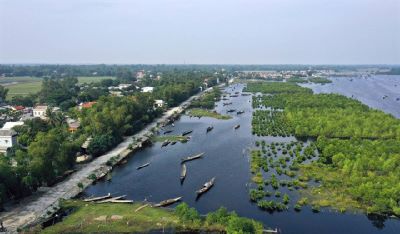
HÀ NỘI — Việt Nam will plant 20,000ha of forests as part of a project to protect and develop coastal forests in response to climate change and to push green growth over the next 10 years.
The project has been approved by Deputy Prime Minister Lê Văn Thành, to achieve sustainable management, protection and use of existing and newly planted forests between now and 2030.
It also aims to effectively promote the role and functions of forests in coastal defence, environment protection and coastal infrastructure systems as well as prevent desertification and land degradation while conserving biodiversity, reducing greenhouse gas emissions as well as creating jobs for people in coastal areas.
The project will also contribute to socio-economic development, protecting the environment, strengthening national defence and security, while reducing natural disasters and effectively responding to climate change and the rise of sea levels.
Recovering and developing coastal forests are among the main tasks in the 10-year period. Among the 20,000ha to be planted, 11,000ha will be grown in the first five years.
Việt Nam will also enhance the capacity and development of livelihoods for communities and local people who help protect the forests.
To achieve these targets, the country will strengthen communication work to raise awareness of the roles and values of coastal forests, develop seedlings for afforestation, protect and develop mangroves especially in Mekong Delta region, and grow forests to combat sand storms, among many others.
Between 2015-2017, Việt Nam planted a total 12,385ha of coastal forests in response to climate change and the coastal forest protection project for 2015-2020. However, the figure has fulfilled only 22 per cent of the target set, which aimed to grow 46,058ha of forests by 2020.
According to a report of World Bank, Việt Nam is highly vulnerable to sea level rises and storms along the coast, highlighting, the critical importance of mangrove and coastal forests. — VNS
HONG KONG – Applicants of Hong Kong government positions will likely need to take a security law test on top of a test on the Basic Law.
Secretary for the Civil Service Patrick Nip Tak-kuen said on Friday that it is natural for the Hong Kong Special Administrative Region’s government to add a test on the National Security Law for its job applicants.
“In the past, we have been doing this for the Basic Law Test and we would review the content of the test and also introduce an additional requirement about attending a test on the National Security Law,” Nip said after attending an event on Friday.
He said requiring applicants to take tests on the Basic Law and the National Security Law aims to recruit the right candidates for the HKSAR government.
“For those who join the government, it is important for them to have a basic understanding about the Basic Law, about the ‘one country, two systems’ principle and also the importance of understanding national security,” he explained.
He said he was not worried about whether the new test would lead to a reduction in the number of applications.
“The most important thing is that we recruit the right people.”
As for the rate of community vaccination, Nip said the government will review the current vaccination situation, the need for a third vaccine jab as well as the community vaccination centers’ operation.
Announcements will be made by the end of this month or early next month, he said.
The Karen National Union (KNU) issued a statement on October 15 urging the military to release all those detained including political leaders as quickly as possible and make an official statement on establishing a federal democratic nation.
KNU issued the statement on the 6th anniversary of Nationwide Cease Fire Agreement (NCA). It has been 6 years that KNU signed the NCA , and committed to solve the over 70 years long political problems peacefully through political dialogue, which was not resolved by the successive governments.
In the NCA implementation, KNU along with the implementation partners have firmly and tirelessly overcome many challenges. KNU achieved the gradual trend of establishing a federal democracy country beyond 2020 through the Three Steps and Three Phases approach in the Union Accord.
But, military took over in February 1, 2021breached all NCA’s principles and stopped the NCA implementation, so that the military returns to dictatorship with the use of coercive force for solving what are political problems.
As a result, all citizens and ethnic people are suffering from many socio-economic related problems resulting from the various forms of oppression, and the country face collapse. The KNU stands on the principle of “solving political problems by political means”. However, according to our experience in the implementation of the NCA, to achieve this it totally depends on the stakeholders’ honesty and commitment to comply with the agreement.
1. To release unconditionally those detainees including political leaders detained following the coup.
2. To withdraw police and military troops back to their station bases throughout the country and to declare and practically implement a nationwide ceasefire.
3. Focus immediately on implementation of humanitarian activities freely with the help of international support, remove restrictions on all medical treatment including COVID-19 vaccination, protection and treatment.
4. Release firm orders for the provision of civilian protection to be followed by the police and military forces, and broad international monitoring process through international observers.
5. Accept UN supported international mediation for the ending of the military rule, and negotiation for the transfer of power to an inclusive and participative unity government with representation from all key stakeholders who are committed to federalism and solving the over 70 years long internal political conflict, rooted problems and causes.
6. Tamadaw to declare officially its commitment to a federal democratic state and its withdrawal from politics.
KNU firmly believes that Myanmar’s diversity of ethnicity and religion, its history of chauvinism and dictatorship, the problems of Myanmar can only be solved and a peaceful; society can only be achieved by building a federal state and applying democratic practices.


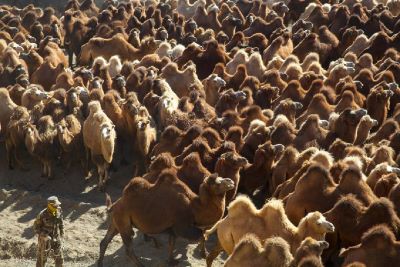
![Many camels can be seen during the migration. [Photo by Zhou Xin/For chinadaily.com.cn]](https://media.nationthailand.com/uploads/images/contents/w1024/2021/10/lfloFO0caPgaD2IcccU2.jpg?x-image-process=style/lg) Many camels can be seen during the migration. [Photo by Zhou Xin/For chinadaily.com.cn]
Many camels can be seen during the migration. [Photo by Zhou Xin/For chinadaily.com.cn]![Many camels can be seen during the migration. [Photo by Zhou Xin/For chinadaily.com.cn]](https://media.nationthailand.com/uploads/images/contents/w1024/2021/10/QHDOqqlEuvyAVImiYmMJ.jpg?x-image-process=style/lg) Many camels can be seen during the migration. [Photo by Zhou Xin/For chinadaily.com.cn]
Many camels can be seen during the migration. [Photo by Zhou Xin/For chinadaily.com.cn]![Many camels can be seen during the migration. [Photo by Zhou Xin/For chinadaily.com.cn]](https://media.nationthailand.com/uploads/images/contents/w1024/2021/10/0kaee7LawgFfC76Dczlk.jpg?x-image-process=style/lg) Many camels can be seen during the migration. [Photo by Zhou Xin/For chinadaily.com.cn]
Many camels can be seen during the migration. [Photo by Zhou Xin/For chinadaily.com.cn]![Many camels can be seen during the migration. [Photo by Zhou Xin/For chinadaily.com.cn]](https://media.nationthailand.com/uploads/images/contents/w1024/2021/10/Ya7tcq5d8NzGaQyQgF8Y.jpg?x-image-process=style/lg) Many camels can be seen during the migration. [Photo by Zhou Xin/For chinadaily.com.cn]
Many camels can be seen during the migration. [Photo by Zhou Xin/For chinadaily.com.cn]