Gyeonggi Province Gov. Lee Jae-myung was announced on Sunday as the ruling party nominee for the upcoming presidential election.
Lee has gained a total of 719,905 votes (50.29 percent), defeating his chief rival Lee Nak-yon, former prime minister, who received 560,392 votes (39.14 percent), in the party’s primary elections. Former Justice Minister Choo Mi-ae and Rep. Park Yong-jin received 129,035 votes (9.01 percent) and 22,261 votes (1.55 percent), respectively.
The ruling party held its last regional primary in Seoul and the third Super Week — national electoral vote — to choose a final candidate at SK Olympic Handball Gymnasium in Songpa-gu, Seoul starting at 3:30 p.m. The results were released at 6 p.m.
In the run-off vote on the day, Gov. Lee gained about 45,737 votes from party members in the Seoul primary election and around 74,441 votes from the third national electoral vote. His rival Lee received 32,445 and 155,220 votes, respectively.
The cumulative number of electors in the Democratic Party was 2,169,511, of which 1,459,992 voted, with a turnout of 67.3 percent.
After the turnout was released, Lee said he would complete the “change and reform” demanded by the people.
The vote result is “A clear and stern order from the people to eliminate unearned income and create a country where working people are respected and live well,” he said.
“I will surely root out corruption among political forces and won’t postpone it for a second. Immediately after election, we will eliminate the stigma of being a country with unearned income from real estate.”
Gov. Lee’s final vote tally is lower than President Moon Jae-in who had gained 56.5 percent of the vote in the 2012 primary election in the ruling party and topped 57 percent in the 2017 presidential election.
ADVERTISEMENT
Lee’s challenge is after the primary election. The Democratic Party’s fate for the presidential election is at stake as to whether it can revive the “party unity” after the election of the final candidate.
During his speech, Lee said, “The best strategy for re-creating a new government is “one team,” expressing his gratitude to the other three candidates.
Party leader Song Young-gil said, “Irrespective of the results, this should be an opportunity to accept (the winner) and become one to meet the calling of Korea’s uninterrupted democracy.”
Outside SK Olympic Handball Gymnasium where the joint speech took place, about 3,000 supporters gathered to support their candidates despite the pouring rain. When Lee moved out of the stadium, his supporters shouted his name and cheered.
The 13th round of Corps Commander-level talks was held at Moldo in Eastern Ladakh on the Chinese side on Sunday to address the ongoing military standoff between India and China along the LAC (Line of Actual Control).
The talks took place nearly two months after both the countries withdrew troops from Gogra. The disengagement at Gogra was carried out on 4-5 August. The disengagement there had taken place after the 12th round of talks between the Corps Commanders held on 31 July.
According to sources, India reported having asked China to work towards early resolution of the remaining issues along the LAC fully abiding by bilateral agreements and protocols.
India also reported to have taken up remaining friction areas like Hot Springs and Depsang plains for disengagement in the meeting. The troops from the two countries have been in a face-off situation in Eastern Ladakh since April-May last year. A face-off between the two militaries in the Tawang sector of Arunachal Pradesh last week also came to light on Friday. The matter was resolved following a meeting between local commanders of the two countries as per established protocols.
India has been insisting that peace and tranquility between the two countries can only be achieved by restoring the status quo ante which existed in April-May last year in Eastern ladakh.
The Ministry of External Affairs (MEA) on Thursday had stated that it expected China to work towards early resolution of the remaining issues along the LAC in Eastern Ladakh by fully abiding by bilateral agreements and protocols.
ADVERTISEMENT
Addressing a weekly media briefing, MEA spokesperson Arindam Bagchi said, “It is our expectation that China will work towards early resolution of the remaining issue along the Line of Control (LoC) in Eastern Ladakh while fully abiding by bilateral agreements and protocols.”
In the last one and a half years, the two countries have held a series of meetings both at the military and diplomatic levels to peacefully resolve the stand-off.
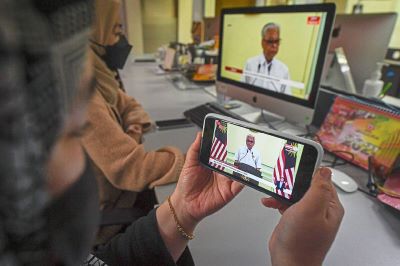
PETALING JAYA: For the first time since January, state borders will be opened up and interstate travel allowed from today – but only for those fully vaccinated against Covid-19.
Prime Minister Datuk Seri Ismail Sabri Yaakob said the decision to lift the ban on interstate travel was made as 90% of the adult population had been fully vaccinated.“Malaysians are free to reunite with their parents and also go on holidays,” he said in a special address yesterday.
He advised Malaysians to undergo Covid-19 self-testing before leaving their state.
“It is not compulsory, but it is to protect your family members.
“For those who have symptoms such as fever, cough, runny nose or shortness of breath, I advise you to postpone your journey first,” he said, adding that those who test positive should seek help from their nearest Covid-19 Assessment Centre.
Ismail Sabri also reminded Malaysians that Prevention and Control of Infectious Diseases (Act 342) would apply and individuals who were caught violating the standard operating procedure (SOP) could be fined.
“We must not take this lightly. This is important in the government’s efforts to reopen the economy and its preparation towards the endemic phase, also known as #ReopeningSafely,” he added.
Ismail Sabri said although there were no more roadblocks at district and state borders, they would still be mounted by the police to deter crime.
ADVERTISEMENT
“Random checks will continue to be carried out by the authorities under Act 342.
“The lifting of the prohibition on interstate travel does not apply for visits to localities placed under the enhanced movement control order,” he added.
Ismail Sabri also advised Malaysians who have yet to be vaccinated to get their jabs quickly.
“Many of the announced relaxations, such as interstate travel, domestic and international travel, and dining-in are all subject to the term that one must be fully vaccinated,” he stressed.
The ban on interstate travel was briefly lifted last year but was reimposed in January this year following a surge in Covid-19 cases.
Based on Health Ministry data on its CovidNow portal yesterday, 21,003,074 individuals or 89.7% of the adult population in the country had completed their Covid-19 vaccination, just 0.3 percentage points shy of the targeted 90% for interstate travel to be permitted.
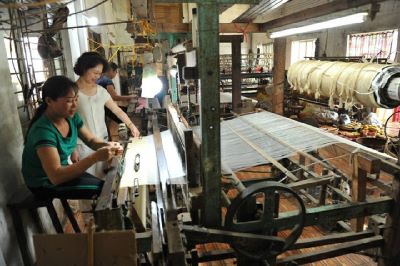
It is a cool autumn morning. The sound of weaving machines echo steadily from various workshops at Hạ Village, Phùng Xá Commune, in Thạch Thất District, some 50km on the western outskirts of Hà Nội centre.
The Đáy River flows gently around the tranquil village, and the gentle pace of local rural life seems to run much as usual, as if there has been no pandemic sweeping through.
People work busily every day in artisan Phan Thị Thuận’s workshop. Some collect mulberry leaves to feed silkworms, while others work attentively at the weaving machines.
ADVERTISEMENT
From time to time, Thuận checks the sheet spun from silk by thousands of worms on the floor.
She smiles at the thicker and thicker silk sheet as it is ‘weaved’ by the hard-working worms.
“Though I have been bogged down with lots of difficulties in sending my products to customers due to the pandemic, I have tried my best to maintain production and created jobs for locals as before,” Thuận told Việt Nam News.
The best season for the mulberry plant to grow is between March and November, and this abundant material is used to feed the silkworms. Hence, silk production runs as normal.
Silk artisan keeps production going despite pandemic
Thuận said that her sales had reduced by 70 per cent of that in the period before the pandemic. She has used her savings and got loans from her relatives to ensure she can maintain production.
“We are lucky not to have the pandemic spread here, so we can still work in safety,” she said. “My workers work as usual so I still pay them as usual. When the pandemic is over, we should have products available for customers. That’s the reason why we still keep things going.”
Thuận said her Mỹ Đức Silkworm Co Ltd gathers 20 workers at two workshops in the village and some 150 people working at home in the area and other provinces like Nghệ An.
Each worker at the workshops earns VNĐ6-7.5 million (US$260-300) per month, while a ‘satellite’ worker may earn VNĐ5 million.
Every month, her company produces 1,000m of silk and 500kg of cotton.
Before the pandemic, she sold out everything she produced while during recent social distancing and lockdown periods she has found it hard to reach customers and send goods to the cities.
Thuận’s customers are spread throughout the country from Hải Phòng, Thái Bình and Nam Định to HCM City and Gia Lai. Most of her goods are sent by land and air.
Since the outbreak of the pandemic in the country in April last year, Thuận has adopted a new product: three-layer silk masks.
“Worms are especially sensitive to chemicals,” she said. “They live in a fresh natural environment, otherwise they will die.”
Her mask is made with three silk layers. The inner most layer is made from smooth silk, the middle layer is made of flat cocoon material that the worms spun over ten hours. The outer layer is a rougher silk sheet.
Silk artisan keeps production going despite pandemic
“Masks not only protect people from dust or the virus, but also nurture the skin, absorb sweat and bring pleasure to the wearer,” she said.
She said that while other products like silk blankets and fashion accessories have sold slowly during the pandemic, her silk masks have sold well.
Each month, the company produces around 5,000 silk masks.
Silk cotton facial towels are another key product of the company during this period.
Thuận said three popular products of the company are waiting for official five-star [the highest of its kind] certification for the national OCOP (One Commune One Product) programme. They include silk scarves made from lotus stems, silk scarves made by silkworms and blankets made from flat-formed cocoon material also from silkworms. The products already have four-star certificates.
Stable jobs
Trương Anh Tuấn, head of the Economic Department of the Mỹ Đức District’s People’s Committee, said he appreciated the efforts of the company amid the pandemic.
“Thanks to a convenient form and friendly-to-user material, silk masks from the company have sold very well creating stable jobs for locals,” he said.
He said the authorities would explore more potential products and assist local enterprises to join the OCOP system to ensure quality as well as create more jobs.
The district makes other traditional OCOP products like Hương Tích Apricot Wine, cake from yams in Hương Sơn Commune, and cotton towels in Phùng Xá Commune.
Đỗ Thị Loan, a worker in Thuận’s company, feels happy and content to have a stable job.
“Though the pandemic has not reached our village, it has affected jobs of many people here,” she said.
Her husband, a freelance weaver for various companies in the commune, has had no job for a year.
“I still work as usual in Thuận’s workshop and receive a normal salary,” she said. “I know I’m luckier than many people here to have strength and a stable job.”
Loan said one of her sons, a worker at a local aluminium factory, has also been unemployed for many months.
Loan has been working in Thuận’s company for three years, doing hand loom weaving. She earns VNĐ7 million per month. Her husband gets VNĐ10 million each month in normal periods.
“We all hope the pandemic will be under control soon to have stable jobs and income,” she said.
Thuận is a pioneer in weaving silk from lotus stem fibre in the north. Her scarves made from lotus silk have been chosen as a handmade gift presented by national leaders to guests at various international events.
Pandemic or not, Hạ Village will continue to quietly go about its business making top-quality artisanal silk. VNS
Silk artisan keeps production going despite pandemic
International craze aside, the Netflix original series “Squid Game” is inspiring parodies and send-ups throughout the South Korean entertainment industry.
Cable channel Channel A was one of the first to air a parody of the global megahit. “The Fisherman and the City,” a show featuring five Korean TV celebrities who are obsessed with fishing, introduced its cast as if they were “Squid Game” contestants, with tags like those used in the Netflix series.
“SNL Korea” from domestic streaming platform Coupang Play and tvN’s “Comedy Big League” also parodied “Squid Game,” with comedians dressing up as the characters and repeating famous lines.
ADVERTISEMENT
A screenshot from “Comedy Big League” shows comedian Kim Doo-young (center) imitating the first contestant to sign up for the competition in “Squid Game.” (tvN)
The terrestrial broadcaster SBS joined in the fun with its hit Wednesday program “Kick a Goal.” The program, which centers on soccer tournaments for female celebrities from different fields — comedians, actors, models and more — imitated the “Squid Game” logo in graphics used to introduce soccer matches.
The domestic excitement over “Squid Game” is not likely to die down anytime soon. “Amazing Saturday” from tvN released a preview of this coming Saturday’s episode with content referencing the Netflix mystery thriller. Veteran actor Oh Young-soo, who plays elderly contestant Oh Il-nam in “Squid Game,” will appear on MBC’s weekend variety show “Hangout With Yoo.” The date has yet to be announced.
The rest of the world is catching up with the “Squid Game” phenomenon as well, including the popular US late-night show “The Tonight Show Starring Jimmy Fallon,” which featured an interview with “Squid Game” actors on Wednesday.
The nine-part series has topped the Netflix chart in 80 countries since its release and is the first Korean show to reach No. 1 in the streaming platform’s rankings in the US, according to streaming analytics firm FlixPatrol.
Everyone is so occupied and aligned with technology that we have entirely lost our touch with pen and paper. As we are growing older the gap between the usage of mobile notes and writing things down on paper has grown wider.
As the global pandemic has taken a mental and emotional toll on each one of us, we have started to take our physical and mental health more into consideration. Most of us have looked inwards instead of outwards as we were forced to spend time with ourselves.
It was good to see how people turned inwards to find serenity, strength, and peace.
ADVERTISEMENT
More awareness and light were shed on mental health, why it’s important, and what are the ways people can live a life with lesser stress. Many people were seen taking up arts and related activities to pursue their creative interests (including writing, singing, playing an instrument, drawing, and painting) far more seriously than they had ever done before leveraging colours, pens, paper, and stationery. In the same way, day-to-day journaling has remained one of the main elements that support people through tough and testing times.
Marking the occasion of Mental Health Day on October 10, the importance of putting pen to paper, particularly through journaling, is important to an individual’s well-being.
Here are five key benefits of journaling your thoughts and feelings:
* Keep your stress and anxiety at a bay: When we write down our deep and actual feelings and actions, we become aware of them. Otherwise, we often tend to spend our days, and weeks unknowing doing things that are unnecessary and consume lots of our time and energy. Keeping a journal often helps us put our everyday activities, how we have felt in order and reduce the chaos of everyday life. It’s like emotional management. Journaling not only helps us relive memories and experiences, but provides us with a platform to get to know ourselves better and reveal our deepest fears, passion points, thoughts, and feelings. This all helps us remain balanced, focused, and controlled. Journaling is like talking to a best friend but better as it digs deep into our souls. To make journaling more enjoyable, invest in colourful stationery to lift your mood, and get your creative juices going.
* Awareness brings learning and experiences: It is scientifically proven that writing using pen and paper helps retain information better than when using mobile phones or tablets. Writing down affirmations, achievements, and learnings helps us take in information, and learn from the past. It also helps look at experiences through different approaches to ensure that we make better and informed decisions.
* Improves mood and enhances sleep: Generations, including millennials and Gen Z, work very differently from previous groups. They have shorter attention spans and store bits and pieces of information. Their minds resemble a computer with various open tabs, which makes shutting their brain down challenging. Journaling encourages people to let things out, keeping them sane and uplifted and making a good night’s sleep possible. Colour coding a journal enhances the experience even further as it would help process and get a deeper understanding of feelings.
* Boosts creativity: As it’s your personal diary, there is no factor of any judgment, you have your way to go. Journaling sets your brain free as it provides us with an opportunity to doodle, draw, write, illustrate, and colour in a personal space without any judgment. Journaling allows people to explore uncharted thoughts and emotions. Writing gets thoughts out and clears the mind for fresh ideas, helping our minds wander and dream — all the while recharging its creative cells.
* Helps build a stronger immune system and a higher IQ: Several studies around the world show that regular journaling leads to sound sleep, a stronger immune system, and eventually a higher IQ. James W. Pennebaker, a social psychologist at the University of Texas at Austin, who is considered the pioneer of writing therapy, said, “Labelling emotions and acknowledging traumatic events have a known positive effect on people. When we do that, our working memory improves, since our brains are freed from the enormously taxing job of processing that experience, and we sleep better, indeed improving our immune system.” According to research published in Frontiers in Behavioral Neuroscience, ‘paper is more advanced and useful compared to electronic documents because paper contains more one-of-a-kind information for stronger memory recall’.
Why not utilize this day of Mental Health Day to motivate you to keep a journal and kick off a new habit that would benefit you mentally positively and stimulate your brain in a way that digital communication or social media doesn’t. It’s an old saying that the power of writing is powerful and unmatched — continue to express yourself in an impactful manner to ensure a better and healthy you.
This week, YouTube took the step of banning anti-vaccine content on its platform. The outcry against Facebook and YouTube being cesspools of medical misinformation has existed for years; with the stakes increasingly high due to COVID-19, the pressure has increased for these two major platforms to supervise uploaded content.
Ethically it has been a question of protection of freedom of speech versus allowing the clear consequences of large-scale medical misinformation. With social media giants facing criticism for allowing misinformation to run rampant, Facebook and YouTube had previously banned overt COVID-19 misinformation on their platforms. YouTube has only recently extended this ban to misinformation on other vaccines already in use.
This prompts me to think of recent experiences with medical misinformation. Misinformed comments on the internet are a given, but sometimes, when I bother to read them, they can be instructive. In last week’s column, in response to a passing mention of ivermectin for COVID-19 treatment, a commenter accused me and other “anti-ivermectin” or “pro-vaccination” doctors of being scared to engage in debate with ivermectin supporters because we supposedly don’t have scientific data to back up our “allegations.” “Instead,” the comment continued, “you’re just spreading disinformation […] like suggesting ivermectin are just for horses and animals — what an ignorance!”
ADVERTISEMENT
It is healthy to occasionally pay attention to such comments to prompt the search for sound evidence. What if, indeed, I was just being carried away by the media scrutiny on ivermectin and overlooked its potential? A little startled by the commenter’s certainty, I went through the usual steps of looking for evidence. A search through pubmed.gov, a search engine for a vast archive of scientific articles, as well as through other databases for reviews and clinical trials, led me to an update of my original views: That at present, the quality of evidence for ivermectin for the treatment or prevention of COVID-19 is not high. No one with a scientific mind would completely exclude the possibility of ivermectin or its components being a lifesaving treatment for COVID-19 in the future, but it is the interest of physicians to look out for patient safety first — to do no harm — and as such, many medical bodies do not feel that enough evidence exists to support ivermectin in the absence of further, better trials. The World Health Organization also does not exclude the possibility of ivermectin being a cure, but given this quality of evidence, can only caution that ivermectin use be limited to settings of clinical trials.
This is not a monograph on ivermectin, but rather a reflection on the use of appropriate tools to arrive at a scientific conclusion, and how lamentable it is that we cannot so easily equip others to use them. It can be difficult for those outside the sciences to appreciate the levels of evidence that go into medical recommendations.
I could instruct the lay person to go on the pubmed.gov database, to search “ivermectin” and “COVID-19,” and modify the settings to show the “most recent” search results. But in so doing I could not trust that, instead of looking at the prospective studies or meta-analyses — considered “high” level evidence because these gather data from different trials and appraise the quality of the evidence — the lay reader would not latch on to lesser quality papers and herald them as ammunition in the ivermectin debate. They could latch on to a paper on the activity of ivermectin against the virus in vitro, without realizing that “in vitro” does not translate to real-life safety and efficacy. They could latch on to a small trial on the use of the drug as prophylaxis for COVID-19 in health workers, without recognizing that the trial has an unacceptably small sample size and lacks randomization, rendering it non-generalizable to the general population.
To be able to change the firm convictions of the user who commented so passionately on my article, I would need to sit them down and work through the evidence with them, pointing out what qualifies as strong and what doesn’t. This is a daunting task to face in educating our friends and loved ones, to say nothing of faceless strangers on the internet. I am fortunate to be equipped with the tools to look for evidence, or the resources to ask those more qualified, but it is frustrating to be unable to communicate these thoughts effectively to those who have already been reached by (sometimes painfully convincing) misinformed content on YouTube, Facebook, Twitter, or Viber. While conscious of the pitfalls of censorship on social media, I cannot help but be thankful that we are slowly convincing social media platforms to regulate content that can have disastrous public health consequences. Until we’re able to equip the lay public with the tools to discern sound evidence for themselves, we can only try to prevent misinformation before it happens.
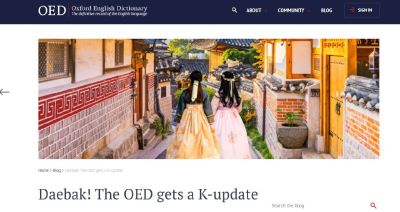
Thanks to the soaring popularity of Korean culture, 26 words and phrases of Korean origin have been included in the latest update to the Oxford English Dictionary.
The dictionary was first published in 1884, and the word “Korean” was first added in a 1933 supplement.
Food features prominently in the recent update: Banchan are small side dishes served along with rice as part of a typical Korean meal. Bulgogi is a dish consisting of thin slices of beef or pork, which are marinated and then grilled or stir-fried.
Dongchimi refers to white kimchi, made with radish and typically also containing napa cabbage. Galbi refers to beef short ribs, marinated in soy sauce, garlic and sugar, and then cooked on a grill at the table.
Japchae refers to cellophane noodles made from sweet potato starch, usually stir-fried with vegetables and other ingredients, and seasoned with soy sauce and sesame oil. Kimbap is a Korean dish consisting of cooked rice and other ingredients wrapped in a sheet of seaweed and cut into bite-sized slices. Samgyeopsal is a dish of thinly sliced pork belly, usually cooked by the diner on a tabletop grill.
ADVERTISEMENT
Kimchi, the most iconic Korean dish of all, was added to the dictionary in 1976.
Another notable new food term is “chimaek,” meaning fried chicken and beer. The hybrid word became popular when South Korean actor Jun Ji-hyun used it in the global hit drama “My Love From the Star” (2014). The show started a Korean fried chicken craze in many Asian countries where the show was a huge hit, including China.
Words depicting traditional Korean culture have also been added, including the traditional Korean costume, hanbok; Korean martial arts Tang Soo Do and taekwondo; and sijo, a classical Korean vocal music genre used to perform classical poems also called sijo.
Various aspects of Korean culture are reflected in terms such as “aegyo” — used to describe the charm and cuteness considered characteristically Korean — the Korean cartoon genre “manhwa” and “mukbang,” a type of video where someone eats on camera while interacting with the audience. The dictionary defines “daebak” as an interjection used to express enthusiasm, like “fantastic” or “amazing.”
The global popularity of Korean movies and dramas led the dictionary to include certain honorifics and forms of address used in Korean: noona, oppa and unni. Noona is used when a male speaker is addressing his older sister or an older female friend, while oppa is used by a female speaker in addressing or referring to an older brother or an older male friend. Unni is used when a female speaker is referring to her older sister or older female friend.
According to the Oxford, the work of defining the Korean words in English was undertaken by the dictionary’s editors and organizations concerned with the Korean language. These included the National Institute of Korean Language, the National Library of Korea and Korea University.
Tanzanian novelist Abdulrazak Gurnah has just been announced as the recipient of this years Nobel Prize in Literature “for his uncompromising and compassionate penetration of the effects of colonialism and the fate of the refugee in the gulf between cultures and continents.”
Born in Zanzibar off the coast of East Africa, Gurnah has taught literature at the University of Kent, England and served as associate editor of Wasafiri journal.
Immigrant experiences in contemporary Britain made up the primary focus of his early novels, Memory of Departure (1987), Pilgrims Way (1988) and Dottie (1990), while his later works looked towards Africa—Paradise (1994), shortlisted for the Booker Prize, unfolds in WWI East Africa and Admiring Silence (1996) oscillates between England and Zanzibar, and The Last Gift (2011), similarly explores the role of storytelling in weaving the past of an immigrant in England.
ADVERTISEMENT
Launched in 1901 by the will of Swedish inventor and businessman Alfred Nobel, the Nobel prize is worth 10 million Swedish crowns (USD 1.14 million), and is awarded for achievements in science, literature, economics and peace by the Swedish Academy.
Past winners in the literature category are Rabindranath Tagore, Ernest Hemingway, Gabriel Garcia Marquez, Toni Morrison, Pablo Neruda, Bob Dylan and, last year’s winner, American poet Louise Glück. Only 16 of the 118 winners have been women.
The Nobel Peace Prize 2021 is to be announced in 21 hours.
For more book-related news and views, follow Daily Star Books on Facebook, Instagram, Twitter, and LinkedIn. Write to us at thedailystarbooks@gmail.com.
Sony Group Corp. and Taiwan Semiconductor Manufacturing Company (TSMC), the world’s largest contract chip manufacturer, have entered into discussions to jointly build a new semiconductor plant in Kumamoto Prefecture.
The government wants an advanced semiconductor plant built in Japan and is planning to include related expenses to support the construction of the plant in the fiscal 2021 supplementary budget bill to be compiled after the lower house election.
According to sources, the new plant is expected to start operations by fiscal 2024. The total investment is expected to be around ¥800 billion, and the government is considering subsidizing half that amount. Priority over the supply of products manufactured at the plant is expected to be one of the conditions to receive the subsidy.
ADVERTISEMENT
The plant, which the sources said might be built near Sony’s image sensor plant in Kikuyo, is expected to produce semiconductors used in automobiles and home appliances.
Amid the COVID-19 pandemic, there has been a global shortage of semiconductors, a staple of industry.
Japan used to dominate the global chip market, with a 50% market share in the late 1980s, but with the rise of Taiwanese and Chinese companies, its market share has fallen to around 10% in recent years.
The Japanese government believes that a stable supply of advanced semiconductors is essential for future economic growth, and has decided that cooperation with global companies is necessary to quickly establish a production system in Japan.
Semiconductor giant TSMC has been expanding its business overseas.
In Japan, the company announced in February this year that it plans to establish a research and development base for cutting-edge semiconductor materials in Tsukuba, Ibaraki Prefecture.
As there are no factories in Japan capable of producing cutting-edge semiconductors, the Japanese government is urging the public and private sectors to conduct joint research and develop a production system.



 Silk artisan keeps production going despite pandemic
 Silk artisan keeps production going despite pandemic
 Silk artisan keeps production going despite pandemic
 A screenshot from “Comedy Big League” shows comedian Kim Doo-young (center) imitating the first contestant to sign up for the competition in “Squid Game.” (tvN)