WHO: Covid recovery plans should include climate action #SootinClaimon.Com

#SootinClaimon.Com : ขอบคุณแหล่งข้อมูล : หนังสือพิมพ์ The Nation.

https://www.nationthailand.com/international/40007445


MANILA, Philippines — The World Health Organization (WHO) is calling climate change the “single biggest threat facing humanity,” as it urged governments to take swift action to respond to the unfolding global crisis.
In a report released weeks ahead of the United Nations climate change conference in Glasgow, Scotland, the WHO governments should not only commit to a healthy and green recovery from the coronavirus pandemic but also to place health and social justice at the heart of the climate talks.

“The next few years present a crucial window for governments to integrate health and climate policies in their COVID-19 recovery packages,” read the report, which outlined recommendations developed in consultation with over 400 experts and health professionals and 150 organizations.

“While near-term pandemic responses will largely set the pace and direction of health and climate goals, ambitious national climate commitments will be crucial to sustain a healthy recovery in the mid- to long-term,” it added.

Intimate, delicate links

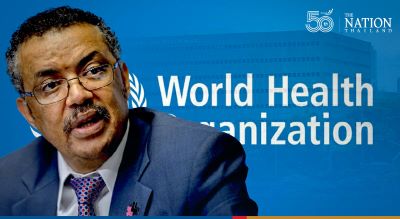
Dr. Tedros Ghebreyesus, the WHO director general, said the pandemic had shone a light on the “intimate and delicate links” between humans and the environment, and that the same unsustainable choices killing the planet were also killing people.

“WHO calls on all countries to commit to decisive action at COP26 to limit global warming to 1.5 degrees Celsius-not just because it’s the right thing to do, but because it’s in our own interests,” he said.

COP26 refers to the 26th Conference of the Parties to the UN Framework Convention on Climate Change, where world officials will gather in November to discuss the way forward in stemming the worst impacts of the climate crisis.

ADVERTISEMENT

The 82-page report stressed that climate change is already affecting health in many ways, like in the deaths and illnesses attributable to increasingly frequent extreme weather such as storms and heatwaves, as well as the rise in zoonotic and vector-borne diseases, disruption in food systems, and mental health issues.

“Strengthening resilience and building adaptive capacity to climate change… can also lead to health benefits,” it said. “The public health benefits resulting from ambitious mitigation efforts would far outweigh their cost.”

Transition to renewables

Among the report’s recommendations is a just transition to renewable energy sources and moving away from the use of fossil fuels, such as coal.

“The burning of fossil fuels is killing us, causing millions of premature deaths every year through air pollutants, costing the global economy billions of dollars annually, and fueling the climate crisis,” the report read. “Governments and the private sector can support a green and healthy recovery from COVID-19 by reforming energy subsidies so no public money goes to fossil fuel production.”

WHO also called on governments to reimagine urban environments, transport and mobility by promoting sustainable and healthy urban designs, increasing access to green and blue public spaces, and prioritizing walking, cycling and public transport.

45M signatures

Alongside the release of the report was an open letter calling for national leaders and COP26 country delegations to step up climate action, signed by at least 45 million doctors, nurses and health professionals worldwide, representing over two-thirds of the global health workforce.

In the letter, the health workers said the “rapidly growing” climate crisis could be “far more catastrophic and enduring” than the COVID-19 pandemic.

“Integrating health and equity into climate policy will protect peoples’ health, maximize returns on investments and build public support for the urgently needed climate actions,” the letter read. “These climate actions must be taken now to protect the planet, and the health, well-being and prosperity of all people alive today and for generations to come.”

Published : October 13, 2021

By : Philippine Daily Inquirer

IMF slashes 2021 PH growth forecast to 3.2% #SootinClaimon.Com

#SootinClaimon.Com : ขอบคุณแหล่งข้อมูล : หนังสือพิมพ์ The Nation.

https://www.nationthailand.com/international/40007444


The International Monetary Fund (IMF) has slashed its 2021 growth forecast for the Philippines to 3.2 percent—below the government’s target—as high inflation and the highest unemployment rate in the region would linger for the rest of the year.

The Washington-based multilateral lender’s World Economic Outlook (WEO) report for October 2021 released on Tuesday showed a further drop in the gross domestic product (GDP) growth estimate for this year, from 5.4 percent previously.

The updated projection was also lower than the already downgraded 4 to 5 percent goal set by President Duterte’s economic managers when the more infectious Delta strain of COVID-19 reached the country.

As of press time, IMF resident representative for the Philippines Yongzheng Yang had yet to respond to request for comment, as the report embargo was lifted during a holiday in the United States, where he’s currently based.

Back in July, Yang said that “the Delta variant of the coronavirus is a concern and we are monitoring its potential impact on the economy.”

Fiscal support

Also, Yang had said that “timely implementation of fiscal support—with flexibility to address evolving priorities—is crucial for continued recovery.”

“The fiscal deficit targeted in the 2021 budget provides significant stimulus to economic activity, but given the imperative to beat the virus and the continued difficulties faced by vulnerable families and businesses, more resources could be needed. Such resources should aim to bolster the health-care system to accelerate vaccinations, strengthen capacity for testing, tracing, isolation, and treatment, and support affected families and businesses,” Yang had said.

ADVERTISEMENT

Budget deficit

But the economic team wanted to keep the 2021 budget deficit at an already record-high P1.86 trillion, equivalent to 9.3 percent of GDP. The government had set aside P4.74 trillion in expenditures this year to fight the health and socioeconomic crises inflicted by the prolonged pandemic.

The IMF projected the Philippines’ GDP growth in 2022 at 6.3 percent, also below the government’s 7 to 9 percent target range.

It forecasted headline inflation this year to rise to an average of 4.3 percent, above the Bangko Sentral ng Pilipinas’ 2 to 4 percent target band of a manageable rate of increase in prices of basic commodities.

In Asia, the Philippines’ inflation rate in 2021 was poised to be the second highest, next only to India, making private-sector economists worry that consumption—a prime mover of the economy—would take a hit from expensive goods and services, especially food items, amid hopes for an economic rebound starting this year.

Next year, the IMF expects inflation to ease to a within-target 3 percent.

The unemployment rate in the Philippines was expected to remain elevated in 2021 to end the year at 7.8 percent—the highest in Asia, just like last year’s 10.4 percent.

In 2022, the jobless rate would go down to 6.8 percent, but it remained the worst among the Asian countries covered by the latest IMF WEO report.

Published : October 13, 2021

By : Philippine Daily Inquirer
IMF: Chinas 2021 growth moderates to 8% as pandemic weakens global recovery momentum #SootinClaimon.Com

#SootinClaimon.Com : ขอบคุณแหล่งข้อมูล : หนังสือพิมพ์ The Nation.

https://www.nationthailand.com/international/40007442


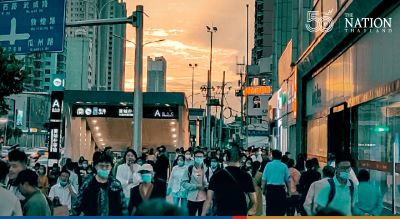
The International Monetary Fund has projected the world economy will grow at 5.9 percent this year, while Chinas growth will moderate to 8 percent, both 0.1 percentage point lower than the IMFs July estimates, as global recovery continues amid increasing uncertainty from the pandemic.

“The downward revision for 2021 reflects a downgrade for advanced economies — in part due to supply disruptions — and for low-income developing countries, largely due to worsening pandemic dynamics,” the IMF said in its quarterly World Economic Outlook released on Tuesday.

Fueled by the highly transmissible Delta variant, the recorded global COVID-19 death toll has risen close to 5 million, and health risks abound, holding back a full return to normalcy, noted IMF Economic Counsellor Gita Gopinath.

The IMF said China’s prospects for 2021 were marked down slightly due to a stronger-than-anticipated scaling back of public investment; the country’s growth in 2022 is estimated at 5.6 percent, which is also 0.1 percentage point down from the IMF’s July forecast.

The US economy is forecast to grow by 6 percent this year, 1 percentage point lower than the July prediction, but due to sizable anticipated further policy support, the US growth is expected to reach 5.2 percent next year, an upward revision of 0.3 percentage point from the July prediction.

ADVERTISEMENT

Looking beyond this year, the IMF predicted the global economy to grow at 4.9 percent in 2022, unchanged from the July forecast, but there exists a “dangerous divergence” in prospects across countries, according to Gopinath, also director of the IMF’s Research Department.

Aggregate output for the advanced economies is expected to regain its pre-pandemic trend in 2022 and exceed it by 0.9 percent in 2024, while that for the emerging market and developing economies, excluding China, is expected to remain 5.5 percent below the pre-pandemic forecast in 2024, resulting in a larger setback to improvements in their living standards.

“These divergences are a consequence of the ‘great vaccine divide’ and large disparities in policy support,” Gopinath wrote in a blog, noting that while more than 60 percent of the population in advanced economies is fully vaccinated, and some are now receiving booster shots, about 96 percent of the population in low-income countries remain unvaccinated.

The foremost policy priority is therefore to vaccinate at least 40 percent of the population in every country by the end of 2021, and 70 percent by mid-2022, she wrote.

In the latest World Economic Outlook, the IMF said there is an urgent need for vaccine donations by countries with large shares of their population already vaccinated, and it estimated that at least 1 billion doses could be shared by the end of 2021 without jeopardizing national vaccination targets.

“Recent pledges by China, the Group of Seven, and other countries in that direction are welcome steps, though donations should be accelerated to rapidly fulfill the commitments,” it said.

China will strive to provide a total of 2 billion doses of vaccines to the world by the end of this year, Chinese President Xi Jinping said in his statement delivered via video at the general debate of the 76th session of the United Nations General Assembly on Sept 21.

In addition to more COVID-19 variants and pandemic-induced supply-demand mismatches, the intensification of trade and technology tensions is also one of the major risk factors that contribute to the uncertainty in the global recovery, according to the IMF.

“An escalation of trade and technology tensions, notably between the United States and China, could weigh on investment and productivity growth, raising additional roadblocks in the recovery path,” it noted.

The IMF’s October World Economic Outlook presents a special section to discuss how a reverse in scientific integration of major economies, such as the United States and China, might affect global growth.

It uses an empirical framework to model scientific decoupling, implemented as a reduction in the citation intensity between the two countries. That reduces the foreign stock of basic research available to each country, which in turn decreases innovation and productivity, according to the IMF.

“As a purely illustrative example, full decoupling, as modeled by citations between the two countries shrinking to zero, is estimated to reduce global patent flows by 4.4 percent and global productivity by 0.8 percent,” the IMF concluded.

Currently, these countries are forecast to have cumulative output next year that is 6.7% below pre-pandemic levels. Advanced economies, meanwhile, will have 2022 output nearly 1% above pre-pandemic levels, the IMF said.

Published : October 13, 2021

By : China Daily

Golden Triangle SEZ asks for more workers #SootinClaimon.Com

#SootinClaimon.Com : ขอบคุณแหล่งข้อมูล : หนังสือพิมพ์ The Nation.

https://www.nationthailand.com/international/40007394


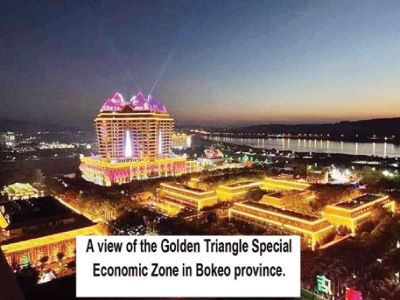
Golden Triangle Special Economic Zone developers in Bokeo province have asked the province’s Covid-19 taskforce to ease the procedures around the importing of workers, so that operations can take place with less disruption.

Vice Chairman of the Board of Directors of the Golden Triangle Special Economic Zone, Mrs Chen Zhong, said recently that the Covid-19 outbreak has disrupted operations at the Zone for the past five months.

In response to the stringent measures required to address the virus outbreak as set by the government and provincial authorities, the Board of Directors has formulated a plan to help curb the Covid-19 outbreak among workers in the area.

Committees operating within the Zone have signed agreements with real estate companies and companies operating within special economic zones to take steps to prevent the spread of the virus and restrict access to unauthorised areas.

Collaboration in the management of patrols to prevent the entry of unauthorised or illegal workers has already taken place after provincial health officials identified six major areas as high-risk and re-examined each building.

ADVERTISEMENT

As a result, the number of infections in the Zone has declined.

However, a red zone has been declared and is strictly closed to the public. Out of 286 workers hired from other countries, one person has contracted Covid-19 and has been admitted to hospital.

With regard to outbreaks of the virus in nearby areas and airport construction areas, it is strictly forbidden for workers to have any contact with each other.

Mrs Chen Zhong called on the provincial leadership to consider allowing 392 people to start work in the Zone, on the condition that they quarantine for 28 days.

The Zone’s Board of Directors recommended that Lao authorities coordinate with authorities in China and Myanmar to hire more workers, in particular increasing the number hired from Myanmar from 200 to 500.
Closer collaboration is needed so that workers can be sent to Laos more quickly, Mrs Chen Zhong said.

The Deputy Governor of Bokeo province, Dr Khamphaya Phompanya, thanked the Zone’s management for taking steps to keep workers separate and rolling out other measures to prevent the spread of infection.

He asked the Board of Directors and other authorities to ensure that all virus control measures were strictly implemented within the Zone.

The hiring of both Lao and foreign workers must be carried out in strict accordance with the regulations so that operations within the Zone can proceed as normal, he said.

Dr Khamphaya added that all authorities involved must curb the spread of rumours and false information so as not to undermine the operations of the Golden Triangle Special Economic Zone and to address Covid-related issues as soon as possible.

Published : October 12, 2021

By : Vientiane Times

Indonesia prepares to take over G-20 presidency in December, host summit in Bali in 2022 #SootinClaimon.Com

#SootinClaimon.Com : ขอบคุณแหล่งข้อมูล : หนังสือพิมพ์ The Nation.

https://www.nationthailand.com/international/40007393


Indonesia is determined to prove to the world its “ability to keep Covid-19 pandemic under control” as it prepares to assume, for the first time, the Group of 20 (G-20) presidency from December and to host the G-20 summit next year.

Italy will officially hand over the year-long presidency to the South-east Asia’s largest economy at the G-20 summit in Rome in end October.

Indonesia’s presidency will run from Dec 1, 2021, to Nov 30, 2022.

Last Friday (Oct 8), President Joko Widodo visited the popular resort island of Bali, where the 17th G-20 summit will be held next year, and expressed his satisfaction with the preparations. The G-20 is a forum comprising most of the biggest developed and developing economies, including the United States, China and Japan, along with Brazil, South Africa and India.

Bali has the reputation and the experience in organising international events and “as the host we want to serve our guests well”, said Mr Widodo.

“We must seize the opportunity to showcase our country’s ability to control the Covid-19 pandemic, both health-wise and economic. We also want to show the progress we have achieved… and our leadership.”

A series of cumulative meetings over the year are expected to bring together thousands of delegates from all member countries and various international institutions, said a Foreign Ministry statement.

ADVERTISEMENT

Foreign Minister Retno Marsudi said last month that promoting inclusivity will be on the agenda for the meeting, which will bear the theme “Together, Recover Stronger”.

Indonesia, she said “will not only pay attention to the interests of G-20 members, but also the interests of developing countries” in Asia, Africa and Latin America, including small island countries in the Pacific and the Caribbean.

Indonesia will also embrace the involvement of various groups of women, youth, academics, the business world and Parliament, she added.

“This is indeed the DNA of Indonesia’s foreign policies,” said the minister.

Indonesia’s economic growth has taken a beating due to the pandemic, with its gross domestic product (GDP) falling 2.1 per cent in 2020, its first negative growth in more than 20 years.

At the peak of its pandemic in July, daily cases exceeded 50,000, spurred by mass travel during the Hari Raya Aidilfitri holidays and the spread of the virulent Delta variant.

Social curbs were imposed in mid-July and since the beginning of October, daily infections have fallen to below 2,200.

Coordinating Economic Minister Airlangga Hartarto told a briefing last month that the G-20 summit could potentially raise domestic consumption by up to 1.7 trillion rupiah (S$162 million), add up to 7.47 trillion rupiah in GDP and create 33,000 jobs in various sectors.

Indonesia hopes to showcase several structural reforms, such as the omnibus law on job creation meant to simplify regulations on investments, as well as the creation of a sovereign wealth fund which will facilitate local and foreign investment to help finance development programmes.

He said: “Surely this will boost confidence from global investors to accelerate our economic recovery and encourage mutually beneficial global partnerships.”

By Arlina Arshad

Published : October 12, 2021

By : The Straits Times

Gathering of 5 or more banned in 31 townships of Yangon, 10pm-4am curfew still in force #SootinClaimon.Com

#SootinClaimon.Com : ขอบคุณแหล่งข้อมูล : หนังสือพิมพ์ The Nation.

https://www.nationthailand.com/international/40007392


Yangon Region General Administration Department issued an order dated October 8 banning a gathering of five or more people in the roads, streets and lanes of 31 townships of the region and imposing a 10pm-4am curfew.

Gathering of 5 or more banned in 31 townships of Yangon, 10pm-4am curfew still in force

The order points out some of the Yangon city residents are attempting to harm pubic security and the rule of law. Their attempts can harm community peace and tranquility, public security and the rule of law and lead to chaos. Thus, assemblies, giving talks, processions with the use of a vehicle or in person, demonstrations, vandalizing and formation of mobs will be banned in the 31 townships of the Yangon municipal area except Seikkyikhanaungto and Dala townships.

“It’s true such an order has been issued. It is dated October 8. But it is a regional order. We received the instruction too,” said a township administration department official.

The 31 townships where the order is in force are Thingangyun, Mingalar Taungnyunt, Tamway, South Oakkalapa, North Oakkalapa, Pazundaung, Dawbon, Botahtaung, Yankin, Tharkayta, Dagon Myothit (South), Dagon Myothit (North), Dagon Myothit (East), Dagon Myothit (Seikkan), Kamayut, Kyauktada, Kyimyindine, Sanchaung, Dagon, Pabedan, Bahan, Mayangon, Hlaing, Lanmadaw, Latha, Ahlon, Insein, Mingalardon, Hlaing Tharya (East and West) and Shwepyitha.  

The order will be in force until further notice.  

Published : October 12, 2021

By : Eleven Media

India, China military talks fail #SootinClaimon.Com

#SootinClaimon.Com : ขอบคุณแหล่งข้อมูล : หนังสือพิมพ์ The Nation.

https://www.nationthailand.com/international/40007391


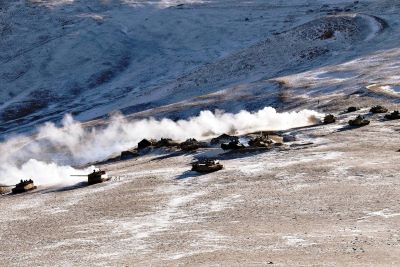
India and China failed to make headway on resolving the ongoing military stand-off at Eastern Ladakh at the 13th round of talks held between their Corps Commanders, putting a big question mark over the disengagement process.

It is learnt that the Chinese side bluntly refused to disengage from the Hot Springs area, Depsang Plains and Demchok areas, as proposed by the Indian side.

”During the meeting, the Indian side made constructive suggestions for resolving the remaining areas but the Chinese side was not agreeable and also could not provide any forward-looking proposals. The meeting thus did not result in resolution of the remaining areas,” said a statement issued today by the Ministry of Defence (MoD) on the talks held at the Chushul-Moldo border yesterday.

The statement said the two sides have agreed to maintain communications and also to maintain stability on the ground. ”It is our expectation that the Chinese side will take into account the overall perspective of bilateral relations and will work towards early resolution of the remaining issues while fully abiding by bilateral agreements and protocols,” it added.

During the meeting,the Indian side pointed out that the situation along the LAC had been caused due to unilateral attempts by China to alter the status quo in violation of the bilateral agreements.

Indian Army personnel told their Chinese counterparts that it was necessary that the Chinese side take appropriate steps in the remaining areas so as to restore peace and tranquility along the LAC in the Western Sector.

ADVERTISEMENT

This would also be in accord with the guidance provided by the two foreign ministers in their recent meeting in Dushanbe where they had agreed that the two sides should resolve the remaining issues at the earliest.

The Indian side emphasised such resolution of the remaining areas would facilitate progress in the bilateral relations.

China, meanwhile, blamed the Indian side for the failure of the talks. “India still insisted on unreasonable and unrealistic demands, which made the negotiations more difficult,” a Chinese spokesperson said.

The failure of the talks is seen as a big setback to the disengagement process started by the two countries in February to end the military stand-off which began in April-May last year. The two countries pulled back their troops from the Pangong Tso Lake in February and Gogra Heights in August.

Published : October 12, 2021

By : The Statesman

Philippine president congratulates journalist Maria Ressa on Nobel Prize #SootinClaimon.Com

#SootinClaimon.Com : ขอบคุณแหล่งข้อมูล : หนังสือพิมพ์ The Nation.

https://www.nationthailand.com/international/40007390


MANILA, Philippines — Philippine President Rodrigo Duterte’s office on Monday congratulated journalist Maria Ressa for winning the Nobel Peace Prize, calling it “a victory for a Filipina” for which it was happy to see.

Philippine president congratulates journalist Maria Ressa on Nobel Prize

Ressa, founder of Philippine news site Rappler, and Dmitry Muratov shared the 2021 prize after braving the wrath of the leaders of the Philippines and Russia to expose corruption and misrule.

Ressa has been fighting multiple legal challenges in courts related to Rappler’s dogged investigative reporting of Duterte’s government, its bloody war on drugs, and its use of social media to target opponents. She is currently on bail pending an appeal against a conviction last year in a cyber libel case, for which she faces up to six years in prison.

“It’s a victory for a Filipina and we’re very happy for that kasi wala naman pong utak talangka dito sa (because no one has a crab mentality here in) Malacañang,” he said in a regular Palace briefing with a seeming hint of ridicule, replying to a question on what Ressa’s award meant for the government.

“Of course it is true there are individuals who feel Maria Ressa still has to clear her name before the courts,” he said, in the first comment on Friday’s award from Duterte’s camp.

ADVERTISEMENT

The firebrand leader has described Rappler, launched in 2012, as a “fake news outlet and a tool of the U.S. Central Intelligence Agency, which Ressa has dismissed as nonsense.

The Prize was hailed by many in the Philippines, with critics saying it is a rebuke on Duterte, a frequent critic of Rappler.

It was the first Nobel Peace Prize for the Philippines and the first for journalists since the German Carl von Ossietzky won it in 1935. The Kremlin congratulated Muratov on Friday, describing the investigative journalist as talented and brave.

Asked on Monday what her message would be to Duterte, Ressa urged him not to pursue a divide and conquer approach.

“I beg you, unite this nation. Don’t tear us apart,” she said in an interview with news channel ANC.

While Malacañang congratulated Ressa on her Nobel Peace Prize, it still insisted that press freedom in the Philippines was not under attack because “no one has ever been censored in the Philippines.”

Roque also said Ressa’s Nobel Peace Prize was “not a slap on the government.”

He also said the closure of media giant ABS-CBN cannot be blamed on the House of Representatives, which is dominated by administration allies, and that such a decision did not come from the Executive department.

“It is not a slap on the government; it was made by private individuals in Norway. We respect their decision,” Roque said.

“There is no slap there because as everyone knows, no one has ever been censored in the Philippines. A journalist who claims a chilling effect should not be a journalist,” he added.

According to the Nobel Prize organizers, Ressa and Muratov were recognized for their “efforts to safeguard freedom of expression, which is a precondition for democracy and lasting peace.”

By Daphne Galvez

Published : October 12, 2021

By : Philippine Daily Inquirer
Efforts underway to commercialize ‘flying cars’ #SootinClaimon.Com

#SootinClaimon.Com : ขอบคุณแหล่งข้อมูล : หนังสือพิมพ์ The Nation.

https://www.nationthailand.com/international/40007331


OSAKA — “Flying cars” are expected to be used as a means of transportation to the site of the Osaka-Kansai Japan Expo 2025.

Yet many problems remain to be solved before the technology can come to a street — or a sky — near you. It is not yet clear when these futuristic vehicles will be integrated into everyday infrastructure.

■ Demonstration experiment

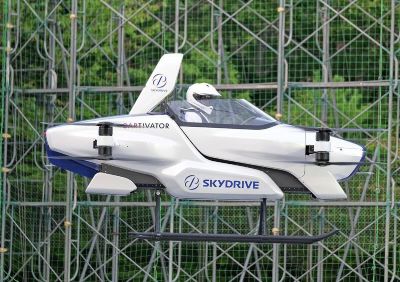
The Osaka prefectural and city governments signed a partnership agreement with SkyDrive Inc., a Tokyo-based startup company, with a view to realizing the operation of flying cars at the Expo.

The company, established in 2018 by former employees of Toyota Motor Corp., aims to launch a flying car operation business by 2025. It plans for the Expo to be the stage for its unveiling.

In May this year, the central government decided to set up a working group to examine safety standards and other issues related to flying the cars at the Expo.

According to the plan, a takeoff and landing site will be set up in the Tempozan area in Minato Ward, Osaka, about 5 kilometers from the Expo venue at Yumeshima, also in Osaka, and a two-seater flying car is to shuttle between the two locations.

“We would like to open the world of flying cars with the Expo as a starting point,” SkyDrive President Tomohiro Fukuzawa said at a press conference.

The company was to start a demonstration test in the Osaka Bay area this month. For the time being, the company will not carry people on the flying car. The firm will instead fly a large drone to check the flight conditions and battery consumption.

German company Volocopter GmbH, which is planning a flying taxi business, has also proposed to fly at the Expo 2025.

At a government meeting held in May, Volocopter presented a concept under which it would cover the 30 kilometers from Kansai Airport to Yumeshima in about 21 minutes by flying car, and the 15 kilometers from Kobe Airport in about 11 minutes.

■ 400 projects

ADVERTISEMENT

A wide variety of flying cars have appeared in science fiction as symbols of futuristic worlds — from the speeder bikes of “Star Wars” to the spinners of “Blade Runner.”

The Land, Infrastructure, Transport and Tourism Ministry envisions an aircraft that combines electric power, autonomous operation, and vertical takeoff and landing abilities.

The most common type currently under development is a larger version of the now familiar drones that use electric propellers to hover.

As they have fewer parts than helicopters, maintenance costs are lower. Autonomous operation using artificial intelligence and sensors also eliminates the need for a pilot.

They are also less noisy and can take off and land at even more locations than helicopters.

Flying cars are expected to be used for various purposes such as transporting disaster victims and doctors, as well as for leisure activities.

According to SkyDrive, about 400 development projects are underway around the world.

Morgan Stanley of the United States estimates that the global market for flying cars will be worth about $1.5 trillion (about ¥160 trillion) by 2040.

■ Challenges

There will be various challenges for flying cars to move about in a space without lanes and signals, unlike roads.

Seeking to lead the international competition to develop flying cars, the government established a public-private council of business operators and experts in 2018 to discuss legal and technical issues.

Flying cars are expected to be treated as airplanes, helicopters and other aircraft under the Civil Aeronautics Law.

Aircraft are not allowed to fly below the minimum safe altitude set by ministry ordinance. Presently, this means 300 meters above the highest buildings in urban areas and 150 meters above water.

 Flying car manufacturers are calling for a review of the rules to allow short flights at lower altitudes.

Aircraft are required to meet strict safety standards, such as annual inspections for airworthiness that check the strength and performance of the aircraft to prevent accidents.

There will be more discussions on how to apply such safety measures to flying cars.

A mechanism to avoid collisions with other flying objects such as helicopters and drones is also essential. The government is considering the development of control technology to manage flight operations in a unified manner.

There are many technical challenges to flying freely in the sky, so, for the time being, flying cars are likely to follow fixed routes over unpopulated areas or water.

To prepare for unforeseen circumstances, the government is considering the possibility of requiring a pilot on board instead of using a fully automated vehicle at the Expo.

“The Expo is a great opportunity to demonstrate the convenience of flying cars. We want to make it a reality after ensuring safety and stimulating social demand,” a government official said.

Published : October 11, 2021

By : The Japan News

‘Squid Game’ pokes at the far side of Korea #SootinClaimon.Com

#SootinClaimon.Com : ขอบคุณแหล่งข้อมูล : หนังสือพิมพ์ The Nation.

https://www.nationthailand.com/international/40007330


Breakdown into how real-life events in South Korea were depicted in “Squid Game”

Everyone from the “Squid Game” has good reasons to win it all: 45.6 billion reasons to be exact. But some have problems that are mirrored from real-life version of the society they are in.

Part of why Netflix’ record smashing hit drama has resonated with so many people is that it is also a social commentary on the actual incidents that had occurred in Korea, and perhaps the problems prevalent in the modern society.

Young, smart, broke and from N.K.

Jung Ho-yeon portrayed Kang Sae-byeok, a headstrong, quick-witted former North Korean defector who made her living as a pick-pocket. She joined the death game after she was swindled out of all her savings by a broker, who claimed to be able to retrieve her mother out of the North.

As was the case with her, the defectors are often subject to discrimination and social prejudice in South Korea. Most recent numbers by the Ministry of Unification tallies North Korean defectors at 33,752 as of 2020, 24,317 of whom are women and work in low-paying jobs.

According to a 2019 report by the National Human Rights Commission of Korea, defectors on average make 1.89 million won ($1587) a month, 659,000 won less than an average South Korean.

Taking care of her and her little brother is not the only issue at hand. As indicated in her family’s perilous journey out of the communist regime — one that resulted in her father’s death — an escape from one of the poorest and repressive countries in the world is no picnic.

The clause 62 of the North Korean law constitutes an any attempt to flee, surrender, defect or hand over secrets to another country as “betrayal against the nation,” and sentences up to five years in the labor camps. This is likely the fate that Sae-byeok’s mother is facing north of the border. The conditions of forced labor camps are known to be brutal, and the law further stipulates that what is deemed “grave violation of the said cause” can result in a lifetime sentence, or even death.

ADVERTISEMENT

‘Parable for the modern society’

Seong Gi-hun, the protagonist who is a gambling addict and makes his living day-to-day, is another one with a chip on his shoulder.

Questionable life choices aside, his moral compass usually points north as he cares about his sick mother and fell into debt while protesting what was depicted as an unfair firing of workers. The protestors fell victim to a violent crackdown that resulted in death of a worker.

This is inspired by the 2009 mass-firing of Ssangyong Motor workers, a move that affected at least 2,600 workers and sparked a protest that ended in a violent crackdown. Over 30 people involved in the incident, workers and their families, had taken their own lives.

“An average worker from a middle class can fall to the very bottom after getting fired and his business had failed. I wanted to show that it can happen to anyone through Gi-gun,” director Hwang Dong-hyuk said during a recent press conference last week, confirming a wide-spread fan theory that the much-disputed Ssangyong incident was indeed where the story came from.

Other minorities appear in the show, including a Pakistani worker, Ali Abdul. The young man was thrusted into the game due to financial troubles stemming from his boss not paying his wages.

Reports show that the number of foreign workers who were not paid for their work had been on the rise in the past few years, according to figures from the Ministry of Employment and Labor. Rep. Lim Jong-seong of the Democratic Party of Korea revealed last week that the delayed payment cases for foreign workers went from 23,885 in 2017 to 31,998 in 2020, with the total amount also jumping from 28.5 billion won to 59.1 billion.

Incorporating social minorities were a deliberate choice, according to director Hwang. He noted that he wanted to depict the survival game “a metaphor, a parable for the modern capitalist society.

“It may have been good for the drama that the world has become a place where so many people related to it (‘Squid Game’), but it is a sad thing indeed for the world,” he said.

By Yoon Min-sik

Published : October 11, 2021

By : The Korea Herald