Currency depreciation and skyrocketing prices pose major threat to Myanmar people #SootinClaimon.Com

#SootinClaimon.Com : ขอบคุณแหล่งข้อมูล : หนังสือพิมพ์ The Nation.

https://www.nationthailand.com/international/40006543


YANGON- The steep depreciation of the Myanmar kyat and the rapid rise in inflation—which has led to the skyrocketing prices of items such as basic foods and fuel– pose a major danger to the well-being of the Myanmar people and Myanmar economy.
Inflation means a general rise in the prices of services and goods in a particular country, resulting in a fall in the value of money.

When the prices of goods and services increase, consumers may consider buying their goods and services to a lesser degree despite using the same currency unit. 

The inflation rate is represented as a percentage increase in prices over a set period of time. The Consumer Price Index (CPI) is a measure that examines the weighted average of prices of a basket of consumer goods and services.

Inflation rate is a decisive factor for the economic situation of a country. For economic growth, there should be a suitable inflation rate. However, extremely high inflation rate may economically destabilize the global countries in a long-term period.

Inflation rate is measured in various ways such as a long-lasting rise in general prices and high cost of living in a whole country.   

The ongoing kyat depreciation and consumer price hikes in Myanmar are posing a real threat to the daily lives of its people. 

According to the data from the Central Statistics Organization (CSO), inflation rate was 9.06% in January 2020 and it jumped to 9.20% in December. Due to the Covid-19 impact since March 2020, public consumption of goods and services has declined with decreasing CPI. So, inflation rate decreased to 3.87% in December 2020. 

Since then, the SCO has not released any data about Myanmar’s inflation rate and CPI.   

Currently, US dollar exchange rate is record high with around Ks2,000 per dollar, causing a great impact on the grass roots. 

Foreign exchange rate in domestic market has significantly since June 2018. The value of Myanmar kyat per US dollar reached Ks,1,440 on July 30, 2018 that overtook a record high of Ks1,438 on December 16, 2016.  The whole year of 2018 maintained a high dollar exchange rate—Ks1,570 on August 16, Ks1,585 on September 18, Ks1,622 on September 19, and Ks1,650 on September 20. Although dollar exchange rate decreased to Ks1,480 on August 20, it increased again to Ks1,650 on September 20. Then, it fluctuated and reached Ks1,577 on December 12.

ADVERTISEMENT

In 2019, Myanmar kyat value per US dollar was a maximum of Ks1,565 on September 6 and a minimum of Ks1,297 in October.

In 2021 (this year), the US dollar exchange rate in domestic market was Ks1,331 in January and leaped to Ks2,000 seeing a record high.

The rise and fall of foreign exchange usually results from impacts on supply and demand. Major impacts come from foreign exchange market situation, unbalance between export and import, national economic growth rate, budget situation and prices of goods and services. 

With high dollar value, there will be increasing prices of imported goods especially those in high demand such as fuels, communication equipment, medicines and food, allowing inflation rate to increase as well.

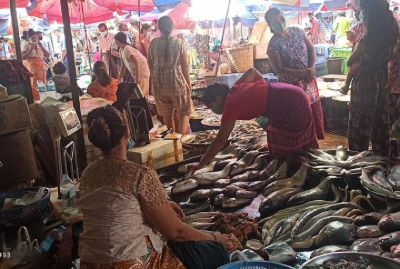
According to the data about food category released by Bayint Naung Wholesale Center in Yangon Region, prices of rice and cooking oil have increased in September this year, but onion price has not increased significantly.

“Previously, prices of rice from Pyapon and Mawgyun were Ks35,000 per bag. Now, the price is about Ks50,000 in Yangon. Pawhsan rice from Myaungmya and Pathein are priced at Ks43,000 to Ks53,000. Rice wholesalers are selling rice now. Their prices are much different from those at local markets,” said a resident in Lanmadaw Township, Yangon. 

On September 17, 2021, a bag of Shwebo Pawhsan rice was worth Ks48,000 to Ks54,000, that of Pathein Pawhsan rice Ks45,000 to Ks48,000 and that of Ehmahta rice Ks24,000 to Ks25,000.

Moreover, there have been changes in prices of seasonal vegetables such as cauliflower, cabbage, carrot, water cress, roselle and tomato. 

“The price of coriander is the highest. A very small bundle of it is about Ks200,” said a housewife.

Most of the commodities have increased in prices, said a grocery owner in Thingangyun Township. 

Another grocery owner from Tamway Township said the prices of imported goods particularly increased citing Myanmar kyat depreciation as the likely reason.

The steep depreciation of Myanmar currency is a great blow to national economy, causing public concern. Review and reconsideration are necessary because it impacts the ordinary public rather than businesses and entrepreneurs. 

Besides, the rich-poor gap must be considered in Myanmar whose minimum wage is the lowest in the ASEAN countries. Unbalance between income and expenditure is the greatest challenge.

Along with much reliance on import, the ongoing dollar and fuel price hikes will greatly impact the people, local businesspeople commented.

Generally, high inflation rate affect poor countries rather than rich countries. It is high time for Myanmar to adopt sound policies that can help reduce inflation rate and CPI. 

In this context, the adoption of such policies also needs to seek the root cause of inflation rate.

The high inflation rate Myanmar is seeing is cause for alarm and a threat to the public. Therefore, it is time for the government and the Central Bank of Myanmar to take action.

By Ni Lar/Eleven Media

Published : September 23, 2021
Duterte hits wealthy nations for ‘hoarding’ COVID-19 vaccines #SootinClaimon.Com

#SootinClaimon.Com : ขอบคุณแหล่งข้อมูล : หนังสือพิมพ์ The Nation.

https://www.nationthailand.com/international/40006542


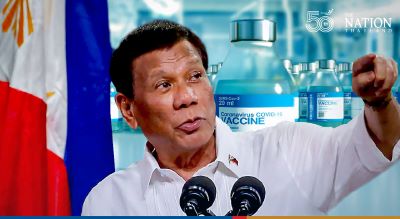
MANILA, Philippines — President Rodrigo Duterte slammed wealthy nations “hoarding” COVID-19 vaccines and said it is selfish to even talk about booster shots when poor nations are barely getting by.

“The picture is bleak. It is a man-made drought of vaccines ravaging the poor countries. Rich countries hoard life-saving vaccines while poor nations wait for trickles,” Duterte said in a pre-recorded speech for the 76th United Nations General Assembly on Wednesday.

“They now talk of booster shots, while developing countries consider half-doses just to get by. This is shocking beyond belief and must be condemned for what it is – a selfish act that can neither be justified rationally nor morally,” he added.

Further, Duterte stressed the need for fairness, equality and respect in “our engagement with one another.”

“Only with this can we correct the injustices that doom the downtrodden all over the world to a life of indignity and for the thousands during this pandemic—certain death,” he added.

So far, over 18.5 million persons have been fully vaccinated against COVID-19 in the Philippines.

This means 26.6 percent of the eligible population, or Filipinos 18 years old and above, have been fully vaccinated. The government’s goal is to vaccinate 70 percent of its target population by the end of 2021.

Duterte urged privileged countries to fully support the COVAX facility, as he cited the Philippines’ US$1-million dollar contribution to the global vaccine platform.

ADVERTISEMENT

“The plain fact is—this pandemic will not end unless the virus is defeated everywhere. Vaccines are key to achieving this,” he said.

“We strongly urge our privileged partners to fully support the COVAX facility and further strengthen other cooperation mechanisms. We need this to save more lives, break the cycle of variants and help ensure global economic recovery,” the President added.

The COVAX facility, co-led by the Gavi vaccine alliance, the World Health Organization and the Coalition for Epidemic Preparedness Innovations, is a global platform aiming to provide equitable access to COVID-19 vaccines, especially for low and middle-income countries.

As of Sept. 20, the Philippines has received 64.9 million doses of COVID-19 vaccines, according to data from the National Task Force Against COVID-19.

A portion of these doses were from the COVAX facility.

By: Christia Marie Ramos/INQUIRER.net

Published : September 23, 2021
Covid-19 delays economic recovery in Laos: ADB #SootinClaimon.Com

#SootinClaimon.Com : ขอบคุณแหล่งข้อมูล : หนังสือพิมพ์ The Nation.

https://www.nationthailand.com/international/40006541


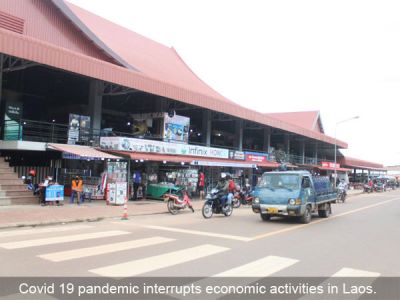
The unanticipated Covid-19 pandemic has delayed economic recovery in Laos, with consumption hit hard by the virus control measures implemented since April, according to a report from the Asian Development Bank (ADB) on Wednesday.

Laos’ economy is now projected to grow by 2.3 percent in 2021, compared with the 4.0 percent expansion forecast in April, the Asian Development Outlook (ADO) 2021 Update reported.

The pandemic has resulted in lockdowns in Vientiane and some provinces, disrupting economic activities, causing rising unemployment, and lowering consumer spending.

According to the report, the pandemic has pushed an additional 75 million to 80 million people in developing Asia into extreme poverty.

However, the ADB report stated that global recovery is expected to spur domestic growth in 2022, albeit lower than projected in ADB’s previous forecast.

“Policies to reduce the spread of the coronavirus have curbed output in manufacturing and hurt growth in the retail trade, transport, and tourism services,” said ADB Country Director for Laos, Sonomi Tanaka.

“Curtailed economic activity has increased joblessness and reduced household incomes, especially among women and those with lower education. A swift recovery from the pandemic depends on policies that support businesses and households to adapt to the ‘new normal’.”
With lower domestic demand, inflation stayed at 3.1 percent on average in the first seven months of this year, according to the ADB.

The kip has depreciated against foreign currencies, with the spread between official and parallel rates for the kip and US dollar exceeding 20 percent in July, reflecting a domestic shortage of currency following large external public debt payments.

Revenue collection is yet to return to pre-pandemic levels, with public finances remaining constrained.

The report says Laos’ economic recovery will be supported by the issuing of new mining licences and earnings from electricity exports, as well as the planned opening of the US$5.9-billion Laos-China railway in December, linking the capital of Laos with China.

ADVERTISEMENT

With a forecast of warmer temperatures and rainfall on-trend, rice and cash crop harvests are anticipated to be stable.

According to the ADB, commodity exports, notably food crops, electricity, and gold, remained strong in the first half of 2021, helping to offset continuing weakness in manufactured exports and payments for imports and investor dividends.

Challenges remain. New measures to contain Covid outbreaks and the pace of the vaccine rollout will impact the country’s economic prospects.

Measures to strengthen macroeconomic management and improve investor sentiment remain essential to economic recovery and household welfare, as reported in ADO 2021 in April.
Boosting development in agriculture and tourism is critical for Laos to alleviate poverty and advance its economic transformation.

Agriculture and tourism generate many job opportunities for local people and are an important source of foreign currency earnings.

Published : September 23, 2021

China’s GDP forecast to hover above 8 percent #SootinClaimon.Com

#SootinClaimon.Com : ขอบคุณแหล่งข้อมูล : หนังสือพิมพ์ The Nation.

https://www.nationthailand.com/international/40006540


China is expected to see 8.1 percent economic growth this year, as solid export performance and increased fiscal support in the second half will offset a more protracted recovery in household consumption, said economists at the Asian Development Bank.

The forecast made by the Manila-based development bank on Wednesday was unchanged from its projection in April. However, the ADB lowered the GDP growth forecast for developing Asia, which groups 46 developing economies in the Asia-Pacific region that are members of the bank, to 7.1 percent this year, down from the prediction of 7.3 percent in April.

“We would expect a more protracted recovery in household consumption (in China), while at the same time, this would be compensated by higher infrastructure investment and ongoing good export performance,” said Dominik Peschel, head of the economics unit for the ADB resident mission in China.

Economists at the bank expect household demand in China to further recover gradually, and this should also help the services sector.

“We think people will travel more and demand more services once the COVID situation is fully under control and the restrictions have been lifted,” Peschel said.

China’s recovery from the COVID-19 pandemic is in good shape, showing the strong resilience and vigorous dynamics of the economy, said Liu Qiao, dean of the Guanghua School of Management of Peking University.

The benchmark Shanghai Composite Index rose 0.4 percent to 3,628.49 points on Wednesday. Overall market liquidity in the A-share market is adequate to stimulate further economic growth, said Zhu Hong, investment director of Nuode Asset Management.

ADVERTISEMENT

Looking ahead, China’s economic fundamentals are still strong and its future growth will remain stable in 2022, said David Chao, global market strategist for the Asia-Pacific region (except Japan) at Invesco, who added that the country could further tap the potential of its monetary policy to support the economy.

The ADB’s economists also expect China’s monetary policy to ease marginally.

“Another cut in the reserve requirement ratio is possible in the second half of this year,” Peschel said. “At the same time, credit to the real estate sector and shadow bank financing will remain tightly regulated.”

Peschel said he is looking forward to more fiscal support because there is room to increase spending without incurring a high fiscal deficit as revenue recovers. New issues of local government special bonds will pick up and will support infrastructure investment in the second half of the year, and manufacturing investment should expand solidly in line with robust exports, the report said.

The Organization for Economic Cooperation and Development said in its interim economic outlook released on Tuesday that China’s real GDP is expected to grow 8.5 percent this year and 5.8 percent in 2022. Both figures are the same as the OECD’s projections in May.

Zhou Lanxu in Beijing and Shi Jing in Shanghai contributed to this story.

Published : September 23, 2021

Over 3 million Myanmar peoples fully vaccinated against Covid-19 #SootinClaimon.Com

#SootinClaimon.Com : ขอบคุณแหล่งข้อมูล : หนังสือพิมพ์ The Nation.

https://www.nationthailand.com/international/40006479


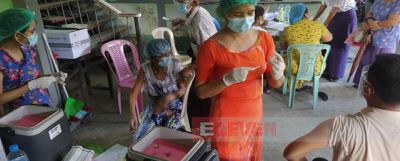
YANGON—–The Ministry of Heath reported that 3.471 million of Myanmar people already have been fully vaccinated against Covid-19 as being of September 18th.

The report also said that Myanmar had signed an agreement with China aiming to purchase 24 million of Sinopharm vaccines. If the Sinopharm Covid-19 jab will arrive in Myanmar, the government will be offering the Sinopharm vaccine to 12 million populations aged between 40 and 64. 

Yangon Region started Covid-19 vaccinations for the 55-64 age group on September 18th with the use of China-made Sinopharm vaccine.

Moreover, two million of Covid-19 vaccines being purchased from Russia will be arriving in Myanmar this month. 

Myanmar launches Covid-19 vaccination program since the beginning of January.

World Health Organization already allows China-made Sinopharm and Sinovac Covid-19 vaccines for use of emergency case. The WHO also recommended that above aged 18 people can get two kinds of Sinopharm and Sinovac Covid-19 vaccines.

In Myanmar, 36.9 million people who are above 18 years are being given COVID-9 jab. Up to September 18, there are 3.471 million people who completed full doses, and 1.624 million people who completed single dose of COVID-19 according to the Ministry. 

In addition to the priority groups, COVID-19 jabs will be given to ethnic armed forces and IDP camps according to the Ministry of Health.

In the past, priority was given to above 65 years of age and now it has extended to above 55 years, disable, ethnic armed forces, refugee camps and IDP camps and people with underlying diseases.

Published : September 22, 2021

HCM City to allow fully vaccinated tourists to revive travel industry #SootinClaimon.Com

#SootinClaimon.Com : ขอบคุณแหล่งข้อมูล : หนังสือพิมพ์ The Nation.

https://www.nationthailand.com/international/40006478


HCM CITY — People in HCM City will be allowed to travel if they have received a second dose of a COVID-19 vaccine at least two weeks earlier or were infected and recovered from the disease.

The city Steering Committee for COVID-19 Prevention and Control has listed this among safety requirements for tourists to allow tourism businesses to resume operations.

They apply to accommodation establishments, tour operators and outdoor tourist attractions though only in areas deemed to be at low risk of COVID infection.

The businesses need to meet all 10 safety criteria issued by authorities, and failure to meet even one will result in closure.

They must provide hand disinfection products and a convenient hand-washing place with clean water and soap for both staff and tourists.

All surfaces touched by people should be disinfected and cleaned at least once a day.

Tourist attractions with outdoor activities can only operate at 30 per cent capacity.

Staff coming into direct contact with tourists and outsiders (such as tour guides, ticket staff and drivers) must have had both vaccine shots at least two weeks prior to resumption of work or a certificate of recovery from COVID, and have to be tested once every three days.

Unvaccinated staff can only work online.

All employees and tourists must strictly follow the Ministry of Health’s 5K safety message: khẩu trang (face mask), khử khuẩn (disinfection), khoảng cách (distance), không tụ tập (no gathering), and khai báo y tế (health declaration).

ADVERTISEMENT

Tourists aged above 18 must furnish documents showing they were fully vaccinated at least two weeks before arrival or have recovered from COVID.

People below 18 need a negative COVID rapid test obtained within 48 hours before arrival. 

The Steering Committee for COVID-19 Prevention and Control will review and finalise the criteria based on the pandemic status.

The criteria are expected to help gradually revive the tourism market after a long hiatus due to the pandemic, starting with city tours before expanding to inter-provincial ones.

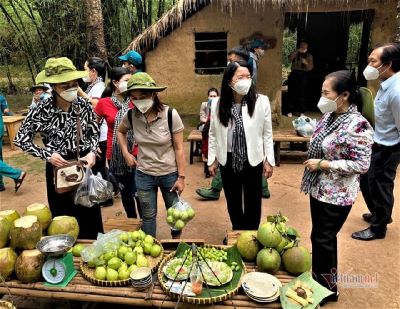
The city has recently trialled tours to Cần Giờ and Củ Chi districts. — VNS

Published : September 22, 2021

[Malaysia] 80 per cent vaccination target met ahead of target date #SootinClaimon.Com

#SootinClaimon.Com : ขอบคุณแหล่งข้อมูล : หนังสือพิมพ์ The Nation.

https://www.nationthailand.com/international/40006477


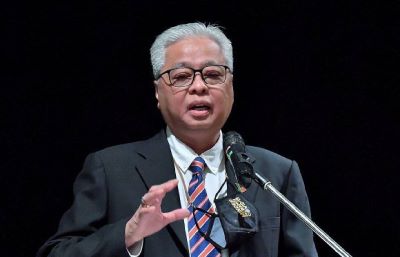
PUTRAJAYA: Malaysia has fully vaccinated 80% of the adult population in the country, ahead of its October target.

“Congratulations! Malaysia has achieved 80% full vaccination of the adult population,” Datuk Seri Ismail Sabri Yaakob declared on Twitter yesterday.

The Prime Minister also reminded the people to continue in their efforts in fighting Covid-19. According to the CovidNow website, 79.6% or 18,646,795 of the country’s adult population has been fully vaccinated as at noon, Sept 21.

It also said that 93.1% of the adult population or 22,097,565 individuals have received at least their first dose.

Under the National Covid-19 Immunisation Programme, the original target for Malaysia to reach the 80% fully vaccinated adult population was October.

Cumulatively, 40,664,674 doses have been administered.

Meanwhile, Health Minister Khairy Jamaluddin said the country’s next mission is to track the remaining 20% who have not been inoculated.

“At 1300hrs today (yesterday), Malaysia reached its target of fully vaccinating 80% of its adult population.

“Even though our initial target was to vaccinate 80% adults, now JKJAV (the Special Committee on Access Guarantee to Covid-19 Vaccine Supply) will strive to track the 20% who have yet or refuse to be vaccinated,” said Khairy in a retweet of Ismail Sabri’s post.

Khairy is the co-chairman of the Covid-19 Immunisation Task Force.

Published : September 22, 2021

Moon proposes formal end to Korean War for irreversible progress in denuclearization efforts #SootinClaimon.Com

#SootinClaimon.Com : ขอบคุณแหล่งข้อมูล : หนังสือพิมพ์ The Nation.

https://www.nationthailand.com/international/40006476


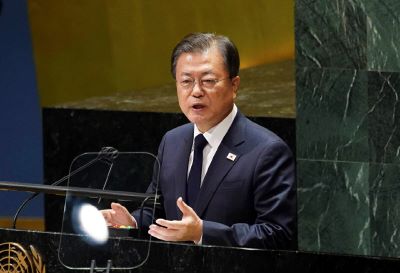
NEW YORK — South Korean President Moon Jae-in suggested once again in his United Nations speech Tuesday that the two Koreas and the United States, probably joined by China, declare a formal end to the 1950-53 Korean War.

“Ipropose that three parties of the two Koreas and the US, or four parties of the two Koreas, the US and China come together and declare that the War on the Korean Peninsula is over,” he said, addressing the 76th session of the UN General Assembly here.

“When the parties involved in the Korean War stand together and proclaim an end to the War, I believe we can make irreversible progress in denuclearization and usher in an era of complete peace.”

Declaring an end to the war will “mark a pivotal point of departure in creating a new order of ‘reconciliation and cooperation’ on the Korean Peninsula,” he added.

It marked his last speech at the annual UN session, with his single five-year tenure slated to finish in early May 2022.

His proposal for such a declaration was not new. He made the offer during his UN General Assembly speech in 2018 and last year.

But this year’s offer was delivered in a stronger tone and more specifically.

He asked the world to explore ways for cooperation.

“I expect that the international community, together with Korea, remain always ready and willing to reach out to North Korea in a cooperative spirit, he said.

He also called for “speedy resumption of dialogue” between the two Koreas and between the US and North Korea.

“I hope to see that the Korean Peninsula will prove the power of dialogue and cooperation in fostering peace,” Moon said, citing a set of inter-Korean agreements as well as the Pyongyang-Washington summit accord signed in Singapore in 2018.

This year, especially, marks the 30th anniversary of the UN approving the both Koreas as its members simultaneously, he noted.

Moon made no mention of North Korea’s recent test-launches of ballistic and cruise missiles.

He instead proposed the resumption of an inter-Korean program to get separated families reunited.

“Heeding the yearnings of the separated families, already advanced in age, we must lose no time in pressing ahead with their reunions,” he stated.

He added that the two Koreas can work together in regional platforms such as the Northeast Asia Cooperation for Health Security, which will make them respond more effectively to infectious diseases and natural disasters.

“As a community bound by common destiny on the Korean Peninsula, and as the members of the global community, the South and North, I hope, will come together to join forces,” Moon said.

Meanwhile, Moon announced South Korea’s bid to become a non-permanent member of the UN Security Council for the 2024-2025 term. South Korea had the seat for the 1996-1997 and 2013-2014 terms.

Moon described the recent situation in Afghanistan as a “stark reminder” of the UN’s crucial role in advancing peace and human rights and reaffirmed Seoul’s commitment to more contributions to the international community. In December, it is scheduled to host the UN ministerial meeting on peacekeeping.

ADVERTISEMENT

A task most urgent for the global community is delivering an inclusive recovery from the coronavirus crisis, he emphasized.

“Now a responsible member of the international community, (South) Korea is determined to step up its efforts to help countries prosper together and embrace one another,” he said. “It will take the lead in putting forward a vision for partnership and co-existence that can be shared by both developed and developing countries.” (Yonhap)

Published : September 22, 2021

President Xi addresses debate at UN General Assembly #SootinClaimon.Com

#SootinClaimon.Com : ขอบคุณแหล่งข้อมูล : หนังสือพิมพ์ The Nation.

https://www.nationthailand.com/international/40006474


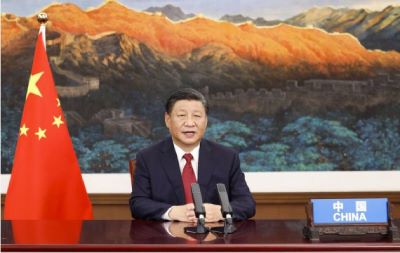
President Xi Jinping expounded on Chinas positions on a range of important issues when he addressed the General Debate of the 76th Session of the United Nations General Assembly via video link on Tuesday.

Here are some highlights:

– China will solemnly commemorate the 50th anniversary of the restoration of the lawful seat of the People’s Republic of China in the United Nations.

– It falls on each and every responsible statesman to answer the questions of the times and make a historical choice with confidence, courage and a sense of mission.

– We must beat COVID-19 and win this decisive fight crucial to the future of humanity.

– China will strive to provide a total of 2 billion doses of vaccines against COVID-19 to the world by the end of this year. 

– Facing the severe shocks of COVID-19, we need to work together to steer global development toward a new stage of balanced, coordinated and inclusive growth. To this end, I would like to propose a Global Development Initiative. 

– We need to foster global development partnerships that are more equal and balanced, forge greater synergy among multilateral development cooperation processes, and speed up the implementation of the UN 2030 Agenda for Sustainable Development.

– We should care about the special needs of developing countries.

– China will step up support for other developing countries in developing green and low-carbon energy, and will not build new coal-fired power projects abroad. 

– Democracy is not a special right reserved to an individual country, but a right for the people of all countries to enjoy.

– Military intervention from the outside and so-called democratic transformation entail nothing but harm.

– One country’s success does not have to mean another country’s failure, and the world is big enough to accommodate common development and progress of all countries.

ADVERTISEMENT

– We need to advocate peace, development, equity, justice, democracy and freedom, which are the common values of humanity, and reject the practice of forming small circles or zero-sum games.

– China has never and will never invade or bully others, or seek hegemony.

– We must improve global governance and practice true multilateralism.

– China will continue to bring the world new opportunities through its new development.

– The UN should serve as the central platform for countries to jointly safeguard universal security, share development achievements and chart the course for the future of the world.

– The United Nations should advance, in a balanced manner, work in all the three areas of security, development and human rights.

Published : September 22, 2021

[Cambodia] Chinese may be first in tourism revival: PM #SootinClaimon.Com

#SootinClaimon.Com : ขอบคุณแหล่งข้อมูล : หนังสือพิมพ์ The Nation.

https://www.nationthailand.com/international/40006428


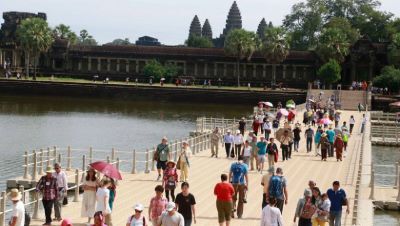
Cambodias tourism industry is gearing up to roll out the red carpet for Chinese travellers after Prime Minister Hun Sen on September 17 indicated that the Kingdom could soon throw open its doors to international holidaymakers vaccinated against Covid-19 – starting with guests from China.

Cambodia Chinese Tour Guide Association (CCTGA) president Tea Kileng told The Post on September 19 that CCTGA members were raring to return to work and welcome back international visitors, especially those hailing from China.

This brings tourism employers’ gruelling nearly two-year wait to a close, he enthused, noting that a sizeable portion have been forced to look into alternative ways to earn a living.

“We are ready to welcome [Chinese] tourists to Cambodia, although we do not think there will be many at this first stage,” he conceded.

He shared that virtually all CCTGA members have been vaccinated, noting that they had numbered 827 before Covid-19 struck.

Cambodia Association of Travel Agents president Chhay Sivlin said the private sector was eager for as early a reopening as possible to allow vaccinated foreign travellers to once more explore and experience the Kingdom.

And as Thailand and Vietnam trial partial, restricted border reopening schemes, Sivlin warns that Cambodia will lose prospective visitors to the neighbouring countries if plans to open are left on the backburner for too long.

Alluding to the fact that Cambodia has a better grip on the Covid-19 crisis than its neighbours, she stressed that countries with a lower risk of contracting the novel coronavirus and higher rates of inoculation against the pathogen should be first to reopen.

ADVERTISEMENT

“The high vaccination rate in Cambodia will be a pivotal consideration for Cambodia to reopen for foreign visitors that have taken the jab. We are looking forward to receiving them with open arms,” she said.

The Ministry of Tourism has repeatedly stated that the plan is to open Cambodia’s borders to fully-vaccinated international tourists in October-December.

Speaking at the launch of Covid-19 vaccination campaign for children aged 6-11 on September 17, the prime minister signalled that he was keen to allow all businesses to reopen soon if the Covid-19 situation shows significant signs of improvement.

“No one wants to see closures like this, our people want to go out. I first want to reopen the education sector, followed by the service industry … [including] domestic tourism – our people want to travel on Saturday, Sunday and public holidays,” he said, indicating that international tourism would follow soon after.

But he stopped short of abolishing quarantine requirements, at least in the near term, one of the options that had been on the table.

Instead, he hinted at a model reminiscent of “sandbox” schemes piloted in Thailand and Vietnam, with a seven-day quarantine period under controlled but less restrictive settings, during which inter-provincial travel is forbidden.

“It will not be an in-room quarantine,” he assured.

Citing strong Cambodia-China relations and the relatively low rate of daily new Covid-19 cases logged in the Kingdom, Hun Sen said Chinese tourists may be the first to be allowed in any reopening scheme.

“Now let’s all brainstorm a way towards reopening to [international] tourists. Do not forget that services lead the economies of developed countries,” he stressed, highlighting the lucrative nature of the tertiary sector, which he said eclipses industry and agriculture.

Cambodia booked just $1.023 billion in international tourism revenue last year, representing a 79.4 per cent nosedive from $4.919 billion in 2019 due to the sweeping effects of the global Covid-19 pandemic, the tourism ministry reported in April.

By Hin Pisei/The Phnom Penh Post

Published : September 21, 2021