[Laos] Covid-19 control measures extended #SootinClaimon.Com

#SootinClaimon.Com : ขอบคุณแหล่งข้อมูล : หนังสือพิมพ์ The Nation.

https://www.nationthailand.com/international/40006345

[Laos] Covid-19 control measures extended


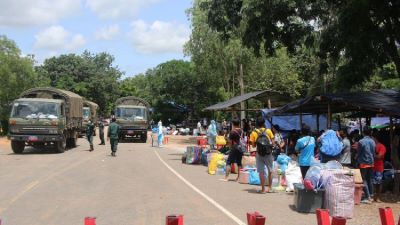
The Lao government has extended Covid-19 prevention and control measures until September 30, expanding a night-time travel ban to provinces hit by a community outbreak.
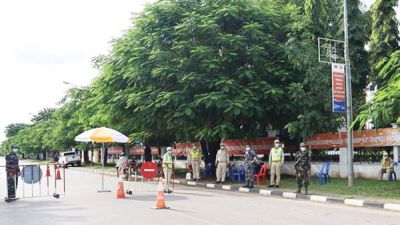
People are prohibited from travelling from 10 pm to 5 am in the capital of Vientiane and provinces affected by outbreaks.

In its last update, which is issued every 15 days, the travel ban was imposed only in the capital.

Addressing a media briefing on Wednesday, the Vice Chairperson of the National Taskforce for Covid-19 Prevention and Control, Mrs Thipphakone Chanthavongsa, said the community outbreak was increasingly spreading, requiring the tightening of the measures. 

The outbreak in the capital of Vientiane and the provinces of Champassak, Khammuan and Savannakhet has spread wider compare to other provinces.

“Although imported cases in these areas have declined, community outbreak is spreading wider,” Mrs Thipphakone said.

Authorities have blamed the worsening community outbreak on people continuing to travel to and from localities.

In light of this issue, some provinces recently imposed travel bans to and from communities affected by outbreaks.

In its latest update on the prevention and control measures, the government decided to expand the night-time travel ban to some provinces. Exceptions have been made for transporting goods and emergency trips, including the movement of rescue vehicles, fire trucks and ambulances.

Other measures that will remain in place under the extension include:

ADVERTISEMENT

– The closure of entertainment venues, cinemas, spa services, karaoke halls, drinking shops, internet cafés, snooker clubs, casinos and gaming shops across the country.

–  Massage services, beauty salons, night markets, food gardens and tourist sites in areas affected by community outbreaks are prohibited.

– Travel to and from red zones is not allowed, except in cases permitted by the relevant taskforce.

– All indoor and outdoor sports, including sport competitions and sporting activities in parks in red zones are prohibited.

– Any kind of party or gathering in any location is prohibited.

– School classes at all levels will be closed and entrance examinations to tertiary education institutions in Vientiane and the provinces affected by community outbreaks will be suspended. Exceptions will be made for dormitory schools if permission is granted by the provincial taskforce.

–  The issuance of visas for foreign visitors will remain suspended. Diplomats, staff of international organisations, experts and investors can apply for permission from the taskforce. In this regard, foreign ambassadors and heads of international organisations are permitted to undergo quarantine at their residence, while the rest are required to undergo quarantine at designated hotels.

– All border checkpoints will continue to be closed for ordinary citizens.

– Meetings and other activities, including traditional events and ritual involving more than 20 people, are prohibited. In essential cases, permission must be given by a Covid-19 taskforce before such events are organised.

However, the government is allowing some businesses to remain open as long as they strictly observe Covid-19 prevention and control measures.

These businesses include wholesale and retail shops, supermarkets, minimarts, and fresh markets.

Barber shops and beauty salons outside of red zones may open if service providers are fully vaccinated.

Restaurants and coffee shops in communities without outbreak may continue to open. Factories may continue to operate if employees are fully vaccinated and do not live in a red zone.

Meetings outside red zones can be convened.

Classes may be held at schools given permission by the taskforce of the provinces or the capital of Vientiane.

Published : September 19, 2021
[Vietnam] Govt signs decision to release $116mln to procure 20 million doses of Pfizer vaccines #SootinClaimon.Com

#SootinClaimon.Com : ขอบคุณแหล่งข้อมูล : หนังสือพิมพ์ The Nation.

https://www.nationthailand.com/international/40006344

[Vietnam] Govt signs decision to release $116mln to procure 20 million doses of Pfizer vaccines


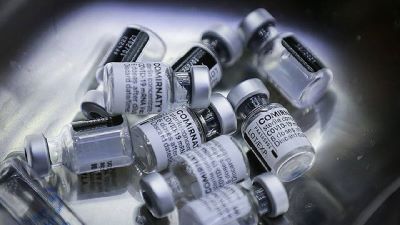
HÀ NỘI — Deputy Prime Minister Lê Minh Khái on behalf of the Prime Minister has approved funding to purchase nearly 20 million doses of COVID-19 vaccine BNT162 by Pfizer.

According to the decision, signed on September 17, more than VNĐ2.65 trillion (US$115.95 million) sourced from the national COVID-19 vaccine fund (which to date has about $378 million in donations) will be used to purchase nearly 20 million doses of the mRNA vaccine and activities related to the administration of the vaccine at the request of the Ministry of Health.

Relevant ministries are asked to take responsibility for the management, use and payment of the amount in an economic, effective, open and transparent manner. 

The health ministry is required to report the use of the sum to the Prime Minister.

Earlier, the Ministry of Health and Pfizer signed an amendment of the definitive supply agreement for an addition 20 million doses – reportedly reserved for children aged 12-18 years old in the country – on top of the original deal for 31 million doses. — VNS

Published : September 19, 2021

Almost 70% of Korea is at least partly vaccinated against COVID-19 — now what? #SootinClaimon.Com

#SootinClaimon.Com : ขอบคุณแหล่งข้อมูล : หนังสือพิมพ์ The Nation.

https://www.nationthailand.com/international/40006343

Almost 70% of Korea is at least partly vaccinated against COVID-19 — now what?


South Korea is close to reaching its goal of having 70 percent of the population vaccinated with a first dose of a COVID-19 vaccine before Saturday, when this year’s Chuseok holiday begins.

So what does this mean for the country’s pandemic response going forward?

Lee Ki-il, the Ministry of Health and Welfare’s deputy minister for health care policy, told Friday’s televised news briefing that Korea was close to hitting “a significant milestone in the vaccination campaign against COVID-19.”

Some 36 million people, or 70 percent of the Korean population, will have had at least one dose, more than six months since the very first batch of vaccines were put in arms back in February. As of Friday noon, the first-dose rate stood at 69 percent.

As the two rounds of Pfizer and Moderna vaccinations — which have been the most widely distributed kinds here since July — are completed within six weeks, the share of fully vaccinated people is expected to rise to 70 percent sometime in October.

The interval between the first and second AstraZeneca dose has been shortened to four weeks from eight weeks to boost the second-dose uptake, according to Thursday’s announcement. 

Moving up appointments for a second Pfizer or Moderna dose, which is scheduled at six weeks after the first, is now possible through the online signup systems for “leftover” vaccines.

In the same briefing, the ministry’s spokesperson Son Young-rae said at the current trajectory, Korea was “anticipated to get to 80 percent, possibly even higher, within October.”

Asked to explain what crossing the 70 percent mark for first doses would entail for COVID-19 control in the country, he said that one dose still provided strong protection against hospitalizations and deaths.

But one dose of a vaccine is known to be less effective in preventing infection with the delta variant, which accounted for 98 percent of all analyzed cases last week. Nearly 1 in 5 patients diagnosed between July and September here were first-dose recipients awaiting their second dose, according to official statistics Wednesday.

ADVERTISEMENT

Despite the vaccine progress, the fourth wave of the pandemic is not dying down, with 2,008 more cases confirmed in the latest 24-hour period until Thursday midnight. So far in September, an average of 1,796 cases were logged each day, slightly higher than the daily average seen in August of 1,712 cases.

Lee, of the Health Ministry, said this was due to the impact of delta, which is “about three times more contagious than the original virus found in Wuhan,” China, and the easing in social distancing restrictions earlier this month.

The limit on private gatherings has been eased to allow up to eight people to mingle past 6 p.m. — if at least four among the group are fully vaccinated. Throughout summer only two people could meet up at a time in the evening.

“Our projections indicate that Korea will be heading on a downward trend for case rates over the latter half of September,” he said.

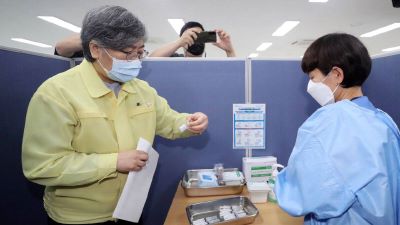
The ultimate goal is to raise the full vaccination coverage, Jeong Eun-kyeong, the Korea Disease Control and Prevention Agency’s commissioner, told reporters at a vaccination clinic near the agency’s headquarters in Cheongju, North Chungcheong Province.

“The most important task is to have more people fully immunized,” she said. “Do not to skip the second dose when the time comes.”

As of Friday’s count 41 percent in Korea were fully vaccinated.

By age, the full vaccination rate was highest in people who are in their 70s at 89 percent, followed by those in their 60s at 86 percent and those in their 80s and older at 79 percent. 

For people in their 50s, for whom vaccinations began in the last week of July, it was 40 percent. The cohort of 30-somethings, many of whom were offered the US-supplied Johnson & Johnson vaccines in June, came next at 31 percent. For 40-somethings and 20-somethings, it was a tie at 26 percent.

An even busier phase in the rollout is ahead in October, when vaccinations for minors under 18 and pregnant women are planned, as well as third “booster” vaccinations for older, vulnerable people.

Korea has delivered 11,785,221 doses over the first 17 days of September, of which 6,086,314 were first doses. The average number of doses given out per day this month is 368,288, up from August’s 285,969.

Published : September 19, 2021

Talent, funds continue to exit Hong Kong amid Covid-19 pandemic #SootinClaimon.Com

#SootinClaimon.Com : ขอบคุณแหล่งข้อมูล : หนังสือพิมพ์ The Nation.

https://www.nationthailand.com/international/40006342

Talent, funds continue to exit Hong Kong amid Covid-19 pandemic


HONG KONG – Moving to Hong Kong was a “no brainer” for Mr Bryan James when he was choosing where to relocate to from the United States three years ago.

Now that he has completed his master’s degree, the 40-year-old American, who declined to use his real name, decided to move back home as there “are better prospects”.

“The US economy is recovering, frankly, it’s booming right now. There’re tons of jobs,” said Mr James.

“Given the current geopolitical climate, it doesn’t really seem like a wise time to be doubling down on China.”

While the national security law implemented in June last year “made it very clear that leaving is the right decision”, it was the Covid-19 pandemic that made him reconsider his future.

“I don’t think that the zero-case approach is practical in the new environment, certainly not with the low vaccination rates that are here.

“I just don’t see a way back to normal here with respect to the Covid-19 restrictions.”

The pandemic also took a toll on a Singaporean expatriate in the legal profession who is leaving Hong Kong for good soon.

The 30-year-old, who wished to be anonymous, said the pandemic made it difficult for her to travel back and forth between Singapore and Hong Kong.

The territory has some of the toughest border controls and mandatory quarantines of up to 21 days.

“I feel safe about the low Covid-19 rate here and I’m glad we can resume a lot of activities in Hong Kong, and that must be partially attributable to the zero-Covid-19 policy and strict quarantine measures.

ADVERTISEMENT

“But for an expat, on a cost-benefit analysis, the inability to freely travel back and forth weighs heavily for me,” she said.

In the middle of last month, the Census and Statistics Department released data that showed nearly 90,000 people left Hong Kong in the past year – the highest since record-keeping started in 1961 – marking a 1.2 per cent decline in the population to 7.39 million people.

Between mid-2019 – when the often violent anti-government protests started – and the middle of last year, Hong Kong’s population slid 0.3 per cent.

The government has said that the population decline does not necessarily reflect emigration.

“Net movement, which includes the movement of Hong Kong residents into and out of Hong Kong for various purposes including work and study, is conceptually different from immigration and emigration.”

Still, the further drop coincided with the roll-out of the national security law. As at June, more than 100 individuals had been arrested under the law that criminalises subversion, secession, collusion with foreign powers and terrorism.

In January, Britain offered up to 5.4 million British National Overseas (BNO) visas to Hong Kong residents and their dependants, paving the way for citizenship. Late last month, the local media reported that 65,000 people had signed up for the scheme.

But the government soon after announced that a BNO passport would no longer be recognised as a valid travel document, or as proof of identity in Hong Kong, which meant it could not be used to support an application for early withdrawal of the mandatory savings.

Recent data from the Mandatory Provident Fund Authority showed that departing residents took out a record HK$6.567 billion (S$1.13 billion) from the pension fund in the 12 months till end-March, up 27 per cent from the previous year.

City University’s Economics and Finance Professor Law Ka Chung reportedly said that the emigration wave could cost Hong Kong more than HK$60 billion or 2.3 per cent of its gross domestic product every year.

The brain drain, particularly of the young and capable, could deepen the next two years, further affecting the economy.

And while the pandemic might have made it physically harder for people to relocate, it has not stemmed the hollowing out of funds from the Asian financial hub.

An asset manager familiar with both the Singapore and Hong Kong finance scenes said the Singapore tax incentive for family offices have been a huge hit.

“The process (to set up one) normally takes three to six weeks, but the backlog is taking 12 to 16 weeks to process these days,” he said.

The fund flows from Hong Kong to Singapore began in the first half of the year when the national security law was in full swing, the fund manager said, adding that “the flows ebbed a little these past months, but it’s still a positive inflow into Singapore”.

While the overall assets under management might have dropped as a result of the Chinese tech rout, he said “one can conclude that Chinese President Xi Jinping’s new directive would be a catalyst to move away from Hong Kong and China”.

Last month, Mr Xi gave a speech on tackling the huge wealth gap in the mainland, saying there needs to be wealth distribution and common prosperity to narrow the divide.

Published : September 19, 2021
Gamechanger #SootinClaimon.Com

#SootinClaimon.Com : ขอบคุณแหล่งข้อมูล : หนังสือพิมพ์ The Nation.

https://www.nationthailand.com/international/40006341

Gamechanger


The initial reaction from Beijing has been belligerent with the trilateral partnership being termed “irresponsible and indicative of a Cold War mentality”.

In a surprise announcement late on Wednesday, barely a week before the scheduled summit meet of Quad leaders in Washington DC, the US Administration announced a new trilateral security partnership for the Indo-Pacific between Australia, the United Kingdom and the USA (AUKUS). As part of the deal, Australia will acquire nuclear-powered submarines with help from the UK and the USA.

The trilateral grouping was formally launched by Australian Prime Minister Scott Morrison who joined US President Joe Biden at the White House via video-link. British Prime Minister Boris Johnson also participated. The working thesis of strategic experts is that Japan and India, which along with the USA and Australia comprise the Quad grouping, were in the loop on this development.

The betting money is on the assumption that both countries were sounded out and the initiative has Tokyo’s and New Delhi’s tacit support. Given that both countries have carefully calibrated positions vis-à-vis China because of the proximate geographical threat the world’s second-most powerful country poses to them including on outstanding territorial issues, it is perhaps a mature and sensible approach.

What is of significance is that the trilateral grouping is security focused, with treaty-like commitments, suggesting it is different from ~ but complementary to ~ arrangements such as the Quad. AUKUS leaders were also quick to underline this point. Mr Morrison said: “AUKUS will enhance Australia’s contribution to its other partnerships, including the Quad.”

ADVERTISEMENT

President Biden iterated Washington’s pivot away from West Asia and towards the Indo-Pacific with China definitely at the top of his mind: “We need to be able to address both the current strategic environment in the region, and how it may evolve, because the future of each of our nations depends on a free and open Indo-Pacific enduring and flourishing.

There’s no divide separating the interests of America’s Atlantic and Pacific partners. The USA will work with other partners ~ such as the Quad and Asean ~ in the region.” Mr Biden also singled out France for its growing presence in the region and role in strengthening security there, an attempt to soothe tempers in Paris which was close to clinching a deal with Australia to provide nuclear-powered submarines before Wednesday’s announcement. If the new partnership lives up to its potential, it could indeed be a gamechanger for the Indo-Pacific.

For, without directly placing countries such as Japan and India in China’s direct line of ire, it would effectively pose a maritime security challenge to China’s hitherto more or less unchallenged sway in the region. Nuclear-powered submarines for Australia, albeit armed with conventional and not nuclear warheads, along with India’s officially stated intent to acquire more nuclear-powered submarines and a robust projection of US, British, and French navies’ blue water capabilities in the Indo-Pacific will exponentially augment the maritime warfare abilities of the Quad-plus.

How China reacts will decide whether the region can look forward to a stable environment which fosters trade, commerce, and freedom of navigation or leads to yet more sabre-rattling. The initial reaction from Beijing has been belligerent with the trilateral partnership being termed “irresponsible and indicative of a Cold War mentality”.

Published : September 19, 2021
Tesla sees great potential for self-driving vehicles in China #SootinClaimon.Com

#SootinClaimon.Com : ขอบคุณแหล่งข้อมูล : หนังสือพิมพ์ The Nation.

https://www.nationthailand.com/international/40006307

Tesla sees great potential for self-driving vehicles in China


Tesla CEO Elon Musk said on Friday that he sees huge potential in China for fully autonomous vehicles, as Chinese customers want cars with better connected and more intelligent features.

He made the remarks in a video speech at the 2021 World New Energy Vehicle Congress held in Haikou, capital of South China’s Hainan province.

A J.D. Power survey shows that among consumers in China who intend to buy a new vehicle in the next six months, nearly one-fourth consider intelligent features as the most crucial factor.

The survey is based on responses from 11,266 respondents in January and June 2021.

In his video message, Musk said Chinese companies are the most competitive in the world, especially because some are very good at software, which is reshaping the auto industry from design and manufacturing to autonomous driving.

Autonomous driving is gaining momentum in the country. Startups including Momenta and Pony.ai and carmakers including SAIC have been working on autonomous vehicles solutions.

Nio expects its autonomous driving staff members to number around 800 by the end of this year from 500 in August.

Baidu’s Apollo is offering pilot robotaxi services in cities including Beijing, Shanghai as well as Changsha in Huanan province.

The Beijing-based technology company said it expects users of its robotaxi services to hit 3 million in two to three years across the country.

ADVERTISEMENT

Musk said data security will become even more important when vehicles are becoming smart and autonomous.

“Data security is not only the responsibility of any single company but also the cornerstone of the whole industry development.

“Tesla will work with national authorities in all countries to ensure data security of intelligent and connected vehicles,” he said.

In an earlier statement Tesla said data about its vehicles sold in China as well as their local production, sales, after-service and charging information are stored locally in the country.

Published : September 18, 2021

HCM City’s master plan to 2040 focuses on climate change adaptation #SootinClaimon.Com

#SootinClaimon.Com : ขอบคุณแหล่งข้อมูล : หนังสือพิมพ์ The Nation.

https://www.nationthailand.com/international/40006306

HCM City’s master plan to 2040 focuses on climate change adaptation


HCM CITY — HCM City’s master plan calls for the city to be developed into the nation’s largest economic hub for tourism, industrial services and high-tech agriculture by 2040, with a focus on climate change adaptation.

According to a Government decision on the master plan, the city is expected to have 13-14 million people by 2040 and 16 million by 2060. It plans to allocate 100,000-110,000ha of land for urbanisation by 2040. 

The city will remain the country’s economic and technological hub, focusing on innovation as part of the national urban development strategy.

Under the master plan, the city will develop a complete infrastructure linking the city with neighbouring provinces. The newly established Thủ Đức City will be developed into an innovative city model that will support the development of HCM City and the southern region.

The city will integrate urban development with transit-oriented development (TOD), including underground-based public transport solutions. 

The master plan requires the effective use of the city’s natural conditions and ecosystems to protect the environment and adapt to climate change.

The Government has asked the city People’s Committee to develop a plan to allocate capital and approve the total cost estimate, and work with the Ministry of Construction and others to make adjustments to the master plan.

The city has also set a goal by 2060 to become an international trade and financial centre in the Asia-Pacific region. The city will create an appealing working environment with a diverse culture, heritage conservation, and a scenic river system. 

ADVERTISEMENT

HCM City has faced serious flooding for more than 20 years. The previous city’s development plan, which was done before 1975, was designed for only two million people. It has failed to keep pace with the rising population.

New Thủ Đức City

According to a recently revised master plan submitted to the city government by the Department of Planning and Architecture, the new Thủ Đức City, formed by merging districts 2, 9 and Thủ Đức District, will have 18,930ha of land for urban construction by 2030, and 19,994ha by 2040.

It currently has a population of more than 1 million. The figure is expected to reach 1.5 million by 2030, and 1.9 to 2.2 million people by 2040 and 3 million by 2060. 

The new Thủ Đức City will implement a range of key projects to create an innovative ecosystem.

These include the Quang Trung Thủ Đức Software Park, the Advanced Technology and Innovation Centre (under the Department of Science and Technology), a High-Performance Computing Centre, a Creative Start-up Centre, an Advanced Research Institute (under the National University of HCM City), and a Centre for Research and Pharmaceutical Production Products, among others.

The new city will also focus on developing quality human resources. 

HCM City will offer special incentives to attract investment in these projects. 

As the city’s eastern gateway, the new Thủ Đức City will be developed into a centre of innovation to assist the growth of HCM City and seven key economic hubs in the South. — VNS 

Published : September 18, 2021

Flooding most serious climate change impact in Southeast Asia #SootinClaimon.Com

#SootinClaimon.Com : ขอบคุณแหล่งข้อมูล : หนังสือพิมพ์ The Nation.

https://www.nationthailand.com/international/40006305

Flooding most serious climate change impact in Southeast Asia


Flooding is the most serious climate change impact for some Southeast Asian nations, according to a climate survey on Southeast Asians’ attitudes and perceptions published on Thursday.

The survey conducted by the ISEAS-Yusof Ishak Institute gathered responses from Brunei Darussalam, Vietnam, the Philippines, Myanmar, Malaysia, Laos and Indonesia.

Respondents also suggested that businesses in Brunei, Cambodia, Laos, Malaysia, the Philippines and Vietnam should adopt green practices.

Eighty per cent of respondents from Vietnam and 77.9 per cent from the Philippines agreed that climate change is “a serious and immediate threat” to their countries, while 58 per cent from Brunei said the issue must be monitored.

The survey also revealed that Southeast Asians are only marginally optimistic about the potential economic benefits of adopting climate change measures and policies. In addition, almost half of respondents feel that the stimulus measures and COVID-19 spending by respective governments did not contribute to a green recovery.

ISEAS–Yusof Ishak Institute conducted the second iteration of its Southeast Asia Climate Outlook Survey from June 11 to August 2. Designed to gather insights on the perspectives of Southeast Asian citizens towards a variety of climate change issues, the online survey covered topics including climate change impacts, urban mitigation and adaptation, low-carbon transitions and partnership on climate action.

It drew a total of 610 responses from citizens of all ASEAN member states, and its findings provided a general sense of the prevailing views of Southeast Asian citizens towards climate change issues.

ADVERTISEMENT

About a third of respondents identified the European Union (EU) as having demonstrated global climate leadership, but a substantial portion felt that no country had fulfilled the role of climate leader.

However, when asked which country could potentially play a more proactive role in climate issues, respondents’ top three choices were the EU, Japan and the United States. At the regional level, ASEAN’s effectiveness in tackling climate action is in question as the majority of respondents question the regional organisation’s role in climate change.

Commenting on the results, Director and CEO of ISEAS– Yusof Ishak Institute Choi Shing Kwok said, “This is the second year we have conducted the survey. The results show that Southeast Asians believe that more should be done to address climate change issues, with a majority viewing climate change to be as much of a crisis as the COVID-19 pandemic.

“Survey respondents also believe that better and more innovative climate change policies can result in higher economic competitiveness, which will translate into strong support for governments and private companies pursuing climate change initiatives in the region.”

Coordinator of the Climate Change in Southeast Asia Programme at ISEAS–Yusof Ishak Institute Sharon Seah said the survey confirmed that climate change remained top priority for Southeast Asia despite the ongoing pandemic.

Respondents were unequivocal about the role of governments, businesses and individuals in reducing carbon emissions and the need to cut reliance on coal as soon as possible. This was accompanied by an emerging consensus on the potential of a renewable energy transition.

By Azlan Othman

Published : September 18, 2021

US, UK aid to Australias acquisition of nuclear submarines sheer act of nuclear proliferation: Chinese envoy #SootinClaimon.Com

#SootinClaimon.Com : ขอบคุณแหล่งข้อมูล : หนังสือพิมพ์ The Nation.

https://www.nationthailand.com/international/40006303

US, UK aid to Australias acquisition of nuclear submarines sheer act of nuclear proliferation: Chinese envoy


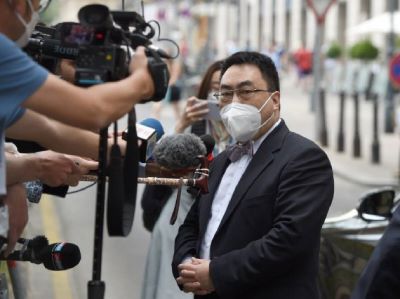
VIENNA — A Chinese diplomat on Thursday expressed Chinas “grave concern” at the pronounced assistance by the United States and the United Kingdom to Australias acquisition of nuclear-powered submarines.

Addressing the International Atomic Energy Agency’s (IAEA) Board of Governors meeting here, Wang Qun, Chinese envoy to the United Nations and other international organizations in Vienna, described the trilateral move as “sheer act of nuclear proliferation”.

The U.S. and the UK, both nuclear weapon states, and are state parties to the Treaty on the Non-Proliferation of Nuclear Weapons (NPT) which prevents proliferation of nuclear weapons and technologies, the core obligation for its state parties, Wang stated.

He stressed that such assistance “will apparently give rise to proliferation of nuclear materials and technologies by openly providing assistance to Australia”, a non-nuclear weapon state, in its acquisition and building of the nuclear-powered submarine.

“This contradicts the purpose, objective and core obligation of the NPT to the detriment of the international nuclear non-proliferation regime with the NPT at its core and on-going international efforts on this front,” Wang stated.

“While firmly safeguarding the validity of the international non-proliferation regime, China wishes to register its grave concern at the development,” Wang said.

“In the meantime, we believe that, it is the responsibility of IAEA, as an international organization mandated to implement NPT non-proliferation regime, to openly express its solemn position at the trilateral act by the U.S., the UK and Australia, which contradict their obligations under the NPT,” Wang stated.

Wang also stressed that, such an act of nuclear proliferation “will give rise to serious negative implications on the on-going international efforts to address the nuclear issue on the Korean Peninsula as well as the Iranian nuclear issue”.

ADVERTISEMENT

“Given the ongoing review and discussions of the Korean Peninsula and Iranian nuclear issues at the IAEA Board of Governors and the General Conference, it is essential that all members of the Board and international organizations including IAEA, make solemn position on the trilateral collaboration among the U.S., UK and Australia in helping Australia develop nuclear-powered submarine, in promotion of the full and effective implementation of international non-proliferation obligations under the NPT by all countries,” he stated.

Exporting highly sensitive nuclear submarine technology to Australia has shown that the U.S. and the UK have “once again adopted a double standard on nuclear export”, and “have taken nuclear export as a means of their geo-political game”, Wang pointed out.

Wang said that, in the meantime, it is “utterly irresponsible” for Australia, as a non-nuclear state and state party to the NPT and South Pacific Nuclear Free Zone Treaty, to import nuclear submarine technology with strategic militarily value.

“The international community, including neighboring countries, has every reason to question Australia’s sincerity in implementation of nuclear non-proliferation commitment under the relevant treaties,” he said.

The trilateral collaboration by the U.S., the UK and Australia “will seriously impair the regional peace and stability, escalate arms race, to the detriment of international peace and security,” Wang added.

Wang said that China will closely follow its development and reserve the right to make further responses. In the meantime, China will call on the international community to “work together to check such a dangerous act”.

In a joint statement issued on Wednesday, governments of the U.S., the UK and Australia announced the creation of a new trilateral security partnership called “AUKUS,” which will help “significantly deepen cooperation on a range of security and defense capabilities”.

The first initiative under AUKUS will be the delivery of a nuclear-powered submarine fleet for Australia, and the three countries will spend as many as 18 months discussing how this capability will be delivered, according to the statement.

Published : September 18, 2021

Over 50,000 Cambodian migrant workers get Covid jabs #SootinClaimon.Com

#SootinClaimon.Com : ขอบคุณแหล่งข้อมูล : หนังสือพิมพ์ The Nation.

https://www.nationthailand.com/international/40006302

Over 50,000 Cambodian migrant workers get Covid jabs


As of September 17, more than 50,000 Cambodian migrant workers in Thailand have been vaccinated against Covid-19, according to Prime Minister Hun Sen.

Speaking during the launch of Covid-19 vaccinations for children aged 6-11 at the Peace Palace in Phnom Penh on the morning of September 17, Hun Sen said the majority of returning migrant workers tested positive, most of them for the coronavirus Delta variant.

He noted that there are currently more than 7,000 workers remaining in quarantine sites on the Cambodian-Thai border.

The prime minister also touted the noticeable decline in Covid-19 cases in Phnom Penh and Kandal province following the government’s all-out vaccination campaign.

He said the capital and Kandal were previously the country’s main Covid-19 hotspots but have now brought the situation largely under control with significantly lower transmission cases and deaths. Thanks to vaccinations, he said, those who still contracted the virus despite having received the jabs only had mild symptoms.

“Once you have antibodies after vaccination, you won’t develop severe symptoms when you contract the virus. But don’t rely on vaccine alone, you need to continue adhering to health and administrative measures to protect yourself and the community,” he said.

By Mom Kunthear/The Phnom Pehn  Post

Published : September 18, 2021