Coronavirus subcommittee urges halving Tokyo crowds
Measures should be strengthened over the next two weeks to reduce the number of people moving around in Tokyo to half the level seen in the first two weeks of July, a government subcommittee has recommended.
Asubcommittee on measures to fight the novel coronavirus compiled a draft proposal Thursday aimed at curbing infections in six prefectures where a state of emergency has been declared, including Tokyo and Osaka.
The draft expressed strong concern that despite the declaration of a state of emergency, the number of people coming into contact with each other has not decreased and the medical system has become strained, leading to a situation where lives may be lost that could have been saved.
With regard to the medical system, the draft urged the government and prefectural authorities to recognize the importance of “disaster medical care” and gather necessary medical personnel from all over the country. The number of overnight care facilities with enhanced medical functions must be urgently increased, the draft said, to secure a system for monitoring the health of people recuperating at home.
In the event of an emergency call from an infected person at night, emergency transport services would contact the prefectural government and proceed with the transport, even without a decision from a public health center.
As a concrete measure to reduce the number of people moving around in Tokyo, the committee called for strong restrictions on people going to shopping malls and the food halls on the basement floor of department stores, in response to an outbreak of clusters in department stores in Tokyo and Osaka.
In contrast, the committee said that concert halls, theaters, movie theaters, parks, libraries and museums, where the audience does not speak, can be used after thorough countermeasures are taken against infection.
Shenhai Yihao platform aims to boost nations maritime resource development
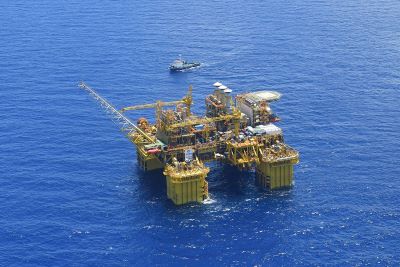
On June 25, Shenhai Yihao, the world’s first 100,000 ton deep-sea, semi-submersible oil production and storage platform, began drilling at Lingshui 17-2, an offshore gas field located 150 kilometers south of Hainan island in the South China Sea.
The domestically designed platform aims to tap into the gas reserve 1,500 meters beneath the ocean surface. This single rig can produce about 3 billion cubic meters of natural gas per year, roughly 1.6 percent of China’s total gas output last year, according to China National Offshore Oil Corporation.
Analysts hailed the launch of the 40-story behemoth as a new milestone in China’s maritime resource development. Shenhai Yihao, or Deep Sea No 1, is the culmination of nearly two decades of deep-sea engineering ingenuity and has made China one of the few nations able to extract oil and gas with only domestically made equipment.
In a speech addressing China’s top scientists and engineers in late May, President Xi Jinping urged the Chinese scientific community to break new ground in four strategic frontiers, one of which is the ocean.
Xi has been emphasizing the need to study the seas since 2013, when he uttered the famous phrase “Care about the ocean, understand the ocean, and strategically manage the ocean”.
Wang Pinxian, a prominent marine geologist and an academician of the Chinese Academy of Sciences, said deep-sea exploration can yield data on matters such as climate change and weather forecasts and can uncover resources including fossil fuels and minerals.
About three-fifths of Earth is covered by water with an average depth of over 2,000 meters, he said in a People’s Daily article last year.
“The deep sea is also the home of greenhouse gases and is a major factor in long-term climate change. If we wish to know more about Earth, we have to probe the ocean”, Wang said.
On the economic front, nearly 70 percent of newly discovered oil and gas reserves are buried more than a kilometer underwater, he added.
“The bottom of the sea holds a treasure trove of resources, but humanity has only barely tapped into them.”
Wang said deep-sea exploration typically involves three activities: diving, drilling and establishing networks.
The diving is done by manned and automated submersibles that can reach the seafloor. The drilling requires equipment that can penetrate the ocean basin. As for networks, underwater installations, cables and detectors are put in place to continuously monitor the sea floor.
China’s rapid rise in deep-sea exploration in recent years is due to it making major breakthroughs in all three fields, Wang said.
Going deep
Last year, China’s new manned submersible Fendouzhe, or Striver, set a national diving record of 10,909 meters in the Challenger Deep, the deepest known point of Earth’s oceans.
With this feat, China became one of few countries to achieve “full ocean depth capability”, meaning it can carry out routine manned expeditions at any ocean depth, said Yang Rui, the scientist responsible for creating the vehicle’s cabin and a researcher at the Institute of Metal Research of the Chinese Academy of Sciences.
Since the mid 20th century, scientists around the world have been going on ocean drilling expeditions from the Arctic to Antarctica. In 1998, China joined the Ocean Drilling Program, an international organization dedicated to conducting basic research on the ocean floor.
Although a latecomer to the field, China successfully extracted 5,500 meters of ocean basin sediment core samples from the South China Sea in 1999, the first samples of their kind from the region, according to the National Institute for South China Sea Studies.
The samples revealed key insights on the climate and geological formation of the region over 30 million years ago. Now, China is an active member of the International Ocean Discovery Program, the largest international scientific ocean drilling initiative with over 20 member countries.
In June, the Institute of Oceanology of the CAS reported it had successfully deployed an underwater experimental platform on the ocean floor capable of storing and studying deep-sea creatures.
Wang Minxiao, an associate researcher at the institute, said when the creatures are brought to the surface, the sudden change in pressure, temperature and chemical environment will often alter their physiological characteristics. So a lab on the ocean floor allows for a more accurate examination of deep-sea life under extreme conditions.
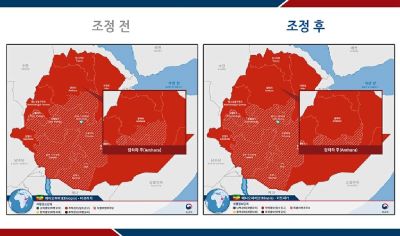
S. Korea raises travel alert for Ethiopias South Wollo, East Gojjam
South Korea on Thursday raised the travel alert for two areas in Ethiopias northern Amhara region amid escalating armed clashes in the country, recommending citizens cancel or delay plans to travel there.
The foreign ministry issued the Level 3 travel alert for South Wollo and East Gojjam — the second highest in the four-tier system, which asks citizens to cancel their travel plans and those already in the areas to move to safe places.
The ministry said that it would continue to review whether there is a need to readjust the travel alert level as it carefully watches the security conditions in northern Ethiopia. (Yonhap)
Samsung’s new foldables more practical, but lack “wow”
Company bets on foldable market growth as challenges mount from Xiaomi and rivals.
Samsung Electronics is making a big bet on the fate of its smartphone business by replenishing its flagship lineup for the remaining 2021 with cheaper, more durable foldable smartphones.
The Korean tech giant presented the Galaxy Z Fold3 and Galaxy Z Flip3, two models of the Galaxy Watch4 and the wireless ear buds Galaxy Buds2, in a Galaxy Unpacked show that was live-streamed from Seoul at 11 p.m. Wednesday.
The third-generation models of the inwardly folding Z Fold and clamshell-type Z Flip phone series had no “wow” factor in terms of folding technology or user experience.
The difference mainly comes down to durability.
Reflecting requests of current foldable phone users, Samsung focused its efforts on reinforcing the hardware of the gadgets.
So for the first time, the Samsung Galaxy Z Fold3 and Z Flip3 both are water-resistant.
Both have IPX8 water resistance, so users no longer have to worry about getting caught in the rain.
Samsung also adopted an upgraded Gorilla Glass Victus that is 50 percent stronger than the previous models for the main screens, and a new protective film that is 80 percent more durable.
For the hinge, the company used armor aluminum that makes the folding system 10 percent stronger.
And while keeping the size of the main screens of the Galaxy Z Fold3 and Z Flip3 unchanged — 7.6 inches for the Fold and 6.7 inches for the Flip — Samsung slightly reduced the total weights and thicknesses of the latest editions to make them look slimmer and sleeker.
The weight of Galaxy Z Fold3 was cut by 11 grams to 271 grams compared to Z Fold2.
What can be touted as the most innovative technology this time is the under display camera on the Galaxy Z Fold3, which allows a “true full-screen experience.”
Known as UDC technology, Samsung added extra pixels on the top of the camera hole on the main screen of Galaxy Z Fold3, which means the screen doesn’t have a gap in the corner where the front-facing camera is, unlike existing phones with notch or hole-punch designs.
ADVERTISEMENTx
Samsung’s new foldables more practical, but lack
To offset its decision to discontinue the beloved Galaxy Note series from this year, the company added the stylus S Pen to Galaxy Z Fold3.
It introduced a new S Pen edition for the foldable, which is smaller and lighter than the S Pen that came with the Note series.
“With Galaxy Z Fold3 and Z Flip3, Samsung is once again redefining the possibilities with foldable smartphones that empower users with the flexibility and versatility needed for today’s fast-paced world,” said Roh Tae-moon, president and head of mobile communications at Samsung.
“As a pioneer and industry leader in the foldable category, we’re proud to build on our legacy of innovation with the Z Fold3 and Z Flip3. These devices equip consumers with technologies that unlock new ways to maximize and enjoy every moment with an ecosystem built on openness and innovation.”
Samsung is shifting a significant portion of its efforts from the current flagship Galaxy S series to the foldable lineup. According to market forecasts, the foldable phone market is expected to grow 113 percent from 0.7 million units in 2019 to 117 million in 2025.
Samsung, the world’s largest smartphone vender, is beginning to see signs of its market grip weakening, in the face of cheaper Chinese phones.
The firm seemed to fare well even in the shrinking smartphone market until last year, but in June, Xiaomi edged Samsung as the world’s No. 1 phone brand in terms of shipments, taking 17.1 percent of the global market, according to Counterpoint Research.
Samsung’s strategy to counter Xiaomi and other rivals is to offer higher-quality phones at more affordable prices.
The company also reduced the prices of both Galaxy Z devices, it said.
The Z Fold3 is available at $1,799.99, and Galaxy Z Flip3 $999.99, starting from Aug. 27 in select markets, including the US, Europe and Korea.
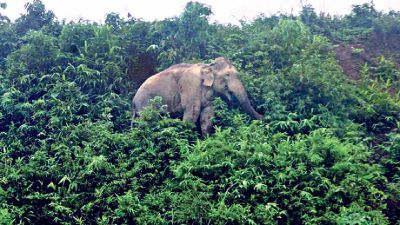
Wild elephants face serious threats to their survival in the country, thanks to frequent killings of the giant mammal and shrinking of their habitat in the absence of concrete protective measures by the government.
Since 2001, a total of 120 elephants have died for various reasons, including direct shootings, shows data of Wildlife and Nature Conservation Department of Chattogram Circle.
ADVERTISEMENTx
At least 12 elephants have been killed in shootings by poachers in the last five years — all in the forests under Cox’s Bazar and Chattogram (South).
To conserve the fast-depleting elephant population, the government formulated a 10-year “Bangladesh Elephant Conservation Action Plan (BECAP)” in 2018, outlining six objectives.
Sadly, none of the objectives of BECAP, prepared by the Forest Department, have been implemented yet, intensifying the threats to elephants.
The objectives include reducing human-elephant conflict and poaching, protecting their habitats, and conducting research and improving knowledge in elephant conservation.
According to the 2016 elephant census conducted by the International Union for Conservation of Nature (IUCN), there were 248 Asian elephants living in Cox’s Bazar, Chittagong Hill Tracts, and in other regions including Sherpur. The survey covered 12 identified corridors through which the herd of elephants move from one forest to another in search of food.
ADVERTISEMENT
The Asian elephant, the species found in Bangladesh, has been included as endangered on the IUCN Red List, as apart from poaching, construction of settlements in forests and hills seriously threaten their existence.
“The extent of elephant deaths we see each year is really alarming,” eminent wildlife biologist Monirul H Khan told The Daily Star, calling for immediate action.
According to Forest Department data, the country lost 90 elephants by direct killing between 1995 and 2016.
Despite the frequent killings, the Forest Department could not bring any offenders to book since the government formulated the Wildlife Conservation Act-2012.
As per the law, elephant killing is a non-bailable offence and offenders are jailed for a minimum of one year and up to a maximum of seven years. Besides, a fine of Tk 1 lakh at the lowest and Tk 10 lakh maximum is imposed for the offence.
ADVERTISEMENT
CORRIDORS THREATENED
In the last three years, three out of the 12 recognised corridors in Cox’s Bazar were blocked due to large structures and the Rohingya camps.
Another corridor — Chunati-Fasiakhali-Medakocchopia — will be jeopardised due to the under-construction railway lines linking Dohazari of Chattogram to Ghumdum in Cox’s Bazar, apprehends forest department officials.
The rest of the corridors are threatened by encroachment, setting up of brick kilns, gardening, and fish farming inside reserve forests.
Monirul, also a professor of zoology at Jahangirnagar University, said, “We must regenerate the habitats of elephants. The corridors must be secured for their risk-free movement.
“We have to apply the conservation law to ensure exemplary punishment of the offenders. We also have to raise awareness among mass people.”
Raquibul Amin, country director of IUCN, said elephants will not get safe habitation and their population will not be protected until the government includes it in the national priority list.
“Out of the 12 corridors, three have already been blocked. There are corridors which fall on private land. So, we need to make sure the elephants are safe when they move through private land,” he said.
Md Amir Hosain Chowdhury, chief conservator of forest, said they were conducting a feasibility study to identify more corridors being used by elephants.
“The elephant response teams formed under the BECAP worked well in the beginning but due to the fund crisis, we could not incentivise them. I have directed forest officials concerned to find ways to ensure coordination,” he told this newspaper.
Amir said they have taken up a project to mitigate human-elephant conflict by reinstating the corridors.
“Some of the corridors are on private land. So, we will write to the government to acquire the private land so that elephant movements are secured.”
He added, “The project will cover three regions. If the ministry approves the project, we will be able to implement many of the action plans outlined in BECAP.”
Vietnam administers record 1.4m doses of COVID-19 vaccine on Tuesday, total crosses 11m mark
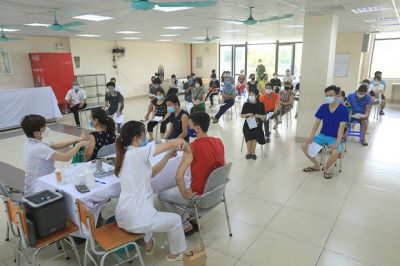
HÀ NỘI — Việt Nam administered over 1.4 million doses of COVID-19 vaccine on Tuesday, the highest one-day increase since the country starts its vaccination campaign on March 8, according to the health ministrys report on Wednesday.
The total doses given in Việt Nam reached 11,341,864 and the number of fully vaccinated people crossed the mark of 1 million (1,036,102 specifically) as of Tuesday.
The country has currently received some 18.7 million doses of vaccines of various types, mostly AstraZeneca and Moderna.
Up to 2.5 million doses of Moderna along with 250,000 doses of Sinopharm, donated by the US and Chinese governments respectively, would remain in storage until second doses are given.
The health ministry said that 72 per cent of the received doses have been distributed.
According to the National Government Portal on COVID-19 Vaccination, HCM City, the epicentre of the fourth wave of infections and which has been allocated the most vaccines, is leading the race with over 3.5 million doses administered. The southern city has given at least one jab to 51.66 per cent of the official population over 18 years old (around 7 million).
Hà Nội, also the recipient of a large number of vaccines, has administered about 1.5 million doses, with 25.41 per cent of the population getting at least one vaccine shot.
Health Minister Nguyễn Thanh Long, during a meeting on Tuesday, has asked for close collaboration between the medical sector and the army as vaccines will come in great quantity especially in the final months of the year, including vaccines like Pfizer which need to be preserved in strict conditions.
The Health Ministry issued a document on scheduled allocation of vaccines for localities between now and year’s end to ensure vaccination progress.
Deputy Minister of Information and Communications Nguyễn Huy Dũng said more than 2.4 million people downloaded the electronic health record app.
Minister Long suggested the Ministry of Information and Communications soon launch a campaign to call on residents to download the app, fill in health declarations, register for vaccination, as well as issue vaccination certificates via software.
All 63 cities and provinces have so far updated data on the software.
Helicopters to transport COVID-19 vaccines
Military forces are ready to be on duty around the clock and mobilise helicopters to transport COVID-19 vaccines to islands and disadvantaged areas, according to Deputy Minister of Defence Vũ Hải Sản.
Minister of Health Nguyễn Thanh Long said receiving, transporting and storing vaccines have been implemented resolutely by the Ministry of Health in collaboration with the army. They established eight cold storages facilities to keep and preserve vaccines with a total capacity of 60 million doses.
He added that 63 trucks with cold storage capabilities have been delivered to the army to transport vaccines to localities as scheduled.
Deputy minister Sản added that the Ministry of Defence has mobilised and trained staff and prepared vehicles to be ready to transport vaccines when needed.
The ministry would have transportation plans right after more doses of vaccines arrive in Việt Nam, he said. — VNS
China maps out new blueprint on building of rule of law govt
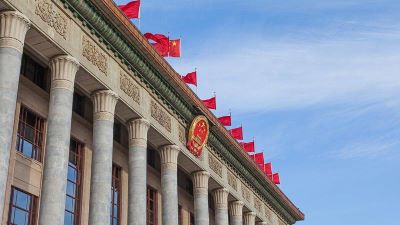
BEIJING – China has set out an outline on promoting the building of a rule of law government from 2021 to 2025, on the basis of the successful implementation of a previous 5-year plan.
The document, jointly issued by the Central Committee of the Communist Party of China and the State Council, was made public Wednesday.
Identifying promoting the rule of law for government as the main task in advancing law-based governance in all areas, the document highlighted the guiding philosophies, principles, and overall goals of this cause for the next five years.
It urges improving government functions in various fields, including economic adjustment, market supervision, social management, public service, and environmental protection.
The government’s function in formulating development strategies, plans, policies and standards should strengthen. More legal and institutional efforts should curb unjust interventions in micro-economic activities, says the document.
It also specifies that the lists of power and duties of departments of the State Council should be formulated by the first half of 2022. The negative list for market access should also be strictly implemented.
On improving the law-based business environment, the plan calls for concrete efforts to prevent the administrative power from eliminating or stifling competition. It pledges improvements in the system of pre-establishment national treatment plus a negative list for foreign investment. It also promises strengthened enforcement of anti-monopoly and anti-unfair competition laws.
It stresses pushing forward legislative activities and studies in key areas such as national security, bio-security, infectious diseases prevention and control, and digital economy.
The document calls for improved emergency response systems, including monitoring and early warning, information reporting, rapid response, restoration and investigation and assessment of relevant events.
Primary-level organizations and the public should be guided and regulated in participating in emergency response to enhance the capability of handling emergencies in accordance with the law, the outline says. It added that drills in this regard should be conducted regularly.
Systems of exercising oversight over administrative powers should improve, it says. It calls for greater transparency in government.
Also, it urges governments at all levels to promote law-based administration with the help of digital technologies, including the internet, big data, and artificial intelligence.
The document stresses strengthening the Party’s leadership for the building of a government based on the rule of law.
U.S. gives Myanmar $50 mln in aid as humanitarian crisis worsens
WASHINGTON, Aug 10 (Reuters) – The United States said on Tuesday it was giving Myanmar more than $50 million in aid as surging COVID-19 infections worsened a humanitarian crisis in the Southeast Asian country already reeling after generals overthrew a democratically elected government earlier this year.
It is also providing Thailand with $5 million to cope with novel coronavirus, U.S. State Department spokesman Ned Price said in a statement. U.S. Ambassador to the United Nations, Linda Thomas-Greenfield, announced the funding during a visit to Thailand, he added.
In Myanmar, the U.S. funding will aid “those forced to flee violence and persecution” as well as help groups provide health care services in addition to essentials such as food, shelter and water, the State Department said.
“This funding comes at a critical point of rising humanitarian needs and will help mitigate the impacts of COVID-19 on the lives of the people of both Thailand and Burma,” Price said. “In the wake of the February 1 coup, people from Burma continue to flee their homes due to ongoing violence.”
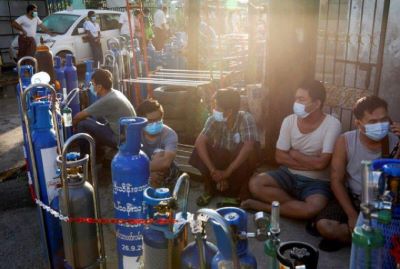
Six months after the army seized power, Myanmar’s economy has collapsed and its health system has buckled as coronavirus cases surged.
COVID-19 cases peaked in Myanmar last month, with 3,824 new daily infections now reported on average, Reuters data show. It has seen 333,127 infections and 12,014 coronavirus-related deaths since the pandemic began.
In Thailand, the average number of new COVID-19 infections are at their peak, with more than 20,400 cases reported daily, according to Reuters data.
Myanmar’s rapidly declining manufacturing industry amid Covid-19 case surges
A lot of manufacturing businesses and factories in Myanmar have closed and are closing with their workers having no chance but to return home, following surges in Covid-19 cases in the third wave. Output, new orders, purchases, employment, and postproduction inventories all fell at quicker rates, with declines that were amongst the quickest in the series history, according to Manufacturing Purchasing Manager’s Index released for July 2021.
Manufacturing companies are still confident that their production capacity will improve in next 12 months, but the degree of optimism remained much lower than the long-run series average.
Turning to prices, raw material shortages and unfavorable exchange rate movements against the dollar contributed to a solid rate of input price inflation, standing higher than the long-run average.
The IHS Markit Myanmar Manufacturing PMI sank to 33.5 in July 2021 from 41.5 in June, pointing to the 11th straight month of contraction. The decline has reached record level over the three months, the steepest since December 2015.
“These days, inflation and pressures have decreased significantly up from the highest in May and June. Yet, great burden such as costs still remain in July. Kyat-dollar exchange rate fluctuation and cash shortages are biggest dangers,” said Shreeya Patel, economic expert from HIS Markit.
Those who answered the questions in the survey said factory closures had stemmed from surging Covid-19 cases, adding that production capacity has started to decline speedily since March.
“Myanmar’s production sector has declined rapidly since the second half of 2021. The Covid-19 case surges in the third wave and the political situation had plunged the industry into a steep decline just as it regained some footholds. Factory closures and return of workers to their homes are these factors. So, the companies are hesitant about increasing their balance accounts,” she added.
Local demand remained weak at the start of the quarter and new orders have declined significantly. Most of those participating in the poll mainly described a combination of business and factory closures and cash shortages.
Purchases have also seen a steep decline due to decreasing output, orders and prices and factory closures.
Studying prices, raw material shortages and unfavorable exchange rate movements against the dollar contributed to a solid rate of input price inflation.
Despite a significant decrease in inflation when compared to May and June, it stands higher than the long-run average.
Anyhow, Covid-19 spread has further shaken Myanmar’s economy. As infection rate gains speed, the crisis has been hardest hit, Shreeya Patel commented.
But, a greater vaccination effort could help prevent future diseases and create a shield for the healthcare system, she added.
The Covid-19 pandemic has plunged global economy into a biggest downturn after the recession in the 1930s.
Millions of people from across the world are out of work, government budgets in limbo, financial market almost collapsed and trade flow and investment greatly impacted.
The pandemic will cause consequences, a threat to global development and wealth.
Under such circumstances, Myanmar already facing economic challenges has seen other new challenges.
Myanmar’s economy is set to shrink by 18 percent this fiscal year (October 2020 to September 2021) amid the ongoing situations including poverty and a rapid surge in the third wave of COVID-19 in the country, the World Bank said in its latest report on July 26.
The political crisis and Covid-19 case surges in the third wave have significantly impacted the country’s weakening economy.
“Around 1 million jobs could be lost, and many other workers will experience a decline in their incomes due to reduced hours or wages,” the bank said. The share of Myanmar’s population living in poverty is likely to more than double by the beginning of 2022, compared to levels before COVID-19 hit, the bank said.
“The loss of jobs and income and heightened health and food security risks are compounding the welfare challenges faced by the poorest and most vulnerable, including those that were already hit hardest by the pandemic last year,” said Mariam Sherman, World Bank country director for Myanmar, Cambodia and Laos.
The current third wave of COVID-19 is posing an immediate threat to lives, livelihoods and the economy, especially given the lack of capacity in the public health system to adequately respond, the World Bank warned.
While testing rates remain limited, extremely high positivity rates among those who have been tested indicate widespread community transmission. Combined with the impact of containment measures and precautionary behavior, this will amplify Myanmar’s economic challenges, the bank said.
Significant impacts on investment, human capital accumulation and the environment for doing business are likely to impair prospects for economic growth over the longer term,” it said.
“While there were initial signs of stabilization in some areas in May and June, with mobility improving and logistics disruptions easing, overall economic activity remained very weak and a further contraction is likely from July onwards due to the recent surge in COVID-19 cases,” said Kim Alan Edwards, World Bank Senior Economist for Myanmar.
Over the longer term, recent events have the potential to jeopardize much of the development progress that has been made over the past decade. Significant impacts on investment, human capital accumulation, and the environment for doing business are likely to impair prospects for economic growth over the longer term, the bank pointed out.
“It’s been long since we had to struggle with our businesses. The mechanism is still operating but very slowly. With the Covid outbreak, some businesses have stopped operation. Some are still running. As a businessman said, it was OK with everything when sitting idle, but we made losses only when we started a business. It’s better if we’d rather sit,” said a local entrepreneur.
An industrialist said the majority of entrepreneurs had expressed doubts if they could overcome the ongoing social, health, education and service impacts, especially economic ones, caused by the year-long Covid-19 crisis.
“The situation is worsening. Myanmar has already been hard hit by the second wave. We are considering how long we can survive. When it comes to a health issue, we have to close factories and businesses that harm our economy. Like in other countries, our government can work with polices, we can reduce our impact,” said an industrialist.
It is high time policy makers in Myanmar adopted suitable and correct policies to remedy the economy.
There are still many challenges to the effort to revive the affected private businesses, the backbone of the country’s economy.
[South Korea] No sign of letup in COVID-19 spread while vaccine plans are disrupted
Daily new cases could exceed 2,000 in coming days, expert says.
The latest wave of COVID-19 infections is showing no signs of slowing down, with 1,540 new cases announced Tuesday — 1,476 locally transmitted and 64 imported from overseas.
The figure, which covers the 24 hours ending Monday at midnight, pushes the total number of cases to date to 213,987, according to the Korea Disease Control and Prevention Agency. South Korea added nine more deaths, raising the death toll to 2,134.
The virus seemed to have slowed down a little in the capital region — Seoul, Incheon and Gyeonggi Province — thanks to strict social distancing rules, but the situation has become more severe in other parts of the country.
Seoul, Incheon and Gyeonggi Province accounted for 55.4 percent of newly reported locally transmitted cases. Gyeonggi Province reported 398 new cases, followed by Seoul with 356 cases and Incheon with 64.
At the same time, Busan reported 105 new cases and neighboring South Gyeongsang Province added 110 new cases, showing that the virus situation is serious in other regions as well.
Korea is enforcing Level 4 social distancing rules in the Greater Seoul area until Aug. 22, and most of the other regions within the country are under Level 3 rules. Authorities have additionally banned gatherings of three or more people after 6 p.m. and maintained 10 p.m. curfews for most businesses.
While the restrictions are to remain in place for less than two weeks, experts have said the worst is yet to come, as variants of COVID-19 will continue to spread, especially when combined with increased travel in the summer vacation season.
Dr. Chun Eun-mi, a respiratory disease specialist at Ewha Womans University Medical Center, warned that the number of daily cases could exceed 2,000 in the coming days, as the delta variant is expected to have spread quickly among vacationers.
“If the number doesn’t reach 2,000, I would say that’s because the number of tests was low,” Chun said in a radio interview Tuesday. “Once we go past that 2,000 mark, the number could rise at an even faster rate, and now that the holiday season is over, those who return home will now undergo testing.”
Authorities on Tuesday strongly encouraged people returning from vacation to take COVID-19 tests as needed, adding that they would install more testing centers at highway rest stops.
Older adults are likely to be at risk of infection with the delta variant, Chun added, because time has passed since they received their vaccinations in February and March and their immunity may have waned.
Korea is carrying out a national vaccination program, and people aged between 18 and 49 could begin booking appointments Monday night.
Around 21.37 million people, or 41.6 percent of Korea’s 51.3 million people, have received their first COVID-19 shots, and close to 7.9 million people have been fully vaccinated since the country started the nationwide program in late February.
But the country faces a vaccine supply shortage after Moderna failed to provide the planned doses of COVID-19 vaccines for this month.
Moderna will be sending less than half of the roughly 9 million doses of the vaccine it promised to ship this month, and in response Korea has lengthened the interval between the first and second doses of two messenger RNA COVID-19 vaccines to six weeks instead of the recommended three to four weeks.
The country also approved plans Tuesday for the first-ever Phase 3 clinical trial for a locally developed COVID-19 vaccine. SK Bioscience plans to run a comparative clinical study on its COVID-19 vaccine candidate and that made by AstraZeneca, and intends to start recruiting participants in the coming weeks.


 Samsung’s new foldables more practical, but lack