Singapore raises 2021 growth forecast to 6-7% amid rising Covid-19 vaccination rates #SootinClaimon.Com

#SootinClaimon.Com : ขอบคุณแหล่งข้อมูล : หนังสือพิมพ์ The Nation.

https://www.nationthailand.com/international/40004504

Singapore raises 2021 growth forecast to 6-7% amid rising Covid-19 vaccination rates


SINGAPORE – Singapore upgraded its economic growth forecast range for 2021 to 6 per cent to 7 per cent, in view of the better-than-expected performance of its economy in the first half of the year and as Covid-19 vaccination rates gain pace in key advanced economies and at home.
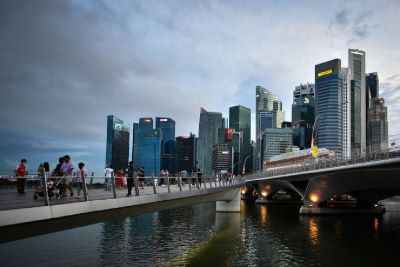
The new prediction compares with the previous official growth forecast of 4 per cent to 6 per cent, made first in November last year and maintained in May.

The Ministry of Trade and Industry (MTI), which announced the forecast, said that while Covid-19 cases continue to be on the rise globally due to the spread of the highly transmissible Delta variant, vaccination rates have also picked up in key advanced economies such as the United States and the eurozone, which have in turn allowed them to press on with their reopening plans.

In contrast, regional economies, which have been slow to vaccinate their populations, have had to reimpose restriction measures to curb a resurgence in infections. This has in turn dampened their growth outlook, MTI said.

“On balance, the recovery in external demand for Singapore for the rest of the year remains largely on track,” the ministry noted.

Enterprise Singapore, meanwhile, hiked its 2021 trade forecasts amid the Republic’s better-than-expected  second-quarter growth – particularly in electronics, specialised machinery and petrochemicals – and higher expected oil prices that support the oil trade.

Non-oil domestic exports (Nodx) are now tipped to grow 7 per cent to 8 per cent, up from the 1 per cent to 3 per cent previously forecast. Total merchandise trade is predicted to increase by 13 per cent to 14 per cent, much higher than the  previous forecast of 5 per cent to 7 per cent growth.

This comes after Nodx grew by 10.1 per cent in the second quarter, following the 9.7 per cent rise in the first quarter, driven by increases in both electronics and non-electronics shipments. 

At home, Singapore began easing some of its Covid-19-related curbs this week, allowing dining in to resume and raising group sizes to five for those who have been fully vaccinated. Work-from-home rules are expected to ease next week.

The easing of restrictions come as Singapore announced that 70 per cent of its population has been fully vaccinated, and 79 per cent have received at least one dose.

Mr Gabriel Lim, Permanent Secretary for Trade and Industry, said the progressive easing of domestic and border restrictions amid rising vaccination rates in Singapore will also help to support the recovery of consumer-facing sectors and alleviate labour shortages in sectors that are reliant on migrant workers, such as construction and marine engineering.

However, the recovery will remain uneven, with tourism- and aviation-related sectors projected to recover more slowly than previously expected.

“Even though domestic border restrictions may be eased towards the later part of the year, demand is not expected to return quickly as travel restrictions globally are likely to be lifted cautiously,” said Mr Lim.

The bulk of growth will still come from outward-oriented sectors such as manufacturing and wholesale trade, he said.

“In particular, the manufacturing sector is projected to see robust growth due to strong semiconductor and semiconductor equipment demand.”

Some help will be forthcoming from consumer-facing sectors such as retail, and food and beverage service, as the restrictions are eased over the course of the year, and as consumer sentiments improve in tandem with better labour market conditions.

Mr Kenny Tan, director at the Ministry of Manpower, said unemployment rates are likely to improve through the rest of the year, although employment recovery may remain uneven across sectors with mismatches in the labour market.

Mr Edward Robinson, the Monetary Authority of Singapore’s (MAS) deputy managing director and chief economist, said the central bank’s current policy stance of zero appreciation of the trade-weighted Singapore dollar remains appropriate.

However, MAS will continue to watch global developments, he added.

MAS will review the policy stance in October.

According to MTI, the Singapore economy expanded by 14.7 per cent on a year-on-year basis in the second quarter of this year, faster than the 1.5 per cent growth in the previous quarter.

For the first half of the year, growth came at a better-than-expected 7.7 per cent.

The strong second-quarter growth was largely due to the low base in the same period last year when gross domestic product (GDP) fell by 13.3 per cent as a result of the circuit breaker measures implemented from April 7 to June 1, 2020, as well as the sharp fall in external demand amid the Covid-19 pandemic.

In absolute terms, GDP remained 0.6 per cent below its pre-pandemic level in the second quarter of 2019, MTI said.

On a quarter-on-quarter seasonally adjusted basis, the Singapore economy contracted by 1.8 per cent in the second quarter of this year a reversal from the 3.3 per cent expansion in the first quarter.

Growth in the quarter was led by the manufacturing sector, which expanded by 17.7 per cent year on year, extending the 11.4 per cent growth recorded in the previous quarter.

The construction sector grew by 106.2 per cent year on year, a sharp turnaround from the 23.2 per cent contraction in the previous quarter, as both public and private sector construction works expanded.

ADVERTISEMENTx

The wholesale trade sector expanded by 2.9 per cent year on year, easing from the 3.5 per cent growth in the previous quarter.

The retail trade sector expanded by 50.7 per cent year on year, accelerating from the 1.6 per cent growth in the previous quarter. The transportation & storage sector grew by 20.9 per cent year on year, a turnaround from the 15.8 per cent contraction in the preceding quarter.

The information and communications sector expanded by 9.6 per cent year on year, a step up from the 6.8 per cent growth in the previous quarter.

The real estate sector grew 25.8 per cent year on year, a turnaround from the 3.1 per cent contraction in the previous quarter. The accommodation sector expanded by 13.2 per cent year on year, easing from the 16.3 per cent growth in the preceding quarter.

The food and beverage service sector expanded by 36.7 per cent year on year, a turnaround from the 9.2 per cent contraction in the previous quarter.

Published : August 11, 2021

By : Ovais Subhani/The Straits Times/ANN

China boosts efforts to hit green targets #SootinClaimon.Com

#SootinClaimon.Com : ขอบคุณแหล่งข้อมูล : หนังสือพิมพ์ The Nation.

https://www.nationthailand.com/international/40004503

China boosts efforts to hit green targets


Political Bureau urges faster rollout of action plan as climate change worsens.

China is bolstering efforts to tackle climate change by proactively promoting low-carbon projects as drivers of economic growth and reining in sectors with high energy consumption and emissions, experts said.

In late July, a meeting of the Political Bureau of the Communist Party of China Central Committee had carbon emissions high on the agenda amid the worsening climate crisis that has seen extreme weather conditions across the globe.

The world’s leading scientists warned in the Intergovernmental Panel on Climate Change report on Monday that climate change is “widespread, rapid, and intensifying”.

The human-caused climate crisis is “unequivocal” and temperatures are likely to rise by more than 1.5 C over the next 20 years, triggering more extreme weather events worldwide, the report said. Many of the climate changes observed are unprecedented in thousands, if not hundreds of thousands of years, the report added.

The Political Bureau meeting urged a faster rollout of a national action plan to fulfill the country’s target of reaching a carbon dioxide emissions peak before 2030, according to a statement released after the meeting.

Presided over by President Xi Jinping, who is also general secretary of the CPC Central Committee, the meeting set out key economic policy directions for the second half of this year.

Aside from adhering to coordinated national action, the meeting stressed the need to correct “movement-style” carbon reduction measures, as the country forges ahead to fulfill its climate targets, which also include achieving carbon neutrality before 2060.

Fu Sha, program director of Energy Foundation China’s Low Carbon Economic Growth Program, said many regions have included the development of hydrogen energy in their 14th Five-Year Plan (2021-25).

An example of a “movement-style” measure is undertaking a hydrogen energy program without a proper assessment of local conditions. However, for the country to achieve its carbon neutrality target doesn’t necessarily mean that each region needs to go carbon neutral, she said.

Some regions may not only be able to achieve negative emissions but can help make up the gap in other areas. Other regions may not have the suitable conditions to develop new energy industries.

“Each region should proceed with carbon reduction in light of local conditions,” she stressed, adding that different measures should be rolled out in a coordinated way.

The meeting called for the county’s climate targets to proceed in a “build first, destroy later” manner. “The development of projects with high energy consumption and emissions will be rigorously curbed,” the release said.

Fu said China will prioritize low-carbon, clean industries in new projects to promote the construction of infrastructure for renewable energies.

As low-carbon projects start to dominate new developments, the country will target its “historical stockpile” of high-emission projects for further carbon reduction, she said.

In addition to infrastructure, policy and institutional mechanisms need to be put in place to create a favorable situation for the development of new energy and low-carbon industries.

Lin Boqiang, head of the China Institute for Studies in Energy Pol-icy at Xiamen University, said only after the country builds the infrastructure for new energy, can it undertake large-scale reduction of the consumption of coal and other fossil fuels, which make up about 85 percent of China’s energy mix.

The “build first, destroy later “strategy will help ensure energy security and a stable power supply to sustain economic growth, he said.

Steel, cement and the nonferrous metal industries are the main sectors with high energy consumption and emissions, and consume 21.5 percent of the country’s power.

Efforts to contain these industries will reduce China’s dependence on energy for economic development, and set the country on the path of high-quality development.

New projects with high energy consumption and emissions have been major targets of environmental inspections.

The inspection teams are usually headed by retired ministry-level officials, and these teams report to a central leading group headed by Vice-Premier Han Zheng.

Published : August 11, 2021

By : HOU LIQIANG/China Daily/ANN

Survey: Residents more upbeat about HKs economic prospects #SootinClaimon.Com

#SootinClaimon.Com : ขอบคุณแหล่งข้อมูล : หนังสือพิมพ์ The Nation.

https://www.nationthailand.com/international/40004502

Survey: Residents more upbeat about HKs economic prospects


HONG KONG – Hong Kong residents are becoming more optimistic about the city’s economic development prospects, a survey conducted by the Democratic Alliance for the Betterment and Progress of Hong Kong showed.

Telephone interviews with 1,158 Hong Kong residents aged over 18 in June revealed that 28 percent of the respondents expressed optimism, up 8 percentage points from the survey conducted at the end of last year. Around 35 percent of respondents are pessimistic about the city’s economic future, down 19 percentage points from the last survey.

“The survey result shows that Hong Kong residents are still prudent and conservative toward future economic forecasts for Hong Kong,” said Holden Chow Ho-ding, vice-chairman of the DAB. “We urge the government to formulate medium- and long-term strategies for fostering Hong Kong’s long-term economic development.”

The government needs to design measures to diversify the city’s economic structure by promoting the innovation and technology industry and attracting more Chinese mainland and overseas technology talent expatriates to come to Hong Kong, Chow added.

Published : August 11, 2021

By : Oswald Chan/China Daily/ANN

SCG sale revenue in Viet Nam surges 41% in Q2 #SootinClaimon.Com

#SootinClaimon.Com : ขอบคุณแหล่งข้อมูล : หนังสือพิมพ์ The Nation.

https://www.nationthailand.com/international/40004453

SCG sale revenue in Viet Nam surges 41% in Q2


SCG, a cement and building material conglomerate in the ASEAN region, has announced a revenue from sales in Viet Nam at over VND9.85 trillion (US$428 million) in the second quarter of this year, up 41 per cent year-on-year.

The positive performance was mainly attributable to new partnership of packaging (SOVI, GOPAK), chemicals (TPC, Chemtech) and export sales from Thailand to Viet Nam, according to the company.

In the second quarter, SCG’s total assets in Viet Nam surpassed VND122 trillion, an increase of 37 per cent year-on-year, mainly from the chemicals business.

Amid the pandemic, SCG has actively contributed to the National Vaccination Fund while its subsidiaries have supported nationwide pandemic curbing attempts.

In southern provinces, SCGP – the packaging business of SCG – has donated 2,000 field hospital beds to alleviate frontline pressure in HCM City, Dong Nai, Binh Duong and Long An, while Long Son Petrochemicals has contributed VND10 billion for vaccination purposes.

In the central region, Song Gianh Cement has supported the vaccination programme in Quang Binh. Meanwhile, in the northern areas, SCGP has accompanied Hai Duong and Bac Giang in the fight against the pandemic.

Overall, SCG revenue from sales for the first half of 2021 rose 27 per cent year-on-year to over US$8.29 billion thanks to higher chemical prices. Profit for the period saw a yearly hike of 99 per cent to over $1 billion on the back of improved chemical product spreads and equity income. — VNS

Published : August 10, 2021

By : Viet Nam News/ANN

Economic impact of Tokyo Games estimated at ¥1.6 tril. #SootinClaimon.Com

#SootinClaimon.Com : ขอบคุณแหล่งข้อมูล : หนังสือพิมพ์ The Nation.

https://www.nationthailand.com/international/40004452

Economic impact of Tokyo Games estimated at ¥1.6 tril.


Japan’s economy stands to gain a ¥1.6771 trillion windfall from the Tokyo Olympic and Paralympic Games, according to Takahide Kiuchi, executive economist at Nomura Research Institute, Ltd.

The estimate included factors such as revenue from the sale of officially licensed merchandise and the construction of temporary facilities for the Games.

The figure was down from an earlier estimate of ¥1.8108 trillion, when the decision was made to bar overseas spectators. The absence of domestic spectators at most venues may have resulted in a ¥133.7 billion hit, including lost ticket and accommodation revenue.

The government has declared a state of emergency, in effect until August 31, for six prefectures including Tokyo and Osaka. Since the fourth state of emergency went into effect in Tokyo on July 12, there have been fewer opportunities to dine out and stay at hotels or other lodgings. Kiuchi projects that the economic loss from the states of emergency could total ¥2.19 trillion.

Yet the strong performance of Japanese athletes at the Tokyo Games stands poised to stimulate new consumption.

Katsuhiro Miyamoto, professor emeritus at Kansai University, has said that if major department stores and supermarkets were to hold post-Olympics sales in honor of the athletes for about a week or so in August, they could cash-in on a gold rush of their own, to the tune of ¥143.6 billion.

Published : August 10, 2021

By : The Japan News/ANN

Philippines now at ‘high risk’ status as COVID-19 cases rise #SootinClaimon.Com

#SootinClaimon.Com : ขอบคุณแหล่งข้อมูล : หนังสือพิมพ์ The Nation.

https://www.nationthailand.com/international/40004451

Philippines now at ‘high risk’ status as COVID-19 cases rise


MANILA, Philippines — The Philippines is now officially at “high risk” of being overwhelmed with COVID-19 cases, according to the Department of Health (DOH).

It reported on Monday that daily cases grew by 25.61 percent nationwide to 8,829 last week from 7,029 in the last week of July.

The DOH uses the average daily attack rate (Adar), or the number of people infected for every 100,000 population, as an indicator of the COVID-19 risk in an area. Classified as “low risk” are those with an average of less than one infection for every 100,000 population. Those with between one and seven infections are classified as “moderate risk,” while areas are considered “high risk” when the cases reach more than seven.

The DOH in particular flagged Metro Manila and six other regions as high risk due to the increase in cases, high average daily attack rate or the number of people infected out of every 100,000 population, and high hospital occupancy. The high-risk regions were the Cordillera, Ilocos, Cagayan Valley, Calabarzon (Cavite, Laguna, Batangas, Rizal and Quezon), Central Visayas and Northern Mindanao.

Five other regions were at moderate risk: Western Visayas, Central Luzon, Soccsksargen (South Cotabato, Cotabato, Sultan Kudarat, Sarangani and General Santos), Eastern Visayas and Bicol.

The DOH said last week it was already assuming a community transmission of the highly infectious Delta variant of COVID-19 and to date, such cases have been detected in 26 provinces and 29 cities—including all of Metro Manila—covering 13 of the country’s 17 regions, according to the DOH.

In Metro Manila, the cities of Malabon and Navotas and the town of Pateros were officially at critical risk while the rest were at moderate or high risk.

As of Sunday, the regions with the most number of new daily reported cases were Metro Manila with 2,325; Calabarzon, 1,562; Central Visayas, 1,412; Central Luzon, 1,025; and Northern Mindanao, 635.

The areas with the most number of new cases were Cebu with 664; Cavite, 556; Laguna, 528; Bulacan, 487; and Quezon City, 431.

More deaths

An average of 48 people died every day due to COVID-19 during the first week of August. The average daily deaths were 75 in July and 98 in June.

On Monday, 8,900 more cases were reported but the DOH admitted this was small due to lower laboratory reports last Saturday. The country’s total cases now stood at 1,667,714.

The DOH reported a 21.3-percent positivity rate, the highest since April 10, out of the 50,096 people who were tested for the virus on Aug. 7.

The DOH said COVID-19 cases were also increasing not only among children but across all age groups, with the highest increase observed among the 30-38 age group.

The lowest increase in cases was seen among those 80 years old and above.

Health Undersecretary Maria Rosario Vergeire also clarified that the DOH and its vaccine advisers were still studying whether to start vaccinating those 12 to 17 years old.

Alarming situation

In Cebu City, the local government has transformed a portion of the Cebu City Sports Center into an isolation facility.

However, the Mega Stay-in Center, which has 150 beds, could not start operations yet since the city government still had to hire nurses and doctors.

In a post on Facebook, acting Mayor Michael Rama said the city was offering a monthly salary of P70,000 for doctors and P45,000 for nurses.

In a press briefing on Monday, Cebu City Councilor Joel Garganera said: “We are not in good shape. It’s alarming. I have talked with some of the infectious disease experts and they told me that we are just about to start the third surge.”

Local government data showed that from June to August, Cebu City recorded 7,576 new cases. The city also recorded 151 deaths, at least 50 of which happened in the first eight days of August.

Garganera said the occupancy rate of the 15 hospitals in Cebu City stood at 69.5 percent.

He said 296 beds were not being used due to a shortage of health workers.

Lack of frontliners

At the Southern Philippines Medical Center (SPMC), the primary COVID-19 referral hospital in the Davao region, authorities were trying to add more beds and nurses.

Dr. Ricardo Audan, SPMC acting chief, said the hospital had increased its COVID-19 ward capacity to 519 beds and would be opening 44 more beds this month.

As of Sunday, only four of SPMC’s 92 beds in the intensive care unit (ICU) remained unoccupied although there were still 87 unused ICU beds in the region, most of them at Davao Regional Medical Center in Tagum City.

Audan also said he was confident that their new job order rates would attract more applicants. “From the P711 per day salary, we have increased this to P1,190 per day, with all the benefits and their hazard pay,” he said.

Audan said some of the hospital’s health-care workers had resigned because they were already being called by their employers abroad.

Hospitals and other health facilities in the provinces of Ilocos Norte, Pampanga and Tarlac were likewise overwhelmed by COVID-19 patients.

The Mariano Marcos Memorial Hospital and Medical Center in Batac City was facing a shortage of workers as 159 of its personnel had been infected with the coronavirus.

As of Monday, the COVID-19 bed capacity of the hospital reached 97 percent, said Dr. Rheuel Bobis, COVID-19 focal person of the DOH in the Ilocos region.

The entire Ilocos region has a 63.6-percent health-care utilization rate (HCUR) out of its 79 facilities as of Monday.

The provincial hospital of Ilocos Norte in Laoag City and the Laoag City General Hospital reached a critical risk capacity and were also running out of beds. Both hospitals were already over 90 percent occupied.

In Dagupan City, at least 89 of 120 beds dedicated to COVID-19 patients at the Region 1 Medical Center were already occupied, said Dr. Roland Mejia, chief of the hospital. But he said 70 beds would be added to the city’s capacity in September.

In Central Luzon, 59 percent of COVID beds in its 173 health facilities had already been occupied.

In Pampanga alone, only 20 percent of the beds dedicated to COVID patients in 47 hospitals and medical facilities in the province remained vacant.

In Tarlac, only eight of 37 ICU beds in the province remained available.

In the Cordillera, where two Delta variant cases have been recorded, the regional HCUR was classified as low risk as of Aug. 8.

—WITH REPORTS FROM INQUIRER BUREAUS

Published : August 10, 2021

By : Dona Z. Pazzibugan/Philippine Daily Inquirer/ANN

Samsung’s Lee to walk free from jail on Friday #SootinClaimon.Com

#SootinClaimon.Com : ขอบคุณแหล่งข้อมูล : หนังสือพิมพ์ The Nation.

https://www.nationthailand.com/international/40004450

Samsung’s Lee to walk free from jail on Friday


The Ministry of Justice on Monday decided to parole Samsung Electronics Vice Chairman Lee Jae-yong, who is in prison for bribery.

He will walk free from the Seoul Detention Center in a southern suburb of Seoul at 10 a.m. on Friday, about 11 months before the end of his sentence.

The de facto chief of Samsung Group is among over 800 prisoners to be released the same day as part of South Korea’s long tradition of clemency for Liberation Day, which falls on Aug. 15.

“The committee decided to grant parole for Samsung Vice Chairman Lee Jae-yong, considering the current conditions in the global business environment,” Justice Minister Park Beom-kye said in a press conference, which was streamed live online.

“The committee also said to have considered various factors including public sentiment and his conduct in prison,” he said adding he has also gave his endorsement on Lee’s release.

The ministry didn’t mention whether Lee would be given a special exemption that would enable him to formally return to the management of Samsung Electronics. Under current laws, anyone convicted of crimes such as embezzlement are not allowed to work there for five years following the completion of the sentence.

Lee has spent 18 months of his 2 1/2-year term behind bars. The ministry lowered the minimum time an inmate has to serve to become eligible for parole, from 80 percent to 60 percent, starting this month.

He was imprisoned in January this year after the top court sentenced him to serve 2 1/2 years, saying he was responsible for paying a total of 8.6 billion won ($7.51 million) in bribes to former President Park Geun-hye.

By that time, Lee had already spent nearly a year behind bars during investigations and lower court trials.

Monday’s decision came amid mounting calls for leniency for Lee, with many citing the need for strong leadership at Samsung Electronics so it can navigate through a global chip war. In the beginning, appeals were directed to President Moon Jae-in, asking him to grant a pardon.

Releasing Lee on parole appears to be a face-saving way for President Moon to heed the calls.

Moon, a liberal who took charge after two consecutive conservative administrations, has openly criticized the country’s record of leniency toward law-breaking chaebol chiefs.

The late Samsung Chairman Lee Kun-hee, father of the current leader, was convicted twice, only to be pardoned both times.

Moon’s stance on what he called “economic justice,” however, seems to have changed in recent months, as major economies engage in a power struggle over key supply chains, including those for semiconductors.

The local business community strongly called for a pardon for the Samsung chief, citing Samsung’s significance to the national economy. Korea should step up and help the local chip industry — namely, Samsung Electronics — to stay ahead of the game, they said.

The heads of five economic organizations submitted a joint petition to the presidential office in April. In June, leaders of the country’s top four conglomerates met with President Moon at a luncheon meeting to request a pardon for Lee Jae-yong.

Without him at the helm, Samsung, the world’s biggest memory provider and one that aspires to be No. 1 in the processor chip market by 2030, appears to have slowed down its decision-making process for new investments and business plans.

Regarding the delays in Samsung’s plan to build a new foundry plant in the United States, Samsung officials said, “Such a huge investment decision cannot be decided without the leader’s determination.”

Published : August 10, 2021

By : Song Su-hyun/The Korea Herald/ANN

IPCC report indicates Singapore could take bigger hits from climate change #SootinClaimon.Com

#SootinClaimon.Com : ขอบคุณแหล่งข้อมูล : หนังสือพิมพ์ The Nation.

https://www.nationthailand.com/international/40004449

IPCC report indicates Singapore could take bigger hits from climate change


SINGAPORE – The harshest impacts of climate change have been elsewhere so far, but a report published on Monday (Aug 9) indicates that Singapore must brace itself for tougher times ahead.

If planet-warming emissions do not come down to net-zero by around 2050, more punishing heatwaves, severe coastal flooding events, and bouts of heavier rain could be on the cards for this island.

“Cities intensify human-caused warming locally, and further urbanisation together with more frequent hot extremes will increase the severity of heatwaves,” noted the Intergovernmental Panel on Climate Change (IPCC) in its summary for policymakers.

Singapore has already experienced warming higher than the global average because of the urban heat island effect – a phenomenon of urban structures trapping heat in the day and releasing it at night.

Local temperatures are 1.8 deg C higher than they were in 1948, data from the National Environment Agency’s Meteorological Service Singapore (MSS) showed. In contrast, global temperatures have warmed by about 1.1 deg C from pre-industrial times, which ended around 1850.

And the Centre for Climate Research Singapore – a unit under the MSS – said the latest report suggests that even higher temperatures will be felt here in the coming decades.

This finding comes amid Singapore’s efforts to make the city cooler, through planting more trees in urban spaces and a pilot programme involving 130 Housing Board blocks in Tampines being coated with heat-reflective paint.

But Singapore Management University climate scientist Winston Chow, who is an expert on the impacts of climate change on cities, said temperatures above 35 deg C in Singapore would be an uncomfortable experience for many due to the humid environment.

Humidity magnifies thermal discomfort, said Prof Chow, who contributes to the IPCC reports.

But while humans can adapt to this with air-conditioning and shade, the country’s native flora and fauna cannot. “Our trees and animals on land and sea don’t have that luxury if there’s a prolonged heatwave.”

Another worrying indicator of climate change for the island will be the rising tides. As the world warms, ocean waters expand and land ice melts, raising water levels.

Global mean projections in the latest report, of sea levels rising up to about 1m by 2100, do not differ significantly from past IPCC reports. But there was more information about the possibility of extreme sea level events, which have low probability of happening but can be very damaging when they do.

Said the IPCC: “Extreme sea level events that occurred once per century in the recent past are projected to occur at least annually at more than half of all tide gauge locations by 2100.” Tide gauges are tools used by scientists to monitor changes in sea level relative to land.

The Centre for Climate Research Singapore said processes such as instabilities in marine ice cliffs – which are sea-facing blocks of ice that act as a “door-stopper” preventing land ice from entering the ocean – could potentially contribute more than one additional metre of sea level rise by the end of the 21st century, adding to the current projected global mean sea level rise.

ADVERTISEMENTx

Professor Benjamin Horton, director of the Nanyang Technological University’s Earth Observatory of Singapore, who was a review editor for the chapter on sea level changes, said this was an ongoing area of study.

“Extrapolations from sparse observations of a poorly understood process mean that resulting predictions of ice cliff collapse on future sea level rise have deep uncertainty,” he said.

Scientists use observational data to develop and validate models, which are in turn used to make projections into the future. The lack of data may make it difficult to come up with such forecasts with any certainty.

Prof Horton said a big concern for the future is the melting of the planet’s two large ice sheets – Greenland and Antarctica. While melting has been mostly limited to mountain glaciers in the 20th century, he said satellite-based measurements of the ice sheets show that this melting is accelerating.

If all the ice in Greenland melted, it would raise global sea levels by 7m he said.

“Antarctica is 20,000 times the size of Singapore, two to three kilometres thick, and has enough water to raise sea levels by 65m,” Prof Horton added. “That is more than a third of the height of the Singapore Flyer and seven times the height of the Merlion statue. If a few per cent of the Antarctic ice sheet were to melt, it would cause devastating impacts.”

As for rainfall, the IPCC said that in general, bouts of rain could become more intense and frequent with each additional degree of warming.

South-east Asia would also likely experience this, resulting in flash floods if ground is covered with concrete and if drainage systems are overwhelmed, but more research has to be done to see if Singapore will experience this.

This is because rainfall is highly variable. If Singapore were a bathtub and rain falling over it came from taps feeding into it, climate change would just be one spigot.

Rainfall is also influenced by other factors, including vegetation and the topography of the surrounding areas, since terrain and coastlines influence how winds transport moisture.

“The science around climate change attribution is still evolving, and MSS will continue to study this, along with the impact of climate change on Singapore’s weather,” said its spokesman.

The latest report, of more than 1,000 pages, produced by the IPCC’s Working Group 1, examines the physical basis of climate change. It is the first of three reports that will make up the IPCC’s Sixth Assessment Report to be published next year.

The Centre for Climate Research Singapore said it is studying the IPCC’s latest report, and working to contextualise the findings for the Republic.

Singapore’s third national climate change study is expected to be completed by the end of next year, said the MSS spokesman in a statement.

“The findings will guide the ongoing planning and implementation of adaptation measures to safeguard Singapore against the impact of climate change. These measures will be continually reviewed and adjusted, as new knowledge and information on the effects of climate change become available,” she added.

Published : August 10, 2021

By : Audrey Tan/The Straits Times/ANN

Alibaba suspends staff, launches probe into sexual assault charges #SootinClaimon.Com

#SootinClaimon.Com : ขอบคุณแหล่งข้อมูล : หนังสือพิมพ์ The Nation.

https://www.nationthailand.com/international/40004398

Alibaba suspends staff, launches probe into sexual assault charges


Chinese e-commerce giant Alibaba Group Holding Ltd. said it was working with police on an investigation following allegations by a female employee that she was sexually assaulted by her boss and a client.

Alibaba suspends staff, launches probe into sexual assault charges

The company has suspended several staff.

The woman’s harrowing account published in an 11-page PDF was widely circulated online, triggering a social media clamour on China’s Twitter-like website Weibo. Reponses to her account figured among the top-trending list on Weibo as of Sunday morning.

Police in the city of Jinan said on Sunday morning said that they were investigating the incident.

The victim alleged that the incident took place during a trip to the city of Jinan in Shandong province where they were, according to her account, on business.

The woman alleged that her boss forced her to go on the particular trip with him to meet one of her team’s clients in the city of Jinan.

On the evening of 27 July, she wrote that the client kissed her and after consuming alcohol she woke up in a hotel room the following day stripped and unable to recall the what transpired the evening before.

CCTV footages, she had obtained, of the hotel shows that her boss entered her room four times during the course of the evening, she said.

Upon returning to Hangzhou, she said she had reported the incident to the human resources and higher authorities urging that her boss be sacked and for time-off. HR initially agreed, ultimately they didn’t follow through, she said.

Alibaba CEO Daniel Zhang on the company’s internal message board wrote “everyone at Alibaba must empathise, reflect and take action”, according to a person who saw the post.

Published : August 09, 2021

By : The Statesman/ANN

[Vietnam] Tax collection reaches record high but slows down as virus takes a toll #SootinClaimon.Com

#SootinClaimon.Com : ขอบคุณแหล่งข้อมูล : หนังสือพิมพ์ The Nation.

https://www.nationthailand.com/international/40004397

[Vietnam] Tax collection reaches record high but slows down as virus takes a toll


HÀ NỘI — Tax collection in the first seven months of this year set a record high, driven by robust banking, property, securities and automobile production sectors, but was slowing down as the virus took a toll, according to the General Department of Taxation.

Statistics showed that tax collection was estimated to total VNĐ763.8 trillion from January to July, equivalent to 68.4 per cent of expectations for the full year and increasing by 13.1 per cent against the same period last year, setting a record high in terms of collection value.

The General Department of Taxation said that tax collection in the period was good mainly thanks to the recovery of the economy in the final months of 2020 and the increases in tax collection from robust sectors, including banking, real estate, securities and automobile production.

Tax collection from the banking sector increased by 72.9 per cent, the equivalent to VNĐ6 trillion on good credit growth, increases in banking services fees and a reduction in operating costs which helped increase banks’ profits.

The real estate market also recovered in late 2020 and early 2021 with a number of projects transferred which pushed tax collection up by 61.7 per cent to VNĐ25 trillion. The increase in merger and acquisition deals in the early months of 2021 also pushed up corporate income tax collection by 2.6 times to VNĐ5.7 trillion.

The tax collection from the securities sector rose by 2.47 times to more than VĐ5 trillion in January – July.

Policies to promote the consumption of domestically produced and assembled cars also helped increase tax collection by 47.1 per cent, the equivalent to VNĐ35 trillion.

However, the General Department of Taxation said that tax collection was on a decreasing trend month over month with higher decreases since the fourth outbreak of the virus in late April.

Statistics showed that domestic tax collection increased by 15.9 per cent in April but slowed down to 5.6 per cent in June and even dropped by 10.4 per cent in July.

Tax debts also increased by 23 per cent against the end of 2020 to more than VNĐ116.8 trillion, reflecting that production and business were struggling in the COVID-19 pandemic.

The tax watchdog said that while the economy was still facing challenges as the pandemic remained complicated in a number of provinces and cities, including HCM City, Đồng Nai, Bình Dương, Long An and Bà Rịa – Vũng Tàu, focus would be placed on removing barriers and making it easier for enterprises to maintain their production and business and attract investment, which would help increase tax revenue in the long term.

The tax watchdog is also focused on implementing tax and fee exemptions, reductions and extensions for enterprises and citizens following the Government’s directives to promote production and business and well as economic growth.

Special attention would be attached to enhancing tax management of e-commerce and businesses on digital platforms such as Facebook, Google, Youtube and Netflix.

More support

At the meeting on Thursday, the Government basically agreed with the Ministry of Finance’s proposal about a tax and fee reduction and exemption package to support citizens and enterprises affected by the COVID-19 pandemic.

The package included a 30 per cent reduction in corporate income tax for those with revenue of less than VNĐ200 billion per year, a 50 per cent reduction in the third and fourth quarters of all household and individual businesses, together with a 30 per cent reduction in value-added tax for some sectors.

The ministry also proposed exemption of the fee for late payments arising in 2020 and 2021 for enterprises and organisations which incurred losses for the three consecutive years of 2018, 2019 and 2020.— VNS

Published : August 09, 2021

By : Viet Nam News/ANN