Plastics pile up amid food delivery boom #SootinClaimon.Com

#SootinClaimon.Com : ขอบคุณแหล่งข้อมูล : หนังสือพิมพ์ The Nation.

https://www.nationthailand.com/international/40004396

Plastics pile up amid food delivery boom


Food delivery app operators urged to take action to reduce plastic waste.

Food delivery apps such as Baemin and Coupang Eats have brought us great comfort in this pandemic, as months of social distancing and restrictions on business hours left us with little choice.

But as the market nearly doubled to 17.38 trillion won ($15.22 million) in South Korea last year, with 27 million monthly users and 120,000 riders according to Statistics Korea and the Fair Trade Commission, plastic waste has also increased considerably.

In one Facebook group for people trying to avoid using plastic containers, one user shared her experience of carrying her own containers to a Mexican restaurant in her neighborhood so she could bring the food home.

“It is uncomfortable to see all the plastic waste when I order food. I might do this from time to time,” the post read.

Lee Min-hee, the Seoul-based woman behind the online post, who wished to use a pseudonym, is among many who feel divided between the convenience of food delivery services and the growing amount of plastic waste they generate.

“Since the pandemic, I have been ordering food very often. Now I find myself throwing out recyclables more frequently than before.”

As the volume of food delivery orders was up 78 percent in 2020 compared with the previous year, the amount of plastic waste rose 19 percent, according to data from the Ministry of Environment.

Waste from packaging materials that included Styrofoam or other plastic foam products saw a 14 percent year-on-year increase.

Environmental group Green Korea estimates that some 2.7 million orders are made on food delivery apps every day, which translates to at least 8.3 million plastic containers, many of which the group says are not recyclable in practice.

In April, the group staged a protest outside the headquarters of Woowa Brothers, operator of the country’s top food delivery app, Baemin, as it urged the platform to take action against the growing amount of plastic waste.

Their calls did not fall on deaf ears as Korea’s major delivery app operators, Baemin, Yogiyo and Coupang Eats, made a joint decision not to send out disposable utensils starting in June unless customers ask for them.

Baemin also sells eco-friendly containers to restaurant owners on its maintenance, repair and operations platform, according to the company.

“We jointly developed a container with a South Korean startup which is designed to use up to 50 percent less plastic by using eco-friendly materials,” one Baemin representative said.

“Green classes” are also being held to raise environmental awareness among restaurant owners.

As climate change awareness grows, companies have many reasons to be more environmental-friendly.

Three in 4 people said they felt “guilty” or “uncomfortable” throwing away waste from delivery food, according to a survey carried out by Green Korea. Recent boycotts, including one against Coupang over the working conditions of its staff, show that consumer activism is alive and well in this country.

Environmental, social and governance efforts have also become synonymous with sustainability as investors seek to incentivize socially responsible practices.

Presidential hopeful Lee Nak-yeon said last week that the next president post-COVID must be an “ESG president” as he proposed plans to force the National Pension Service to consider ESG investment.

Retail giant Shinsegae announced plans on Sunday to adopt eco-friendly bagasse pulp containers, made from sugarcane waste, for select fresh food products sold at E-mart stores as part of its ESG efforts.

But Green Korea activist Heo Seung-eun said delivery app operators have a long way to go in reducing plastic use.

“How much impact do you think those actions have had on reducing plastic waste? One fewer spoon does not mean much when there are almost 10 containers (each order),” the activist said.

Against this backdrop, Gyeonggi Province is pushing for reusable containers to be used for delivery services.

As recyclable plastic waste rose by 22. 7 percent between 2019 and 2020 in the region, the initiative to collect containers and wash them before reusing them has made headlines.

With some 140 restaurants currently taking part in the trial, the provincial government will provide container collection and washing services to encourage the use of reusable containers.

Food delivery services have yet to follow suit, citing pandemic woes and additional costs as delivery riders would have to make an extra trip.

Other alternatives exist such as paper food containers made by Good Pulp, a pulp container company founded last year.

“The reaction has been positive. Most of our customers are environmentally conscious people who are happy to replace plastic lids and PET cups with paper alternatives,” said CEO Oh Ju-won.

“Apart from soups, they are compatible with any dishes that can be delivered in plastic containers such as tonkatsu or bulgogi,” he said.

Published : August 09, 2021

By : Yim Hyun-su/The Korea Herald/ANN

Successful Tokyo Games gives precious gift of hope #SootinClaimon.Com

#SootinClaimon.Com : ขอบคุณแหล่งข้อมูล : หนังสือพิมพ์ The Nation.

https://www.nationthailand.com/international/40004395

Successful Tokyo Games gives precious gift of hope


Held under the specter of a pandemic and threats of cancellation, the Tokyo 2020 Olympic Games wound up on Sunday-a success story that brought hope to the world.

International Olympic Chief Thomas Bach declared the Tokyo Games “unprecedented” and the “most challenging Olympic journey” as he addressed the near-empty 68,000-seat Olympic Stadium at the closing ceremony.

“In these difficult times we are all living through, you give the world the most precious of gifts: hope,” Bach told athletes attending the ceremony.

The next Summer Olympics is scheduled for Paris in 2024, but the Olympic flame will burn again in six months when Beijing hosts the 2022 Winter Olympic Games.

Over the 16-day sports extravaganza in Tokyo, a total of 339 medal events were held across 33 sports with skateboarding, surfing, sport climbing and karate making their debuts. A total of 94 different countries and regions claimed a medal at Tokyo, more than at any other Games.

After a late flourish, the United States topped the medal table just ahead of China, followed by Japan.

The Communist Party of China Central Committee and the State Council extended their congratulations and sincere greetings to the Chinese delegation on Sunday, wishing them a safe return on behalf of the country and the Chinese people.

Both hailed the excellent achievements of the delegation during the course of the Olympic Games, despite challenges and difficulties faced amid the COVID-19 pandemic.

The Chinese delegation was urged to continue carrying forward their good tradition to further improve China’s comprehensive strength in competitive sports and to arouse the enthusiasm of Chinese people, especially teenagers, for physical exercise.

The US topped the medal table with 39 golds, 41 silvers and 33 bronzes. Team China was in second with 38 gold, 32 silver and 18 bronze medals, followed by Japan with 27 gold, 14 silver and 17 bronze medals.

Team Chinese Taipei earned two golds, four silvers and six bronzes and Team Hong Kong claimed one gold, two silver and three bronze medals.

Sprinter Su Bingtian was chosen as Team China’s flag-bearer at the closing ceremony. He was honored as the first Chinese to qualify for an Olympic men’s 100-meter final as well as setting a new Asian record of 9.83 seconds in the semifinals.

“It’s an honor like no other. To be an athlete, to represent China in this closing ceremony is a huge privilege,” Su said.

“In Tokyo, I can see that we have made a huge improvement in athletics. For China to hit 9.83 seconds is something we’ve never been able to do before. This means that China has changed from a country that watches, to a country that stands shoulder to shoulder with the big guys.”

Published : August 09, 2021

By : WANG XU and MO JINGXI/China Daily/ANN

Curtain comes down on Tokyo Olympics #SootinClaimon.Com

#SootinClaimon.Com : ขอบคุณแหล่งข้อมูล : หนังสือพิมพ์ The Nation.

https://www.nationthailand.com/international/40004394

Curtain comes down on Tokyo Olympics


The Tokyo Olympics came to an end on Sunday with no end in sight for the coronavirus that continues to spread across the nation.

Curtain comes down on Tokyo Olympics

The Tokyo Olympics, which were postponed for a year due to the spread of the coronavirus, attracted about 11,000 athletes from 205 countries and regions, plus a team of refugees, in a record 339 events across 33 sports. Russian athletes that were cleared to compete made up the Russian Olympic Committee.

Japan won a national record of 27 golds and an overall total of 58 medals in the first Summer Olympics held in Tokyo since 1964. By gold medals, Japan placed third, behind the United States with 39 and China with 38. The United States also led the overall medal count with 113, followed by China with 88 and the Russian Olympic Committee with 71.

The Olympics began amid a state of emergency declared for Tokyo and Okinawa Prefecture. The competitions took place mostly as planned, with no spectators at most of the venues and with other measures taken to mitigate the spread of the coronavirus.

However, infections surged in the host nation during the Olympics. On Thursday, the number of newly infected people in a single day in Tokyo surpassed 5,000 for the first time.

The Japanese government expanded the areas subject to a state of emergency to four more prefectures on Aug. 2, and the area subject to pre-emergency priority measures was also expanded to 13 prefectures on Sunday, the final day of the Tokyo Olympics.

The Tokyo Paralympics are scheduled to begin on Aug. 24 and run for 13 days through Sept. 5.

The 2024 Summer Olympics will be hosted by Paris.

Published : August 09, 2021

By : The Japan News/ANN

Covid-19 Delta variant runs riot in SL: Three patients die every one hour #SootinClaimon.Com

#SootinClaimon.Com : ขอบคุณแหล่งข้อมูล : หนังสือพิมพ์ The Nation.

https://www.nationthailand.com/international/40004364

Covid-19 Delta variant runs riot in SL: Three patients die every one hour


As hospitals and allied medical facilities reached breaking point in the backdrop of the virulent Delta strain of the Coronavirus wreaking havoc across the country, Sri Lanka’s top national professional medical body, called for the re-imposition of travel restrictions to curb the rapid transmission of the deadly variant.

“That’s the only solution to combat surging caseloads in the short term”, says the Sri Lanka Medical Association (SLMA).

The final outcome could be disastrous if there’s no decisive action at this juncture to clamp down on unrestricted public movement as the country is on the brink of the fourth wave, SLMA Vice President, Consultant Endocrinologist, Dr. Manilka Sumanatilleke warned.

The Colombo area was found to be particularly vulnerable as most of the positive cases that have emerged so far were linked to the highly transmissible Delta variant, medical officials said.

“The infection is spreading super fast”, they cautioned, while pointing out that the spike in the caseload and the mortality rate reported on a daily basis was due to Delta surfacing as the dominant Covid-19 strain.

Director of the Department of Immunology and Molecular Medicine of the Sri Jayewardenepura University, Dr. Chandima Jeewandara, confirmed that 75% of the Covid-19 cases detected in Colombo during the last week of July were associated with the Delta variant.

ADVERTISEMENTx

The rapid spread of the strain in Colombo has become increasingly clear because in the first week of July, only 13% Delta infections were found following laboratory testing on Covid-19 variants, he said.

Initially detected in the Dematagoda area, the strain has spread rapidly to many other parts of the country bringing in its wake a bigger caseload, which has overwhelmed the country’s health sector.

According to latest figures, 94 Covid related deaths were reported (49 males and 45 females), while 1,885 positive cases were reported on August 5. This has pushed up the total caseload to 320,640 and the death toll to 4,821 so far.

The situation is so grave that there are three Covid linked deaths in Sri Lanka every hour, Dr. Sumanatilleke explained.

“The frequency of accommodating patients have already been exceeded in Colombo, Gampaha, Kalutara, Galle, Kununegala and Puttalam”.

The virus is spreading faster than the ongoing inoculation drive, he said, while stressing that the only option to combat the growing threat is to re-impose travel restrictions.

The government must be proactive in addressing the crisis without allowing the situation to reach alarming proportions, he noted.

With hospitals at maximum capacity in terms of patient’ admissions, the whole outlook is frightening, he pointed out.

Though the SLMA and other professional medical bodies have called for a fresh travel ban, there has still not been a positive response from the health sector.

Government medical officials have expressed confidence that galloping infection numbers can be tackled by broad-basing the ongoing inoculation drive.

Published : August 08, 2021

By : The Island / ANN

Reopening plans out soon #SootinClaimon.Com

#SootinClaimon.Com : ขอบคุณแหล่งข้อมูล : หนังสือพิมพ์ The Nation.

https://www.nationthailand.com/international/40004362

Reopening plans out soon


KUALA LUMPUR: Plans are being finalised ahead of the anticipated announcement by the Prime Minister to reopen certain sectors of the economy.

The National Security Council (NSC), chaired by Tan Sri Muhyiddin Yassin, is expected to announce the reopening of the business sector, especially the small and medium enterprises (SMEs) soon.

The sectors involved in the first phase would probably be those with proven low or even zero infection records, said government sources. As part of the move, vaccinations in the Klang Valley are likely to be bumped up to meet the targets to enable such flexibility.

Separately, coordinating minister for the National Recovery Plan (NRP), Tengku Datuk Seri Zafrul Tengku Abdul Aziz, said the reopening, especially SMEs, needed to be decided based on the risk of Covid-19 infection in the respective sectors.The Finance Minister also said it needed to be assessed based on robust science and data, adding that sector-based risk analysis alone might produce inconsistent results.

“So we have to look at all sectors, not just based on specific sectors, but in terms of the risk of Covid-19 in the respective sectors,” Bernama quoted him as saying yesterday.

The government sources cautioned that enhanced standard operating procedures would be part of the reopening.

“I won’t expect all sectors to reopen at once as the government would be cautious to ensure no negative backlash. The numbers (Covid-19 cases) are still high but it is in the right direction to allow businesses to sustain,” said the sources.Muhyiddin on Friday chaired the second meeting of the National Recovery Council (NRC), which, among others, discussed the leeway for the business sector, especially SMEs, to reopen under stringent SOP.Later yesterday, Tengku Zafrul said in a statement that “daily symptomatic hospital admission rate” (based on each state’s population) would be the new indicator to determine whether a state would change phases (ranging from one to four) under the NRP.

ADVERTISEMENTx

The criterion for symptomatic cases is based on daily hospital admission number of patients in Categories Three (with pneumonia), Four (needs supplementary oxygen) and Five (critical condition with multiple complications).

“The NSC and NRC meetings chaired by the Prime Minister (last week) have considered and accepted the new indicator, based on expert health advice as well as international and domestic experiences on the decline of Covid-19 transmission in tandem with adult vaccination,” he said.

“NRC decided that the new indicator will replace the existing indicator (new daily Covid-19 case numbers) when the vaccination percentage in any particular state under Phase One has hit at least 50% of the adult population.

“The evaluation for progression from one phase to another is still subject to meeting other indicators such as the availability of intensive care unit (ICU) beds and adult vaccination rate,” said Tengku Zafrul.

For example, when the Klang Valley, Johor, Negri Sembilan, Kedah and Melaka, all of which are still under Phase One, achieve at least a 50% vaccination rate, the indicator that will be used is based on new hospital admission rates.

ADVERTISEMENT

He said these states could only move to Phase Two if they did not breach the threshold for daily hospital admissions (6.1 per 100,000 residents), while the availability of ICU beds remained “moderate”.

Moving from Phase Two to Three will mean that a state’s hospital admission rate does not exceed three per 100,000 residents, while ICU beds are even more freely available. Meanwhile, ministry sources said that one factor when considering whether a business would be allowed to reopen was the percentage of workers who were fully vaccinated, other than the ability of the employer to create “safe bubbles” at the workplace.

The sources said the government was prepared to consider companies that had vaccinated at least 80% of their employees to reopen under Phase One of the NRP.

Muhyiddin had also recently met with industry leaders.

“Representatives of the American Malaysian Chamber of Commerce met with the Prime Minister and conveyed to him that some of the multinational companies had vaccinated all their employees under the Pikas (Public-Private Partnership Industrial Covid-19 Immunisation Programme), put in place safe work bubbles, and we’re willing to conduct testing every two weeks.

ADVERTISEMENT

“Yet in the lockdown on Selangor, these multinational companies still can’t operate as they do not fall under the essential list. This created much unhappiness as they have spent a lot of money, time and effort on this. Their workers are mostly Malaysians,” said the sources.

“The Prime Minister also considered that the data from May 2020 showed that the first total lockdown resulted in a 5.3% unemployment rate, one of the highest in the country’s history, where 826,000 people lost their jobs.

“Further data from the Statistics Department was presented to show NSC that should the economy sectors remain closed, we may be seeing a million going jobless as companies cannot pay their employees while not operating at maximum capacity, if at all,” added the sources.

Published : August 08, 2021

By : The Star / ANN

The Delta dilemma: How the Covid-19 variant is disrupting the worlds reopening plans #SootinClaimon.Com

#SootinClaimon.Com : ขอบคุณแหล่งข้อมูล : หนังสือพิมพ์ The Nation.

https://www.nationthailand.com/international/40004361

The Delta dilemma: How the Covid-19 variant is disrupting the worlds reopening plans


The Delta variant of the coronavirus has played havoc with governments plans to return life to some sense of normality.

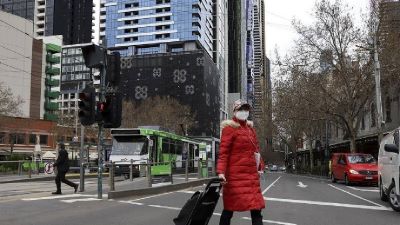
Fresh outbreaks fuelled by the highly infectious strain have forced major cities in China, Australia, the Philippines and elsewhere back into lockdown and spurred the authorities, particularly in Asia, to reimpose harsh restrictions as low vaccination rates leave people vulnerable to Covid-19.

Economies have taken a hit as manufacturing hubs like Thailand and Vietnam see their supply chains interrupted. Factories making goods for global brands are halting work and potentially missing out on the crucial holiday shopping season in major markets.

The wave of new infections has also seen the likes of Israel, Britain and the United States scramble to reinstate mask recommendations even among the vaccinated, as data emerges to show that more fully vaccinated individuals are also catching the Delta strain, and might be just as likely to spread it to others around them.

The Delta variant, first identified in India, has become by far the most dominant strain in many countries: It now accounts for almost all new Covid-19 cases in the US, Britain, Russia, Germany, South Africa and Singapore, among other countries.

ADVERTISEMENTx

‘Breakthrough’ cases

Studies show that the variant to date is the fastest, fittest and most formidable version of the Sars-CoV-2 virus, which causes Covid-19.

Scientists estimate that it is roughly 50 per cent more contagious than the Alpha variant first found in Britain, which in turn was about 50 per cent more contagious than the original strain detected in the Chinese city of Wuhan.

It has also proven more potent than its predecessors, capable of infecting fully vaccinated people.

Still, such individuals – even if infected with Covid-19 – remain far less likely than those who are unvaccinated to fall severely ill, require hospital care, or die from any known variant of the coronavirus.

ADVERTISEMENT

US data shows that infections, hospitalisations and fatalities remain rare among those who are fully vaccinated.

More than nine in 10 of all new cases, hospitalisations and deaths in US states that reported on Covid-19 from the beginning of the year occurred among those who were unvaccinated or yet to be fully vaccinated, according to the Kaiser Family Foundation, a US non-profit organisation that has been collecting and analysing data on Covid-19 vaccinations.

In Singapore, the fully vaccinated made up about four in 10 of all new cases over the past month – a surprising statistic that can be explained by the fact that around 70 per cent of the population have already been fully inoculated, so the probability of encountering an infection in a vaccinated individual is significantly higher.

Aggressive contact tracing and testing measures would also have identified mild or asymptomatic infections that might not have surfaced otherwise.

Significantly, not one of the fully vaccinated people who were infected died, and current data shows that only one is in intensive care.

ADVERTISEMENT

Health experts stress that cases of fully vaccinated individuals becoming infected with Covid-19, commonly called “breakthrough infections”, do not imply that the vaccines are ineffective.

“The risk (of infection) among vaccinated people should be closer to 0.0 per cent everywhere, but the fact that they are not is less a matter of some failure of the vaccines themselves than the fact that the virus is spreading so widely,” Dr James Hamblin, a public health policy lecturer at the Yale School of Public Health, wrote in his online health bulletin on Friday.

“The more people who refuse to get vaccinated, the more vaccinated people will get infected.”

Separately, the preventative medicine physician wrote on Twitter: “No one… ever claimed vaccines will stop the virus from landing on you. Vaccines prevent serious illness. They do that very well.”

Transmission risks

What about the chances of fully vaccinated people infecting others around them with the virus? The jury is still out on this.

In a study last month, Chinese researchers reported they had found early evidence that while those who are vaccinated and infected with the Delta strain do not necessarily get sicker, they do become more contagious and for longer.

The researchers said those infected with the Delta variant had on average about 1,000 times more virus in their respiratory tracts than people who caught the original strain.

“Let’s say you had to spend 15 minutes with an infected person in a closed room before you would be exposed to enough virus to get sick. Now we’re talking about 1,000 times that potentially,” civil and environmental engineering professor Linsey Marr at Virginia Tech, who studies airborne transmission of viruses, told The Wall Street Journal.

“So that 15 minutes become just a few seconds.”

Those infected with the Delta variant also started carrying detectable virus earlier than those who got the original strain (four days versus six days after exposure), the Chinese study found.

But another recent study by researchers at Imperial College London showed that fully vaccinated people with the Delta strain may be less likely to infect others. It found lower viral loads in the samples of these individuals than in their uninoculated counterparts.

They were also half as likely to be infected with the Delta variant than the unvaccinated, with a one in 26 chance of catching the virus, compared with a one in 13 chance for those not inoculated.

But a study by US researchers in Wisconsin, released late last month, suggested that fully vaccinated people might in fact be just as likely as the unvaccinated to spread the Delta variant to others.

A separate study from Singapore found the same, although viral loads decreased faster in the vaccinated group, rendering them less contagious sooner.

All four research papers have yet to be peer-reviewed.

“What makes the (Delta) variant worrisome is the fact that it is a more contagious version of Covid-19 and will find unvaccinated individuals and infect them at a high rate,” said Dr Amesh A. Adalja, a senior scholar at the Johns Hopkins Centre for Health Security in the US.

“If those unvaccinated are at high risk for hospitalisation, and there are many of them in a geographic area, it could be problematic for hospitals.”

Looking to the future

The Imperial College London study estimated that a full course of a Covid-19 vaccine is 49 per cent effective in preventing Delta infection – much lower than previous estimates from other studies.

Early data last month from Israel, where six in 10 people have been fully inoculated with the Pfizer-BioNTech vaccine, also suggested that the full two-dose course was only 39 per cent effective in preventing Delta infections.

Wary that the strain or other new variants might lower the effectiveness of existing vaccines, scientists are already looking into improving the shots, recommending boosters, or developing new ones that offer greater protection.

But data thus far suggests that current vaccines are still sufficiently effective in protecting people against severe illness from the Delta strain.

Four vaccines are currently approved for use in Singapore – Pfizer-BioNTech, Moderna, Sinovac and Sinopharm. The efficacy rates for the first two US-developed vaccines range from 64 per cent to 95 per cent, while the rates for the two Chinese-made ones have not been made clear by their developers.

“The takeaway message remains: If you’re vaccinated, you are protected,” said Dr Celine Gounder, an infectious disease specialist at New York’s Bellevue Hospital Centre.

Published : August 08, 2021

By : The Straits Times / ANN

Olympics: Neeraj Chopra wins historic athletics gold medal for India #SootinClaimon.Com

#SootinClaimon.Com : ขอบคุณแหล่งข้อมูล : หนังสือพิมพ์ The Nation.

https://www.nationthailand.com/international/40004359

Olympics: Neeraj Chopra wins historic athletics gold medal for India


Neeraj Chopra on Saturday made history by becoming the first Indian to win gold medal in athletics at Olympic Games when he clinched first position at Tokyo 2020 with a throw of 87.58 metres in the javelin competition.

Chopra has also become only the second Indian after Abhinav Bindra to win an individual gold medal at the Olympics. Chopra now holds gold medals in javelin throw at the Commonwealth Games, Asian Games and now the Olympics, all at the same time.

Chopra’s gold means India, with seven medals at Tokyo Games, have surpassed the tally of six medals won at 2012 London Olympics. This is the most medals won by India in a single edition of Olympics.

ADVERTISEMENTx

Czech Republic’s Jakub Vadlejch bagged silver medal with a throw of 86.67m. His compatriot Vitezslav Vesley took bronze medal with a throw of 85.44m.

Published : August 08, 2021

By : The Statesman / ANN

Suga denies link between Olympics and surge in COVID-19 cases #SootinClaimon.Com

#SootinClaimon.Com : ขอบคุณแหล่งข้อมูล : หนังสือพิมพ์ The Nation.

https://www.nationthailand.com/international/40004358

Suga denies link between Olympics and surge in COVID-19 cases


Prime Minister Yoshihide Suga said Friday that there is no link between the Tokyo Olympics and the recent surge in the number of coronavirus infections.

Suga denies link between Olympics and surge in COVID-19 cases

At a press conference in Hiroshima on Friday, Suga denied any connection between the Games and the dramatic spread of the virus, saying, “I don’t think that the Tokyo Olympics are the cause of the surge.”

As for how spectators will be handled at the Aug. 24 to Sept. 5 Tokyo Paralympics, Suga said, “The issue will be discussed at the five-party talks [comprising the government, the Tokyo Olympic and Paralympic organizing committee and others] after the closing of the Olympic Games.”

Other topics at the press conference included a class action lawsuit related to the black rain that fell in Hiroshima soon after the 1945 atomic bombing. Suga mentioned people under similar circumstances to the plaintiffs. “I would like to decide how to deal with the issue in a speedy manner by holding discussions between the Hiroshima prefectural government, the Hiroshima municipal government and the central government to give relief to such people.” Suga also said he had met with two of the plaintiffs ahead of the press conference and said to them, “You’ve all been put to a lot of trouble for a long time.”

On the Treaty on the Prohibition of Nuclear Weapons, which took effect in January this year, Suga said, “I don’t think Japan will sign the treaty at the moment.”

Concerning the dissolution of the House of Representatives and the general election, Suga said, “It is natural that the government will give priority to measures against the coronavirus infections.”

ADVERTISEMENTx

■ Bach calls Games a success

Thomas Bach, the International Olympic Committee president, called the Tokyo Olympic Games a “success” Friday.

Bach held a press conference in Tokyo to sum up the Tokyo Olympics ahead of its closing ceremony. He said, “The Olympic Games have been a powerful demonstration of the unifying power of sport.”

Bach also said that athletes “are extremely grateful for the fact that the Olympic Games could happen.”

Commenting on Japan’s decision to have no spectators at most of the venues, Bach said he had been “concerned that these Olympic Games could become an Olympic Games without soul.”

Bach said that the success of the Games far exceeded his personal expectations. He praised the Games by saying such things as that everyone was grateful for the great Olympic venues, that the friendliness of the volunteers could be a model for other countries, and that the transportation was flawless.

■Paris head lauds Tokyo

Tony Estanguet, the president of the Paris 2024 Organizing Committee for the Olympic and Paralympic Games, held a press conference in Tokyo on Friday. Praising the anti-COVID-19 measures at the Tokyo Olympics, Estanguet said that Tokyo proved that the Olympic Games could be held under difficult circumstances and that Japan has dealt with the crisis positively and effectively.

He also appreciated that there were only a few cities that put such great effort into holding the Olympic Games, and said Tokyo’s ability to respond to the pandemic was worthy of a gold medal.

Published : August 08, 2021

By : The Japan News / ANN

U.S. economy adds 943,000 jobs in July amid recovery in labor market #SootinClaimon.Com

#SootinClaimon.Com : ขอบคุณแหล่งข้อมูล : หนังสือพิมพ์ The Nation.

https://www.nationthailand.com/international/40004329

U.S. economy adds 943,000 jobs in July amid recovery in labor market


The U.S. economy added 943,000 jobs in July as hiring surged and employers raised wages to lure workers. It marked the second straight month of impressive growth as the countrys recovery sped up amid widespread availability of vaccines.

But the renewed strength of the coronavirus in late July and early August is raising concerns about whether this momentum can continue. The delta variant has sped through the country’s vaccine-resistant population in recent weeks, leading to new government restrictions.

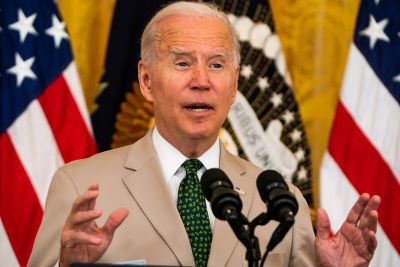
President Joe Biden comments on the jobs report in the East Room at the White House on Aug. 6, 2021. Washington Post photo by Demetrius Freeman

This has clouded many economist’s outlook for the second half of the year and raised questions about whether July could serve as a high-water mark of the recovery’s second wave.

The unemployment rate in July fell to 5.4% from 5.9%, a sizable monthly reduction. It is down from 6.3% when President Joe Biden took office but still well above the 3.5% rate in February 2020, the final report before the pandemic slammed into the United States and sent the numbers of joblessness spiking to historic levels.

July’s tally was the highest number of jobs added since last August, and it surpassed June’s impressive numbers, which were revised up in the report to 938,000.

Economists, political leaders, executives and many workers are now watching to see where the economy goes from here.

ADVERTISEMENTx

In the weeks since the hiring data was collected, numerous firms began requiring vaccinations or imposing new mask restrictions on employees, as rising cases begin to complicate reopening efforts. The stock market, though, remains at record levels, and the recent reports about brisk hiring in June and July show that this momentum could be hard to knock off course.

June and July make for two straight months when nearly 1 million jobs were added – totals that are close to the optimistic predictions many economists had last year about how vaccinations would smooth the way for the labor market recovery.

And there were other promising signs in the report. Wages also continued to rise, raising by 11 cents an hour to $30.54 on average – the fourth straight month of growth. The number of people reporting both long-term unemployment and temporary layoffs fell precipitously.

“This is an unambiguously positive report,” said Mark Zandi, chief economist of Moody’s Analytics. “It’s consistent with a booming economy, an economy that’s roaring back from the pandemic recession.”

Joe Brusuelas, chief economist at the firm RSM, agreed that the report showed exceedingly strong momentum.

“I’ve been doing this a long time – this is one of the best monthly jobs reports that I’ve seen in my career arc,” he said.

Biden touted the numbers at a morning appearance where he talked about the importance of his infrastructure plan, saying that more than 4 million jobs have been added since he took office.

“What is indisputable now is this: The Biden plan is working, the Biden plan produces results, and the Biden plan is moving the county forward,” he said.

If there was a caveat about the report, it was its timing. The report is a portrait of the economy from the middle of July – around the beginning of the time when coronavirus cases from the delta variant began to surge.

The country is in a unique place, having confronted a number of conflicting forces in 2021 as the economy works to dig out of a public health crisis unlike any other in the modern era. While vaccinations have given the country its strongest tool yet in the battle against the virus, the crisis is far from over, as resistance to the vaccine and the potential for the virus to continue to mutate, make it hard to forecast how the intertwined crises – an economic on one hand, and the public health one on the other – will unfold next.

There has been a notable uptick in inflation, though experts are split over whether it will be short-term or more lasting. Employers continue to complain about labor scarcities, particularly for low-wage jobs, though there is some evidence that it can be partially addressed for through things like better pay and benefits, as well as the wider availability of in-person schooling that is expected in the fall.

Hiring slowed in the winter as the virus raged, but it has picked up with sustained velocity in recent months.

The biggest jump has come in the leisure and hospitality sector, as hotels and restaurants worked to bring employees back, optimistic about a consumer spending boom. These types of businesses, though, are susceptible to a setback if the virus doesn’t ebb this fall, making some of these gains fleeting.

Economists like Constance Hunter, chief economist for accounting firm KPMG, said it was too soon to tell how severely the latest surge of coronavirus cases, which is threatening the country’s reopening, will affect the labor market, but said there were reasons to be concerned. The economy remains about 5.7 million jobs down from where it was before the pandemic hit, in March 2020, and economists have expected the jobs market to roar as school reopenings and wide vaccination usage allows many working parents to get back into the labor force.

“We could see some reversal in August and September’s data because of the delta variant,” Hunter said. “As the delta variant progresses here, if it hampers back to school, it’s could put a dent in.”

Zandi said that some economic indicators – mobility data, restaurant reservations, hours worked, when tracked by private time management systems, consumer and business sentiment – were already sending off warning signals in the South and Midwest the past month, particularly in states like Florida and Georgia.

But a vaccination effort that stalled this summer – more than 40% of the U.S. vaccine eligible population remains unvaccinated despite their wide availability – and only recently began ticking up again, has provided fertile ground for the delta variant to wreak havoc, raising questions about whether some consumers and businesses will begin the process of buttoning up, yet again.

For now, the economic indicators continue to be strong, when looked at nationally. New weekly unemployment claims have trended downward gradually this year, though they have largely flatlined in recent weeks on average. They remain about twice the level of pre-pandemic average.

Reservations at restaurants are hovering just below 2019 levels, according to OpenTable data – a remarkable achievement after so many businesses shuttered earlier in the pandemic. And air travel, as measured by TSA checkpoint data, continues to hit record numbers for the pandemic, every couple of weeks.

The growth in July was driven by employment in the leisure and hospitality sector, with restaurants and bars adding 253,000 people, hotels adding 74,000 and arts entertainment and recreation adding 53,000. The sector is still down 1.7 million jobs from February 2020.

Employment rose by 221,000 in local government education and 40,000 in private education, although the report noted that the distinct patterns in hiring in schools – namely that there were fewer layoffs at the end of the school year this year, because there had not been seasonal increases earlier – may have distorted the report, and contributed to the signals about job gains in July.

Professional and business services added 60,000 jobs; transportation and warehousing added 50,000 jobs.

Published : August 07, 2021

By : The Washington Post · Eli Rosenberg

Hanoi extends stringent COVID-19 restrictions until August 23 #SootinClaimon.Com

#SootinClaimon.Com : ขอบคุณแหล่งข้อมูล : หนังสือพิมพ์ The Nation.

https://www.nationthailand.com/international/40004327

Hanoi extends stringent COVID-19 restrictions until August 23


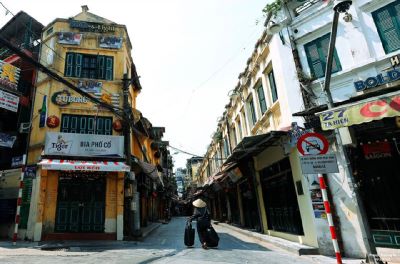
HÀ NỘI — Hà Nộis People’s Committee on Friday afternoon officially announced its decision to extend stringent citywide social distancing orders for 15 days until 6am on August 23.

According to dispatch No.18, signed by Chairman Chu Ngọc Anh, after 14 days of heavy restrictions in line with the Government’s Directive 16 that began at 6am Saturday, July 24 and set to expire at 6am Saturday, August 7, the city had attained “certain results”, Anh said. 

However, the outbreak in the city as well as across the country remains “unpredictable and complicated,” with many infections found in the community without clear sources and numerous cases displaying no symptoms, he added.

The capital city has logged 1,800 cases in the fourth wave of infections starting in late April, half of which were found during the lockdown period with about 60-70 cases new cases registered each day.

During a press briefing held the same day, a health official said the health sector will take advantage of the lockdown period to ‘filter’ out all hidden COVID-19 cases in the community.

Under the social distancing order, non-essential businesses continue to remain closed, people are not allowed to go outside except for essential purposes like buying food or medical emergencies. Public transport also remains halted.

The dispatch noted that many members of the public and organisations/companies have not strictly abided by the social distancing rules and that crowding still occurred from time to time in markets and on the streets. The presence of the highly-transmissible Delta variant threatens to shatter the city’s COVID-19 prevention and control efforts, he said.

The city leader asked for absolute compliance with social distancing orders, separating household from household and individual from individual.

Companies, businesses and agencies in the city should continue to arrange for their employees to work from home and only go to work in truly necessary cases such as members of the armed forces or people handling confidential documents and all under the monitoring of the company and/or local authorities.

The chairman noted that the success of the COVID-19 fight, other than the “robust involvement” of the administration, is predicated on the self-discipline and compliance and support of the people and society in obeying social distancing rules.

For green zones (COVID-19 free areas), residents should remain proactive and not complacent in preventing the disease, but stand ready to respond to any emerging incidents.

For orange zones – high-risk areas like factories, workplaces, markets, hospitals or other medical facilities – each unit must have a prevention and control plan ready and local authorities will inspect and only permit them to operate once the units satisfy the COVID-19 safety criteria.

For red zones or blockaded/quarantined areas, local authorities can decide to impose stronger measures to make sure no spread of the virus will occur inside these zones and to contain the outbreak as soon as possible.

Testing and treatment

The city leader also asked for stock to be taken of the city’s testing capacity, as well as for the mobilisation of all capable units to help expand testing capacity.

Health agencies and local authorities have been tasked with taking the initiative in conducting rapid antigen testing based on their assessment of outbreaks and clusters, to act fast and flexibly to avoid missing virus carriers, and start to offer guidance for the public to take samples by themselves under the supervision of healthcare workers.

The health authorities have also been asked to prepare for maximum capacity scenarios – with regards to the treatment of COVID-19 patients, especially ensuring enough oxygen, ventilators and beds.

Healthcare centres have been told to classify asymptomatic and symptomatic patients and sort them into the appropriate treatment units.

Suitable apartment buildings, educational institutions, and construction projects could be requisitioned and repurposed to act as treatment facilities for asymptomatic patients (30,000 beds and up to 50,000 beds if necessary).

Anh also asked for quicker vaccinations but in a safe manner, providing sufficient instructions for people before their vaccine appointments.

Local authorities and relevant sectors must have plans and arrangements in place to avoid disruptions to the supply of goods to the city, market instability, shortages or hoarding and ensure the safe circulation and supply of food and essentials for all people, especially in blockaded areas, guaranteeing that no one is left wanting.

Trần Thị Phương Lan, Acting Director of Hà Nội’s Department of Industry and Trade, said the department had told distribution chains to stock up three times the normal amount of goods (up to VNĐ194,000 billion in value).

Lan said given that there are some markets and supermarkets that have been closed due to COVID-19 infections, mobile units have been set up to provide essential products for local residents. — VNS

Published : August 07, 2021

By : Viet Nam News/ANN