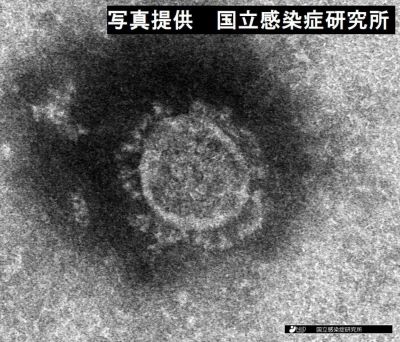
Japan passed the 1 million mark in its cumulative total of novel coronavirus cases on Friday.
The nation reached the milestone about 1½ years after the first domestic case was confirmed in January last year.
On Friday, Tokyo reported 4,515 new infection cases, marking the second largest daily number for the capital, after a record 5,042 new cases were confirmed there on Thursday. The daily tally in the capital exceeded 4,000 for the third consecutive day.
According to the Tokyo metropolitan government, there were 141 people with serious COVID-19 symptoms on Friday, up by six from Thursday. The seven-day moving average of new infection cases was 3,820, up 52.7% from the previous seven-day period’s average of 2,501.
In Kanagawa Prefecture, the number of new cases hit a record high of 2,082 on Friday, renewing its record for the second day in a row. The prefecture saw its daily figure exceed 2,000 for the first time. Four deaths of COVID-19 patients were reported in the prefecture, bringing its cumulative death toll to 1,003.
Chiba Prefecture also confirmed a record high of 1,057 new cases, topping 1,000 for the first time.
In Osaka Prefecture, there were a record 1,310 new cases. The figure topped the previous record of 1,260 logged on April 28 and May 1 during the fourth wave of infection.
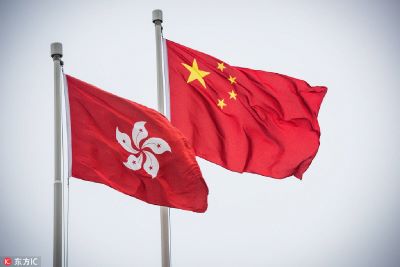
The United States was again urged to stop playing political tricks by meddling in the legal affairs of the Hong Kong Special Administrative Region.
The Foreign Ministry’s commissioner’s office in the Hong Kong Special Administrative Region and the Hong Kong SAR government on Friday voiced opposition to Washington’s self-proclaimed “safe haven” offer to Hong Kong residents.
US President Joe Biden on Thursday signed a memorandum that allowed Hong Kong residents already in the US to stay for up to 18 months. The White House said the decision was made in response to the National Security Law for Hong Kong and to the “crackdown” on the city’s opposition camp.
A spokesperson for the Commissioner’s Office of the Ministry of Foreign Affairs in the HKSAR in a statement expressed “strong condemnation” and “firm opposition” to the US move.
The US decision reflects its hypocrisy as it turns a blind eye to the facts and mainstream opinion in Hong Kong, the spokesperson said.
The facts include that the National Security Law for Hong Kong only targets a small number of anti-China, destabilizing forces in the SAR who seriously endangered national security and the city’s stability.
By late July, 138 people had been arrested on suspicion of endangering national security, 76 of whom were later prosecuted. The city has more than 7.56 million people.
Other facts overlooked by the US include a more stable society and lower crime rates brought about by the National Security Law for Hong Kong along with electoral system improvements. The spokesperson said that the legislation further optimizes the rule of law and protects the legitimate rights of people living in the city.
The spokesperson said the US “tricks”, including talking down to the Hong Kong SAR and stigmatizing Beijing, revealed its ulterior motives to curb China’s development by playing the “Hong Kong card”.
The office urged the US to drop the illusion about containing China and put an end to such shameful political manipulations.
In a separate statement, a spokesperson for the Hong Kong SAR government also rebutted the US claim that the National Security Law for Hong Kong was used to crack down on dissidents, adding that the smear was “baseless and purely politically motivated”.
“Any law enforcement actions taken by Hong Kong law enforcement agencies are based on evidence, strictly according to the law, based on the acts of the persons or entities concerned, and have nothing to do with their political stance, background or occupation,” the government statement read.
The US is one of the destinations where some Hong Kong people suspected of endangering national security have fled to over the past two years.
“The Hong Kong government will pursue … legal liabilities in accordance with the law to ensure fugitive offenders face justice,” the spokesperson added.
Before granting the 18-month arrangement, the US last month imposed a round of sanctions on central government officials in the SAR and warned US enterprises in Hong Kong of the city’s “deteriorating business environment”.
India, China pull out troops from friction point Gogra in Ladakh
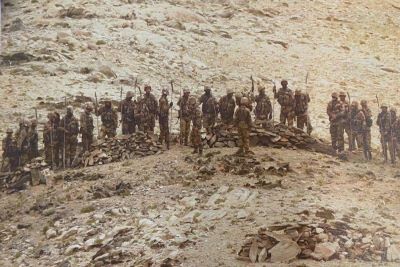
In a major breakthrough, India and China have withdrawn troops from the friction Patrolling Point (PP) 17A in Gogra along the Line of Actual Control (LAC) in Eastern Ladakh, the Indian Army said on Friday.
The Indian Army said that both the countries have ceased forward deployments in this area in a phased, coordinated and verified manner.
“The disengagement process was carried out over two days, i.e., August 4 and 5. The troops of both sides are now in their respective permanent bases,” the Indian Army said in a statement.
The force said that the 12th round of talks between the Corps Commanders of India and China were held on July 31 at the Chushul Moldo Meeting Point in Eastern Ladakh.
The two sides had a candid and in-depth exchange of views on the resolution of the remaining areas related to disengagement along the LAC in the Western Sector of India-China border areas.
“As an outcome of the meeting, both sides agreed on disengagement in the area of Gogra,” the Indian Army said.
The troops in this area were in a face-off situation since May last year.
The force said that all the temporary structures and other allied infrastructure created in the area by both sides have been dismantled and mutually verified.
“The landform in the area has been restored by both sides to the pre-stand off period,” the Indian Army stated.
This agreement ensures that the LAC in this area will be strictly observed and respected by both sides, and that there is no unilateral change in status quo.
With this, one more sensitive area of face-off has been resolved.
“Both sides have expressed their commitment to take the talks forward and resolve the remaining issues along the LAC in the Western Sector,” the force added.
The Indian Army also pointed out that along with the ITBP, it is totally committed to ensure the sovereignty of the nation and maintain peace and tranquility along the LAC in the Western Sector.
In a joint statement after the 12th Round of India-China Corps Commander-level talks geld earlier this week, it was stated that the two sides have also agreed that in the interim, they will continue their effective efforts in ensuring stability along the LAC in the Western Sector and jointly maintain peace and tranquility.
The talks between the two countries took place after a gap of three months.
With the latest disengagement reached between both the countries in Gogra, India will now take up the other remaining friction areas like the Hot Springs and the 900 sq km Depsang plains.
The build-up in Depsang was not being considered part of the current standoff that started in May last year as escalation here took place in 2013. India has insisted during recent military commander-level meetings to resolve all the issues across the LAC.
Till now, apart from 12 round of Corps Commander-level talks, the two forces have also held 10 Major General-level and 55 Brigadier-level talks, apart from 1,450 calls over hotlines.
Earlier, the troops of the two Himalayan giants had disengaged from both the banks of Pangong Tso in February this year.
#SootinClaimon.Com : ขอบคุณแหล่งข้อมูล : หนังสือพิมพ์ The Nation.
#SootinClaimon.Com : ขอบคุณแหล่งข้อมูล : หนังสือพิมพ์ The Nation.
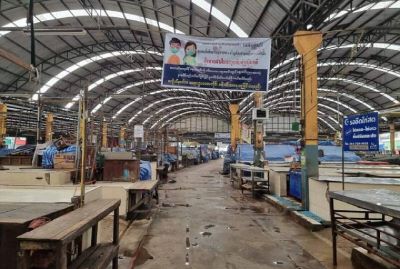
Mae Sot market in Myanmar-Thai border temporarily closed as the numbers of cases higher in COVID-19 Third wave
Mae Sot market in Myanmar-Thai border situated in downtown Mae Sot was temporarily closed from August 4 to August 10 by Thai authorities in the COVID-19 Third wave.
The market sells products from Myanmar such as fish paste, dry fish, dry prawn, various kinds of food, and clothing. Many Myanmar migrant workers are working at the market. In Mae Sot, there are upper market and lower market. Now, the upper market will be temporarily closed.
“Myanmar workers are anxious as the market will be closed temporarily. But they can buy at lower market and Macro shopping mall. The market was packed with shoppers a day before the market was closed,” said a Myanmar living in Thailand.
More than 100,000 Myanmar migrant workers are working in Mae Sot.
In Tak province including Mae Sot, there are about 400 factories and industries opened legally or illegally. There are over 200,000 Myanmar migrant workers working at these factories and they faced hardships during COVID-19 crisis according to a Myanmar worker who doesn’t want to be identified.
Myanmar calls on US to provide more support, including providing of COVID-19 vaccines
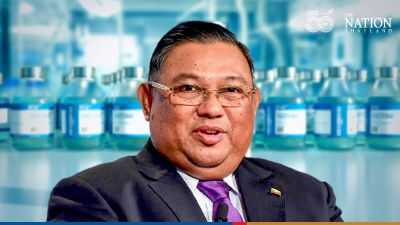
Union Minister for Foreign Affairs Wunna Maung Lwin has called on the United States to provide more assistance, including the COVID-19 vaccines, to protect the lives of the Myanmar people, according to a statement from Ministry of Foreign Affairs.
He made the remark at the Second Mekong-U.S. Partnership Ministerial Meeting held on August 3, via video conferencing.
At the meeting, Wunna Maung Lwin thanked the United States for its assistance to the Mekong countries and urged the United States to give more support, including the COVID-19 vaccines, to protect the lives of the people in Myanmar. More assistance should be provided to the people of the Mekong region for the sake of inclusive sustainable development based on the principles of the Mekong-US Partnership Program: consensus, equality and non-interference in internal affairs. He welcomed the release of the “Action Plan (2021-2023)” of the Mekong-US Partnership, which includes cooperation in the fields of education, young people, capacity building, energy and environmental protection.
In addition, the importance of information sharing in the effective implementation of the new Mekong-US Partnership Action Plan and the priority should be given to cooperation in services, trade and investment for the need for small, medium and large-scale economic recovery in the post-COVID-19 period, he said.
The Union Minister also endorsed US proposals to hold policy dialogues on inequality and women’s empowerment and to hold policy dialogues aimed at enhancing direct communication between United States and Mekong government officials.
Then, the meeting approved the action plan (2021-2023) of the Mekong-US Partnership Plan designed to bring significant results to the member countries. The Mekong-US Partnership Program was upgraded in 2020 to meet current and future needs for sustainable and inclusive development in the region, based on the achievements of the “Lower Mekong Countries Cooperation Program” implemented between the United States and Mekong countries.
Japan to apply COVID-19 priority measures to 8 more prefectures
The government decided Thursday to apply emergency-level measures for eight more prefectures amid a surge in coronavirus cases.
Aproposal to apply priority measures for the prefectures of Fukushima, Ibaraki, Tochigi, Gunma, Shizuoka, Aichi, Shiga and Kumamoto was presented to the government’s COVID-19 subcommittee on Thursday morning. The measures will be in effect in the eight prefectures from Sunday through Aug. 31.
In areas under priority measures, eating and drinking establishments are asked to shorten their business hours and close by 8 p.m. and stop serving alcohol, in principle. However, if businesses meet certain conditions, such as implementing infection control measures, and if cases are on the decline, prefectural governors can approve the sale of alcohol until 7 p.m.
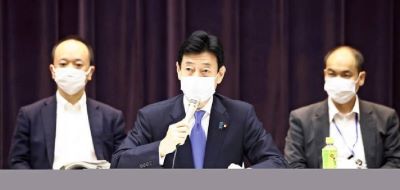
At the subcommittee meeting, Yasutoshi Nishimura, the minister in charge of COVID-19 countermeasures, said, “The number of newly confirmed cases is increasing at an extremely rapid pace, and at a magnitude not seen before.”
Excluding Shizuoka and Aichi, six of the eight prefectures have infection levels at Stage 4 on the government’s COVID-19 alert scale, the most severe level.
Health, Labor and Welfare Minister Norihisa Tamura said Thursday that patients with moderate symptoms would be hospitalized in principle even in areas where cases have surged.
“Patients who doctors judge to be at low risk of developing severe symptoms will recuperate at home,” he said.
Some members of the ruling coalition have claimed that the lack of an explanation on a measure to reduce the number of hospitalizations led to people thinking that those with moderate symptoms would not be admitted to hospitals, prompting calls for a review of the policy.
Tamura’s clarification of the criteria for hospitalization could be interpreted as the government’s way of attempting to resolve the situation.
Korea says November herd immunity will happen even as prospects darken
South Korean political and health leaders are standing firm on their goal of getting to COVID-19 herd immunity in November, which has been marked as a point of return to normalcy, after reaching a vaccination threshold of 70 percent of the population.
So far the term herd immunity has been loosely thrown around by those in political circles and public health offices alike. But the concept has been largely understood as some degree of a return to normal life and retirement from the excruciating practice of social distancing.
President Moon Jae-in said back in June that a “maskless Chuseok” will be possible as vaccinations progress, and top officials at the Ministry of Health and Welfare and the Korea Disease Control and Prevention Agency have repeatedly associated having herd immunity with restoration of normal life.
What herd immunity would look like when Korea gets there in November has been more concretely laid out for the first time during Health Ministry’s closed-door briefing Thursday.
Health Ministry spokesperson Son Young-rae told reporters that even after herd immunity is reached in November, face masks and other safety steps will remain necessary.
Asked how the administration was defining herd immunity, Son said it was “when transmissions slow and fatality rates fall as large proportions of Koreans are immunized against COVID-19.” “The day-to-day operations of the society will be significantly close to normal,” he said. “But that doesn’t mean we can do away with face masks or other basic health protocols.”
Herd immunity is “thought to be a situation where risks are controlled through continued compliance with basic health protocols,” he said.
Son said in the same briefing 70 percent of Korea’s roughly 51 million people will complete their vaccinations between late October and early November, adding on to Moon’s reaffirmation of the administration’s vaccine goal on Monday.
Moon told a meeting of senior presidential secretaries and aides earlier this week that 36 million Koreans will be vaccinated with at least one dose of a vaccine before Chuseok, a national holiday falling Sept 18-22.
Since Pfizer and Moderna vaccines — which are administered over a minimum interval of four weeks per the guidance updated July 23 — are to be mainly available from August onwards, the finishing point of second-round vaccinations for 70 percent of the population is anticipated to be around a month after Chuseok.
But Son gave a more conservative estimate, saying, “The majority of Koreans will become fully vaccinated by the end of October or the start of November. By September’s end is when at least 70 percent will have gotten one dose.”
What the Health Ministry has described as herd immunity Thursday far is from how the term has been previously communicated to the public, or how it is commonly understood as a public health term, according to experts.
“The notion of herd immunity has grown rather elusive with COVID-19, but I wouldn’t call that herd immunity,” said Dr. Paik Soon-young, emeritus professor at Catholic University of Korea’s department of microbiology.
“But what is more important is that even without herd immunity, the pandemic is expected to become substantially more manageable as more people get vaccinated, with reductions in deaths and hospitalizations,” he added.
“Generally speaking, herd immunity is when the spread of a virus can be contained without non-pharmaceutical interventions such as social distancing, masking and hand washing, after a large chunk of population in a given community becomes immune either through infection or vaccination,” said infectious disease professor Dr. Kim Woo-joo of Korea University.
Kim went on, “We also need to keep in mind that 70 percent vaccination rate does not necessarily translate to corresponding rates of neutralizing antibody responses across the vaccinated population.” “Plus, there is a question of immunity waning over time,” he said.
While the key task facing Korea remains delivering first doses to people who have never been vaccinated, older, immunocompromised people who were given vaccinations months ago are now getting what is known as “breakthrough infections,” he said. In recent weeks, outbreaks among the vaccinated have been reported at nursing homes, whose residents were first in line for a vaccine when the national campaign kicked off in February.
Korea has no plan to give a third booster shot to vulnerable people first vaccinated in February and March.
Dr. Eom Joong-sik, infectious disease specialist at Gachon University Medical Center, also said, “Herd immunity as I understand it is when infections remain at a stable level in the absence of social distancing.”
He pointed out that in light of highly contagious new variants, Korea needed a vaccination rate greater than the initially aimed 70 percent. “Delta raises the bar higher — now the vaccination target should be 80 percent, or even 90 percent,” he said. “That is, if delta continues to be the dominant strain. We could be fighting against a new, different variant then.”
Children under 18 years of age, who make up 15 percent of the population, are currently left out of vaccine plan, which also complicated the equation, Eom said.
Out of the 51 million people in Korea, 39 percent had received at least one dose of a vaccine by Wednesday’s end, while 14 percent were fully vaccinated. Over the month of July, an average of around 90,000 doses were administered per day.
[Philippines] 12 big Metro hospitals hit critical risk level
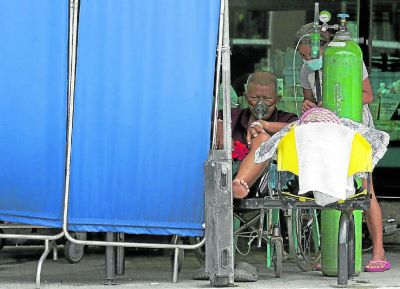
As the National Capital Region (NCR) and nearby provinces begin a two-week lockdown today, 12 of the 22 major hospitals in Metro Manila are already at critical risk in terms of their ICU capacity.
Seven of the hospitals have actually reached their full ICU capacity as of Aug. 2, namely East Avenue Medical Center, Chinese General Hospital and Medical Center, Metropolitan Medical Center, Quirino Memorial Medical Center, San Juan de Dios Foundation Inc., University of Perpetual Help Dalta Medical Center and VRP Medical Center.
The ICU occupancy rates of the rest were critically high: Capitol Medical Center (85.71 percent), Ospital ng Makati (91.57 percent), UP-Philippine General Hospital (83.3 percent), V. Luna Medical Center (90 percent) and St. Luke’s Medical Center (90.9 percent).
The list was based on the monitoring of the Metropolitan Manila Development Authority (MMDA) and was presented by its chair, Benhur Abalos, in a recent meeting with NCR mayors and business leaders.
In terms of bed occupancy, which included COVID wards, the MMDA said East Avenue Medical Center, Metropolitan Medical Center, National Children’s Hospital, University of Perpetual Help Dalta Medical Center, Philippine General Hospital (PGH), VRP Medical Center and V. Luna Medical Center were also classified as being at critical risk.
In an Aug. 2 memorandum to all NCR hospitals, the Department of Health (DOH) ordered the conversion of some of their facilities to accommodate new cases and to increase their COVID-dedicated beds by 50 percent.
In anticipating an increase in COVID-19 infections, the DOH also ordered the suspension of scheduled hospital procedures, “but (still) ensuring continuity of essential services..for patients needing specialized care.”
It also ordered the safeguarding of health-care workers through alternate staffing and hiring additional manpower for a backup pool of hospital workers.
Four-fold increase
The One Hospital Command Center (OHCC) hotline also recorded a 400-percent jump in calls so far this month, indicating the rising number of COVID-19 infections.
The OHCC is an inter-agency project led by the DOH and the Inter-Agency Task Force for the Management of Emerging Infectious Diseases (IATF) to ensure an efficient health facility referral system in Metro Manila.
In an online press briefing on Thursday, OHCC operations manager Dr. Bernadett Velasco said they received an average of 600 calls a day in the past three days, a four-fold increase from the June average of 120 calls. It was also double the 300 calls received each day by the hotline in July, she said.
Of those who reached out to the OHCC, about 40 percent were referred to hospitals, another 48 percent to isolation centers and temporary treatment and monitoring facilities, while the rest involved consultations and inquiries, according to Health Undersecretary and treatment czar Leopoldo Vega.
Most calls to the 24-hour hotline came from Metro Manila, Calabarzon and Central Luzon.
Velasco also said during the briefing that the OHCC came up with a surge capacity plan after it noticed the increasing trend in the volume of calls the hotline received in recent days.
New Delta cases
The DOH on Thursday also said it recorded 8,127 new COVID-19 cases, which brought the country’s total case count to 1,627,816.
In a separate bulletin, the health department, along with the University of the Philippines-Philippine Genome Center (UP-PGC), announced that the country’s genomic surveillance effort detected an additional 116 cases of the more transmissible Delta variant of COVID-19, thought to be fueling the surge in infections in the country.
Of the 116 new cases, 82 percent or 95 were local cases. One was a returning overseas Filipino, and the DOH said it was still trying to determine the travel history of the remaining 20 cases.
Majority or 83 of the local cases have indicated addresses in the NCR, while three were from Calabarzon. Four cases have addresses in Central Visayas, two in Davao Region, and one each in the Zamboanga Peninsula, Cagayan Valley and Ilocos Region.
The 116 newly detected Delta cases have been tagged as recovered, the DOH said. The latest round of whole genome sequencing brought the country’s total tally of Delta variant cases to 331.
However, the UP-PGC was able to sequence less than 1 percent of all COVID-19 cases in the country, indicating that the occurrence of the Delta variant in the country could be higher.
The DOH also said 113 cases of the Alpha variant and 122 cases of the Beta variant were also detected.
Published : August 06, 2021
By : Maricar Cinco, Patricia Denise M. Chiu/Philippine Daily Inquirer/ANN
Xi: China will provide 2 billion vaccine doses globally in 2021
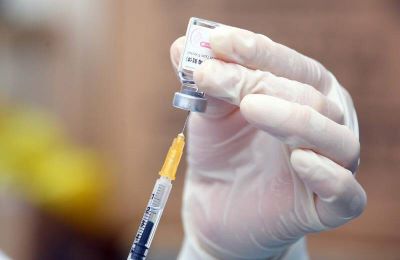
BEIJING – China will provide 2 billion COVID-19 vaccine doses to the world throughout this year and offer US$100 million to COVAX, Chinese President Xi Jinping said Thursday in a written message to the first meeting of the international forum on COVID-19 vaccine cooperation.
The US$100 million to COVAX will mainly go to the distribution of vaccines to developing countries, he said, adding that China would do its best to help developing countries cope with the COVID-19 pandemic.
China is committed to building a global community of health for all and has provided vaccines to the world, especially developing countries. The country actively carried out joint production, which illustrates the concept of vaccines as global public goods, Xi stressed.
“I hope this forum will promote the accessibility and fair distribution of vaccines around the world, strengthen solidarity and cooperation in developing countries, and make new contributions for an early victory against the pandemic,” he said.
At the Global Health Summit this May, Xi announced five measures to support global solidarity against COVID-19. These include the proposal of setting up an international forum on vaccine cooperation for vaccine-developing and producing countries, companies, and other stakeholders to explore ways of promoting fair and equitable distribution of vaccines worldwide.
“We are willing to work with the international community to promote international vaccine cooperation and build a community with a shared future for humanity,” he said.
Huawei to invest $100m in Asia-Pacific startup ecosystem over 3 yrs
Huawei Technologies Co on Tuesday announced its plan to invest $100 million to support startups over the next three years, as the Chinese tech heavyweight aims to help build a sustainable startup ecosystem for the Asia-Pacific region.
The plan was unveiled at the inaugural Huawei Cloud Spark Founders Summit, which took place simultaneously in Singapore and Hong Kong.
Huawei said the investment would go toward its Spark Program in the Asia-Pacific region, which aims to build a sustainable startup ecosystem for the region over the next three years.
According to the company, it has been helping Singapore, Hong Kong, Malaysia and Thailand build their startup hubs. At the summit, Huawei also announced that this program would focus its efforts on developing four additional startup hubs – in Indonesia, the Philippines, Sri Lanka and Vietnam – with the overarching aim of recruiting a total of 1,000 startups into the Spark accelerator program and shaping 100 of them into scaled-up businesses.
Catherine Chen, senior vice-president and board member of Huawei, said “Startups and small and medium-sized enterprises are the innovators, disruptors and pioneers of our times. Thirty-four years ago, Huawei was a startup with just $5,000 of registered capital. Recently, we have been thinking: How can we leverage our experience and resources to help more startups address their challenges? Doing so would allow them to seize the opportunities posed by digital transformation, achieve business success, and develop more innovative products and solutions for the world.”
At the summit, Huawei also unveiled a plan to build an HMS (Huawei Mobile Service) Developer Innovation Center. Through this center, Huawei aims to cultivate future talent in cooperation with 210 leading universities across the Asia-Pacific region.