Korea to invest over W5tr in chips, bio, next-gen cars
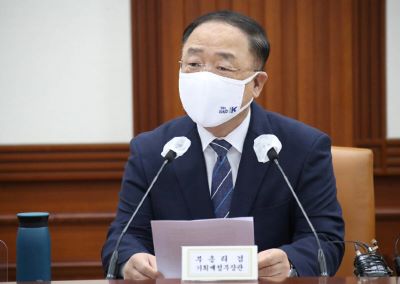
South Korea plans to invest over 5 trillion won ($4.36 billion) in semiconductors, biohealth and next-generation vehicles next year and provide them the latest tax benefits ahead of other industries, the nation’s fiscal policy chief said on July 29.
The size of next year’s fiscal support for the industries dubbed the “Big 3” will be larger than this year’s corresponding figure of some 4.2 trillion won.
Finance Minister Hong Nam-ki pointed out that the Big 3 industries are at the core of key agenda items that global economies have been pursuing in the COVID-19 era, including overhaul of global value chains, the transition into a digital and green society and the race toward future technologies and industries.
To bolster tax benefits for the industries, the government recently announced a tax reform bill that would expand the current 1.16 trillion won of incentives for research and development and infrastructure investment. The government plans to submit the tax code revision bill to the National Assembly before Sept. 3 for approval, but Hong said that the Big 3 industries will start receiving the benefits in the second-half of the year, handing them priority seats.
The key agenda items tied to the Big 3 industries during the meeting held in the morning were bolstering the supply of electric vehicle and hydrogen-powered car chargers, local production of chips and the development of artificial blood substitutes.
As of June, South Korea operated some 72,000 electric vehicle chargers and 110 hydrogen fuel cell vehicle chargers across the nation, and Hong plans to increase the numbers by 2025.
It plans to install more than 12,000 fast chargers at highway rest areas and over 500,000 standard ones in cities in the cited period. Over 70 charging stations for hydrogen fuel cell cars will be installed in the second half of this year, increasing the total number to 180 by the year-end.
To further improve domestic production of chips, the establishment of an ultrapure water system here, which currently heavily relies on foreign partnerships, will be pursued. Recycling of semiconductor wastewater, which is considered inherently difficult to treat, will be expanded as well.
On the development of artificial blood substitutes, the government aims to procure the technology and make actual synthetic blood transfusion possible by 2030. The government plans to partner up with local institutions including the state-run National Center for Stem Cells and Regenerative Medicine to kick off the project.
After more than a year in limbo, the Visiting Forces Agreement (VFA) between the Philippines and the United States is “back in full force.”
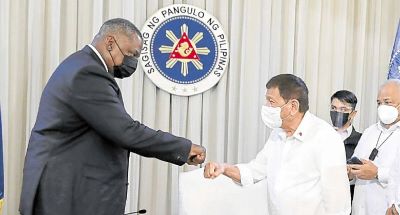
It took only a visit from US Secretary of Defense Lloyd Austin III for President Duterte to drop his threats to scrap the military pact ratified in 1999 that governs the presence of US troops in the country.
“Last night, after the meeting between Secretary Austin and the President in Malacañang, the President decided to recall or retract the termination letter [on] the VFA,” Defense Secretary Delfin Lorenzana said in a press briefing by the two defense chiefs on Friday.
“The VFA is in full force again. There is no letter of termination pending and we are back on track,” Lorenzana said.
The President ordered the VFA’s termination in February 2020 following the cancellation of the US visa of Sen. Ronald dela Rosa, his friend and ally and a former chief of the Philippine National Police who led his administration’s centerpiece war on drugs.
But four months later, he suspended its termination for six months due to “political and other developments in the region.” The suspension was eventually extended for another six months, and again up to the end of 2020.
Last stop
Last February, he said America must “pay” if it wanted the VFA to remain in place.
The President’s changed stance is based on the Philippines’ “strategic core interests,” his spokesperson Harry Roque said in a statement on Friday.
Austin called on Mr. Duterte on Thursday night, with the Philippines the last stop in his tour of Southeast Asia after visiting Singapore and Vietnam.
He is the first Cabinet member of the Biden administration to visit the country.
Thanking Mr. Duterte for restoring the VFA, Austin said: “A strong, resilient US-Philippine alliance will remain vital to the security, stability and prosperity of the Indo-Pacific. A fully restored VFA will help us achieve those goals together.”
Austin and Lorenzana discussed ways to enhance the alliance, including support for the modernization of the Philippine military.
Asked by reporters why Mr. Duterte reversed his position on the agreement, Lorenzana said he did not know: “I’m not privy to his decision-making.”
“But one thing is clear: the Department of Foreign Affairs and the ambassador to the United States (Jose Manuel Romualdez) have been … working for this to happen. Maybe the President was just convinced that we could continue with the VFA,” he said.
Last week, Lorenzana said there would be additions but no changes in the VFA’s current provisions.
He has yet to respond to the Inquirer’s questions on the side agreement to implement the VFA.
ADVERTISEMENTx
Balancing act
For international policy and security expert Chester Cabalza, Mr. Duterte’s “hasty softening of heart and mind [toward] Washington can be seen as a balancing act despite his five-year pivot to Beijing.”
“As a result, the China threat still undermines our national interest and sovereignty,” Cabalza told the Inquirer.
Politically, Mr. Duterte’s action may be his way of “playing his cards well” given his avowed intention to seek the vice presidency in 2022, said Cabalza, president and founder of the nonprofit International Development and Security Cooperation.
He said it was “a good thing” that Washington had listened to Manila’s demands and sentiments and ironed out problems with its longtime ally.
ADVERTISEMENT
“Otherwise, the damage will further cost American interest in the South China Sea,” with Chinese power dominating the region, he said.
Activists who had welcomed the scrapping of the VFA said they were not surprised at the President’s action.
No surprise
“Duterte was never really serious in terminating the agreement. He did seek more US military aid, the kind that will be used against the Filipino people especially in the regime’s counterinsurgency drive,” said Renato Reyes Jr., secretary general of Bagong Alyansang Makabayan (Bayan).
According to Reyes, the promises of the VFA and the Philippines-US Mutual Defense Treaty (MDT) were falsities peddled by America for the Philippines to remain “a neocolony and military outpost in the Pacific.”
ADVERTISEMENT
“The VFA will not help us … defend our exclusive economic zone against China,” Reyes said. In Malacañang, Roque said Mr. Duterte’s “decision to recall the abrogation of the VFA is based on upholding [Philippine] strategic core interests, the clear definition of Philippine-US alliance as one between sovereign equals, and clarity of US position on its obligations and commitments under [the MDT].”
Roque said the Philippines would also continue to engage other countries for partnerships based on its core national interests.
Mr. Duterte has had a testy relationship with America, and has bristled over its statements of concern over the killings and rights abuses in the country.
Early in his term, during a visit to Beijing, he announced that he would cut ties with the United States. But he later said what he meant was that he was moving for a “separation of a foreign policy” and not a parting of ways with the United States.
At the House of Representatives, Speaker Lord Allan Velasco and Majority Leader Martin Romualdez were in agreement with Deputy Speaker Rufus Rodriguez’s statement that the restoration of the VFA was “the right decision for the good of the country” as it would strengthen ties with the United States amid the pandemic, the West Philippine Sea dispute and the fight against terrorism.
Mixed reactions
Said Velasco: “Now, more than ever, we need to maintain strong ties with the United States given the current uncertain and challenging international political environment that was further aggravated by the COVID-19 pandemic.”
Romualdez said it was “crucial” for both nations to strengthen bilateral cooperation especially with the pandemic raging worldwide.
Muntinlupa Rep. Ruffy Biazon, vice chair of the House national defense and security committee, said Austin may have conveyed to Mr. Duterte America’s commitment to stand by the Philippines for “mutual interest and benefit, particularly on security issues.”
But Minority Leader Joseph Stephen Paduano called for “full public disclosure.”
“As of now, all we know is that the abrogation was recalled. The advantage we were expecting has not materialized yet, and an improved VFA is nowhere to be seen,” he said.
Albay Rep. Joey Salceda said the continuation of the VFA would better secure freedom of navigation. He said its best use was “helping secure our interests in the West Philippine Sea.”
But the six-member Makabayan bloc said it was an expected move and part of Mr. Duterte’s “Janus-faced foreign policy” and “braggadocio.”
Published : July 31, 2021
By : Dexter Cabalza, Julie M. Aurelio, Leila B. Salaverria/Philippine Daily Inquirer/ANN
Students from 26 countries advised to travel to Korea after 70% first-dose vaccination rate
Incoming foreign students required to take 3 PCR tests
In preparation for an influx of students coming for the fall semester, the Education Ministry has come up with a separate set of guidelines for students from 26 countries where there has been a higher risk of the spread of virus variants, including the highly contagious delta variant.
The government has designated 26 countries where COVID-19 variants are spreading fast. The countries are South Africa, Malawi, Botswana, Mozambique, Eswatini, Zimbabwe, Bangladesh, Brazil, Suriname, Paraguay, Chile, Uruguay, the Philippines, India, Indonesia, the United Arab Emirates, Uzbekistan, Vietnam, Nepal, Russia, Lebanon, Malaysia, Haiti, Angola, Kuwait and Trinidad and Tobago.
The Education Ministry advises foreign students from the 26 nations to enter Korea after the first-dose vaccination rate here reaches 70 percent.
The government plans to achieve the 70 percent first-round vaccination rate by the end of September. Approximately 35.8 percent of the country’s population have received their first dose as of Wednesday, according to the Korea Disease Control and Prevention Agency.
If foreign students from the 26 countries choose to come to Korea before that milestone is achieved, the ministry recommends they stay at designated self-quarantine facilities where medical staff are always on duty or at university dormitories for their 14-day self-isolation. They can also self-isolate at accommodations of their choice.
In addition, there will be at least two health monitoring sessions per day for the students. When going to a health center, they will have to take separate routes from other foreign students.
ADVERTISEMENTx
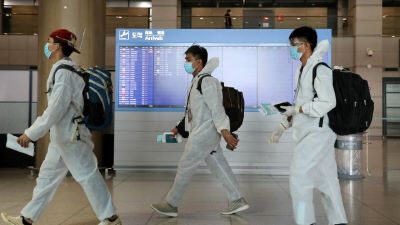
Foreign students entering South Korea for university in September must also undergo three coronavirus tests, according to the Education Ministry. The country previously implemented the antivirus measure in January ahead of the first semester.
As part of the country’s COVID-19 prevention measures, foreign students are required to submit negative results from polymerase chain reaction tests taken before departure in their home country upon arrival at the airport in Korea. Negative results from self-test kits will not be accepted.
The students will then have to install a self-quarantine application on their smartphones and start their 14-day mandatory self-isolation.
They have to be tested for the coronavirus again within the next day of their arrival. They can get tested at the public health center nearest to where they are self-isolating.
At the end of their two-week quarantine, they must take another PCR test and receive a negative result before they are free to leave.
The Education Ministry also looks to stagger the arrivals of foreign students with support measures to promote remote learning.
Even if international students decide to take online classes from their home country after getting a student visa to Korea, the government will not revoke their visa so they will still be able to come to Korea in the middle of the semester.
In order to prevent a shortage of medical personnel or test kits, the ministry will map out individual plans with each university and share the information and timeline of incoming foreign students with their respective local governments.
Furthermore, the Education Ministry intends to include each university’s efforts to protect and manage foreign students in evaluating the government certification of the International Education Quality Assurance System.
According to the ministry, there were about 34,000 foreign students who came to Korea in the first half of this year, down 82 percent from 185,000 in the first half of 2019, before the coronavirus pandemic.
Of the 34,000 foreign students, there were 255 confirmed cases, including 33 found at the airport where they tested positive for COVID-19 and 222 who tested positive during their self-isolation period.
Antivirus measures targeted at foreign student arrivals during previous semesters, such as providing separate transportation and conducting more tests, had helped prevent the spread of the virus in the local community, the ministry said.
“We are deeply grateful to universities and local governments for their efforts to protect and manage foreign students for a year and a half, starting with Chinese students in February last year,” Education Minister Yoo Eun-hae said.
“Even though the COVID-19 situation is serious due to variants of the virus, we ask universities and local governments to work together to ensure schools’ stable management of academics in the second semester.”
US, Vietnamese defence chiefs stress peaceful resolution of South China Sea issues
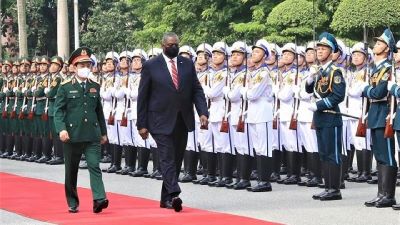
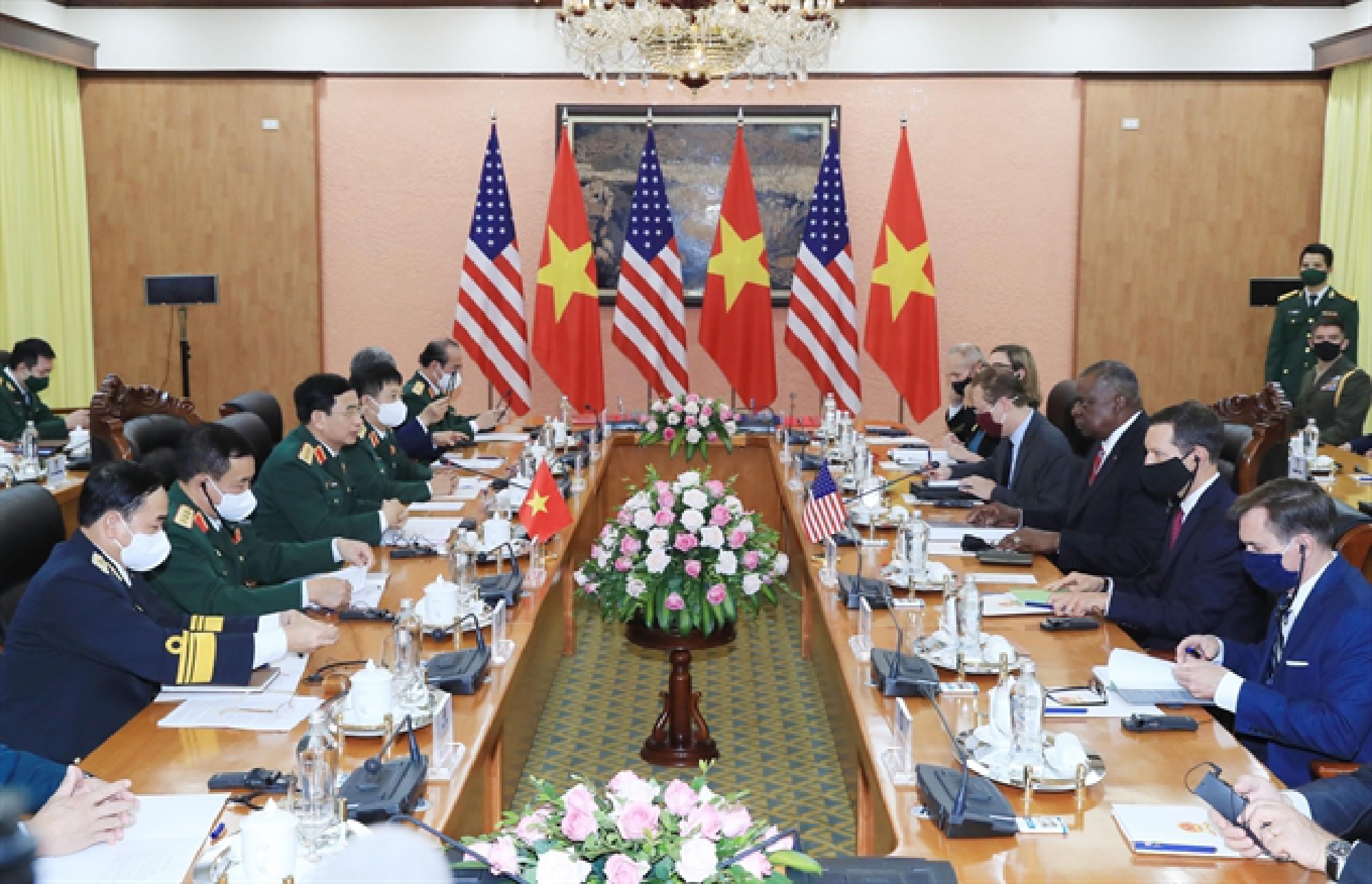
HÀ NỘI — Vietnamese Minister of Defence, General Phan Văn Giang, and his US counterpart Lloyd Austin, have underlined the need to respect international law in the South China Sea (known in Việt Nam as the East Sea) during talks in Hà Nội on Thursday.
The two defence chiefs said they are linked by a mutual understanding of the importance of respecting the legal rights of coastal countries, and a belief in the resolution of disputes and conflicts via peaceful means.
The two countries have a shared belief in the maintenance of peace, stability, security, order and freedom of flight and navigation in waterways and oceans in line with international law and the 1982 United Nations Convention on the Law of the Sea (UNCLOS), a statement from the Vietnamese Ministry of Defence said.
The two defence leaders also noted their appreciation for the results of cooperation between the two defence ministries, particularly regarding addressing the legacies of the war including searching for soldiers missing in action, efforts to remove landmines, and ameliorating the consequences of Agent Orange/dioxin; as well as resolving non-traditional security issues like COVID-19 prevention and control, search and rescue efforts, humanitarian assistance and disaster relief, and supporting Việt Nam’s participation in UN peacekeeping missions.
The US Secretary of Defence also announced it would supply medical equipment support to aid Việt Nam’s COVID-19 prevention efforts.
The trip by the US official also reaffirmed U.S. support for a strong, prosperous, and independent Việt Nam that contributes to international security.
ADVERTISEMENTx
US, Vietnamese defence chiefs stress peaceful resolution of South China Sea issues
The two ministers agreed to continue to boost cooperation as outlined in the Memorandum of Understanding on Advancing Bilateral Defence Cooperation in 2011 and the Việt Nam-US Joint Vision Statement on Defence Relations signed in 2015. These agreements give priority to overcoming the consequences of war, enhancing the capacity of law enforcement at sea, cooperation in military medicine to tackle COVID-19, training, as well as understanding the capabilities and needs of each party with regards to their respective defence industries.
Austin also agreed to focus on accelerating the dioxin decontamination project at Biên Hoà Airport in the southern province of Đồng Nai to ensure the schedule is met, along with other humanitarian projects in Việt Nam and support projects for Vietnamese law enforcement at sea.
During the talks, the two sides also discussed regional and international issues of mutual concern – especially traditional and non-traditional security threats in the region.
They also stressed the central role of the Association of Southeast Asian Nations (ASEAN) in promoting cooperation within the framework of the ASEAN Defence Ministers Meeting plus Russia, China, US, Japan, the Republic of Korea, Australia, New Zealand and India (ADMM+) to maintain peace in the region and in the world.
At the end of the talks, the two defence ministers signed a memorandum of understanding on cooperation in locating, recovering, and identifying the remains of Vietnamese martyrs. They also exchanged war memorabilia and artefacts.
Prior to the meeting with his Vietnamese counterpart, Lloyd Austin, had paid a visit to Hoả Lò Prison, which was originally built by the French to detain Vietnamese revolutionaries during the colonial era and then held American prisoners of war during the Resistance War Against America.
“I wanted to make sure one of my first stops in Việt Nam was to the Hỏa Lò Prison in Hà Nội. It is a visible reminder of the cost of war, and why our strong bilateral partnership with Vietnam today is rooted in our shared sacrifice,” he said via Twitter. — VNS
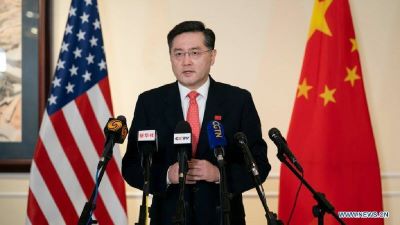
Qin pledges to improve relations with Washington, calls for peaceful coexistence
Four years ago, Qin Gang, then assistant foreign minister and director of the Foreign Ministry’s protocol department, received the copy of credentials from Terry Branstad, who came to Beijing to serve as United States ambassador to China.
On Wednesday, Qin arrived in Washington as Beijing’s new top envoy to the largest economy in the world, urging that “the door of China-US relations, which is already open, cannot be closed”.
“Bridges” and “path” stood out as keywords in several statements or messages he delivered upon arrival to local media, netizens, the Chinese community in the US and students from China.
He highlighted the need to build bridges between the two nations and find a path for the peaceful coexistence of the two countries with different political systems and cultures.
Qin’s remarks demonstrate Beijing’s clear sincerity to keep one of the world’s most important bilateral relationships afloat, as well as the great challenges and difficulties both sides have to tackle, experts and business organizations said.
“Through his remarks upon arrival, Beijing issues the clear signal that the door for cooperation is wide open despite the currently difficult relationship,” said Yuan Zheng, deputy director of the Institute of American Studies of the Chinese Academy of Social Sciences.
Qin assumes his post as the world keeps a close eye on China-US ties, which lately have been strained by US attacks on issues including COVID origin tracing, Taiwan and Xinjiang.
He succeeds Cui Tiankai, who was ambassador for eight years, leaving the post in June. With a background in handling European affairs, Qin, 55, became known to more people as a spokesman for Foreign Ministry.
His arrival in the US came shortly after US Deputy Secretary of State Wendy Sherman’s two-day China visit, which wrapped up on Monday.
During talks with Sherman in Tianjin, Beijing put forward two lists to Washington about the “US wrongdoings that must stop” and “key individual cases that China has concerns with”. It also singled out three areas where it said the US is not to cross the line-China’s political system, development and sovereignty.
While addressing Chinese and US media in Washington, Qin said the China-US relationship “has once again come to a new critical juncture”, and he seeks to translate into reality the “mutual respect, equality, win-win cooperation and peaceful coexistence” of the two countries.
“I look forward to working closely with them to safeguard the foundation of China-US relations, uphold the shared interests of the two peoples, and endeavor to bring China-US relations back on track,” Qin added.
ADVERTISEMENTx
Yuan, the CASS scholar, said that Qin’s assuming his post in Washington “marks progress already in the two-way ties” and shows a certain degree of consensus worked out by diplomats from both sides.
“The new Chinese ambassador’s remarks sound friendly. Still, Beijing will not back down on issues that matter to its principles,” Yuan said.
Qin’s remarks show that China “is still taking a productive, progressive approach (toward the US ties) and has no intention of confrontation”, Yuan added.
Douglas Barry, senior director of communications and publications with the US-China Business Council, said the organization is “delighted to welcome the new ambassador”.
“We encourage both governments to redouble efforts to meet regularly in good faith and open minds to resolve disagreements-some of which affect not just our two countries but the world,” Barry said.
Recent bilateral diplomatic interactions show that Washington has a one-sided definition of its cooperation with Beijing, as it has been seeking US-China collaboration in a limited number of areas, such as the Iran and Korean Peninsula nuclear issues and climate change, an expert said.
Su Xiaohui, deputy director of the Department of American Studies at the China Institute of International Studies, said: “On one side, the US expects China to serve its interests, and on the other side, it continues suppressing and containing China. It is impossible for China to accept such a scenario.”
“A reasonable view on cooperation must be based on mutual respect, equality and mutual benefit, and China has made this principle clear to the US,” Su added.
Terry Branstad left his post as Washington’s top envoy in Beijing last year. Washington has not yet announced its next ambassador to China.
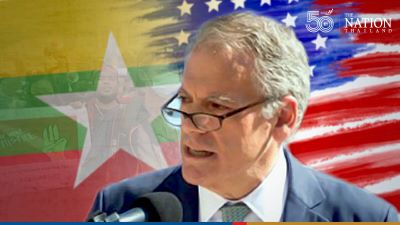
US urges UN Council to press Myanmar to return to democracy
UNITED NATIONS (AP) — A senior U.S. diplomat urged the U.N. Security Council on Thursday to press Myanmar’s military to stop violence and restore democracy, warning that with COVID-19 surging and hunger increasing, “the longer we delay, the more people die.”
Deputy U.S. Ambassador Jeffrey DeLaurentis said Myanmar “is reeling from a surge in COVID-19 cases” and faces a “burgeoning health catastrophe” as a direct result of “the military’s brutality and administrative failures since its coup six months ago.” The violence and military crackdown that followed have also displaced hundreds of thousands of people, and up to 2.8 million additional people may be facing food shortages, he said.
His appeal for Security Council action follows a call two days ago by Tom Andrews, the U.N. special investigator on human rights in Myanmar, for the Security Council and the U.N.’s 193 member states to push for an emergency “COVID ceasefire” in light of an explosion of coronavirus infections and deaths.
“Too many in Myanmar have needlessly perished and too many more will die without action by the United Nations,” Andrews warned. “The U.N. must act immediately to halt the military junta’s attacks, harassment and detentions in the midst of a COVID-19 crisis … so that doctors and nurses can provide life-saving care and international organizations can help deliver vaccinations and related medical care.”
DeLaurentis told the informal council meeting that Myanmar’s military has said it doesn’t plan to honor commitments it made in April at a summit of the Association of Southeast Asian Nations, known as ASEAN. Myanmar, previously known as Burma, belongs to the 10-member regional group.
“So what are we waiting for?” DeLaurentis asked council members. “This council is failing in our collective responsibility to safeguard international peace and security. And it is failing the people of Burma. We must do more, and we must do more now.”
At the ASEAN summit, leaders issued a five-point action plan that calls for stopping violence, constructive dialogue, appointment of an ASEAN special envoy as mediator, humanitarian aid and the mediator’s visit to Myanmar.
But a day after attending the summit, Myanmar’s junta leader, Senior Gen. Min Aung Hlaing, said he would consider the five points when the situation in Myanmar is stable, and in May he reportedly told Chinese television he didn’t see that the five points could be implemented.
Gum San Nsang of the Kachin Political Interim Coordination Team, which advocates for the rights of the Kachin ethnic groups in northern Myanmar, said in a virtual briefing to the council that “while we consider ASEAN’s five-point consensus to be a great step forward, the current health crisis demands immediate robust action.”
Nsang called on U.N. Secretary-General Antonio Guterres to urgently convene a meeting with key parties including ASEAN and China to dispatch teams to communities to administer coronavirus vaccines and provide humanitarian assistance.
ADVERTISEMENTx
He called on the Security Council to impose an arms embargo and no-fly zone along Myanmar’s borders with China, India and Thailand, to impose sanctions on senior military leaders and state-owned enterprises, and to refer Myanmar to the International Criminal Court for prosecution for the alleged crime of aggression against civilians.
Opponents of the military have been seeking alliances with ethnic minority groups as a way to strengthen their resistance. At least 20 ethnic minorities, including the mainly Christian Kachin, have kept up on-again, off-again armed struggles for greater autonomy for decades
Nsang said that despite pain and suffering, sickness and disease, hardship and terror, “We can see light at the end of the tunnel.”
“We see the Feb. 1 coup has placed the nation on to fast track to national unity and national cohesion,” he said. “Solidarity within and across ethnic and religious communities is at a sobering height. In Kachin state, the inter-tribal tensions which we witnessed up until even before the coup hardly exist now.”
Susanna Hla Hla Soe, minister for women in the National Unity Government set up by ousted lawmakers, said in a virtual briefing that food is getting scarce, “the economy is collapsing and the health system has collapsed with a new wave of COVID-19 spreading like wildfire across the country.”
Soe called the military junta’s report of 6,000 positive coronavirus cases and 400 deaths from COVID-19 “just the tip of the iceberg,” citing the lack of a data collection system.
“There is also growing evidence that the military council is purposely targeting the health care workers,” she said, saying that more than 250 attacks on front-line workers and medical staff have been documented this year.
Louis Charbonneau, U.N. director for Human Rights Watch, criticized the Security Council for not having started negotiations on a resolution to address Myanmar’s crisis.
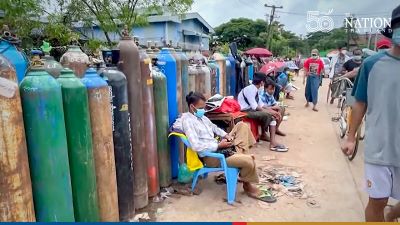
Myanmar ruling military seeks international cooperation over Covid-19 crisis
YANGON (REUTERS) – Myanmars military ruler is looking for greater cooperation with the international community to contain the coronavirus, state media reported on Wednesday (July 28), as the South-east Asian country struggles with a surging wave of infections.
Senior General Min Aung Hlaing called in a speech for more cooperation on prevention, control and treatment of Covid-19, including with fellow members of the Association of Southeast Asian Nations and “friendly countries”, the Global New Light of Myanmar reported.
The ruling military leader said vaccinations needed to be increased, through both donated doses and by developing domestic production, aided by Russia, the newspaper said, adding Myanmar would seek the release of funds from an Asean Covid-19 fund.
Myanmar recently received two million more Chinese vaccines, but it was believed to have only vaccinated about 3.2 per cent of its population, according to a Reuters tracker.
Infections in Myanmar have surged since June, with 4,964 cases and 338 deaths reported on Tuesday, according to health ministry data cited in media. Medics and funeral services put the toll much higher.
Myanmar has been in chaos since the military ousted an elected government led by Aung San Suu Kyi on Feb 1, with regular protests and fighting between the army and newly formed militias.
ADVERTISEMENTx
Last week, prisoners in Yangon staged a protest over what activists said was a major Covid-19 outbreak in the colonial-era Insein jail, where many pro-democracy protesters are being held.
Efforts to tackle the outbreak have been further hampered by some of the worst flooding in years in eastern Myanmar.
The military has appeared wary of outside help in past disasters, particularly if it believes strings are attached, forcing Myanmar’s people to help each other, though a previous junta did allow in aid via Asean after the devastating cyclone Nargis in 2008.
Despite Senior General Min Aung Hlaing agreeing to an Asean peace plan reached in April, the military has shown little sign of following through on it and has instead reiterated its own, entirely different plan to restore order and democracy.
The military justified its military takeover by accusing Ms Suu Kyi’s party of manipulating votes in a November general election to secure a landslide victory. The electoral commission at the time and outside observers rejected the complaints.
But in a further sign of the military’s tightening grip on power, the military-appointed election commission this week officially annulled the November results, saying the vote was not in line with the constitution and electoral laws, and was not “free and fair”, army-run MRTV network reported.
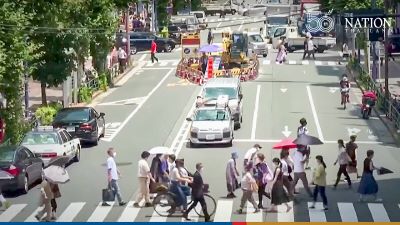
More than 10,000 new cases of coronavirus infection were confirmed in Japan on Thursday, according to a preliminary tally, marking a record high for the second consecutive day.
Tokyo logged a record 3,865 new cases and Kanagawa Prefecture reported a record 1,164.
Govt plans to declare state of emergency in Osaka, Saitama, Chiba, Kanagawa
The government plans to declare a state of emergency in Osaka, Saitama, Chiba and Kanagawa prefectures, where priority measures to prevent the spread of the novel coronavirus are currently in place, sources said Thursday.
The state of emergency will be in effect until Aug. 31.
The government also informed ruling party officials that priority measures will also be applied to Hokkaido, Hyogo, Kyoto, Ishikawa and Fukuoka prefectures.
The state of emergency currently in place in Tokyo and Okinawa prefectures will be extended to Aug. 31, beyond the original deadline of Aug. 22.
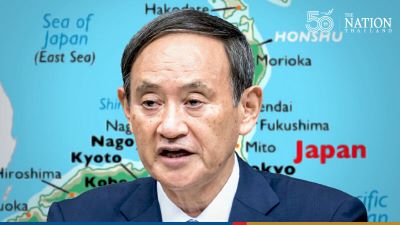
The government will finalize the plans on Friday, Prime Minister Yoshihide Suga told reporters Thursday evening after discussing the matter with the relevant Cabinet members at the Prime Minister’s Office.
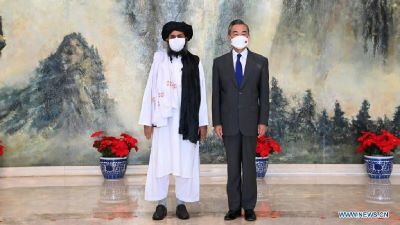
State Councilor and Foreign Minister Wang Yi said on Wednesday that the Afghan Taliban is expected to play an important role in the Afghan peace and reconciliation process as a decisive military and political force in the country and he hoped it could cut ties with the East Turkestan Islamic Movement.
The hasty withdrawal of troops by the United States and NATO, which in fact marked the failure of Washington’s Afghan policy, provided a significant opportunity for the Afghan people to stabilize and develop their own country, Wang said as he met in Tianjin with a Taliban delegation led by Mullah Abdul Ghani Baradar, the political chief of the Afghan Taliban.
The meeting was the latest of a series of efforts made by China to help resume negotiations among Afghans and prevent civil war in Afghanistan in order to work out solutions for political reconciliation in the country.
As the largest neighbor of Afghanistan, China always respects the sovereignty, independence and territorial integrity of Afghanistan, always adheres to the basic principle of noninterference in the internal affairs of Afghanistan, and always pursues a friendly policy toward all Afghan people, Wang said.
China believes that Afghanistan belongs to its own people and the destiny of the country must be in the hands of its people, he added.
ADVERTISEMENTx
Wang said that China hopes that the Afghan Taliban will put the interests of the Afghan nation first, support peace talks, establish the goal of peace, create a positive image and adopt an inclusive policy.
He called on all factions and ethnic groups in Afghanistan to stay united, truly implement the “Afghan-led and Afghan-owned “principle, promote the peace and reconciliation process in Afghanistan to achieve substantive results as soon as possible and independently establish an inclusive political structure in line with Afghanistan’s own national conditions.
Wang noted that the East Turkestan Islamic Movement, a terrorist organization listed by the United Nations Security Council, poses a direct threat to China’s national security and territorial integrity. China hoped that the Afghan Taliban could firmly crack down on the ETIM and other terrorist groups to ensure the peace, stability and development of the region, he said.
Baradar praised the fair and positive role played by China in Afghanistan’s peace and reconciliation process, saying that China has always been a reliable and good friend of the Afghan people.
The Afghan Taliban hopes that the Chinese side will increase its participation in the process and play a bigger role in the country’s reconstruction and economic development, he said.
Baradar also said that the Afghan Taliban will not allow Afghanistan’s territory to be used by any force to do harm to China and believes that Afghanistan should develop friendly relations with neighboring countries and the international community.

 US, Vietnamese defence chiefs stress peaceful resolution of South China Sea issues