India and US discuss regional security and Covid-19 aid in Blinkens visit #SootinClaimon.Com

#SootinClaimon.Com : ขอบคุณแหล่งข้อมูล : หนังสือพิมพ์ The Nation.

https://www.nationthailand.com/international/40003894

India and US discuss regional security and Covid-19 aid in Blinkens visit


NEW DELHI – US Secretary of State Antony Blinken said ties between India and the United States would be critical for bringing prosperity to the Indo-Pacific region and that India was a top foreign policy priority against the backdrop of mutual unease over Chinas growing assertiveness.
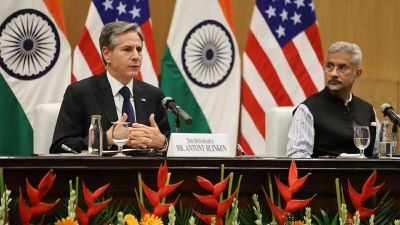
Mr Blinken, who is on a visit to India, held talks with External Affairs Minister S. Jaishankar on boosting vaccine production, the Quadrilateral Security Forum, increasing bilateral trade and the deteriorating security situation unfolding in Afghanistan among others.

The pandemic remained on top of the agenda, with Mr Blinken pledging US$25 million (S$34 million), adding to the earlier US$200 million, to boost vaccine supply chain logistics, fight vaccine hesitancy and help train healthcare workers in India.

The two sides also discussed the vaccine initiative under the Quadrilateral Security Forum or Quad, to deliver one billion doses of coronavirus vaccine by the end of 2022 with a focus on South-East Asia. The Quad countries include the US, Japan, India and Australia.

“We focused today on expanding vaccine production to make it globally affordable and accessible,” said Mr Jaishankar at a joint press conference after the talks.

The Quad vaccine initiative depends on India’s pharmaceutical manufacturing prowess. But a deadly second wave of the pandemic saw India narrow the focus to its domestic vaccination programme and stop all exports. India has not revealed when it will resume exports.

ADVERTISEMENTx

Both sides also expressed their commitment to supply vaccines to the region, where China has stepped in to fill the gaps with its vaccines.

“We are determined to end this pandemic. India and the US will work together to do it, including through the Quad vaccine partnership, which will bring safe and effective vaccines to others across the region,” said Mr Blinken.

India and the US have committed to working closely in the Asia-Pacific region, in what is seen as providing a counterweight to growing Chinese dominance.

Indian and Chinese troops have clashed at the border in the past year, while the US has a slew of concerns over China including its activities in the South China Sea.

China views the Quad as an effort to contain its rise.

On this, Mr Blinken noted that the grouping is not a military alliance and that it is “reinforcing international rules and values” and cooperating with other blocs such as Asean.

However, an aspect of the visit that is likely to capture Chinese attention was Mr Blinken’s meeting on Wednesday with Mr Ngodup Dongchung, who serves as a representative of the Tibetan government in exile.

It follows Prime Minister Narendra Modi’s publicised greetings to the Dalai Lama, Tibet’s exiled spiritual and political leader, on his birthday after a gap of many years.

Strategic analyst Brahma Chellany saw it as raising stakes on the issue of sovereignty for Tibet, which China rules.

“Blinken’s meeting with Dalai Lama’s envoy, and Modi’s publicised birthday greetings to the Tibetan leader, signal US and Indian intent to raise the profile of the Tibet issue at a time when Xi’s Tibet visit showcased his aggressive policies,” tweeted Mr Chellany.

Chinese President Xi Jinping visited Tibet last week in the first official visit by a Chinese leader in 30 years.

Dr Rajeswari Pillai Rajagopalan at Observer Research Foundation said China remained a major factor in the growing proximity between India and the US.

“I think overall clearly despite the irritants – human rights and media freedom – from the US side, they are looking at India from a broader strategic perspective. India and the US share similar concerns on China.”

Mr Modi, who met with Mr Blinken, tweeted that he welcomed US President Joe Biden’s strong commitment to strengthening ties.

Still the two countries have divergences.

Last month, the US urged India to “respect the vital role of human rights activists in healthy democracies”, following the death of 84-year-old tribal rights activist and Jesuit priest Stan Swamy, who contracted Covid in jail.

During his visit Mr Blinken, who met with Prime Minister Narendra Modi, National Security Advisor Ajit Doval and civil society leaders, noted that a shared commitment to democratic values is the bedrock of the bilateral relationship.

“Shared values – freedom and equality – are key and none of us have done enough. We need to strengthen our democratic institutions. This is at the core of our relationship, beyond strategic and economic ties,” Mr Blinken said.

Published : July 29, 2021

By : The Straits Times / ANN
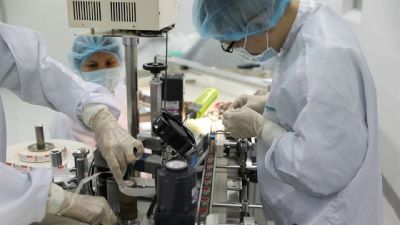
Việt Nam signs vaccine technology transfer contracts with Japan, US and Russia #SootinClaimon.Com

#SootinClaimon.Com : ขอบคุณแหล่งข้อมูล : หนังสือพิมพ์ The Nation.

https://www.nationthailand.com/international/40003893

Việt Nam signs vaccine technology transfer contracts with Japan, US and Russia


HÀ NỘI — Việt Nam has signed COVID-19 vaccine technology transfer contracts with Russia, the US, and Japan, said Nguyễn Ngô Quang, Deputy Director of the Health Ministry’s Department for Science, Technology and Training.

According to the official, one of the three was sealed between two Vietnamese companies – the Company for Vaccine and Biological Production No.1 (VABIOTECH) and the International Progressive Joint Stock Company (AIC) – and Japanese pharmaceutical firm Shionogi. VABIOTECH, a State-owned enterprise under the Ministry of Health, is one of the leading units in the field of research, manufacture and sale of vaccines and biological products for human use in the country. 

Their deal targeted the transfer of the Recombinant SARS-CoV-2 Spike Protein, a baculovirus expression vector system, with the parties signing a confidentiality agreement to access vaccine and technology records.

Regarding the technology transfer project between the AIC and Shionogi, the Ministry of Health has signed a cooperation agreement and is preparing a plan to conduct the third phase of clinical trials in Việt Nam (via the National Institute of Hygiene and Epidemiology) and procedures for technology transfer (via VABIOTECH). It is expected that the vaccine will be completed and on the market in June 2022.

The second contract involving the Russian Sputnik V vaccine was inked between VABIOTECH, DS-Bio, and the Russian Direct Investment Fund, with the Vietnamese side in charge of packaging the vaccine tubes from the semi-finished products.

ADVERTISEMENTx

VABIOTECH has sent its sample tubes to Russia for quality checks. After related tests finish on August 10 as scheduled, Sputnik-V vaccine tubes would be produced under the contract at a volume of 5 million doses per month. It would start with 500,000 doses in August and later scale up to 100 million doses per year.

For technology transfer project with US partners, the Ministry of Health has sent a group of experts to coordinate with the World Health Organization (WHO) to support relevant units in completing dossiers for clinical trials according to a shortened process, with the research expected to start on August 1 and end in late December.

Vingroup controlled-VinBiocare is reported to be in negotiations with Arcturus Therapeutics, maker of a mRNA COVID-19, for the phase 3 trials in Việt Nam and subsequent production.

The transfer and the building of a vaccine factory in Việt Nam will be completed in June 2022. — VNS

Published : July 29, 2021

By : Vietnam News / ANN

Efforts to develop a vaccine against COVID-19 in Myanmar should be implemented as soon as possible: Senior General Min Aung Hlaing #SootinClaimon.Com

#SootinClaimon.Com : ขอบคุณแหล่งข้อมูล : หนังสือพิมพ์ The Nation.

https://www.nationthailand.com/international/40003892

Efforts to develop a vaccine against COVID-19 in Myanmar should be implemented as soon as possible: Senior General Min Aung Hlaing


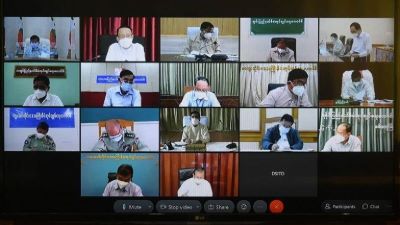
Efforts to develop a vaccine against COVID-19 in Myanmar should be implemented as soon as possible, said the chairman of the State Administration Council and Commander-in-Chief of the Armed Forces Senior General Min Aung Hlaing in the fifth coordination meeting on COVID-19 Prevention, Control and Treatment held on July 26 via video conferencing.

At the meeting, Chairman of the State Administrative Council Senior General Min Aung Hlaing said that the necessary measures for the prevention and control of COVID-19 disease should be provided in a timely manner. Coordination meetings are being held to do whatever is necessary to make decisions quickly and control the spread of infection. As of July 25, there were more than 194 million cases of COVID-19 worldwide and more than 260,000 in Myanmar. Although the number of infections is reduced day by day in July, you can only control the spread of the disease if only to avoid travel. I would like to call for effective and expedited vaccination of incoming vaccines as soon as possible. He said efforts should be made to develop vaccines in the country as soon as possible.

In addition, some pharmacies that sell preventive and curative drugs and other home-based medicines are selling at a higher price. It is learned that the shops are being closed to cause shortages, so it is necessary to take systematic measures to regulate the sale of medicines in each region and state. The government has allowed the import of the required medicines and has not imposed any restrictions on the import of medicines. It is necessary to act in a timely manner with the owned thoughts of the people who directly managed it, so the responsible persons in the respective areas need to pay close attention. When it comes to medical supplies, they must be delivered to the public as soon as possible. One-stop-service has also been set up to speed up the import of medicines. The ministries and chairs of the regions and states administration councils would need to pay special attention, he said.

Next, Senior General Min Aung Hlaing said the authorized people need to decide whether they need to be hospitalized depending on their medical condition when people visited the hospitals and clinics. It is necessary to decide whether or not to do so, and in making such a decision, the responsible persons will need to supervise in order to assist in the management method and ensure its accuracy. It is necessary to provide treatment to those who need treatment. Each region and state council should share responsibilities as appropriate so that not only the health workers but also other departments can assist in the necessary administrative matters. Success depends on good management. There may be a lack of management to systematically distribute the required areas as there are reports about the shortages of oxygen and it is necessary to make systematic arrangements for distribution, he said.

The outbreak of COVID-19 is causing problems around the world. There are no restrictions on the production of consumables such as food and beverage products. Food is the key thing and we must make it easy. It is necessary to continuously carry out individual production activities. In addition, health notice to be followed, warnings should be made public and need to be reminded frequently to comply. During the current rainy season, the country is receiving heavy rains, and on the one hand, agriculture can be good, and on the other hand, it is necessary to be prepared for floods caused by heavy rains. Tatmadaw, Myanmar Police Force and Red Cross must work in partnership with civil society organizations. It must be done in collaboration with the Ministry of Social Welfare, Relief and Resettlement. The equipment bought for disaster relief needs to be put to practical use, he said.

Published : July 29, 2021

By : Eleven Media / ANN

More people die at their homes from 3rd wave of Covid-19 #SootinClaimon.Com

#SootinClaimon.Com : ขอบคุณแหล่งข้อมูล : หนังสือพิมพ์ The Nation.

https://www.nationthailand.com/international/40003891

More people die at their homes from 3rd wave of Covid-19


YANGON – While it could be said that Myanmar made it relatively unscathed in the  the first and second wave, circumstances and mutated coronavirus variants meant that the country is witnessing high rates of infection and severity of symptoms in the third.

The Ministry of Health and Sports (MOHS) had reported that Alpha, Belta, Delta and Kappa variants have been found within Myanmar.

The situation unraveled  the end of May 2021 and as cases infection continue to skyrocket, stay-at-home or lockdown orders were imposed in many townships across the nation.

There are widespread criticisms that there are much more deaths than those officially reported as patients struggle to get access to oxygen and medical treatments.

Volunteer and civil groups said most deaths occurred within the Yangon Region was due to the lack of oxygen supply, worsened by being unable to gain access to both private and public hospitals due to restrictions or financial reasons.

“It will be fine if there is sufficient oxygen but if it runs out and you cannot find more, the patient is dead. We are seeing the same thing everyday,” said a volunteer worker.

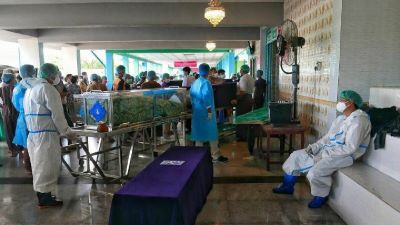
The volunteers claimed that there could be as high as thousands of deaths at homes everyday within Yangon Region, so much so that volunteers have resorted to stacking up two to three corpses in ambulances or other vehicles and then sending them over to cemeteries.

Family and friends of the deceased can be been in cemeteries, ferrying the body in cars or even taxies.

“From what I’ve been told from those that are transporting dead bodies that can be as high as a thousand on the day. There is no precise number. For us, we will try to send patients in need of immediate medical attention to every hospital we can find. But it’s all full up to capacities. Public hospitals are all full. In the end, the day passed by and we had to bring back the patients home. And the patients, in most cases, will not survive,” said a volunteer.

As each individual volunteer, civil or charity groups and associations are overburdened, they have now set up networks to help each group out wherever they can.

ADVERTISEMENTx

MOHS reports

The MOHS had been regularly publishing, between July 15 to July 21, daily Covid-19 case updates, categorizing from the highest to lowest Covid-19 cases found per township.

From those data, a total of 516 people within Yangon Region officially died of Covid-19 in Yangon Region during  July 15 to July 21. These numbers have been severely criticized as under-reporting on the severity of the situation due to public hospitals only able to treat at their capacities while most suspected Covid-19 dealths, were taking place at homes.

From July 1 to July 23, there have been 3,125 listed new deaths from Covid-19 out of 5506 new cases with a positivity infection rate of the tests was a very high 40.82 percent. The numbers on July 25 were 4988 new cases and 355 new deaths.

The suffocating lack of oxygen

For most Covid-19 positive patients, most are over 40 years of age and/or are  chronic patients suffering from a sharp drop in blood oxygen level while younger patients will tend to suffer only mild symptoms such as loss of smell, fever, and coughs.

“My aunt’s oxygen level kept dropping even when she was on oxygen. Hospitals also said they won’t accept if her oxygen level is dropping, ” said a man from North Oakkalapa Township.

World Health Organisation had warned that around 15 percent of Covid-19 patients will see severe symptoms and may require oxygen supply while 5 percent of the patients may need to be put on ventilators.

As Covid-19 continues to wreak havoc, the panic and worry only grew, giving rise to a hugely inflated black market for the many types of oxygen as well as other related apparatus.

The MOHS has warned, referencing Dr.Janet Diaz from the WHO, that oxygen is dangerous in the hands of those untrained, and advised against home treatment.

However, the hospitals continue to be unable accommodate Covid-19 patients amongst other difficulties the people are facing to receive medical treatment for Covid-19.

The situation has forced the people to figure out their own solutions at home, in turn giving rise to more paranoia, jacking up black market prices and causing more deaths.

Published : July 29, 2021

By : Eleven Media / ANN

PM imposes nationwide Covid restrictions, curfew over Delta scare #SootinClaimon.Com

#SootinClaimon.Com : ขอบคุณแหล่งข้อมูล : หนังสือพิมพ์ The Nation.

https://www.nationthailand.com/international/40003890

PM imposes nationwide Covid restrictions, curfew over Delta scare


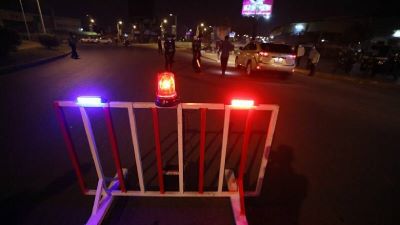
Prime Minister Hun Sen late on July 28 instructed the municipal and provincial authorities nationwide to strictly enforce Covid-19 measures including curfew for two weeks from July 29 midnight through August 12 to stem the new coronavirus Delta variant.

The instruction came shortly after he issued a directive mandating lockdowns in eight provinces bordering Thailand – Koh Kong, Pursat, Battambang, Pailin, Banteay Meanchey, Oddar Meanchey, Preah Vihear and Siem Reap – from July 29 midnight through August 12.

“Impose curfew from 9pm to 3am in parts or throughout territories under your jurisdiction, especially in Phnom Penh, provincial town or urban areas,” he said.

The prime minister also advised the municipal and provincial administrations to set up more targets to administer Covid-19 rapid antigen tests to people in areas under their jurisdictions free of charge.

Published : July 29, 2021

By : The Phnom Penh Post / ANN

IMF raises growth forecasts for rich nations, dims outlook for developing world #SootinClaimon.Com

#SootinClaimon.Com : ขอบคุณแหล่งข้อมูล : หนังสือพิมพ์ The Nation.

https://www.nationthailand.com/international/40003889

IMF raises growth forecasts for rich nations, dims outlook for developing world


The International Monetary Fund on Tuesday maintained its 6 percent global growth forecast for 2021, upgrading its outlook for the United States and other wealthy economies but cutting estimates for developing countries struggling with surging COVID-19 infections.

The divergence is based largely on better access to COVID-19 vaccines and continued fiscal support in advanced economies, while emerging markets face difficulties on both fronts, the IMF said in an update to its World Economic Outlook.

“Close to 40 percent of the population in advanced economies has been fully vaccinated, compared with 11 percent in emerging market economies, and a tiny fraction in low-income developing countries,” Gita Gopinath, the IMF’s chief economist, said during a news conference.

“Faster-than-expected vaccination rates and return to normalcy have led to upgrades, while lack of access to vaccines and renewed waves of COVID-19 cases in some countries, notably India, have led to downgrades,” she said.

The IMF significantly raised its forecasts for the United States, which it now expects to grow at 7.0 percent in 2021 and 4.9 percent in 2022 – up 0.6 and 1.4 percentage points, respectively, from the forecasts in April. The projections assume the U.S. Congress will approve President Joe Biden’s roughly $4 trillion in proposed infrastructure, education and family support spending largely as envisioned by the White House.

Positive spillovers from the U.S. spending plans, along with expected progress in COVID-19 vaccination rates, are boosting the IMF’s 2022 global growth forecast to 4.9 percent, up 0.5 percentage points from April.

The Fund gave its biggest upgrade to Britain, lifting its 2021 growth by 1.7 percentage points to 7.0 percent, reflecting better adaptation to COVID-19 restrictions than previously anticipated. The euro zone saw a smaller 0.2 percentage point upgrade for 2021, while Japan saw a 0.5 percentage point cut, reflecting higher infections and tighter restrictions in the first half of the year.

India, which has struggled with a massive wave of coronavirus infections this year, saw the biggest cut in its growth forecast – three percentage points – to 9.5 percent for 2021. The IMF also reduced its 2021 forecast for China by 0.3 percentage point, citing a scaling back of public investment and overall fiscal support.

ADVERTISEMENTx

The IMF also forecast lower prospects for Indonesia, Malaysia, the Philippines, Thailand and Vietnam where recent waves of COVID-19 infections are weighing on activity. The Fund forecast that emerging Asia would grow 7.5 percent this year, down 1.1 percentage points from the April forecast.

Low-income countries saw a downgrade of 0.4 percentage point in their 2021 growth, with the Fund citing the slow rollout of vaccines as the main factor impeding their recovery.

INFLATION WATCH

Gopinath said the IMF views inflation pressures as transitory due to “supply-demand mismatches” as economies reopen, with high inflation readings this year, especially in the United States, returning to normal levels next year.

But she said that if supply bottlenecks proved long-lasting, they could cause inflation expectations to become unanchored next year, which would be a concern.

“While we are seeing wages going up for some sectors, we are not seeing that as a broad-based phenomenon and inflation expectations are anchored,” she said. “However, we still aren’t out of the woods yet.”

If the Federal Reserve reassesses its inflation outlook and takes pre-emptive action to tighten monetary policy, this would add a “double-hit” to emerging markets, adding capital outflows and higher borrowing costs to their growth challenges, the Fund said.

VIRUS, SPENDING RISKS

The IMF said other downside risks remain significant globally, including the potential for new, highly contagious coronavirus variants to lead to new restrictions on movement and reduced economic activity.

In one scenario affecting both emerging markets and advanced countries with high vaccine hesitancy, the Fund said 0.8 percentage point could be shaved from global GDP growth this year and in 2022 – resulting in a global output loss of around $4.5 trillion by 2025.

Another significant downside risk is the potential for U.S. infrastructure and social spending plans to be scaled back, the IMF said, amid deep divisions between Democrats and Republicans in Congress. The IMF estimated the proposed spending would boost U.S. growth by 0.3 percentage point in 2021 and 1.1 percentage points in 2022.

The Fund left its policy prescriptions for countries largely unchanged: prioritize health spending, especially for vaccinations, support vulnerable households and firms and invest in education, training and projects that boost productivity, and accelerate the transition to a low-carbon economy.

Published : July 29, 2021

By : The Jakarta Post / ANN

Singapore aims to capture areas in aviation industry that will grow in 5 to 10 years #SootinClaimon.Com

#SootinClaimon.Com : ขอบคุณแหล่งข้อมูล : หนังสือพิมพ์ The Nation.

https://www.nationthailand.com/international/40003850

Singapore aims to capture areas in aviation industry that will grow in 5 to 10 years


SINGAPORE – Certain growth areas have been identified within the aviation industry, and the Government is trying to make sure the country captures these, Manpower Minister Tan See Leng said in Parliament on Tuesday (July 27).

He said he could not divulge what these growth areas are for now, but they were expected to recover strongly in the next five to 10 years, and had been identified by the Emerging Stronger Task Force, together with the Economic Development Board and various other agencies.

More details should emerge in the coming weeks, he said.

His comments come as forecasts for the aviation industry’s recovery remain grim, with the lifting of border restrictions slow and more transmissible strains of Covid-19 wreaking havoc on travel plans.

Mr Desmond Choo (Tampines GRC) had asked if there could be a permanent reduction in manpower requirements within the aviation and tourism-related sectors. This was not answered directly.

“What we are trying to do is to ensure that as we come out of this particular pandemic in this crisis, we want to be able to anchor our skill sets in that particular (growth) area,” Dr Tan said.

“Given our hub status, given our credibility and also the strength of our workforce, we think that it’s one area that we can continue to anchor on.”

In the interim, many in the hardest-hit industries, including the hospitality sector, will have to find other jobs and learn new skills. Students of courses related to aviation, aerospace and hospitality who have graduated recently are also likely to face an uncertain future.

Dr Tan hoped firms still able to expand local hiring would tap the Jobs Growth Incentive, which provides up to $54,000 per hire, before it expires in September. “I believe that will put a lot of our fellow citizens and the companies themselves in good shape.”

He further noted that institutions of higher learning are also expanding their courses to ensure that graduates are equipped for jobs in growth sectors like healthcare, finance and infocomm.

The aviation sector has received at least $870 million in the form of the OneAviation Support Package since February to help it maintain Singapore’s position as an aviation hub and retain its employees.

SingapoRediscovers Vouchers worth $320 million have also been given out to boost local tourism.

Published : July 28, 2021

By : Clement Yong/The Straits Times/ANN

AirAsia sees improvement in key operating entities #SootinClaimon.Com

#SootinClaimon.Com : ขอบคุณแหล่งข้อมูล : หนังสือพิมพ์ The Nation.

https://www.nationthailand.com/international/40003849

AirAsia sees improvement in key operating entities


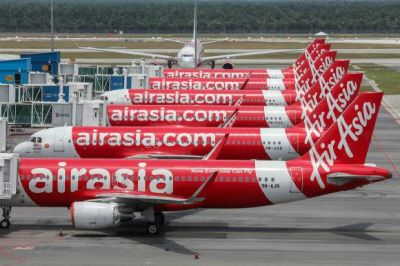
KUALA LUMPUR: AirAsia Group Bhd saw all its four key operating entities post significant improvement for the second quarter of this year (Q2’21) amid a low base effect as the group’s fleet were hibernated for the most part of the Q2’20 impacted by the Covid-19 pandemic.

In a statement issued yesterday, the low-cost carrier said AirAsia Malaysia carried 64% higher number of passengers year-on-year (y-o-y) on 54% higher capacity, resulting in a four percentage point-increase to a healthy load factor of 64%.

This is despite AirAsia Malaysia’s operations remaining constrained quarter-on-quarter (q-o-q) due to a lockdown and interstate travel restrictions imposed from January this year. “The ongoing subdued operations are expected to persist until Malaysia reaches herd immunity by the fourth quarter of this year. The government has recently set a new target of vaccinating all adults by October 2021,” it said.

Meanwhile, AirAsia Philippines posted a 2% increase in number of passengers carried and four percentage points increase in load factor to reach 78%.

However, it said the monthly breakdown showed that load factor was as high as 83% in June 2021, driven by active capacity management.

ADVERTISEMENTx

“This was despite running a limited number of charter and passenger flights due to community quarantine restrictions and despite flying only from its Manila hub,” it added.

Although AirAsia Indonesia’s number of passengers showed a mere 1% dip in the q-o-q, its load factor grew by 11 percentage points to 67% in Q2’21 due to more stringent capacity management.

“AirAsia Indonesia was operating approximately 70% of pre-pandemic domestic capacity in May 2021 and demonstrated strong signs of recovery before it had to enter hibernation mode in early July in support of the containment efforts by the government as infection cases increased,” said AirAsia.

On the other hand, AirAsia Thailand more than doubled the number of passengers carried y-o-y and reported a nine percentage point-increase in load factor to 61% in Q2’21, driven by higher demand during the Songkran festival in April 2021 and low base effect in the corresponding period last year.

However, AirAsia Thailand’s recovery was short-lived due to the new wave of Covid-19 that started in mid-April this year.

Having said that, it posted a 26% q-o-q decline in passengers carried in June this year.

Nevertheless, AirAsia Thailand’s load factor stood firm at 78% in June, attributed to active capacity management.

Moving forward, AirAsia remains committed to strengthen its domestic foothold while awaiting positive developments on international air travel.

“Expectation of high vaccination rates in Asean countries by the end of this year is lending confidence on upcoming recovery, enhanced by the group’s robust short-haul model in addition to leaner and more stabilised operations,” said AirAsia.

Published : July 28, 2021

By : The Star/ANN

Myanmar’s capital Naypyidaw struggles to contain 3rd wave of Covid-19 #SootinClaimon.Com

#SootinClaimon.Com : ขอบคุณแหล่งข้อมูล : หนังสือพิมพ์ The Nation.

https://www.nationthailand.com/international/40003848

Myanmar’s capital Naypyidaw struggles to contain 3rd wave of Covid-19


Nay Pyi Taw (NPT) – the capital of Myanmar and a Union area, consisting of Lewe, Pyinmana, Tatkone, Dakkinathiri, Ottarathiri, Zabuthiri, Pobbathiri and Zayyathiri Townships, directly placed under the Presidents control as Chapter 2 of the 2008 Constitution.

When Covid-19 first landed in Myanmar, strict security measures were placed in the Nay Pyi Taw region as it was the place of administration for the whole country. Entries and exits to and from NPT were all closely monitored, amongst other measures, thus those that were in Nay Pyi Taw were sheltered from the brunt of the damage. Workers, especially public servants, continue to travel from one township to another regularly within the region itself with no stay-at-home orders imposed in NPT townships.

For the third wave, however, there have been attempts at mitigating the effects of Covid-19 on Nay Pyi Taw region. Nay Pyi Taw’s Covid-19 control and response committee issued a statement on June 18 which makes a 10 day quarantine period mandatory for those coming into Nay Pyi Taw – be it via land or air – from townships that have been put under the stay at home order.  Those undergoing quarantine will also be subject to an RDT Test Kit on the third day of quarantine and a RT-PCR test on the seventh day. Anti-Covid security measures have also been put in place at entry/exits into the NPT region such as temperature reading, checking for possible Covid-19 symptoms such as lower blood oxygen levels and so on. 

Guests visiting on official business or  public servants returning from outside of NPT will not be subjected to the quarantine but will have to undergo testing, only to be allowed entry if results show negative. If positive, they will be admitted to the hospital for further treatment.

But starting from around middle of July, NPT started seeing Covid-19 positive patients. On July 1, the total amount of Covid-19 cases in NPT reached 1976 and had continued to climb. And thus on July 6, Zabbuthiri and Pyinmana came under the stay home order issued by the Ministry of Health and Sports (MOHS). Those outsied of the two townships were placed under travel restrictions.

Yet the numbers climbed. By July 15, the daily increase was at 383 cases and hitting a total of 6541 by July 22. In comparison, the total amount of cases within NPT by January 29, 2021 was only 1258.

Health and safety checks and gates were placed in both townships with Zabbuthiri seeing 10 locations and Pyimana seeing 9 locations. Zabbuthiri Township was homed to 2651 patients while Pyinmana was at 883 patients on July 22. Dekkinathiri Township was at 154, Ottarathiri was at 186, Pobbathiri was at 513, Zayyarthiri  was at 914, Lewe was at 726, Tatkone at 192 and finally, there were a total of 192 patients that came from outside of NPT.  The total death toll within NPT was at 105 officially.

Now, NPT’s streets remain mostly empty except for those on urgent business. Despite the precautionary measures, NPT residents say that there are many that are unable to seek treatment or medical aid from hospitals and clinics as well as that the death toll is likely to be much higher than reported.

“There’s no one here on the road. In villages, everyday is at least two to three deaths. There’s no point going to the hospital. One died here today and yesterday it was two and three and so on. It is happening consecutively,” said a resident from a stay-at-home township within NPT.

“I’m infected. My wife got it first. She almost got better and I became sick. I’m not going to go to the hospital and stay at home. I have no medicine and no money left. All I can do is gargle with salt water. I had the fever since yesterday and now I lost my smell this morning,” said a person with Covid-19 symptoms in NPT.

Such cases are also common within NPT.

“People with severe conditions cannot go to the hospital. What I mean by cannot is because the beds are all full. There are those on oxygen at the hospital that are not on beds and there are at least 30 or 40 of them. The main problem is that there is insufficient space. So there isn’t enough beds for patients that require oxygen at the hospitals,” said a volunteer working in NPT.

To help those patients that need oxygen to stay alive, volunteer and charity groups as well as places like the Htan ta Pin Taw Ya Monastery is helping with whatever they can by delivering oxygen to them or refilling the spent cylinders.

“It’s bad. We are cooperating with Ottarathiri Township’s administrator. But the hospital has some weaknesses. There are about 2000 Covid-19 positive cases housed at both municipal guest houses at around 950 and 980 each side. There aren’t enough doctors and cannot check on every room,” recounted the volunteer of his experience.

He also says that there have been many that lost their lives while volunteers try and find oxygen and other needs.

“Too many have died. There are already six deaths in my village. In the morning, the 1000-bed hospital saw 11 deaths. This doesn’t even include Pyinmana and so on. There are daily deaths at the municipality guest houses. The patient will die at night, people know about it only in the morning and carry away the body. That’s the routine. The main problem is lack of oxygen and there are no doctors to help when they suffocate,” said another volunteer trying to helping the situation in NPT.

There are five specialist hospital and 17 public hospitals that are monitoring and treating Covid-19 patients. Municipal guest housing 1 and 2 as well as Lewe’s playground have been transformed to also house Covid-19 patients. NPT’s Mani Yadanar Jade Hall is also being transformed to fit 1526 Covid-19 patients. Pyimana’s Mingalar Byuhar Thar Thanar Beik Mandaw is also now a Covid-19 contact person center. The NPT council had also announced that facility quarantine centers have also been opened at places like the Jade City Hotel, Zabbuthiri Hotel, New Ayer Hotel, Shwe Pyitaw Hotel and so on.

The council had also announced on their Facebook page that Covid-19 suspected cases will be tested at the Lewe gymansium starting on July 20. The tests will be split into two parts with 50 people at 7am and then another 50 again at 2pm. Those that wish to undertake the tests were adviced to register via phone in advance.

The State Administration Council had also issued an order to make it a public holiday for most, apart from essential services such as healthcare services as well as the banking sector, from July 17 to July 25 (now extended to August 1) in order to act as a circuit breaker in attempting to control the spread of Covid-19.

Only time will tell how effective the NPT council’s efforts are to protect the NPT region, a highly controlled area that had did not saw very little of Covid-19 during the first and second wave, in comparison against the current third wave. The lack of plenty oxygen supply, space and capacity limitations at hospitals, shortage of healthcare workers and dozens dying in their homes everyday will be challenges that the government must address not only for NPT but Myanmar as a whole.

Published : July 28, 2021

By : Aung Min Thein/Eleven Media/ANN

Hotlines restored between two Koreas #SootinClaimon.Com

#SootinClaimon.Com : ขอบคุณแหล่งข้อมูล : หนังสือพิมพ์ The Nation.

https://www.nationthailand.com/international/40003847

Hotlines restored between two Koreas


Restoration comes after multiple exchanges between Moon and Kim; No discussions on immediate summit talks

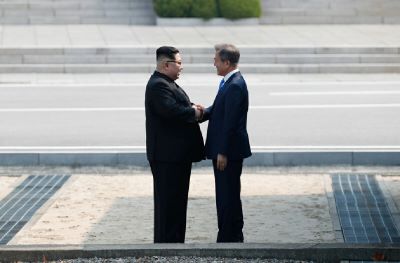
South and North Korea have reopened direct communication lines as of 10 a.m. Tuesday, with President Moon Jae-in and North Korean leader Kim Jong-un agreeing to restore mutual trust and improve the soured inter-Korean relationship.

“The two leaders shared an understanding to recover mutual trust and again push their relationship forward,” said Park Soo-hyun, Moon’s senior secretary for public communication.

According to Cheong Wa Dae sources, the leaders started exchanging personal letters from April 27 on the occasion of the third anniversary of the Panmunjeom Declaration that marked their first summit talks in the cross-border village in 2018.

Until recently, the leaders reportedly shared views on diverse pending issues such as COVID-19, heavy rainfalls in the North and the stalled peace talks on the Korean Peninsula.

“Holding a summit was not on the agenda,” a senior Cheong Wa Dae official said on condition of anonymity. “Their discussions were made through letters. There were no phone calls.”

The hotline restoration came after 13 months of collapsed diplomacy between the two Koreas. In June last year, the North cut off all communication channels with the South in protest over Seoul’s failure to contain anti-Pyongyang leaflets being sent by North Korean defectors.

At the time, the North also blew up an inter-Korean joint liaison office in the North Korean city of Kaesong that was set up as a sign of good will following the 2018 inter-Korean summit that led to Kim’s three meetings with then US President Donald Trump.

With the latest agreement, Seoul’s four hotlines to Pyongyang– two operated by the Unification Ministry and two operated by the Defense Ministry– have been recovered. The ministries also confirmed they succeeded in making the first phone calls in months earlier in the day.

“We tried to make the first call at 10 a.m. but the actual conversation started slightly after 11 a.m. due to some technical issues,” a Unification Ministry official said on the condition of anonymity, adding the first conversation lasted for about three minutes. 

ADVERTISEMENTx

The two Koreas used to make phone calls at 9 a.m. and 5 p.m. every day via the hotlines. The official said that regular phone calls will be resumed like before, saying a second phone call was supposed to be made later in the day.

Other cross-border hotlines, such as those installed in Cheong Wa Dae or at Seoul’s spy agency, seemed to have not yet been fully recovered, given discussions are still underway for a complete restoration of the communication channels between the two Koreas.

“For the South, the most urgent issue was reopening communication channels with the North. We will continue to work for a complete restoration. Considering restrictions on face-to-face contact amid COVID-19, we also plan to set up a new system for virtual meetings for smoother talks between the two Koreas,” the ministry official said.

Citing the mutual agreements made between the two Koreas, both Cheong Wa Dae and the ministries were cautious about elaborating further on some sensitive issues, like an apology from the North over its wrecking of the liaison office last year or whether any preconditions had been discussed for the official resumption of inter-Korean talks.

“The hotline restoration is the starting point of the suspended dialogue between the two Koreas. Nothing specific has been discussed yet,” the Cheong Wa Dae official said.

In the meantime, North Korea also confirmed the latest agreement earlier in the day, saying the restoration will play a positive role in improving relations between the two sides.

“The top leaders of the North and the South agreed to make a big stride in recovering the mutual trust and promoting reconciliation by restoring the cutoff inter-Korean communication liaison lines,” the official Korean Central News Agency said. 

Published : July 28, 2021

By : Lee Ji-yoon/The Korea Herald/ANN