China’s top legislature eyes more laws for HK, Macao SARs
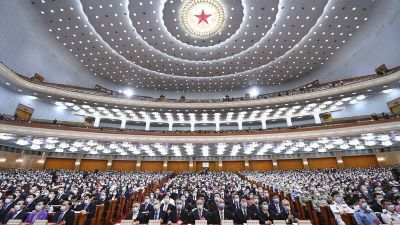
BEIJING – The Standing Committee of the 13th National Peoples Congress (NPC) will convene its 30th session next month in Beijing to discuss draft legislation, including a decision that would add more laws that can be applied in the Hong Kong and Macao special administrative regions.
The decision to hold the session from Aug 17 to 20 was made on Tuesday at a meeting of the Council of Chairpersons of the NPC Standing Committee, which was presided over by Li Zhanshu, chairman of the NPC Standing Committee.
According to the proposed agenda, lawmakers will review at the session draft laws on personal information protection, supervisors, legal aid, physicians, combating organized crime, family education and land border as well as a draft revision to the military service law.
They will also hear draft revisions to the law on scientific and technological progress, the law on prevention and control of noise pollution, the seed law and the population and family planning law.
Lawmakers will deliberate a draft decision to include more national laws in the list of laws in Annex III to the Basic Law of the Hong Kong Special Administrative Region and a similar one concerning Annex III to the Basic Law of the Macao Special Administrative Region.
The NPC Standing Committee will also deliberate a draft decision to authorize the Supreme People’s Court to launch pilot projects of court reform.
Other documents to be submitted at the session will include reports on the implementation of the national economic and social development plan and on the implementation of this year’s budget.
Cambodians are divided on the cause of climate change but 84 per cent of people believe climate change is happening, a report released by the National Council for Sustainable Development (NCSD) revealed.
The NCSD on July 26 launched its third report on public perception on climate change in Cambodia.
This study aims to understand people’s understanding, attitude and practices in relation to climate change, environment, and availability of resources.
According to the report, 76 per cent believe that the loss of forests is the main cause of climate change, 53 per cent believe human activity is the cause, while 52 per cent say it is nature. Fifty per cent claim a damaged ozone layer is to blame, 49 per cent say population growth and 34 per cent blame migration to the city, and 22 per cent believe climate change is an act of god.
Seventy-two per cent have heard about climate change, and 33 per cent understand what climate change means. The latter group is urban dwellers, male, professional and highly educated.
The report said 91 per cent of Cambodians have responded to climate change, while 79 per cent are willing to make further changes to adapt to climate change, the environment and available resources.
Institutional support and lack of resources are major barriers for people to take action regarding climate change followed by social barriers, the report claimed.
The report added that living standards had improved by 87 per cent and incomes increased by 52 per cent.
Unfortunately, the report revealed that 28 per cent of people believed climate change cannot be solved, while 69 per cent said it could. Eighty-one per cent thought climate change will affect Cambodia in the future.
Ministry of Environment secretary of state Tin Ponlok said that research revealed three-quarters of Cambodians are aware that climate change is affecting Cambodia, and almost all have sensed that temperatures and droughts have increased in the last 10 years.
“The research found that most Cambodians are prepared take action against severe climate such as rising heat waves, storms, droughts and floods.
“Two-thirds of Cambodians interviewed said their lives had improved in the last five years,” he said.
Ponlok said linking climate change-related activities with health factors and improving family livelihoods, as well as educating people’s children, is an important key to motivating people to take more action in response to climate change.
UNDP deputy resident representative in Cambodia Sonali Dayaratne said: “This report provides an important opportunity for all stakeholders to collectively contribute to and further coordinate Cambodia’s progress towards a more climate resilient society.”
“Using the results of this important study, joint interventions can be better designed to improve Cambodia’s adaptive capacity, reduce emissions, and ultimately fulfill the stakeholders’ commitment to better the lives of people, especially the most vulnerable,” she said.
S. Korean tidal flats listed as UNESCO world heritage
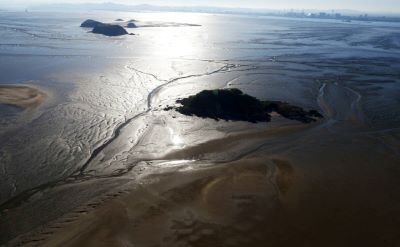
South Koreas tidal flats have been officially inscribed as a UNESCO world natural heritage despite receiving a deferral in a preliminary review, cultural heritage authorities said Monday.
Seoul has been pushing to register “getbol,” or “Korean tidal flats,” on UNESCO’s world heritage list in the 44th session of the World Heritage Committee taking place in Fuzhou, China, online.
The decision came as a surprise, considering that getbol was deferred from the list of potential assets that could be listed as UNESCO world heritage in a preliminary review held in May. The list consists of cultural, natural and mixed sites.
The International Union for Conservation of Nature, an advisory body for UNESCO, handed down a deferral for getbol in a four-tier system consisting of inscribe, refer, defer and not to inscribe.
While an “inscribe” recommendation raises the possibility of the heritage being listed on the UNESCO list, those that have received a “not to inscribe” recommendation cannot reapply for review.
The IUCN suggested that while there is a possibility that getbol serves as an important habitat for biodiversity, the range of the areas is not large enough to show a large-scale topographic and ecological process, with the exception of the tidal flats in Sinan.
South Korea had applied for a review on four tidal flats across the country’s coastal areas, such as Seocheon in South Chungcheong Province, and Gochang, Sinan, Boseong and Suncheon in South and North Jeolla Provinces.
With the inscription, South Korea has 15 sites listed on the world heritage list. The tidal flats are the country’s second natural site after Jeju volcanic island and the lava tubes on the southern resort island.
Singapore to review Covid-19 rules in early August, ease measures for vaccinated people if situation under control
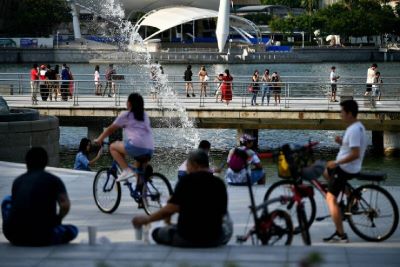
SINGAPORE – Singapore will review its Covid-19 restrictions in early August, and ease some measures if virus clusters are under control and hospitalisation rates remain low.
But any loosened restrictions will be extended only to vaccinated individuals, who are “much better protected against the effects of the virus”, Finance Minister Lawrence Wong said on Monday (July 26).
“This means that if you want to attend a large event or a religious service involving more than 100 persons, you have to be fully vaccinated,” he told the House in a ministerial statement that gave an overview of the country’s next steps in its pandemic response.
“If you want to go out to dine in a restaurant or work out in a gym, you have to be fully vaccinated,” he added.
Mr Wong said Singapore will be able to further ease restrictions around September, when about 80 per cent of the population are expected to have got the full two doses of the vaccine. This will include allowing fully vaccinated people to travel to areas where the Covid-19 situation is under control without serving the 14-day stay home notice (SHN) in a hotel.
He noted that by early August – the mid-point of the phase two (heightened alert) period – around two-thirds of Singapore’s population would have received the full two doses and some three-quarters of seniors aged 70 and above would also have been vaccinated.
The hope is that come early September, about 80 per cent of seniors aged 70 and up would be fully vaccinated, added Mr Wong, who co-chairs the multi-ministry task force tackling Covid-19.
Singapore will then allow larger groups to gather, especially if all are fully vaccinated. It will also begin to reopen its borders for travel, especially for vaccinated people.
“We will start by establishing travel corridors with countries or regions that have managed Covid-19 well, and where the infection is similarly under control,” he said.
Instead of serving the 14-day SHN in a hotel, fully vaccinated people who travel to these areas will instead likely undergo a rigorous testing regime or serve a shorter seven-day SHN at home, depending on the risk level of the place they visit.
However, unvaccinated individuals will be subject to the prevailing requirements.
ADVERTISEMENTx
Looking further beyond, Singapore will continue with a series of “progressive easings”, the minister said.
As it does so, the country must expect Covid-19 cases to rise – partly because there are still “cryptic” cases being transmitted in the community, he noted.
Imported cases will also rise as Singapore opens its borders, with “infected persons slipping through from time to time”.
“But at that stage… our main focus will no longer be on daily case numbers, because the vast majority by then would have been vaccinated, and even if they catch the virus, they are much less likely to become very ill,” Mr Wong said.
“Instead, our focus will be on the much smaller number of infected persons who need supplementary oxygen or require intensive care.”
ADVERTISEMENT
At each stage of easing, Singapore will monitor Covid-19 patients’ health outcomes – especially hospitalisation rates and intensive care unit usage.
These must be deemed “acceptable and stable” before the country moves to the next step, Mr Wong said. It will have to slow down or even pull back on reopening should these numbers shoot up.
The minister added that Singapore must be prepared for new variants that may be more transmissible or lethal to emerge.
“We will find solutions to these variants, especially through booster shots or updated vaccines, which we may need to roll out nationwide,” he said. “But we must be prepared that the new variants can lead to more severe outbreaks, and may well force us to introduce restrictions again from time to time.”
In his statement, Mr Wong also explained why the task force “made the difficult decision” to return to phase two (heightened alert) – a move that has drawn criticism from some quarters.
ADVERTISEMENT
The stricter rules that scale back activities help slow down transmission and give the country time to push vaccination rates up further, protecting seniors, he said.
Covid-19 rules to be reviewed in early August; curbs may be eased for those vaccinated
The large clusters that formed in recent weeks show how easy it is for the Delta variant to spread and potentially overwhelm Singapore’s hospital system, Mr Wong added.
He pointed out that vaccinated individuals may experience very mild symptoms when infected, inadvertently becoming asymptomatic carriers.
“By the time the cases pop up, days or even weeks would have passed and the infection would have spread to many people,” he said.
Facing a heightened risk of widespread community transmission before enough people attained adequate vaccine protection, Singapore thus decided to tighten the rules.
At present, the proportion of people who are fully vaccinated is still less than 50 per cent, he said.
“We are especially worried about our seniors, because there are still over 200,000 seniors aged 60 and above who are not fully vaccinated.”
In reopening, the vaccination of seniors is key, Mr Wong added.
“So I make a special plea to all who remain unvaccinated or have not registered to be vaccinated, especially our parents and grandparents: Please come forward,” he said.
In a separate statement, Health Minister Ong Ye Kung observed that Singaporeans’ thoughts on living with Covid-19 fall into two broad categories.
Younger, vaccinated individuals feel that those who are vaccinated should be allowed to enjoy more social activities but, on the other hand, a sizeable segment of older Singaporeans who have yet to be vaccinated remains.
Differentiated measures for vaccinated persons are necessary for public health reasons, especially to protect the unvaccinated, he said.
Mr Ong pointed out that Singapore is one of the few countries to have come through the last 20 months with very few fatalities, and is unique even among countries and regions which have access to vaccines.
Some countries – such as the United States and United Kingdom – went through major episodes of widespread transmission, while others – such as Australia and New Zealand – kept the pandemic under control but are now finding it difficult to get their people vaccinated.
“This will make us perhaps the only country in the world, which has not suffered a collapse of our hospitals nor a high death toll, and at the same time achieved a very high vaccination rate in our population,” he said.
“This uniqueness is due to the unity of our people, the trust amongst them, and between the people and Government.”
Key points in the next steps in Singapore’s pandemic response
• Greater use of community care facilities rather than hospitals
• Shorter stays in hospitals and community care facilities
• Home quarantine instead of staying at government facilities
• All households to get DIY Covid-19 test kits
• Vaccinated individuals travelling to safe countries could serve a shorter seven-day SHN at home
13-year-old Nishiya becomes youngest-ever Japan medalist with skateboarding gold
Momiji Nishiya, 13, won the women’s street skateboarding at the Tokyo Olympics on Monday at the Ariake Urban Sports Park, becoming Japan’s youngest athlete to win an Olympic medal.
Compatriot Funa Nakayama, 16, finished third to bag the bronze medal. The podium was dominated by teenagers, as Brazil’s Rayssa Leal, also 13, took silver.
Nishiya finished first in the eight-person final with 15.26 points. Leal scored 14.64, while Nakayama earned 14.49.
Nishiya started slowly in the final, but recovered to score high marks in her last three tricks.
“At first, I thought there’s no chance to win, but people around me encouraged me,” Nishiya said.
“So I shifted my focus, and determined to never give up until the end.”
The World Bank forecasts Myanmar’s Economy to Contract by 18 Percent in FY 2021
The World Bank, in a report dated July 26, forecasts that the economy is expected to contract by 18 percent in 2021 Fiscal Year, which will have detrimental implications for the lives, livelihood, poverty, and future growth of the country.
The reports states that as a result of the ongoing crisis and rapidly-rising threat of Covid-19 cases, compounded on an economy that has already been weakened by the effects of Covid-19 in 2020, Myanmar’s economy is projected to contract by 18 percent. The report adds that the economy is around 30 percent smaller than it would have been without the impacts of Covid-19 and the February 1st military takeover.
Additionally, the share of the Myanmar population living in property is expected to double by the beginning of 2022, compared to 2019 levels. As many as 1 million workers are likely to lose their jobs while numerous other workers will experience declines in income due to reduced pay and hours.
Mariam Sherman, the Country Director of World Bank Myanmar, Cambodia, and Lao PDR states,
“The loss of jobs and income and heightened health and food security risks are compounding the welfare challenges faced by the poorest and most vulnerable, including those that were already hit hardest by the pandemic last year.” The World Bank report warns of the alarming dangers of the current third wave of Covid-19, which will inflict even more significant damage on an economy already reeling from economic shocks that has weakened consumption, investment, trade, business operations and the supply of labor.
Kim Edwards, the World Bank Senior Economist for Myanmar, states that “While there were initial signs of stabilization in some areas in May and June, with mobility improving and logistics disruptions easing, overall economic activity remained very weak and further contraction is likely from July onwards due to the recent surge in Covid-19 cases.”
The report paints a gloomy picture of the economy in the long term and cites that recent events will jeopardize the developmental gains that have been made over the past decade. Investment, human capital accumulation, and environment for doing business are likely to be seriously impacted.
In March, the World predicted that Myanmar’s economy would contract by 10 % in the financial year of 2021. The World Bank in its previous update of the economy in October 2020 predicted that the economy would grow by 5.9 percent, one of the strongest rates of expansion in the Southeast Asia region.
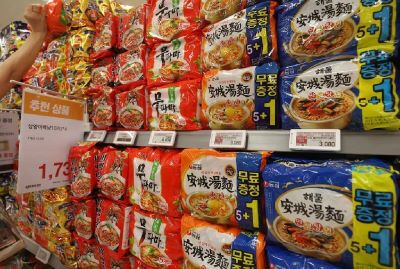
Instant noodle exports hit new high in H1 amid pandemic
South Koreas instant noodle exports touched an all-time high in the first half of the year amid the coronavirus pandemic, data showed Monday.
Asia’s fourth-largest economy exported $319.68 million worth of instant noodles, or “ramyeon” in Korean, in the January-June period, up 5.8 percent from a year earlier, according to the data from the Korea Customs Service.
The amount was above the previous first-half record of $302.08 million set a year earlier.
Yet the first-half growth rate was well lower than the 37.4 percent surge during the first half of last year due mainly to a 15.8 percent on-year fall in shipments to China, the largest export destination.
Other reasons for the slowdown include the so-called base effect and South Korea’s export bottlenecks stemming from a shipping container shortage, according to market watchers.
The solid first-half gain was attributed to the global popularity of Korean-made instant noodles as an emergency food in the wake of the coronavirus outbreak that forced people to stay home.
Also responsible were strong overseas shipments of Chapaguri, a signature noodle dish from the Oscar-winning film “Parasite” and a mixture of Chapaghetti, instant black bean noodles, and Neoguri, spicy Korean udon-like noodles.
China was the largest overseas market in the first half, with exports reaching $68.13 million.
The United States came next with $37.3 million, followed by Japan with $33.02 million, Taiwan with $16.21 million and the Philippines with $12.05 million.
Meanwhile, South Korea’s instant noodle imports came to $4.69 million in the six-month period, according to the data. (Yonhap)
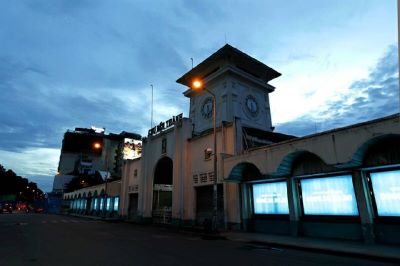
HCM City residents forbidden to go outside between 6pm-6am
HCM CITY — Starting Monday, residents of HCM City will no longer be allowed to go outside and all activities except medical emergencies or COVID-19 coordination efforts, will be banned from 6pm until 6am the following day.
Nguyễn Thành Phong, Chairman of HCM City People’s Committee, announced the latest movement restriction late Sunday as the southern economic centre battles a serious outbreak that still sees no sign of improving after 55 days into a social distancing order and more than two weeks into the stringent Directive 16, the equivalent of a lockdown.
Further details on the order, including who will be allowed out after 6pm, will be available on Monday. The city’s official insisted that the latest measure is not a “curfew” however.
With a 10 million population, HCM City continues to be the epicentre of the ongoing fourth wave of infections in Việt Nam, with 60,425 local cases recorded since late April, accounting for the nearly two thirds of the country’s 94,666.
Local law enforcement (police, military, local authorities) will need to step up patrols and enforce compliance with social distancing orders, and issue appropriate penalties for offenders – even detainment in cases of resistance, Phong said.
For organisations and individuals that intentionally commit violations resulting in the spread of the virus, authorities shall quickly investigate and prosecute criminal cases if there is sufficient evidence to constitute a crime, Phong said, adding that local leaders and officials will need to set an example and heighten their own sense of responsibility.
Phong said that despite the social distancing order currently in effect – which states that people must stay at home and go outside only for necessary purposes like buying food or essential items, or for medical emergencies – he still sees that direct contact remains rampant and there are still too many people travelling in the streets city-wide.
“This morning, going from the city’s centre to Bình Tân, Củ Chi and moving to Thủ Đức City, I called up every chairman of each district and commune, to immediately work with the local military and police units to tighten the order,” Phong said.
“We all have to understand that this is very dangerous and the cause of this protracted outbreak. If we cannot control this, things will deteriorate and force the authorities to implement more stringent and heavy-handed measures. The impact would be significant on several fronts,” the city’s leader stressed.
Phong said that the city has drawn up three scenarios after the 15 days of Directive 16, and despite the best efforts, it failed to meet the first scenario where outbreak is contained, so the city has to roll out the scenario where “enhanced measures” are added on top of the Directive 16, and with the ongoing situation, more emergency measures might be needed.
“This is not what the city’s authorities want, but that is the only way to defeat the outbreak,” he said, adding that he hopes people would sympathise and cooperate with the municipal authorities to effectively implement the COVID-19 policies.
Medical capacity
Vice Secretary of the HCM City Party Committee Phan Văn Mãi said that the city is focusing all resources on effective treatment of patients to minimise deaths, but admitted that the overwhelmed healthcare system might struggle to deliver on-time services in some cases.
HCM City has been receiving numerous support from the central Government as well as other provinces and cities across the country, but with the situation deteriorating in many other neighbouring southern localities, medical units have been diverted gradually to these affected areas.
Therefore, the city needs to fully take advantage of its international resources and have more logical, effective coordination in COVID-19 responses, he added.
Vice Chairman of HCM City People’s Committee Dương Anh Đức said the caseload of HCM City remains high and the city is trying to “flatten the curve”.
He urged cooperation and that everyone does their best to contain the spread of the virus.
Deputy Health Minister Nguyễn Trường Sơn, head of the health ministry’s special standing division in HCM City, on Saturday, issued an appeal letter, “urgently” calling on all people with a medical background from the public and private sector, including active and retired medical officers, healthcare teachers and students, as well as members of health associations, to help deal with Delta variant-outbreaks in HCM City that are having a serious impact on public health and the economy.
“With professional responsibility, compassion towards our fellow countrymen, let’s come together to support the fight against the outbreaks around the country, providing counsel and engaging in the treatment of patients,” Sơn wrote. — VNS
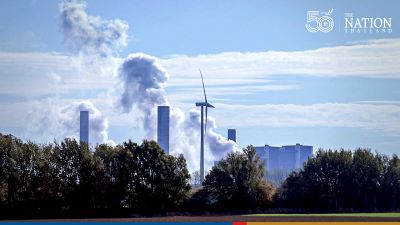
Japan aims to reduce households’ greenhouse gas emissions by 66%
The government has specified for the first time the amount by which greenhouse gas emissions need to be reduced in different sectors to achieve the government’s goal of reducing overall emissions by 46% from the fiscal 2013 level by fiscal 2030, according to a draft obtained by The Yomiuri Shimbun.
According to the draft of a global warming prevention plan, emissions must be curtailed 66% by households, for example.
Scheduled to be released Monday by the Environment Ministry at a meeting of a government council, the plan sets the nation’s medium- and long-term numerical targets for reducing greenhouse gas emissions. It will be the first time to revise the plan since 2016.
The draft presents a complete picture of the nation’s greenhouse gas reduction efforts, reflecting the contents of a draft of the basic energy plan released Wednesday and including reduction targets not presented in the energy plan.
According to the draft of the global warming prevention plan, the emission of carbon dioxide from energy sources should be reduced by 45% from the fiscal 2013 level by fiscal 2030. Specifically, the household sector will be required to cut CO2 emissions by 66%, up from 39% under the current plan.
Business operations at offices and elsewhere will have to slash emissions by 50%, up from 40%, while the transport sector, including the operation of cars and trains, will need to cut emissions by 38%, up from 28%.
The industrial sector, including manufacturing, will need to cut emissions by 37%, up from 7%.
As for carbon dioxide from non-energy sources, the government aims to trim emissions by 15% by reducing waste incineration, among other means. It also aims to cut CO2 emissions by 48 million tons by expanding carbon sinks through the promotion of urban greening.
The draft provides a complete picture of the nation’s greenhouse gas reduction efforts and includes targets and measures for each sector, but it remains unclear whether they will be viable.
In April, the government raised its target for reducing greenhouse gas emissions by fiscal 2030 from 26% to 46%. Emissions will need to be cut to about 760 million tons, from the about 1.41 billion tons released in fiscal 2013.
More than 80% of greenhouse gas emissions come from energy sources such as power generation through fossil fuels and others. The government aims to reduce the emissions in part by increasing the percentage of power generation from renewable energy sources.
The 66% reduction target among households is the the largest among all the sectors. On top of changing households’ sources of energy, the government will focus on measures such as increasing the number of houses that can reduce energy consumption to virtually zero through rooftop solar power generation.
In the transportation sector, where a 38% reduction in emissions is sought, the government aims to improve the efficiency of truck transportation and promote car sharing.
As for greenhouse gas emissions coming from non-energy sources, the government aims to reduce the amount of waste incinerated, including that of plastic shopping bags and disposable spoons.
The draft also includes the use of a “bilateral credit system” under which Japan would assist in the energy-saving measures of developing countries and part of the emissions that were curbed would be calculated as reductions by Japan.
The government’s global warming prevention plans used to be drawn by setting achievable reduction targets based on actual results, but the figures included in the draft were made to endorse previously set government targets. Since the government will rely heavily on businesses and the public to achieve the goals, a source close to the government admitted that the hurdles to achieving the targets are particularly high.
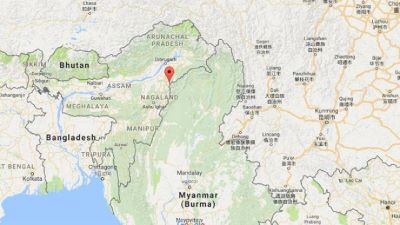
China’s growing presence in Myanmar among security concerns for Indias northeast
Chinas growing presence in Myanmar, the Rohingya refugees, illegal immigration, and drug trafficking have serious security concerns for north east India, according to Indias Chief of Defence Staff General Bipin Rawat.
He said there has been a significant fall in insurgency-related violence in India’s north eastern states due to sustained operations by Indian security forces and loss of “safe havens” in neighbouring countries like Bangladesh in recent years.
There is a need for further consolidating the “positive developments” through peace talks with the insurgent groups, reports our New Delhi correspondent quoting the General.
General Rawat also added that India needs to closely monitor Myanmar’s evolving situation as China is making further inroads following the international sanctions that were imposed post-military coup in February.
“China’s Belt and Road Initiative is bound to get further impetus with the sanctions on Myanmar,” said Gen Rawat while speaking at a webinar titled Opportunities and Challenges in North East India, organised by the Indian Military Review.
Gen Rawat said the return of normalcy in Myanmar would augur well for the entire region, especially India, because of our historical and cultural linkages with that country.
The north east region of India, which is linked to the rest of the country through a narrow and vulnerable Siliguri corridor, is of considerable strategic importance since China “mischievously’ set eyes on it.