China denies Mekong hacking #SootinClaimon.Com

#SootinClaimon.Com : ขอบคุณแหล่งข้อมูล : หนังสือพิมพ์ The Nation.

https://www.nationthailand.com/international/40003759

China denies Mekong hacking


As the US and its allies joined hands last week to expose what they allege to be China’s Ministry of State Security’s malicious cyber activities around the world, the attention also turned to Cambodia with the US Department of Justice claiming that four Chinese hackers stole data concerning the Mekong River from a Cambodian ministry in January of 2018.
The US justice department issued a press statement on July 19 accusing four Chinese nationals of involvement in a “global computer intrusion campaign targeting intellectual property and confidential business information, including infectious disease research”.

According to the prosecutor’s indictment filed with the court in the southern district of California, the four members of the conspiracy had infiltrated the network of a “Cambodian government ministry” in January 2018 and stole data pertaining to discussions between the Chinese government and Cambodia over use of the Mekong River.

The document states: “On or about January 10, 2018, the same day that the PRC [People Republic of China] was engaged in discussions with multiple countries, including Cambodia, concerning use of the Mekong River, members of the conspiracy stole data from a system operated by ‘Cambodian Government Ministry A’ pertaining to those discussions, and stored that data at DOMAIN 6, where it was protected with the password “goodperson”.

Although the indictment said the conspiracy also recruited Cambodian linguists to translate the data, it did not elaborate on what the stolen data was specifically about.

On January 10, 2018, Cambodia hosted the second Mekong-Lancang Cooperation (LMC) meeting in Phnom Penh under the theme Our River of Peace and Sustainable Development.

The meeting was co-chaired by Prime Minister Hun Sen and Chinese Premier Li Keqiang and attended by the leaders of the Mekong countries including Lao Prime Minister Thongloun Sisoulith, Thai Prime Minister Prayut Chan-o-cha, Vietnamese Prime Minister Nguyen Xuan Phuc and Myanmar’s Vice President Myint Swe.

On July 22, wire service Reuters reported the indictment and quoted unnamed sources who claimed that the hackers had stolen data from the Ministry of Foreign Affairs and International Cooperation.

Reached on July 25, foreign ministry spokesperson Koy Kuong said the ministry was looking into what was being reported.

Ministry of Posts and Telecommunications secretary of state So Visothy said on July 23 that his ministry has no comment regarding whether the hacking took place, what data was stolen and whether it had any importance.

Ministry of Water Resources and Meteorology spokesman Chan Yutha could not be reached for comment on July 25.

US embassy spokesman Chad Roedemeier declined to comment on the matter, referring reporter to the US court indictment and the press release issued by the White House.

The Chinese embassy in Phnom Penh on July 22 firmly denied the accusation that four Chinese hackers from the Ministry of State Security had hacked and stolen Mekong data from a Cambodian ministry.

“China has been solidly opposing and combating cyber attacks of all forms. China never does [these attacks] nor will it encourage, support or condone cyber attacks. As a matter of fact, the United States is the largest source of cyber attacks in the world.

“US wiretapping and surveillance know no bounds, not even its ‘allies’. On the issue of cybersecurity, the US has long forfeited the last shred of credibility. Trumping-up charges, projecting their guilty conscience onto others, and sowing discord everywhere is nothing but a case of ‘the emperor’s new clothes’ – [it is] worthless misinformation and self-deceit,” the embassy said.

The Chinese embassy also took aim at Reuters for reporting what it called the “unwarranted accusations of the US Justice Department”. The Reuters’ article, the embassy said, is based entirely on fabrications and falsehoods by the US and it is replete with factual and logical inconsistencies.

The Chinese embassy said it never received any request for comment from Reuters regarding the matter prior to the story’s publication.

The Mekong River Commission (MRC) said they were aware of the situation from news reports, but had no further information as the hacking was not targeted at the MRC Secretariat.

“It’s not immediately clear as to what type of data that the hackers have stolen, and we don’t know why they made this attempt. But there must be something interesting or important that motivated them to do so,” the Secretariat said.

It said most data at MRC is publicly available and hosted on a data portal. The portal represents a storehouse of data where at least 10,333 datasets are currently available. The datasets include current and historical hydro-meteorological and climate time-series, spatial maps, atlases, photographs and sectorial datasets that can all be easily accessed.

“While the data sets are important, nothing is confidential on our platform, and it is meant for everyone who is interested in Mekong development and status,” it said.

Digital security consultant Nget Mose said on July 25 that there was no information available yet as to what data was stolen or what the motive was.

“This happened in 2018 but we’re just hearing the news now when the US department of justice released it,” he said.

He said if there were meetings that were private or closed-door, then the hackers probably wanted the meeting documents and Chinese hackers would have an interest in these political meetings because the Mekong River flows from China.

“As to why the documents would be important to hackers, it depends on the definition of hackers. Only they know what they wanted the data for. We as victims cannot know its importance. We only know that it was important documents related to meetings between our country and the neighboring countries on the Mekong,” he said.

Kin Phea, director of the Royal Academy of Cambodia’s International Relations Institute, said it was hard to judge whether what the US said was true because both the US and China often accused each other of various misdeeds.

“Only the US, China and Cambodia can say whether it is true or not. What we’ve noted is that accusations by each of these two countries against each other happen very often. Sometimes China accuses the US and vice versa regarding hacking. The US also accused North Korea of hacking various US entities,” he said.

He said it is difficult to determine the veracity of such accusations because it requires technology, independent researchers and investigators with expertise.

Phea said China, the US, Russia and some others are all countries with advanced technology that allows them to easily steal data from other countries.

“We used to hear that the US used to tap the telephone lines of their allies in Europe and Asia, but we didn’t say they hacked them,” he said

He said whatever the truth of the matter might be, it is clear that Cambodia needs to be careful and strengthen its cybersecurity, especially in the national defence and security sectors.

Published : July 26, 2021

By : Niem Chheng/The Phnom Penh Post/ANN
We can make next 30 years the best in India’s history: Mukesh Ambani #SootinClaimon.Com

#SootinClaimon.Com : ขอบคุณแหล่งข้อมูล : หนังสือพิมพ์ The Nation.

https://www.nationthailand.com/international/40003731

We can make next 30 years the best in India’s history: Mukesh Ambani


“I am supremely hopeful and confident about the Rise of New India. I can see that the spirit of India is more resurgent than ever before”, Mukesh Ambani, Chairman, Reliance Industries Limited (RIL) wrote in Times of India.

We can make next 30 years the best in India’s history: Mukesh Ambani

Ambani said India and the world changed dramatically at the beginning of the 1990s. Communist Soviet Union collapsed. The cold war ended. And India embarked on a bold new path of economic reforms. “Thirty years later, the global order is changing fundamentally yet again. The speed, scale and substance of this change are unprecedented, even unpredictable. Yet, one thing is absolutely predictable: India’s time has come”, Ambani said.

“Destiny and Drive is making the 21st centur’s favourite nation ready for a great leap forward. India stands at the doorstep of prosperity that is both significant and inclusive, and of delivering all-round human development through the democratic route. With faith in our potential, confidence in our collective capabilities, and unity in action, we can exceed the world’s expectations”, Ambani wrote.

ADVERTISEMENTx

“My source of optimism is our recent past. In 1991, India showed foresight and courage in changing both the direction and determinants of its economy. These reforms liberated India’s entrepreneurial energy and inaugurate an era of fast-paced growth”, Ambani said.

Ambani said the results are for all to see. India’s GDP of $266 billion in 1991 has grown by over ten times. India’s economy has become the fifth largest in the world. Poverty rates have halved despite population rising from 880 million to 1.38 billion. Key infrastructure has improved beyond recognition. Our expressways, airports and ports are now world-class, and so are many of our industries and services. “No young Indian today would believe that people had to wait for years to get a telephone or a gas connection, or that businesses had to seek government’s permission to buy a computer”, Ambani said.

“India transformed from an economy of scarcity in 1991 into an economy of sufficiency in 2021. Now, India has to transform itself into an economy of sustainable abundance and equitable prosperity for all by 2051. In India, equity will be at the heart of our collective prosperity”, Ambani said.

“With our accomplishments over the past three decades, we have earned the right to dream big. What can be a greater dream than to be able to celebrate the centenary of our independence in 2047 by making India one of the world’s three wealthiest nations, on par with America and China? Is it too tall an ambition to pursue? No. My visionary father Dhirubhai Ambani, who was one of the earliest advocates of economic liberalisation in the 1980s, used to tell me – ‘To think small is unbecoming of an Indian”, Ambani said.

How can we realise this ambition? By following our own unique Indian and atmanirbhar model of wealth creation, while cooperating with, and learning all the right lessons from, the rest of the world. Ambani has presented five broad ideas.

ADVERTISEMENT

First. So far economic reforms have benefited Indians unevenly. The disparity is neither acceptable nor sustainable. Therefore, the Indian model of development should focus on creating wealth for the people at the bottom of the economic pyramid. Our greatest advantage lies in India’s continent-sized domestic market, which is still largely untapped. Our economy will begin to witness miraculous growth when we create a middle class of one billion people with rising incomes. In demographic terms, this will amount to adding all of USA and Europe combined to the current size of the Indian market. When so many people are enabled to fulfil their aspirations for a better life, they will set in motion a virtuous cycle of consumption and production. This will cause an exponential rise in young entrepreneurs, including women entrepreneurs. Investors and businesses from around the world will want to participate in this humungous India Opportunity.

To achieve this might have seemed impossible in the past. Not so now.

Hence, my second idea. This is the age of technological disruption and acceleration. The world will witness more changes over the next 30 years than seen in the previous 300 years. After losing out in the first two Industrial Revolutions, and catching up on the third, India now has an opportunity to lead the Fourth Industrial Revolution. By speedily deploying its technologies, our entrepreneurs can achieve quantum increases in productivity and efficiency. This will transform not only our large industries and services, but also agriculture, MSMEs, construction, renewable energy, arts and crafts, etc. These are precisely the areas with the highest potential to create large-scale employment, which is India’s most pressing need. These technologies can help us achieve quality, affordability and equity in education, healthcare and housing at scale – a dire necessity since our population is expected to rise to 1.64 billion by 2050. They also have the power to reverse degradation of the environment and make it safe for all. In short, technology-led development is the surest way to create a better India and a more equal India for every Indian.

Third. To turn these exciting possibilities into realities, India should become a nation of innovators. Traditionally, India has been highly innovative in low-tech activities. Now we have to replicate this prowess using hi-tech tools so that they become facilitators of faster growth. Innovation will help our entrepreneurs provide high-quality, yet extremely affordable, services and solutions to meet India’s needs. The same can also be offered to export markets, where they will fetch higher value. Wealth will thus migrate from developed countries to India. Of course, a critical requirement to achieve this goal is rapid re-skilling of our workforce and reforms in our education system to make our children and youth future-ready. Specifically, we must expeditiously build world-class universities and research centres and also upgrade existing institutions to serve India’s 21st century needs.

Fourth. We need to change our understanding of wealth and the ways to pursue it and bring them in alignment with India’s ancient wisdom rooted in the primacy of empathy. For too long, we have been measuring wealth only in personal and financial terms. We have neglected the truth that India’s true wealth lies in achieving ‘Education for All’, ‘Health for All’, ‘Employment for All’, ‘Good Housing for All’, ‘Environmental Safety for All’, ‘Sports, Culture and Arts for All’ and ‘Opportunities for Self-Development for All’ – in short, ‘Happiness for All’. To attain these redefined parameters of prosperity, we have to bring care and empathy to the core of everything we do in business and society.

ADVERTISEMENT

Furthermore, our concept of prosperity of the people has to be extended to prosperity of our planet. After all, India is called upon to play a leading role in realising the daunting 2050 Climate Action goals. Therefore, at Reliance our newest and most ambitious business initiative is aimed at offering ‘Affordable Green Energy’ solutions to India and the global market.

Fifth, the Indian model of wealth creation requires reconceptualization of entrepreneurship itself. Tomorrow’s successful businesses will be partnerships and platforms, which promote both healthy competition and fruitful collaboration. Moreover, running enterprises of the future cannot be a solo play. Ambani said at Reliance, we see it is orchestration of professionals and employees with an ‘ownership mindset’, joined by partners, and investors, all working for the common goal of what Mahatma Gandhi called ‘Antyodaya’ (welfare and wellbeing of the last man).

“Having begun my own business career when India was still in the pre-reforms era, I am supremely hopeful and confident about the Rise of New India. I can see that the spirit of India is more resurgent than ever before”, Ambani said.

“Let us accelerate our nation’s forward march with positivity, purpose and passion. True, the road ahead is not easy. But let us not be deterred by unexpected and temporary problems, such as the pandemic, or distracted by unimportant issues that dissipate our energies. We have the opportunity, also a responsibility towards our children and youth, to make the next thirty years the best ever in independent India’s history”, Ambani added.

Published : July 25, 2021

By : The Statesman / ANN

Western European embassies, including the United States, urge authorities to provide better health care to detainees #SootinClaimon.Com

#SootinClaimon.Com : ขอบคุณแหล่งข้อมูล : หนังสือพิมพ์ The Nation.

https://www.nationthailand.com/international/40003730

Western European embassies, including the United States, urge authorities to provide better health care to detainees


Western European embassies, including the United States, issued a joint statement on July 23 urging the authorities to provide better health care to detainees in prisons.

Western European embassies, including the United States, urge authorities to provide better health care to detainees

On the morning of July 23, the embassies issued a joint statement on the situation in Insein Prison after anti-government chants emerged from the special prison inside the prison.

A joint statement from the embassies said that the detainees in Yangon’s Insein Prison had staged a protest against the current outbreak of the COVID-19 virus in the prison as the authorities cannot control it effectively.

In addition, the statement said that they are closely monitoring the situation and urged the relevant authorities to adhere to basic human rights to ensure access to good health care for all detainees in this and other prisons to resolve the current situation peacefully.

The statement was signed by ambassadors, Chargé d’Affaires and Heads of the Embassies of Australia, Canada and EU embassies in Myanmar and embassies of the EU members such as Czech Republic, Denmark, Finland, France, Germany, Italy, Netherlands, Spain and Sweden, in addition to Switzerland, Norway, the United Kingdom and the United States.

Published : July 25, 2021

By : Eleven Media / ANN

Foreign Minister visits Thanaleng Dry Port, Vientiane Logistics Park as project prepares for soft opening, linking with Laos-China railway #SootinClaimon.Com

#SootinClaimon.Com : ขอบคุณแหล่งข้อมูล : หนังสือพิมพ์ The Nation.

https://www.nationthailand.com/international/40003729

Foreign Minister visits Thanaleng Dry Port, Vientiane Logistics Park as project prepares for soft opening, linking with Laos-China railway


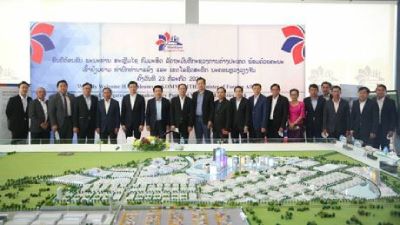
Minister of Foreign Affairs Saleumxay Kommasith on Friday visited the Thanaleng Dry Port and Vientiane Logistics Park. He pledged support for the project after learning that it will significantly facilitate logistics and transport and thus boost trade and Laos’ economy. 

Minister of Foreign Affairs Saleumxay Kommasith on Friday visited the Thanaleng Dry Port (TDP) and Vientiane Logistics Park (VLP) as the project prepares for a soft opening next month and linking with the Laos-China railway. 

The top Lao diplomat and his entourage were briefed on the significance of the US$727 million project being developed in Dongphosy village, Hadxaifong district, Vientiane.

With the railway, which links the Lao capital of Vientiane with the Chinese border, slated for opening on December 2, the developer of the TDP and VLP told the visiting guests that the railway will link with the project. 

As the TDP and VLP are located next to the Laos-Thailand railway station near the first Laos-Thailand Friendship Bridge, the dry port and logistics park are expected to serve as a logistics and transport hub linking the two railways and facilitate trade and investment. 

ADVERTISEMENTx

Presenting the project to the minister, TDP Managing Director Sakhone Philangam said it was necessary for Laos to have a dry port and logistics park to facilitate logistics and transport links. “Laos does not have a coastline, so there is a need for an international connecting point,” he said. 

Although Lao industry is small, the country is surrounded by large industrial neighbours, thus the project envisions becoming a ‘logistics connector’ among countries in the region, Mr Sakhone said. 

The Thanaleng Dry Port tops the list of development priorities in the Lao National Logistics Strategy, an action plan that will drastically transform Laos from being landlocked to a land-linked country.

Being developed on a 382-hectare site, the 50-year concession project is part of the Laos Logistics Link project. 

The TDP and VLP are set to connect to a number of mega trade infrastructure projects that are also part of the Laos Logistics Link. These include the Vung Ang seaport in Vietnam’s central Ha Tinh province, which the Lao and Vietnamese governments have agreed to jointly develop, the planned railway to link the Lao capital of Vientiane with the Vung Ang seaport, and the 2,000MV coal-fired power plant in central Khammuan province. 

ADVERTISEMENT

Mr Sakhone said the project would also connect to Asean Highway No. 12 and the Laos-China railway connecting the capital of Vientiane with the Chinese border. 

The project is set to streamline logistics and transport procedures and reduce relevant costs, the managing director added. 

Located near the 1st Lao-Thai Friendship Bridge, the Thanaleng Dry Port and Vientiane Logistics Park are expected to reduce cross-border transport costs, especially at the 1st Lao-Thai Friendship Vientiane-Nong Khai border crossing by 40 percent from current prices by 2025. 

This would not only make Laos a preferred transit point, but also an international commercially-connected centre.

Landlocked countries need dry ports in addition to other trade infrastructure in order to facilitate trade, former Minister to the Prime Minister’s Office and current President of the Executive Board of Strategy and Planning at the PTL Holding Company Limited, Mr Alounkeo Kittikhoun said, citing advice given by foreign experts. 

ADVERTISEMENT

Mr Alounkeo, who was Chairman of the Group of Landlocked Developing Countries (LLDC) for 1999-2007, said it is envisioned that the Thanaleng Dry Port and Vientiane Logistics Park will be world-class facilites. 

The Vientiane Logistics Park is the only comprehensive logistics park in Vientiane and comprises five zones in one location as follows: 

1. Thanaleng Dry Port (TDP): The dry port acts as the centre of international import and export trade with all categories of customs operations. Importantly, quality equipment, vehicles and warehouse systems will be installed professionally to enable the processing of larger numbers of containers. Use of the Terminal Operation System (TOS) will guarantee the best service in terms of speed, security and reliability. 

2. Tank Farm: This facility will store liquid bulk cargoes for importing and storing fuel from Thailand and will serve as a fuel distribution centre for Laos. Diesel and petroleum products will arrive at the tank from a dedicated rail yard and pipeline in the future. 

3. Logistics Park: The main service provided by the Logistics Park is a warehousing and distribution centre which offers goods storage, consolidation, distribution, inventory management, and warehouse management.

4. Free Trade Zone (FTZ): The main business activities in the zone are the HALAL Hub and Agriculture Production Park, Technology Park, Office Zone, SME Building Area, Commercial Zone and Landmark (VLP Co., Ltd. office). 

5. Export Processing Zone (EPZ): The new destination as a modern and the most dynamic EPZ in the region, this will offer a more competitive business environment and will gear up to become a manufacturing export hub for the Asean and global consumer market. 

Minister Saleumxay praised the project developer, saying that once it is realised, the project would bolster the government’s land-link effort and increase the competitiveness of made-in-Laos products. 

He expressed full support for the project, hoping to see that it is fully realised and can drive the Lao economy.

Also welcoming the minister and his delegation were President of Vientiane Logistics Park Company Limited VLP Co., Ltd., Mr Chanthone Sitthixay, and former Deputy Minister of Finance and now Vice President of the Executive Board of Trade and Regulation, Mr Sila Viengkeo.

Published : July 25, 2021

By : Vientiane Times / ANN

Xi hails Tibets 7 decades of progress #SootinClaimon.Com

#SootinClaimon.Com : ขอบคุณแหล่งข้อมูล : หนังสือพิมพ์ The Nation.

https://www.nationthailand.com/international/40003728

Xi hails Tibets 7 decades of progress


President Xi Jinping has stressed the importance of stability, development, ecological conservation and border security in the Tibet autonomous regions sustainable growth, urging efforts to promote ethnic unity and progress for lasting peace and stability and high-quality development in the plateau region in the new era.

Xi, who is also general secretary of the Communist Party of China Central Committee and chairman of the Central Military Commission, made the remark during an inspection tour of Tibet from Wednesday to Friday. The inspection tour took him to the cities of Nyingchi and Lhasa, the region’s capital.

His visit came on the occasion of the 70th anniversary of Tibet’s peaceful liberation, and was the first time a top Chinese leader has taken part in such a celebration in the history of the Party and the country. Observers said that Xi’s visit to Tibet fully demonstrates the strong support of the CPC Central Committee for Tibet as well as its care for the people of the plateau region.

During the visit, Xi said that over the past seven decades, Tibet has realized all-around socioeconomic development with people’s livelihoods greatly improved, and both urban and rural areas having taken on a new look.

Practice has proved that the guidelines and policies for work related to Tibet are totally correct, Xi said, urging efforts to fully implement the Party’s strategy for governing Tibet in the new era, which stresses implementing the new development philosophy, serving and integrating into the nation’s new development paradigm, advancing high-quality growth and strengthening border security.

During his visit to Nyingchi on Wednesday, Xi visited the Nyang River Bridge to inspect ecological conservation in the basin of the Yarlung Zangbo River, and its tributary the Nyang River. He then visited a local urban planning hall, a village and a park in the city, inspecting the local development planning, rural vitalization and park construction efforts.

ADVERTISEMENTx

On Thursday, Xi went to Nyingchi Railway Station to learn about the overall design of the Sichuan-Tibet Railway and the operation of its Lhasa-Nyingchi section, and then took a train to Lhasa.

Officially put into operation last month, the Lhasa-Nyingchi section is Tibet’s first electric railway. Xi also inspected construction along the railway during the journey.

Xi has attached great importance to the building of the railway project and made several instructions about its construction work. He said that building the Sichuan-Tibet Railway is a significant step to promote Tibet’s development and improve local people’s livelihoods.

Given the complex topography and climate conditions and great difficulties in construction of the section between Ya’an in Sichuan province and Nyingchi, Xi stressed the need to allow technological innovation to play a key role in the process and to stick to scientific, safe and green construction of the landmark railway.

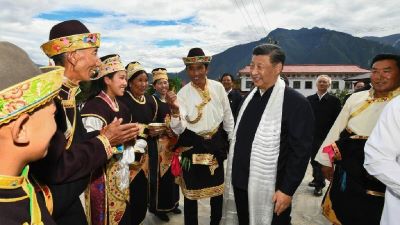
During his visit to Lhasa on Thursday, Xi visited the Drepung Monastery, Barkhor Street and the Potala Palace square to learn about work on ethnic and religious affairs, the conservation of the ancient city, and the inheritance and protection of Tibetan culture. Xi was warmly welcomed by local residents from various ethnic groups and he chatted with them.

He stressed the need to fully implement the Party’s guidelines for religious work in Tibet, respect local people’s religious beliefs, manage religious affairs in accordance with the law, and actively guide Tibetan Buddhism to adapt to socialist society in order to promote religious, social and ethnic harmony and allow religion to play a positive role in advancing social development.

Speaking at a meeting in Lhasa on Friday attended by officials of the autonomous region, Xi urged the region’s authorities to uphold the people-centered philosophy and earnestly improve social governance to ensure national security, social stability and people’s happiness.

Efforts should be made to strengthen exchanges and integration among various ethnic groups to improve people’s awareness of the motherland, the Chinese nation, Chinese culture, the Party and socialism with Chinese characteristics, and lay a solid ideological foundation for ethnic unity, he said.

Xi called on Tibet to deepen reform and opening-up, step up building major railway and highway infrastructure facilities, develop specialty industries and coordinate development and security to blaze a high-quality development path suited to local conditions.

He underlined the need to consolidate and expand the results of poverty elimination to enable this to be integrated with rural vitalization efforts. Efforts should be focused on issues concerning people’s livelihoods, such as employment, education, social security, healthcare, eldercare and housing, in order to further enhance people’s sense of gain, happiness and security, he added.

While highlighting the importance of ecological conservation in the plateau region, Xi urged the local authorities to stay focused on improving environmental governance, strive to protect the biodiversity of the Qinghai-Tibet Plateau, and stick to the ecology-first and green development path to ensure modernization featuring harmony between man and nature.

Xi also met on Friday with representatives of military officials and soldiers stationed in Tibet, and urged them to make contributions to promoting Tibet’s long-lasting peace, stability and prosperity.

Published : July 25, 2021

By : China Daily / ANN

Hà Nội prepared for multiple scenarios in latest COVID-19 outbreak #SootinClaimon.Com

#SootinClaimon.Com : ขอบคุณแหล่งข้อมูล : หนังสือพิมพ์ The Nation.

https://www.nationthailand.com/international/40003727

Hà Nội prepared for multiple scenarios in latest COVID-19 outbreak


HÀ NỘI — Hà Nội has developed plans to respond to a range of possible scenarios as the number of local COVID-19 infections increases, Deputy Secretary of the Hà Nội Party Committee Nguyễn Văn Phong has said.

The city’s agencies including health, industry, trade, education, and transportation have actively developed plans at different levels to deal with the pandemic if the situation becomes more complicated, he said at a press conference on Saturday morning.

Nguyễn Đình Hưng, director of the city’s Health Department, said Hà Nội recorded an additional 50-60 new COVID-19 cases a day and this number was predicted to increase due to a number of cases being detected in the community through increased screening. There were also a number of infected cases that had been detected with no symptoms.

At present, the department has 1,000 beds prepared for treatment and can increase this to up to 50,000 beds in the worst-case scenario, according to Hưng.

The city has also prepared a field hospital at the Capital Military School as well as in the student housing area, in three buildings, at Pháp Vân-Tứ Hiệp isolation area. Each building can accommodate up to 700 beds.

“With these plans, together with the direction of the City Party Committee and People’s Committee, Hà Nội is completely ready to respond to each specific situation,” Hưng said.

The city’s testing capacity is currently 48,000 samples per day.

As of July 23, 201,965 people had received one dose of vaccine and 9,443 people have been fully vaccinated. These are mostly frontline workers.

Hà Nội aims to inject 100,000-200,000 people a day under the national vaccination campaign.

The city has set up 1,000 to 1,200 vaccination sites throughout the city, that are both mobile and fixed.

ADVERTISEMENTx

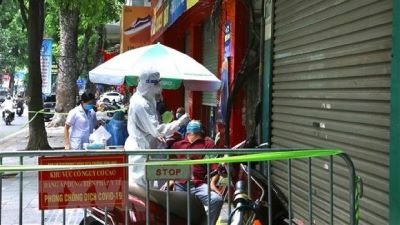
In order to prevent the further spread of the COVID-19 pandemic, Hà Nội also suspended motorbikes from transporting passengers and delivery services from earlier today, Saturday, July 24, according to the Department of Transport.

The suspension is for motorbikes and ride-hailing services.

The agency also requested the Department of Information and Communications monitor and handle violations if ride-hailing service providers failed to comply with the decision. — VNS

Published : July 25, 2021

By : Vietnam News / ANN

Govt considering flexibilities and privileges, says Muhyiddin #SootinClaimon.Com

#SootinClaimon.Com : ขอบคุณแหล่งข้อมูล : หนังสือพิมพ์ The Nation.

https://www.nationthailand.com/international/40003726

Govt considering flexibilities and privileges, says Muhyiddin


PUTRAJAYA: With more people in the country being fully vaccinated against Covid-19, the Malaysian public can start to look forward to the easing of pandemic curbs.

Prime Minister Tan Sri Muhyiddin Yassin said the government acknowledged that staying cooped up at home due to Covid-19 restrictions could impact mental health and some breathing space was needed.

“The government is now assessing what flexibilities or privileges we can give to those who have completed their vaccination dosage.

“Within the next few days, I will announce this as a total package of social, sports and dining-in activities that will be allowed for those who are fully vaccinated.

“I hope these (relaxations) can give the people a bit of room or breathing space to live a slightly better life,” he told reporters at a special media interview yesterday.

Also being looked into is the possibility of allowing fully vaccinated travellers arriving in Malaysia to undergo home quarantine.

“We are mulling some options for travellers or Malaysians returning from abroad. They can undergo quarantine at home instead of at a hotel or a centre. This will save costs.

“They may be given a wrist tracker and they will take a swab test before exiting quarantine,” said Muhyiddin.

Another flexibility being considered for the double vaccinated, he said, was to allow interstate travel for long-distance couples.

“These are all still being finalised and will be announced soon,” said Muhyiddin.

Malaysia has more than 5.2 million people who are fully vaccinated, which is about 16% of its total population.

ADVERTISEMENTx

Muhyiddin said while the Covid-19 situation in the country still showed high number of infections, he believed the National Recovery Plan (NRP) remained on track.

“The situation with rising Covid-19 numbers is also seen in our neighbouring countries, and this is due to the emergence of the Delta variant.

“But with the NRP, we have set the threshold that will guide us before the next phases. So far, eight states have entered Phase 2.

“Although some states have seen an increase in new infections, they do not get downgraded from Phase 2.

“Instead, our approach is to implement enhanced movement control order at certain localities.

“We have managed to pass several targets with our vaccination rate. Hopefully, we can reduce pressure on our health systems.

“It is a long and painful recovery, but I am confident we can pass this. Give the government a chance,” said Muhyiddin.

He said that Sarawak and Perlis were likely to be the first states to enter Phase 3 of the NRP.

“Sarawak’s level of vaccination is very high and their control of infections is good. We can expect the state to enter Phase 3 soon,” he said.

Published : July 25, 2021

By : The Star / ANN

Jakarta tightens security amid calls for protest in ‘Jokowi Endgame’ march #SootinClaimon.Com

#SootinClaimon.Com : ขอบคุณแหล่งข้อมูล : หนังสือพิมพ์ The Nation.

https://www.nationthailand.com/international/40003725

Jakarta tightens security amid calls for protest in ‘Jokowi Endgame’ march


Police set out barbed wire and concrete barricades around the Presidential Palace in Central Jakarta on Saturday in an effort to tighten security after calls for an antigovernment march spread among the public.

Certain roads in the Harmoni area and those leading to the palace were also closed.

More than 3,000 personnel from the Indonesian Military (TNI), the police and the Jakarta administration were deployed to secure other locations in Jakarta, including the National Monument (Monas) and the House of Representatives building in Senayan, according to media reports.
Several people accused of instigating a protest were detained on Saturday at the Jakarta Police headquarters.

“Their roles are still being investigated,” said Jakarta Police operational bureau chief Sr. Comr. Marsudianto, as quoted by Tempo.co.

Calls for the public to rally on Saturday against emergency public activity restrictions (PPKM Darurat) had been circulating on social media and WhatsApp groups. In a widely shared digital flier with “Jokowi Endgame” written on it, the logos of ride-hailing apps Gojek and Grab, student alliances and trade unions were displayed as supposed participants. The flier referred to President Joko “Jokowi” Widodo.

According to the flier, participants were to march from Glodok to the palace.
 

ADVERTISEMENTx

“Calling all elements of the public to the street to march against PPKM and destroy the palace oligarchs,” the flier read.

The National Police have urged the public to refrain from participating in the demonstration.

“We hope people will avoid crowds, as COVID-19 cases are still high,” National Police spokesman Sr. Comr. Argo Yuwono said in a statement on Friday.
 

Speaking at a live-streamed news conference on Saturday, Coordinating Political, Legal and Security Affairs Minister Mahfud MD said a “group of people” was trying to exploit the pandemic to take down the government.

“The government is aware that there is a group of people who would like to exploit the situation. […] They only want to oppose the government, exploit the situation,” he said.

He asked the public to stay calm and said the government was taking notes and listening to people’s concerns.

“The government understands that there are anxieties and concerns about the uncertainty of the COVID-19 situation,” he said. “We will work together with religious and public figures to build solidarity in the fight against COVID-19.”

Grab and a community of Gojek drivers, whose logos were displayed on the flier, have denied any involvement in the planned demonstration, according to media reports.

Published : July 25, 2021

By : The Jakarta Post / ANN

Hanoi applies stricter social distancing measures under Directive 16 #SootinClaimon.Com

#SootinClaimon.Com : ขอบคุณแหล่งข้อมูล : หนังสือพิมพ์ The Nation.

https://www.nationthailand.com/international/40003703

Hanoi applies stricter social distancing measures under Directive 16


HÀ NỘI — Hà Nội will apply strict social distancing measures across the city from 6am on Saturday July 24 to prevent further spread of the COVID-19 pandemic, according to the latest dispatch issued by local authorities on Friday evening.

The measures to stamp out worsening outbreaks of COVID-19 will be in place for 15 days and follow the Prime Minister’s Directive 16. At present, 19 southern localities including HCM City are implementing social distancing measures under Directive 16.

Under the new measures, all public transport services including buses, taxis, contract vehicles and coaches are banned, excluding those in service of pandemic prevention and control and transporting workers and experts.

Motorbikes are also suspended from transporting passengers.

People in the city are asked to stay at home and only go outside in necessary cases like business trips, working at essential businesses (State agencies, factories, essential shops and service providers), buy food and medicines, or emergencies such as medical issues, fires or natural disasters.

Masks are mandatory in public. People must maintain a distance of two metres in public, and must not congregate in groups larger than two outside of hospital, workplaces, or schools.

People are required to submit health declaration forms via website http://www.tokhaiyte.vn or Ncovi and Bluezone apps. Those who have symptoms such as fever, coughing or difficulty breathing must contact local medical establishments for further instructions.

Non-essential services and businesses must close.

The businesses and services that are still allowed to operate include factories, production facilities, transport projects, construction sites, essential businesses or suppliers (food, medicines, utility, gas and oil, etc.), educational institutions, banks and treasuries along with bank-related and business support activities (such as notaries and attorney offices, registration offices, etc.), securities, post offices, import and export activities, medical examination and treatment, and funeral services.

Delivery services such as Grab will continue to operate as normal but will not be allowed to transport passengers.

People are asked to hold off from organising weddings, while funeral services must not have more than 20 attendants and will face monitoring by the local health authorities.

All unnecessary meetings are banned.

Production businesses, service establishments, and industrial zones must strictly observe COVID-19 prevention and control measures.

For the agencies and offices of Hà Nội and the central Government based in Hà Nội, companies, enterprises and corporations (including foreign-invested companies) must develop arrangements to ensure their staff work online and only go to the offices in case of necessity.

Malls, supermarkets, traditional markets and wholesale markets in the city are to ensure adequate supply of daily necessities for the local population, arrange stalls and reception procedures (from parking to entry) to reduce the number of customers in the same place at the same time, minimise close contacts and encourage online shopping and delivery.

The municipal authorities requested the State agencies and businesses to work out plans that can ensure smooth, undisrupted transportation of goods and production materials.

Industrial parks or production plants with workers residing in Hà Nội or going to Hà Nội from other provinces and cities must register with local authorities (details on the number of workers and experts, their places of residence or accommodation, vehicles transporting them, etc.) and perform regular COVID-19 screening as per health authorities’ guidelines.

The dispatch said in response to the complex development of the COVID-19 pandemic in Hà Nội and other localities and Hà Nội has kept recording new community transmission cases without clear sources of infection, thus posing huge risks of community transmission without strict prevention and control measures, the municipal authorities issued the new measures to ensure health and safety for people.

Hà Nội has recorded 666 infections during the fourth wave of infections (since late April this year). VNS

Published : July 24, 2021

By : Viet Nam News/ANN

Suga’s govt faces its own Olympic event: tightrope walking #SootinClaimon.Com

#SootinClaimon.Com : ขอบคุณแหล่งข้อมูล : หนังสือพิมพ์ The Nation.

https://www.nationthailand.com/international/40003696

Suga’s govt faces its own Olympic event: tightrope walking


The Tokyo Olympics have begun. The path leading to this point has been anything but smooth, and the government will continue walking a tightrope over the next two weeks.

Due to the spread of the novel coronavirus, these Games were the first in history to be delayed by one year, and most events will be held in stadiums without spectators. Tokyo remains under a state of emergency, the opening ceremony’s composer resigned, and its director was dismissed in the past week, capping a tumultuous build-up to the sports extravaganza.

Prime Minister Yoshihide Suga could not conceal his frustration with the Games organizers over the string of scandals just before the Olympics get under way. “I think the organizing committee is taking these issues seriously. I hope they make the necessary preparations and properly do what needs to be done,” Suga said to reporters in front of the Prime Minister’s Office on Thursday.

The stunning firing of the director because of discriminatory comments he made years ago was the latest black eye for an Olympics that faces significant challenges to go ahead even as the coronavirus pandemic rumbles on.

As infections continued to spread, Suga believed vaccinations would be a silver bullet to ensure the Games would be a success.

Even after the second state of emergency was declared for Tokyo and other areas in January, Suga remained bullish. “Provided we can inject [enough] vaccines, the atmosphere will completely change once summer rolls around,” Suga repeatedly told his close aides. He had high expectations that administering vaccines would deliver a dramatic improvement in Japan’s infection situation.

However, delays in the vaccine rollout and the emergence of coronavirus variants have stymied efforts to bring the virus under control and dashed Suga’s expectations.

ADVERTISEMENTx

■ Shrinking spectator numbers

At one point, the government insisted the Olympics would be held in a “complete form.” However, in March, it was decided that overseas spectators would be banned from attending the Games, and in June an upper limit of 10,000 spectators from Japan was set for each event. Step by step, the organizers were forced to pare back the number of fans allowed to attend. The declaration of the fourth state of emergency for Tokyo on July 8 rendered the bulk of Olympic competition venues closed to any regular spectators.

This resulted in a striking contrast between the spectator-less Olympics and other sporting events that were going ahead with fans in the stands. This was because under government-set criteria, up to 5,000 spectators could be permitted even during a state of emergency.

A senior official of the organizing committee was at a loss for an answer when a high-ranking International Olympic Committee member visiting Japan asked why crowds were allowed to watch soccer warm-up games and other sports but would not be allowed to attend the actual matches at the Olympics. “I said that couldn’t be helped because the Olympics needed the public’s understanding, but they weren’t convinced by that answer,” the organizing committee official said.

■Suga still optimistic

ADVERTISEMENT

Through all this, Suga remained confident and optimistic about the Games. In an interview published in The Wall Street Journal on Tuesday, Suga said: “They say about four billion people around the world are going to watch on television. In that sense, if you’re talking about what the value of doing it without spectators [is], well, it’s enormous.”

Suga envisions a strategy in which the Olympics lift the feeling of helplessness pervading the nation, which in turn gives his administration momentum ahead of the House of Representatives election that must be held before Oct. 22.

However, ensuring the Olympics go smoothly is akin to walking a tightrope. It is hard to predict whether the Games will end on a successful note.

The athletes must follow rules that ensure they take the utmost care of their health before arriving in Japan, and they are regularly tested while here. However, several athletes have already withdrawn from their events because they caught the coronavirus. If infections spread among the athletes, it is possible some matches might not be able to go ahead. There are mounting concerns within the organizing committee that the way these Games are being run “could be branded as a failure” around the world.

The “bubbles” set up to restrict the movements and activities of tens of thousands of athletes and Olympic officials and to keep them from contact with people not involved in the Games are already showing their limits. The “worst-case scenario” keeping government officials awake at nights would be a situation in which infections spread from Olympic athletes or officials to members of the Japanese public, which could eventually strain medical care services in Tokyo and other areas.

ADVERTISEMENT

Some models predict that Japan’s current surge in infection numbers will peak in early August, around the time the curtain comes down on the Olympics.

A Cabinet minister involved in dealing with coronavirus issues was concerned about the possible political ramifications of that scenario. “If the medical system comes under pressure because of the Olympics, it could spell the end for this administration,” the minister said.

■Games preparations full of mishaps

In September 2013, Japan won the bid to host the Olympics and Paralympics in Tokyo, beating Turkey and Spain, and the country was in a celebratory mood.

Shinzo Abe, who was then prime minister, declared, “We will show the world Japan’s recovery from the [2011 Great East Japan Earthquake and tsunami],” and came up with the theme of “Recovery Olympics.”

Since the successful bid, issues surrounding the preparation for the Games have emerged one after another.

The design of the new National Stadium was changed due to soaring costs, and the original Games emblem was scrapped due to accusations of plagiarism.

Organizing committee executives and staff have faced public criticism due to their actions and remarks, including a sexist gaffe by former organizing committee President Yoshiro Mori that led to his resignation.

The situation changed dramatically after the outbreak of the novel coronavirus pandemic. In March 2020, Abe agreed to postpone the Games for one year in a telephone conversation with IOC President Thomas Bach, in order to realize a “safe and secure Games.”

“Needless to say, the next leader will also aim for that,” Abe stressed at a press conference announcing his resignation as prime minister in August of the same year.

For Abe’s successor, Prime Minister Yoshihide Suga, the commitment to the Games is significant to protect the political legacy of the previous administration, which he supported as its chief cabinet secretary.

The Games, which are supposed to be an apolitical festival where athletes compete, have become political because of the issue of whether it is appropriate to hold the event amid a pandemic. Explaining the situation to the public has become the most pressing concern.

Public opposition to the Games is still strong. “The prime minister just kept repeating ‘safe and secure’ and did not explain the significance of holding the Games thoroughly,” said a former cabinet member of the Liberal Democratic Party.

Published : July 24, 2021

By : Kensaku Fujiwara and Hirotaka Kuriyama/The Japan News/ANN