It’s murder, not accident #SootinClaimon.Com

#SootinClaimon.Com : ขอบคุณแหล่งข้อมูล : หนังสือพิมพ์ The Nation.

https://www.nationthailand.com/international/40003082

It’s murder, not accident


The fire that killed 51 employees of a food processing factory in Narayanganj was not a bolt from the blue for the owners who, according to police, knew such a disaster was imminent but chose to do nothing.
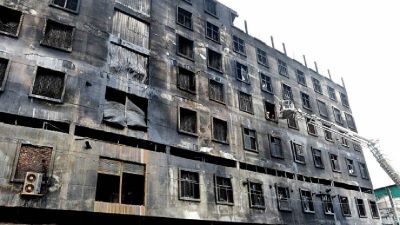
Police yesterday arrested the owners of Hashem Foods Ltd, Md Abul Hashem, his four sons, and three others accused of burning 51 employees to death.

“They knew that the building, full of combustible chemicals and substances, might catch fire anytime, but did nothing… We accused them of killing the workers,” Deputy Inspector General of Police (Dhaka Range) Habibur Rahman told The Daily Star yesterday.

“There were inadequate fire exits and no fire safety equipment. The fire was not a mere accident,” he said.

Inspector Nazim Uddin Majumder of Bhulta Police Outpost filed the case with Rupganj Police Station yesterday.

Hashem’s four sons: Hasib Bin Hashem, Tarek Ibrahim, Tawsib Ibrahim and Tanjim Ibrahim were accused.

Others accused and arrested are: Sajeeb Group Chief Operating Officer Shahan Shah Azad, Hashem Foods Deputy General Manager Mamunur Rashid, and its Civil Engineer and Admin Officer Salahuddin.

Hashem, chairman and managing director of Sajeeb Group, which owns the Rupganj factory, and his sons were arrested at their Gulshan home in the capital. The three others were also arrested in the city.

A Narayanganj court placed each of the eight accused on four-day remand yesterday.

A team from the Electric Safety and Security Association of Bangladesh (ESSAB) visited the building and the members told reporters that they were shocked by the inadequate fire safety measures.

“Every basic rule was violated. There were no fire doors, no hydrants, and no evacuation plans. There’s a barrier on every floor. Besides, each section is within a netted enclosure. It seems they didn’t follow any plan on what to do in case of fire” he said.

ADVERTISEMENT

Debashish Bardhan, deputy director (operations and maintenance) of Fire Service and Civil Defence, said that the firefighters gave the owners a plan to follow in case of fire and that the building had approval from the fire service.

After visiting the site yesterday, he said the roof on the fourth floor of the building had collapsed, making the entire structure risky now.

The owner of the property, Hashem, was an Awami League nominee for the parliamentary seat of Laxmipur-3 in the 2008 general election. He was defeated by BNP nominee Shahid Uddin Chowdhury Annie.

Home Minister Asaduzzaman Khan, while visiting the Narayanganj factory yesterday, said no one would be spared if their negligence was found to be a cause of the tragedy.

“Every responsible person will be brought under trial,” he added.

ADVERTISEMENT

Though the cause of the fire has yet to be ascertained, police suspect that it originated from an electrical short circuit on the ground floor where flammable goods like cartons and paper rolls were stored.

Firefighters on Friday said the total number of deaths was 52. But the police and district administration yesterday said the number was 51.

Bodies of 48 people were found on the third floor where the only exit was locked. The bodies were charred beyond recognition. Most of the victims were women and children. At least 10 others were injured while the firemen rescued 25 from the rooftop of the factory.

After conducting autopsies of 49 bodies at Dhaka Medical College morgue, officials sent 15 to a mortuary of Shaheed Suhrawardy Medical College because the one in DMC was at capacity.

The body of Morsalin, 22, who jumped off the second floor, was handed to his family members.

Besides, DNA samples of 51 family members of 36 victims were collected for matching. Some of the families have demanded compensation for their losses.

At the site of the six-storey building, Director (operations) of Fire Brigade and Civil Defense Lt Col Zillur Rahman said, “We didn’t find adequate firefighting equipment. Some places in the building were locked. Many could not get out because of the partitions. These can be a cause of the fire and the loss of life.”

There is a chance that the fire originated from electric sparks as machineries and raw materials were kept at the same place, he said.

The entire building was full of combustible materials, he said, adding that some sections were locked.

HASHEM FOODS STATEMENT

In a statement issued on Friday, the company said soon after the fire started, the authorities informed the firefighters and also used their own fire hydrants.

The company will provide medical treatment to the injured ones and stay by the side of the families of those who died.

Published : July 11, 2021

By : The Daily Star / ANN
HCM City sets up mobile teams for COVID-19 testing at home, tightens travel from nearby provinces #SootinClaimon.Com

#SootinClaimon.Com : ขอบคุณแหล่งข้อมูล : หนังสือพิมพ์ The Nation.

https://www.nationthailand.com/international/40003080

HCM City sets up mobile teams for COVID-19 testing at home, tightens travel from nearby provinces


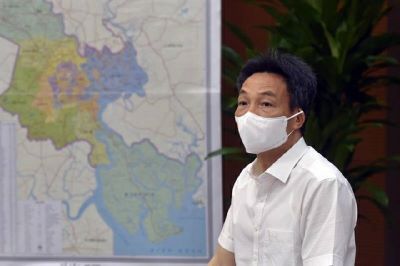
HCM CITY — Deputy Prime Minister Vũ Đức Đam has urged HCM City to work with neighbouring provinces to enforce strict COVID-19 prevention measures, including control of people going in and out of the city while ensuring convenient circulation of goods.

Đam, head of the National Steering Committee for COVID-19 Prevention and Control, said during an online meeting on Friday that the city must implement more drastic solutions to cut off infection chains within the next two weeks.

Lockdown measures under Directive 16 must be followed, and State agencies, factories and enterprises should continue to maintain production while applying strict preventive measures.

Anyone who leaves home without necessary reasons must be strictly punished, according to Đam.

The city must use both rapid tests and PCR tests, depending on the situation in each particular area, he said. “Results of COVID tests should be available within 24 hours.” 

HCM City and provinces must prepare treatment facilities according to three severity levels: level 1, asymptomatic to mild symptoms; level 2, moderate to severe symptoms; and level 3, critically ill.

More field hospitals should be set up using available resettlement apartment buildings and factories to treat asymptomatic COVID patients or those with mild symptoms. When the symptoms worsen, the patients must be immediately transferred to a higher level of treatment facility, he said.

It is paramount to prevent cross-infection at centralised isolation facilities, which have become overloaded due to surging cases. The city should be ready to isolate F1 cases (direct contacts of confirmed cases) at home under guidance of the health ministry, according to Đam.

On Friday HCM City reopened 12 pandemic checkpoints at city gateways to ensure that drivers have a negative COVID test before entering the city. 

The city Department of Transport has asked provincial Departments of Transport to work with staff at the checkpoints and road forces to ensure smooth circulation of goods during the lockdown period.

Testing at home

Speaking at another meeting on Friday afternoon, Deputy Secretary of the HCM City Party Committee Phan Văn Mãi said the city has set up 2,500 mobile teams for COVID testing at people’s homes.

During the lockdown period, districts and Thủ Đức City will send mobile teams to each household to take large-scale screening samples.

ADVERTISEMENT

People with symptoms like cough and fever should call local medical staff, and a mobile team will come within 30 minutes to an hour to take samples for testing.

“If there is no emergency, there is no need to go to the hospital for testing. The city will test 100 per cent of households in very high-risk areas over the next 15 days,” he said. 

Test results for a single sample must be returned within eight hours and pooled samples within 12 hours from the time of receipt of the sample.

Nguyễn Thanh Long, Minister of Health, said: “It’s impossible to ask people to come to a designated place for testing because no gatherings are allowed to prevent the spread of the virus.”

There are 2,500 teams composed of two medical staff each, with a total capacity of testing 350,000- 400,000 samples a day.

ADVERTISEMENT

The city should increase the number of sampling teams to meet demand in coming days, Long said.

City prepares 1,000 ICU beds

The Department of Health plans to add 1,000 Intensive Care Unit (ICU) beds to treat severely and critically ill COVID-19 patients at the city’s four highest-level hospitals, Chợ Rẫy Hospital (300 ICU beds), Hospital for Tropical Diseases (300), 115 People’s Hospital (250) and Gia Định People’s Hospital (150), as requested by the Health Ministry.

The city has prepared for a scenario for treatment of 20,000 COVID patients. 

In addition to available hospitals, the health department has set up four field hospitals for COVID treatment.

They include a 4,000-bed field hospital (which has been converted from a dormitory at Việt Nam National University in HCM City), a 2,000-bed field hospital (from a resettlement apartment building in Tân Thới Nhất Ward in District 12), a 3,000-bed hospital field hospital (from resettlement housing in Thủ Đức City), and a 3,000-bed field hospital (from resettlement housing in Bình Chánh District).

The city will also use part of Thuận Kiều Plaza in District 5, known as the Garden Mall, as a field hospital. Two of the 33-floor towers have been requisitioned for treating COVID with a capacity of 1,000 beds. It is slated to open next week.

HCM City, home to about 13 million people, on Friday applied lockdown under Directive 16, the highest level of prevention which was enforced nationwide during the early days of the pandemic last year. 

This year, the city has faced more serious challenges due to the highly contagious Delta variant that has caused infections in hospitals, industrial parks, residential areas and wholesale markets in the city.

The city has recorded more than 11,400 locally transmitted cases since the outbreak began in late April. — VNS 

Published : July 11, 2021

By : Vietnam News / ANN

US sends 500,000 doses of Moderna vaccine to Bhutan #SootinClaimon.Com

#SootinClaimon.Com : ขอบคุณแหล่งข้อมูล : หนังสือพิมพ์ The Nation.

https://www.nationthailand.com/international/40003079

US sends 500,000 doses of Moderna vaccine to Bhutan


The United States of America government yesterday announced that it has dispatched 500,000 doses of Moderna vaccine to Bhutan. 

The White House Press Secretary Jen Psaki announced this during a press briefing yesterday. 

According to the Press Secretary, the US also shipped three million doses to Indonesia, 1.5 million (M) doses to Nepal. 

This is a part of the US government’s pledge to share an initial batch of 80M US-made vaccines globally amid concerns about the wide disparity in vaccination rates between advanced and developing countries.

With this shipment, besides the AstraZeneca vaccine, which all eligible people in Bhutan received for their first dose, two more vaccine types — Pfizer and Moderna — have been added to the list of vaccines to be used for the second dose in Bhutan.

The country has already received 5,850 doses of Pfizer vaccines from the COVAX Facility on May 25. There are some 60,000 additional Covishield (AstraZeneca) vaccines left over from the first round.

Lyonchhen recently said that the government has secured some 550,000 doses of AstraZeneca vaccines, which includes 250,000 doses from Denmark.

With the US government shipping 500,000 doses of Moderna vaccines yesterday, this puts Bhutan in a very good position to vaccinate its entire population, including children below 18 years.

Kuensel learnt that the government had also secured about 200,000 doses of Pfizer vaccine from the US. 

The government, for now, has not specified as to which vaccine would be rolled out for the second dose, which is tentatively scheduled in the third week of this month.

The concern now, according to health officials, is to vaccinate all Bhutanese and those living in the country with the second dose, as the 16-week period after the first dose is coming to an end.

Prime Minister Dr Lotay Tshering said that although it was likely that people in the country would get second dose of AstraZeneca vaccine, should the national immunization technical advisory group (NI-TAG) recommend a heterologous (mix-and-match) method of the vaccination, the government has access to both Moderna and Pfizer vaccines.

“Who will get what kind of vaccine is being worked out currently. In the next one or two days, NI-TAG should be ready with their recommendation,” Lyonchhen said yesterday. “There is no reason for us to hide this information from the public. All our decisions will be based on science and recommendation from the experts.”

Developed countries like Spain, Canada, and Germany have already started vaccinating their population with the mix-and-match mode of vaccination, where the initial dose of AstraZeneca has been boosted with a mRNA (Pfizer or Moderna) vaccine in the second. Germany’s Chancellor Angela Merkel and Canadian Prime Minister Justin Trudeau are some of the world leaders to mix their Covid-19 vaccines recently.

ADVERTISEMENT

The NI-TAG has also recommended a mix-and-match mode of vaccination given the successful outcome globally.

Herd Immunity  

Besides the adequate number of vaccines, secured for now, the most critical part would be achieving an adequate level of vaccination coverage to achieve herd immunity.

Lyonchhen said that the more contagious the disease, the higher the population coverage is required to achieve herd immunity. “In the pre-Delta variant period, during our first vaccination campaign, we required at least 70 percent of our population to be vaccinated. We could manage only about 65 percent then.”

ADVERTISEMENT

He said that for the Delta variant of the SARS-CoV-2 virus, the required vaccine coverage was a minimum of 80 percent. “If we can’t cover our children below 18 years, it would be really difficult for us to achieve herd immunity.”

Officials said that close to 30 percent of the country’s population were aged 18 years and below. “So, to achieve the 80 percent coverage, every single individual above the age of 18 has to be vaccinated,” said Lyonchhen, adding that it was critical to vaccinate children to achieve herd immunity.

According to the 2017 population and housing census of Bhutan, the projected population of Bhutan in 2021 is 756,129. This would mean that there are about 226,000 people below 18 years.

Currently, the only Covid-19 vaccine certified for children below 18 years is the US’s Pfizer vaccine. However, studies have also shown that the Moderna vaccine was safe and effective among children aged 12-17 years. The company has sought approval from the United States’ Food and Drug Administration (FDA) to use their vaccines in children above the age of 12 years.

Given the urgency, Lyonchhen urged all eligible individuals to come forward and get vaccinated this time. He said that the vaccines had two definite benefits — to prevent people from being infected and from developing serious disease once infected.

However, he cautioned that the vaccines would be effective against only those variants of the virus which are in circulation now.

“With the rate at which new variants of concern are emerging, we are all worried. Following our second dose, if we hurry to relax the protocols and if a new variant of concern emerges, it would overwhelm all of us,” he said.

In the meantime, some 400 Bhutanese had already received their second dose of the vaccine. The recipients are those who had travelled outside the country.

Sowai Lyonpo (health minister) Dechen Wangmo said that the majority of the recipients were students returning to their schools outside. “There were also those who work and live aboard. We started giving the second dose after they completed eight weeks following the first dose.”

Lyonchhen said that none who are still in the country has received the second dose of the vaccine.

Published : July 11, 2021

By : Kuensel / ANN

Health Ministry expects daily cases to decline within a week or two, says Dr Noor Hisham #SootinClaimon.Com

#SootinClaimon.Com : ขอบคุณแหล่งข้อมูล : หนังสือพิมพ์ The Nation.

https://www.nationthailand.com/international/40003078

Health Ministry expects daily cases to decline within a week or two, says Dr Noor Hisham


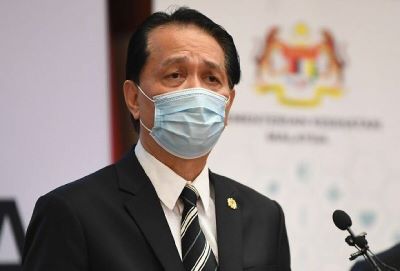
KUALA LUMPUR (Bernama): The Health Ministry (MOH) expects the country’s daily Covid-19 cases to stabilise and show a decline in the next one to two weeks’ time, said Health director-general Tan Sri Dr Noor Hisham Abdullah.

He said that the vaccination drive nationwide and public health controls such as the current movement control could flatten the curve of the pandemic again.

He said the spike in new cases over the last few days was due to more targeted screenings being implemented, especially in Selangor and Kuala Lumpur, which are currently under the enhanced movement control order.

“The MOH had expected that with the lockdown in the Klang Valley areas, the daily cases will increase due to the implementation of the targeted and community screenings.

“However, I am confident that with better movement control methods, we will see a more stable total number of cases as well as a drop within a week or two. At the same time, the vaccination process must be expedited,” he said.

He said this when appearing as a guest on the Bernama TV programme ‘The Nation’, entitled “Covid-19: Apa Lagi Ikhtiar Kita” (Covid-19: Measures To Be Taken), hosted by Bernama chairman Datuk Ras Adiba Radzi here, Saturday (July 10) night.

Dr Noor Hisham also said that from the experience and lessons learned from the second wave of Covid-19 previously, the country would need to be more cautious and not rush to open several sectors that could trigger a surge in new cases.


He said continued compliance by all parties as well as the enforcement of the standard operating procedure (SOP) in the field, such as the manufacturing sector, needed to be enhanced in an effort to control more infections, especially those involving workplace transmissions.

In explaining the capacity situation at several hospitals, which were reported to be overcrowded with Covid-19 patients, he said the MOH was actively increasing the hospitals’ capacities to accommodate patients, especially those under Category Four and Category Five, in the intensive care units (ICUs).

“The problem we face is that the Category Four and Category Five patients take a long time to be treated in the ICU, between two to five weeks, including requiring ventilators.

“These are the constraints we face because the number of patients in Category Four and Category Five is also increasing. That’s why the MOH is doing its best to increase the hospitals’ capacity,” he said.

There are five categories of the Covid-19 disease. Category One – asymptomatic; Category Two – mild disease; Category Three – moderate disease (pneumonia, not requiring oxygen); Category Four – severe disease (pneumonia and requiring oxygen); and Category Five – critical disease (multiple organ impairment, possibly requiring assisted ventilation).


July 10 saw Malaysia hit another record high of 9,353 new cases, with 29 new clusters, including 19 linked to workplaces. – Bernama

Published : July 11, 2021

By : The Star / ANN

HCM City to support households with food difficulties during lockdown #SootinClaimon.Com

#SootinClaimon.Com : ขอบคุณแหล่งข้อมูล : หนังสือพิมพ์ The Nation.

https://www.nationthailand.com/international/40003051

HCM City to support households with food difficulties during lockdown


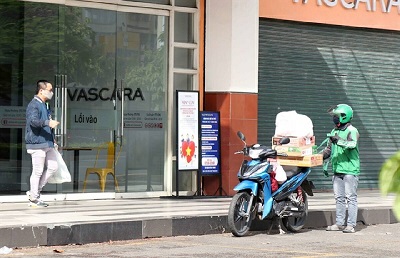
HÀ NỘI — HCM City People’s Committee sent an urgent notice announcing support regarding the provision of food and cooked meals as the city banned takeout services during the ongoing 15-day lockdown starting Friday.

The supermarkets and suppliers (SaiGon Co.op, Satra, MM.Mega Market, Bách Hóa Xanh, VinMart, Family Mart, AEON, Vissan) are asked to increase and diversify the offerings of safe and hygienic prepared meals and food on their shelves, as well as coordinate with online shipping and other direct delivery methods.

Thủ Đức City and districts in HCM City are instructed to support residents under their jurisdiction, especially households that have trouble cooking meals during the lockdown period.

Volunteers from local women’s and youth unions could also be mobilised to deliver food and essential items to households in need.

Local authorities must provide free meals to elderly people living alone, sick people, and other social policy beneficiaries under their jurisdiction.

On Thursday, asked about the reasoning behind the takeout ban, a representative from HCM City’s People’s Committee explained shippers usually crowded the restaurants or other food and beverage joints, and proper distancing measures are hard to enforce.

The ban also means that these establishments must be closed, and only supermarkets and convenience stores remain open. 

Tô Thị Bích Châu, Chairwoman of the HCM City branch of the Việt Nam Fatherland Front, urged people to trust in the leadership of the Government and Party, and said the citizens can report difficulties or shortcomings regarding authorities’ help via the hotlines: (028) 38 223 212 – (028) 38 293 958. — VNS

Published : July 10, 2021

By : Viet Nam News/ANN

[Japan] Restaurants that cooperate with requests to stop serving alcohol will get financial support in advance #SootinClaimon.Com

#SootinClaimon.Com : ขอบคุณแหล่งข้อมูล : หนังสือพิมพ์ The Nation.

https://www.nationthailand.com/international/40003050

[Japan] Restaurants that cooperate with requests to stop serving alcohol will get financial support in advance


Eating and drinking establishments that comply with requests to stop serving alcohol will be offered financial support in advance under a new system being introduced by the government.

The so-called cooperation money is expected to help the dining sector in Tokyo and Okinawa Prefecture during the latest state of emergency, as well as areas where emergency-level priority measures are to be applied.

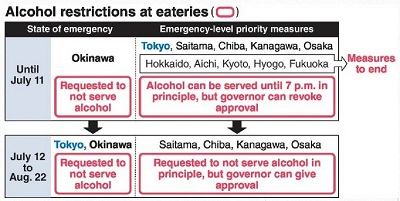
From Monday to Aug. 22, a fourth state of emergency will be in effect for Tokyo, where priority measures are in place until Sunday. Meanwhile, in Okinawa Prefecture, the current state of emergency will be extended and emergency-level priority measures will continue for Saitama, Chiba, Kanagawa, and Osaka prefectures.

“We must absolutely avoid a situation in which infections spread from Tokyo,” Prime Minister Yoshihide Suga said at a press conference.

In Tokyo and Okinawa Prefecture, eating and drinking establishments will be asked to stop serving alcohol.

In prefectures where priority measures are in place, eateries are currently allowed to serve alcohol until 7 p.m. However, the government has revised its coronavirus basic policy, asking eateries in areas under priority measures to not serve alcohol without the prefectural governor’s approval.

To obtain cooperation from bars and restaurants, the government included a new system so that businesses that comply with the request can receive financial support in advance.

Many eateries have been ignoring requests to close or shorten business hours because it takes time to receive financial support from the government after filing applications.

The government will also ask liquor wholesalers to stop taking orders from bars and restaurants that do not cooperate with requests to stop serving alcohol.

■ Delta variant

The delta variant of the novel coronavirus, which is believed to be more contagious than the original form of the virus, is spreading in Tokyo.

In Okinawa Prefecture, the number of new infections remains at Stage 4, the most serious level on the government scale.

Priority measures will be extended through Aug. 22 for Osaka and three of Tokyo’s neighboring prefectures, but they will end on Sunday for Hokkaido, Aichi, Kyoto, Hyogo and Fukuoka prefectures.

The maximum number of spectators at large-scale events will be 5,000 for all areas under a state of emergency or priority measures. In Tokyo and Okinawa, events will be held no later than 9 p.m.

Suga said he hoped that about 40% of the population would have received at least one shot of a COVID-19 vaccine by the end of July.

If vaccinations and alcohol restrictions, among other measures, lead to an improvement in the infection situation, the state of emergency or priority measures may be lifted ahead of schedule.

The Tokyo metropolitan government will ask eating and drinking establishments in the capital to stop serving alcohol from Monday.

When the third state of emergency ended on June 21, the metropolitan government said eateries could serve alcohol if customers stayed no longer than 1½ hours and refrained from dining in groups of more than two people.

After just three weeks, it will again ask eateries to stop serving alcohol and to close by 8 p.m.

Requests will continue for large commercial facilities to close by 8 p.m. and events to limit the number of spectators to 50% of the venue’s capacity or 5,000, whichever is lower.

Tokyo Gov. Yuriko Koike said Thursday at the Tokyo metropolitan government’s coronavirus headquarters: “We share the central government’s sense of urgency. We will take more effective and more powerful measures.”

Published : July 10, 2021

By : The Japan News/ANN

Imported cases reported in Savannakhet as Laos’s records 68 new Covid-19 infections #SootinClaimon.Com

#SootinClaimon.Com : ขอบคุณแหล่งข้อมูล : หนังสือพิมพ์ The Nation.

https://www.nationthailand.com/international/40003049

Imported cases reported in Savannakhet as Laos’s records 68 new Covid-19 infections


Irregular crossings on the Lao-Thai border have resulted in new Covid-19 cases in the country and triggered community transmission across several provinces.

This is one of the reasons for a fresh Covid-19 outbreak in some provinces of Laos, where infections have spread rapidly in squalid conditions, health authorities have said.


The irregular crossings occurred despite local authorities being directed to monitor border crossings to prevent people from illegally entering Laos from Thailand via the Mekong River. The direction was issued amid fears of the spread of the Delta variant of Covid-19.

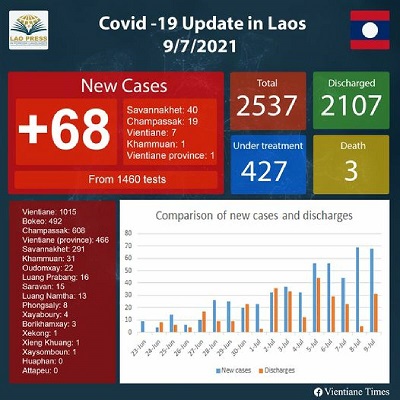
On Friday, the National Taskforce for Covid-19 Prevention and Control reported 68 new infections, with the total number now standing at 2,537. The positive results were obtained after testing 1,460 samples for the Coronavirus on July 8.

Seven imported cases were recorded in Vientiane, while Vientiane province recorded one new locally transmitted cases after Phonhong district was placed under lockdown earlier this week.

Khammuan recorded one imported cases, while Savannakhet saw 40imported cases and Champassak reported 19 imported cases.
Health officials urged anyone who believes they have come in contact with an infected person to self-isolate for 14 days.

A total of 49 quarantine centers are operational across the nation, with 4,979 people in quarantine as Lao workers rush to return home from Thailand.

Vientiane has not recorded any new cases of community spread, with only five villages across four districts now designated as red zones.

Published : July 10, 2021

By : Phetphoxay Sengpaseuth/Vientiane Times/ANN

Record COVID-19 surge pushes Seoul to ‘toughest-ever’ social distancing #SootinClaimon.Com

#SootinClaimon.Com : ขอบคุณแหล่งข้อมูล : หนังสือพิมพ์ The Nation.

https://www.nationthailand.com/international/40003048

Record COVID-19 surge pushes Seoul to ‘toughest-ever’ social distancing


Reopening canceled, evening gatherings of more than two people banned in Seoul

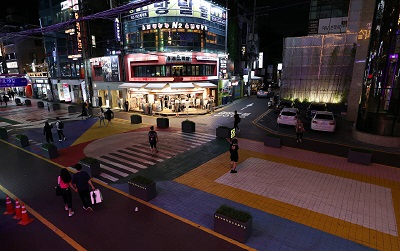
Korea on Friday announced further restrictions to tame a record surge in COVID-19 cases from Monday onward, including a ban in the capital region on social gatherings of more than two people past 6 p.m. and total closures of bars and other nightlife establishments.

In the last 24 hours ending Thursday midnight, the country logged its highest daily total of 1,316 cases, according to official statistics, topping the previous worst 1,275 cases of the day before.

Prime Minister Kim Boo-kyum told a government COVID-19 response meeting Friday that the wider Seoul area — which includes nearby Incheon and Gyeonggi Province — will be subject to the most stringent degree of social distancing restrictions for two weeks until July 25.

“The situation in Seoul leaves us with no choice but to tighten measures,” Kim said.

The prime minister said additional restrictions “may be needed” for the rest of the country, which went through with reopening last week. Busan and Daejeon decided to restore some of the restrictions Thursday.

The measures announced are the harshest ever to be imposed in Korea, coming after the country had been moving toward reopening in recent weeks.

Starting Monday in the Seoul area, up to four people can socialize at a time before 6 p.m., after which only two are allowed. Since December, people have been barred from gathering for nonessential purposes in groups larger than four.

Schools will go back to full-time virtual learning and care services can only operate at half capacity. Workplaces are recommended to adopt remote working arrangements for at least 30 percent of their employees. The 10 p.m. curfew will be back on for food outlets and indoor sports venues, while full closures will be enforced for nightlife businesses such as bars and nightclubs. Public events of any sort, no matter the size, will be banned.

Post-vaccine incentives such as waivers from face mask mandates and gathering bans have also been deferred.

Kwon Jun-wook, the deputy chief of the Korea Disease Control and Prevention Agency, told a Friday televised briefing that the current wave was “different” from the last wave in December that left over 800 dead.

“Korea is, for lack of a better word, at an advantage now that vaccinations are completed for more than 10 percent of the population — most of them at-risk groups — which is why hospitalizations and deaths aren’t really rising,” he said, echoing the Ministry of Health and Welfare’s assessment a day earlier.

The ministry’s spokesperson Son Young-rae said as groups more susceptible to severe forms of COVID-19 are vaccinated, less people were falling critically or fatally sick.

But in Korea, full vaccination rates remain low even among older people, except for those aged 75 and above, for whom the Pfizer vaccine was offered from April. Close to 83 percent of over-75s have completed the two-dose vaccination series.

On the other hand, the vast majority of people in their 60s and early 70s have just started getting their first doses of the AstraZeneca vaccine last month. Although more than 80 percent of people in this age group have been vaccinated with a first dose, less than 1 percent are fully vaccinated, as the second dose is administered after 11 to 12 weeks.

As just one dose of the AstraZeneca and Pfizer vaccines provides far less protection from the delta variant, known to be the most transmissible version of COVID-19 yet, getting the two full doses is important, according to infectious disease professor Dr. Kim Woo-joo of Korea University.

Kim pointed out that 70 percent of people in Korea have not been vaccinated at all, with just 11 percent fully vaccinated. Vaccinations of 20- to 50-somethings, who are more socially active, have yet to begin.

“One dose does not provide enough protection against delta, which may be associated with an increased risk of hospitalization, according to a study out of the UK,” he said.

He added that based on the rate by which delta’s share is growing, by early August it is estimated to become the dominant strain in Korea.

Pushing ahead with reopening and signaling to the public that a “more normal” reality could return in summer were to blame for the COVID-19 mire Korea finds itself in, Kim said. “Korea wasn’t ready for less social distancing yet, not with the current rate of vaccinations. We shouldn’t be basing projections and policies on single-dose vaccination rates.”

So far, neither delta nor other variants of concern have become the leading strain in Korea, and their impact appears minor, according to the Health Ministry spokesperson Son. Delta made up roughly 10 percent of all variant cases identified in the analysis from last week, he said.

Even with the unprecedented restrictions though, containing the latest wave will not be easy, according to Dr. Jung Ki-suck, former director of the Korea Centers for Disease Control and Prevention.

He said it could take “longer than two weeks to bring the patient numbers down to a manageable level.” Beds for patients with mild to moderate cases were already running out in Seoul, with some having to be transported to facilities outside the city.

“Korea might need to impose even tougher rules truly akin to a lockdown,” he said. “The ones being imposed are hardly a lockdown in its true sense. There are no restrictions on travel, for instance.”

More than four months since Korea’s vaccination campaign began on Feb. 26, 30 percent of 51 million in the country have received at least one dose of a COVID-19 vaccine, while 11 percent are fully vaccinated. Over the past week, an average of 72,983 doses were administered each day.

Korea aims to deliver first-dose vaccinations to 70 percent of the population — the threshold the government has set for herd immunity — before the end of September.

Since the pandemic began, 165,344 people have been infected in Korea, of whom 2,036 have died.

Published : July 10, 2021

By : Kim Arin/The Korea Herald/ANN

IMF backs new SDR allocation for pandemic recovery #SootinClaimon.Com

#SootinClaimon.Com : ขอบคุณแหล่งข้อมูล : หนังสือพิมพ์ The Nation.

https://www.nationthailand.com/international/40003047

IMF backs new SDR allocation for pandemic recovery


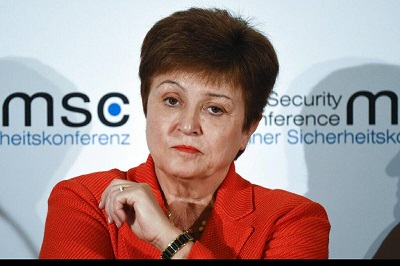
The executive board of the International Monetary Fund (IMF) has approved a proposal for a new general Special Drawing Rights (SDR) allocation of $650 billion, the largest allocation in the organization’s history, to help recovery from the Covid-19 pandemic, IMF Managing Director Kristalina Georgieva said on Friday.

“Iwill now present the new SDR allocation proposal to the IMF’s Board of Governors for their consideration and approval. If approved, we expect the SDR allocation to be completed by the end of August,” Georgieva said in a statement.

“This is a shot in the arm for the world. The SDR allocation will boost the liquidity and reserves of all our member countries, build confidence, and foster the resilience and stability of the global economy,” she said.

Noting that an SDR allocation in 2009 had contributed significantly to recovery from the global financial crisis, Georgieva believed that the new SDR allocation will help every IMF member country, particularly vulnerable countries, strengthen their response to the Covid crisis, reports Xinhua news agency.

“We will maintain active engagement with our membership in the months ahead to identify viable options for voluntary channeling of SDRs from wealthier members to support our poorer and more vulnerable countries to help their pandemic recovery and achieve resilient and sustainable growth, which will also help boost global economic recovery,” she said.

Final approval of the SDR allocation by the Board of Governors requires an 85 percent majority of the total voting power of all IMF members.

The allocation would be implemented and become effective 21 days after the Board of Governors’ approval, sometime in late August, according to the IMF.

The SDR can be exchanged among governments for freely usable currencies in times of need.

The IMF executive board’s approval came a day after Georgieva called for urgent action by the G20 and policymakers across the globe to address a worsening “two-track” recovery.

The IMF chief urged G20 policymakers to step up international cooperation to end the pandemic, step up efforts to secure recovery and step up support for vulnerable economies.

IMF staff recently outlined a $50 billion plan that could lead to trillions of dollars gained from faster vaccine rollout and accelerated recovery.

“This would be the best public investment of our lives and a global game-changer,” Georgieva added.

Published : July 10, 2021

By : The Statesman/ANN

DCGI nod for Sanofi-GSK’s phase 3 trial of Covid vax in India #SootinClaimon.Com

#SootinClaimon.Com : ขอบคุณแหล่งข้อมูล : หนังสือพิมพ์ The Nation.

https://www.nationthailand.com/international/40003024

DCGI nod for Sanofi-GSK’s phase 3 trial of Covid vax in India


The Drugs Controller General of India (DCGI) has granted approval to Sanofi and Glaxo Smith Kline (GSK) to conduct phase-III clinical study, to assess the safety, efficacy and immunogenicity of their adjuvanted recombinant-protein Covid-19 vaccine candidate in India, the pharma giants announced on Thursday.

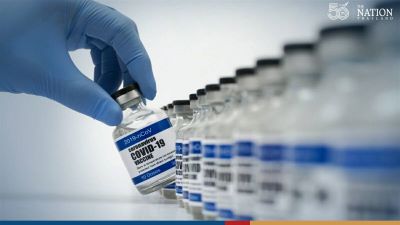
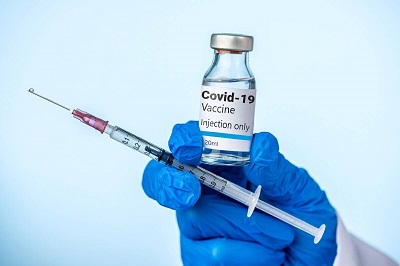
Doctor or nurse is holding the Covid-19 vaccine and syringe with her blue glove.

The global, randomised, double-blind Phase-III study will include more than 35,000 volunteers aged 18 and older across sites in the US, Asia, Africa, and Latin America as well as from India.

The trial aims to prevent symptomatic Covid-19 infections, as well as reduce severe disease and asymptomatic infection.

“India is participating in Sanofi Pasteur’s pivotal Phase-III study, and subject to subsequent approvals, we should soon begin enrollment of study participants in the country,” said Annapurna Das, Country Head, Sanofi Pasteur India, in a statement.

“As the virus continues to evolve, we are anticipating what will be needed in the coming months and years, and accordingly, have adapted our vaccine development programme. We believe our Covid-19 adjuvanted, recombinant vaccine can make a significant contribution to the ongoing fight against Covid-19 and are committed to initiating our clinical programme in India, at the earliest” she added.

As vaccination becomes available, study participants are encouraged to receive an approved Covid vaccine during the study, if they wish to do so. As part of the study design, all participants including the control group will be offered the study vaccine as soon as it is determined to be safe and effective.

In a two-stage approach, the study will initially investigate the efficacy of a vaccine formulation targeting the original virus strain (D614), while a second stage will evaluate a second formulation targeting the Beta variant (B1351).

Recent scientific evidence shows that antibodies created against the Beta variant may provide broad cross-protection against other more transmissible variants.

Sanofi and GSK will also run clinical studies to assess the ability of the adjuvanted recombinant-protein Covid-19 vaccine candidate to generate a strong booster response regardless of the type of vaccine initially received.

The Phase 3 study initiation follows the global interim Phase 2 results which showed that the adjuvanted recombinant Covid-19 vaccine candidate achieved high rates of neutralising antibody responses in all adult age groups.

The Phase-II trial, which involved 722 adult volunteers from the US and Honduras between 18 to 95 years old, did not raise any safety concerns and also produced a strong immune response across all age groups.

It showed 95 per cent to 100 per cent seroconversion following a second injection, while a single jab produced high neutralising antibody levels among people with prior SARS-CoV-2 infection. This suggested the vaccine’s strong potential for development as a booster shot.

The French pharma company Sanofi and its British peer GSK aim to produce up to one billion doses in 2021.

Published : July 09, 2021

By : The Statesman/ANN