Samsung Electronics to transfer some 500 technologies to local SMEs
Samsung Electronics will share its 505 patented technologies with local small and medium enterprises, the Ministry of Trade, Industry and Energy said Friday.
The list comprises 213 mobile technologies, 68 semiconductor technologies, 68 display technologies, 45 telecommunications technologies and 31 medical equipment technologies, and others.
The SMEs that wish to benefit from the governments technology transfer program are required to submit their application via the ministry or the Korea Institute for Advancement of Technology, by June 10.
The given program, initiated in 2013, contributed to transferring 444 technologies to 226 SMEs last year from the country’s largest businesses.
Recently joining the program was SK Group, which completed the transfer of 75 technologies to 53 SMEs in March this year.
In the second half this year, South Korea plans to work with other industry leaders, including Posco, LS Electric, Korea Hydro & Nuclear Power and Korea Water Resources.
“We hope that this technology transfer program may help local businesses overcome the market challenges triggered by the COVID-19 pandemic fallout,” said an official of the ministry.
Pakistan receives first batch of 1.2m AstraZeneca doses via Covax facility
Pakistan received its first shipment of Oxford-AstraZeneca Covid-19 vaccines through the Covax facility on Saturday, according to a statement issued by the National Command and Operation Centre (NCOC).
The statement said that the first consignment consisted of 1,238,400 vaccine doses and would be followed by an additional 1,236,000 doses in a few days. It added that the doses would serve to support the government’s “ongoing historic drive to bring the pandemic to an end”.
“Further allocations from June onwards will be confirmed in due course. The goal of the Covax facility is to supply Pakistan with enough doses to vaccinate 20 per cent of the population depending on availability.”
Special Assistant to the Prime Minister (SAPM) on Health Dr Faisal Sultan received the consignment at the National Emergency Operations Centre headquarters with representatives from Covax’s technical and funding partners.
“In this unprecedented crisis, we appreciate Covax and Gavi’s (Global Alliance for Vaccines and Immunisation) contribution to the collective effort to fight Covid-19 in Pakistan,” said SAPM Sultan.
“Sometimes, such crises propel innovation and to this end, we were able to quickly expand the capacity of EPI’s (Expanded Programme on Immunisation) facilities to vaccinate our eligible population against Covid. Recently, we’ve been administering almost 200,000 doses a day and we will be able to increase to 0.5 million doses a day very soon,” he added.
SAPM Sultan also urged everyone above 40 to register themselves for vaccination so the mission to “immunise our fellow citizens, especially the ones who fall in the high-risk and vulnerable groups” could be continued, said the statement. “Very soon, we will be able to expand the campaign to other age groups and demographics,” he said.
The statement added that the AstraZeneca vaccines would supplement the purchased vaccines by the government and help to bolster the drive to immunise frontline healthcare workers, senior citizens and other priority groups identified in the National Deployment and Vaccination Plan by the NCOC.
“More than 3.3m vaccine doses have been administered to healthcare workers and citizens at large,” said the statement, further nothing that the The Ministry of National Health Services, Regulations and Coordination had also ramped up the cold chain capacity of the EPI to meet the requirements of the vaccine deployment plan. “This also includes ultra-cold chain facilities in 15 large cities.”
“Sinopharm, Sinovac, CanSino-Bio and Sputnik [vaccine] doses have been administered in Pakistan so far,” the statement said.
“The 2.47m doses of Oxford-AstraZeneca’s Covid-19 vaccine will be used to immunise about 1.24m high-risk people against the virus,” said the statement.
“Unicef is proud to be leading efforts to procure and supply safe, effective and affordable Covid-19 vaccines on behalf of the Covax facility which aims to quickly reach people in low and middle-income countries and ensures that no one at risk is left behind,” Aida Girma, Unicef representative in Pakistan, said on the occasion.
“Unicef commends the government for its leadership in the national response to the pandemic, including the successful rollout of the national vaccination programme, and thanks the Covax partners for their generous contribution. Solidarity is key to ending the pandemic.”
Gavi Senior Country Manager for Pakistan, Alexa Reynolds, meanwhile, said, “This delivery — the first of many — is the product of an unprecedented global partnership to ensure no country is left behind in the global race for Covid-19 vaccines.”
She said the vaccines were safe and effective and would “play an important role in helping the country to end this pandemic”.
Covax is an alliance set up by Gavi, Coalition for Epidemic Preparedness Innovations and the World Health Organisation in April last year. The alliance has pledged provision of free vaccine for 20pc of the population of different countries, including Pakistan.
“It aims to provide at least two billion doses of approved Covid-19 vaccines by the end of 2021, enabling the protection of frontline healthcare and social workers, as well as other high-risk and vulnerable groups in what will be the largest immunisation campaign in history,” said the NCOC statement.
Covax donors and diplomatic missions
The NCOC statement noted that diplomatic missions and Covax donors also attended the handover ceremony.
Ambassador of the European Union to Pakistan Androulla Kaminara said: “We welcome the opportunity to concretely show our solidarity with the government and support its efforts to fight the coronavirus through this important delivery of vaccines.
“We are proud to play our part in the global Covax initiative, alongside our partners, as it helps to complement efforts where vaccines are needed. For the time being SOPs (standard operating procedures) still need to be followed.”
“The United States welcomes the successful arrival in Pakistan of 1.2m doses of the AstraZeneca Covid-19 vaccine. We remain committed to working bilaterally and multilaterally to support access to vaccines for the world’s most at-risk populations,” said US Embassy Chargé d’affaires Angela P Aggeler.
She added the pandemic had shown the importance of partnerships “such as the longstanding partnership between the United States and Pakistan, which has enabled us to more effectively respond to this health crisis together”.
The British High Commissioner to Pakistan Dr Christian Turner said: “I’m proud of the UK’s role in developing the Oxford University/AstraZeneca vaccine that Pakistan is receiving today. The UK is one of the world’s biggest contributors to the Covax facility — donating £548m to make sure countries get the vaccines they need, including Pakistan.”
“Today’s arrival of the first Covax batch in Pakistan is an important milestone for fighting this pandemic together. It is also a strong token of multilateralism and international solidarity at its best.
“Germany, as [the] second largest donor, is proud of contributing to the Covax facility more than 1.5bn euros because we are convinced: An inclusive global access to vaccines is the need of the hour and nobody is safe until everyone is safe!” stated Dr Philipp Deichmann, Charge d’Affaires of the Embassy of Germany in Pakistan.
Russia to cooperate with China on production of Sputnik V vaccine
MOSCOW – The Russian Direct Investment Fund (RDIF) has signed deals with three Chinese biopharmaceutical companies for the production of over 260 million doses of its Sputnik V vaccine against the coronavirus in the past weeks, according to statements published on the website of the RDIF.
The first contract was signed with China’s Shenzhen Yuanxing Gene-tech Co., Ltd. on March 29 for the production of over 60 million doses of the Sputnik V jab that is scheduled to start this month.
Another agreement was reached on April 1 with a subsidiary of a key leader in the pharmaceutical field, the Tibet Rhodiola Pharmaceutical Holding, namely TopRidge Pharma, for the production of over 100 million doses per year.
The most recent agreement was reached on April 19 with a subsidiary of a major Chinese biopharmaceutical producer Hualan Biological Engineering Inc. for the production of over 100 million doses.
The three deals together amount to a production of over 260 million doses of the jab, which will facilitate supply and could be sufficient to fully vaccinate over 130 million people worldwide, according to the RDIF.
Kirill Dmitriev, CEO of the RDIF, said cooperation with China would significantly “help increase production capacities,” adding that the country is one of Russia’s key partners in this field.
“China is one of the major production hubs for Sputnik V and we are ready for increasing the scope of partnership with local producers to meet the rising demand for the Russian vaccine,” he added.
COVID-19 variants are changing the pandemic situation
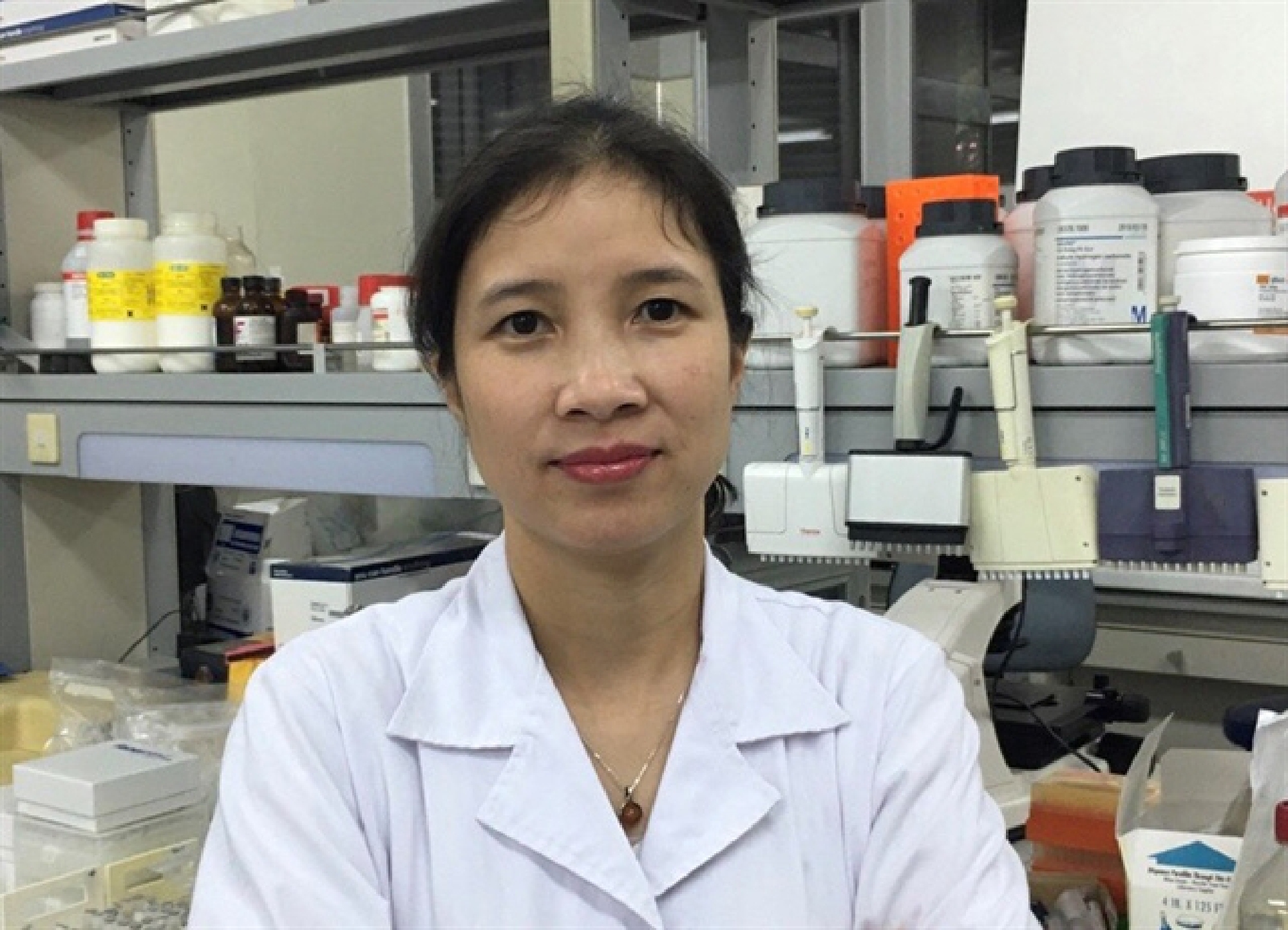
Recently, the Indian variant of the novel coronavirus has been detected in Việt Nam. At the same time, people who finished 14-day quarantine periods went on to test positive. Hoàng Vũ Mai Phương, Head of Virus Department, National Institute of Hygiene and Epidemiology, talks to Sức khoẻ đời sống (Life and Health) newspaper about research related to this virus variant.
What is the difference between this virus strain to previous strains detected in Việt Nam, and what should be noted about this variant?
Up to now, there are four strains of SARS-CoV-2 from the original SARS-CoV-2 virus that appeared for the first time in Wuhan and are circulating in Việt Nam. The variant of European origin was determined from July 2020. In January 2021, Việt Nam recorded strain B.1.351 for the first time, which was first discovered in South Africa. Variant B.1.1.7 appearing for the first time in the UK is the cause of two outbreaks of COVID-19 in Hải Dương and Quảng Ninh in February 2021. On May 5, the National Institute of Hygiene and Epidemiology announced the results of DNA sequencing of some samples in community outbreaks in Vĩnh Phúc and Hà Nam. Three samples from Vĩnh Phúc are strain B.1.617.2, which is the Indian variant; the samples from Hà Nam are strain B.1.1.7.
Variant B.1.617.2 was first identified in India in December 2020, after which 20 countries announced the presence of this variant. Scientists have identified three mutations L452R, E484Q, P618R on the protein of variant B.1.617 (strain B1.617.2 in Việt Nam has two out of three important mutations: L452R, P618R), increasing the likelihood of the virus’s ability to bind to target cells. This can lead to an increase in infectiousness, as well as an increase in the virus’ ability to evade the immunity system.
Recently the discovery of positive cases after the end of the 14-day quarantine period indicates the likelihood of the virus having changes in the pathogenesis. The fact that multiple variants of the virus circulate is a real problem in prevention, as we have to deal with the different characteristics of each variant. Hopefully, with the coordination of the people and the government, the health sector can control the pandemic in the coming time.
Many say the Indian virus has lower virulence but is spreading faster, what is your opinion on this perception and why has the number of COVID -19 cases and deaths in India increased so rapidly?
Scientists have not seen concrete evidence of higher virulence of this strain compared to others. The rapid increase in the number of deaths in India is also influenced by other factors such as the shortage of medical equipment, overcrowding of hospitals, and the status of patients with underlying disease. Further studies are also needed to understand the impact of each of these factors on the increase in COVID-19 infections in India.
The Made-in-Vietnam COVID-19 vaccine is in the testing process. What is its ability when facing these new virus mutation?
The fact that viruses change rapidly and constantly creating new variants is a challenge for scientists. The COVID-19 vaccine produced by Việt Nam is currently in the testing process. At the end of the first phase of the trial of NanoCOVAX, tests showed that there were antibodies against the new genetically modified virus in the UK (B.1.1 .7). Currently, scientists continue to perform the testing process to be able to find the results in the shortest time. — VNS
‘India does not need lectures about vaccine supplies’, ‘European Union is leading the way in vaccine donations’: President Macron
The virtual summit was attended by Germany’s Angela Merkel and the EU president Ursula von der Leyen amongst others where Macron highlighted India’s vaccine exports to several countries in the time of the pandemic.
French President Emmanuel Macron on Saturday came out in the support of India as he expressed solidarity with Prime Minister Narendra Modi during the India-EU virtual summit attended by 26 other EU.
The virtual summit was attended by Germany’s Angela Merkel and the EU president Ursula von der Leyen amongst others where Macron highlighted India’s vaccine exports to several countries in the time of the pandemic.
In response to the COVID-19 vaccine shortage and criticism aimed at the Indian government, Macron asserted that India does not need to be ‘lectured from anyone’ on vaccine supplies.
“India does not need to listen to lectures from anyone about vaccine supplies. India has exported a lot for humanity to many countries. We know what situation India is in,” the French President said.
As per MEA data, India exported COVID-19 vaccines to as many as 95 countries as part of its “Vaccine Maitri” initiative.
Emmanuel Macron also insisted that the immediate priority for the developed countries should be to first donate more doses to poor countries.
“Evidently, we must turn this vaccine into a global public good,” he said claiming that the European Union is leading the way in vaccine donations and called for the United States and Britain to share more, too.
He said that “Europe is the most generous continent with the rest of the world,” having exported 45 million doses, and expressed hope that “the British, the Americans and others will follow.” He added that “In the short term, this is what will allow us to vaccinate.”
The India-EU leaders’ meeting is hosted by Prime Minister of Portugal Antonio Costa. Portugal currently holds the Presidency of the Council of the European Union.
“We are opening a new chapter in #EUIndia strategic partnership at the meeting of EU Leaders with PM @narendramodi,” tweeted Charles Michel, President of the European Council.
He said the two sides are launching negotiations on three agreements — trade, investment and geographical indications.
High-level talks being held to keep the food coming
High-level talks are being held with India to ensure continuous food shipments as concerns rise in import-dependent Nepal that the Covid-19 crisis there may disrupt supply, the Ministry of Industry, Supplies and Commerce said.
Both countries are grappling with ever rising coronavirus caseloads while the southern neighbour is in the midst of its worst pandemic situation, with daily new infections crossing the 400,000 mark.
Nepal relies heavily on food imports, especially from India, and there are fears that the food supply chain could be hit.
“We will not let problems occur in the supply of food; and for that, discussions are being conducted at the higher levels,” Narayan Prasad Regmi, joint secretary of the Industry Ministry, told the Post.
“There is no problem with food deliveries from India, and we do not expect any hindrances to the regular flow in the coming days too,” he said. “The production of essential food items is going on smoothly in Nepal and India, and the supply system will run continuously,” he said.
Most of Nepal’s cereal requirement is fulfilled by imports, mainly from India.
According to the Trade and Export Promotion Centre, cereal imports rose sharply by 46.3 percent year-on-year to Rs59.73 billion during the period mid-July to mid-March of the current fiscal year.
During the same period in the last fiscal year, Nepal bought cereals valued at Rs40.82 billion. The country’s imports of cereals amounted to Rs56.88 billion in the whole of the last fiscal year 2019-20.
“We are alert that no problems occur in supply management and there are no obstacles in the supply of food items from India,” said Dinesh Bhattarai, commerce and supply secretary at the Industry Ministry.
“The ministry has been working to ease supply, transportation and distribution,” he said, adding that this will help to enlarge food reserves and ensure that a shortage situation will not occur.
The southern border with India has been closed to all foreigners, but transport personnel like drivers and conductors are allowed to enter Nepal, he said.
“There is no need to panic because the private sector and the government hold a huge stock of food items,” he said.
According to the Industry Ministry’s food stocks data as of May 5, state-owned Food Management and Trading Company has 104,656 quintals of rice in stock, and another 50,000 quintals is being procured through competitive bidding.
Its warehouses contain 176,885 quintals of paddy, 11,590 quintals of wheat, 51,554 tonnes of salt and 50,923 tonnes of sugar.
On Tuesday and Wednesday, 29 truckloads of rice, three truckloads of paddy, 21 truckloads of sugar, 16 truckloads of lentils, 18 truckloads of fruits, 67 truckloads of vegetables, and 22 truckloads of ghee and edible oil arrived in the Kathmandu Valley.
On Wednesday, 243 tankers loaded with petroleum products entered Nepal through different trade points on the southern border.
“Nepali mills producing rice, lentils, edible oil and flour have sufficient inventory so problems in supply of food items are unlikely to occur,” said Devendra Bhakta Shrestha, president of the Nepal Wholesalers Association.
Domestic wholesalers and retailers have food items enough for at least three months, he said. Mill owners have sufficient stocks of paddy purchased from India, and they also import rice from India and sell it by branding it, he said.
India reported 412,262 new cases and 3,980 deaths on Thursday with the number of cases and death increasing daily. The country has imposed partial and full lockdown in different states to prevent the spread of the coronavirus.
The detection of an Indian variant of the coronavirus and a its subtype called double-mutant in Bangladesh is a worrying sign, especially since the country is just recovering from the second wave of Covid-19.
The strain of the virus that has overwhelmed India’s hospitals might jeopardise the healthcare system in Bangladesh unless the strictest measures are taken right now, health experts said.
Officials of the Directorate General of Health Services yesterday told reporters that they detected six cases of the Indian variant, including some with the double-mutant subtype.
Besides, a genome sequencing centre at Jashore Science and Technology University (JSTU) found two other cases of the Indian variant in individuals who recently travelled back from India.
Meanwhile, the government extended the closure of borders with India for 14 more days, UNB reports.
Conditions of the travel ban that has been in effect since April 26 will remain unchanged, said Mashfee Binte Shams, secretary (east) at the foreign ministry.
The government earlier closed the border with India for 14 days with on April 26. Freight operations were exempt from the ban.
Bangladeshis in India with visas valid for less than 15 days can come back only through Benapole, Akhaura and Burimari after taking permission from Bangladesh Missions in New Delhi, Kolkata, and Agartala given that they test negative for coronavirus in a PCR machine in less than 72 hours before entering Bangladesh.
“The Indian variant of coronavirus was detected in a sample test at Evercare Hospital in Dhaka. It has been published on Global Initiative on Sharing All Influenza Data,” UNB quoted ASM Alamgir, chief scientific officer of the Institute of Epidemiology, Disease Control and Research (IEDCR), as saying.
At the daily briefing, Nasima Sultana, additional director general of the DGHS, said, “We are concerned about the Indian variant. And everyone else should be concerned.”
Professor Iqbal Kabir Zahid, associate director of the JSTU genome centre, said the facility received 16 samples sent by Jashore General Hospital from Bangladeshis travelling back from India.
The double-mutant Indian variant known as B1.617.2 was detected in two of the three samples that tested positive for coronavirus, he said.
The people who tested positive are being treated in isolation, reports our correspondent in Benapole.
Since the borders had been closed, a total of 2,203 Bangladeshis returned from India with special permission through Benapole Land Port as of May 6.
They were quarantined at different government and private facilities in Jashore and four other districts in the region.
Health experts and officials said the authorities should track down everyone who came in contact with the individuals with the Indian variant and have them tested.
WHAT IS THE INDIAN VARIANT?
The India variant known as B.1.617 was first detected in October last year. It is far more transmissible than former strains of the virus.
It was reported more recently that the variant has three different subtypes with slightly different genetic mutations.
The subtype, B.1.617.2, found in Bangladesh, appears to be spreading more quickly than two other subtypes detected by scientists in India.
A study published on April 20 in Cell, a medical journal, said there was a mutation of the Indian variant that increased its potency to infect human cells. In laboratory setting, the double-mutant variant proved to be 20 percent more transmissible, said the study.
The World Health Organization (WHO) earlier suggested that the Indian variant might have mutations that would make the virus more transmissible, cause more severe symptoms or render vaccines less effective.
The Indian variant has been spotted in at least 21 countries, according to the Global Initiative on Sharing All Influenza Data (GISAID) database.
India yesterday announced over 4 lakh new cases of Covid-19, taking the country’s total caseload to over 2.18 crore. Out of these, over 37 lakh cases are currently active while over 1.79 crore people have recovered.
Health officials in India yesterday reported a record 4,187 deaths from Covid-19 in a single day.
India’s crematoriums and burial grounds are being overwhelmed by the devastating new surge of infections tearing through the populous country with a terrifying speed, depleting the supply of life-saving oxygen to critical levels and leaving patients to die while waiting in line to see doctors, reports AP from New Delhi.
Bangladesh saw a surge of the Covid-19 in April. According to the DGHS, about 80 people were reported dead from Covid-19 every day on an average in April.
The numbers began to fall this month.
Officials at yesterday’s briefing said 45 people died from Covid-19 in 24 years while 1,285 new patients were identified.
The positivity rate was 8.74 percent yesterday while the overall positivity rate stood at 13.75 percent.
Prof Sayedur Rahman, chairman of pharmacology at the Bangabandhu Sheikh Mujib Medical University (BSMMU), said scientists in the UK found that the Indian variant to be more contagious than the UK variant.
He said Nepal was about to face the same fate as India.
“Bangladesh government should take the highest measure to contain the transmission. We are in trouble and the situation may turn out to be something beyond our imagination.”
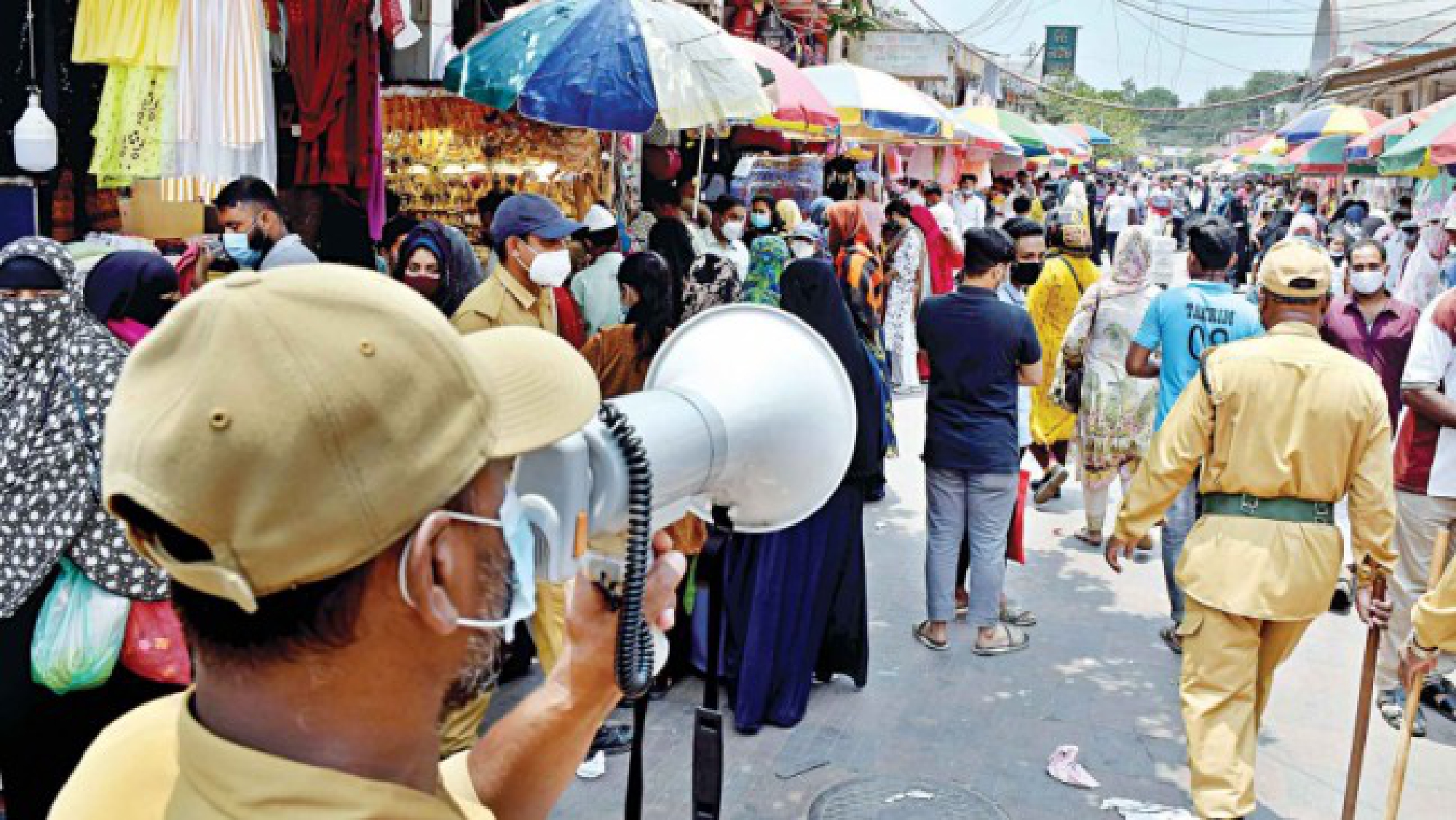
Professor Nazrul Islam, member of the national technical advisory committee on Covid-19, said the government failed to seal the border completely and that’s why the variant entered Bangladesh.
“The consequences will be grave. We don’t follow the health rules, ignore the government directives, and are travelling out of the city. There is no sign of people following the health rules. The coming days might be full of disasters,” he said.
BORDERS CLOSED
People entering Bangladesh from India with special permission would have to stay officially quarantined for two weeks, UNB reports.
Except for the Benapole, Akhaura and Burimari land ports, human movement at the land ports between the two countries would be completely suspended for two weeks, said the latest decision made at a virtual meeting yesterday with Foreign Secretary Masud Bin Momen in the chair.
The vehicles carrying imported goods from India would have to be properly sterilised before entering Bangladesh borders.
The drivers and helpers concerned would have to observe the Covid-19 safety protocol strictly.
Railroads will be encouraged for the export and import of goods between the two countries during this period.
Bangladesh Missions in New Delhi, Kolkata and Agartala will convey the relevant information in this regard to the authorities concerned in India in the light of the friendly relations between the two countries.
Fate of NLD and other political parties will depend on investigations: SAC spokesperson
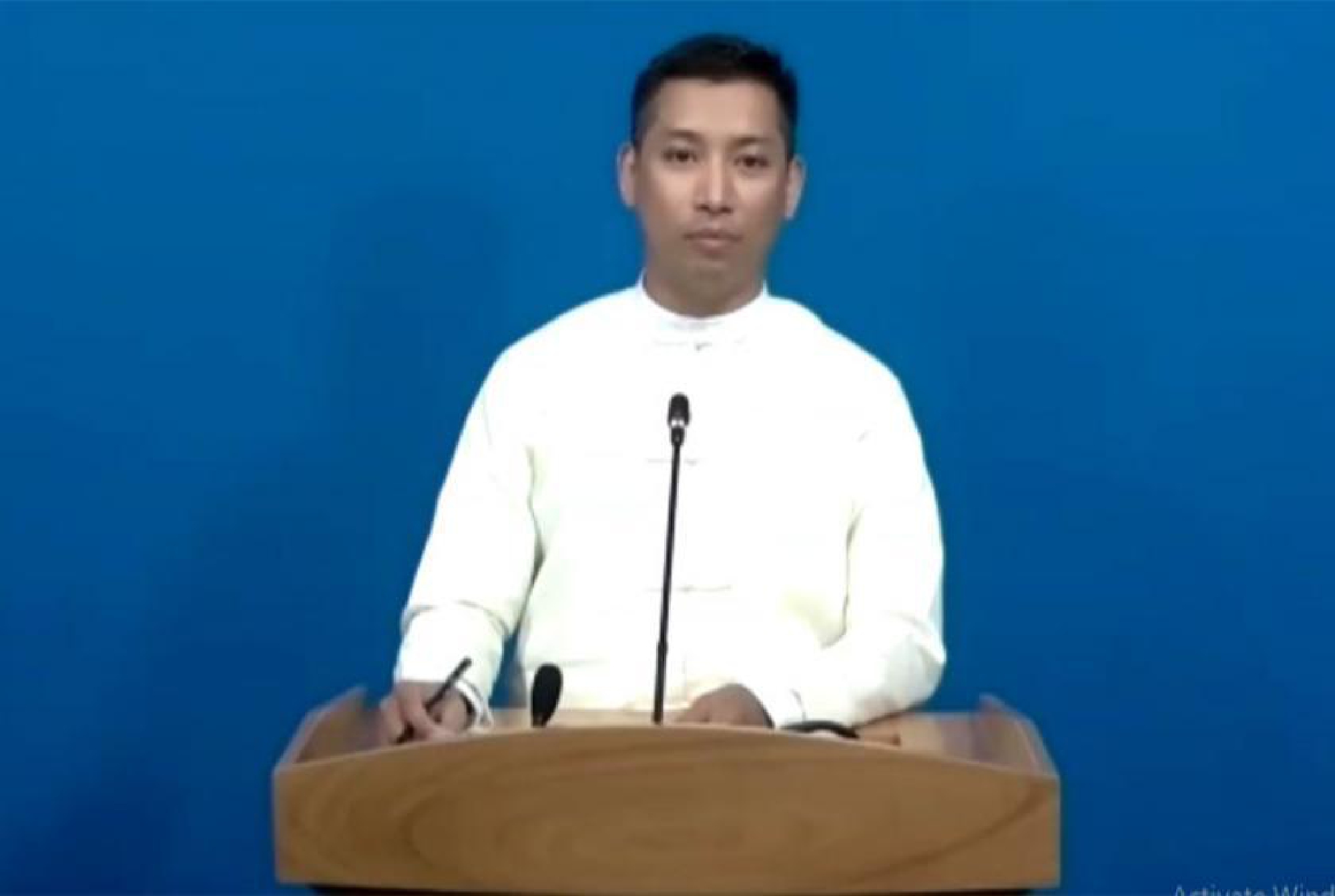
All political parties, including the National League for Democracy(NLD), will be investigated into and follow up actions will be taken depending on how many laws were broken by them, according to the State Administration Council (SAC) information team member and spokesperson Major Kaung Htet San.
On May 7, the SAC held a press conference over video conferencing during which a reporter had asked regarding the Union Election Comission’s (UEC) current investigations regarding the NLD.
“Since the SAC government took over, the UEC was reformed and investigations were launched into voter lists. It had progressed considerably. After the investigations are done, depending on findings regarding voter fraud and so on will decide the future of the NLD and all other parties, actions will be taken according to the law,” said the Major.
The SAC and the reformed UEC under the military had been issuing statements of their findings regarding voter fraud or malpractice regarding the 2020 General Election.
“In regards to the NLD, there are laws that the political parties are allowed to exist from those in the constitution to the political party registeration law. In Section 407(b), there are clauses that say that a political party is not allowed to communicate, directly or indirectly, with insurgents, terrorists or those that were declared to be an illegal organisation,” said Kaung Htet San.
NLD’s chair Daw Aung San Suu Kyi, vice-chair U Win Myint and other top-level NLD leaders are still being detained and sued.
Myanmar junta designates shadow government as a terrorist group
YANGON (AFP) – Myanmars junta declared on Saturday night (May 8) that a group of ousted lawmakers running a shadow government would now be classified as “terrorists”, as the military moves to tighten its grip over a country in turmoil.
Since the military seized power in a Feb 1 coup, detaining and ousting civilian leader Aung San Suu Kyi, a nationwide uprising has refused to back down in its demands for a return to democracy.
Protesters continue to take to the streets daily, while a nationwide boycott by students and faculty as well as civil servants across various sectors has brought the country to a shuddering halt.
Meanwhile, a group of ousted lawmakers – many of them previously part of Suu Kyi’s National League for Democracy party – have formed a shadow “National Unity Government” (NUG) to undermine the junta.
On Wednesday, the NUG announced the formation of a so-called “people’s defence force” to protect civilians facing violence from the military.
By Saturday night, state-run television announced that the NUG, its people’s defence force, and an affiliated group known as the Committee Representing Pyidaungsu Hluttaw (CRPH) – the Burmese word for parliament – were now classified as “terrorist organisations”.
“We ask the people not to… support terrorist actions, give aid to terrorist actions that threaten the people’s security from the CRPH, NUG, and PDF,” said the evening news broadcast.
The announcement comes as sporadic bomb blasts go off more frequently across Myanmar, especially in commercial hub Yangon – which authorities have blamed on “instigators”.
Previously, the junta had declared the CRPH and NUG as “unlawful associations”, and said interacting with them would be akin to high treason.
But their new designation as a “terrorist organisation” means anyone speaking to them – including journalists – can be subjected to charges under counter-terrorism laws.
The Arakan Army – an insurgent group that had clashed with the military in conflict-wracked Rakhine state – held the designation last year, and a journalist who had interviewed a high-ranking representative was detained.
He faced terrorism charges, carrying penalties ranging from three years to life in prison.
While he was released not long after, the use of the counter-terrorism law against journalists sparked fears of a tightening noose around the country’s embattled press.
Dozens of journalists have been arrested in the wake of the coup, while media outlets have shut down and various broadcasting licenses have been revoked for some TV stations – placing the country under an information blackout.
Junta leader Min Aung Hlaing has justified his Feb 1 power grab by citing electoral fraud in November elections won by Suu Kyi’s NLD party.
But the regime’s efforts to suppress a growing anti-junta movement have brought only bloodshed, with security forces having killed more than 770 civilians since Feb 1, according to a local monitoring group.
Vietnam records first death from adverse reaction to AstraZeneca COVID-19 vaccine
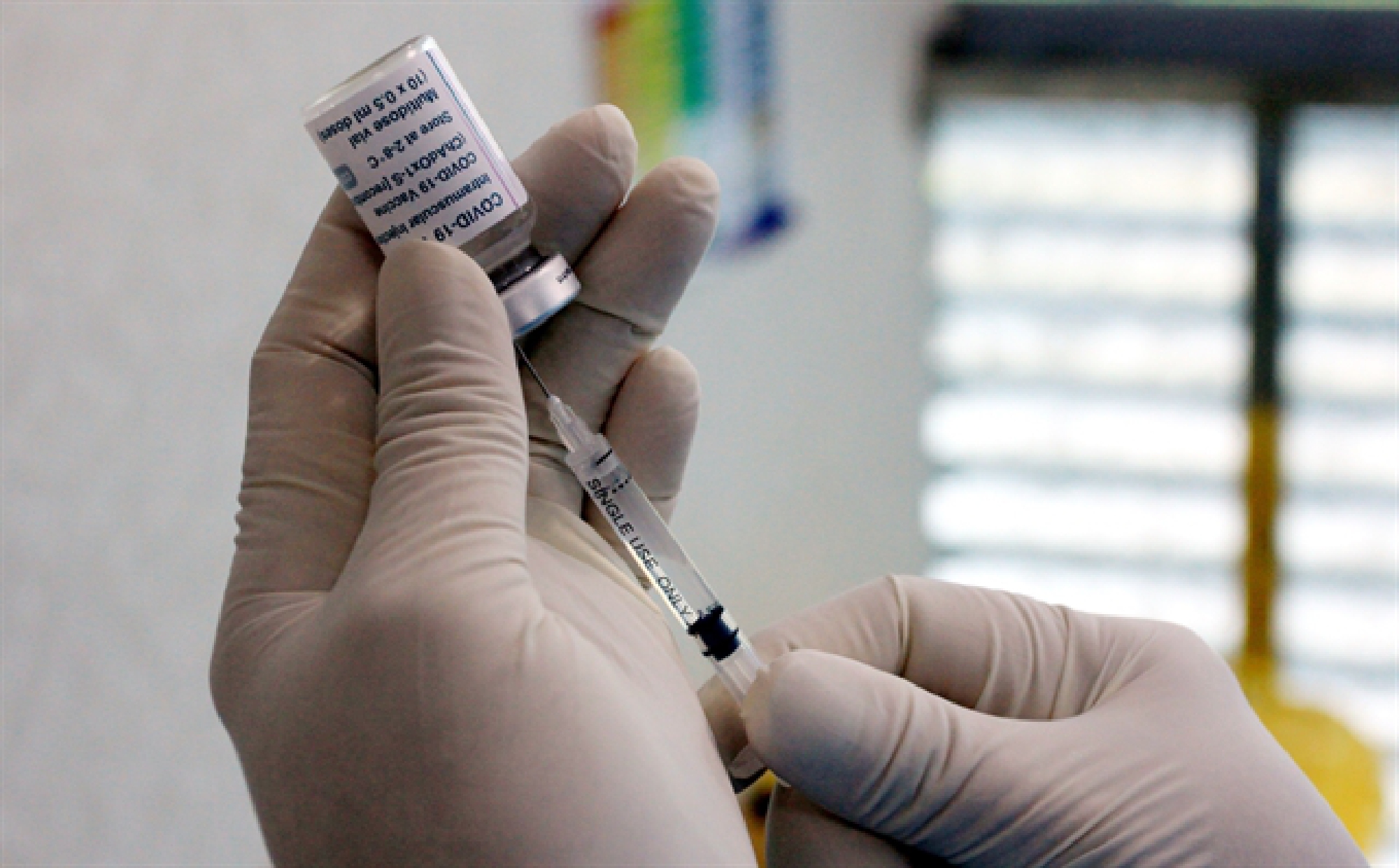
HÀ NỘI — A 35-year-old female medical worker in the southern province of An Giang died on Friday of anaphylactic shock after receiving a dose of the AstraZeneca COVID-19 vaccine a day earlier.
Từ Quốc Thuấn, director of An Giang’s health department, confirmed the death late on Friday, making this the first death from adverse reaction to COVID-19 vaccine in Việt Nam since the country started its inoculation drive using primarily AstraZeneca doses in early March.
The woman was working at Tân Chân Region General Hospital and received the vaccine shot on Thursday.
After the injection, the patient went into shock and was treated by the Tân Châu Hospital in accordance with the protocol. The hospital also consulted with experts and doctors from the An Giang Province General Hospital and Chợ Rẫy Hospital in HCM City via telemedicine regarding the treatment.
She was then transferred to An Giang Province’s General Hospital, and the Ministry of Health instructed Chợ Rẫy Hospital to send intensive care specialists there to provide emergency assistance, but the patient did not survive.
he official cause of death was registered as anaphylaxis, with an underlying condition identified as an allergy to non-steroidal anti-inflammatory drugs.
The health ministry’s notice said this is an extremely rare incident in regards to COVID-19 vaccinations.
Health minister Nguyễn Thanh Long called the woman’s family to send his condolences and sympathies for their loss as well as the loss of An Giang’s frontline healthcare forces.
Earlier on Thursday, Long along with three of his deputies received AstraZeneca doses, stressing the need to ensure a safe vaccination programme.
“The Ministry of Health has established a Steering Committee for safe immunisation, which brings together leading experts and professors in all relevant fields to be ready to assist localities in handling any situation arising during the vaccination drive,” Long said.
As of Friday morning, 747,827 people in Việt Nam, mostly frontline workers and medical staff, had received COVID-19 vaccine shots. — VNS