[Japan] Battered tourism industry ready to help for smooth vaccine rollout
The tourism industry, battered by the prolonged coronavirus crisis, is moving to provide buses and facilities as COVID-19 vaccination sites and to operate call centers to handle reservations, as inoculations will be fully rolled out in mid-May.
The government has set an immediate goal of having about 36 million elderly people vaccinated by the end of July, and preparations are proceeding at a rapid pace. The tourism industry, which is in a difficult situation, will play a role in this effort.
“By refurbishing the interiors of our vehicles, they’ll be transformed into mobile vaccination units that can be used in depopulated areas and other places where the majority of the population is elderly,” said a senior employee of IBS Inc. in Minato Ward, Tokyo.
The bus company has prepared a wheelchair-accessible vehicle, among other types, to be used as a mobile vaccination unit.
Persons to be vaccinated first take a seat in the front part of the bus, where they will fill in a medical questionnaire. In turn, they will receive their inoculation at a shot station in the middle area, then they can lie down in the rear of the bus if they feel sick. Acrylic panels are installed at each seat to prevent infections through airborne droplets.
The company owns about 40 buses, but sales in January and February were down 90% from the same period last year due to the sharp drop in travel demand. A number of school trips and excursions scheduled for this spring were canceled or postponed.
Since February, the company has been receiving inquiries about fees to use its buses from several municipalities in the Kanto region, many of which have areas difficult to access.
“We want to use our buses because maintenance and parking fees cost a lot,” the IBS official said. “When the supply of vaccines increases, there should be occasions for our buses to become useful.”
The use of buses as mobile vaccination units has already been introduced in the United States and France. The government has simplified the necessary procedures to use them for the purpose when fewer people use such buses as a means of transportation.
In addition to IBS, companies in Tokyo and Chiba Prefecture have also refurbished their vehicles and are encouraging local governments to use them as mobile inoculation units.
■ Offering banquet halls
The Grand Hotel Kanachu Hiratsuka in Hiratsuka, Kanagawa Prefecture, will offer two of its banquet halls as vaccination sites to be used on May 22 and 23. The larger of the two halls has about 260 square meters of floor space to fit about 100 people seated. The room will be divided with partitions to secure a waiting area.
“The hotel is conveniently located near Hiratsuka Station, so hopefully the vaccinations of residents will proceed smoothly,” said an official of the Hiratsuka city government’s health division.
Some travel agencies have been commissioned for the task of accepting vaccination reservations.
Nippon Travel Agency Co. in Chuo Ward, Tokyo, will take assignments from about 140 municipalities nationwide to manage and operate vaccination-related call centers and reservation systems.
“We want to contribute as much as possible to bring back a world where people can easily travel and go sightseeing,” said an official in charge of the company’s public relations.
■ Transportation services
In areas where public transportation is scarce, there is a growing movement to secure a means of transportation for elderly people to go to vaccination sites.
According to a survey by the Land, Infrastructure, Transport and Tourism Ministry, local governments and business operators in 32 prefectures, as of March 23, decided or were considering distributing taxi tickets or operating chartered buses for people to come to vaccination sites.
In Teshikaga, Hokkaido, about 40% of the population is 65 or older. However, there are only a few train and bus services available per day that can take people to the vaccination venue in the town center.
The town government is planning to provide a free shuttle service using large taxis between the vaccination site and the homes of elderly residents who have chronic illnesses and find it difficult to get around on their own.
“The strength of a taxi service is that we can take passengers to their homes,” said an employee of Mashu Hired Car, a firm the municipality asked to operate the service. “We would like to cooperate with the town government to ensure a smooth vaccination rollout.”
Deadly new surge in South Asia threatens to reverse global gains against COVID-19 pandemic and have disproportionate impact on children
The scenes we are witnessing in South Asia are unlike anything our region has seen before. Family members of patients are pleading for help as the region reels under an acute shortage of medical-grade oxygen. Exhausted health workers are being pushed to the brink of collapse. We are faced with a real possibility that our health systems will be strained to a breaking point – leading to even more loss of life.
Urgent action and steadfast leadership are indispensable to stopping the catastrophe. Governments must do everything within their power to stop the devastation, and partners that are able to send assistance must do so immediately. The international community must step up without delay. This is not just a moral imperative. The deadly new surge in South Asia threatens us all. It has the potential to reverse hard-earned global gains against the pandemic if not halted as soon as possible.
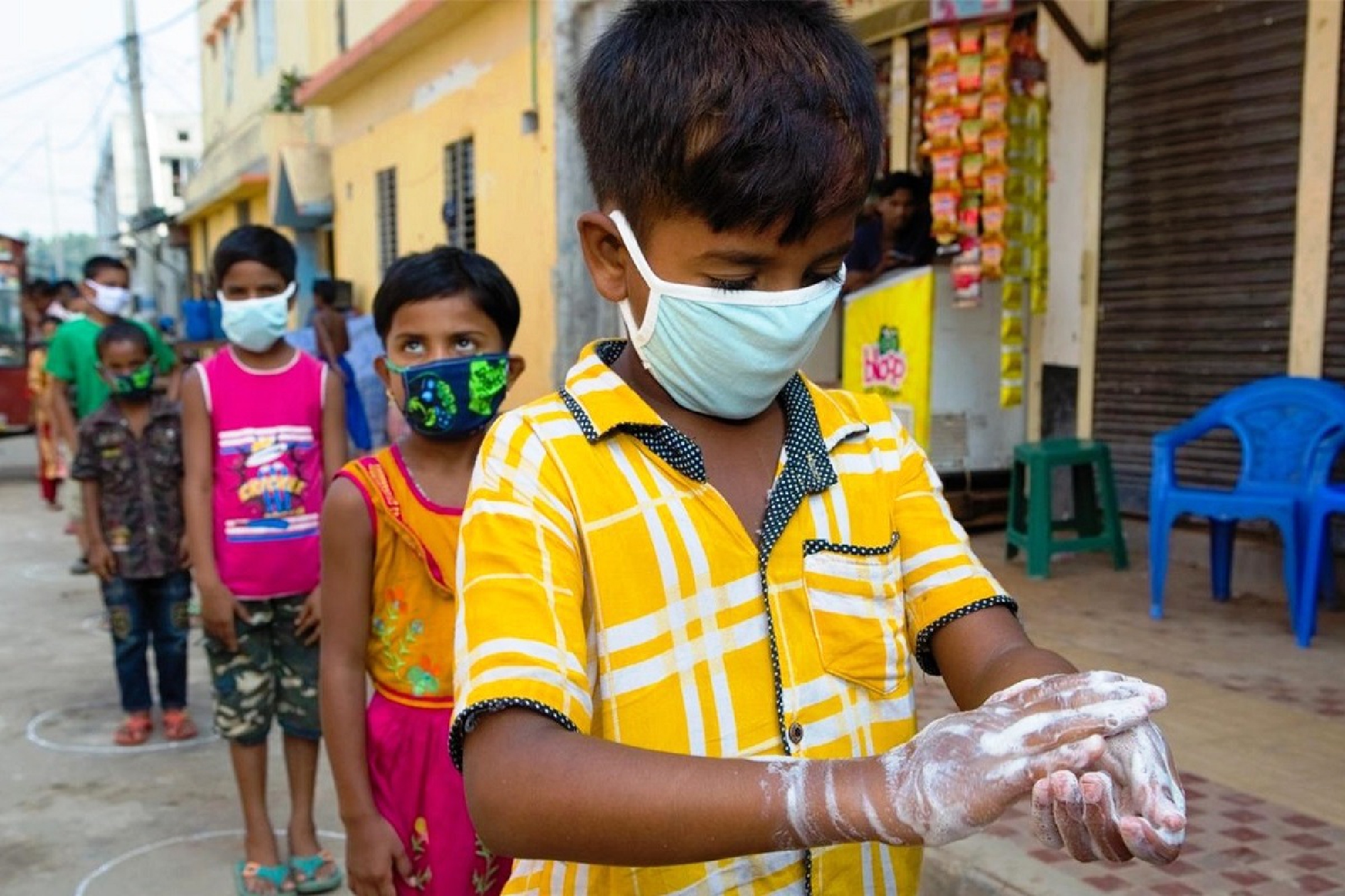
Let us not forget our individual responsibility. Every decision we make has the potential to alter the course of this surge – and to either safeguard or endanger the lives of those around us. We may be exhausted, but the virus is not yet exhausted. Now more than ever, we must commit ourselves to wearing masks, handwashing with soap as often as possible, keeping physical distance and getting ourselves vaccinated if we have the opportunity to do so.
The very low levels of vaccination in South Asia magnify the likelihood of the virus spiraling even further out of control. In almost all countries in the region, with the exception of Maldives and Bhutan, fewer than 1 in 10 people have been vaccinated. Now more than ever, we must ensure vaccines equitably reach all populations. Manufacturing must be ramped up, technology transferred, and doses equitably shared. None of us are safe until all of us are safe.
As we work to respond to the public health emergency, we cannot forget the profound impacts of the pandemic on children. Children are being directly affected by the disease in higher numbers than ever before. They are losing parents and caregivers, becoming witnesses to scenes no child should ever see, and being cut off from their schools and vital support networks. And as resources are diverted and services saturated, the essential health services they so heavily rely on – including routine immunization programmes – are now at risk of being compromised, if not shuttered entirely.
If this happens, it will once more be the most vulnerable children and families who will suffer most. The first wave of the pandemic caused drastic cuts in the availability and use of essential public health services in South Asia, costing us the lives of an estimated 228,000 children and 11,000 mothers. We simply cannot let this happen again. We must do everything within our power to keep essential health, immunization and nutrition services running – and make sure women and children everywhere feel safe to use them.
Viruses know no borders. We must come together now as a global community to stop the devastation and protect our children.
(Statement by George Laryea-Adjei, UNICEF Regional Director for South Asia)
[Vietnam] Quarantine period extended to 21 days: Health minister
HÀ NỘI — The COVID-19 quarantine period in Việt Nam has been officially extended to 21 days.
Mandatory centralised quarantine for entries into the country and direct contacts of confirmed COVID-19 cases will be extended from the current 14 days to 21 days, and the new regulation takes effect from Wednesday, Minister of Health Nguyễn Thanh Long announced on Wednesday afternoon.
The decision was made after consultation with epidemiologists and virologists in light of new variants of the virus prompting revisions to our knowledge of disease incubation time, he said.
The new protocol aims to “protect the community from the spread of coronavirus” amid recent cases found positive following the completion of 14-day quarantine, Long said.
The health minister requested local health departments and centres for disease control to strictly comply with centralised quarantine protocols to avoid cross-infection within quarantine facilities and transfer people who have completed centralised quarantine to the authorities in their residence.
The follow-up medical observation period at home for those who have completed centralised quarantine will be cut from two weeks to seven days.
People who return from quarantine facilities should make daily health declarations with local medical workers. If they show signs of fever, cough, sore throat, shortness of breath, tiredness or loss of taste, they must go to the closest health clinic for guidance, a dispatch from the health ministry from earlier this morning, which still put the quarantine period at 14-day but provided tightened regulations, said.
They are not allowed to leave their houses or places of residence. If they need to go out for work or other necessary purposes, they must report to local police and medical staff and strictly follow basic prevention measures.
Health minister Long also requested all localities to review cases of foreigners entering Việt Nam and screen high-risks groups of people like those in service sectors like at discotheques, bars, karaoke bars, and massage parlours for COVID-19.
He also called on the public for strict observance of basic prevention and control measures like 5K – Khẩu trang (face mask), Khử khuẩn (disinfection), Khoảng cách (distance), Không tụ tập (no large gatherings), and Khai báo y tế (health declaration).
Previously, in late April, a Vietnamese national returning from Japan has found to be infected with the virus after finishing 14-day centralised quarantine and caused a cluster of infections in the northern province of Hà Nam.
Yesterday, an Indian expert in Hà Nội was confirmed to be carrying the virus after 14 days of quarantine. — VNS
PUTRAJAYA: More people will celebrate Hari Raya Aidilfitri under the movement control order after authorities placed the entire Kuala Lumpur and several localities in Johor, Perak and Terengganu under MCO for 14 days beginning tomorrow until May 20.
This comes after six districts in Selangor went under MCO beginning today until May 17.
Hari Raya Aidilfitri is expected to fall on May 13.
A temporary travelling ban will also be imposed on some countries to prevent new Covid-19 variants from entering Malaysia.
Senior Minister Datuk Seri Ismail Sabri Yaakob said existing standard operating procedure would apply, including a prohibition on social events and eatery dine-ins.
Official or non-official events by the government or private sector were also prohibited.
“Also not allowed are social gatherings such as kenduri, wedding receptions, engagement parties, aqiqah, doa selamat, tahlil, birthdays, reunions and retreats.
“This is enforced on all areas now under MCO, ” he said yesterday, adding that interstate travel would not be allowed with the exception of work purposes and emergencies.
Convenience stores, grocery and sundry shops and pharmacies can operate from 6am to 10pm. Petrol stations too can operate from 6am to 10pm while those located along highways can operate 24 hours.
Hospitals, clinics and medical laboratories are allowed to operate as normal while operating hours for markets are from 6am to 2pm.
As for Ramadan bazaars, while they were allowed to operate with strict standard operating procedure, state governments through local authorities would have the final decision, he said.
He said the decision to impose MCO in Kuala Lumpur was made after health authorities reported the emergence of 17 new clusters between April 1 and 27 and the spike in the number of daily cases.
In Johor, MCO will be enforced in Johor Baru, Kulai and Kota Tinggi which have been categorised as red zones with more than 150 cases reported while the capacity in hospitals and intensive care units reached above 70%.
In Perak, MCO will be imposed in Taiping sub-district as well as the district of Larut Matang and Selama.
In Terengganu, 14 sub-districts in Besut – Kampung Raja, Lubuk Kawah, Pelagat, Tenang, Keluang, Bukit Kenak, Kubang Bemban, Jabi, Pengkalan Nangka, Kerandang, Pasir Akar, Tembila, Bukit Puteri and Kuala Besut – will be under MCO.
Ismail Sabri said that between April 1 and May 3, the Health Ministry recorded 406 positive cases from 5,617 screenings carried out on residents at the localities.
“Health authorities informed us that the surge in cases in Besut district stemmed from the movement of students and workers from a neighbouring state, with infectivity reaching 95%.
“Besut also recorded 15 clusters within that period which have spread to other localities, ” he said.
On the international travel ban, he said this would involve citizens of Sri Lanka, Bangladesh, Pakistan and Nepal but there was no mention on when the ban would take effect.
“The travel restriction imposed on citizens of these countries involved all categories holding long-term social visit passes, business travellers and for social visits.
“Exemptions are, however, given to holders of diplomatic passports and officials as stated in the Vienna Convention on Diplomatic Relations 1961.
“This category will be given due consideration to enter Malaysia using existing standard operating procedure, ” he said.
Malaysia has temporarily banned flights to and from India to stop a new Covid-19 variant from entering the country beginning April 28.
Ships and Indian citizens with Malaysian work permits will also be denied entry.
The National Security Council has agreed to the proposal by the Health Ministry, with exemptions given to Malaysian citizens who will undergo the mandatory 14-day quarantine upon entry.
India clocks 3.68L new cases; PM reviews Covid staff strength
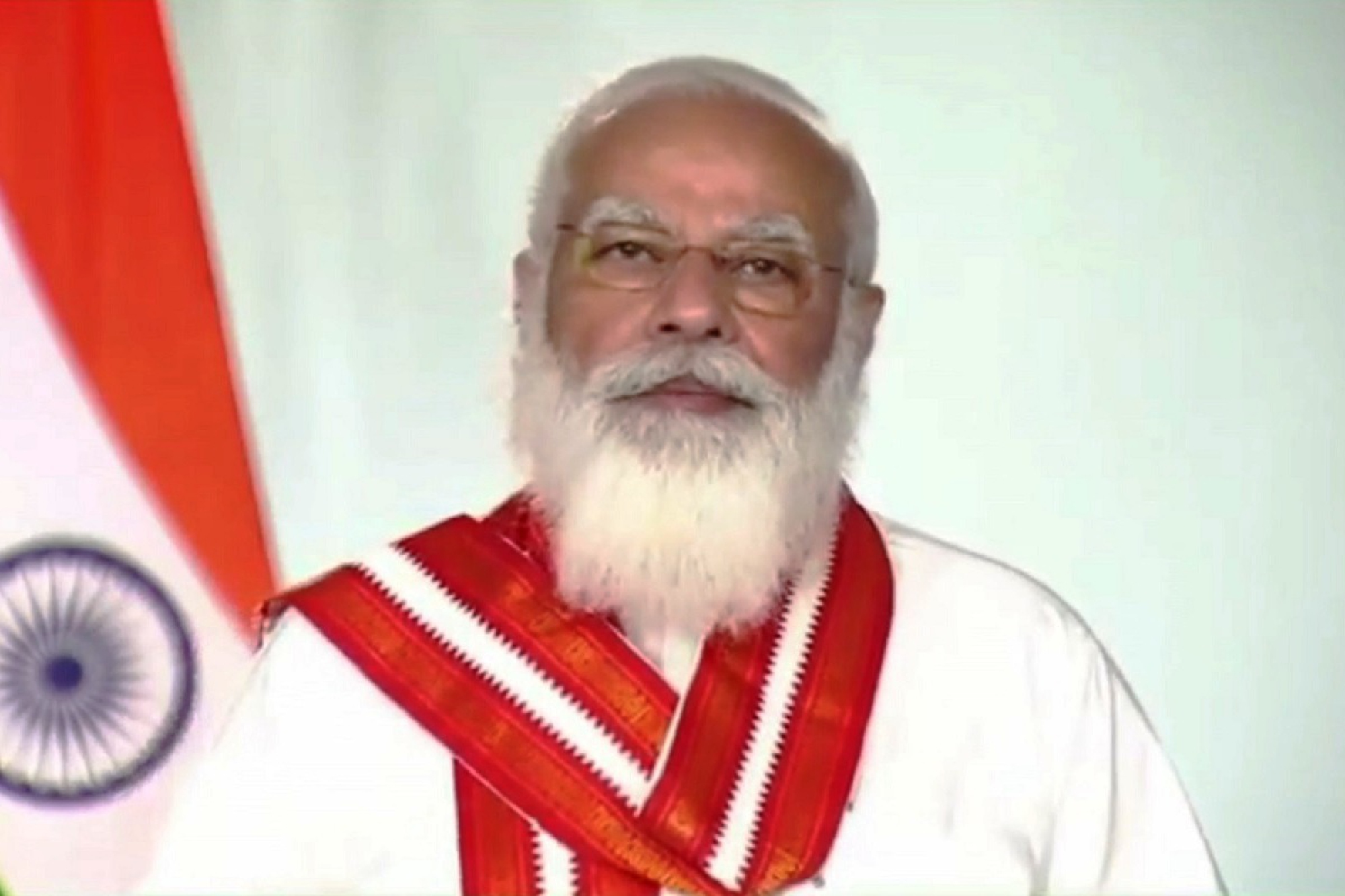
In a significant move, Prime Minister Narendra Modi on Monday announced a slew of measures aimed at ramping up availability of doctors and medical staff to deal with surging number of Covid 19 cases in the country.
Photo credit: Twitter/@narendramodi
The decision came during a review meeting held to assess the requirement of ‘adequate human resources for responding to the Covid19 pandemic.’
The daily Covid-19 cases in India showed a slight dip with 3,68,147 new coronavirus infections being reported in a day, taking the total tally of cases to1,99,25,604, according to the Union Health Ministry data on Monday.
“It was decided to postpone NEET-PG for at least 4 months and the exam will not be held before 31 August 2021. Students will also be given atleast one month of time after announcement of exam before it is conducted. This will make a large number of qualified doctors available for Covid duties,” a note from Prime Minister Office stated here.
Accordingly, it was also decided to allow deployment of Medical Interns in Covid Management duties under the supervision of their faculty, as part of the Internship rotation.
“The services of Final Year MBBS students can be utilised for providing services like tele-consultation and monitoring of mild Covid cases after due orientation by and under supervision of Faculty. This will reduce the workload on existing doctors engaged in Covid duty and provide boost to efforts of triaging,” the PMO note further added.
The services of Final Year PG Students (broad as well as super-specialities) as residents is also proposed to be utilised until fresh batches of PG Students joined. B.Sc./ GNM Qualified Nurses is also to be utilised for full-time Covid nursing duties under the supervision of Senior Doctors and Nurses.
Accordingly, “individuals providing services in Covid management will be given priority in forthcoming regular Government recruitments after they complete minimum of 100 days of Covid duty.”
To ensure safety, the medical students/professionals sought to be engaged in Covid related work will be suitably vaccinated. “All health professionals thus engaged will be covered under the Insurance Scheme of Government and be given the Prime Minister’s Distinguished Covid National Service Samman from Government of India,” the note further added.
Bengal cases: West Bengal registered 17,501 fresh Covid cases and 98 deaths today. Kolkata recorded 3,990 cases and 21 deaths in the last 24 hours. The total Covid case count is 8,80,894 and death toll is 11,637 in the state till now while there are 1,19,961 active cases.
Lost in translation: ‘Starvation’ in capital’s designated red zones
“DACH bay” is a Khmer slang meaning a “loss of income”, that could also be literally translated to «deprived of rice”, which alludes to starvation.
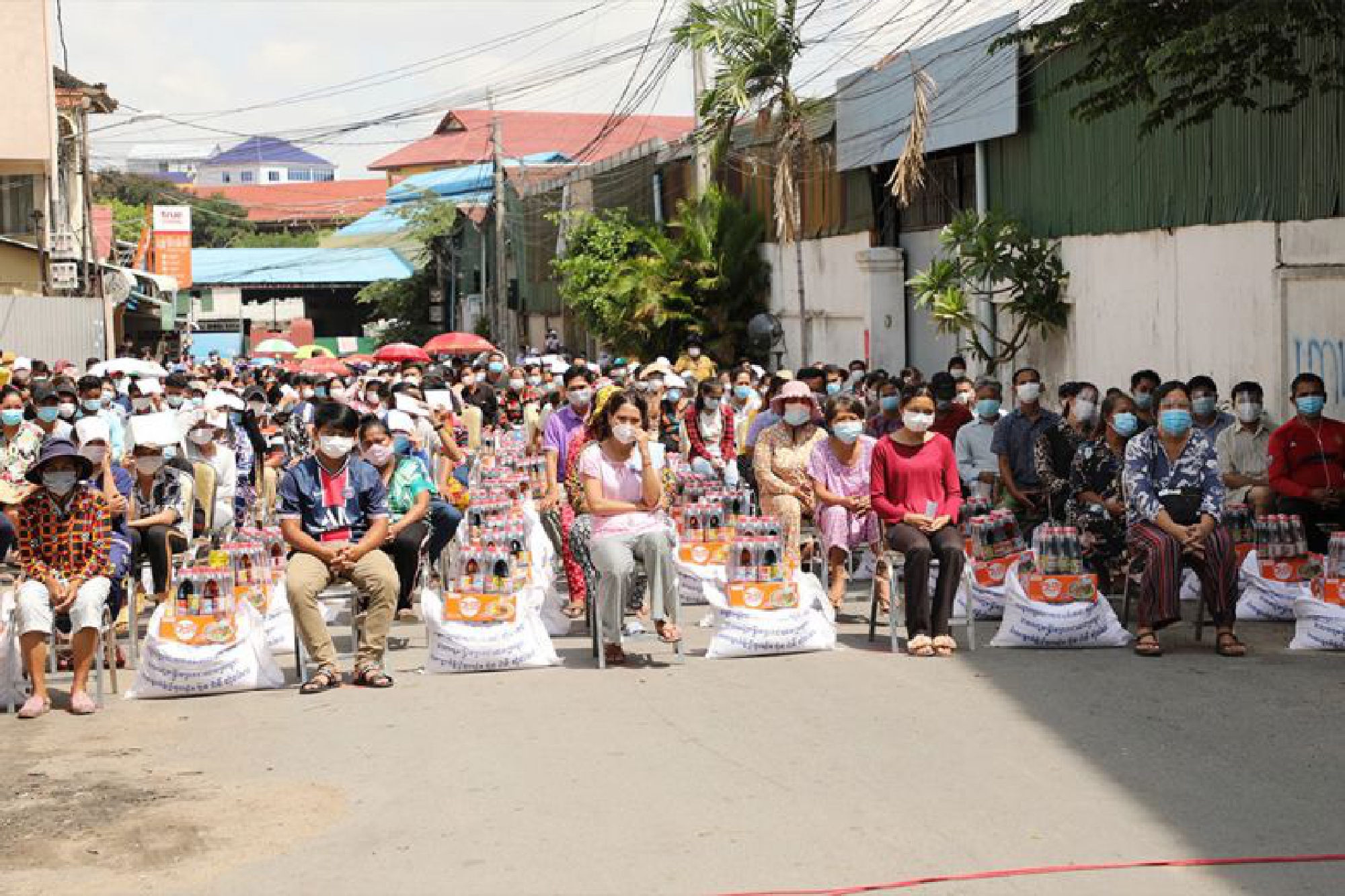
People receive food aid in a red zone in Phnom Penh. Post Staff
However, civil society organisation (CSO) officials have independently confirmed the government’s prior assertions that there are no cases of starvation in Phnom Penh’s red zones because the government and the municipal authorities, as well as some CSOs themselves, continue to provide food assistance to people living in the highly restricted areas.
The municipal hall has so far distributed food to nearly 200,000 families in the red zones to support them.
Hon Seiha, a resident of Por Sen Chey district’s Trapaing Thloeng commune, already received some donations from the authorities on April 28 in the form of rice, canned sardines, fish sauce, soy sauce and noodles to feed his family for now.
“My landlord wrote down the names of those of us who rented the rooms and sent our names to the village chief so that the authorities could distribute the food to us,” Seiha told The Post on May 2.
Seiha said the food would feed his family of four for about a month, but he hoped that the authorities would soon reopen the roads and that the Covid-19 situation would soon subside.
Seng Rath, another resident who lives in the red zone of Meanchey district, also said she received food assistance on May 1 after her landlord included her name along with other tenants’ and sent to the village chief.
“I registered about a month ago and just received food yesterday. I do not know why, but I heard that they distributed it to those who are most in need first and then to us,” Rath said.
She added that in the area where she lives, some people had not yet received their food donations because their landlord didn’t pay much attention to list the names of his tenants for the village or commune chief.
Pich Sophoeun, a 40-year-old woman residing in a rented room in Stung Meanchey II commune’s Damnak Thom 4 village in Meanchey district who had just recovered from Covid-19 and finished her 14-day quarantine, told The Post that she had not received any assistance from the authorities before, during or after her sickness.
“My landlord listed our names, but so far no one has brought us anything and my landlord isn’t going to spend much time on this to help us,” Sophoeun said.
“When I asked my landlord, I was told to contact the village chief myself. My landlord is not helpful to tenants who are trying to get this food assistance,” she added.
Sophoeun asked the authorities to provide food to her family because she was a Covid-19 patient and currently has no job and no income at all.
Even though Sophoeun has no income and receives food from the authorities, she still has a small amount of savings and her niece has been providing her with food almost every day.
“The remaining rice can be cooked for about two more days, and my niece always buys me some groceries like meat, too. It eased my burdens as well when my husband and son were both hospitalised for Covid-19 treatment,” she said.
She said she may withdraw money reserved for her room rental to buy rice first as she has no choice and expects her landlord to understand her inability to pay for now during this crisis period.
Another resident, who asked not to be named and who lived across from the Trapeang Thleung market – a red zone area in Dangkor district – said he had not yet received his food donations. He said only factory workers who lived in nearby rented rooms had received it.
“They got it because the village chief came and got their names registered, but not for every household. For me, I do not want gifts. It does not have serious impacts on me even though I live in a red zone I don’t need donations,” he said.
He said he works from home and is receiving his regular salary and the only annoying thing about the situation was the inability to travel outsides of the area.
Authorities’ Response and landlords’ assistance
Domnak Thom 4 village chief Va Pha told The Post that so far 70 to 80 per cent of the people in his village had received food, and he is also going to continue distributing food to those who have not yet received any.
“The number of families who have already received food is now at 1,174 and they are all living in rented rooms. Today I will start distributing food to those who have not received anything,” he said.
Pha confirmed that if the landlords or their representative contacted the village or commune, then village officials will go down to distribute food.
He acknowledges that some people have not yet received their food assistance as sometimes he does not receive information from the landlords on time or in full, and all food assistance distribution must have a registered recipient.
Regarding the listing of tenants in rented houses, Ry Satyanika, who has nine rooms and 13 tenants living in Stung Meanchey II commune, told The Post on May 2 that she paid attention and was careful in helping her tenants by listing all of their names and send them to the village chief so that they can receive food donations.
“All nine of my tenants have already received their food donations. The authorities came to get the data of the needy people at their rented rooms, so I helped them until they got their packages from the authorities yesterday,” she said.
Satyanika confirmed that the landlord had to help him in order to receive his food donation because the authorities were using the names of the landlords as the delivery recipients and then transporting the food to those people.
“The village chief came to meet with the landlord directly in order to get the exact number of rooms. And whether or not the tenants would get donations also depends on the assistance from the landlord,” she said.
Satyanika says he is not charging rental fees from his tenants during this difficult time.
Mechanisms for receiving donations, distributing aid, providing emergency assistance and engaging with CSOs
Phnom Penh municipal governor Khuong Sreng said that after the lockdown of some areas the government plans to provide food relief such as rice, noodle and basic food needs so that people could survive.
“It is a point of pride for Phnom Penh that so far no one has died of hunger,” Sreng said.
The Phnom Penh Municipal Administration has rejected allegations that the mechanisms for receiving donations, distributing aid and providing emergency assistance are discriminatory because these mechanisms were made with transparency and in line with the government’s guidelines.
The municipal administration also called for patience from donors who could not distribute directly to the affected people due to the high risk of contracting Covid-19 there.
The municipal administration will continue to distribute aid to targeted groups of people who are in need of emergency food.
At the same time, Sreng expressed his disappointment that some foreign and local media outlets had misleadingly reported that municipal hall authorities prevented them from distributing the food relief for other reason than sanitary issues.
According to the municipal governor, some local authorities have not yet distributed the food donations to their people. In Phnom Penh they will distribute aid to up to 400,000 families, but so far there are only nearly 200,000 families who have received it.
“The first target, we provided to those who live in the red zones, and mostly [unemployed] workers who need food. As soon as we get a call from people in need of food, the authorities will go down to the location and provide immediate assistance,” he said.
Regarding CSOs’ donation activities to assist with the crisis, the Centre for Alliance of Labour and Human Rights (CENTRAL) has provided food to workers trapped in the red zone. So far CENTRAL has provided meals to 1,511 people living in 605 rented rooms, according to executive director Moeun Tola.
View from associations and unions
Fa Saly, president of the National Trade Union Confederation, told The Post he did not believe that people in the red zones or other locked down areas are facing actual starvation because of the loss of income.
“As a Cambodian citizen, I believe that the Cambodian people still have a sense of solidarity and would not leave any people starving to death. We will all definitely help each other to the best of our ability,” he said.
“I am a Cambodian. I have never seen our citizens refusing to help the needy. Neighbours are always helping each other. There is no need to wait for the government to come and help,” he said.
Saly said that until now, he had not received any information from workers about people lacking food. Each village or commune has assigned a specific representative to distribute donations to them.
“At first, it was difficult and the situation was serious, but it has now improved with help from donors and the authorities have been very busy trying to provide food,” he said.
Saly was prepared to provide food to the workers and the poorest people, but so far no requests have been made to him because the government has provided them with enough assistance.
“There is no such case where people have had nothing to eat or no food at home. It’s just a question of more or less,” he added.
The lockdown is expected to end by May 6. But several red zones will remain to contain the spread. It’s expected that more complaints and fake news about starvation will emerge, but so far fact-checking has proven starvation, or “dach bay”, to be hyperbolic or lost in translation.
The government has extended the lockdown for another 15 days until May 20 in an ongoing effort to contain the Covid-19 outbreak as new cases continue to surge.
The National Taskforce for Covid-19 Prevention and Control announced to continue imposing the measures in a press conference on Tuesday. The government has imposed a lockdown in the capital of Vientiane since April 22 after suspected super-spreaders had caused a widespread outbreak. All 17 provinces have imposed lockdowns at later dates.
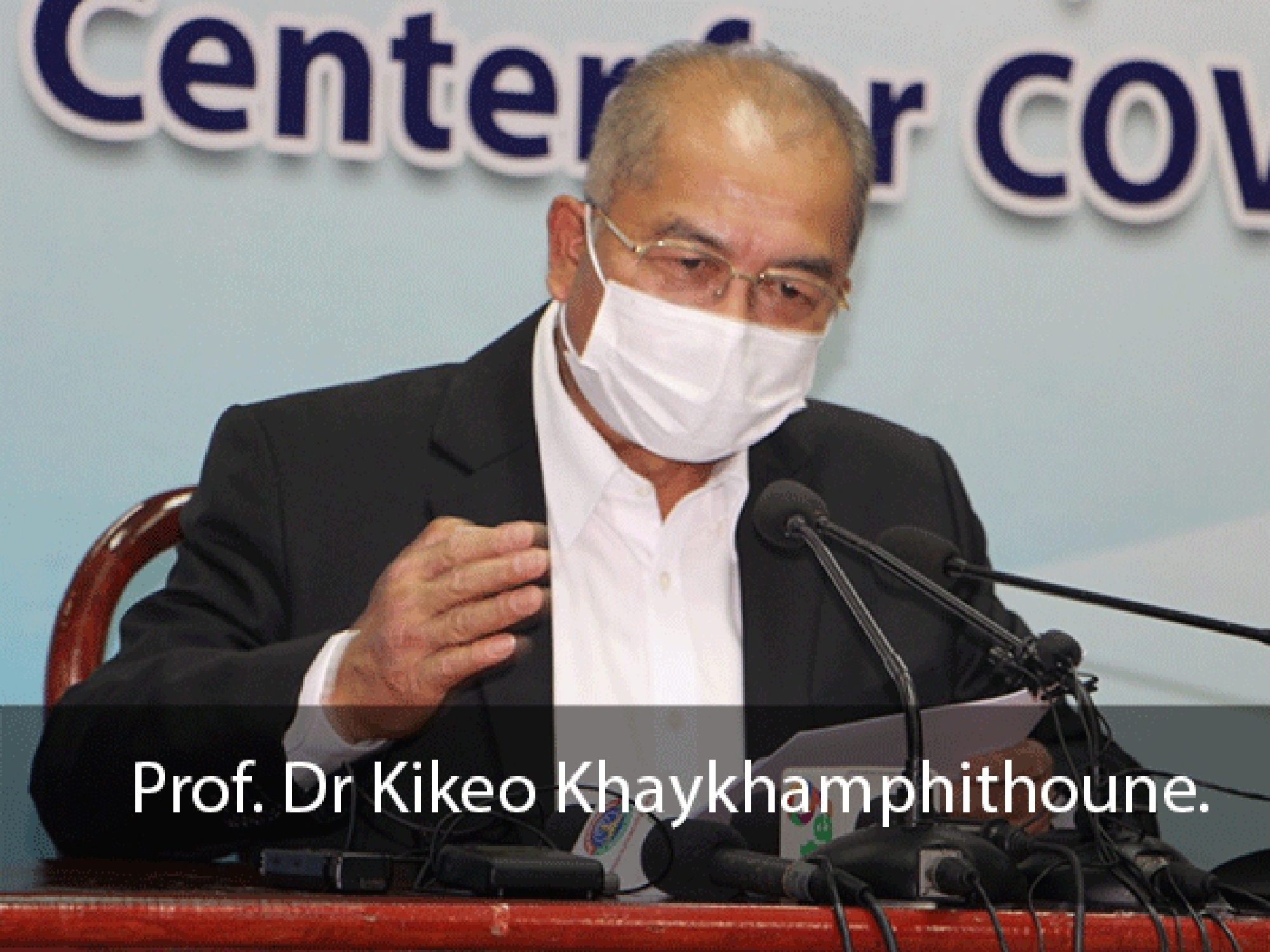
The suspected super spreaders involved two Thai men who crossed the border illegally and travelled around the central provinces and the capital together with their two Lao female friends, who have tested positive. Most daily surge since then was linked to the 59th case, one of the two Lao females. Announcing to extend the lockdown at the Tuesday press conference, Chairman of the National Taskforce for Covid-19 Prevention and Control Prof. Dr Kikeo Khaykhamphithoune said the outbreak situation has not declined.
Dr Kikeo, who is also Deputy Prime Minister, said his taskforce would follow up and assess the situation closely and revise measures accordingly and timely. Total cases rose to 1,026 as of May 4 including 60 new cases recorded on the same day some 60 patients were discharged. There has been no reported deaths. Dr Kikeo called for all sectors to strictly observe Covid-19 prevention and control measures in order to contain the outbreak. As daily cases surge, authorities are setting up makeshift hospitals to provide sufficient treatment facilities for the patients. The government has also mobilised assistance from various sectors in the society, friendly countries and international organisaitons to stimulate the government’s effort to cope with the outbreak.
On May 4, teams of medical experts and equipment from neighbouring Vietnam and China arrived in Vientiane to help Laos fighting the pandemic. As of May 4, Laos has received assistance from various sectors in the society and friendly countries amounting to more than 5 billion kip, US$12.6 million and 4.58 million Thai baht. Dr Kikeo expressed heartfelt appreciation and gratitude to those extending the assistance.
YANGON – Even before the 4 am curfew is over, a city resident rushed to the nearest ATM to withdraw cash. Already there were 20 people queuing ahead of him.
Political instability, plunging Kyat value against US dollar and uncertain future have add to people’s anxiety to hold cash. A decade ago, it was not unusual for a Myanmar family to hide a pile of cash under their beds. But since the opening up of the economy and subsequent election which led to power sharing between the National League for Democracy and the military, trust in putting money in the banks as savings had prevailed.
But all is shattered as the Central Bank of Myanmar struggled to win over people confidence and prevent bank runs.
Cash & bank woes in Myanmar
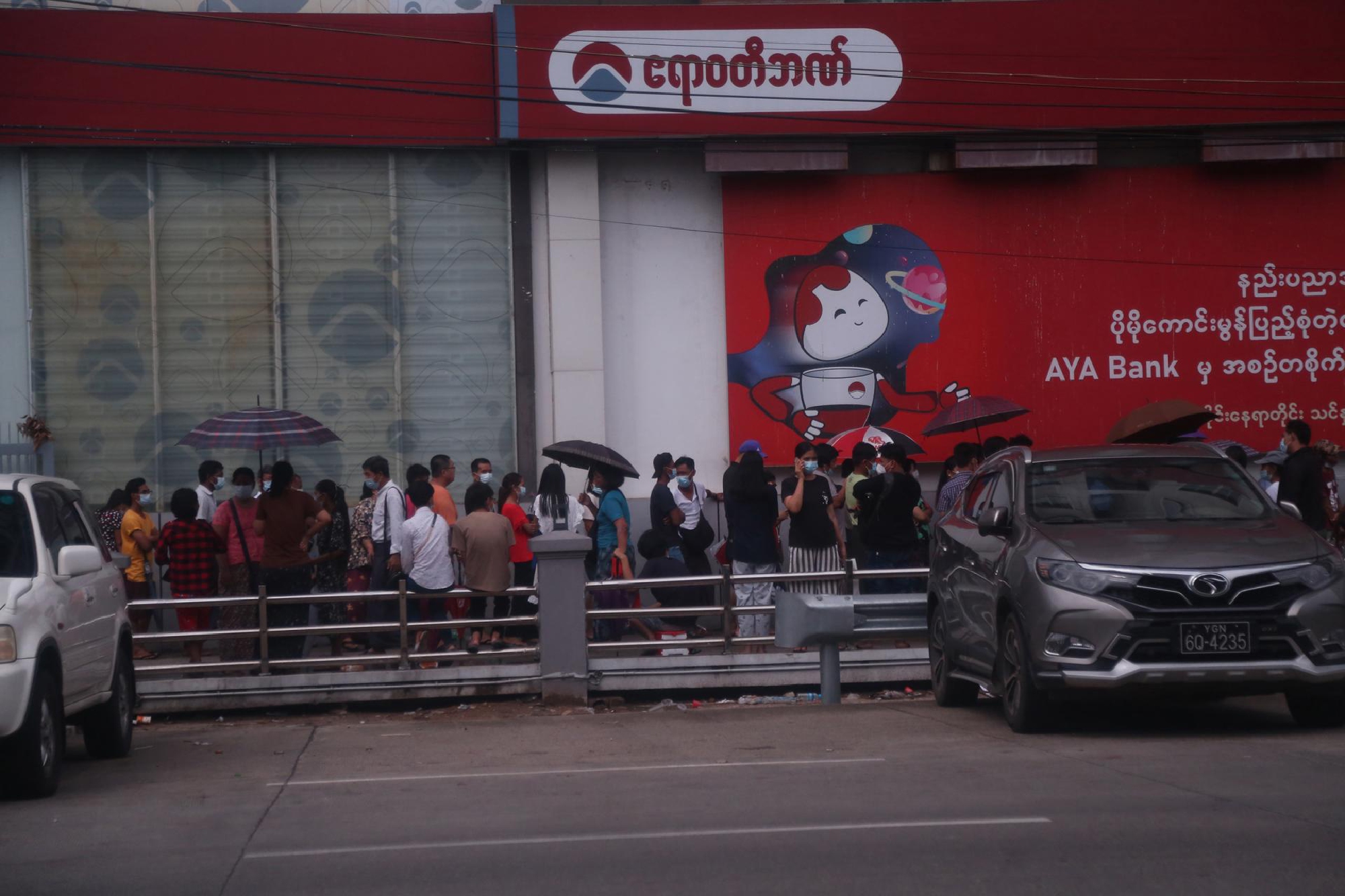
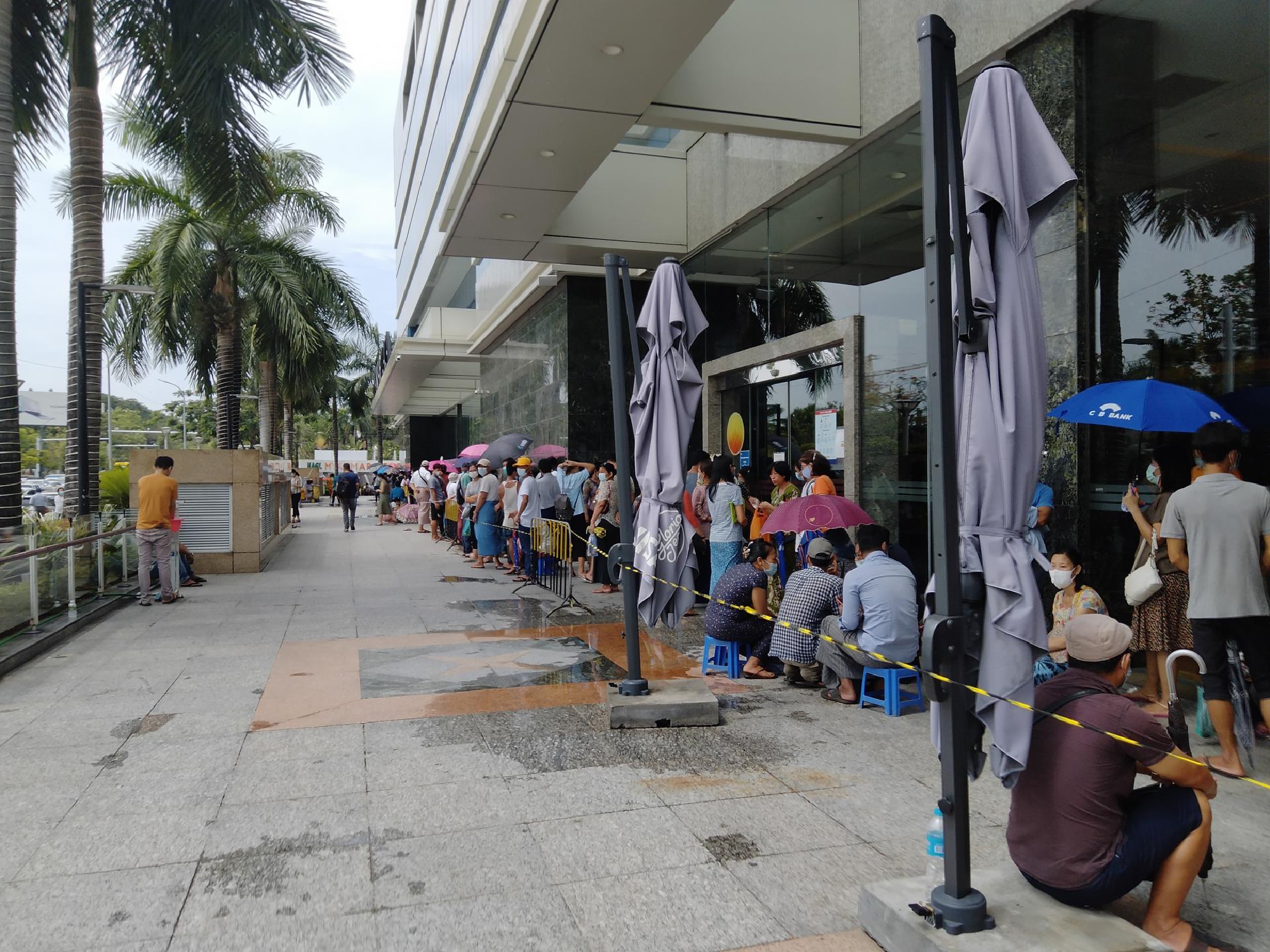
“Come around at 4 am”. Bank customers brought small stools with them to sit as they queued up just to withdraw limited amount of cash money from the ATM. As cash run out of the machines and are refilled there were more waiting time for the customers.
Such gave way to a newly found job – ATM bystanders for hire. The fee has climbed steadily in tangent with the demand and anxiety. It’s 10,000 Kyat (about US$6)
“It’s like a full time job to queue up in front of the ATM. At least some small Myanmar Kyat can be withdrawn. Those with dollar accounts are dead in the water,” said a queuing bank customer.
Anxious savers have turned to gold and foreign currencies especially US dollar as usual in time of high uncertainty. The black market quashed in recent years as banking normalcy prevails because of political stability, has returned.
Cash & bank woes in Myanmar
The banks are working to appear as reliable as possible amidst all kinds of rumours. Some private banks, such as Yoma Bank, have reopened several of their branches on April 20 as well as set up an appointment system that customers must book in order to withdraw cash.
CB Bank has set up a token system to reserve their appointment with bank-tellers. You can get token queuing service online as well.
Even then long queues are formed at all leading banks – KBZ, AYA, CB and Yoma.
KBZ Bank imposes a limited daily withdrawals at 200,000 Kyat per day. For Yoma Bank’s limit is 300,000 Kyat and only one bank card is allowed per person.
CB Bank imposes a daily limit of 200,000 Kyat, and has announced that their ATM machines are still working as normal. It issued a statement assuring the customers that they are striving to fulfil the needs of their customers.
The Central Bank of Myanmar has issued a statement on April 7 that the public can trust the banks to provide their regular services, in order to keep the situation from escalating further.
The Central Bank added that it was supervising the banks so that they can resume operations systematically and that the people should place their trust in the banks.
It had also pushed for online banking services and banks were allowed to resume some of their online payments and other services such as allowing Account-to- Account Transfer, Wallet-to-Wallet, Bank-to-Wallet, Wallet-to-Bank, CBM Net, CCT Function through Mobile Banking, Internet Banking, Mobile Top-up, Other Cards Top-up, Bill Payments, Visa, Master, Credit Card Payments, MPU Cards, ALL ATMs, Bank Pays and so on.
However, despite having allowed mobile banking systems resumed with mobile internet after a period of lapse, the Yangon Region is still seeing long queues of people at ATMs throughout the city to get cash.
“You have to have cash for something. You need to have cash in hand. That’s why I’m here,” said a woman queuing up for the ATM in Kyimyindaing Township within a line of at least 100 people.
“There are slightly less people today. In previous days, there are at least four rows because the queue ran out of space and had to double back on itself. There are also many that came as early as 4am in the morning. This place sees regular refills of cash and since this place has less risk of running out of cash, people opt to come here instead,” said a Kyimyindaing local that lives near the said ATM machines.
On April 30, KBZ Bank – the private bank with highest number of branches in the country – announced that there are 300 locations across the country that customers can withdraw cash from.
Also on April 30, the Central Bank also announced five more banks that were allowed to resume mobile banking operations; the UAB, Myanmar Shae Saung Bank, Asia Development Bank and Shwe Rural and Urban Development Bank.
“Banking is essentially about savings and loans and interests are earned or paid. There are rules and regulations to be followed but there are instances where things can get murky. So plans must be made to ensure predictability, and that is an essential skill in the banking,” said a bank owner.
Despite all this, the people still worry that the banks may go under eventually.
“It’s easy to say a bank will go bankrupt but in reality it’s not that easy for a bank to go bankrupt in the first place. There are many strong pillars for endurance,” said an expert on banking.
Banks have to send daily audit reports, such as total deposits, loans and so on, to the Central Bank. They also have to send weekly and monthly reports of income and expenses and get audited.
“The current spike in gold and dollar prices is temporary. It occurs often in Myanmar. If something happens, people will sell this to buy that and usually turns out to have more people not profiting than those that do. Nobody, in this day and age, will allow a bank to collapse. Banks are not only for self gain but also for the economic well being of the country. A bank collapsing is like a devastating tsunami which will ravage the country. (I) do not want the trust built up for so many years to be destroyed and for people to be scared by rumours,” said the expert on banking.
According to the Central Bank, not only is it keeping a close eye on the operations of banks, it is also conducting on-ground surveillance and checks in order for the banking sector to get back on track by checking, amongst others, the project revenues and expenses.
The Central Bank’s primary duty is ensure that the currency remain stable and for other systems such as payment to develop. It is also its job to protect the deposits of the people.
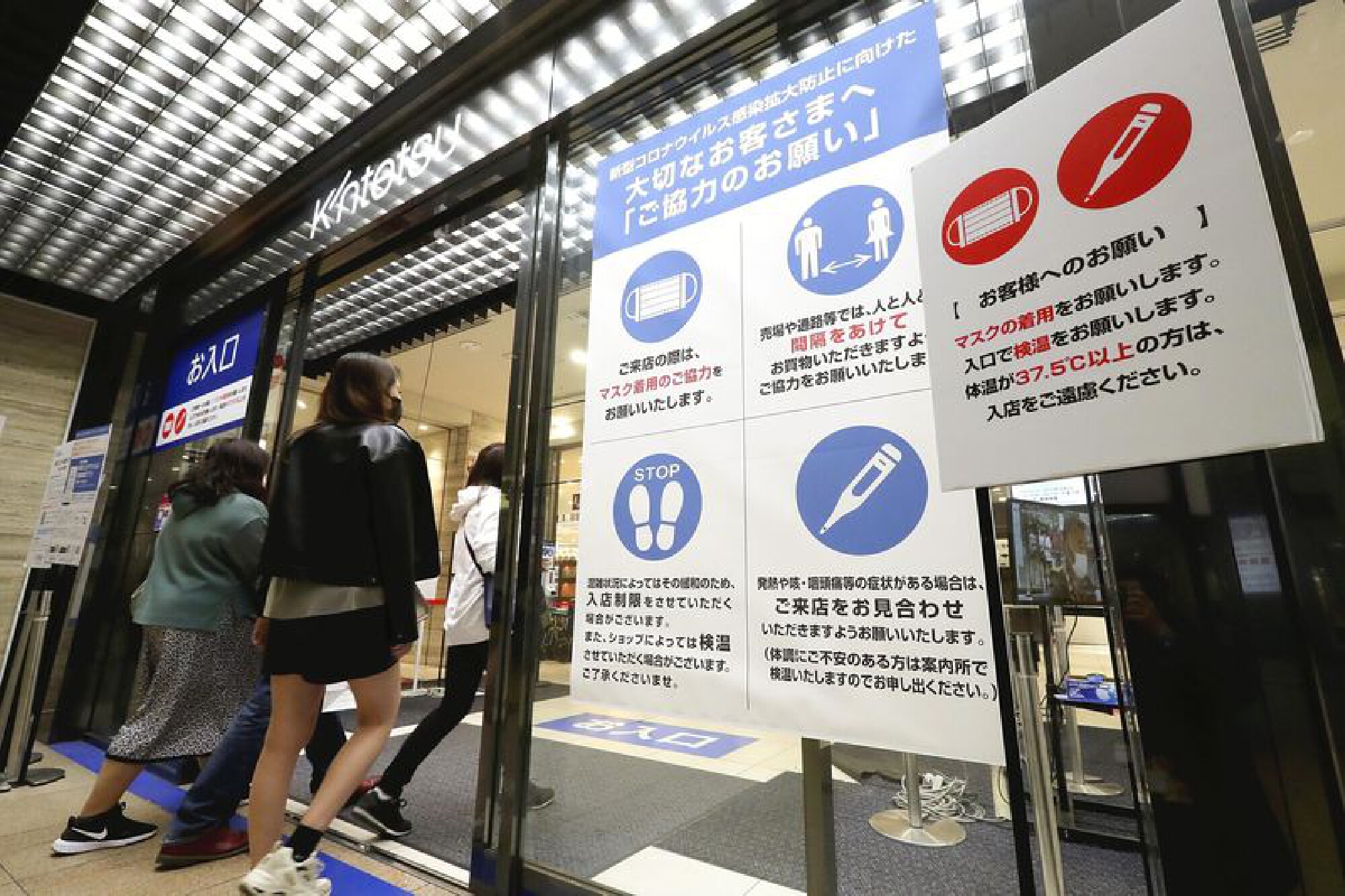
Selling ‘necessities’ only adds pressure on Japan’s ailing department stores
A week has passed since the third pandemic-related state of emergency, was declared in the four prefectures of Tokyo, Osaka, Hyogo and Kyoto. A wide range of locations, such as large commercial facilities and restaurants serving alcohol, have been asked to close during the emergency, prolonging the struggles of department stores and eating and drinking establishments.
The closure requests issued to large commercial facilities allow sales areas providing daily necessities to be open for business, but what constitutes a daily necessity is unclear. Other than food, department stores are not in agreement when it comes to continuing to sell cosmetics or other items.
The Matsuya Ginza department store in Chuo Ward, Tokyo, has closed all floors except those selling food and cosmetics. A Hokkaido fair has been held to sell bento boxed meals featuring seafood and other delicacies from the northern prefecture, but compared to the same time frame in 2019 when events related to the start of the Reiwa era were held, sales are down 80%. During the first state of emergency last year, the store was entirely closed during the Golden Week holidays.
The Takashimaya Osaka department store in the Namba area is only selling food. Sales of such items have apparently declined by about 20% compared to figures before the third emergency.
Kintetsu department store’s flagship location in the Abeno Harukas complex in Osaka is also only open for sales of food and reportedly is seeing a decrease in customers.
Department stores of the Isetan Mitsukoshi group are offering a service that allows customers to consult with sales staff about products they want through a smartphone app’s chat function. The number of inquiries about the app has tripled since the third emergency was declared. This service is reportedly popular among customers in rural areas who are not traveling during the long Golden Week holidays.
Restaurants that are closing early, at 8 p.m., are also facing a difficult situation.
In order to stay open, family restaurant chain Saizeriya has stopped serving alcohol at its outlets mainly in the four prefectures under the emergency.
An official of a major restaurant chain lamented, “Turnover at restaurants is becoming extremely severe.”
Many izakaya Japanese-style pubs remain closed in the four prefectures.
The trend of people refraining from going out has been a driver of strong sales at supermarkets around residential areas. Some supermarket operators have even stopped distributing circulars to ease congestion in their stores.
Products to help pass the time at home are also selling well.
At Ito Yokado superstores, daily sales of jigsaw puzzles have nearly doubled from the same period last year. Sales of kitchen utensils for making sweets are also strong. As restaurants have been requested not to serve alcoholic beverages during the emergency, Ito Yokado has seen a 10% increase in sales of alcohol from the same period last year.
The operating company, however, has had to temporarily close its six Ario shopping centers in Tokyo and Osaka Prefecture.
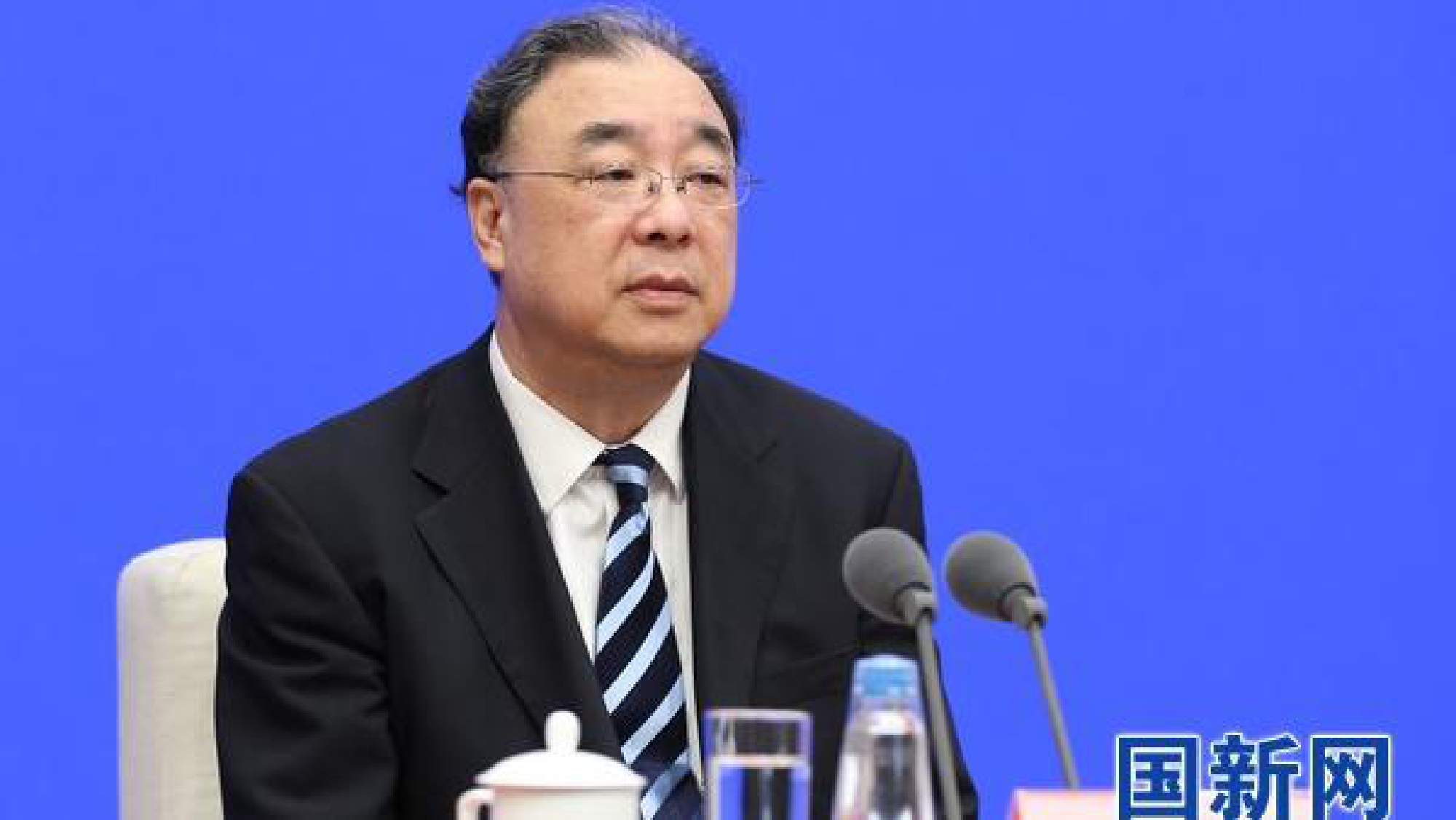
Central govt health official hopes for zero virus infections in HK
HONG KONG – Ma Xiaowei, director of the National Health Commission, said on Monday that he hoped Hong Kong will soon achieve the goal of “zero infection” of COVID-19 so as to resume normal personnel exchanges with the mainland.
Ma made the remarks in a video speech at the opening ceremony of Hong Kong’s Hospital Authority (HA) Convention 2021.
Deeply concerned about the health and well-being of Hong Kong people, the central authorities have paid high attention to the development of the epidemic in Hong Kong and provided assistance for enhancing the COVID-19 testing capacity here, Ma said.
He also appreciated the unremitting efforts of the Hong Kong Special Administrative Region government in fighting the pandemic, noting that the number of daily new cases in Hong Kong has now returned to a low level.
Ma said the National Health Commission will strengthen exchanges and cooperation with the healthcare industry in Hong Kong, including working together in preventing and controlling the pandemic, and deepening medical and health cooperation in the Guangdong-Hong Kong-Macao Greater Bay Area.
He called on Hong Kong medical professionals to go and work in the mainland and also encouraged Hong Kong’s healthcare industry to leverage its geographical and language strengths and seek cooperation with all countries and regions in the world.
Chief Executive of the HKSAR Carrie Lam Cheng Yuet-ngor said that Hong Kong is one of the few places in the world in which every COVID-19 patient is being properly cared for, in terms of isolation and treatment, in public hospitals and related facilities. The Hospital Authority and healthcare workers have worked throughout the pandemic with courage and dedication.
Lam said that since the first infected case was detected in Hong Kong, the HKSAR government set up a high level Steering Committee and appointed an Expert Advisory Panel, joining hands with all sectors to fight the pandemic.
The HKSAR government has been highly transparent about its anti-epidemic initiatives and will continue to promote objective understanding through various means, with a view to restoring and building trust in the community, she said.
Henry Fan Hung-ling, chairman of the Hospital Authority, said the HA staff have done an outstanding job in safeguarding the health of the Hong Kong community. He also thanked the central government and the HKSAR government for their unwavering support in combating COVID-19.
“The swift setting up of the Community Treatment Facility at AsiaWorld-Expo and the North Lantau Hospital Hong Kong Infection Control Center has significantly enhanced resilience and capability of the public healthcare system in fighting the pandemic,” Fan said.
At the meeting, Zhong Nanshan, China’s renowned respiratory disease expert, said in a video speech that aggressive containment actions have been taken since the outbreak of COVID-19 in the mainland, including lockdown and building makeshift hospitals, resulting in effective control of the pandemic.
He said that all governments should always keep an eye on community containment, and strike a balance between resumption of living order and containment of the pandemic. Hong Kong has been doing well in this regard.
“No country is safe until all countries are safe,” Zhong said, adding that it is important to establish herd immunity through mass vaccination so as to reduce the chance of the emergence of new variants.
David Hui, a respiratory medicine expert from the Chinese University of Hong Kong, said that cautious border control is important to prevent importation of COVID-19 cases, especially mutant viruses.
He added that both vaccines now available in Hong Kong are effective in reducing the risk of symptomatic infection.
The two-day convention was held online and offline due to the pandemic situation, providing a platform for healthcare professionals to exchange views and experiences.

![[Japan] Battered tourism industry ready to help for smooth vaccine rollout](https://media.nationthailand.com/uploads/images/md/2021/05/OhAQt7EioCYIhksi61z7.jpg?x-image-process=style/lg)
![[Vietnam] Quarantine period extended to 21 days: Health minister](https://media.nationthailand.com/uploads/images/md/2021/05/z1naPzJ52d39QOfgpv9L.jpg?x-image-process=style/lg)

 Cash & bank woes in Myanmar
 Cash & bank woes in Myanmar