
#SootinClaimon.Com : ขอบคุณแหล่งข้อมูล : หนังสือพิมพ์ The Nation.
Indonesia to send back hazardous materials to Australia, NZ, UK, US
Dec 26. 2020 Batam Customs Office officers oversee the transfer of one of seven containers containing toxic and hazardous waste (B3 waste) to the Capricorn 97.210 Barge, on July 29, 2019 at the Batu Ampar Container Port, Batam, Riau Islands. (JP/Fadli)
By Dian Septiari
The Jakarta Post/ANN
Indonesia is set to send 79 containers of hazardous materials back to Australia, New Zealand, the United Kingdom and the United States beginning in January, the government recently revealed.
The Foreign Ministry summoned the envoys of the four countries to notify them about the plan on Wednesday, according to the ministry’s statement published on Thursday.
The ministry’s director general of American and European affairs, Ngurah Swajaya, said the measure was in accordance with international law, namely the Basel Convention on the Control of the Transboundary Movements of Hazardous Wastes and their Disposal.
The treaty was designed to reduce the movements of hazardous materials between nations, specifically to prevent the transfer of hazardous waste from developed to less developed countries. “In accordance with the Basel Convention […], cross-country imports containing toxic waste are not allowed.
The Indonesian government must return it to the origin country,” he told the ambassadors.
Ngurah said the containers had been verified by various government agencies including the Environment and Forestry Ministry, Trade Ministry, Industry Ministry, Finance Ministry and the National Police.
“The 79 containers to be re-exported are part of the total 107 containers that had been confiscated by the Indonesian government because they contained hazardous waste, while the remaining 28 containers will be re-examined,” he added.
The containers were confiscated in 2019, during which Indonesia, together with other Southeast Asian nations faced a sharp increase in shipments of plastic waste from developed countries to developing nations following China’s decision to ban imports of 24 types of waste materials.
Nonhazardous waste, mostly consisting of clean scrap paper, was intended to be used by paper-recycling companies in Indonesia. However, most of the cargo was found to be contaminated by hazardous waste such as old diapers and plastics, which the businesses reject and ends up in landfills.
 SIA said that it already has a series of precautions to protect its crew and reduce the risk of Covid-19 transmission. PHOTO: ST FILE
 Former Prime Minister Shinzo Abe speaks at a press conference at the Diet Building on Thursday. (The Yomiuri Shimbun)
 People wait in a long line around a large Christmas tree to get tested for COVID-19 at a screening center in Seongnam, just south of Seoul, on Christmas Eve on Thursday. (Yonhap)
 Medical workers conduct nucleic acid tests in Xicheng district, Beijing, on Thursday. Beijing faces a major test of COVID-19 control after new cases have occurred in several districts. WU XIAOHUI/CHINA DAILY
 “As a grouping whose economies constitute about 60% of the global economy, Apec assumes a central role in spearheading post-pandemic economic recovery, ” Prime Minister Tan Sri Muhyiddin Yassin (pic), the host of this year’s Apec meetings, said in his opening remarks.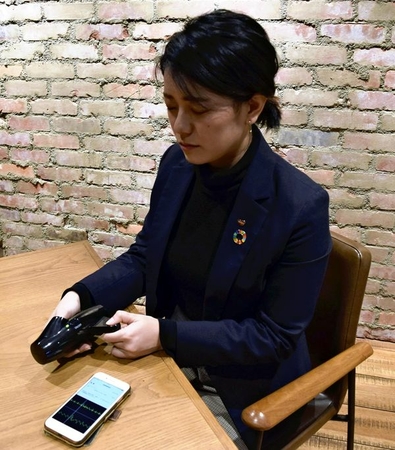
 Current research indicates that new strains will not affect the effectiveness of vaccines. PHOTO: ST FILE
![Logos of Ant Group and Alibaba are pictured at the headquarters of Ant Group, an affiliate of Alibaba, in Hangzhou, Zhejiang province, Oct 29, 2020. [Photo/Agencies]](https://media.nationthailand.com/images/news/2020/12/25/30400209/800_70d6ca376971bca.jpeg?v=1608864387) Logos of Ant Group and Alibaba are pictured at the headquarters of Ant Group, an affiliate of Alibaba, in Hangzhou, Zhejiang province, Oct 29, 2020. [Photo/Agencies]
Logos of Ant Group and Alibaba are pictured at the headquarters of Ant Group, an affiliate of Alibaba, in Hangzhou, Zhejiang province, Oct 29, 2020. [Photo/Agencies] Organizers of a job fair in Iksan, North Jeolla Province, pose on Oct. 22. (Iksan City)
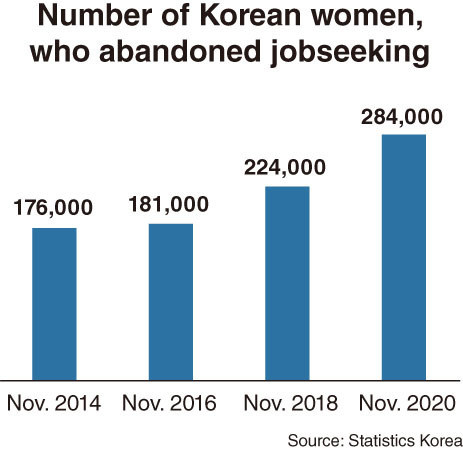 (Graphic by Kim Sun-young/The Korea Herald)
