Swiss-Belhotel celebrates 10,000 rooms in Indonesia

ศาสตร์เกษตรดินปุ๋ย : ขอบคุณแหล่งข้อมูล : หนังสือพิมพ์ The Nation

https://www.nationthailand.com/business/30375114

Swiss-Belhotel celebrates 10,000 rooms in Indonesia

Aug 21. 2019
Hotel Ciputra Cibubur pool

Hotel Ciputra Cibubur pool
By The Nation

241 Viewed

Global hospitality management chain Swiss-Belhotel International has achieved a major milestone and now offers 10,000 rooms in Indonesia, which it describes as a key focus market for the company.

This was achieved following the launch of a series of new Indonesian hotels in recent weeks. The 104-room Swiss-Belinn Gajah Mada Medan in North Sumatra and 150-room Swiss-Belhotel Bogor in West Java both started welcoming guests in May, and the 107-room Swiss-Belhotel Serpong opened in southwest Jakarta on June. The trio of new openings helped to boost Swiss-Belhotel International’s Indonesian collection to 72 hotels and resorts comprising 10,873 rooms and suites.

“Reaching 10,000 rooms in Indonesia is a huge achievement for our company, and I would like to thank our entire team and our local partners for making it possible. Indonesia is one of the world’s most exciting markets, with rising affluence and accessibility helping to drive tourism all over the archipelago. We look forward to unveiling even more exceptional Indonesian hotels in future, as we continue to expand our presence nationwide,” said Gavin M. Faull, chairman and president of Swiss-Belhotel International.

The next phase of Swiss-Belhotel International’s Indonesian expansion is already underway with the company scheduled to open the 227-room Swiss-Belhotel Darmo Surabaya late this year and the 252-room Swiss-Belhotel Solo early in 2020.

Swiss-Belhotel International’s success in Indonesia has not gone unnoticed. The group was named was recognised as “Indonesia’s Leading Global Hotel Chain” at last year’s Indonesia Travel and Tourism Awards (ITTA). the eighth time it had won the award.

Thai consumers prefer open-loop system for public transport: study

ศาสตร์เกษตรดินปุ๋ย : ขอบคุณแหล่งข้อมูล : หนังสือพิมพ์ The Nation

https://www.nationthailand.com/business/30375112

Thai consumers prefer open-loop system for public transport: study

Aug 21. 2019
Photo by VISA

Photo by VISA
By The Nation

281 Viewed

The majority of Thai consumers agree with the idea of paying directly with debit and credit card for public transport, according to a study conducted by Visa on Consumer Payment Attitudes..

The study tracked payment habits and attitudes as well as exploring emerging topics related to payments among 4,000 consumers across eight Southeast Asian countries, including 500 respondents from Thailand.

Nearly two in three (64 per cent) said they prefer paying directly with their own bank cards, such as debit and credit cards, for public transportation. In addition, sixty-seven per cent prefer to pay using contactless card and mobile payments.

“Visa is engaged with 120 cities around the world to implement open-loop payment solutions for public transportation. We have seen that in major cities such as London, New York, Singapore and Sydney, moving from cash to electronic payments in public transportation enables passengers to move quicker from point A to point B while offering a more consistent experience,” said Suripong Tantiyanon, country manager for Visa Thailand.

“At the same time, public transport operators who adopt open-loop payments can reduce their operating cost, improve passenger experience and boost ridership. According to Visa’s Cashless Cities report, transit operators spend an average of 14.5 US cents of every physical dollar collected, compared to only 4.2 cents for every digital dollar,” he added.

Open-loop payment in transit refers to the acceptance of payment methods that are not proprietary to the transportation network. In other words, passengers can pay directly with their bank-issued debit and credit cards for public transport, such as subway, trains and buses.

Respondents said their top reasons for adopting open-loop payment in public transport are no need to prepare cash or top up stored-value cards (76 per cent), reduction of cards in wallet (63 per cent) and the ease of tracking travel expenditure (56 per cent).

Top reasons for consumers to move away from the current fare payment system (close-loop) are the inability to pay if there is insufficient balance in stored-value travel cards (53 per cent), the need to top up stored-value cards (43 per cent), stored-value cards are non-refundable once lost (36 per cent) and the need to prepare cash or payment cards to top-up (35 per cent).

When asked about their most preferred payment methods, respondents to the survey indicated debit or credit card via contactless technology as their first choice (45 per cent), followed by mobile contactless payment (22 per cent) and biometric payment (20 per cent).

The study also tracked consumers’ attitudes towards using different payment methods for toll charges. Similar to public transportation, four in five (81 per cent) of respondents would consider using own debit or credit cards with contactless technology to pay. Their top reasons to digitize their transaction include no need to prepare cash and topping up stored-value toll cards (71 per cent), it helps to reduce the number of cards in wallet (58 per cent) and the ease of tracking toll payment expenditure (31 per cent).

“From our experience working with public transport operators and authorities around the world, open-loop payment in mass transportation is one of the most effective avenues to widen adoption of electronic payments. Additionally, this will provide international visitors with greater choice of payment and improve Thailand’s attractiveness as a global tourist destination. We are convinced open-loop payment holds the key to sustainably transforming consumer behavior and we are open to working with all stakeholders to realise the country’s true potential,” Suripong concluded.

Standard Chartered joins with SAP Ariba in supply and finance pact

ศาสตร์เกษตรดินปุ๋ย : ขอบคุณแหล่งข้อมูล : หนังสือพิมพ์ The Nation

https://www.nationthailand.com/business/30375105

Standard Chartered joins with SAP Ariba in supply and finance pact

Aug 21. 2019
Photo by China Daily

Photo by China Daily
By The Nation

50 Viewed

Standard Chartered Bank and SAP Ariba on Wednesday announced a strategic collaboration to make the bank’s financial supply chain solutions easily accessible to businesses in the Asia

Pacific region through Ariba Network, the world’s largest digital business network that connects more than 4.2 million companies in 190 countries.

By the end of 2019, buyers using Ariba Network will be able to seamlessly manage their payments and supply chain finance needs with the SAP Ariba digital platform, while suppliers will get quicker access to financing and foreign exchange via Standard Chartered’s global network, according to a release on Wednesday.

The collaboration is intended to accelerate the digitalisation of the entire supply chain, improving efficiency, transparency and accuracy for buyers and suppliers alike.

Working across some of the world’s most dynamic trade corridors, Standard Chartered and SAP Ariba are committed to supporting sustainable economic growth and making financing more accessible to companies by connecting business communities and facilitating increased commerce across the globe.

“Our goal is to make life easier for our clients and their ecosystems, and as their businesses evolve, so do we,” said Lisa Robins, the global head of transaction banking at Standard Chartered. “We are delighted to collaborate with SAP Ariba to support our clients throughout their procure-to-pay lifecycles and beyond. As we embrace open banking, we connect communities across our footprint and provide access to integrated solutions that enable our clients to grow their businesses sustainably.”

Sean Thompson , senior vice president for business network and ecosystem at SAP Ariba and SAP Fieldglass, said, “Customers expect the procure-to-pay process to be easy, efficient, comprehensive and seamless, and rightly so.

“We are thrilled to welcome Standard Chartered into our ever-expanding ecosystem to deliver financing options that enhance value for our customers, allowing them to complete the procure-to-pay process end-to-end on a single platform.”

SET lists power plant infrastructure fund SUPEREIF

ศาสตร์เกษตรดินปุ๋ย : ขอบคุณแหล่งข้อมูล : หนังสือพิมพ์ The Nation

https://www.nationthailand.com/business/30375085

SET lists power plant infrastructure fund SUPEREIF

Aug 21. 2019
Manpong

Manpong
By The Nation

243 Viewed

The Stock Exchange of Thailand (SET) will today (August 21) list Super Energy Power Plant Infrastructure Fund, the first SET-listed solar power plant infrastructure fund, the ticker symbol “SUPEREIF”, with a market capitalisation at its initial public offering (IPO) of Bt5.15 billion (about US$166 million).

SET senior executive vice president Manpong Senanarong said that SUPEREIF would list and start trading on SET in the Resources industry group, Energy & Utilities sector.

SUPEREIF has invested in the rights of net income derived from 19 projects of ground-mounted photovoltaic power plants, with a combined installed capacity of 118 megawatts, under the Very Small Power Producer (VSPP) scheme of “17 Aunyavee Holding Co Ltd” and “Health Planet Management (Thailand) Co Ltd”.

The major income contributor is the selling of electricity to the Provincial Electricity Authority (PEA) and the Metropolitan Electricity Authority (MEA), whichever the case may be. The power purchase agreement was made under fixed price or the feed-in tariff (FiT) scheme at Bt5.66/unit, with 21-22 years remaining for each project (counting from August 2019). Each power plant project has been in commercial operation for over three years.

SUPEREIF offered 515 million newly issued units to the general public during July 22-26 and July 30-31, 2019, and institutional investors as well as patronages on August 5, 2019, at a par value of Bt10 per unit, for a total of Bt5.15 billion. BBL Asset Management Co Ltd (BBLAM) is its fund manager, and Bangkok Bank Plc is its financial advisor and lead underwriter.

BBLAM chief executive Peerapong Jirasevijinda stated that SUPEREIF has the potential to generate a consistent income stream from the 22 years remaining of the power purchase agreement under fixed price with MEA and PEA, so the fund provides opportunities for investors to jointly invest in alternative energy business that yields steady and long-term returns.

SUPEREIF’s dividend policy is to pay no less than 90 per cent of the adjusted net profit to unit holders at least twice a year. SUPEREIF’s three major unit holders after IPO are Super Energy Corporation pcl (SUPER) (20 per cent), KRUNGTHAI-AXA Life Insurance pcl (9.07 per cent), and Muang Thai Life Assurance pcl (9.07 per cent).

Mineral resources used for construction to be evaluated

ศาสตร์เกษตรดินปุ๋ย : ขอบคุณแหล่งข้อมูล : หนังสือพิมพ์ The Nation

https://www.nationthailand.com/business/30375075

Mineral resources used for construction to be evaluated

Aug 21. 2019
By The Nation

736 Viewed

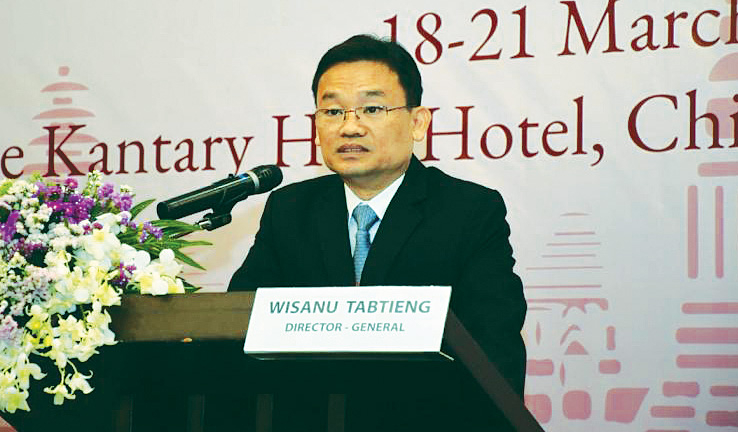
Wisanu Tabtieng, director-general at the Department Primary Industries and Mines (DPIM), said available mineral resources are being evaluated to see if they can support the five mega-projects in the Eastern Economic Corridor (EEC), namely the high-speed rail link to three airports, development of the Laem Chabang industrial port, development of the U-tapao Airport, the EEC airport project and new development projects in the capital.

Officials will propose a draft proposal next year once they complete a precise study on the construction materials required in the EEC area. The study is expected to cost Bt50 million and will come up with an estimation on the minerals and limestone required in each project. The study will especially focus on the airport rail link, because it is expected to use premium-grade stones like basalt and granite.

The officials have roughly estimated that construction minerals from three provinces should be enough to cover all projects, though there may be some extra requirement for stones.

RS looks to multi-platform commerce as it joins with BTS Group

ศาสตร์เกษตรดินปุ๋ย : ขอบคุณแหล่งข้อมูล : หนังสือพิมพ์ The Nation

https://www.nationthailand.com/business/30375070

RS looks to multi-platform commerce as it joins with BTS Group

Aug 20. 2019
By THE NATION

571 Viewed

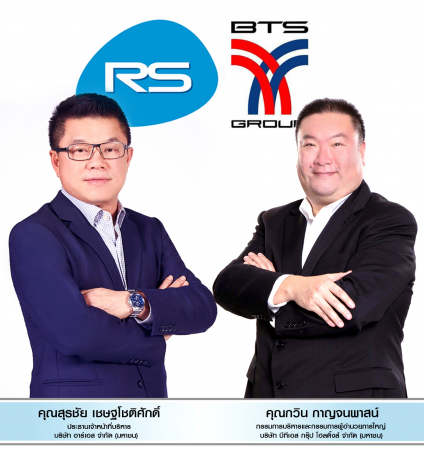
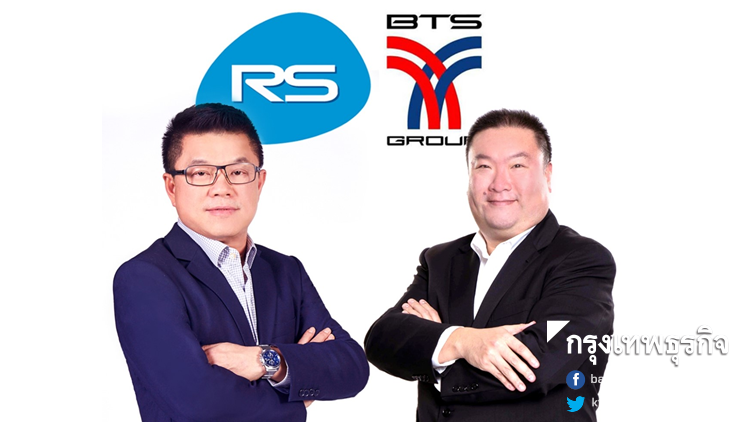
Traditionally a music company, RS Public Company Limited, continues to pursue new approaches to business, including a horizontal integration strategy and building new alliances.

In the latest development, BTS Group Holdings Public Company Limited (BTS) has paid more than Bt1 billion for 68 million shares (7 per cent) in the RS Group.

The move is expected to generate multiple new business opportunities and provide a foundation for an expansion of commercial businesses through multi-platform commerce (MPC). New projects to increase the capacity for competition will also be launched as part of a push to enable RS Group to reach its aim of Bt10 billion in income.

Surachai Chetchotisak, the CEO of RS Public Co Ltd, sees this year as a very important and meaningful one for the firm, as it is marks a turning point for the company’s 35-year-old business. As RS makes a transition towards commercial business, a new era under a new business model has begun, based on MPC and direct to consumer (D to C) principles, according to a company release on Tuesday.

The transition provides an opportunity to build upon the company’s traditional strength in the music business and create new opportunities in the media business, said the release. For example, the company’s Channel 8 has been turned into a platform that has been generating sustained income and growth for RS.

As part of its vision, RS continues to pursue growth spurts as well as long-term corporate strength. The company is open for building new alliances that can contribute to horizontal integration and increased opportunities for reaching new groups of customers.

The alliance with BTS, a leading provider of mass transit, brings with it the potential of its subsidiaries including VGI, a complete ecosystem of offline-to-online solutions with advertising, payment and logistics. With this synergistic strategy, the combined strengths of the two companies and the integration of customer databases will further buttress consumer confidence in effectively accessing goods and services, according to the release., and leading to RS reaching the Bt10 billion income level in 2022.

Kavin Kanjanapas, the CEO of BTS Group, said, “This strategic partnership will build and solidify business opportunities to both BTS and RS.”

BTS’s platforms comprise a travel platform and the VGI platform. The travel platform now serves over 1 million trips per day, and will see an expansion as the company’s mass transit rail lines are extended from the current 48.9 kilometres to 133.4km by 2021. VGI’s platform spans advertising with media capacity of more than Bt12 billion, with Payment (in the form of the Rabbit Group) serving more than 18 million users and Logistics (through Kerry Express) which connects to more than 1.2 million consumers daily, said Kavin.

“Through RS’s multi-platform commerce reaching to more than 1.2 million consumers reflecting in their annual sales of Bt2.1 billion, we believe that this investment will bring countless opportunities and enable both companies to leverage their core capabilities to capture greater market share.”

Added Surachai, “This investment by BTS represents a new dimension in alliance building between companies from different business sectors, aimed at creating new project opportunities for both parties and supporting the expansion towards multi-platform commerce to ensure a superior capability over its competitors and reach the stated income level goal more rapidly. RS remains committed to its mission of horizontal integration and horizontal growth, while keeping an open mind for new business partners in the future.”

The purchase of shares by the BTS Group Holdings Public Company Limited for the purpose of creating this business alliance has no effect on the company’s management, or on the structure of Surachai Chetchotisak’s shareholding. Surachai remains the company’s top shareholder, according to the release.

Samyan Mitrtown, KBank join for 24-hour co-learning space

ศาสตร์เกษตรดินปุ๋ย : ขอบคุณแหล่งข้อมูล : หนังสือพิมพ์ The Nation

https://www.nationthailand.com/business/30375065

Samyan Mitrtown, KBank join for 24-hour co-learning space

Aug 20. 2019
By THE NATION

490 Viewed

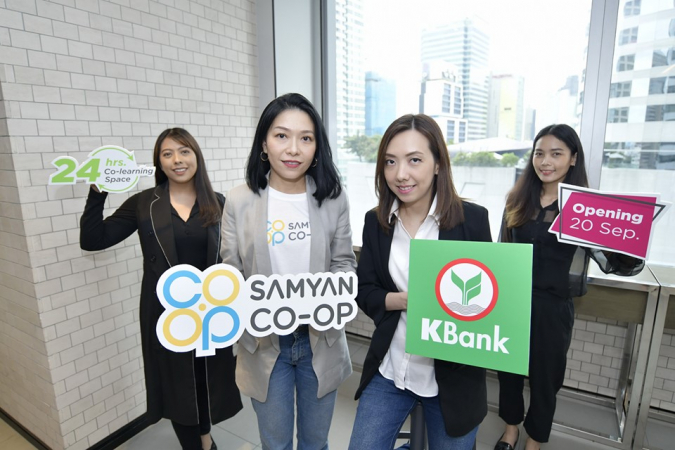
Samyan Mitrtown has teamed up with KBank for “Samyan CO-OP”, a 24-hour co-learning space that is open to the public free of charge.

Equipped with a while range of modern conveniences, including a sophisticated security system, the 1,400-square metre learning space, unmatched in look and feel by any other co-learning space, caters to all types of patrons.

Piyawan Soinoi, director of Samyan CO-OP at Goldenland Property Development PLC (Goldenland), management of the project, said, “Samyan Mitrtown collaborated with KasikornBank (KBank) to open “Samyan CO-OP”, a new-style, 24-hour co-learning space set in a 1,400-square metre area spanning over the second and third floors. It covers 30 per cent of Samyan Mitrtown’s 24-hour retail zone that has a gross floor area of 5,000 square metres.

It features leisure and conference facilities including a central area, meeting and activity rooms, all under 24-hour CCTV surveillance. The co-learning space has a seating capacity for 500 with sufficient power outlets and wi-fi connectivity for all users. The high-tech security system provides total protection with mandated identity verification via the learning space’s proprietary app or website. Entry to the area is by QR code scanning.

“W had conducted a survey of customer demands and found that our target group has diverse lifestyle needs that have to be satisfied. The space is designed to provide 24-hour service to meet the preferences of the new generation. Visitors using Samyan CO-OP include university students and working people. It’s an area where people can come to work, enjoy reading, or meet colleagues for a group session. We wanted to create Samyan CO-OP as a learning community,” Piyawan said.

Samyan CO-OP places great importance on learning and promoting related activities. We have joined forces with content partners to co-organise activities in the premises, including Lukkid Co Ltd and Hacker House Institute. We expect Samyan CO-OP to receive 2,500 visitors daily, making up 10 per cent of the overall customer traffic to Samyan Mitrtown which aims to attract 25,000 daily.”

Thitiporn Sirisrisakunchai, head of Innovative Business Management at Kasikornbank, said the concept of the Samyan Mitrtown project revolves around building a shopping mall that offers new and different experience, not just purely commercial services.

“Our bank has confidence in the management of Goldenland that’s been recognised for a number of real estate projects which have benefited the society and the local community. Thus, the bank partnered with Samyan Mitrtown to create Samyan CO-OP. The new-style co-learning space – located right in the heart of Bangkok – is close to educational institutions. It aims to satisfy the new generation’s lifestyle needs in the digital age where their preferences are shifting. The learning space is a great place to read books, prepare for an exam, exchange or share ideas among friends or colleagues or just join in a meeting. We will be organising activities in the facility.” he said.

Samyan CO-OP is well positioned to serve patrons of all kinds and ages in the interests of educational, personal development and learning.

It also houses a KBank the Office Space, our staff’s workplace, to offer more convenience and flexibility, Thitiporn said.

Stiebel Eltron aims big after initial success in Laos

ศาสตร์เกษตรดินปุ๋ย : ขอบคุณแหล่งข้อมูล : หนังสือพิมพ์ The Nation

https://www.nationthailand.com/business/30375060

Stiebel Eltron aims big after initial success in Laos

Aug 20. 2019
By THE NATION

380 Viewed

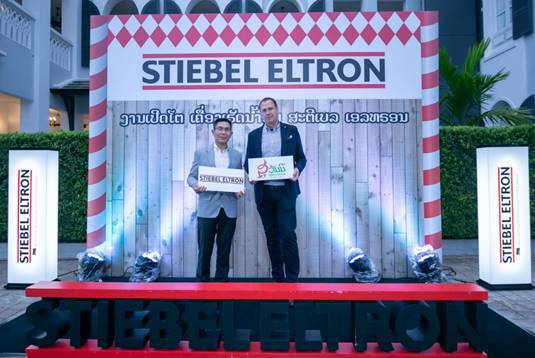
Thailand’s arm of Stiebel Eltron, a leading manufacturer of water heaters, water filters, hand dryers, heat and water pumps, foresees massive potential for market expansion in Laos following strong growth in recent years.

The German company, headquartered in Holzminden, has been distributing in Laos since 2014, and has recorded steady two-digit sales growth for four years, which is why it is ready to establish a strong presence in Laos by boosting brand awareness and increasing marketing. A continuation of this performance will see the company double its sales this year compared to the previous year.

Roland Hoehn, managing director of Stiebel Eltron Asia, said: “Stiebel Eltron is entering its sixth year in Laos, and with a steady growth rate, it is an opportune time for us to fully establish our brand as a household name in the electrical appliances industry in the local market as well as create a solid loyal customer base in Laos. Our strategy in moving forward is to generate brand awareness on a deeper level through direct marketing initiatives so potential customers can identify with who we are as a company, what we stand for and what we offer in terms of our unique product range.

“The main product we sell in Laos is water heater and we plan to introduce new models annually in Laos at the same time as in Thailand. Recently we launched water filters, hand dryers and heat pumps in Laos and received good feedback from customers,” Hoehn continued. “In order to become top consumer brand, we need to establish a solid brand presence and position Stiebel Eltron as a household name by prioritising customer engagement through targeted marketing activities and interactive events as well as continuously investing in social media as a marketing tool to amplify customers’ awareness. These marketing investments are expected to increase our retail consumer demands and help support our plans to expand our wholesale distribution network as well”.

In response to its success in Laos, Stiebel Eltron is planning to establish strong market presence and customer loyalty through strategic partnerships, project and sub dealer acquisitions as well as expanding product ranges and store locations. The company also aims to generate on-going awareness through increased marketing activities and events such as lucky draw campaigns, in-store promotions and online marketing, which is expected to boost retail sales in return.

This projected growth in Laos will help foster an expansion of the company’s market share and in turn reinforce its vision to become a top water heating, water treatment and water movement solution provider in Southeast Asia.

BTS takes 7 per cent of RS in strategic move

ศาสตร์เกษตรดินปุ๋ย : ขอบคุณแหล่งข้อมูล : หนังสือพิมพ์ The Nation

https://www.nationthailand.com/business/30375054

BTS takes 7 per cent of RS in strategic move

Aug 20. 2019
By THE NATION

306 Viewed

BTS Group Holdings, a key provider of mass transit service, purchased a 7-per cent stake in entertainment firm RS on Monday (August 19), via a big lot transaction worth Bt1.050 billion.

The group’s chief executive officer Kavin Kanjanapas had said the company saw an opportunity to grow together with RS.

It always wants to become a strategic partner of companies with which it can create synergy for mutual benefits, he added.

RS is currently focusing on Multi-platform Commerce (MPC), covering media, online sales, retails and direct sales.

Top THAI execs agree to help out by cutting their salaries

ศาสตร์เกษตรดินปุ๋ย : ขอบคุณแหล่งข้อมูล : หนังสือพิมพ์ The Nation

https://www.nationthailand.com/business/30375012

Top THAI execs agree to help out by cutting their salaries

Aug 19. 2019
Sumeth Damrongchaitham

Sumeth Damrongchaitham
By THE NATION

689 Viewed

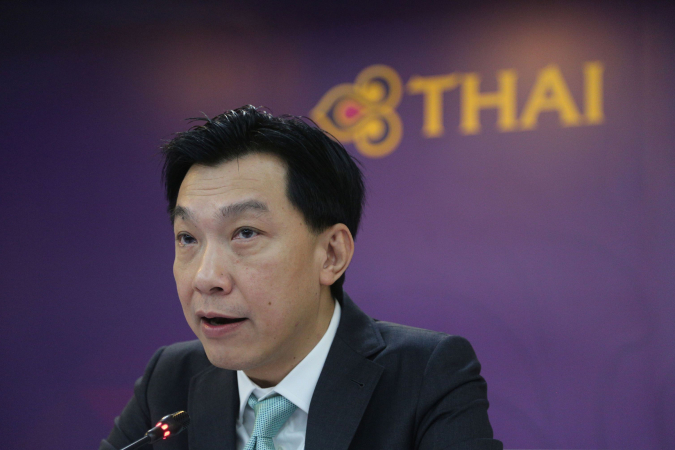
Sumeth Damrongchaitham, president and CEO of Thai Airways International (THAI), said the airline is only reducing the salaries of top executives, not operation officers.

After a THAI board meeting on August 19, it was reported that many top executives agreed willingly to reduce their salaries in order to ease the burden on the airline.

“Lower cost measures will help Thai Airways compete in the airline business. Many board members and top executives have shown their compassion and agreed to help the organisation during this time of crisis. Officials at the operational level do not need to worry, because this measure only aims to lower the cost of management without any effect on the quality of service,” Sumeth said.