
Scania Siam and EA Mechanics aim to double sales growth for marine engines

ศาสตร์เกษตรดินปุ๋ย : ขอบคุณแหล่งข้อมูล : หนังสือพิมพ์ The Nation

https://www.nationthailand.com/business/30374772

Scania Siam and EA Mechanics aim to double sales growth for marine engines

Aug 14. 2019
By THE NATION

257 Viewed

Scania Siam and EA Mechanics aim to boost their growth in the marine engine market in Thailand, targeting a doubling in sales expansion in 2020.

Sathit Riyatanon, director of after sales services at Scania Siam, said: “Scania has been marketing the marine engine for about two years since 2017, with EA Mechanics becoming an official distributor. We work with ship structure manufacturers to penetrate the boat engine market, so we will sell and service only the Scania marine engine.”

Sathit said that the marine engine market in Thailand is growing rapidly and that costumers know the importance of a good engine.

“A wooden boat that transported passengers and tourists on the Chao Phraya River Before was converted into an all-aluminium vessel, because of the problems in maintenance.

“Certainly, the engine is the heart of the boat. For the Scania marine engine market, the market is classified into three main groups. These consisting of the Chao Phraya Express boat, which provides pick-up and drop-off services on important locations on the Chao Phraya River, towing boats such as sand boats and other boats that Scania will continue to market. By 2020, it is expected that 32 Scania engines will be sold.

“It is not difficult to select a Scania marine engine because we are famous, with outstanding features such as fuel saving and environmentally friendliness.

“The oil change cycle at each cycle is 500 hours apart and the engine is durable. We have expertise and agents like EA Mechanics have received training according to the Scania standards.”
SCG eyes upgrading industrial waste disposal in line with its circular economy concept

ศาสตร์เกษตรดินปุ๋ย : ขอบคุณแหล่งข้อมูล : หนังสือพิมพ์ The Nation

https://www.nationthailand.com/business/30374771

SCG eyes upgrading industrial waste disposal in line with its circular economy concept

Aug 14. 2019
By THE NATION

302 Viewed

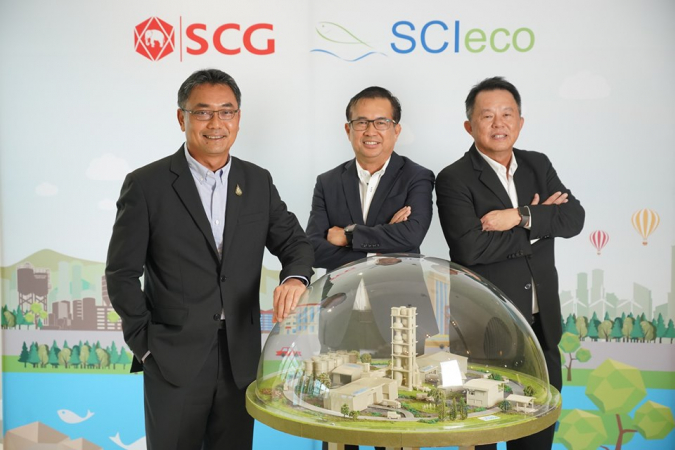
SCG, via its SCI Eco Services Company Limited, has joined with the Industrial Estate Authority of Thailand, the Department of Industrial Works, as well as communityleaders and entrepreneurs in the Map Ta Phut area to conduct a feasibility study on the possibility of upgrading industrial waste disposal based on the Circular Economy concept.

The new industrial waste-power plant will use Japan’s gasification with ash-melting technology. Located in the Map Ta Phut Industrial Estate, this plant is a spinoff business built on the principle of a circular economy. It will be the first in Southeast Asia to feature this world-class industrial waste-disposal technology, with the ability to handle both hazardous and non-hazardous waste using a closed-loop process.

This plant is expected to conduct a test run later this year and start operating early next year. Its target is to process at least 50,000 tonnes of industrial waste by the end of next year. SCG is confident this industrial waste-power plant will become a model business in demonstrating how resources can be utilised efficiently through a value chain based on the circular economy principle, paving the way for sustainable growth in business, industrial, social and environmental sectors.

Chana Poomee, vice president for Cement and Construction Solution Business at SCG Cement-Building Materials Company Limited, said SCG recognises that circular economy is key to sustainable economic, social, and environmental development. The company has applied this concept to its business operation under the SCG Circular Way with the belief that such guidelines will usher success when its implementation begins.

SCI Eco Services Company Limited, in line with SCG’s Circular Way and its “Zero Waste to Landfill” policy, has launched many initiatives, especially in the area of industrial waste management. Among them are solid pre-treatment plant, liquid waste mixing and community waste management projects. Most recently, the company developed an industrial waste-power plant in Map Ta Phut as a prototype business based on the principles of the circular economy.

“We are aware that industrial waste without proper management can affect the environment and communities a great deal,” Chana said. “As a first in Thailand to properly treat industrial waste in cement kilns, SCI Eco Services is leveraging our expertise spanning more than 20 years to take industrial waste management to new heights. We have spent over three years working with the Industrial Estate Authority of Thailand, the Department of Industrial Works and Map Ta Phut community leaders to conduct an environmental health impact assessment [EHIA] and a feasibility study to set up an industrial waste disposal and power plant that complies with law and supports the concept of circular economy. With a budget of more than Bt2.4 billion, we are bringing Southeast Asia’s most advanced technology to this plant, which is being constructed with green supply chain management on 15-rai expanse of land in Map Ta Phut Industrial Estate.”

Sanit Kessuwan, business stakeholder engagement director at SCG Cement Company Limited, added, “We always keep our eye on modern innovations and technologies that can be introduced to help drive our business progress. Gasification with ash melting is the most advanced industrial waste disposal technology in Southeast Asia, and it coincides with SCG’s circular economy and ‘Zero Waste to Landfill’ approaches. This process leaves no residues for disposal, but by-products that can be reused to make the most of resources.”

Panya Sopasriphan, deputy director for business stakeholder engagement at SCG Cement Company Limited, said: “The plant’s operation is a closed-loop system. It will feature pollution and waste control systems that comply with internationally recognised standards, from reception of industrial waste from entrepreneurs and transport to sorting centre for pre-disposal evaluation and analysis through to the disposal in gasifier and ash-melting furnace. While post-combustion residues such as aluminium, steel and fly ash are recyclable, others that are incombustible can be used as alternative materials for road construction. The power derived from the process can used for electricity generation while the water can be treated for reuse. This plant will have a capacity to process 65,000 tonnes of industrial waste per annum.”

Chana said: “We have implemented the plan to raise public awareness among target groups and local communities, highlighting the plant’s remarkable technologies, standards, and residue-free waste disposal. Our main target groups are industrial plants in the East, particularly those from automotive industry, refinery industry and electronics industry. Also, we want to invite entrepreneurs from all industries to accord importance to the need of properly disposing industrial waste so as to drive Thai industries towards sustainable growth. To reaffirm our commitment to Circular Economy promotion, SCG will hold the 10-year SD Symposium ‘Circular Economy: Collaboration for Action’. This seminar will address environmental issues that affect society and present success stories from various parts of the world.”

The symposium will be held on August 26 at Centara Grand and Bangkok Convention Centre at CentralWorld. More information is available at www.scg.com/sdsymposium.

CAT Telecom earns Bt8.6 bn in net profits in first half

ศาสตร์เกษตรดินปุ๋ย : ขอบคุณแหล่งข้อมูล : หนังสือพิมพ์ The Nation

https://www.nationthailand.com/business/30374763

CAT Telecom earns Bt8.6 bn in net profits in first half

Aug 14. 2019
By THE NATION

203 Viewed

CAT Telecom has posted a total revenue of more than Bt29 billion in the first half of this year, with net profits of more than Bt8.6 billion, CAT president Sanpachai Huvanandana said.

The main sources of its revenue are the mobile phone service, data communication service, overseas call service and the leasing of telecommunications towers.

CAT is also continuing to roll out its Long Range Wide Area Network (LoRaWAN), which will be available nationwide this year to serve provinces that want to develop smart cities.

The state agency has also developed smart solutions such as smart tracking, smart lighting and smart energy to serve state agencies and private companies, which Sanpachai said has good growth potential.

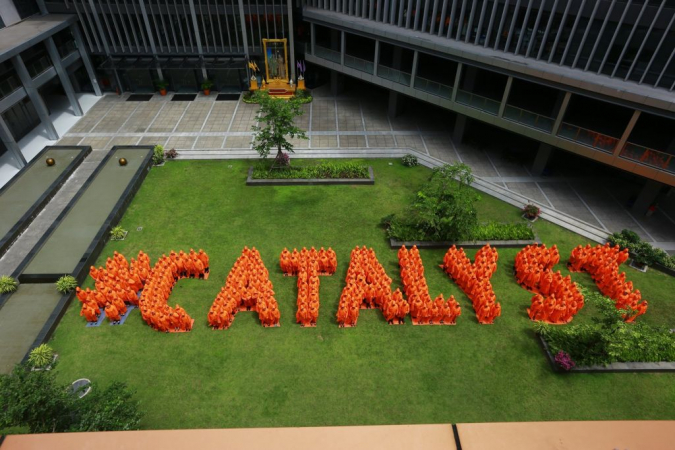
CAT also marked its 16th anniversary on August 14 by introducing new staff uniforms and launching all-year activities to promote what it calls the “CAT new brand DNA” under its CATALYST concept.

This new DNA concept focuses on trying to gain deeper insight into customers and provide solutions to solve their problems.

Recently the other state telecom agency TOT said it was confident of achieving its net profit target of Bt2.49 billion this year, higher than last year’s target of Bt2.17 billion. Of the projected figure, Bt1 billon was achieved in the first half of this year.

TOT’s total revenue target is Bt56.5 billion, of which Bt25.3 billion will come from its own operations, while the remainder will come from its business partners.

MCOT posts 257% surge in profit for second quarter of 2019

ศาสตร์เกษตรดินปุ๋ย : ขอบคุณแหล่งข้อมูล : หนังสือพิมพ์ The Nation

https://www.nationthailand.com/business/30374761

MCOT posts 257% surge in profit for second quarter of 2019

Aug 14. 2019
Kematat Paladesh, president of MCOT Plc

Kematat Paladesh, president of MCOT Plc
By THE NATION

210 Viewed

MCOT Public Company Limited has boosted profit by 257 per cent in the second quarter of 2019 compared with the same period last year. It booked net earnings of Bt287 million.

TV and radio remain the core business. Revenue from almost all central radio stations increased compared to the previous quarter. The company plans to broadcast new quality content in the third quarter of the year, with the aim to increase ratings after the return of the licence to operate the MCOT Family 14 channel.

Kematat Paladesh, president of MCOT Plc, said profit for the first half of the year came to Bt255 million, an increase of 187 per cent compared with the same period of last year, due to revenue recognition from the order of the chief of National Council for Peace and Order on the Solution for Television and Telecommunications Industries No. 4/2019 given on April 11 and the offer in May allowing operators to return their digital terrestrial channel licences to the National Broadcasting and Telecommunication Commission (NBTC).

Fewer Chinese tourists affect CENTEL’s hotel arm

ศาสตร์เกษตรดินปุ๋ย : ขอบคุณแหล่งข้อมูล : หนังสือพิมพ์ The Nation

https://www.nationthailand.com/business/30374720

Fewer Chinese tourists affect CENTEL’s hotel arm

Aug 14. 2019
By THE NATION

171 Viewed

Central Plaza Hotel Public Company Limited (CENTEL) has reported a softening of its hotel business in the second quarter of 2019, mainly due to the lower number of Chinese tourists visiting Thailand, while its Food Business revenues increased 5.7 per cent year on year amidst intense business competition and an overall economic slowdown.

Revenues for the period were reported at Bt5.225 billion, a similar level to the same period last year. Meanwhile, the company’s EBITDA was Bt906.7 million, a decrease of 9.6 per cent year on year. The company achieved net profit from operation of Bt290.5 million, a decrease of Bt81.2 million, or 21.8 per cent year on year. However, the company had net profit of Bt232.4 million, a decrease of 37.5 per cent year on year due to the provision for long-term employee benefits obligations of Bt58.1 million.

Total hotel business revenue was Bt2 billion, a decrease of Bt138.7 million (or 6.5 per cent) year on year, due to the lower number of Chinese tourists, who make up an important group of tourists during the low season, coupled with the closure for major renovation of Centara Grand Beach Resort Samui on June 1. In addition, the operating results for the 5-star property in the Maldives softened compared to the same period last year. In Q2/2019, the company achieved EBITDA of Bt543.1 million (or 27.1 per cent of total hotel business revenue).

Total food business revenue was Bt3.224 billion, an increase of 5.7 per cent year on year, derived from a net increase of 99 QSR outlets. As such, total systems sales (TSS) growth was 5.7 per cent year on year; while same stores sales (SSS) growth decreased by 1.8 per cent year on year – but improved from the previous quarter, especially for Mister Donut and Auntie Anne’s. Nevertheless, the offering of value promotion campaigns to drive sales and the increases in fixed costs such as labour costs resulted in the lower profit margin. Rhe Company achieved EBITDA of Bt363.6 million (or 11.3 per cent of total food business revenue) in the second quarter.

For the first six months of this year, the company achieved total revenues of Bt10.868 billion, a similar level to the same period last year, and total EBITDA of Bt2.404.3 billion, a decrease of 9.9 per cent year on year, as a result of the operating performance for both hotel and food businesses. Net profit from operation was Bt1.035 billion, a decrease of 17.5 per cent year on year. The company recognised provision for long-term employee benefits obligations of Bt58.1 million as well as an insurance claims payment for damages to its property of Bt80.6 million (net of taxes). Thus, this resulted in net profit of Bt1.058 billion, a decrease of 15.7 per cent compared to the same period last year.

THAI to lease, sell aircraft to turnaround after big losses in 1H

ศาสตร์เกษตรดินปุ๋ย : ขอบคุณแหล่งข้อมูล : หนังสือพิมพ์ The Nation

https://www.nationthailand.com/business/30374710

THAI to lease, sell aircraft to turnaround after big losses in 1H

Aug 14. 2019
THAI's president Sumeth Damrongchaitham speaks to the press on Tuesday. – The Nation

THAI’s president Sumeth Damrongchaitham speaks to the press on Tuesday. – The Nation
By The Nation

918 Viewed

Thai Airways International (THAI) will consider leasing out three new aircraft and selling four existing aircraft to boost its revenue for the rest of this year after the carrier reported a net loss of Bt6.43 billion in the first half of this year, the company’s president Sumeth Damrongchaitham said on Tuesday.

“We expect our total revenue in the second half of this year to be better than the first half, when the baht depreciates now that the Monetary Policy Committee has cut the policy interest rate by 0.25 per cent early this month and September, high season for tourists, arrives,” he said.

The national carrier is planning to boost the number of aircraft leased to European airlines by three and sell four existing airplanes and will propose this plan to its board soon.

The airline will also buy foreign exchange after sustaining losses of 5 per cent when the baht appreciated in the first half of this year compared to the end of last year.

“If we don’t do anything, we will suffer high losses for the rest of this year. We believe our business strategy will reduce our losses in the rest of this year,” he said.

As for the plan to buy 38 new aircraft worth Bt156 billion, it needs to be reconsidered because the government has insisted that the funding for the purchase must come from the company, he said.

Sumeth added that the airline has also announced its cost-saving schemes such as SaveTG Co-Creation, which reduces its management cost without having an impact on its service quality.

The airline is also collaborating with other organisations to reduce its cost by following a zero-waste management policy. THAI is also planning to introduce new direct flights to Sendai, Japan in the last quarter of this year.

THAI is also focusing on digital marketing to boost customers and reduce costs, and is cooperating with its business partners and subsidiary ThaiSmile to provide services and increase its income, he said.

Central Plaza Hotel sees total revenue of Bt5.22 billion in Q2

ศาสตร์เกษตรดินปุ๋ย : ขอบคุณแหล่งข้อมูล : หนังสือพิมพ์ The Nation

https://www.nationthailand.com/business/30374703

Central Plaza Hotel sees total revenue of Bt5.22 billion in Q2

Aug 13. 2019
By The Nation

444 Viewed

Central Plaza Hotel Plc earned revenue of Bt5.22 billion in the second quarter of this year, similar to the same period last year, according to the company’s earnings report on Tuesday.

Its earnings before interest tax depreciation and amortisation, or EBITDA, was Bt906.7 million, a decrease of 9.6 per cent year-on-year (YoY). The company saw net profit of Bt290.5 million, a decrease of Bt81.2 million, or 21.8 per cent, YoY.

However, in the second quarter of this year, the company earned net profit of Bt232.4 million, a decrease of 37.5 per cent YoY due to the provision for long-term employee benefit obligations of Bt58.1 million.

Central Plaza’s hotel business meanwhile reported revenue of Bt2 billion, a decrease of Bt138.7 million, or 6.5 per cent, YoY, due to a lower number of Chinese tourists – an important group of visitors during the low season – coupled with the closure of Centara Grand Beach Resort Samui for major renovation since June 1, 2019. In addition, the operating results for the 5-star property in the Maldives softened, compared to the same period last year. In the second quarter of this year, the company achieved EBITDA of Bt543.1 million, or 27.1 per cent, of total hotel revenue, it reported.

Its food business recorded Bt3.22 billion, a rise of 5.7 per cent YoY, derived from a net increase of 99 quick service restaurants. Total systems sales growth was 5.7 per cent YoY, while same stores sales growth decreased by 1.8 per cent YoY but improved from the previous quarter, especially from Mister Donut and Auntie Anne’s outlets. However, the firm’s promotional campaigns to drive sales and an increase in fixed costs such as those for labour resulted in the lower profit margin. The company achieved EBITDA of Bt363.6 million, or 11.3 per cent, of total food business revenue in the second quarter of this year.

For the first half, the firm saw total revenues of Bt10.86 billion – similar to the same period last year – and total EBITDA of Bt2.4 billion, a decrease of 9.9 per cent YoY, for both its hotel and food businesses. Net operational profit was Bt1.03 billion, a decrease of 17.5 per cent YoY.

The company’s long-term employee benefit obligations of Bt58.1 million and meanwhile an insurance claims payment for damages to its property of Bt80.6 million resulted in net profit of Bt1.05 billion, a decrease of 15.7 per cent compared to the same period last year, according to the firm’s earnings report.

Frasers unveils Bt1-bn debenture series

ศาสตร์เกษตรดินปุ๋ย : ขอบคุณแหล่งข้อมูล : หนังสือพิมพ์ The Nation

https://www.nationthailand.com/business/30374695

Frasers unveils Bt1-bn debenture series

Aug 13. 2019
Peerapat Srisukont/Photo by FIRM

Peerapat Srisukont/Photo by FIRM
By The Nation

424 Viewed

Frasers Property Thailand’s Industrial Freehold & Leasehold REIT (FTREIT), which it calls the country’s largest industrial REIT, has issued debenture No 1/2019 amounting to Bt1 billion, divided into four- and seven-year debentures.

Peerapat Srisukont, managing director of Frasers Property Industrial REIT Management (Thailand) Co Ltd (FIRM), which manages FTREIT, said on Tuesday that United Overseas Bank was serving as underwriter.

He said Series 1 was a debenture in the amount of Bt500 million with a maturity of four years and a fixed coupon rate of 2.63 per cent per annum, with redemption in 2023.

Series 2 is in the amount of Bt500 million with a maturity of seven years and a fixed coupon rate of 3.14 per cent, to be redeemed in 2026.

TRIS Rating on July 22 affirmed an “A/Stable” rating for the FTREIT debentures, the highest credit rating of any domestic industrial REIT.

The company plans to use the proceeds from the debentures to repay 2018 loans for assets acquisition.

D-Day arrives for digital broadcasters’ pay-off

ศาสตร์เกษตรดินปุ๋ย : ขอบคุณแหล่งข้อมูล : หนังสือพิมพ์ The Nation

https://www.nationthailand.com/business/30374691

D-Day arrives for digital broadcasters’ pay-off

Aug 13. 2019
Takorn

Takorn
By THE NATION

292 Viewed

The National Broadcasting and Telecommunications Commission (NBTC) will on Friday morning pay more than Bt1.377 billion in compensation to three firms that have returned their terrestrial digital TV licences.

Takorn Tantasith, the watchdog’s secretary-general, said on Tuesday the money is going to Spring 26 (Channel 26, formerly known as Now 26), Spring News Television (Spring News 19 Channel) and Bright TV (Channel 20).

In May they were the first broadcasters to inform the regulator of their intention to hand back their licences and will all suspend programming after midnight Thursday.

Spring 26 will receive more than Bt600.7 million, Spring News Bt498.2 million and Bright TV Bt278.4 million.

Six commercial digital TV broadcasters announced on May 10 that they were returning the seven licences they had secured from the NBTC. May 10 was the deadline for broadcasters to declare such an intention.

The six included Spring News Television Co Ltd (for Spring News Channel 19) and Nation Multimedia Group (for Spring 26, formerly NOW26).

The others are Bright TV (for Channel 20), Voice TV (Channel 21), MCOT (Family Channel 14) and BEC Multimedia (Family Channel 13 and 3SD Channel 28).

Voice TV will go off the air after midnight August 31 and receive more than Bt378 million.

MCOT Channel 14 exist on September 15 with Bt163.3 million.

BEC Channel 28 and Channel 13 leave the airwaves on September 30 with compensation topping Bt680 million and Bt162.5 million, respectively.

Name / Compensation / Off the air

Spring 26/ Bt600.739 million-plus/midnight Aug 15

Spring News/ Bt498.24 million-plus /midnight Aug 15

Bright TV/ Bt278.41 million-plus /midnight Aug 15

Voice TV/ Bt378.054 million-plus /midnight Aug 31

MCOT Channel 14/ Bt163.298 million-plus /midnight Sept 15

BEC Channel 28/ Bt680.083 million-plus /midnight Sept 30

BEC Channel 13/ Bt162.543 million-plus / midnight Sept 30

Source: NBTC


Thailand currently has 22 commercial digital TV channels in what is seen as a saturated market.

The NBTC is ceding to directives from the former ruling junta to ease the financial burden of digital TV broadcasters in an industry that had struggled for years amid the rise of the Internet.

The junta also required the NBTC to waive upfront payments for the fifth and sixth instalments on all licences.

The NBTC will cover the network rental fees for all licence holders for the remainder of their nine-and-a-half-year term.

The NBTC board has meanwhile approved a multi-band-spectrum auction plan to help propel Thailand into the 5G era.

It will soon arrange a hearing with all parties involved.

There will be two auctions, the first for higher-frequency bands such as 26-28GHz, the 2600MHz middle band and the lower 700MHz band.

The second auction will be for middle bands of 3400-3600MHz and 1800MHz.

The board also approved a partial recall of satellite spectrum band 3400-3700MHz for reallocation to 5G service.

The Digital Economy and Society Ministry had granted it to satellite operator Thaicom.

Takorn has said the recall wouldn’t affect Thaicom’s operations, for which it has sufficient bandwidth remaining.

Banks formulating practical guidelines for responsible lending

ศาสตร์เกษตรดินปุ๋ย : ขอบคุณแหล่งข้อมูล : หนังสือพิมพ์ The Nation

https://www.nationthailand.com/business/30374682

Banks formulating practical guidelines for responsible lending

Aug 13. 2019
Veerathai Santiprabhob

Veerathai Santiprabhob
By The Nation

211 Viewed

The Bank of Thailand will establish guidelines in collaboration with 15 commercial banks for responsible lending as part of sustainable business operations.

Banks are being encouraged to lend based on environmental, social and good governance (ESG) criteria, which will serve as protection against adverse consequences and therefore ease potential problems. Four policies for responsible lending will be put in place by the end of next year, accounting for stakeholder engagement, internal implementation mechanisms as well as transparency.

Bank of Thailand Governor Veerathai Santiprabhob said that if banks fail to integrate ESG into their business practices, their financial position may be jeopardised.

Banks should adopt responsible lending guidelines and adjust through internal changes to fend off problems that would otherwise be caused by their failure to embrace ESG principles, he said. It is therefore essential for financial institutions, led by their board members and high-ranking executives, to push for incorporating ESG criteria into their operations and risk management.

At the beginning of this year, many areas in the country suffered from PM2.5 air pollution, which immeasurably damaged people’s health and hit tourism. Besides this, flooding and other environmental issues have led to a slew of additional problems the kingdom faces.

Moreover, household debt has become chronic. If left unresolved, the problem will weaken the economic health of households, affecting debt quality and threatening Thailand’s growth prospects in the long run.

Meanwhile, corruption, which is deeply rooted in society, has eroded the country’s potential to advance and aggravated its social inequality.

Faced with these problems, the Thai banking sector, in its capacity as a financial intermediary, can help fix them by appropriately allocating resources to ease any negative impacts that may occur.

The sector aims to establish a common policy on responsible lending to ensure commercial banks have proper procedures to promote socially conscious loan approvals based on ESG principles to protect financial institutions and mitigate potential damages.

It is essential for financial institutions to prioritise the setting of clear goals, together with evaluation and examination of policy implementation. Related information must also be disclosed in a timely manner.

The cooperation marks a milestone for the financial sector in conducting business by not only adhering to internal corporate governance but also integrating ESG criteria with a holistic approach by considering negative impacts that their businesses may cause.

Thai Bankers’ Association chairman Predee Daochai said the association recognises the importance of responsible lending.

“All of our member banks believe the financial institution system is an important mechanism in not only providing financial support via lending, but also creating a balance that can help minimise potential risks to the sector and the Thai economy. Therefore, a commitment by these institutions to lend responsibly will help protect financial service users and build the nation’s stability over the long term,” he said.

Given this, the BOT-initiated guidelines for sustainable banking operations are vital and comprise leadership and a commitment to responsible lending, stakeholder engagement, internal implementation mechanisms, and transparency.

BOT is also encouraging banks to commit to the creation of a culture of financial discipline and business operation that attaches importance to the well-being of the economy, society and the environment, based on good governance principles and appropriate risk management.