Technology stocks drove the equity market to a record in a volatile session ahead of Fridays options expiration.
The S&P 500 notched its 66th all-time high, with the benchmark gauge poised for the second-biggest number of annual records ever – only behind 1995. The tech-heavy Nasdaq 100 outperformed as giant chipmaker Nvidia boosted its outlook, while Apple jumped after Bloomberg News reported the company is pushing to accelerate the development of its electric car. Macy’s and Kohl’s paced gains in retailers after signaling consumer demand remains robust.
“Technology continues to be a key enabler of higher productivity and home to many of the fastest growing companies,” said Scott Brown, a technical strategist at LPL Financial. “So does this mean investors should be shifting all of their assets over to growth stocks again? We don’t necessarily think so, and continue to find opportunities in both growth and value styles.”
The next six months could see the S&P 500 hitting 5,200 in an environment of reduced monetary stimulus and outperformance by cyclical companies, according to Mark Haefele, chief investment officer at UBS Global Wealth Management. That would imply an 11% rally from Wednesday’s close.
Some other corporate highlights:
– U.S.-listed Chinese stocks slumped after e-commerce behemoth Alibaba’s disappointing revenue outlook.
– CVS Health rose after saying it will close 900 stores over the next three years, part of a plan to decrease its store density in some areas.
– U.S. health insurers say they want more proof before paying for Biogen’s Aduhelm, stalling sales of the costly new Alzheimer’s therapy that the company hailed as a breakthrough for patients.
Bitcoin continued its slide Thursday, falling for a fifth consecutive day in a retreat from record highs. The world’s largest cryptocurrency hasn’t slumped that long since the five days that ended May 16. Unlike traditional assets, crypto assets trade on the weekend, so the streak includes Saturday and Sunday.
JPMorgan Chase economists said they now expect the Federal Reserve to raise interest rates next September, becoming the latest on Wall Street to jettison a forecast for the central bank to stay on hold through 2022. Goldman Sachs analysts said last month they expect a Fed hike in July. Their counterparts at Morgan Stanley still see officials not shifting rates throughout next year.
Stocks
– The S&P 500 rose 0.3% as of 4 p.m. New York time
– The Nasdaq 100 rose 1.1%
– The Dow Jones Industrial Average fell 0.2%
– The MSCI World index was little changed
Currencies
– The Bloomberg Dollar Spot Index fell 0.1%
– The euro rose 0.5% to $1.1372
– The British pound was little changed at $1.3498
– The Japanese yen fell 0.1% to 114.24 per dollar
Bonds
– The yield on 10-year Treasuries was little changed at 1.58%
– Germany’s 10-year yield declined three basis points to -0.28%
– Britain’s 10-year yield declined four basis points to 0.92%
Commodities
– West Texas Intermediate crude rose 0.6% to $78.81 a barrel
The Stock Exchange of Thailand (SET) Index closed at 1,651.02 on Thursday, up 6.42 points or 0.39 per cent. Transactions totalled 76.53 billion baht with an index high of 1,653.68 and a low of 1,642.50.
In the morning session, Krungsri Securities forecast the day’s index would fall to between 1,635-1,640 points.
It said the index would be under pressure due to a sharp fall in oil price amid uncertainty over the US and China would release their oil reserves, plus fund flow volatility due to CME FedWatch Tool forecast the US Federal Reserve would raise the interest rate in March next year.
“However, mass buy-ups of shares which gained specific positive sentiment would help boost the index,” Krungsri Securities said.
The 10 stocks with the highest trade value today were TRUE, DTAC, EA, CBG, PTTEP, KBANK, PTT, SCB, ONEE and ADVANC.
Other Asian indices were down with one exception:
Japan’s Nikkei Index closed at 29,598.66, down 89.67 points or 0.30 per cent.
China’s Shanghai SE Composite closed at 3,520.71, down 16.66 points or 0.47 per cent, while the Shenzhen SE Component closed at 14,579.17, down 132.02 points or 0.90 per cent.
Hong Kong’s Hang Seng Index closed at 25,319.72, down 330.36 points or 1.29 per cent.
South Korea’s KOSPI Index closed at 2,947.38, down 15.04 points or 0.51 per cent.
Taiwan’s TAIEX Index closed at 17,841.37, up 77.33 points or 0.44 per cent.
Thailands herd immunity can be reached with 100 million vaccines administered by the end of 2021 and forecasts economic recovery with 1.1 million more international tourists in Q1/2022, according to the Thammasat University Research and Consultancy Institute (TU-RAC)s research.
Asst Prof Suthikorn Kingkaew, a research project manager at Thammasat University Research and Consultancy Institute (TU-RAC), revealed on Tuesday (November 16) that over the past two years, Thailand had been impacted by the Covid-19 pandemic in various perspectives, including economy, society, and livelihood, due to heavy reliance on other countries for revenue, such as tourism, exports, and inward investment.
He said a research project was initiated to study the economic and social impacts of Covid-19 and the development of domestic vaccine production in Thailand, along with the government’s policy response, as well as to forecast economic and social implications following vaccine rollouts and investigate long-term economic benefits and health security brought about by a domestic Covid-19 vaccine production base.
Asst Prof Suthikorn Kingkaew
“According to the study, the Covid-19 pandemic was responsible for a 6.1 per cent decline in the gross domestic product (GDP) in 2020 compared to 2019. Starting from Q1/2020, Covid-19 caused the industrial sector and the service sector, especially in the spheres of accommodation, food services, transportation, and warehousing, to shrink by 36.6 per cent and 21 per cent, respectively, while also triggering a 19.4 per cent shrinkage in the export sector,” he said.
The study also found that Covid-19 impacted Thailand’s economy and society in eight major areas, namely:
Public debt: Thailand’s public debt-to-GDP ratio soared significantly to 51.83 per cent in 2020 and is expected to keep increasing to 55.59 per cent in 2021, approaching the fiscal sustainability framework, which caps the public debt ceiling at 60 per cent.
Private debt: This type of debt, which refers to private loans of non-financial businesses, began increasing during the onset of the Covid-19 pandemic and was taken on for business continuity, especially during the third wave in Q2/2021. Therefore, the value of newly-issued debt instruments rose by 61.90 per cent compared to the previous quarter, with more valued at over 400,000 million baht expected to be issued in the second half of 2021.
Household debt: In Q2/2020, the household debt stood at 13.59 trillion baht and steadily rose to 14.13 trillion baht in Q1/2021. Borrowers consisted of those taking out loans for real estate, housing, and cars and those taking out loans to improve business liquidity and cover daily expenses.
Tourism: In 2020, Thailand’s tourism revenue shrank to merely 0.8 trillion baht, a 72 per cent decrease compared to the 3 trillion baht of the previous year, while the number of international tourists totalled only 6.7 million in comparison to 40 million in 2019. In July, Phuket Sandbox successfully drew some visitors to Thailand, but the number was limited compared to the normal situation.
Unemployment: The number of unemployed persons was more than 700,000 throughout the pandemic, which rose from approximately 300,000 in the pre-pandemic period.
Liquidated businesses: In 2020, a total of 20,920 companies, with a registered capital of 91,859 million baht combined, went out of business. The top three categories of liquidated businesses were construction, real estate, and restaurants.
Factories: In 2020, there were 2,633 new factories, amounting to an investment of 171,054 million baht combined and 86,797 workers hired. These numbers represent a decline compared to the previous year, in which the number of new factories was 3,175, the amount of investment combined was 301,418 million baht, and the number of workers hired was 96,492. In addition, a total of 716 factories underwent liquidation. The top five categories of liquidated factories were plastics, plant products, metal products, food, and non-metal products.
Shifting ways of life: Covid-19 precipitated the arrival of a cashless society and spurred electronic transactions and online businesses, as well as ushering in new formats of working, such as working from home. As a result, e-commerce grew by as much as 80 per cent from the previous year, equivalent to approximately 300,000 million baht in value. In comparison, in-store shopping shrank by 11 per cent in the same year, reflecting a clear shift in consumer behavior. In addition, consumers also began taking better care of their health and the health of those around them, reducing interactions, observing physical distancing, and wearing face masks.
Thailand economy expected to recover in Q1/2022: TU-RAC
Suthikorn went on to say that the government’s procurement plan for this year consists primarily of three vaccines, namely AstraZeneca, Sinovac, and Pfizer, totalling 127.1 million doses; once alternative vaccines are taken into account, the total number is 179.1 million doses.
He said the government has also aimed to administer 100 million doses by the end of 2021 to achieve herd immunity, speed up the reopening of tourist cities, and ultimately fully reopen the country in the next phase.
It is projected that Thailand will be able to manufacture a total of 260-295 million doses of Covid-19 vaccines in 2022, he added.
“Herd immunity can be achieved if 70 per cent of the population is vaccinated – equivalent to 100 million doses administered – as targeted; at present, a total of vaccinated people in Thailand is 85 million doses (as of November 14, 2021). This will play a significant role in Thailand’s economic recovery and return to normalcy, as evident in several countries where vaccination rates directly impact the economy, such as the United States, Israel, China, and the United Arab Emirates, which have seen a rapid economic recovery. As for Thailand, its ability to produce vaccines by itself and serve as a production base for Southeast Asia holds the key to resolving this crisis and will contribute to the long-term health security of its population and reduce reliance on imports. Furthermore, the manufacturing knowledge and technology transfer will also equip Thailand for new diseases in the future,” added Suthikorn.
Thailand economy expected to recover in Q1/2022: TU-RAC
Suthikorn said if vaccine management, however, proceeds as planned, the numbers of new cases and deaths should drop to 2,500 and 40 respectively by December 2021. This decline will affect the economy in Q4/2021, with the number of international visitors expected to increase by almost 300,000.
He added that such numbers will drive the domestic economy, boosting the capacity utilisation of the industrial sector by 10.28 per cent to 70.39 and causing the private investment index to rise by 6.95 per cent while reducing the total number of unemployed in the social security system by about 450,000 or 32.23 per cent year on year.
“Taking into consideration various economic factors, such as the government’s economic stimulus programs and the growth trend of the global economy, if new cases dwindle to near zero by late March 2022, the number of international tourists will increase by over 1.1 million in Q1/2022, the capacity utilization of the industrial sector will increase by 11.26 per cent, the private investment index will increase by 39.29 per cent, and the number of unemployed insured members of the social security system will reduce by over 70,000 compared to the same period of the previous year. It is also forecast that in 2022, the economy will grow 3.9 per cent,” concluded Suthikorn.
The price of gold rose slightly by THB50 in morning trade on Thursday.
AGold Traders Association report at 9.26am said the buying price of a gold bar was THB28,750 per baht weight and selling price THB28,850, while the buying and selling price of gold ornaments is THB28,227.92 and THB29,350, respectively.
At close on Wednesday, the buying price of a gold bar was THB28,700 per baht weight and selling price THB28,800, while gold ornaments were THB28,182.44 and THB29,300, respectively.
Comex gold at close on Wednesday rose by $16.1 or 0.87 per cent to $1,870.2 per ounce which is the highest closing level since June 11.
The baht opened at 32.63 to the US dollar on Thursday, strengthening from Wednesday’s closing of 32.73.
The Thai currency is likely to move between 32.55 and 32.70 to the greenback during the day, Krungthai Bank market strategist Poon Panichpibool predicted.
Poon said that the baht might strengthen by a weakening dollar and gold sell-offs after the gold
However, the baht will not strengthen much because importers are waiting to buy the dollar if it reaches 32.50 to 32.60 the dollar. The market is also in a risk-off state in the short term which causes foreign investors to not invest in Thai stocks.
Foreign investors who want to buy the baht are waiting for the baht to weaken to 33 to the dollar while those who want to sell will wait for the baht to reach 32.50 to the dollar.
The market is worried about the inflation problem which might cause central banks to use tight monetary policy. The Consumer Price Index in the UK rose by 4.1 per cent in October which is higher than the market expected and was the highest in 10 years.
Krungsri Securities forecast the Stock Exchange of Thailand (SET) Index on Thursday (November 18) would fall to between 1,635-1,640 points.
It said the index would be under pressure due to a sharp fall in oil price amid uncertainty over the US and China would release their oil reserves, plus fund flow volatility due to CME FedWatch Tool forecast the US Federal Reserve would raise the interest rate in March next year.
“However, mass buy-ups of shares which gained specific positive sentiment would help boost the index,” Krungsri Securities said.
It also recommended buying of the following companies’ shares as an investment strategy:
▪︎ BBL, TTB, KTB, KBANK and BLA, which would benefit from the rising interest rate.
▪︎ HMPRO, CPN, CRC, AMATA, WHA, BTS, BEM, VGI and BDMS, which benefit from domestic economic recovery.
▪︎ GFPT and TFG, which would benefit from rising domestic chicken price.
The European Union on Wednesday proposed a measure that would seek to restrict imports to “deforestation-free” goods and materials for countries in the bloc, in an effort to fight consumer trends that drive deforestation around the world.
Importers of commodities including coffee, cocoa, soy, beef, palm oil and wood – as well as products made from those materials, such as furniture and chocolate – would be required to identify the geographic coordinates of the land where the materials were produced. To qualify as “deforestation-free,” the land cannot have been deforested or degraded since Dec. 31, 2020.
The proposal – which would need to be approved by the European Parliament and E.U. member states before coming into force – was hailed as “groundbreaking” action to combat the climate crisis by European Commission officials. “We can’t ask for ambitious climate policies from partners on the one hand and export pollution and support deforestation on the other,” said Virginijus Sinkevicius, a Lithuanian European commissioner for environment, oceans and fisheries.
Demand in the European Union for commodities such as beef and cocoa are “strong drivers of deforestation,” said Frans Timmermans, vice president of the European Commission. E.U. citizens, he said, had called for measures “to minimize the European contribution to deforestation and to promote sustainable consumption.”
The ban on materials from deforested or degraded land would reduce greenhouse gas emissions and biodiversity loss, and benefit vulnerable communities such as Indigenous populations, the commission said in a statement.
The proposal comes on the heels of the COP26 United Nations climate summit in Glasgow, Scotland, earlier this month, where world leaders formed an agreement that nudges countries toward near-term climate goals but failed to include targets – such as limiting Earth’s warming to 1.5 degrees Celsius (2.7 Fahrenheit) – that scientists say are necessary to prevent the worst effects of global warming.
World leaders representing more than 85% of the world’s forests pledged at COP26 to halt deforestation by 2030. Brazil, Canada, Russia and the United States were among the countries that joined the pledge.
Deforestation and forest degradation – when a forest is not eliminated but is damaged to the point that it can no longer fully benefit people or the natural environment – are “important drivers of global warming and biodiversity loss,” the commission said. Nearly a quarter of total human-caused greenhouse gas emissions from 2007 to 2016 are estimated to have come from forestry and direct emissions from livestock and fertilizer production. When downed trees are burned or decay, they release carbon and are also no longer able to absorb carbon dioxide.
The proposal is “very promising,” said Holly Gibbs, a professor at the University of Wisconsin at Madison and an expert on deforestation.
She said the measure has the “potential to send strong signals that one of the largest economies will not accept agricultural products connected to deforestation.” But, Gibbs noted, existing commitments against deforestation have been made by various parties, including private companies, but have yet to be fully implemented. Deforestation in the Brazilian Amazon continues to increase despite many promises to stop it, she said.
The measure would place exporting countries into one of three tiers of risk – low, standard and high – based on factors such as the rate of deforestation or how laws against deforestation are enforced in that country.
Specific countries were not named in the proposal’s “benchmarking” system, but a list would become publicly available if the measure is adopted, according to the proposal.
Copa-Cogeca, which represents the European agricultural industry, said the tiered system – which the proposal called a “key feature” – was “incompatible” with World Trade Organization rules. The system could have “serious consequences on the future trading relationships and distort the competition on both the EU and global market,” the group said in a statement. As a WTO member, Copa-Cogeca said, the E.U. must “fully respect” WTO rules. Representatives for the European Commission did not immediately respond to a request for comment.
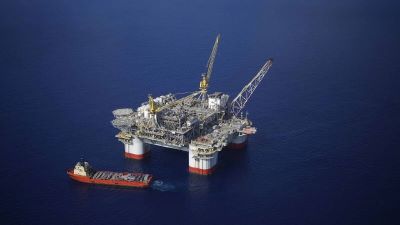
Oil companies spent $191.7 million buying drilling rights in the Gulf of Mexico on Wednesday during a robust government auction that underscored the industrys appetite for new crude as the White House seeks to shifts the U.S. away from fossil fuels.
Analysts said bidding was driven by interest in lower-carbon crude from the Gulf of Mexico as well as uncertainty about the timing and conditions of future sales, which are expected to come with higher fees and stringent requirements.
In total, 33 companies participated, lodging 317 bids for 308 tracts spanning 1.7 million acres (688,000 hectares), according to the Bureau of Ocean Energy Management. Not since 2014, when West Texas Intermediate crude was priced around $80 per barrel, have more leases been sold at a single Gulf of Mexico auction, according to bureau data.
The auction brought in a bigger haul than most of the gulf sales conducted under President Donald Trump despite an unsuccessful push by climate activists seeking for its cancellation.
Industry enthusiasm was stoked by the relatively low carbon footprint of crude extracted from deep stretches of the Gulf of Mexico, in contrast to production from foreign basins and short-lived onshore wells. Top bidder Chevron, which had $48.9 million in apparent winning bids, highlighted the low carbon footprint and high returns of deep-water exploration during its second-quarter earnings call.
Energy companies “want to produce oil from regions with a low carbon intensity,” said Erik Milito, head of the National Ocean Industries Association. “With its world class infrastructure and prospective resources, the Gulf of Mexico provides an incredible value proposition in society’s efforts to tackle climate change while preserving jobs and economic growth.”
The auction came against the backdrop of higher oil prices and inflation that have provoked concern at the White House. The leases sold Wednesday are unlikely to result in production for five to 10 years but could yield crude for decades.
Environmentalists blasted the administration’s decision to sell new drilling rights, just days after President Joe Biden and Interior Secretary Deb Haaland highlighted the nation’s green credentials at the COP26 climate summit in Scotland. Although the auction was largely compelled by a federal district court ruling against Biden’s leasing pause in June, activists had argued the administration could assert other legal authorities to suspend the sale.
“Today’s lease sale is a black eye for the Biden administration,” said Jesse Prentice-Dunn, policy director of the Center for Western Priorities. “After President Biden and Secretary Haaland traveled to Glasgow to assert America’s leadership on climate, they have now released a carbon bomb in the Gulf of Mexico.”
Wednesday’s auction, originally expected in March, was put off after Biden ordered a pause in the sale of new oil and gas leases on federal land so the Interior Department could conduct a comprehensive review of the activity. The department announced plans to hold the delayed sale only after a Louisiana-based federal district court ruled against the moratorium and in the face of a potential contempt of court citation.
It’s not clear whether – or when – another gulf oil auction may happen, though two more sales had been penciled in by an Obama-era five-year leasing program that expires next June.
Any future sales also are likely to come with less generous terms. Pending tax-and-spending legislation in the House would impose new fees and higher royalty rates on offshore oil development that would be embedded in future lease terms.
Chevron and Occidental Petroleum Corp.’s Anadarko US Offshore were the most aggressive bidders, with Anadarko lodging the two highest offers – $10 million and $6 million – for two tracts south of Louisiana.
Overall, Anadarko lodged $39.7 million in high bids, according to bureau data.
Other active bidding came from Shell Offshore, BP Exploration and Production and Talos Energy Offshore.
Exxon Mobil, was the apparent winner of 94 shallow-water leases near the Texas coastline, in an apparent step forward for its planned carbon-capture hub near Houston’s industrial corridor.
Stocks fell on concern that inflation could pose a challenge to the global economic rebound, forcing central banks to raise interest rates sooner than expected. Treasuries rose.
Traders took some risk off the table as data showed new U.S. home construction slowed down – suggesting builders are struggling to break ground on projects amid high materials prices and ongoing labor shortages. Target Corp. sank after warning that cost pressures are creeping up, stoking fears that inflation will dent profits at retailers. The technology-heavy Nasdaq 100 outperformed major benchmarks, led by a rally in giants Apple and Tesla.
“While we remain structurally bullish on stocks, we do anticipate a push-and-pull of market dynamics into year-end given inflation concerns, supply-chain pressures, labor shortages, and fiscal uncertainty,” said Andrea Bevis, senior vice president at UBS Private Wealth Management.
Markets could face a rocky time ahead as the economy seeks to emerge from the abrupt impact of the pandemic, according to Goldman Sachs Group Chief Executive Officer David Solomon. In case rates move up, that “will take some of the exuberance out of certain markets,” he said in an interview at the Bloomberg New Economy Forum in Singapore.
Inflation is “clearly not as transitory as some might have hoped, but we’re not at the point yet where we could definitively say that it’s ingrained or persistent,” said Giorgio Caputo, senior portfolio manager at J O Hambro Capital Management.
The worst quarter for the S&P 500 since the start of the pandemic appears to have driven away some do-it-yourself investors. The retail trading surge that began with lockdowns has now abated, as total equity volume from individual investors fell to 19% in the third quarter, down from 24% at the start of this year, according to Securities and Exchange Commission and market data compiled by Bloomberg Intelligence.
Some other corporate highlights:
– Amazon is considering shifting its popular co-brand credit card to Mastercard amid simmering tensions with Visa – a feud that already prompted the retailer to ban the payment giant’s cards in the U.K.
– Chobani filed for an initial public offering, disclosing steady growth as the company continues to build on sales of its namesake yogurt brand.
– American Airlines Group expects travel to rebound to pre-pandemic levels in 2022, said Chief Executive Officer Doug Parker.
Home-improvement giant Lowe’s raised its sales forecast for this year. TJX Cos. climbed after the off-price retailer’s results topped estimates.
Elsewhere, oil tumbled as investors considered the prospect of a release of crude supplies from strategic reserves.
Stocks
– The S&P 500 fell 0.3% as of 4 p.m. New York time
– The Nasdaq 100 was little changed
– The Dow Jones Industrial Average fell 0.6%
– The MSCI World index fell 0.3%
Currencies
– The Bloomberg Dollar Spot Index fell 0.2%
– The euro was little changed at $1.1322
– The British pound rose 0.5% to $1.3492
– The Japanese yen rose 0.6% to 114.12 per dollar
Bonds
– The yield on 10-year Treasuries declined five basis points to 1.59%
– Germany’s 10-year yield was little changed at -0.25%
– Britain’s 10-year yield declined three basis points to 0.96%
Commodities
– West Texas Intermediate crude fell 2.9% to $78.40 a barrel
Arabica coffee prices soared Wednesday, approaching the highest in almost a decade on increasing signs of shortages in top producers Brazil and Colombia.
Prices for the high-end beans delivered in March climbed 4.6% to $2.3475 a pound in New York, the highest settlement for a most-active contract since January 2012. That’s nearly double from a year ago. The beans that are ubiquitous in cafe chains like Starbucks and Peet’s Coffee & Tea are adding to the inflationary pressure across many sectors of the economy.
“The supply-chain stress is at unprecedented levels. We have never faced so many adverse factors at the same time,” said Judy Ganes, the president of J. Ganes Consulting. “This is quickly turning into a crisis.”
Brazilian areas that saw output plunge this year hurt by drought and frosts are expected to have subpar yields also in 2022, and the country doesn’t have enough buffer inventory to make up the difference, Ganes said. Prices could soon reach $2.70 to $2.80 a pound, she said.
Local arabica prices in Brazil and Colombia are at fresh record highs. There are increased concerns of more contract defaults in both countries from farmers that had sold the beans at much lower levels in forward deals.
About 3.5 million bags of coffee – more than 400 million pounds – are sitting in Brazilian warehouses, according to Anike Ejlers Wolthers, founder of Red Container Coffee, a broker based in Santos, the country’s main export hub. Shipments are taking as long as 100 days when the normal is 30, she said.
Gains on Wednesday were fueled by short covering tied to the soon-to-expire December contract, traders said.
India is also facing yield erosion from too much rain. Meanwhile, Ethiopia’s civil war has spared exports so far, yet any adverse developments for Africa’s largest arabica grower could tighten the pipeline further.
Elevated freight and fertilizer costs are compounding the industry’s supply head winds, and La Nina weather condition could bring erratic weather to South America in the coming months.
Companies are feeling it.
Israel-based Strauss Group, one of the biggest roasters in Europe, said this week higher raw material materials, notably coffee and milk, are eroding margins. The company has raised prices in Brazil, and also in Ukraine, Romania, Serbia and Poland.
Brazilian exporters have been unable to ship millions of bags of coffee in recent months because of port bottlenecks. Vietnam, the biggest producer of robusta, has had problems with supply chain disruptions and soaring Asian freight routes.
“In Brazil, there’s a lot of stress on the trees and input costs for fertilizer are rising, so you’re not going to get farmers suddenly turning on the taps and producing much more coffee,” Geordie Wilkes, head of research at broker Sucden Financial in London, said by phone. “Even if you get a better arabica crop next year, you’re looking at a balanced market at best.”
In other soft commodities, cotton for March delivery advanced 1.6% to $1.1692 a pound, the highest close since July 2011, on shrinking supply.
There’s speculation that India is considering to restrict cotton exports in a bid to bring high prices down for the fiber and yarn, said Peter Egli at Plexus Cotton. That would prompt buyers to seek supplies in other countries such as the U.S. and Brazil.




 Asst Prof Suthikorn Kingkaew
 Thailand economy expected to recover in Q1/2022: TU-RAC
 Thailand economy expected to recover in Q1/2022: TU-RAC