Bidding for Chiang Mai’s Dhara Dhevi Hotel kicked off on Friday with 180 items with an appraised value of 50 million baht being put under the hammer.
However, the Provincial Legal Execution Office reported that the items, including the hotel’s computer system, were sold for more than 140 million baht, or three times the appraised value.
The office believes the actual land and property will also attract far more than the initial appraised price of 2.11 billion baht.
This amount represents just half the money Inter Energy Corporation (IFEC) spent to buy shares in the hotel in 2015.
The five-star Dhara Dhevi Hotel – designed to capture the historical Lanna aesthetic – was built in 2002 with a budget of 3 billion baht in Chiang Mai’s Muang district. The 153-rai, 123-room property opened in 2004 and was put under the management of Mandarin Oriental Hotel Group.
Since its launch, the hotel faced a series of financial problems, and by 2015, its major shareholder sold the hotel to IFEC.
Its problems worsened due to the Covid-19 pandemic, and it ended up having to lay off its employees and declaring bankruptcy when its petition for rehabilitation was rejected in June last year.
The Stock Exchange of Thailand (SET) Index closed at 1,638.73 on Monday, up 4.79 points or 0.29 per cent. Transactions totalled 69.46 billion baht with an index high of 1,642.60 and a low of 1,635.22.
The index gained for the third day in a row after rising by 0.09 per cent on Friday and 0.12 per cent on Thursday.
In the morning session, Krungsri Securities forecast the SET Index on Monday would rise to 1,640 points before falling.
It said the index gained positive sentiment from the rise in other regional stock indices on hopes over the US-China teleconference meeting to discuss guidelines related to trading.
“However, foreign fund flow volatility due to uncertainty over the US Federal Reserve signalling it would raise the interest rate to deal with inflation, would pressure the index,” Krungsri Securities said.
The 10 stocks with the highest trade value today were TRUE, CBG, KCE, BAM, CPALL, BANPU, PIN, EA, DELTA and ONEE.
Other Asian indices were on the rise, except in China mainland:
Japan’s Nikkei Index closed at 29,776.80, up 166.83 points or 0.56 per cent.
China’s Shanghai SE Composite closed at 3,533.30, down 5.80 points or 0.16 per cent, while the Shenzhen SE Component closed at 14,636.39, down 68.98 points or 0.47 per cent.
Hong Kong’s Hang Seng Index closed at 25,390.91, up 62.94 points or 0.25 per cent.
South Korea’s KOSPI Index closed at 2,999.52, up 30.72 points or 1.03 per cent.
Taiwan’s TAIEX Index closed at 17,634.47, up 116.34 points or 0.66 per cent.
Malaysian authorities on Monday accepted Thailand’s proposal to reopen Narathiwat’s Tak Bai and Buke Ta border checkpoints, which had been closed to curb the spread of Covid-19.
“We expect the reopening of the two checkpoints to help generate at least 600 million baht in trade revenue,” said Commerce Minister Jurin Laksanawisit.
The minister added that Thailand shares 97 border checkpoints with neighbouring countries, and 46 of them have resumed cross-border activities thanks to an improvement in the Covid-19 situation.
“All nine checkpoints in the four deep South provinces will be in operation once Tak Bai and Buke Ta reopen,” Jurin added.
Malaysia agrees to reopen two Narathiwat checkpoints
“In the first nine months of this year, cross-border trade stood at 1.27 trillion baht, a 31.67 per cent increase from the same period in 2020,” the minister said. “Exports contributed 778.36 billion, marking a 38.06 per cent increase year on year, while imports were worth 497.17 billion, expanding 22.78 per cent year on year.”
The Commerce Ministry said Malaysia is Thailand’s No 1 cross-border trade partner, with total trade volume in the first nine months of 2021 recorded at 239 billion baht, up 36.47 per cent year on year and is responsible for 35.73 per cent of all cross border trade volume.
Jurin added that the government was also working with Cambodian authorities to open more border checkpoints, including Tha Sen in Trat and Nong Ian in Sa Kaew provinces.
New research by KPMG International reveals the leading drivers for customer experience in 2021 and the highest ranked companies for customer experience.
Anew report released today by KPMG International’s Global Customer Center of Excellence reveals consumers’ expectations of receiving omni-channel and empathic interactions with businesses.
This year’s Global Customer Experience Excellence research entitled ‘Orchestrating experience‘ was conducted on 88,616 consumers across 26 countries, regions and jurisdictions, and provided feedback on 2,112 unique cross-sector brands to determine which organisations are delivering standout customer experiences in 2021.
• Customers highlight that success is based on how the customer is engaged over their life cycle, how firms remain present in their customer’s lives and how technology makes all of this happen.
The research reveals retail brands are performing best in meeting the needs and expectations of consumers. The impact of COVID-19 has changed many businesses’ strategy of now having to meet customers where they want to be met, outside the traditional retail experience.
Consumers also ranked brands highly for their integrity and having an authentic purpose, with the public demanding more ambitious environmental, social and governance (ESG) goals from businesses.
Brands were ranked across The Six Pillars of Customer Experience Excellence – Personalization; Integrity; Expectations; Resolution; Time & Effort and Empathy – to identify the leaders in each region.
This has created a ranking of companies who are delivering exceptional customer experience across the customer journey.
Christopher Saunders, Partner, KPMG in Thailand
“We have seen a movement from ad hoc channel based customer experiences to orchestrated, omni-channel customer experiences,” said Julio Hernandez, Global Head of KPMG’s Global Customer Center of Excellence. “COVID-19 has forced companies to act purposefully, deciding what to take with them into the future and what to leave behind. The leaders in our index appear to be better than most at addressing the twin goals of simplicity and growth. It is their intimacy with the customer, their deep knowledge of their needs that enables these leaders to move faster with greater certainty and conviction and orchestrate growth across the organization.”
The effects of COVID-19 continue to be felt around the globe and organizations will need to anticipate and prepare for the changes in their customers’ needs, behaviors and preferences.
They know their customer almost better than the customer knows themselves, through tools such as customer feedback, lookalike modelling, recommendation engines and digital twin technology which are uncovering new, often unarticulated, needs.
David Korunić, CEO of FWD Life Insurance Thailand
Key findings
The findings were as follows:
• Personalization remains the clear driving pillar of loyalty, leading in 21 of the 26 markets
• Integrity remains the pillar driving advocacy across the majority of markets (16 of the 26)
• Grocery retail is the best performing sector in this year’s research, with a CEE score two percent above average
• Thailand and Romania saw the largest increases in country customer experience performance (an increase of three percent and two percent respectively vs 2020).
• Six brands retained their number one spot from last year’s Hall of Fame, as those who performed well in the beginning of the pandemic seem to be capitalizing on that success in 2021.
• Non-grocery retail dominates the 2021 Hall of Fame (10 of the 26 brands), followed by financial services (6) and travel and hotels (5)
• Nearly two thirds of customers are willing to pay more to a company that they see as being ethical, or giving back to the community
Hall of Fame brands
The leading brands in each market were chosen by customers for their performance against The Six Pillars of Customer Experience. They are as follows:
Country
Brand
Country
Brand
Australia
Mecca
Mexico
Holiday Inn
Austria
Fielmann
Netherlands
Keurslager
Belgium
Coolblue
Philippines
S&R Supermarkets
Canada
Lululemon
Poland
Allegro
Czech Republic
Zásilkovna
Romania
Farmacia Tei.ro
France
Mercure
Saudi Arabia
ALBAIK
Germany
Fielmann
Singapore
Singapore Airlines
Hong Kong (SAR), China
Mandarin Oriental
Slovakia
Martinus
Indonesia
Garuda Indonesia Airlines
Spain
Leading online retailer
Italy
Leading online retailer
Thailand
FWD
Japan
Tokyo Disney Resort
US
USAA Insurance banking and investments
Luxembourg
Raiffesen Bank, Spuerkeess
UK
Starling Bank
Malaysia
PETRONAS
Vietnam
FWD
In Thailand, the leading sector in 2021 for customer experience is financial services – with seven of the top ten ranked brands being either insurers or banks. This sector has seen accelerated behavioural changes from its customers in the wake of COVID-19, with many more migrating to digital channels as means of access to and interaction with their financial services providers.
“It’s no great surprise to see financial institutions dominating the top 10 rankings and this is evidence that the sector wide multi-billion-dollar digital transformation programs are now delivering what we as customers really expect, adapting to changes in our own behaviours that continue to accelerate,” says Christopher Saunders, Partner, KPMG in Thailand. “This is a message to those sectors or organisations that have been slow to invest in their own digital transformation programmes – the customer battlefield has never been more fierce and recent events have taught us that you must transform to survive – time is running out for those that have not.”
“We’re proud to be recognised as the No.1 brand for customer experience in Thailand, demonstrating our customer-led culture that ensures we understand, appreciate and care for our customers,” says Mr. David Korunić, Chief Executive Officer of FWD Life Insurance Thailand. “Not only do we meet customers’ needs with tailored products, we exceed them by providing services when they need it most. For example, at the height of the COVID-19 pandemic we made it easier for customers to access our products and services, which required a high degree of collaboration and alignment across the business to create even more touchpoints. We know that by quickly responding to our customers’ needs we’ll continue to create a brand that keeps them coming back”.
To read the full KPMG Global Customer Experience Excellence report, Orchestrating experience, please visithome.kpmg/cee2021
*Customer experience is measured using a Customer Experience Excellence (CEE) score. The CEE score is derived for each brand via a weighted average of the brand’s score for each of The Six Pillars. The weighting is calculated through regression analysis to understand the relative importance of each pillar in driving the two commercial outcomes measured in the analysis: advocacy and loyalty.
The Dow Jones Sustainability Index (DJSI) will include 24 Thai companies, with three new members, from November 22 onwards, the Stock Exchange of Thailand (SET) said on Monday. The new members are BDMS, BJC and DELTA.
SET president Pakorn Peetathawatchai said Thailand has beaten other Asean countries by having the highest number of firms listed in DJSI for the eighth year running.
“This proves that Thai companies are paying attention to sustainability,” he said.
He added that apart from maintaining a balance with society and the environment, Thai companies’ focus on sustainability will help them manage new risks, such as challenges to the climate and human rights.
“Getting listed in the DJSI will also help Thai companies gain the confidence of domestic and foreign investors,” he added.
The firms to be listed in the DJSI are ADVANC, AOT, BANPU, BDMS, BJC, BTS, CPALL, CPF, CPN, DELTA, EGCO, HMPRO, IRPC, IVL, KBANK, MINT, PTT, PTTEP, PTTGC, SCB, SCC, TOP, TRUE and TU.
Of them, 12 are also being listed in DJSI World. They are ADVANC, AOT, CPALL, CPN, DELTA, IVL, KBANK, PTT, PTTEP, PTTGC, SCB and SCC.
The baht opened at 32.74 to the US dollar on Monday, strengthening from the previous closing of 32.82.
The Thai currency is likely to move between 32.65 and 32.80 during the day and between 32.50 and 33 during the week, Krungthai Bank market strategist Poon Panichpibool predicted.
Poon said that the baht is likely to fluctuate because the gold price is increasing and foreign investors might invest in the baht.
Investors will invest in the baht if the Thai economy recovers continuously such as the GDP is better than expected or the Bank of Thailand Regional Activity Tracker signals a better recovery. Foreign investors will invest in Thai stocks and short term bonds.
The baht’s key support level would be from 32.50 to 32.60, the level some importers are waiting for so they can buy dollars, he added.
The key resistance level for the baht would be at 33 to the dollar, which is the level at which exporters might sell the US currency. Foreign investors are also waiting at this level to buy the baht.
Poon added that the baht might not strengthen much because the dollar might swing sideways if the market is in a risk-on state during the conflict between the US and China. Meanwhile, the new wave of Covid-19 spread in Europe might cause the dollar to be stable in the short term.
The price of gold dropped by THB100 in morning trade on Monday.
AGold Traders Association report at 9.27am said the buying price of a gold bar was THB28,700 per baht weight and selling price THB28,800, while the buying and selling price of gold ornaments is THB28,182.44 and THB29,300, respectively.
At close on Saturday, the buying price of a gold bar was THB28,800 per baht weight and selling price THB28,900, while gold ornaments were THB28,288.56 and THB29,400, respectively.
The spot gold price on Monday morning hovered around US$1,860 (THB60,784) per ounce after Comex gold at close on Friday rose by $4.6 to $1,868.5 per ounce. This was the seventh consecutive day of hikes, the biggest weekly increase since May, as the precious metal price has been supported by the continuous buying of gold as a hedge against inflation amid concerns about rising US inflation and the disclosure of US sluggish economic data.
Krungsri Securities forecast the Stock Exchange of Thailand (SET) Index on Monday (November 15) would rise to 1,640 points before falling.
It said the index gained positive sentiment from the rise in other regional stock indices on hopes over the US-China teleconference meeting to discuss guidelines related to trading.
“However, foreign fund flow volatility due to uncertainty over the US Federal Reserve signalling it would raise the interest rate to deal with inflation, would pressure the index,” Krungsri Securities said.
It also recommended buying of the following companies’ shares as an investment strategy:
▪︎ AOT, AAV, BA, MINT, KBANK, SCB, CPN, CRC, HMPRO, CPALL, AMATA, WHA, BTS, BEM, VGI, BH and BDMS, which benefit from the country reopening.
▪︎ HMPRO, CPALL, TNP and KK, which benefit from the government’s economic stimulus measures.
Business under Thailand’s 13 free-trade agreements (FTAs) has been expanding despite the Covid-19 crisis, its trading partners in Asean, China, Japan, South Korea, Hong Kong, Australia, New Zealand, India, Chile and Peru.
In the first nine months of the year (January to September), the total trade value stood at US$253.21 billion (8.28 trillion baht), up by 25 per cent compared to the same period last year.
Exports in each product group rose during this period, especially in agriculture, livestock and fisheries industries. These industries saw exports worth $460.73 billion baht, up by 33 per cent year-on-year and accounting for 75.3 per cent of exports to FTA partners.
Major exports include rubber, chilled and frozen fruit, cassava products, spices and herbs, as well as fresh, chilled, frozen and dried vegetables.
In terms of industrial products, Thai exports stood at $80.4 billion, accounting for 58.72 per cent of total exports to FTA markets. The main export products were automobiles and parts, computers and equipment, rubber products, plastic resins, chemicals, electrical appliances, and furniture and parts.
The Stock Exchange of Thailand (SET) Index closed at 1,633.94 on Friday, up 1.50 points or 0.09 per cent. Transactions totalled 70.35 billion baht with an index high of 1,640.66 and a low of 1,632.88.
The index gained for the second day in a row after rising by 1.97 points or 0.12 per cent on Thursday.
The 10 stocks with the highest trade value today were KBANK, BAM, CPALL, KCE, PTT, SCGP, KEX, SVI, CBG and OSP.
Other Asian indices were on the rise:
Japan’s Nikkei Index closed at 29,609.97, up 332.11 points or 1.13 per cent.
China’s Shanghai SE Composite closed at 3,539.10, up 6.31 points or 0.18 per cent, while the Shenzhen SE Component closed at 14,705.37, up 5.62 points or 0.038 per cent.
Hong Kong’s Hang Seng Index closed at 25,327.97, up 79.98 points or 0.32 per cent.
South Korea’s KOSPI Index closed at 2,968.80, up 43.88 points or 1.50 per cent.
Taiwan’s TAIEX Index closed at 17,518.13, up 65.61 points or 0.38 per cent.




 Malaysia agrees to reopen two Narathiwat checkpoints
 Christopher Saunders, Partner, KPMG in Thailand
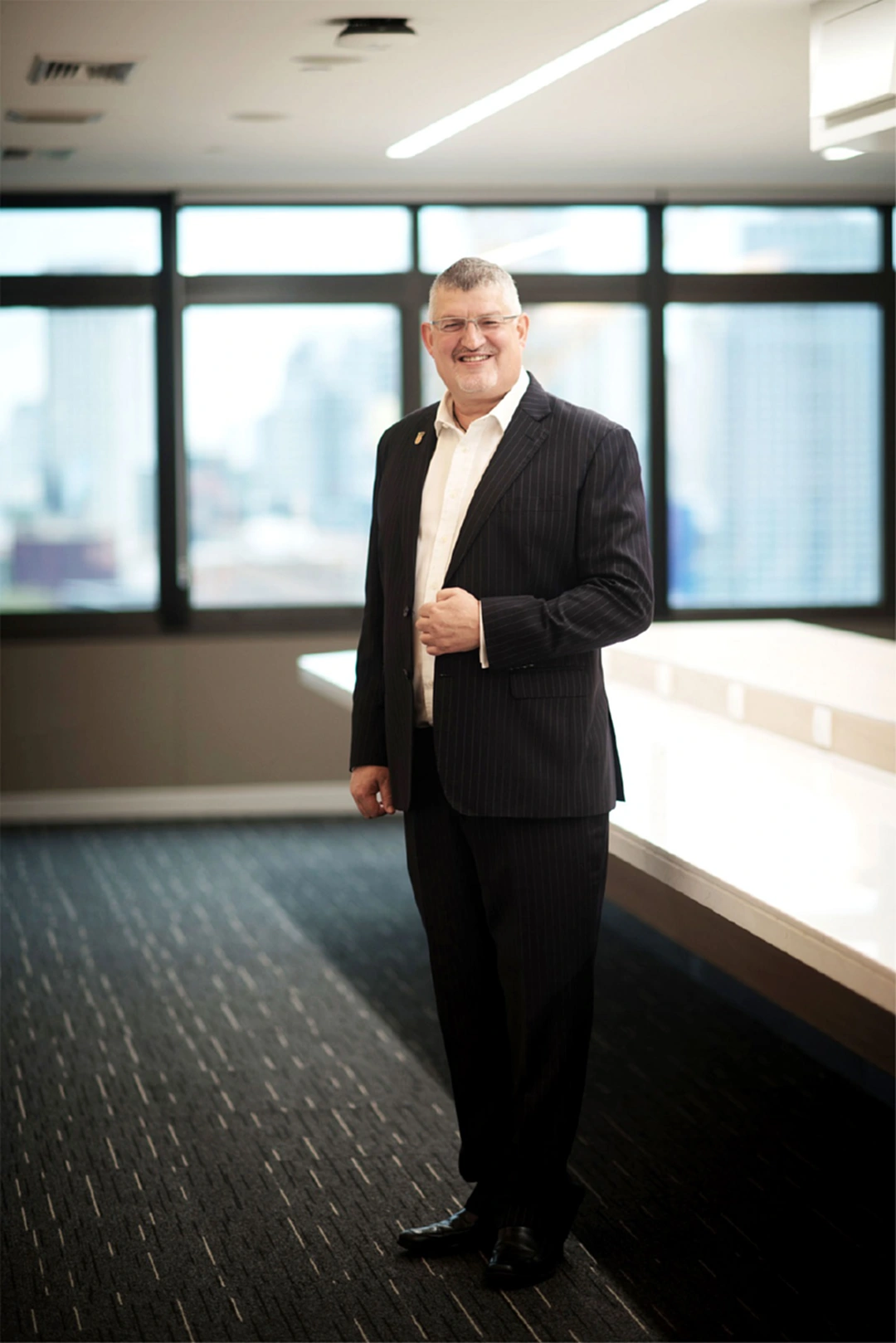 David Korunić, CEO of FWD Life Insurance Thailand