The baht opened at 32.85 to the US dollar on Friday, strengthening from Thursday’s closing of 32.93.
The Thai currency is likely to move between 32.75 and 32.90 to the greenback during the day, Krungthai Bank market strategist Poon Panichpibool predicted.
He added that the baht is likely to swing sideways despite pressure from a strengthening dollar. The baht is supported by gold sell-offs and foreign investors’ interest in short-term bonds.
The strategist expects foreign investors to use the baht to invest in short-term bonds once the currency reaches the resistance level of 33 baht to the dollar.
Meanwhile, other factors may help strengthen or stabilise the dollar such as a surge in Covid-19 cases during the winter in Europe and China.
Poon explained that exporters may sell the dollar when it hits 33 baht to the dollar, while importers will buy the dollar when it hits 32.60 baht.
The Health Systems Research Institute (HSRI), in association with Ministry of Higher Education, Science, Research and Innovation and the Eastern Economic Corridor (EEC) Policy Committee on Thursday (November 11) signed a genome sequencing service contract with Thai Omics Consortium, which consists of Genomics Innovation Ltd, AID Genomics Ltd. and Shenzhen Zaozhidao Technology Ltd.
The contract is a result of HSRI’s setting up of Thailand Genome Sequencing Centre at Burapha University in Chonburi province, which the EEC Policy Committee later assigned the area as special economic zone in 2019 to promote the Thailand Genomics Framework.
The centre aims to research the genome sequencing of 50,000 Thai national volunteers, which will serve as a foundation in treating patients suffering from five disease groups namely cancer, rare and undiagnosed diseases, infectious diseases, non-communicable diseases and pharmacogenomic diseases.
Deputy Public Health Minister Dr Satit Pitutecha, who joined the signing ceremony on Thursday, said that the Thailand Genome Sequencing Centre will be an important steppingstone in the improvement and development of Thailand’s public health system. “The genomic research will enable health professionals to practice precision medicine, whereas they can diagnose, treat and prevent diseases more precisely using patient’s genome information,” he said. “When applied to Thailand’s health insurance system, we estimated that it could help reduce the occurrence of diseases by up to 10 per cent.”
“Furthermore, the genomic research can be applied to improve healthcare system and promote new health-related industries and services in both public and private sectors. It will help strengthen Thailand’s economy and drive us to become a world leader in the utilization of genomic information in the future,” added Satit.
Kanit Sangsubhan, secretary-general of the Eastern Economic Corridor Office (EECO) has added that the Thailand Genome Sequencing Centre will benefit the country in three aspects: Improving public health system, promoting collaborating genomics research with world leading institutes, and increasing investment in medicine-related industries in Thailand.
“The investment in the genome sequencing centre will create more jobs in the EEC areas which will eventually generate income and improve the livelihood of local communities,” he added.
The price of gold dropped by THB100 in morning trade on Friday.
A9.24am report from the Gold Traders Association showed the buying price of gold bar at THB28,750 per baht weight and selling price at THB28,850, while the buying and selling price of gold ornaments is THB28,227.92 and THB29,350, respectively.
At close on Thursday, the buying price of gold bar was THB28,850 per baht weight and selling price THB28,950, while gold ornaments were THB28,334.04 and THB29,450, respectively.
The spot gold price on Friday morning was moving around US$1,859 (THB60,949) per ounce after Comex gold at close on Thursday surged by $15.6 to $1,863.9 per ounce as it continues to be driven by the support in buying gold as a hedge against inflation after the US Consumer Price Index (CPI) rose to its highest level in more than 30 years.
The Stock Exchange of Thailand (SET) Index rose by 6.83 points or 0.42 per cent to 1,639.27 on Friday morning.
The volume of total transactions was 16.87 billion baht with an index high of 1,640.66 and a low of 1,635.63 in opening trade.
The 10 stocks with the highest trade value were KEX, SCGP, KBANK, KCE, SVI, CPALL, BAM, HANA, JMART and STARK.
The SET Index closed at 1,632.44 on Thursday, up 1.97 points or 0.12 per cent. Transactions totalled 63.50 billion baht with an index high of 1,634.44 and a low of 1,626.80.
The U.K. economy grew less than the Bank of England forecast, and consumer spending showed signs of weakening, leaving the chances of an interest-rate increase in December in the balance.
Gross domestic product rose 1.3% in the third quarter, short of the 1.5% predicted by the central bank this month, Office for National Statistics data published Thursday show. A stronger-than-expected 0.6% gain in September alone was marred by evidence that consumers are cutting back as accelerating inflation eroded living standards.
A December rate increase had been largely priced in by markets after officials warned last week that higher borrowing costs will be needed in coming months to bring inflation back to their 2% target. Labor market data will be crucial to their decision, with policy makers looking to see how some 1 million furloughed workers fared when the government stopped subsidizing their wages on Oct. 1.
“The recovery has entered a much tougher phase,” said Martin Beck, economist at the EY Item Club, which uses the Treasury’s forecasting model. “The situation has been made harder by the escalation of supply chain disruption and the increases in inflation, which will eat into household spending power.”
The growth shortfall in the third quarter was due to the ONS revising lower data for July and August. The BOE had been expecting an expansion of 1.5%. Output was 2.1% below its level before the pandemic struck, lagging behind other Group of Seven economies.
“Beyond the strong headline figure, the composition of growth was more concerning,” said Thomas Pugh, economist at RSM U.K., a tax and consulting firm. “The economy is likely to slow in the fourth quarter as supply shortages, surging prices and the removal of fiscal support weighs on consumption.”
The pound was 0.1% weaker at $1.3387 as of 9:31 a.m. in London.
Service industries grew 0.7% due to an increase in output from the health sector as many doctors resumed face-to-face appointments. However, consumer-facing services fell 0.6% on weaker retail sales. That may fan BOE concerns that demand is waning as households brace for a sharp increase in energy bills and taxes in the spring.
“Consumer spending appears to be losing steam, which is likely to worry those who held off voting for a rate rise in November. We still expect a few dazzling labor market releases to tip the balance toward a hike this year, but a move looks far from certain,” according to Dan Hanson of Bloomberg Economics.
Two sets of official labor market are due to be published before the Monetary Policy Committee meets in December, with the first of them coming next week. The early indications are that the majority of those who were furloughed returned to work in October. If so, it suggest the labor market remains tight, which the BOE fears could lead to a wage-price spiral if left unchecked.
Manufacturing fell in the month on a drop in vehicle production, which declined the most since May because of widespread shortages in the supply chain. The fall was offset by an increase in construction output.
Separate ONS figures showed the trade deficit excluding precious metals widened to almost 40 billion pounds ($54 billion) in the third quarter. Exports fell more sharply than expected, and imports rose.
“U.K. exporters face a difficult winter ahead as supply disruption shows little sign of easing, with profits squeezed as a result,” said Ana Boata, head of economic research at trade credit insurer Euler Hermes.
U.S. equities pared back a rebound Thursday after a selloff in the previous session due to fears high inflation could spur tighter monetary policy.
The S&P 500 gained less than 0.1% – led by gains in materials and technology – after falling 0.8% Wednesday in its worst slump in more than a month. Tesla Inc. fluctuated after filings showed Chief Executive Officer Elon Musk unloaded $5 billion of stock. Meanwhile, Walt Disney Co. slid and Beyond Meat Inc. plunged after disappointing quarterly figures.
The U.S. cash Treasury market was closed for a holiday.
Investors are bracing for changes in monetary policy sooner rather than later after higher-than-expected consumer prices dealt a blow to arguments inflation is transitory. Persistently high inflation could force the Federal Reserve to taper at a more substantial rate or hike interest rates faster than anticipated. At the same time, equities are hovering near all-time highs as strong earnings and economic growth prospects have propelled the stock market higher.
Clearbridge Investments’ Jeff Schulze said the recent slide in equities “was a combination of profit-taking after a nice run from the October lows but then also some concerns about margin and overall earnings in 2022.”
The firm’s investment strategist, in an interview by phone, said “although inflation hasn’t made a dent in third-quarter earnings, if we stay at these uncomfortable levels of inflation for three or four more quarters, this is definitely something that could impact margins and create demand destruction in the economy, both of which are headwinds to earnings.”
Instinet LLC’s Frank Cappelleri added Wednesday’s decline was also “right on cue” from a seasonality perspective.
“Over the last two decades, November’s weakest part has occurred in the middle of the month,” Cappelleri wrote in a note. “The damage so far is slight, and this could very well be the start of the next bullish pattern, regardless if yesterday’s dip encourages immediate dip buying or not.”
Oil struggled for direction as investors weighed the odds that the White House will intervene to cool prices. Gold approached a five-month high and Bitcoin hovered near $65,000. In Europe, stocks gained while in Asia, Chinese equities rallied on speculation the government will ease the struggle with property developers. The dollar was stronger against major peers.
– – –
– S&P 500 were little changed as of 4 p.m. New York time
– Dow Jones industrial average fell 0.4%
– Nasdaq 100 gained 0.3%
– The MSCI World index was little changed
– – –
– The Bloomberg Dollar Spot index rose 0.3%
– The euro fell 0.3% to $1.1447
– The British pound fell 0.3% to $1.3361
– The Japanese yen fell 0.1% to 114.08 per dollar
– – –
– Germany’s 10-year yield advanced two basis points to -0.23%
– Britain’s 10-year yield was little changed at 0.92%
– – –
– West Texas Intermediate crude fell 0.3% to $81.10 a barrel
Oil fluctuated in a choppy trading session as investors weighed the odds that the White House will intervene to cool rising energy prices and assessed declines in stockpile levels at the biggest crude storage hub in the U.S.
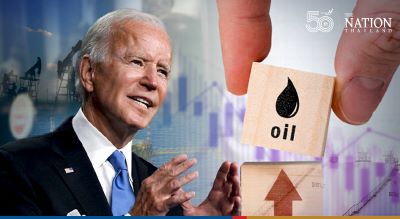
Futures in New York swung between gains and losses on Thursday, ultimately dipping lower midday. Biden is facing growing pressure, including from his own party, to address rising prices as gains in consumer costs hit the fastest pace in decades. His options include tapping the Strategic Petroleum Reserve or even banning oil exports.
“Where we are at this point is prices have risen because demand is rising and so you need a more permanent supply response,” said Rob Haworth, senior investment strategist at U.S. Bank Wealth Management.
Meanwhile, inventories at Cushing, Oklahoma, the delivery point for benchmark U.S. crude futures, fell by about 36,000 barrels Nov. 5-9, according to traders citing data from Wood Mackenzie on Thursday.
This past year oil prices have soared as an economic recovery from the pandemic boosts demand. Rising prices prompted President Joe Biden to weigh the merits of an emergency crude release. As much as 60 million barrels could be released from the SPR, in part by bringing forward mandated sales from 2022, according to Citigroup Inc. That would be enough to wipe out the supply deficit that the Energy Information Administration has forecast for the rest of this year.
West Texas Intermediate for December delivery fell 62 cents to $80.70 a barrel at 12:22 p.m. in New York. Brent for January settlement dropped 39 cents to $82.06 a barrel.
With the market keenly watching for potential U.S. steps, trading has been highly volatile. One closely monitored market gauge — the spread between the nearest two December contracts — has swung by more than a dollar in four of the past six trading sessions, when it would generally move a few cents.
Meanwhile, production at Equinor’s Johan Sverdrup oil field was halted completely due to a power supply issue onshore, Equinor spokesman Ola Morten Aanestad said in a message. He wasn’t able to give an estimate of how long it will take to get back online.
The Stock Exchange of Thailand (SET) Index closed at 1,632.44 on Thursday, up 1.97 points or 0.12 per cent. Transactions totalled 63.50 billion baht with an index high of 1,634.44 and a low of 1,626.80.
The index rose after falling by 1.22 points or 0.07 per cent on Wednesday.
In the morning session, Krungsri Securities forecast the SET Index on Thursday would fall to between 1,620 and 1,625 points due to uncertainty over inflation after the US Consumer Price Index in October has risen by 6.2 per cent year on year, the highest in 30 years.
It added that the index would be under pressure due to falling oil price in response to the rise in US oil storage.
However, the index would rebound from mass buy ups of stocks that benefit from country reopening, as well as shares whose third-quarter profit is expected to grow, Krungsri Securities said.
The 10 stocks with the highest trade value today were COM7, KBANK, KCE, BDMS, BBL, TRUE, IVL, PTT, JMART and SCB.
Other Asian indices were mixed:
Japan’s Nikkei Index closed at 29,277.86, up 171.08 points or 0.59 per cent.
China’s Shanghai SE Composite closed at 3,532.79, up 40.32 points or 1.15 per cent, while the Shenzhen SE Component closed at 14,699.74, up 183.86 points or 1.27 per cent.
Hong Kong’s Hang Seng Index closed at 25,251.05, up 254.91 points or 1.02 per cent.
South Korea’s KOSPI Index closed at 2,924.92, down 5.25 points or 0.18 per cent.
Taiwan’s TAIEX Index closed at 17,452.52, down 107.13 points or 0.61 per cent.
The baht opened at 32.87 to the US dollar on Thursday, weakening from Wednesday’s closing rate of 32.75.
The Thai currency is likely to move between 32.70 and 32.90 to the greenback during the day, Krungthai Bank market strategist Poon Panichpibool predicted.
Poon said that the baht might fluctuate but could be strengthened by gold sell-offs and foreign investors interest in short-term bonds and Thai stocks that might drop after the Monetary Policy Committee expected the economic recovery to be better.
Moreover, Poon said that the dollar hit the highest level of the year as the market was concerned with inflation. He expected the dollar to drop in the short term except if the market find more risk factors such as the Covid-19 situation worsening in the winter.
Poon added that exporters might sell the dollar when it reaches 32.90 to 33.00 baht to the dollar.
Meanwhile, importers are waiting to buy the dollar when it reaches 32.50 to 32.60 baht to the dollar. Poon expected the baht to swing between 32.50 to 33.00.
The price of gold peaked by THB400 in morning trade on Thursday.
AGold Traders Association report at 9.27am said the buying price of a gold bar was THB28,600 per baht weight and selling price THB28,700, while the buying and selling price of gold ornaments is THB28,091.48 and THB29,200, respectively.
At close on Wednesday, the buying price of a gold bar was THB28,200 per baht weight and selling price THB28,300, while gold ornaments were THB27,697.32 and THB28,800, respectively.
The spot gold price on Thursday morning hovered around US$1,844 (THB60,585) per ounce after Comex gold at close on Wednesday surged by $17.5 to $1,848.3 per ounce due to support in buying gold as an inflation hedging asset after the US Consumer Price Index (CPI) rose to its highest level in more than 30 years.