Krungsri Securities forecast the Stock Exchange of Thailand (SET) Index on Thursday (November 11) would fall to between 1,620 and 1,625 points due to uncertainty over inflation after the US Consumer Price Index in October has risen by 6.2 per cent year on year, the highest in 30 years.
It added that the index would be under pressure due to falling oil price in response to the rise in US oil storage.
However, the index would rebound from mass buy ups of stocks that benefit from country reopening, as well as shares whose third-quarter profit is expected to grow, Krungsri Securities said.
It also recommended buying of the following companies’ shares as an investment strategy:
▪︎ AOT, AAV, BA, MINT, KBANK, SCB, CPN, CRC, HMPRO, CPALL, AMATA, WHA, BTS, BEM, VGI, BH and BDMS, which benefit from the country reopening. ▪︎ PSL and TTA, which benefit from rising freight rate.
Bitcoin hit another record high and is flirting with $69,000 for the first time after inflation data bolstered the argument that the cryptocurrency is a hedge against rising cost pressures.
The largest digital asset by market value rose as much as 1.9% to $68,991 on Wednesday, topping the previous high set late Monday in New York trading. Other coins also rose, with the Bloomberg Galaxy Crypto Index — which tracks major cryptos — gaining as much as 2.4% to its highest level since May.
The rise in the token can, at least partly, be explained through the fundamental argument — which has gained traction in recent months — that bitcoin can act as an inflation hedge. Crypto backers argue that, unlike dollars or any other traditional currency, the digital coin is designed to have a limited supply, so it can’t be devalued by a government or a central bank distributing too much of it.
“Bitcoin continues to enjoy the rally that began in August and accelerated through September and October,” said Sui Chung, chief executive of CF Benchmarks, a cryptocurrency benchmarks administrator. The latest leg of its rally began in anticipation of the October launch of a bitcoin-futures ETF, but “seems to now be fueled by the sustained inflation that we are witnessing across all the worlds major economies.”
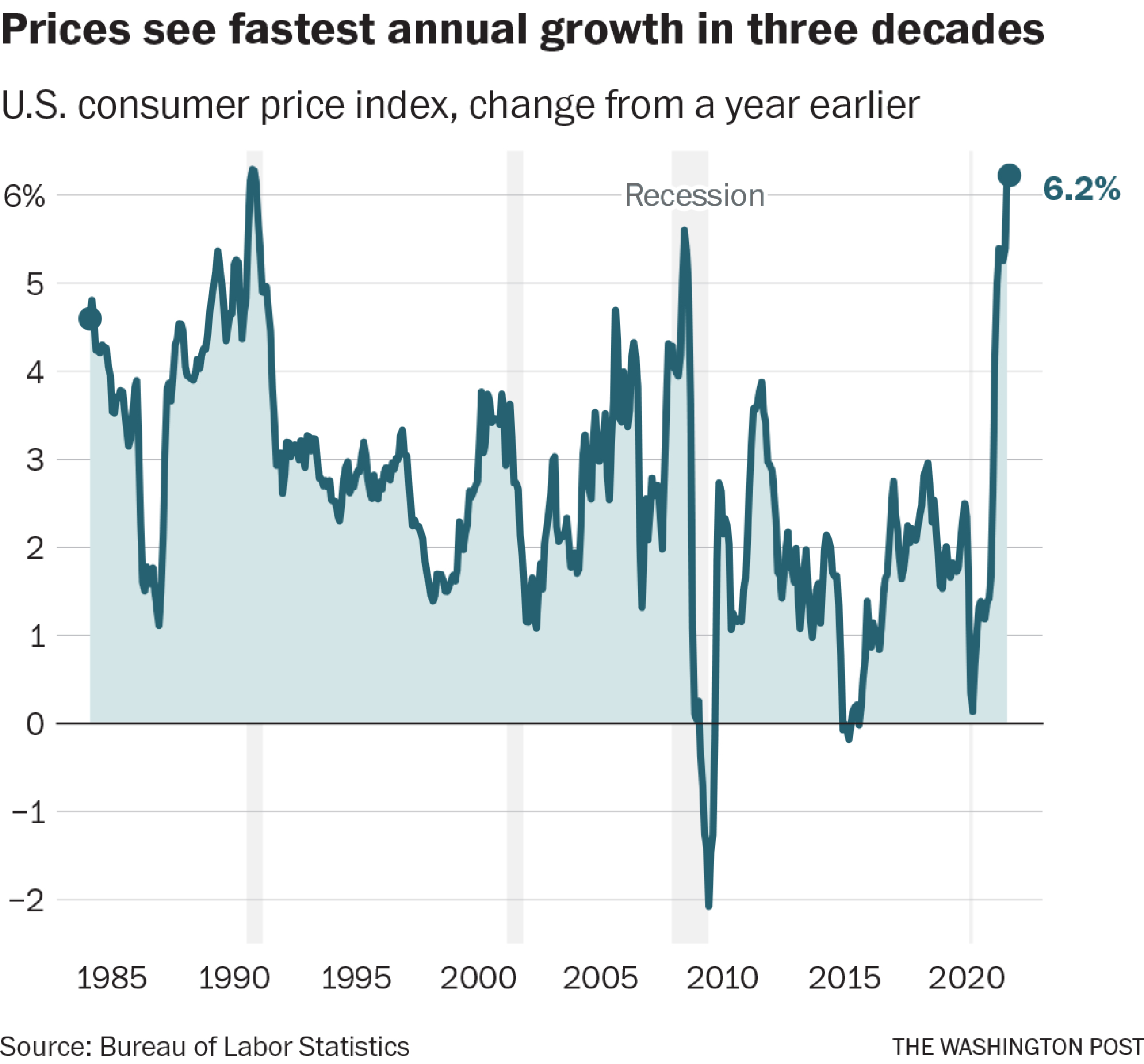
Prices on everything from food to gas to housing have advanced faster and been stickier over the past few months than many economists had anticipated. U.S. consumer prices rose last month at the fastest annual pace since 1990, cementing high inflation as a hallmark of the pandemic recovery and eroding spending power even as wages surge.
Major Wall Street players have said they’ve bought the coin — or become interested in it — thanks to the inflationary-hedge thesis. Their case has been bolstered by the fact that gold, typically thought of as an inflation hedge, has underperformed in recent months while Bitcoin has advanced.
Still, others argue that it doesn’t have a long enough history to establish it can in fact act as an inflation hedge. Cam Harvey at Duke University has made that argument in the past, saying that theoretically, if investors come to regard it as similar to gold, bitcoin might hold its value over a very long term — as in a century or more. In his research on gold, he found that it has held its value well for millenniums. But he also found that it’s prone to manias and crashes over shorter periods.
Matt Maley, chief market strategist for Miller Tabak + Co., says that a lot of investors are looking at it as an inflation hedge, but he’s not convinced that it will work out well.
“I’m not saying it won’t — I just think gold has worked as an inflation hedge for centuries, so people should use gold in combination with bitcoin as a hedge,” he said.
The spot price of gold has dropped 1.8% this year, while Bitcoin has gained more than 130% in that span, according to data compiled by Bloomberg.
“People are looking for places to put their money,” JJ Kinahan, chief market strategist at TD Ameritrade, said by phone. But, he added, “it’s hard to say if it’s an inflation hedge or not because we haven’t lived through inflation with cryptocurrencies. It’s one of those things where everyone thinks it will be, but time will tell.”
Prices rose 6.2% in October compared with a year ago, the largest annual increase in about 30 years, as rising inflation complicates the political agenda for the White House and policymakers road map for the economy heading into the end of the year.
The growth in October prices reported Wednesday by the Bureau of Labor Statistics (BLS) was driven by soaring energy prices and ongoing supply chain backlogs, such as those in the used-car market. Gasoline prices are up 49.6% from a year earlier, and higher energy costs are pushing up the prices of just about every other good, economists say, pinching an already strained supply chain.
A surge that began in narrow sectors now appears to be spreading throughout the economy, with the BLS noting “broad-based” higher prices propelled by not just energy and used cars, but also by shelter, food and new vehicles. Prices for medical care, household furnishing and operations, and recreation all increased in October.
Overall prices rose 0.9% from September to October, tying June for the biggest one-month increase since the Great Recession. Only a few categories saw prices fall last month, including airfare and alcohol.
Prices climbed 6.2 percent in October compared with last year, largest rise in 3 decades, as inflation strains economy
The data underscores how inflation has emerged as a controversial political and economic issue during the pandemic era. For years, inflation remained tamely below the Federal Reserve’s 2% annual target and off politicians’ radar. But the clash of supply chain backlogs, labor shortages, and ongoing uncertainty amid a public health crisis has turned inflation into a crucial test for policymakers and economists – and it’s unclear when that will change.
“This was the first number that very clearly was not ‘temporary shortage’ driven,” said Adam Posen, president of the Peterson Institute for International Economics, suggesting that the pandemic-era supply shortages are no longer the sole, overwhelming force. “There were things that are no longer short, coming back up in price. Services that by definition aren’t really short, coming up in price.”
The latest snapshot of higher prices comes at a tense time for the Biden administration, as it tries to corral support for a $2 trillion social spending package. On Wednesday morning, a key Democrat needed for the bill, Sen. Joe Manchin of West Virginia, raised new concerns about inflation, building on his earlier warnings about more government spending.
President Joe Biden tried to assuage these fears Wednesday, highlighting good news in the economy – including lower weekly claims for jobless benefits – while also suggesting his economic agenda, including the package Congress recently passed to boost infrastructure spending, will bring down prices.
“Inflation hurts Americans pocketbooks, and reversing this trend is a top priority for me,” Biden said in a statement.
But officials at the White House and the Fed have for months asserted inflation will be a temporary, or “transitory,” feature of the economy. They argue that the price increases are driven by supply chain backlogs that have constrained auto manufacturing, housing construction and food production alike. Inflation won’t come down to more sustainable levels, they argue, until those supply chains have time to clear.
It’s unclear when that will happen, especially given how vulnerable the economy remains to the coronavirus pandemic and waves, which add unpredictable pressure to the supply chain overseas and domestically. At a news conference last week, Fed Chair Jerome Powell said “it is very difficult to predict the persistence of supply constraints or their effects on inflation. Global supply chains are complex; they will return to normal function, but the timing of that is highly uncertain.”
Some economists are also concerned that while wages are climbing, they aren’t growing enough to compensate for the rising cost of living, at least in the short term.
Many of the items U.S. households rely on each day are seeing sharp price increases, BLS data shows. In the past 12 months, the national average price of a dozen grade A eggs rose from $1.41 to $1.82, a 29% increase. An average pound of chuck roast rose 29%, from $5.74 to $7.40. A gallon of milk rose 8.4%, from $3.38 to $3.66. However, many other items, such as cheddar and American cheese and produce like tomatoes and strawberries, got cheaper over the same period.
Rent continues to inch upward, with costs rising 0.4% in October compared with September, following a months-long upward trend. Home prices also continue to grow, which some economists say has the effect of pulling rents up higher over time. The median sales price of single-family existing homes climbed 16% from one year ago, to $363,700, according to data released Wednesday by the National Association of Realtors.
“The Fed has to be laser focused on the hardest-hit and low-wage households,” said Diane Swonk, chief economist at Grant Thornton. “Wages and salaries have gone up for leisure and hospitality workers . . . but there’s no way they can absorb the commute costs and accelerating rents. The only thing that’s cheap is turkey, in terms of proteins. So go ahead and stick with that turkey for Thanksgiving.”
Households and businesses have been hamstrung by inflation pressures for months.
Andy Husbands, 52, owns five Smoke Shop BBQ restaurants in Boston. Not only is Husbands scrambling to get ahold of every ingredient he needs to run his business – he’s also hard-pressed to find items at prices he can afford.
Wings that used to cost $84 per case now cost $157. To-go containers are in short supply, as are bottles used for storing liquor. Brisket that used to be $3.75 a pound is now a dollar more, meaning that the 150,000 pounds of brisket Husbands sells each year would cost him an extra $150,000.
Planning ahead has proved to be no match for the pandemic-era economy, with Husbands adding that prices can increase just over a weekend.
“It’s insanity that prices can change on a truck when it’s being delivered to you,” Husbands said.
Higher food prices are weighing on families that, in some cases, haven’t sought handouts before, said Catherine D’Amato, who runs the Greater Boston Food Bank. During the height of covid, many of the people who came for help had been laid off or had their lives upended by the coronavirus. Now, even as parts of the economy show renewed strength, rising costs at the grocery store are forcing people into painful choices.
“Everything is tightening,” said D’Amato, whose food bank is still feeding far more people than before the pandemic. “Are you going to use your resources to eat or pay for medicine? To buy clothes or eat? Are you going to pay rent or eat?”
Powell has pledged that the Fed will do what it can to prevent price increases from becoming more permanent. The central bank’s main tool for combating inflation is interest rates, which it can raise or lower depending on what’s happening in the economy. Fed leaders have pledged not to raise rates until the labor market is more fully healed.
However, the rise in household goods is eroding wage gains each month. Households feeling the strain now could increasingly begin to believe that inflation will stick around longer and change their spending behavior, which could make inflation a self-perpetuating cycle, lasting longer.
Republicans, meanwhile, argue that the Fed should be doing more now to combat inflation. They say the central bank risks being behind the curve if inflation turns out to be more persistent than Powell and others believe.
Some Democrats, too, warned about overheating in the economy. Former Obama treasury secretary Lawrence H. Summers, for example, has long argued that sprawling stimulus efforts would be too much for the economy to handle and cause a boom in consumer demand before supply chains could keep up.
“We’ve got a very, very strong economy on the demand side, and not a very strong economy on the supply side, and that’s risking an overheating,” Summers told Bloomberg TV earlier this month. “We are still not running policies that are consistent with the reality of the economy.”
Still, others on the left argue that the stimulus efforts and expanded government aid were essential in carrying vulnerable households through the pandemic. Officials in the Biden administration and Democratic lawmakers emphasized earlier in the pandemic that the risks of doing too little outweighed the risks of doing too much.
Josh Bivens, an economist at the left-leaning Economic Policy Institute, said he thinks inflation would be lower today if the most recent coronavirus relief bill hadn’t passed. “But I also think we’d have created far fewer jobs over the past year, and people’s wages would be lower – their incomes would be lower.” Bivens added that the generous relief package gave workers the financial cushion and leverage to negotiate higher earnings or switch to better jobs, setting the stage for a massive reassessment of work in America.
Biden visited the Port of Baltimore on Wednesday to tout the administration’s effort to ease warped supply chains, following a White House announcement Tuesday of a plan to expand the capacity of U.S. ports and inland waterways. Most of the new activity involves $17 billion in ports funding included in the bipartisan infrastructure legislation that Congress approved last week. But the White House also plans within the next 45 days to award $243 million in new port and marine infrastructure grants, according to senior administration officials.
Indeed, signs of a resurgent economy continue to appear, encouraging policymakers, economists and workers alike. The nation added 531,000 jobs in October, and the Labor Department has revised the disappointing jobs reports from August and September to show more significant gains. The unemployment rate has ticked down to 4.6%. Coronavirus cases have dropped in recent weeks, helping restore confidence for businesses and consumers. Major U.S. stock indexes have also soared to record levels.
Given those data points, Federal Reserve officials are starting to unwind the pandemic-era stimulus by scaling back, or “tapering,” the central bank’s vast asset-purchase program each month. The Fed has said it could tweak the pace of that effort depending on how the economy progresses. But Powell declined to explain what those criteria would be during a news conference last week.
Swonk said it’s likely that such broad-based price increases will continue in the months to come. That could spur the Fed to draw down its asset purchases more quickly.
“This is going to get worse before it gets better,” she said.
The seven Western oil majors have been trumpeting significant hikes to shareholder returns but it will probably be another four years before dividends and share buybacks surpass pre-pandemic payouts.
The group’s dividends and share repurchases will be 28% lower than 2019 levels this year and won’t entirely claw back the deficit until 2025, according to Bloomberg Dividend Forecasts and Bloomberg Estimates. Even after a recently-announced increase, Royal Dutch Shell’s dividend is still just half its pre-Covid-19 level.
High oil prices and austere drilling budgets are combining to boost free cash flow for the companies to the most since the Great Recession. But shareholders aren’t getting the full weight of the bonanza just yet. The biggest oil explorers took on large amounts of debt during the crude-market crash of 2020 and are balancing repayment with shareholder returns.
Even in the long-term, the oil majors’ will struggle to relive the glory years of the late-2000s, data showed. Dividends and buybacks for the group are forecast to reach $83.6 billion in 2026, almost 50% higher than this year, but significantly below the $100 billion average annual payouts from 2006 through 2008.
U.S. stocks fell by the most in a month and Treasury yields spiked higher as a hot inflation reading roiled financial markets.
The S&P 500 slid 0.8%, extending earlier losses, after a 30-year Treasury auction went off at higher yields than anticipated. Two-year yields also shot higher after data showed the fastest annual inflation rate since 1990, upending bets on the timing for the next interest rate increase.
The Nasdaq 100 led declines in equities as its highly valued tech members are deemed most susceptible to the impact from inflation. The dollar hit a 52-week high, oil slumped more than 3% and gold gained.
Risks are building for both stocks and bonds as persistent elevated inflation could force the Federal Reserve to taper at a more substantial rate or hike interest rates faster than anticipated. The U.S. consumer price index increased 6.2% in October from a year earlier, beating expectations for 5.9%, according to Bloomberg data.
“Now that it’s breached that 6% level, I think the Fed are going to be getting a little bit hot under the collar,” Fiona Cincotta, senior financial markets analyst at City Index, said by phone. “There is no way, I think, they can ignore 6.2% on that CPI reading. It’s going to be prompting a more hawkish feel.”
Treasury Secretary Janet Yellen on Tuesday reiterated her view that elevated U.S. inflation won’t persist beyond next year and said the Fed will not allow a repeat of 1970s-style price rises. Still, traders worry the latest figures may be enough to compel the Fed to raise rates as soon as June 2022 when it has finished tapering its assets-purchase program.
“I expect lots of eyeballs were bulging out of their sockets when they saw the number come in,” said Seema Shah, chief strategist at Principal Global Investors. “Inflation is clearly getting worse before it gets better, while the significant rise in shelter prices is adding to concerning evidence of a broadening in inflation pressures.”
The U.S. five-year breakeven rate on Treasury inflation protected securities rose to a record. Meanwhile, the yield on the U.S. 10-year note gained 13 basis points to 1.56%.
“I can’t explain why the bond market is so content with the current situation, but inflation has been running hot for about a year and the bond market has not panicked,” Michael Zigmont, head of trading and research at Harvest Volatility Management, said by phone. “The bond market seems very, very happy with negative real yields. And as long as the bond market is happy, the Fed can be very slow.”
Bitcoin erased gains after hitting a record. Iron ore tumbled on dimming prospects for steel demand owing to China’s real-estate troubles. And in Europe, equities gained while those in Asia fell.
What to watch this week:
– China’s Communist Party’s decision-making Central Committee meets through Thursday
– U.S. bond marked is closed in observance of Veterans Day Thursday
– China holds its annual Singles’ Day, the world’s biggest shopping festival, when e-commerce giants like Alibaba and JD.com Inc. lure buyers with bargains Thursday
– – –
– The S&P 500 fell 0.8% as of 4 p.m. New York time
– The Nasdaq 100 fell 1.4%
– The Dow Jones industrial average fell 0.7%
– The MSCI World index fell 0.8%
– – –
– The Bloomberg Dollar Spot index rose 0.9%
– The euro fell 1% to $1.1478
– The British pound fell 1.1% to $1.3408
– The Japanese yen fell 0.9% to 113.90 per dollar
– – –
– The yield on 10-year Treasuries advanced 13 basis points to 1.56%
– Germany’s 10-year yield advanced five basis points to -0.25%
– Britain’s 10-year yield advanced 10 basis points to 0.92%
– – –
– West Texas Intermediate crude fell 3.4% to $81.33 a barrel
Thailand’s Monetary Policy Committee (MPC) on Wednesday unanimously voted to maintain the policy rate at 0.5 per cent, MPC secretary Piti Disyatat said.
He added that the decision was based on the fact that the Thai economy had bottomed out in the third quarter of this year and entered recovery phase following the relaxation of restrictions and reopening the country.
Downside risks to the economy also dropped thanks to the accelerated vaccination process.
However, recovery will remain fragile due to uncertainties like global energy prices.
Piti said the committee chose to maintain the policy rate at 0.5 per cent because it believes an accommodative monetary policy will help support the country’s overall economic growth. It also believes that continuing financial and fiscal measures, with a focus on rebuilding and enhancing potential growth will play an important part in bolstering the robust recovery of income.
The Stock Exchange of Thailand (SET) Index closed at 1,630.47 on Wednesday, down 1.22 points or 0.07 per cent. Transactions totalled 67.90 billion baht with an index high of 1,633.43 and a low of 1,625.13.
The index fell after rising by 5.56 points or 0.34 per cent on Tuesday.
In the morning session, Krungsri Securities forecast the SET Index on Wednesday would rise to between 1,635 and 1,640 points.
It said the index gained positive sentiment from rising oil price in line with increasing demand after many countries have reopened, plus the US$1 trillion infrastructure package to boost the economy.
However, uncertainty over rising inflation and stock market volatility during the third-quarter performance announcement would pressure the index, Krungsri Securities said.
The 10 stocks with the highest trade value today were KCE, MTC, DELTA, KBANK, PTT, CPALL, SCB, GPSC, BGRIM and GUNKUL.
Other Asian indices were mixed:
Japan’s Nikkei Index closed at 29,106.78, down 178.68 points or 0.61 per cent.
China’s Shanghai SE Composite closed at 3,492.46, down 14.54 points or 0.41 per cent, while the Shenzhen SE Component closed at 14,515.88, down 56.05 points or 0.38 per cent.
Hong Kong’s Hang Seng Index closed at 24,996.14, up 183.01 points or 0.74 per cent.
South Korea’s KOSPI Index closed at 2,930.17, down 32.29 points or 1.09 per cent.
Taiwan’s TAIEX Index closed at 17,559.65, up 18.29 points or 0.10 per cent.
PTT Exploration and Production (PTTEP) signed an agreement on Tuesday to hand the Bongkot natural gas field over to the Department of Mineral Fuels once its concession expires.
The department’s director-general Sarawut Kaewtathip said the Bongkot field comprises petroleum exploration fields 15 to 17. He said the concession for field 15 expires in April 2022, while that of 16 and 17 expires in March 2023.
“As per concession requirements, the concessionaire must return assets related to petroleum exploration, production, storage and transportation back to the government once the concession expires without any charges,” he explained.
PTTEP gets ready to return Bongkot natural gas field next year
He said PTTEP has also agreed to fund the demolition of the Bongkot natural gas field.
“The government has conducted a feasibility study on the Bongkot field to see if it can help maintain energy stability and if it is in the national interest,” he added.
The baht opened at 32.76 to the US dollar on Wednesday, strengthening from Tuesday’s closing rate of 32.78.
The Thai currency is likely to move between 32.65 and 32.80 during the day, Krungthai Bank market strategist Poon Panichpibool predicted.
Poon said the baht is likely to strengthen due to the weakening of the dollar, gold sell-offs and foreign investors interest in Thai stocks.
He added that foreign investors are buying short-term bonds for 11 billion baht total this week.
Moreover, the baht might be supported by Monetary Policy Committee today which might expect the economic recovery will be better.
Investors expect that the committee will be able to increase the interest rate in 2023 or 2022 if other central banks increase the interest rate faster than expected.
The price of gold in Thailand on Wednesday morning was unchanged from Tuesday close.
A9.26am report from the Gold Traders Association showed the buying price of gold bar at THB28,250 per baht weight and selling price at THB28,350, while the buying and selling price of gold ornaments is THB27,742.80 and THB28,850, respectively.
The spot gold price on Wednesday morning was moving around US$1,827 (THB59,852) per ounce after Comex gold at close on Tuesday rose by $2.8 to $1,830.8 per ounce due to support from the depreciation of the US dollar, including the fall in US government bond yields and concerns about inflation.




 Prices climbed 6.2 percent in October compared with last year, largest rise in 3 decades, as inflation strains economy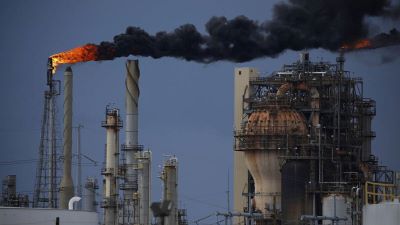


 PTTEP gets ready to return Bongkot natural gas field next year