The price of gold rose by THB200 in morning trade on Friday.
AGold Traders Association report at 9.29am said the buying price of a gold bar was THB28,250 per baht weight and selling price THB28,350, while the buying and selling price of gold ornaments is THB27,742.80 and THB28,850, respectively.
At close on Thursday, the buying price of a gold bar was THB28,050 per baht weight and selling price THB28,150, while gold ornaments were THB27,545.72 and THB28,650, respectively.
The spot gold price on Friday morning hovered around US$1,795 (THB59,879) per ounce after Comex gold at close on Thursday surged by $29.6 to $1,793.5 per ounce due to support from the fall in US government bond yields and from a signal of the US Federal Reserve (Fed) that it is not accelerating the rate hike.
Krungsri Securities forecast the Stock Exchange of Thailand (SET) Index on Friday (November 5) would fluctuate between 1,620 and 1,635 points.
It said the index gained positive sentiment from foreign fund inflow in response to the US Federal Reserve’s move to maintain interest rate and taper quantitative easing by US$15 billion per month.
However, the index would be under pressure due to falling oil price after the Opec+ has declared to raise oil output by 400,000 barrels per day in December.
It also recommended buying of the following companies’ shares as an investment strategy:
▪︎ GULF, BGRIM, CHG, BCH, BDMS, KCE and JMT, whose third-quarter profit is expected to grow.
▪︎ AOT, KBANK, SCB, CPN, CRC, HMPRO, CPALL, AMATA, WHA, BTS, BEM and VGI, which benefit from the country reopening.
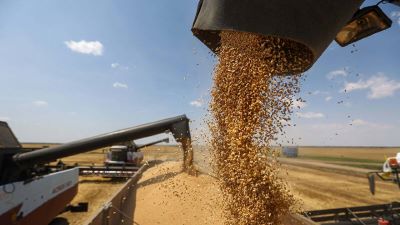
Global food costs jumped last month, extending a march toward a record and piling more inflationary pressure on consumers and governments.
AUnited Nations index tracking staples from wheat to vegetable oils climbed 3% to a fresh decade high in October, threatening even higher grocery bills for households that have already been strained by the pandemic. That could also add to central banks’ inflation worries and risks worsening global hunger that’s at a multiyear high.
Bad weather hit harvests around the world this year, freight costs soared and labor shortages have roiled the food supply chain from farms to supermarkets. An energy crisis has also proved a headache, forcing vegetable greenhouses to go dark and causing a knock-on risk of bigger fertilizer bills for farmers.
“The issue with the inputs and fertilizers and its implications for next year’s crop is a concern,” said Abdolreza Abbassian, a senior economist at the UN’s Food and Agriculture Organization. “By now, the market has factored in most of the supply and demand issues. But the market has by no means factored in next year’s prospects in production.”
Some regions will likely continue to face food-security challenges. The UN on Thursday raised its outlook for global wheat trade to a record as purchases climb in Middle Eastern nations from Iran to Afghanistan. Droughts there slashed crops, boosting dependency on imported grain at a time when prices are soaring.
“This came at the worst time for those countries because world prices are just so high,” Abbassian said. “We cannot afford a bad year in 2022 for important crops.”
The price gains are stirring memories of spikes in 2008 and 2011 that contributed to global food crises. While it takes time for commodity costs to trickle to grocery shelves, officials in areas like North Africa and Turkey are already facing difficulties shielding shoppers from the blow.
Bigger expenses for farmers could also curb Northern Hemisphere plantings now underway, according to the FAO.
October’s food-price gains were mostly driven by higher costs for grains and vegetable oils, the FAO said in a report.
Still, there are signs of stabilizing prices for some foods, with with meat and sugar falling last month, Abbassian said. Global grain and oilseed supplies are proving sufficient to meet demand, and prices for rice — one of the world’s vital staples — remain subdued, he said.
“On the demand side, we’re beginning to get a better hold of what we actually need, so that uncertainty is perhaps diminishing,” he said.
Toyota posted quarterly operating profit well above estimates, raised its annual outlook and unveiled a 150 billion yen ($1.3 billion) share buyback, reflecting confidence that it can ramp up output to meet strong demand for cars after parts shortages disrupted production.
Shares in the world’s biggest automaker by sales volume rose after it forecast operating profit of 2.8 trillion yen for the fiscal year through March, up from 2.5 trillion yen announced in August. Analysts are expecting, on average, 3 trillion yen. For the latest July-September quarter, Toyota reported operating profit of 750 billion yen, exceeding the 553 billion yen projected by analysts.
The upbeat profit figures, which are also being bolstered by a weaker yen that’s boosting earnings at home, comes despite the carmaker having to cut back production because of an outbreak of Covid-19 in Southeast Asia that affected access to chips and other key parts. It also supports predictions by the automaker that supply-chain snags will ease, enabling it to recover lost production.
“This is a positive surprise,” said Bloomberg Intelligence analyst Tatsuo Yoshida. “The fact that they are predicting 2.8 trillion yen means that they will meet consensus estimates or exceed them.”
Toyota started the July-September quarter in strong shape, shaking off industrywide parts shortages. Sales in July rose to a record high and total output grew by double digits. Yet, by mid-August, supply troubles impacted Toyota’s production. Around that time, governments in Southeast Asia, a manufacturing hub for Japanese automakers, were imposing strict restrictions on local business operations amid a resurgence of coronavirus infections.
Unable to secure a number of key parts including wire harnesses from Vietnam and chips from Malaysia, Toyota announced it would be slashing production by around 40% in September. Those cuts have continued to weigh on output plans, leading Toyota to trim its production outlook for the year to 9 million vehicles from 9.3 million units.
That forecast is now looking slightly conservative, Toyota Chief Financial Officer Kenta Kon said in a briefing. Even so, “there are still some risks after December,” he said.
Rising used car prices are making it easier for dealers to cut back on incentives for new cars, boosting the amount of profit that Toyota and other automakers can get from every vehicle driven off sales lots. Quarterly sales climbed 11% to 7.55 trillion yen, topping analysts’ prediction for 7.13 trillion yen. Toyota kept its sales target for the year intact, at 30 trillion yen.
With supply unable to keep up with demand, inventories are thinning out, leading to higher prices and temporarily bolstered profit margins, according to Shinji Kakiuchi, an analyst at Morgan Stanley MUFG Securities. As Toyota ramps up output, “if operating profit margins remain high, this will lead to strong profitability,” he said in a recent briefing, noting that the automaker should be entering a “production recovery” phase this month.
Toyota said last month that conditions in Southeast Asia are improving and that it’s had to cut less production than originally anticipated. The company is targeting November output of 850,000 to 900,000 units, an increase from the same month in 2019 and 2020. It originally planned to produce 1 million cars this month.
“Production volume declined globally, but our suppliers, plants and dealers made great efforts to supply as many cars as possible,” Toyota said in presentation materials. “We have also benefited from tightening supply and high demand in the new car market,” helping to deliver results that are “robust beyond our underlying strength,” the company said.
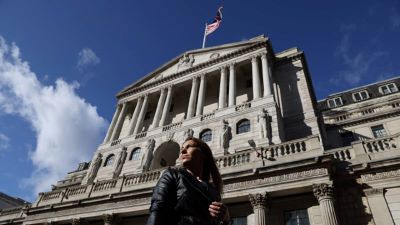
The Bank of England defied market expectations by keeping interest rates on hold, a decision that threatens to undermine its credibility with investors who believed a hike was a done deal.
Policymakers led by Governor Andrew Bailey voted 7-2 to keep the benchmark rate at 0.1%, prioritizing immediate concerns about slowing growth more than a price spike that will lift inflation to 5% next year.
Officials also pushed back against market pricing for a series of hikes to 1% next year, noting that such aggressive action would leave price growth below its 2% goal at the end of their forecast period.
Bailey made an explicit reference to such bets at a press conference after the decision: “I would caution against views on the scale of an increase that would be likely to push inflation below target in the future,” he said.
The pound weakened after the decision, trading 1% lower at $1.3544 as of 1:25 p.m. in London. Government bonds surged, while money markets slashed rate hike bets.
The central bank said recent economic data reinforce the view that borrowing costs will have to rise in the “coming months” to keep inflation on target. But it also noted that major uncertainties remain about the jobs market after the end of the government’s furlough program for those out of work during the pandemic.
The decision raises questions about the bank’s communications, and especially Bailey, who delivered a series of warnings about inflation and allowed speculation for an immediate move in rates to build in the past few weeks, only to vote against a hike.
The surprise announcement on Thursday invoked comparisons with Bailey’s predecessor Mark Carney, who was branded the “unreliable boyfriend” by U.K. lawmakers. Bailey disagreed with that assessment, saying he never made a pledge to act at any particular meeting. He also said the latest decision was a “close call.”
BOE officials indicated increasing concerns about the outlook for growth, noting signs that consumption is weakening because of supply-side bottlenecks and a surge in the cost of oil, natural gas and electricity.
The committee said the economy will linger below its pre-coronavirus level until the first three months of next year, a quarter later than previously expected. The forecast for 2022 growth was cut to 5% from 6%. That cut came despite a small fiscal boost after Chancellor of the Exchequer Rishi Sunak lifted spending in his annual budget last week.
The Monetary Policy Committee also voted 6-3 to maintain its bond buying target. It updated forecasts for the economy, and now sees inflation peaking at 5% in April 2022, which would be the highest since 2011. Most officials judged that to be temporary, and the BOE emphasized that there’s was little monetary policy could do to prevent the spike.
Just two officials, Dave Ramsden and Michael Saunders, voted for an immediate move, saying that inflation is likely to remain above target for the next few years unless rates rise.
Those two, along with Catherine Mann, also voted to reduce the BOE’s target for government bond purchases by 20 billion pounds to 855 billion pounds. Those purchases are due to finish by the end of the year.
The majority saw merit in waiting, saying there was a cost to acting immediately. The current stance of monetary policy allows more space to tighten than loosen, they said.
Expectations about the decision for this meeting shifted rapidly in the past few weeks. after comments from Bailey highlighting the hawkish case.
That left traders before the meeting pricing in a boost in the benchmark rate to 1.25% by the end of next year. That suggested a rate rise once a quarter, which, coupled with the impact on the BOE’s bond holdings, would imply the fastest tightening cycle in at least two decades.
The BOE’s forecasts are conditioned on an older market curve showing rates hitting 1% by the end of 2022. That showed inflation dropping below target by the end of the forecast period, a sign that officials think that forward curve for rates in financial markets is too aggressive.
Policy makers also cautioned that if energy prices move in line with a downward sloping futures curve, inflation may drop even further below target.
Even without a hike on Thursday, the prospect of a move in coming months leaves the BOE far further down the road to tightening than its major peers.
Federal Reserve Chair Jerome Powell yesterday said won’t entertain interest-rate increases until the labor market heals further, even as the Federal Open Market Committee announced it would start slowing its monthly asset purchases.
Earlier, European Central Bank president Christine Lagarde had indicated she thought the conditions for a rate hike by her institution are unlikely to be met in 2022.
OPEC and its allies will stick to their slow pace of oil-production increases, disregarding U.S. President Joe Bidens demand to go faster.
After a brief meeting on Thursday, the group approved a 400,000 barrel-a-day production hike for December. That’s a pace that major consumers say is too slow to sustain the post-Covid economic recovery, with the U.S. asking for as much as double that amount.
The cartel could now face a bare-knuckle fight with the White House, amid growing speculation that the U.S. could tap emergency crude stockpiles in an effort to drive down prices. Crude futures erased most of their earlier gains, trading 0.4% higher at $81.16 a barrel as of 11:02 a.m. in New York.
What happens in the coming weeks will have major implications for a global economy that has been battered by high energy prices, and for the domestic political agenda of a U.S. president whose popularity is sinking as inflation rises. The showdown also puts further strain on America’s increasingly fragile relationship with its strongest Middle Eastern ally — Saudi Arabia.
The agreement between the Organization of Petroleum Exporting Countries and its allies will “ensure a stable and a balanced oil market,” the group said in a statement. It noted “extreme volatility and instability” in some energy markets but concluded that those problems lie “outside the boundaries of oil markets.”
There could still be some room for the group to accelerate the pace of supply increases compared with recent months, even within the constraints of Thursday’s agreement. OPEC+ has consistently failed to hit its own output targets due to production shortfalls at members including Nigeria and Angola. If those countries could resolve their difficulties, the market could see additional supplies.
Other nations, such as Saudi Arabia and the United Arab Emirates, also have sufficient capacity to pick up the slack, but Thursday’s meeting didn’t detail any mechanism for them to do so, delegates said, asking not to be named because the talks were private.
For the past year, oil consuming countries have become increasingly anxious at crude’s resurgence: first to $50 a barrel, then $75 and now to more than $80. When Vladimir Putin, one of the leaders of the OPEC+ cartel, warned that $100 a barrel was a distinct possibility, the alarm bells really started ringing.
As quickening inflation pushed some central banks toward earlier-than-expected interest rate hikes, the U.S. India, Japan and other consuming countries put the strongest diplomatic pressure on the cartel in years, but to no avail.
One reason for OPEC+ resistance is the risk that, if the extra oil were supplied, it could tip markets swiftly in the other direction. Supply is tight now, but the balance is expected to shift back into surplus early in 2022.
If the resumption of nuclear talks between Iran and other world powers later this month results in a deal to lift sanctions, even more crude could flow onto the market next year.
As traders pared their bets on the pace of tightening by the Federal Reserve, stocks climbed to another record and bond yields tumbled.
Technology and retail shares drove gains in the S&P 500, while the Nasdaq 100 extended its rally into a ninth straight day — the longest winning run since December. A bullish outlook from chip giant Qualcomm added to signs the industry crunch is easing. Short-maturity U.S. Treasury yields sank as global investors reassessed the outlook for monetary policy after the Bank of England defied expectations by keeping rates on hold.
The decision followed weeks of speculation that the BOE would become the first major central bank to raise borrowing costs since the start of the pandemic. It also came a day after Fed Chair Jerome Powell announced a start to a reduction in asset purchases, while saying officials can be patient on hikes. Interest-rate futures, which had priced in two quarter-point increases in 2022, shifted the second one into 2023.
“We thought that the extent of market pricing for Fed hikes really around the middle of next year was awfully full, and that should come down,” Mark Cabana, head of U.S. rates strategy at Bank of America Global Research, told Bloomberg Television. “It has come down, especially with the Bank of England guidance that we have received.”
Applications for U.S. state unemployment benefits fell last week to the lowest since March 2020, pointing to fewer dismissals amid strong demand for labor. The data precede Friday’s employment report, which is forecast to show nonfarm payrolls rose by 450,000 in October.
“So far this week we’ve gotten pretty good news on the labor-market front,” said Mike Loewengart, managing director of investment strategy at E*Trade Financial. “With the Fed starting to take a step back from their accommodative stance, in aggregate, this could stand as another proof point of solid gains when it comes our economic recovery.”
Some other corporate highlights:
–AT&T and Verizon will delay their rollout of fast 5G service on some airwaves after U.S. aviation regulators raised concerns it might interfere with aircraft electronics.
–Intel ceded more than 2 percentage points of market share to Advanced Micro Devices Inc. in the third quarter, marking another setback for a chip pioneer that has lost some of its technology edge.
–Moderna jolted the market with sales and earnings that badly missed analysts’ estimates as it lowered its forecast for 2021 Covid-19 vaccine sales.
Here are some events to watch this week:
–U.S. unemployment, nonfarm payrolls, Friday
Some of the main moves in markets:
Stocks
–The S&P 500 rose 0.4% as of 4 p.m. New York time
–The Nasdaq 100 rose 1.2%
–The Dow Jones Industrial Average was little changed
–The MSCI World index rose 0.4%
Currencies
–The Bloomberg Dollar Spot Index rose 0.4%
–The euro fell 0.5% to $1.1557
–The British pound fell 1.4% to $1.3502
–The Japanese yen rose 0.3% to 113.71 per dollar
Bonds
–The yield on 10-year Treasuries declined eight basis points to 1.52%
–Germany’s 10-year yield declined six basis points to -0.22%
–Britain’s 10-year yield declined 13 basis points to 0.94%
Commodities
–West Texas Intermediate crude fell 2.1% to $79.13 a barrel
The overall economic situation has improved, according to the September Economic Report, government spokesman Thanakorn Wangboonkongchana said on Thursday.
In September, 12,237 foreign tourists entered the country, an increase of 100 per cent compared to last year.
Net income in September grew 14.8 per cent year-on-year, while the government’s VAT collection grew 8.6 per cent year-on-year.
Exports also improved.
It is expected that the value of exports in 2021 will grow 16.3 per cent year-on-year. The agricultural production index in September grew by 4.9 per cent compared to the same period last year.
The Fiscal Policy Office predicted that in 2022 the economy would expand at an accelerated rate of 4.0 per cent, with 7 million foreign tourists expected to enter the kingdom, while product exports are expected to grow at 3.8 per cent, which would be a key factor in the recovery of the business sector, employment and domestic consumption.
The increase in income tax and vat figures in September reflects increased production and domestic spending. This is consistent with the opinion of the Bank of Thailand and economic analysts, who believe that the Thai economy will recover quickly in 2022, Thanakorn added.
The Stock Exchange of Thailand (SET) Index closed at 1,626.27 on Thursday, up 14.35 points or 0.89 per cent. Transactions totalled 85.65 billion baht with an index high of 1,627.57 and a low of 1,607.73.
The index gained after falling by 5.97 points or 0.37 per cent on Wednesday.
In the morning session, Krungsri Securities forecast the SET Index on Thursday would fall to between 1,600 and 1,605 points despite positive sentiment from US Federal Reserves move to taper quantitative easing by US$15 billion per month until the middle of next year.
It said the index, however, would be under pressure due to falling oil price in line with rising US oil storage, investors’ mass sell-offs of shares to follow Opec+ meeting and market volatility in line with the third-quarter performance forecast.
The 10 stocks with the highest trade value today were KBANK, BBL, SCB, PTT, OR, SCC, PTTEP, AOT, CBG and MTC.
Other Asian indices were up with one exception:
Japan’s Nikkei Index closed at 29,794.37, up 273.47 points or 0.93 per cent.
China’s Shanghai SE Composite closed at 3,526.87, up 28.33 points or 0.81 per cent, while the Shenzhen SE Component closed at 14,555.27, up 187.49 points or 1.30 per cent.
Hong Kong’s Hang Seng Index closed at 25,225.19, up 200.44 points or 0.80 per cent.
South Korea’s KOSPI Index closed at 2,983.22, up 7.51 points or 0.25 per cent.
Taiwan’s TAIEX Index closed at 17,078.86, down 43.30 points or 0.25 per cent.
The overall Consumer Confidence Index (CCI) in October stood at 43.9, increasing from 41.4 in September and being the highest in the past five months, according to a survey by the University of the Thai Chamber of Commerces Centre for Economic and Business Forecasting.
“The CCI has been rising for two consecutive months following the Centre for Covid-19 Situation Administration’s decision to ease lockdown measures in red zone provinces as well as reduce nighttime curfew,” said Thanawat Polvichai, director of the centre, on Thursday.
“The announcement by the government to reopen selected tourist provinces from November 1, as well as a cap on the diesel price at Bt30 per litre also helped improve consumer confidence in the economic recovery.”
Thanawat said that although the CCI has shown an improving trend, it is still far below the 100 level, which indicates consumers perceive that the economy is still recovering from the impacts of Covid-19.
The centre estimated that positive factors related to the Covid-19 situation, which include a decreasing number of new Covid-19 infections and deaths, an improving vaccination rate, easing of lockdown measures, and reopening of tourist provinces will spur people to spend and travel more toward the end of the year and thus improve the country’s overall economic outlook in the fourth quarter.
“We estimate that this year’s gross domestic product could expand by 1 to 1.5 per cent,” Thanawat added.