The price of gold bobbed up by THB50 in morning trade on Monday.
A9.28am report from the Gold Traders Association showed the buying price of gold bar at THB27,950 per baht weight and selling price at THB28,050, while the buying and selling price of gold ornaments is THB27, 439.60 and THB28,550, respectively.
At close on Saturday, the buying price of gold bar was THB27,900 per baht weight and selling price THB28,000, while gold ornaments were THB27, 394.12 and THB28,500, respectively.
The baht opened at 33.64 to the US dollar on Monday, unchanged from the previous closing rate.
The Thai currency is likely to move between 33.55 and 33.75 during the day and between 33.40 and 34.00, Krungthai Bank market strategist Poon Panichpibool predicted.
Poon predicted that the dollar would drift sideways this week because investors are waiting for the Nonfarm Payrolls (NFP) report. If the NFP is better than expected, the quantitive easing (QE) might decrease next month and support the dollar to strengthen.
ADVERTISEMENT
Moreover, risk factors especially, US debt ceiling negotiation support the dollar’s momentum in the short term. Investors are keeping an eye on the negotiation. The US Congress must raise the debt ceiling before October 18 to avoid default.
The key resistance level for the baht would be at 34.00 to the dollar, which is the level at which exporters might sell the US currency.
The baht’s key support level would be from 33.40 to 33.60, the level some importers are waiting for so they can buy dollars, he added.
The market was in a risk-off state last week because the economic recovery slowed down with stagflation. The market was also pressured by the uncertainty from the US debt ceiling negotiation.
The Stock Exchange of Thailand (SET) Index rose by 9.97 points or 0.62 per cent to 1,615.14 on Monday morning, witnessing a high of 1,616.01 and a low of 1,610.96 in opening trade.
Krungsri Securities predicted the day’s index would fluctuate between 1,600 and 1,615 points despite positive sentiment of rising oil and coal prices, plus hopes over Thailand reopening after the domestic Covid-19 case has declined.
However, it said uncertainty over the US Federal Reserve signalling it would taper its quantitative easing and raise the interest rate sooner than expected, plus the conflict in US Congress corporate income tax hike, would pressure the index.
ADVERTISEMENT
It also recommended buying of the following companies’ shares as an investment strategy:
▪︎ Banpu, Lanna, DCC, Cotto and Tasco, which gained its specific positive sentiment.
▪︎ PTT, PTTEP, TOP, PTTGC, SPRC and IVL, which benefit from rising oil price.
▪︎ AOT, KBank, SCB, BBL, CPN, CRC, HMPro, AAV, BA, MINT, Amata and WHA, which benefit from the country reopening.
The SET Index closed at 1,605.17 on Friday, down 0.51 points or 0.03 per cent. Transactions totalled 75.66 billion baht with an index high of 1,609.48 and a low of 1,593.32.
By now youve probably heard about the fight over Section 230, the law shielding websites from lawsuits over what their users post, which has been under constant attack in Washington. But theres another high-stakes yet lower-profile feud brewing in Congress over platforms liability.
Lawmakers on the House Judiciary Committee on Wednesday advanced legislation that could open up e-commerce giants like Amazon and Walmart to lawsuits over the sale of counterfeit goods on their sites if they don’t meet a set of “best practices” to combat them.
Its proponents say passing the proposal – the SHOP SAFE Act – is critical to holding digital platforms accountable for the distribution of fake products on their sites and to give consumers peace of mind when shopping online.
ADVERTISEMENT
“Whether a purchase is made online or in a brick-and-mortar store, consumers must be able to be confident that what they see is what they will get,” Rep. Jerry Nadler, D-N.Y., the committee chair and lead sponsor on the bill, said during its committee markup Wednesday.
The issue has gained urgency during the coronavirus pandemic amid reports of fake vaccine cards, phony masks and other products proliferating online. Amazon in particular has been dinged by lawmakers and regulators in the past over the prevalence of counterfeits on its sites. (Jeff Bezos, who founded Amazon, owns The Washington Post.)
But some retail groups, tech trade associations and companies, and scholars have voiced concern that the bill would wreak havoc on e-commerce.
Eric Goldman, a law professor at Santa Clara University, wrote in a blistering post this week that the proposal would “drive most or all online marketplaces out of the industry” by imposing “onerous and expensive compliance obligations” that make it “impossible” to avoid liability.
The compliance requirements include verifying a third-party seller’s identity and mandating that sellers can verify or vouch for the authenticity of their goods. If companies take those and other steps, they would be immunized from liability over the sale of counterfeit goods by third-party vendors on their platforms under the bill.
Goldman also suggested the requirements are so steep that e-commerce behemoth Amazon may be the only company able to comply with it, thus creating “an insurmountable competitive moat around Amazon’s marketplace.”
The push has also gotten Silicon Valley’s attention. Major players including Facebook, Etsy and Amazon, as well as Walmart and Alibaba, tapped lobbyists to work on the legislation this year, according to disclosure filings reviewed by The Post.
Some of the companies, such as Etsy, Ebay and Walmart, are going on the record about their concerns.
“It’s clear from the debate at committee … that there remains work to be done on SHOP SAFE to best balance protecting both consumers and America’s small sellers,” Jeffrey Zubricki, head of U.S. government relations for Etsy, told The Post. He added that Etsy plans to work with lawmakers “to find that balance.”
Ebay said in a statement that the legislation “would debilitate individuals, entrepreneurs and small businesses trying to compete online.” It added, “Now is not the time to place harmful regulatory burdens on small businesses continuing to economically recover from the pandemic.”Walmart spokesman Randy Hargrove said the bill “as written could have significant unintended consequences.”
If the legislation picks up even more steam in Congress, it would become another major battlefront for tech companies over their legal liability.
Amazon and other retailers have fiercely opposed other similar efforts, including legislation earlier this year that would have required online marketplaces to authenticate the identity of the third-party merchants who sell on their sites. The language was scrapped from a major legislative package in June after a lobbying blitz by the industry.
Amazon spokesman Alex Haurek said the company recognizes the “intent” of the bill and they “look forward to working with Congress to achieve that goal.” Facebook and Alibaba did not return requests for comment on the bill.
At the markup, lawmakers stressed that the bill has been shaped by a lengthy drafting process and that they have fielded input from all corners.
Rep. Darrell Issa, R-Calif., one of the bill’s lead sponsors, called the legislation a “work in process” but said that there’s been “significant progress” on it.
Nadler said lawmakers had “drawn from industry recommendations and the robust input of a variety of stakeholders” in crafting the bill.
Sens. Chris Coons, D-Del., and Thom Tillis, R-N.C., introduced a companion to the legislation in the Senate earlier this year, making the bill bipartisan and bicameral. The next test will be getting the legislation voted by the full House and out of committee in the Senate.
Coons applauded House lawmakers’ efforts and said that he looks “forward to advancing the process in the Senate.”
The worlds electric grids are creaking under the pressure of volatile fossil-fuel prices and the imperative of weaning the world off polluting energy sources. A solution may be at hand, thanks to an innovative battery thats a cheaper alternative to lithium-ion technology.
SB Energy Corp., a U.S. renewable-energy firm that’s an arm of Japan’s SoftBank Group Corp., is making a record purchase of the batteries manufactured by ESS Inc. The Oregon company says it has new technology that can store renewable energy for longer and help overcome some of the reliability problems that have caused blackouts in California and record-high energy prices in Europe.
The units, which rely on something called “iron-flow chemistry,” will be used in utility-scale solar projects dotted across the U.S., allowing those power plants to provide electricity for hours after the sun sets. SB Energy will buy enough batteries over the next five years to power 50,000 American homes for a day.
ADVERTISEMENT
“Long-duration energy storage, like this iron-flow battery, are key to adding more renewables to the grid,” said Venkat Viswanathan, a battery expert and associate professor of mechanical engineering at Carnegie Mellon University.
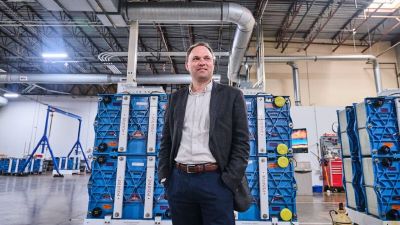
ESS was founded in 2011 by Craig Evans, now president, and Julia Song, the chief technology officer. They recognized that while lithium-ion batteries will play a key role in electrification of transportation, longer duration grid-scale energy storage needed a different battery. That’s because while the price of lithium-ion batteries has declined 90% over the last decade, their ingredients, which sometimes include expensive metals such as cobalt and nickel, limit how low the price can fall.
The deal for 2 gigawatt-hours of batteries is worth at least $300 million, according to ESS. Rich Hossfeld, chief executive officer of SB Energy, said the genius of the units lies in their simplicity.
“The battery is made of iron salt and water,” said Hossfeld. “Unlike lithium-ion batteries, iron flow batteries are really cheap to manufacture.”
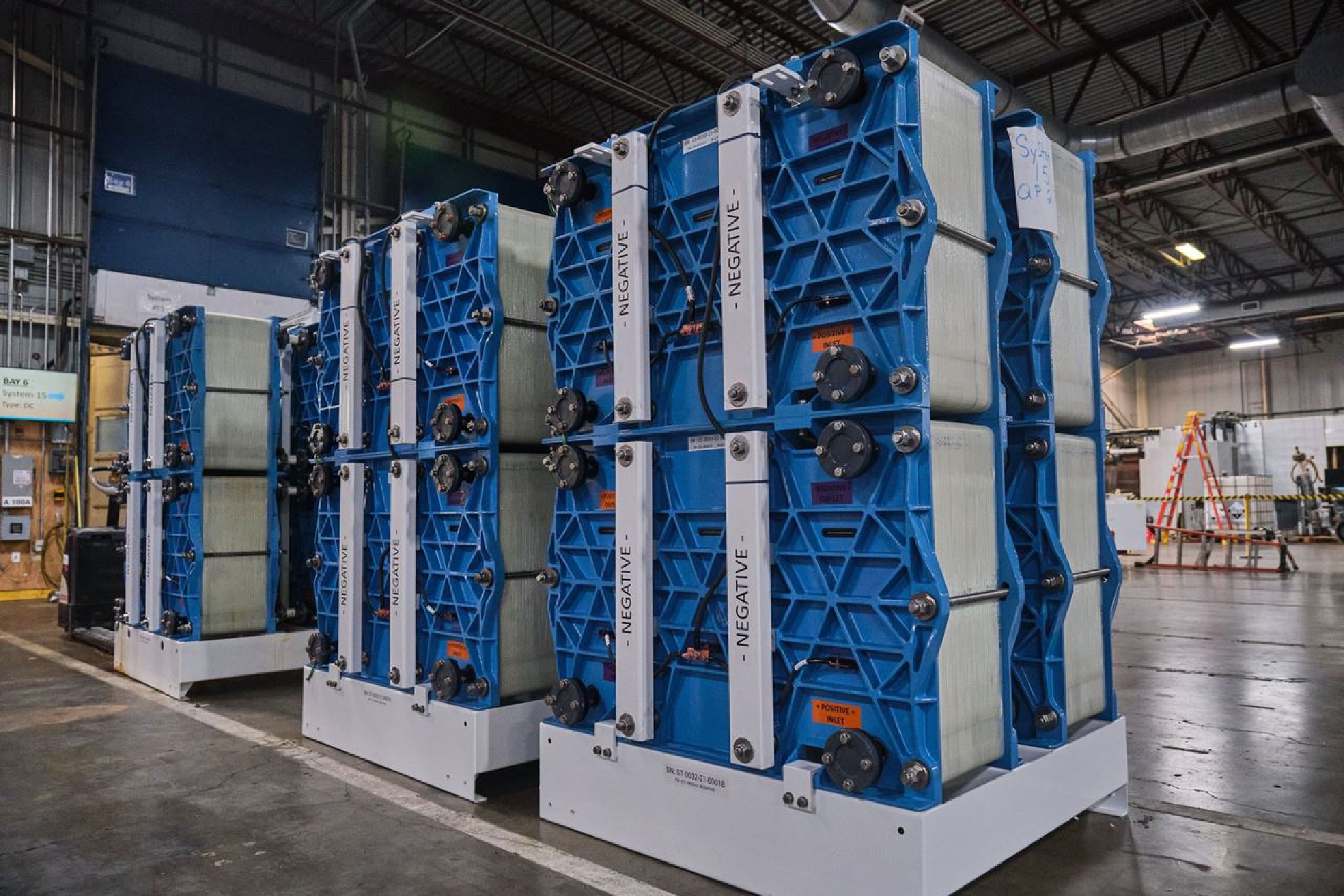
Commercial batteries at the Energy Storage Systems Inc. (Ess Inc.) facility in Wilsonville, Ore., on Sept. 28, 2021. MUST CREDIT: Bloomberg photo by Tojo Andrianarivo.
Every battery has four components: two electrodes between which charged particles shuffle as the battery is charged and discharged, electrolyte that allows the particles to flow smoothly and a separator that prevents the two electrodes from forming a short circuit.
Flow batteries, however, look nothing like the battery inside smartphones or electric cars. That’s because the electrolyte needs to be physically moved using pumps as the battery charges or discharges. That makes these batteries large, with ESS’s main product sold inside a shipping container.
What they take up in space, they can make up in cost. Lithium-ion batteries for grid-scale storage can cost as much as $350 per kilowatt-hour. But ESS says its battery could cost $200 per kWh or less by 2025.
Crucially, adding storage capacity to cover longer interruptions at a solar or wind plant may not require purchasing an entirely new battery. Flow batteries require only extra electrolyte, which in ESS’s case can cost as little as $20 per kilowatt hour.
“This is a big, big deal,” said Eric Toone, science lead at Breakthrough Energy Ventures, which has invested in ESS. “We’ve been talking about flow batteries forever and ever and now it’s actually happening.”
The U.S. National Aeronautics and Space Administration built a flow battery as early as 1980. Because these batteries used water, they presented a much safer option for space applications than lithium-ion batteries developed around that time, which were infamous for catching on fire. Hossfeld says he’s been able to get permits for ESS batteries, even in wildfire-prone California, that wouldn’t have been given to lithium-ion versions.
Still, there was a problem with iron flow batteries. During charging, the battery can produce a small amount of hydrogen, which is a symptom of reactions that, left unchecked, shorten the battery’s life. ESS’s main innovation, said Song, was a way of keeping any hydrogen produced within the system and thus hugely extending its life.
“As soon as you close the loop on hydrogen, you suddenly turn a lab prototype into a commercially viable battery option,” said Viswanathan. ESS’s iron-flow battery can endure more than 20 years of daily use without losing much performance, said Hossfeld.
At the company’s factory near Portland, yellow robots cover plastic sheets with chemicals and glue them together to form the battery cores. Inside the shipping containers, vats full of electrolyte feed into each electrode through pumps – allowing the battery to do its job of absorbing renewable power when the sun shines and releasing it when it gets dark.
It’s a promising first step. ESS’s battery is a cheap solution that can currently provide about 12 hours of storage, but utilities will eventually need batteries that can last much longer as more renewables are added to the grid. Earlier this month, for example, the lack of storage contributed to a record spike in power prices across the U.K. when wind speeds remained low for weeks. Startups such as Form Energy Inc. are also using iron, an abundant and cheap material, to build newer forms of batteries that could beat ESS on price.
So far, ESS has commercially deployed 8 megawatt-hours of iron flow batteries. Last week, after a six-month evaluation, Spanish utility Enel Green Power SpA signed a single deal for ESS to build an equivalent amount. SB Energy’s Hossfeld, who also sits on ESS’s board, said the company would likely buy still more battery capacity from ESS in the next five years.
Even as its order books fill up, ESS faces a challenging road ahead. Bringing new batteries to market is notoriously difficult and the sector is littered with failed startups. Crucially, lithium-ion technology got a head start and customers are more familiar with its pros and cons. ESS will have to prove that its batteries can meet the rigorous demands of power plant operators.
The new order should help ESS as it looks to go public within weeks through a special-purpose acquisition company at a valuation of $1.07 billion. The listing will net the company $465 million, which it plans to use to scale up its operations.
When the first snub-nosed, electric van rolled off the assembly line Tuesday at the Electric Last Mile Solutions Inc. plant in Mishawaka, Indiana, it was a proud moment for the companys co-founder and chief executive officer, Jim Taylor.
The van, one in a run of 1,000 scheduled for this year, is among the first of its kind in the U.S. market: a fully electric, light-duty vehicle meant for delivery workers, contractors and other commercial fleets.
“Who else is starting up this month?” asks Taylor, checking through the list of major auto manufactures and startups, from Ford and General Motors to Arrival Ltd. and Canoo Inc., that have announced plans to build electric vans.
ADVERTISEMENT
Delivery vans and other light commercial vehicles offer fertile ground for electric vehicle makers, according to James Martin, a consulting associate director at the research house IHS Markit. Buyers aren’t commuters, concerned about range estimates and how to handle the occasional long road trip. Instead, they’re fleet managers who know precisely how far their vehicles will travel each day and where they plan to recharge them during off-duty hours. “We think it’s going to be swifter than the ramp-up of electrification in personal vehicles,” says Martin.
IHS expects North American commercial-van production to grow from around 400,000 units this year to nearly 600,000 by 2028, with electric vehicles growing from almost nonexistent to nearly 40 % of the market in that span. Electric Last Mile Solutions, known as ELMS, is aiming for the bottom end via a bare-bones vehicle with relatively low range that’s ideal for customers who carry light packages on short, repetitive routes. The segment has exploded with the rise of e-commerce.
An Urban Delivery electric van is loaded onto a truck outside the Electric Last Mile Solutions facility in Mishawaka, Indiana, on Sept. 28, 2021. PHOTO CREDIT: Bloomberg photo by Taylor Glasscock.
ELMS began in August 2020 as a plan B for the Chinese auto manufacturer Chongqing Sokon Industry Group. In 2017, Sokon subsidiary SF Motors bought the Mishawaka plant from contract manufacturer AM General with a plan to build an electric SUV called the SF5. But the SF5 never came to Mishawaka, a city of 50,000 on the eastern edge of South Bend. When Sokon hired Taylor, a 30-year GM veteran, to take over as CEO at SF Motors in the summer of 2019, he reviewed the business plan and concluded that it was doomed. Launching an electric SUV brand in the U.S. would be far more expensive than Sokon anticipated, Taylor told the company’s leadership, and it would land them in a brutal competition with some very large players. Sokon heeded his advice and abandoned its U.S. plans for the vehicle.
This left the question of what to do with the Mishawaka plant. Taylor suggested pivoting to electric delivery vans, which Sokon already was producing in Asia. Sokon, however, didn’t want to spend more in the U.S. market, so Taylor offered to start a new company that would raise the funds to buy the Mishawaka plant.
Taylor, 64, knows the 675,000-square-foot space well: Two decades ago, when he was an executive in the truck group at GM, he outfitted it to assemble Hummers. In 1999, GM bought the Hummer brand from AM General and contracted with them to build a mass-market version of the SUV. AM General built a plant for the job next door to the one where it makes Humvees for the military. Taylor, who oversaw purchasing for GM trucks, chose the equipment.
By 2005, 1,000 workers were building tens of thousands of Hummers per year in Mishawaka. When the financial crisis arrived three years later, the fad was fading and GM, forced into bankruptcy, decided to shutter the money-losing brand. The plant revived in 2015, when Daimler hired AM General to build Mercedes-Benz minivans there for the Chinese market. But Mercedes walked away two years later and AM General announced plans to close the plant, a demise that was seemingly averted with the arrival of SF Motors.
In the summer of 2020, Taylor and his co-founder Jason Luo, a longtime auto executive who briefly ran Ford China, began trying to raise money for ELMS. This was during the rise of SPAC fever. In the six months before ELMS’s founding, electric vehicle startups Nikola Corp., Fisker Inc., Lordstown Motors Corp. and Canoo all had announced plans to enter the public markets via mergers with special purpose acquisition companies.
SPACs intrigued Taylor. Since leaving GM in 2010, he had done stints at a pair of electric vehicle companies – what are now Workhorse Group and Karma Automotive – and seen enough of the traditional fundraising process to know that he’d be happy to fast-forward through it. “This allows you to get the money much quicker,” he says, “and it arrives in a gigantic trainload.”
In fall 2020, Taylor and Luo began discussing a merger with a SPAC called Forum Merger III, which recently had raised $250 million. By late October, they were ready to approach private equity firms, hedge funds and investment banks about adding to this pool of funds through a so-called private investment in public equities, or PIPE. In December, Forum announced the planned merger, which valued ELMS at $1.4 billion. With $155 million in PIPE money, the deal was set to generate nearly $380 million in gross proceeds for ELMS.
The companies originally hoped to close the deal in the first three months of 2021, but that was delayed after the Securities and Exchange Commission began to scrutinize SPACs more closely. The EV companies that preceded ELMs into the public markets had illustrated the downside to giving startups a big bucket of money all at once: Few live up to their hype. After refiling paperwork to meet new SEC guidance, ELMS completed the merger and began trading on the Nasdaq at the end of June. As soon as the funds were in the bank, Taylor made a $30 million down payment on the $145 million purchase of the Mishawaka plant and beginning outfitting it to assemble electric vans.
ELMS is taking a crawl-before-you-walk approach to production. For now, the vans arrive in Indiana from factories in China as “pushers,” complete with chassis, frames, battery packs and wheels. At Mishawaka, a couple of dozen hourly workers spread across a handful of stations add steering wheels and a few electronic components. It’s a comedown from the Hummer days, but if all goes according to plan ELMs could bring the plant back to something approximating that scale.
Over time, the company plans to buy more parts from U.S. suppliers and do more assembly in Mishawaka. ELMS told the Indiana Economic Development Corp., a public-private partnership, that it expects to create up to 960 new jobs building 100,000 vehicles per year by the end of 2024. If it does, IEDC will grant $10 million in tax credits.
“Everyone here is just excited that the doors are getting opened up,” says Bryan Tam, a 62-year-old plant manager for ELMs who has been at Mishawaka through its 20-year history.
The initial 1,000 ELMS vans are headed to Randy Marion Automotive Group, a collection of dealerships in North Carolina whose namesake and founder was in Mishawaka on Tuesday for a ceremonial handing over of keys. His first few hundred vans are destined for campuses, airports and other spaces where they won’t encounter public roads, which saves ELMS from having to meet full safety standards until it scales up production.
The vans are basically breadboxes on wheels. But the company is not trying to turn heads on the sidewalk. It’s hoping to get the attention of fleet managers with a simple proposition: save money by converting to electric. The vehicles have a range of 100 to 120 miles, 171 cubic feet of cargo space (enough to carry several hundred shoe boxes) and a cost of about $27,000 after a $7,500 federal tax credit. By ELMS estimates, the total cost of ownership, including fuel and maintenance, is 35% cheaper than comparable gas-powered vans.
While ELMS is betting on gaining an edge by being first, the competition isn’t far behind. Ford, Daimler and General Motors all have plans to introduce commercial electric vans to the U.S. by 2023. Earlier this week, GM unveiled a midsized cargo hauler and announced that it has signed up Verizon Communications Inc. as its first customer. Rivian Automotive, meanwhile, has already taken an order for 100,000 vans for Amazon.com Inc., with the first expected to arrive this year.
“It’s an incredibly short window,” says Reilly Brennan, founding partner at the San Francisco venture capital fund Trucks. “The clock is ticking.”
The “EEC Automation Park”, expected to officially kick off on October 27, was created to make manufacturing more efficient and cut down costs.
The project, led by Mitsubishi Electric Factory Automation (Thailand) under the e-F@ctory Alliance, is based in Burapha University.
This automation park is expected to attract up to 500 billion baht in investment in robotics and automation over the next three years.
ADVERTISEMENT
Kanit Sangsuphan, secretary-general of the Eastern Economic Corridor (EEC) Policy Committee, said upgraded technology and digital manufacturing platforms will not only boost efficiency in the production sector but will also increase Thailand’s competitiveness in the region.
The initial aim of the project is to link at least 200 companies within five years and have as many as 10,000 factories hooked up to robotics or green tech in line with the Digital Manufacturing 4.0 policy.
Thai household debt in the second quarter of 2021 recorded at 14.27 trillion baht, or 89.3 per cent of GDP, comparing to 14.14 trillion baht recorded in the first quarter, or 90.6 per cent of GDP, which was the highest point of household debt per GDP in the past 18 years, Kasikorn Research Centre revealed on Friday (October 1).
“Thai economy in the second quarter is expanding faster than household debt, with nominal GDP expanding at 10.7 per cent year on year, while the household debt in second quarter is expanding at 5 per cent year on year,” said the centre.
Kasikorn Research attributed the rise in household debt in second quarter to the increasing home loans by 156 billion baht and increasing debts from credit cards and personal loans, which are the preferred methods that Thai households use to increase their short-term liquidity.
“The latest wave of Covid-19 outbreak has accelerated the need for loans among Thai households, which can be seen from increasing number of customers applying for individual loans at commercial banks and other financial institutes from April onward,” said the Centre. “Statistics from the Bank of Thailand revealed that as of July 2021, up to 5.12 million accounts have requested loans amounted to 3.35 trillion baht from financial institutes, increasing from 4.77 million accounts recorded in April.”
ADVERTISEMENT
As for the rest of 2021, Kasikorn Research estimated that the household debt per GDP will gradually increase and could reach 90 to 92 per cent of GDP by year end. “Although the easing up of lockdown measures, the reopening of the country and increased vaccination rate will improve economic situation and increase household income, but it is unlikely that the repayment capability of many debtors will be fully restored within this year,” added the centre.
The centre also revealed its survey results on preference in loan services among people in Bangkok and surrounding provinces, which found that most of respondents (50.4 per cent) wanted financial institutes to provide debt moratorium. 20.3 per cent wanted extension of repayment deadline, 16 per cent wanted reduced installment rate, and 9.8 per cent wanted debt restructuring programme.
The Stock Exchange of Thailand (SET) Index closed at 1,605.17 on Friday, down 0.51 points or 0.03 per cent. Transactions totalled 75.66 billion baht with an index high of 1,609.48 and a low of 1,593.32.
The index fell for the second day running after dropping by 0.70 per cent on Thursday.
In the morning session, Krungsri Securities predicted the day’s index would fall to between 1,600 and 1,590 points due to uncertainty over the US Federal Reserve signalling it would taper its quantitative easing and raise the interest rate sooner than expected, plus the conflict in US Congress debt ceiling and corporate income tax hike.
ADVERTISEMENT
However, the rising oil price and mass buy-up of stocks enjoying specific positive sentiment would help boost the index, Krungsri Securities said.
The 10 stocks with the highest trade value today were BANPU, GULF, KBANK, SCB, GUNKUL, RCL, PTT, SCGP, BBL and TRUE.
Japan’s Nikkei Index closed at 28,771.07, down 681.59 points or 2.31 per cent. South Korea’s KOSPI Index closed at 3,019.18, down 49.64 points or 1.62 per cent. Taiwan’s TAIEX Index closed at 16,570.89, down 363.88 points or 2.15 per cent.
China and Hong Kong Indices were closed for National Day.
The baht opened at 33.65 to the US dollar on Friday, strengthening from Thursday’s closing rate of 33.82.
The Thai currency is likely to move between 33.60 and 33.80 during the day, Krungthai Bank market strategist Poon Panichpibool predicted.
Poon said that the baht might strengthen on Thursday after the Bank of Thailand signalled the worry about the baht volatility. The baht is also supported by the gold price increasing which causes investors to sell.
ADVERTISEMENT
However, the baht will not strengthen clearly soon until risk factors are solved especially debt ceiling negotiation in the US. Risk factors also include floods and the new Covid-19 wave, Poon added.
He felt the key resistance level would be 34.00 to the dollar. The Thai currency could reach its next resistance level of 34.25 if it weakens, he maintained.
The key support level for the baht would be at 33.60 per dollar, Poon added.





 Commercial batteries at the Energy Storage Systems Inc. (Ess Inc.) facility in Wilsonville, Ore., on Sept. 28, 2021. MUST CREDIT: Bloomberg photo by Tojo Andrianarivo.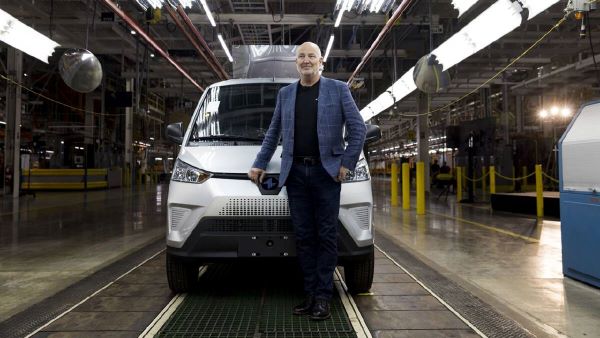
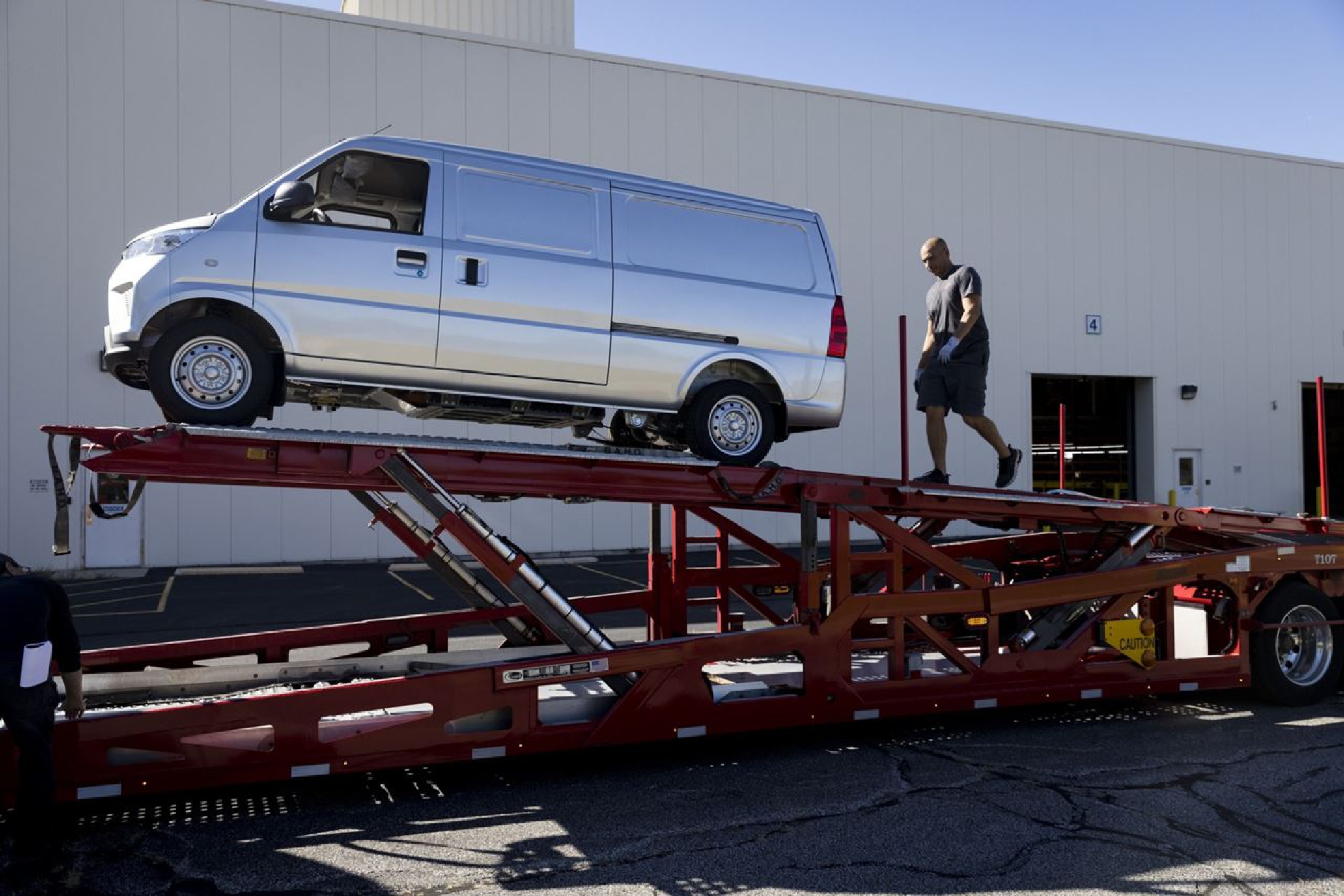 An Urban Delivery electric van is loaded onto a truck outside the Electric Last Mile Solutions facility in Mishawaka, Indiana, on Sept. 28, 2021. PHOTO CREDIT: Bloomberg photo by Taylor Glasscock.