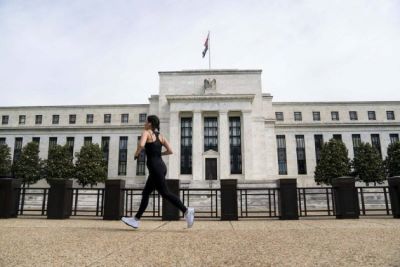
Markets wrap: Stocks rally amid growth optimism; yields surge #SootinClaimon.Com

#SootinClaimon.Com : ขอบคุณแหล่งข้อมูล : หนังสือพิมพ์ The Nation.

https://www.nationthailand.com/business/40006581


U.S. stocks rallied for a second day as investors embraced the Federal Reserves bullish economic outlook while downplaying the risk of contagion from turmoil in Chinese debt markets. Yields jumped worldwide after the Bank of England moved closer to raising rates and the dollar weakened.

The S&P 500 registered its biggest two-day gain since July, jumping 2.2%, with the Fed signaling on Wednesday that it’s on track to start scaling back asset purchases this year as the recovery takes hold. Yields climbed globally led by the U.K. market, where the 10-year gilt yield topped 0.90% for the first time since May after the Bank of England opened the door to a 2021 rate increase to contain a surge in inflation. Treasury yields surged, led by the 30-year, which rose about 12 basis points in the biggest increase in more than a year.

“A hawkish Fed was surprisingly welcomed by equity markets as it was seen as a confirmation of continued strength and ‘substantial progress’ made by the economy in recovering from the COVID shock,” said Anu Gaggar, global investment strategist at Commonwealth Financial Network. “While we are far from the end of QE and near-zero rates, the tide seems to be beginning to change. So far, the market had welcomed bad news as good news, but a market reacting to signs of an economy able to stand on its own without the monetary policy crutches is a refreshing change.”

Even with Thursday’s jump in yields, confidence is building that markets can ride out a pullback in Fed stimulus, unlike 2013 when the so-called taper tantrum triggered large losses in bonds and equities. Investors are betting that the economic and profit recovery will be strong enough to outweigh a reduction in asset purchases, while ultra-low rates will continue to support riskier assets even as concerns linger about contagion from China’s real-estate woes.

ADVERTISEMENT

“The turbo-charged taper — a little bit of a surprise, it was coming in a relatively short period that they’re planning for this, but the markets are OK with that at the end of the day,” Paul Donovan, UBS’s global chief economist, said during a Bloomberg TV interview.

Meanwhile, the British pound rallied and gilts declined as traders brought forward wagers on a Bank of England rate hike to 0.25% after officials said developments since its August meeting appear to have strengthened the case for modest tightening.

Stocks briefly pared gains during European market hours after a report that Chinese authorities signaled reluctance to bail out Evergrande, even as Beijing injected more cash into the financial system and regulators instructed the embattled property developer to avoid a near-term default.

Fears of an Evergrande failure have caused a sharp rise in borrowing costs for other junk-rated Chinese developers and cast doubt on the health of some smaller Chinese banks.

Elsewhere, emerging-market stocks climbed for a third day. Turkey’s lira slumped to record low against the dollar after the central bank unexpectedly cut interest rates. Oil gained and gold declined, while Bitcoin steadied around $44,000.

Here are key events to watch this week:

– Fed Chair Jerome Powell, Fed Governor Michelle Bowman and Vice Chairman Richard Clarida discuss pandemic recovery, Friday

Here are the main moves in markets:

– – –

– The S&P 500 rose 1.2% as of 4:03 p.m. New York time

– The Nasdaq 100 rose 0.9%

– The Dow Jones industrial average rose 1.5%

– The MSCI World index rose 1%

– – –

– The Bloomberg Dollar Spot index fell 0.4%

– The euro rose 0.5% to $1.1740

– The British pound rose 0.7% to $1.3723

– The Japanese yen fell 0.5% to 110.28 per dollar

– – –

– The yield on 10-year Treasuries advanced 12 basis points to 1.42%

– Germany’s 10-year yield advanced seven basis points to -0.26%

– Britain’s 10-year yield advanced 11 basis points to 0.91%

– – –

– West Texas Intermediate crude rose 1.4% to $73.21 a barrel

– Gold futures fell 1.8% to $1,747.30 an ounce

Published : September 24, 2021

Semiconductor shortage that has hobbled manufacturing worldwide is getting worse #SootinClaimon.Com

#SootinClaimon.Com : ขอบคุณแหล่งข้อมูล : หนังสือพิมพ์ The Nation.

https://www.nationthailand.com/business/40006580


The global semiconductor shortage that has paralyzed automakers for nearly a year shows signs of worsening, as new coronavirus infections halt chip assembly lines in Southeast Asia, forcing more car companies and electronics manufacturers to suspend production.

Awave of delta-variant cases in Malaysia, Vietnam and the Philippines is causing production delays at factories that cut and package semiconductors, creating new bottlenecks on top of those caused by soaring demand for chips.

Underscoring that the problem has defied easy solutions, the White House on Thursday held its second summit in five months with semiconductor manufacturers and buyers, in part to gain more clarity on the scope of the crisis, senior administration officials said.

Attendees included senior executives from Intel, General Motors, Ford, Apple, Microsoft, Samsung and two dozen other companies, as well as Commerce Secretary Gina Raimondo and National Economic Council Director Brian Deese.

Frustration has mounted on all sides. Automakers want semiconductor companies to crank out more chips for cars. Smartphone companies do not want their semiconductors diverted to automakers. Chip manufacturers say the auto industry shot itself in the foot by canceling semiconductor orders after the covid crisis hit. They are also impatient for Congress to approve $52 billion in federal subsidies to boost domestic semiconductor manufacturing. That measure, supported by the White House, has cleared the Senate but not the House.

The Biden administration, meanwhile, says that while it can play a supporting role, it expects the private sector to take the lead in sorting out the crisis.

ADVERTISEMENT

“It’s on industry to come up with the solutions here and to identify some of the path forward,” one of the administration officials said Wednesday, speaking on the condition of anonymity to preview Thursday’s meeting.

At the meeting, Raimondo asked companies to fill out questionnaires to clarify how much supply and demand there really is in the market, and said the administration would consider invoking the Defense Production Act to compel them to provide the information if they don’t comply, a Commerce Department spokeswoman said, confirming a Bloomberg News report.

The administration wants the information in part to address a big problem: Manufacturers are placing chip orders larger than what they actually need because they’re concerned suppliers won’t fill the entire order, industry executives say. That makes it hard for semiconductor factories to know what they need to supply to meet real, short-term needs – and how much they should invest in new production lines. The administration also wants the information to determine whether some chip buyers are hoarding supplies.

Also known as computer chips, semiconductors are the brains behind modern electronics. Demand for the components is soaring as more consumer goods become computerized, but supply is scarce because semiconductor factories are extremely expensive and time-consuming to build.

Pat Gelsinger, the chief executive of Intel, the U.S.’s largest chip maker, has said he expects shortages to last into 2023. Others say it could last through the end of that year.

“The chip shortage continues to get worse and at this point we’re going to go through 2023,” said Ambrose Conroy, founder of Seraph Consulting, which is advising car companies on the crisis.

Automakers, which rely on dozens of chips to build a single vehicle, have been particularly hard hit, forced to halt production lines globally as they await chip supplies. The debacle is likely to cost the auto industry $450 billion in global sales from the start of the crisis through the end of 2022, according to Seraph Consulting.

Martin Daum, chief executive of the Daimler AG division that makes trucks and buses, described the problem as intensifying.

“Until the second quarter we were able to manage the situation quite well at Daimler Truck,” Daum said Wednesday. “But since summer the semiconductor situation has worsened for us. Our production in Germany and the U.S. was affected, which led to a situation in which we could deliver fewer vehicles to our customers.”

Even automakers such as Toyota and Hyundai, which planned for potential shortages and initially managed to avoid crippling shutdowns, are starting to encounter problems.

Toyota this month was forced to slash production at 14 factories in Japan over a lack of semiconductors. Some of the cuts will continue into October due to a lack of components from Southeast Asia, Toyota has said.

Ford and General Motors in recent months have been suspending production for weeks at a time at more than a dozen North American factories. As a result, Ford this month said its U.S. sales declined by 33 percent in August compared with a year ago.

The list of attendees at the White House meeting – including the medical device maker Medtronic and the appliance manufacturer Siemens – shows how the problem is hurting industries beyond autos.

“This is having an impact all across the economy, with automobiles, yes, but even beyond that, into medical devices, networking equipment – we’re hearing regularly from companies that cannot get the supply they need,” one of the Biden administration officials said.

Administration officials said the United States is asking its embassies around the world to help monitor production problems at chip factories and to provide any technical assistance needed to keep them running.

“I applaud Secretary Raimondo for her leadership today in recognizing the current chip shortage requires both short and long-term solutions,” Tom Caulfield, chief executive of the U.S.-based chip manufacturer GlobalFoundries, said in an emailed statement after the meeting.

Some chipmakers have taken steps to help auto manufacturers. Taiwan’s TSMC, which produces a type of chip called a microcontroller that is widely used by automakers, said it is increasing output of the components by 60 percent this year compared with 2020.

GlobalFoundries is adding manufacturing equipment to a factory near Albany, N.Y., to increase output for all types of chips, and recently broke ground on a $4 billion expansion of its factory in Singapore, with financial support from the Singaporean government.

Globally, chip factories have increased their production capacity by 8 percent since early 2020 and plan to boost it by over 16 percent by the end of 2022, according to the U.S.-based Semiconductor Industry Association.

Global spending on semiconductor manufacturing equipment is likely to grow by more than 30 percent this year to $85 billion, showing that chipmakers are expanding production, according to C.J. Muse, a semiconductor analyst at Evercore ISI.

But that comes after chip companies had “underinvested over the last five years,” he said. Industry executives say investment has been particularly low in production lines for automotive chips because they are older-tech components that offer lower profits.

Some semiconductor companies are holding back on big domestic investments until the subsidy plan is signed into law. GlobalFoundries has said it will double output at its New York site by building a new facility there if the subsidies come through.

Published : September 24, 2021

Thailand seeks FTA with Eurasian Union #SootinClaimon.Com

#SootinClaimon.Com : ขอบคุณแหล่งข้อมูล : หนังสือพิมพ์ The Nation.

https://www.nationthailand.com/blogs/business/40006577


Thailand will seek a free-trade agreement (FTA) with Russia and four of its neighbours during a meeting with the Eurasian Economic Commission later this month.

Commerce Minister Jurin Laksanawisit will chair the second round of trade talks with the commission by video link on Monday (September 27).

The Eurasian Economic Union (EAEU) covers Russia, Kazakhstan, Belarus, Armenia and Kyrgyzstan – an economy of more than 180 million people and a GDP of over US$1.9 trillion.

It also boasts rich natural energy sources of oil, gas, coal and other minerals.

The EAEU already has an FTA with two Asean member countries, Vietnam and Singapore.

Trade between Thailand and the EAEU in the first seven months of 2012 (January-July) totalled $1,831.31 million, up 25 per cent from the same period last year.

Published : September 23, 2021

SET Index rises for 3rd day in a row #SootinClaimon.Com

#SootinClaimon.Com : ขอบคุณแหล่งข้อมูล : หนังสือพิมพ์ The Nation.

https://www.nationthailand.com/business/40006573


The Stock Exchange of Thailand (SET) Index closed at 1,631.15 on Thursday, up 11.56 points or 0.71 per cent. Transactions totalled 140.53 billion baht with an index high of 1,637.65 and a low of 1,623.00.

The index rose for the third successive day after gaining 0.74 per cent on Tuesday and 0.29 per cent on Wednesday.

In the morning session, Krungsri Securities expected Thursday’s index to rise to between 1,625 and 1,630 points as regional stock markets responded to hints that the US Federal Reserve will taper its quantitative easing programme soon and raise the interest rate next year.

It added that the index also gained positive sentiment from Siam Commercial Bank’s move to restructure and establish a fin-tech arm, SCB X.

“However, investors should beware of foreign fund outflows in response to the weakening baht,” Krungsri Securities said.

The 10 stocks with the highest trade value today were SCB, KBANK, TRUE, BBL, TIDLOR, DTAC, PTT, ADVANC, SAWAD and AOT.

ADVERTISEMENT

Related stories:

Other Asian indices were up with one exception:

China’s Shanghai SE Composite Index closed at 3,642.22, up 13.73 points or 0.38 per cent, while the Shenzhen SE Component Index closed at 14,387.36, up 110.28 points or 0.77 per cent.

Hong Kong’s Hang Seng Index closed at 24,510.98, up 289.44 points or 1.19 per cent.

South Korea’s KOSPI closed at 3,127.58, down 12.93 points or 0.41 per cent.

Taiwan’s TAIEX closed at 17,078.22, up 152.40 points or 0.90 per cent.

Japan’s Nikkei Index was closed for Health and Sports Day.

Published : September 23, 2021

Gold price drops in opening trade #SootinClaimon.Com

#SootinClaimon.Com : ขอบคุณแหล่งข้อมูล : หนังสือพิมพ์ The Nation.

https://www.nationthailand.com/business/40006558


The price of gold dropped by THB50 in morning trade on Thursday.

AGold Traders Association report at 9.21am said the buying price of a gold bar was THB27,950 per baht weight and selling price THB28,050, while gold ornaments cost THB27,439.60 and THB28,550, respectively.

At close on Wednesday, the buying price of a gold bar was THB28,000 per baht weight and selling price THB28,100, while gold ornaments cost THB27,500 and THB28,600, respectively.

The spot gold price on Thursday morning was moving around US$1,763 (THB59,166) per ounce after Comex gold at close on Wednesday rose slightly by 60 cents to $1,778.80 per ounce ahead of results from a key Federal Reserve meeting. The New York gold market was closed for trading before the Fed committee announced it would taper its quantitative easing programme soon and raise the interest rate next year.

Related news:

ADVERTISEMENT

The Hong Kong gold price, meanwhile, rose by HK$80 to $16,400 (THB70,688) per tael, the Chinese Gold and Silver Exchange Society reported.

Published : September 23, 2021

Baht weakens in opening trade #SootinClaimon.Com

#SootinClaimon.Com : ขอบคุณแหล่งข้อมูล : หนังสือพิมพ์ The Nation.

https://www.nationthailand.com/business/40006550


The baht opened at 33.46 to the US dollar on Thursday, weakening from Wednesday’s closing rate of 33.44.

The Thai currency is likely to move between 33.40 and 33.55 during the day, Krungthai Bank market strategist Poon Panichpibool predicted.

Poon said the baht was testing the key resistance level of 33.50 to the dollar due to China’s Evergrande crisis, which caused the dollar to strengthen and the yuan to weaken.

Meanwhile, foreign investors are offloading their Thai assets, but Poon expected the sales to be limited unless an Evergrande default hammers the Chinese economy, which might cause foreign investors to sell their emerging market assets again.

Poon said the baht could weaken from 33.80 to 33.85 to the dollar if it dropped past the resistance level. However, the Thai currency might strengthen from 32.70 to 32.80 if it does not weaken past the resistance level.

Related News

ADVERTISEMENT

Baht might weaken by risk-off market pressure: market strategist

Weakening trend continues for baht

Baht level linked to signal from Fed, gold trend

Investors are ready to take more risks despite uncertainties after a key US Federal Reserve meeting produced the expected results. The Fed stuck with its policy interest rate of 0.00 to 0.25 per cent until an economic recovery.

The Fed also signalled that its quantitative easing (QE) programme may decrease soon and it might stop buying assets in the middle of next year.

Chairman Jerome Powell said the QE programme might even decrease in November, but pointed to an interest rate increase after a QE decrease.

The Fed’s dot plot revealed that some central bank officials support an increase in the interest rate in 2022, while most officials back a rise in 2023 and 2024, which is more than the market expected.

Poon added that investors are not fully open to taking risks because they are awaiting a solution to Evergrande’s massive default.

Published : September 23, 2021

SET expected to advance today on Fed QE, rate decisions #SootinClaimon.Com

#SootinClaimon.Com : ขอบคุณแหล่งข้อมูล : หนังสือพิมพ์ The Nation.

https://www.nationthailand.com/business/40006549


The Stock Exchange of Thailand (SET) Index rose by 10.59 points or 0.65 per cent to 1,630.18 on Thursday morning, witnessing a high of 1,637.65 and a low of 1,628.81 in opening trade.

Krungsri Securities expected the day’s index to rise to between 1,625 and 1,630 points as neighbouring stock markets moved up in response to the US Federal Reserve’s move to taper its quantitative easing programme soon and raise the interest rate next year.

It added that the index also gained positive sentiment from Siam Commercial Bank’s move to restructure its business and establish SCB X Pcl in order to make a foray into the financial technology business.

“However, investors should beware of foreign fund outflows in response to the weakening baht,” Krungsri Securities said.

It recommended purchasing the following companies’ shares as an investment strategy:

ADVERTISEMENT

▪︎ SCB, Advanc and True, which gained specific positive sentiment.

▪︎ PTT, PTTEP, Top, PTTGC, SPRC and Banpu, which benefit from rising oil and coal prices.

▪︎ Hana, KCE, TU, CPF, GFPT, Asian, EPG, NER, Sun and APure, which benefit from a weakening baht.

Related stories:

The SET Index closed at 1,619.59 on Wednesday, up 4.73 points or 0.29 per cent. Transactions totalled THB79.02 billion with an index high of 1,623.86 and a low of 1,611.76.

Published : September 23, 2021

ADB trims Thailand’s 2021 GDP estimation to 0.8 from 3% amid Covid-19 concerns #SootinClaimon.Com

#SootinClaimon.Com : ขอบคุณแหล่งข้อมูล : หนังสือพิมพ์ The Nation.

https://www.nationthailand.com/business/40006547


The Asian Development Bank (ADB) has lowered Thailand’s 2021 GDP estimation to 0.8 per cent from its previous estimation of 3 per cent in April amid continuing concern over the Covid-19 pandemic across Asia.

Thailand’s growth outlook for 2022 was also lowered from 4.5 to 3.9 per cent, according to the ADB’s updated Asian Development Outlook 2021, released on Wednesday.

The ADB has lowered its 2021 economic growth outlook for all of developing Asia.

ADB forecast growth of 7.1 per cent among Asia’s developing nations this year. That compares with a projection of 7.3 per cent in April.

The growth outlook for 2022 is however raised to 5.4 from 5.3 per cent.

New Covid-19 variants, renewed local outbreaks, the reinstatement of various levels of restrictions and lockdowns, and slow and uneven vaccine rollouts are weighing down the region’s prospects, it said.

Related Stories

Thai economy to grow 4% next year, 1 point lower than Asean average: ADB

Thailand seeks help from UN, ADB to fight drug problem

China’s GDP forecast to hover above 8 percent

The report also said Thailand’s inflation rate would stay at 1.1 per cent this year and 1 per cent next year due to overall sluggish demand.

ADVERTISEMENT

The ADB said the latest Covid-19 wave threatens to undermine Thailand’s economic recovery this year and the next.

However, strong growth in merchandise exports and an enabling policy environment could partly offset the large negative impact of Covid-19 on Thai growth.

“Even so, the risks to economic outlook are tilted downward on the current wave of the outbreak adding to concerns over the efficacy of vaccines and delays in the country’s vaccination programme,” the ADB report added.

Published : September 23, 2021

U.S. Fed signals tapering could start soon despite Delta variant uncertainty #SootinClaimon.Com

#SootinClaimon.Com : ขอบคุณแหล่งข้อมูล : หนังสือพิมพ์ The Nation.

https://www.nationthailand.com/business/40006534


“The Committee would be prepared to adjust the stance of monetary policy as appropriate if risks emerge that could impede the attainment of the Committees goals,” the Fed said in a statement.

The U.S. Federal Reserve on Wednesday kept its benchmark interest rate unchanged at the record-low level of near zero, while signaling that the central bank may begin tapering asset purchases soon despite the Delta variant increasing economic uncertainty.

The Fed has pledged to continue its asset purchase program at least at the current pace of 120 billion U.S. dollars per month until “substantial further progress” has been made on employment and inflation since last December.

“Since then, the economy has made progress toward these goals. If progress continues broadly as expected, the Committee judges that a moderation in the pace of asset purchases may soon be warranted,” the Federal Open Market Committee (FOMC), the Fed’s policy-making committee, said in a statement after a two-day meeting.

ADVERTISEMENT

“The Committee would be prepared to adjust the stance of monetary policy as appropriate if risks emerge that could impede the attainment of the Committee’s goals,” the statement said.

At a virtual press conference Wednesday afternoon, Fed Chair Jerome Powell said that the sectors most adversely affected by the pandemic improved in recent months, but the rise in COVID-19 cases slowed recovery.

Related Stories

“The Delta variant led to significant increases in COVID-19 cases resulting in significant hardship and loss and slowing the economic recovery. Continued progress on vaccinations would help contain the virus and support a return to more normal economic conditions,” he said.

U.S. Federal Reserve Chairman Jerome Powell testifies at a hearing before the House Select Subcommittee on the Coronavirus Crisis on the Federal ReserveU.S. Federal Reserve Chairman Jerome Powell testifies at a hearing before the House Select Subcommittee on the Coronavirus Crisis on the Federal Reserve

Powell also said that Fed officials downgraded their forecasts for U.S. economic growth this year compared with three months ago, “partly reflecting the effect of the virus”.

The U.S. economy is expected to expand at 5.9 percent this year, lower than 7 percent estimated in June, according to the median forecast of the Fed’s latest summary of economic projections released Wednesday.

The median estimate of inflation at the end of this year, measured by annual growth in the personal consumption expenditures (PCE) index, rose to 4.2 percent from 3.4 percent in June, well above the central bank’s target of 2 percent.

“For inflation, we appear to have achieved more than significant progress, substantial further progress,” Powell said, adding the substantial further progress test for employment is “all but met”.

“Once we met those two tests … that could come as soon as the next meeting, the Committee will consider that test and look at the broader environment at that time and make a decision whether to taper,” he said.

“This sets the stage for the Fed to formally announce tapering plans in November and the first reduction to occur in December, which is our baseline forecast assumption,” Ryan Sweet, a senior director at Moody’s Analytics, said Wednesday in an analysis.

Jay H. Bryson, chief economist at Wells Fargo Securities, believed that the September labor market report, which is scheduled for release on Oct. 8, will be crucial in determining whether the FOMC will announce a tapering decision at its next meeting in November.

“If payrolls disappoint again, then the FOMC may decide to take a pass at the November meeting and wait until its last meeting of the year on December 15 to see if the data improve by then,” Bryson said.

“While no decisions made, participants generally view that so long as the recovery remains on track, a gradual tapering process that concludes around the middle of next year is likely to be appropriate,” Powell added.

Published : September 23, 2021

Markets wrap: Stocks gain, treasuries curve flattens after signs from Fed #SootinClaimon.Com

#SootinClaimon.Com : ขอบคุณแหล่งข้อมูล : หนังสือพิมพ์ The Nation.

https://www.nationthailand.com/business/40006529


Stocks closed higher and the Treasury yield curve flattened after Federal Reserve officials signaled they would probably begin tapering their bond-buying program soon. The dollar strengthened versus its major peers, while oil gained.

The S&P 500 had jumped earlier, rising for the for the first time in five trading sessions, as concerns about China Evergrande Group’s debt woes eased. The benchmark index rose 1%, the biggest-one day increase since July. Shorter-maturity Treasury notes fell while longer-maturity debt edged higher, flattening the yield curve, after revisions to Fed’s dot-plot forecasts for fed funds target showed a 2022 median of 0.25%, up from 0.125% prior, while 2023 rate forecasts were also dragged higher.

“If you take a step back, the Fed’s stance is still accommodative and it’s reasonable for the Fed to want to return to a state of normalcy if the economy is as robust as the data suggests,” said Mike Loewengart, managing director of investment strategy at E*Trade Financial. “And given the recent volatility, it’s likely that investors are viewing the taper projection and potential 2022 rate hikes as a vote of confidence that the recovery is on track.”

If progress toward the Fed’s employment and inflation goals “continues broadly as expected, the committee judges that a moderation in the pace of asset purchases may soon be warranted,” the U.S. central bank’s policy-setting Federal Open Market Committee said Wednesday in a statement following a two-day meeting.

ADVERTISEMENT

Fed Chair Jerome Powell said during a news conference that tapering could end around mid-2022 and that most on the committee favor a gradual pace. That could mean the Fed makes an announcement in November, potentially creating an eight-month taper process.

Earlier, basic resources and energy were among the leading gainers in the Stoxx Europe 600 index as commodity prices steadied after Beijing moved to contain fears of a spiraling debt crisis at Evergrande that could ravage demand from the property sector. China avoided a major sell-off as trading resumed following a holiday, after the country’s central bank boosted its injection of short-term cash into the financial system.

The Fed’s timeline for tapering stimulus and any shifts in expectations for interest-rate increases are key for investors, who have grown used to central-bank stimulus supporting asset prices. The revision follows a period of market volatility stoked by Evergrande’s woes. China’s wider property-sector curbs are also feeding into concerns about a slowdown in the economic recovery from the pandemic.

“What markets are relieved by was that given the events of this week in terms of China, Evergrande, the debt ceiling dysfunction, some of the growth slowdown,” said Michael Arone, chief investment strategist at State Street Global Advisors’ U.S. SPDR business. “Some of what we’ve been seeing in markets, I think the risk was that the Fed would announce tapering and a timeline today. I think that would have been an unexpected surprise that would have created some volatility and some negative reaction by investors, and that didn’t happen, and so investors are happy.”

Elsewhere, Governing Council member Madis Muller said the European Central Bank may boost its regular asset purchases once the pandemic-era emergency stimulus comes to an end.

In Japan, the central bank left its main monetary policy settings unchanged. Markets in South Korea and Hong Kong were closed for a holiday.

Here are key events to watch this week:

– Bank of England rate decision, Thursday

– Fed Chair Jerome Powell, Fed Governor Michelle Bowman and Vice Chairman Richard Clarida discuss pandemic recovery, Friday

Some of the main moves in markets:

– – –

– The S&P 500 rose 1% as of 4:01 p.m. New York time

– The Nasdaq 100 rose 1%

– The Dow Jones industrial average rose 1%

– The MSCI World index rose 0.6%

– – –

– The Bloomberg Dollar Spot Index rose 0.2%

– The euro fell 0.3% to $1.1694

– The British pound fell 0.3% to $1.3620

– The Japanese yen fell 0.5% to 109.79 per dollar

– – –

– The yield on 10-year Treasuries declined two basis points to 1.30%

– Germany’s 10-year yield was little changed at -0.32%

– Britain’s 10-year yield was little changed at 0.80%

– – –

– West Texas Intermediate crude rose 2.1% to $71.97 a barrel

– Gold futures fell 0.6% to $1,767.60 an ounce

Published : September 23, 2021