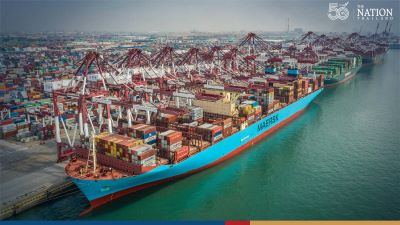
Fed signals easing of markets supports could start in November, despite ongoing threat of delta variant #SootinClaimon.Com

#SootinClaimon.Com : ขอบคุณแหล่งข้อมูล : หนังสือพิมพ์ The Nation.

https://www.nationthailand.com/business/40006525


WASHINGTON – Reflecting growing optimism for the economic recovery, the Federal Reserves top policymakers signaled on Wednesday they will ease supports for markets in November if the economy progresses as expected, while also moving up expectations for a rate hike in 2022.
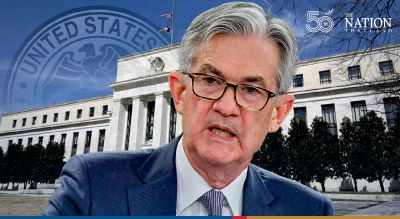
Federal Reserve Chair Jerome H. Powell also raised concerns Wednesday about the ongoing coronavirus pandemic and its grip on the economy. At the end of their two-day policy meeting, Fed officials downgraded earlier, more-encouraging expectations for job and economic growth by the end of the year, amid the continued strain of the public health crisis.

The Fed’s assessment captures two simultaneous tales of the economy. By some measures, the economy has made a full recovery from the pandemic and is on track for even more growth. At the same time, jobs and peoples’ livelihoods are still being threatened by a surge in coronavirus cases and drop-off in government aid in a pandemic that has killed 1 in 500 Americans.

Fed officials must now find a way to unwind the central bank’s financial supports while acknowledging the economy’s lingering holes. Overall, the country is still down more than 5 million jobs from before the pandemic, and the unemployment rates for Black and Hispanic workers are well above that for White workers.

Fed officials had said over the summer that they hoped job growth would gain momentum this fall, with more people getting vaccinated, enhanced unemployment benefits phasing out and schools reopening, helping alleviate child-care responsibilities. But then “delta happened,” as Powell put it in a Wednesday news conference. The surge in cases is hurting some workers’ confidence about returning to jobs and weighing on consumer spending.

“Hiring and spending in these face-to-face service industries – travel and leisure – it just kind of stopped during those months,” Powell said, referring to the recent surge of the delta variant of the coronavirus. “The big shortage in jobs was really in travel and leisure, and that’s clearly because of delta.”

Policymakers on Wednesday signaled they still predict that inflation – which has risen faster and higher than the Fed expected this year – will simmer back down closer to the central bank’s goal of around 2% next year.

ADVERTISEMENT

Stocks rallied off news that the Fed is not pulling back its financial supports just yet. The Dow Jones industrial average climbed more than 330 points, or 1%, and the S&P 500 index rose nearly 1%. Fed officials have said there will be plenty of notice before the Fed starts to pull back its stimulus, to avert turmoil in the markets.

Fed leaders have been saying they needed to see “substantial further progress” on inflation and job growth before they start slowly pulling back on vast financial supports to the economy, namely $120 billion a month in asset purchases that have continued throughout most of the pandemic.

Many Fed officials, including Powell, say that bar has been met on inflation. As the global economy emerges from the pandemic’s depths, supply chains – for used cars, food, construction materials and more – have struggled to catch up with pent-up consumer demand, pushing prices up. The Fed’s preferred gauge of inflation showed prices rose 4.2% in July compared with the year before and 0.4% compared with June.

On employment, Powell said during the news conference that it was his opinion that “the test is all but met.” He said he would not necessarily need to see a gangbuster jobs growth for September to fill that gap and would be satisfied with “a decent employment report.”

Still, Powell acknowledged differences of opinion among the Fed’s top ranks on when to begin pulling back on supports. He said that many officials “feel the test for employment has been met,” while “others feel that it’s close” but want to see a little more progress.

Powell is known to value consensus at the Fed, especially on major policy decisions. Still, he repeatedly pointed toward the Fed’s next meeting in November as a marker for when the Fed could start to “taper” its sprawling bond-buying program.

“There’s very broad support on the committee for this plan, quite broad support for this approach,” Powell said.

Depending on the pace and structure, the Fed could be in position to entirely wind down its asset purchases by the middle of next year. That could put the Fed in a position to raise rates sometime afterward, though Powell has warned that the Fed’s projections on interest rates can easily change with time.

Meanwhile, the country is facing an urgent financial crisis as lawmakers clash on whether to raise the U.S. government’s borrowing limit, known as the debt ceiling. There is growing alarm among economists and the business community about what would happen if there was an unprecedented default on the federal debt.

Powell on Wednesday added his voice of concern, saying it was “very important that the debt ceiling be raised in a timely fashion, so that the United States can pay its bills when and as they come due. That’s a critically important thing.”

“No one should assume that the Fed or anyone else can protect the markets or the economy in the event of a failure – fully protect – in the event of a failure,” Powell added.

Fed leaders lowered their expectations for the unemployment rate later this year, projecting it could be 4.8% by the end of 2021, compared with a previously suggested 4.5%, according to the Fed’s newest crop of economic projections. They also lowered their estimates for the economy’s overall growth. The projections pointed to gross domestic product growing 5.9% by the end of the year. The projection from June was for 7% growth.

Last month, Powell teed up the possibility that asset purchases could start to be scaled back later this year, based on the pace of the economic recovery.

While the labor market showed clear progress picking up new jobs over the summer – with the unemployment rate edging down to 5.2% in August – that jobs report also showed how vulnerable the recovery is amid the spread of the delta variant. The economy added only 235,000 jobs last month – well short of expectations – with the restaurant and retail sectors shedding positions. The rise in coronavirus cases, especially among unvaccinated Americans, has also rattled consumer confidence.

Fed leaders have said they do not expect the delta variant to lead to shutdowns or significantly alter the economic recovery. Many say they are taking stock of many months of jobs data, rather than fixating on August’s disappointing numbers.

“Some months come in stronger, some not so strong. It’s really about accumulation,” John Williams, president of the Federal Reserve Bank of New York, said earlier this month.

Still, Powell on Wednesday pointed to challenges for the labor market, including parents who must constantly weigh whether their children’s schools will stay open as they consider job options. Powell has long maintained that the surest way to stabilize the economic recovery is to vaccinate as many people as possible and end the public health crisis.

“Rather than going ahead and taking a job and having to quit it, you’re going to wait until you’re confident,” Powell said.

Another big question hanging over the Fed is whether the White House will decide to keep Powell and others in leadership positions. In the coming months, the Biden administration will have as many as four slots to fill with its own nominees. Powell was made chair by President Donald Trump.

Powell’s term is up in February, and he did not answer a question Wednesday about his possible reappointment. Still, the personnel decision is of enormous consequence and is fanning political flames across Washington and beyond.

The White House must also decide whom to nominate to be the Fed’s top banking cop after Randal Quarles. Quarles’s term as vice chair for supervision expires in mid-October.

The decision has taken on added scrutiny as many liberals criticize Powell’s record on banking regulation. Some liberal advocacy groups and Democrats in Congress have raised concerns that a more left-leaning banking cop would not be as effective under Powell if he stays on as chair.

Powell on Wednesday said he respects the authority of whoever is in that role – as he did with Daniel Tarullo, a Democrat who led the Fed’s moves to tighten Wall Street oversight when Janet L. Yellen, now the treasury secretary, was chair.

“It’s fully appropriate for a new person to come in and look at the current state of [regulatory policy] and suggest appropriate changes, and I welcome that,” Powell said.

Published : September 23, 2021

SET Index up despite rising outflow risk. #SootinClaimon.Com

#SootinClaimon.Com : ขอบคุณแหล่งข้อมูล : หนังสือพิมพ์ The Nation.

https://www.nationthailand.com/business/40006514


The Stock Exchange of Thailand (SET) Index closed at 1,619.59 on Wednesday, up 4.73 points or 0.29 per cent. Transactions totalled THB79.02 billion with an index high of 1,623.86 and a low of 1,611.76.

In the morning session, Krungsri Securities forecast the day’s index would fluctuate between 1,605 and 1,625 points as investors delayed trading to see whether the US Federal Open Market Committee would taper its quantitative easing programme.

Meanwhile, China Evergrande’s rising default risk, a US corporate tax hike and the weakening baht could trigger fund outflows from the SET, it warned.

“Hence, we advise investors to buy stocks that have gained specific positive sentiment,” Krungsri Securities said.

The 10 stocks with the highest trade value today were SCB, TRUE, ADVANC, KBANK, EE, DELTA, PTT, KCE, BBL and KTC.

ADVERTISEMENT

Related stories:

Other Asian indices were down with one exception:

Japan’s Nikkei Index closed at 29,639.40, down 200.31 points or 0.67 per cent.

China’s Shanghai SE Composite Index closed at 3,628.49, up 14.52 points or 0.40 per cent, while the Shenzhen SE Component Index closed at 14,277.08, down 82.28 points or 0.57 per cent.

Taiwan’s TAIEX Index closed at 16,925.82, down 350.97 points or 2.03 per cent.

Hong Kong’s Hang Seng Index was closed for the day following the Chinese Mid-Autumn Festival.

South Korea’s KOSPI was closed for Korean Thanksgiving Day.

Published : September 22, 2021

Gold rides a wave crest in opening trade #SootinClaimon.Com

#SootinClaimon.Com : ขอบคุณแหล่งข้อมูล : หนังสือพิมพ์ The Nation.

https://www.nationthailand.com/business/40006490


The price of gold surged by THB250 in morning trade on Wednesday.

AGold Traders Association report at 9.25am said the buying price of a gold bar was THB28,050 per baht weight and selling price THB28,150, while gold ornaments cost THB27,545.72 and THB28,650, respectively.


At close on Tuesday, the buying price of a gold bar was THB27,800 per baht weight and selling price THB27,900, while gold ornaments cost THB27,303.16 and THB28,400, respectively.


The spot gold price on Wednesday morning hovered around US$1,777 (THB59,422) per ounce after Comex gold at close on Tuesday rose sharply by $14.40 to $1,778.20 per ounce due to support in buying gold as a safe-haven asset amid concerns about the debt crisis surrounding China’s Evergrande Group, in addition to the depreciation of the dollar, which is also a factor supporting the rise in gold prices. 


Investors are also keeping an eye on results of a key US Federal Reserve meeting on Thursday, which in the meanwhile is expected to affect the movement of gold prices.

Related news: 

ADVERTISEMENT

Published : September 22, 2021

Index all set to seesaw today #SootinClaimon.Com

#SootinClaimon.Com : ขอบคุณแหล่งข้อมูล : หนังสือพิมพ์ The Nation.

https://www.nationthailand.com/business/40006488


The Stock Exchange of Thailand (SET) Index rose by 4.64 points or 0.29 per cent to 1,619.50 on Wednesday morning, witnessing a high of 1,620.76 and a low of 1,614.19 in opening trade.

Krungsri Securities predicted the day’s index would fluctuate between 1,605 and 1,625 points as investors were expected to delay trading as they watch and see whether the US Federal Open Market Committee will go ahead and taper its vital quantitative easing programme.

In addition, it said uncertainty over a default by China’s Evergrande, besides a US corporate tax hike and a weakening baht could trigger fund outflows, all of which would have an impact on the index.

“Hence, we advise investors to buy stocks which have gained specific positive sentiment,” Krungsri Securities said.

It recommended purchasing of the following companies’ shares as an investment strategy:

ADVERTISEMENT

▪︎ Hana, KCE, TU, CPF, GFPT, Asian, EPG, NER, Sun and APure, which benefit from a weakening baht.

▪︎ Banpu, Lanna, CKP, Gulf, CHG, BCH and BDMS, whose third-quarter profit is expected to rise.

Related stories: 

The SET Index closed at 1,614.86 on Tuesday, up 11.80 points or 0.74 per cent. Transactions totalled THB83.91 billion with an index high of 1,618.19 and a low of 1,591.81.

Published : September 22, 2021

Baht might weaken by risk-off market pressure: market strategist #SootinClaimon.Com

#SootinClaimon.Com : ขอบคุณแหล่งข้อมูล : หนังสือพิมพ์ The Nation.

https://www.nationthailand.com/business/40006486


The baht opened at 33.39 to the US dollar on Wednesday, weakening from Tuesday’s closing rate of 33.37.

The Thai currency is likely to move between 33.35 and 33.50 during the day, Krungthai Bank market strategist Poon Panichpibool predicted.

Poon said the baht might weaken by the risk-off pressure from the currency market in the short term. A strengthening dollar and a weakening yuan brought on by China’s Evergrande crisis might have a wide impact on the market, he said.

Meanwhile, other factors that could influence the Thai market are still vague, especially the Covid-19 situation, Poon said.

Moreover, the quantity of available bonds seems to be more than expected, because the government has raised the public debt ceiling and borrowed more. Investors, especially foreigners, might shun such long-term bonds.

Related News

ADVERTISEMENT

Weakening trend continues for baht

Baht level linked to signal from Fed, gold trend

Baht hits weakest level in almost a month

Poon pointed out that the baht might fluctuate according to the dollar if the US Federal Reserve signalled a monetary policy that’s tighter than the market expected.

He said some Fed officials could support an interest rate increase in 2022, or most officials could even back a gradual increase four times in 2024. This could cause the dollar to strengthen. The US currency might weaken if the Fed does not provide a clear signal or if any interest rate increase takes place according to market expectation.

Markets are in a risk-off state as wary investors speculate how Evergrande’s default would finally be tackled. If the Chinese government steps in, the problem will not heavily affect the monetary system or the economy, Poon said.

Investors are also awaiting results of a key Fed meeting on Thursday, he added.

Published : September 22, 2021

Markets wrap: Stocks fall after dip buying enthusiasm wanes #SootinClaimon.Com

#SootinClaimon.Com : ขอบคุณแหล่งข้อมูล : หนังสือพิมพ์ The Nation.

https://www.nationthailand.com/business/40006466


U.S. stocks fell in the final minutes of trading a day after registering the biggest slide in four months as traders assessed risks from Chinas crackdown on the real-estate sector and this weeks Federal Reserve meeting.

The S&P 500 had whipsawed investors through the session after opening broadly higher, which had initially suggested some improvement in sentiment after concerns about fallout from China Evergrande Group’s debt woes roiled global markets Monday. The industrial, communication services and utilities sectored weighed on the benchmark index. Disney slumped the most since May after the company forecast slower subscriber growth.

“Investors remain on the edge of their seats as they await tomorrow’s update from the Fed as well as details around if and how the Chinese government will respond to the Evergrande crisis,” said Adam Phillips, managing director of portfolio strategy at EP Wealth Advisors.

The Stoxx Europe 600 index climbed about 1%, rebounding from the biggest slump in two months.

Aside from worries over Evergrande’s ability to make good on $300 billion of liabilities, investors are also positioning for the two-day Fed meeting that started Tuesday, where policy makers are expected to start laying the groundwork for paring stimulus. Treasury yields were mostly flat and the dollar was little changed.

“We have the virus that’s kicked in again as a concern,” said John A. Carey, a money manager at Pioneer Investment Management Inc. “And then there’s the situation in Washington with the still uncertain outlook for various tax and spending plans, and so it’s hard for people to know which way to go.”

A Hong Kong gauge of real-estate firms steadied, after developers disputed a report of pressure from the Chinese government. Evergrande slid deeper in equity and credit markets. Concerns remain about broader contagion after S&P Global Ratings said the developer is on the brink of default. China’s markets reopen on Wednesday after holidays.

ADVERTISEMENT

Elsewhere, Bitcoin slid for a third day in volatile trading, tumbling as much as 7.6% before trading around $42,000. Oil finished higher after a two-day slide, while iron ore futures took a breather following Monday’s rout, though stayed below $100 a ton on China’s steel output curbs.

Here are key events to watch this week:

– Bank of Japan rate decision, Wednesday

– Federal Reserve rate decision, Wednesday

– Bank of England rate decision, Thursday

– Fed Chair Jerome Powell, Fed Governor Michelle Bowman and Vice Chairman Richard Clarida discuss pandemic recovery, Friday

Some of the main moves in markets:

– – –

– The S&P 500 was little changed as of 4:08 p.m. New York time

– The Nasdaq 100 rose 0.1%

– The Dow Jones industrial average fell 0.1%

– The MSCI World index rose 0.1%

– – –

– The Bloomberg Dollar Spot Index was little changed

– The euro was little changed at $1.1725

– The British pound was little changed at $1.3660

– The Japanese yen rose 0.2% to 109.21 per dollar

– – –

– The yield on 10-year Treasuries advanced one basis point to 1.32%

– Germany’s 10-year yield was little changed at -0.32%

– Britain’s 10-year yield advanced one basis point to 0.81%

– – –

– West Texas Intermediate crude rose 0.4% to $70.56 a barrel

– Gold futures rose 0.7% to $1,775.50 an ounce

Published : September 22, 2021

Asean-Hong Kong FTA expands to boost economic recovery post-Covid #SootinClaimon.Com

#SootinClaimon.Com : ขอบคุณแหล่งข้อมูล : หนังสือพิมพ์ The Nation.

https://www.nationthailand.com/blogs/business/40006460


Hong Kong and Asean have agreed to expand bilateral trade under their free-trade and investment agreements, the Thai Commerce Ministry revealed on Tuesday.

The two agreements are crucial to the region’s economic recovery after the pandemic, said Commerce Vice Minister Sansern Samalapa, who headed the Thai delegation at last week’s 5th Asean-Hong Kong Economic Ministers’ Meeting.

All sides agreed to add five more branches of economic and academic cooperation to the Asean-Hong Kong, China Free Trade Area (AHKFTA) Agreement and the Asean-Hong Kong Investment Agreement (AHKIA).

The five branches are sanitary and phytosanitary measures; standards, technical regulations and conformance assessment processes; intellectual property; digital technology for trade facilitation; and investment promotion.

The meeting also agreed to accelerate talks on the next negotiating plan, which covers product-specific rules under the AHKFTA, and investment clauses.

Hong Kong has already exempted import duties on all Asean products under the two agreements, which came into effect in February. It has also opened up its content production services to Thai radio and television operators.

Meanwhile, the territory has pledged 5 million Hong Kong dollars (21.4 million baht) to develop potential of Asean member countries.

Hong Kong is Thailand’s 8th largest trading partner. Trade between the two territories in the first seven months this year (January-July), totalled $8.418 billion (281 billion baht), up 10.35 per cent from the same period in 2020.

Published : September 21, 2021

Thai stocks rebound after sharp fall on Monday #SootinClaimon.Com

#SootinClaimon.Com : ขอบคุณแหล่งข้อมูล : หนังสือพิมพ์ The Nation.

https://www.nationthailand.com/business/40006457


The Stock Exchange of Thailand (SET) Index closed at 1,614.86 on Tuesday, up 11.80 points or 0.74 per cent. Transactions totalled THB83.91 billion with an index high of 1,618.19 and a low of 1,591.81.

The index bounced back after a sharp fall of 22.59 points or 1.39 per cent on Monday.

The 10 stocks with the highest trade value today were DELTA, SCB, PTT, KBANK, AOT, KCE, SCGP, BBL, GULF and ADVANC.

Related stories:

ADVERTISEMENT

Other Asian indices were mixed:

Japan’s Nikkei Index closed at 29,839.71, down 660.34 points or 2.17 per cent.

Hong Kong’s Hang Seng Index closed at 24,221.54, up 122.40 points or 0.51 per cent.

China and Taiwan indices were closed for Mid-Autumn Festival.

South Korea’s KOSPI was closed for Korean Thanksgiving Day.

Published : September 21, 2021

Thailand reevaluates CPTPP pact after China membership expands market size #SootinClaimon.Com

#SootinClaimon.Com : ขอบคุณแหล่งข้อมูล : หนังสือพิมพ์ The Nation.

https://www.nationthailand.com/business/40006450


The Department of Trade Negotiations (DTN) said on Monday that Thailand is reevaluating the pros and cons of the Comprehensive and Progressive Trans-Pacific Partnership (CPTPP) free trade agreement after China signed the pact last week.

Auramon Supthaweethum, the department’s director-general, said the market size of CPTPP is now bigger than it was when it only had 11 signatories, namely Japan, Australia, New Zealand, Canada, Mexico, Peru, Chile, Singapore, Brunei, Malaysia and Vietnam.

“With China, the CPTPP population has expanded to over 1.9 billion people or 25 per cent of the global population with a total gross domestic product [GDP] of approximately US$25.3 trillion or 30 per cent of the global GDP,” she said.

However, she added that CPTPP was smaller than the Regional Comprehensive Economic Partnership (RCEP) which comprises 15 members, namely Indonesia, Malaysia, the Philippines, Singapore, Thailand, Brunei, Vietnam, Laos, Myanmar, Cambodia, China, Japan, South Korea, Australia and New Zealand.

The RCEP is the world’s largest free trade agreement covering over 2.3 billion people or 30 per cent of the global population with a total GDP of $28.5 trillion or 33.6 per cent of the global GDP.

“China’s move to join the CPTPP agreement will help expand trade and investment opportunities among member countries, especially participation in the regional supply chain, as China is an important material resource and production base in the region,” she said.

“Meanwhile, it proved that China is ready to improve standards and regulations to match those of member countries, such as intellectual property protection, labour rights, e-commerce and state enterprises’ operations.”

Thailand has free trade agreements with nine CPTPP members, namely Japan, Singapore, Vietnam, Brunei, Malaysia, Australia, New Zealand, Chile and Peru.

ADVERTISEMENT

Auramon added that Thailand was getting ready to negotiate a free-trade agreement between Asean countries and Canada soon.

“The expansion of CPTPP had caused Thailand to reevaluate agreement’s benefits and impacts, such as tariff reduction or suspension, product origin and trade facilitation rules,” she said.

The Commerce Ministry will also reevaluate the agreement before it proposes changes to the Cabinet, she said.

Since, CPTPP is an issue that is closely followed by many sectors, the International Economic Policy Committee, which is made of senior representatives of the economic sector, is required to participate in the reevaluation as well.

Published : September 21, 2021

Energy policy panel approves initial 20-year national power plan #SootinClaimon.Com

#SootinClaimon.Com : ขอบคุณแหล่งข้อมูล : หนังสือพิมพ์ The Nation.

https://www.nationthailand.com/business/40006444


The Energy Policy Administration Committee chaired by Energy Minister Supattanapong Punmeechaow on Monday approved the first revision of the National Power Development Plan of 2018-2037, a source said.

This version reportedly includes the objective of securing national energy stability by producing clean energy, reducing carbon emission and helping Thailand become a decarbonised society. The objective will be implemented between 2021 and 2030.

The committee has also tasked the Energy Policy and Planning Office (EPPO) and Department of Alternative Energy Development and Efficiency (DEDE) to revise the annual production capacity of power plants fueled by coal and natural gas, boost their capacity through the use of renewable energy (biomass, biogas, solar, wind, community and industrial wastes), as well as consider buying electricity generated by hydro-power plants from neighboring countries.

Related Stories

PTG tapping strong growth in household LPG sector to expand market penetration

Japanese investors eye clean energy projects in Thailand’s EEC

Incentives for promotion of electric vehicles to be announced next month

The committee also agreed to extend the price guarantee for liquefied petroleum gas (LPG) at Bt318 per 15-kilogram canister for three months until December 31. The move aims to ease people’s financial burden in the fallout of Covid-19 even though the global price of LPG is trending upwards. The Energy Ministry has been tasked with monitoring the price of LPG closely and proposing a price revision to the committee when necessary.

ADVERTISEMENT

Published : September 21, 2021