The Stock Exchange of Thailand (SET) Index fell by 3.49 points, or 0.22 per cent, to 1,599.57 on Tuesday morning.
The volume of total transactions was THB4.16 billion with an index high of 1,605.37 and a low of 1,599.12 in opening trade.
The 10 stocks with the highest trade value were: KBANK, EE, DELTA, SAWAD, CPALL, PTT, SCC, CPF, KCE and TTA.
The SET Index closed at 1,603.06 on Monday, down 22.59 points or 1.39 per cent. Transactions totalled 85.01 billion baht with an index high of 1,620.72 and a low of 1,601.16.
The price of gold peaked by THB150 in morning trade on Tuesday.
AGold Traders Association report at 9.23am said the buying price of a gold bar was THB27,800 per baht weight and selling price THB27,900, while gold ornaments cost THB27,303.16 and THB28,400, respectively.
At close on Monday, the buying price of a gold bar was THB27,650 per baht weight and selling price THB27,750, while gold ornaments cost THB27,151.56 and THB28,250, respectively.
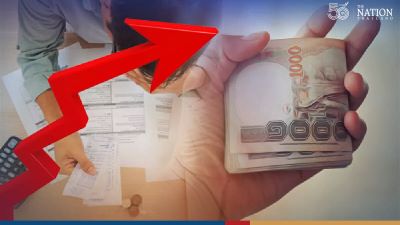
The baht opened at 33.35 to the US dollar on Tuesday, weakening from Monday’s closing rate of 33.34.
The Thai currency is likely to move between 33.30 and 33.45 during the day, Krungthai Bank market strategist Poon Panichpibool predicted.
Poon said the baht is still pressured by weakening factors than strengthening in the short term. Foreign investors might sell more Thai bonds amid concerns that bond issues in the future might be more than expected after the Thai government raised the public debt ceiling and borrowed more.
Some investors have stopped speculating that the baht will strengthen and sold short-term bonds, due to worries of a new Covid-19 wave.
Poon added that the baht was pressured by the strengthening dollar from the risk-off state in the market. The baht was also pressured by the weakening yuan that affected the Asian currencies market from Evergrande’s default.
The key resistance level for the baht would be at 33.50 to the dollar. Poon speculated that the rising price of gold might prompt some investors to sell while the gold price rebounds.
The rise in gold price might help the baht strengthen because investors who sell gold in dollars will exchange them back to the baht.
While voters prepare to render their verdict on Prime Minister Justin Trudeaus government at the polls on Monday, the market is taking a distinctly downbeat view of the local currency, despite recent buoyancy in resource prices.
Indeed the rise in global commodity costs could even become a headwind for the country’s economy rather than a tailwind as concerns about domestic inflation take center stage for citizens, politicians and central bankers alike.
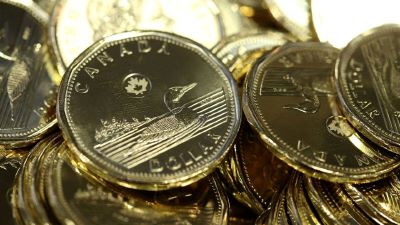
The loonie, as it is affectionately dubbed because of the bird that graces Canada’s coinage, has been one of the worst-performing developed-market currencies in the second half of this year. After outstripping all its Group-of-10 counterparts in the first six months of 2021, it’s fallen 3.6% since June 30. And activity within derivative markets suggests there could be more pain to come for the currency even as the Bank of Canada starts to pave the way for monetary policy tightening.
“It’s been pretty clear over the last week or two that the CAD is just not responding to some of the positive fundamental impulses in the way we would have expected,” said Shaun Osborne, chief currency strategist at Scotiabank. “I suspect the CAD may continue to struggle a little bit.”
On Monday, the loonie was the second-worst performing G-10 currency amid a broad stock and commodity rout, as investors weighed the impact of China’s struggling real estate sector.
ADVERTISEMENT
In the options market, the right to sell the Canadian dollar versus the greenback in three months’ time has been rising in cost relative to the price of purchase rights. So-called risk reversals, which compare the costs of these puts and calls, this month reached levels unseen since June 2020, suggesting increased interest in hedging against Canadian dollar losses.
One- and three-month implied volatility measures have ticked up in recent weeks, suggesting that some investors are bracing for an increase in activity.
Positioning data from the Commodity Futures Trading Commission also shows a dialing back of Canadian dollar bullishness. While speculators maintain a net long position, it has fallen notably from its recent peak in mid July, while asset managers are also holding smaller bullish positions than they were a couple of months ago.
All this comes even as the Bloomberg Commodity Index has risen 2% since June 30, although crude oil is around 4.2% lower.
Opinion polls in Canada have indicated that Trudeau’s Liberals are in a tough fight to remain in power, despite promises to boost spending. While elections have not typically been a source of major investor disquiet when it comes to Canada, there are a number of elements to this year’s battle between Trudeau and Conservative challenger Erin O’Toole which could potentially sway markets.
The biggest risk will be if a minority government is formed and is unable to make any headway on policy decisions, potentially triggering another election in the not-too-distant future, according to Toronto-Dominion Bank analyst Mark McCormick. This could lead to elevated volatility in the short-run, he said.
Another major potential impact is on the monetary policy backdrop. The central bank’s five-year inflation targeting mandate is up for renewal this year and there is a chance that Bank of Canada Governor Tiff Macklem might request more flexibility, so whoever is in power could hold the key to that.
O’Toole has said he favors the inflation target at 2% as regular people struggle to make ends meet. Trudeau said that families, not monetary policy, would be his government’s top economic priority and wants to continue with increased stimulus.
New data released Wednesday showed year-on-year consumer-price gains accelerated to 4.1% in August, the fastest inflation since 2003 and the fifth consecutive reading above the Bank of Canada’s 3% cap. That landscape of accelerating inflation will, of course, be critical for monetary policy: The BOC boss said earlier this month he intends to scale back bond purchases as the economy recovers, leaving open the possibility for higher rates if consumer costs keep on rising. But it will also potentially have an effect on the election result itself, the kinds of fiscal policy that emerge in its wake and the eventual decision surrounding the BOC mandate.
“Election outcomes can have an impact on fiscal policy which reverberates into monetary policy or vice-versa,” said Tom Nakamura, a portfolio manager at AGF Management. “There is some concern about the election.”
Looming over all this is the specter of the U.S. monetary policy decision this Wednesday. Any notable signals from the Federal Reserve about its potential timeline for asset-purchase tapering or interest-rate hikes are likely to have a significant impact on risk assets around the world, including the Canadian dollar and the commodities complex.
“It’s clear the Fed is going to start the taper process this year and at the same time we reached peak BOC hawkishness,” said McCormick. “The biggest driver of loonie now is the outlook for the dollar and global risk sentiment.”
U.S. stocks climbed from the lowest levels of the day following a rout sparked by investor angst over Chinas real-estate sector and Federal Reserve tapering.
The S&P 500 was down about 2%, after slumping as much as 2.9%, the biggest one-day slide since October 2020. Treasuries gained along with the dollar before Wednesday’s Fed meeting, where policy makers are expected to start laying the groundwork for paring stimulus.
“If the market is ripe for a correction, ’tis the season for one,” said Anne Wickland, Portfolio Manager at Easterly Investment Partners LLC. “Most selloffs seem to occur at the end of the third quarter, beginning of the fourth as investors start to adjust future expectations.”
The Stoxx Europe 600 index dropped 1.7% to a two-month low. Raw materials led the broad-based retreat as iron ore extended a slump below $100 a ton and base metals declined after China stepped up restrictions on industrial activity.
Hong Kong shares slumped amid the biggest selloff in property stocks in more than a year as traders tracked the risk of contagion from the debt crisis at developer China Evergrande Group, which is fueling new fears about China’s growth path.
“China is not investable, not at this point — even on a government level because you just really don’t know what protection you’re going to have or what the currency is going to do,” Ed Yardeni, president of Yardeni Research, said in an interview on Bloomberg TV.
Aside from Evergrande and the prospect of reduced Fed stimulus, financial markets also face risks from uncertainty over the outlook for President Joe Biden’s $4 trillion economic agenda as well as the need to raise or suspend the U.S. debt ceiling. Investors were already fretting over a slowing global recovery from the pandemic and inflation stoked by commodity prices.
ADVERTISEMENT
Treasury Secretary Janet Yellen said the U.S. government will run out of money to pay its bills sometime in October without action on the debt ceiling, warning of “economic catastrophe” unless lawmakers take the necessary steps.
Meanwhile, emerging-market stocks headed for their biggest drop in a month, while Russia’s ruble and Chile’s peso led developing-nation currency declines. Bitcoin briefly fell below $43,000. WTI crude oil extended a drop toward $70 a barrel.
– – –
Some of the main moves in markets:
-The S&P 500 fell 2.2%
-The Nasdaq 100 fell 2.7%
-The Dow Jones Industrial Average fell 2.2%
-The MSCI World index fell 2%
– – –
-The Bloomberg Dollar Spot Index rose 0.2%
-The euro was little changed at $1.1727
-The British pound fell 0.6% to $1.3658
-The Japanese yen rose 0.5% to 109.41 per dollar
– – –
–The yield on 10-year Treasuries declined five basis points to 1.31%
–Germany’s 10-year yield declined four basis points to -0.32%
–Britain’s 10-year yield declined five basis points to 0.79%
– – –
–West Texas Intermediate crude fell 1.9% to $70.62 a barrel
Bill Gates raised more than $1 billion in corporate funding for Breakthrough Energy Catalyst, drawing on BlackRocks Larry Fink and Microsofts Satya Nadella to rally support for some of the worlds most demanding clean-energy projects.
BlackRock is making a five-year, $100 million grant from its charitable foundation. Microsoft and the other backers — General Motors, Bank of America, American Airlines, Boston Consulting and ArcelorMittal — are providing a mix of equity capital and so-called offtakes, or purchase agreements tied to the projects.
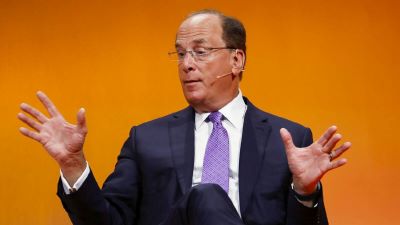
“We’re not doing this to make money,” Fink, BlackRock’s CEO, said in an interview together with Gates on Bloomberg Television. “We’re doing this to seed these ideas, to rapidly accelerate ideas.”
Gates established Breakthrough Energy Catalyst to accelerate the commercial viability of four key solutions to the climate crisis: green hydrogen, sustainable aviation fuel, long-duration battery storage and carbon capture from the air. In practice, Catalyst will supply the cash needed to get capital-intensive projects off the ground, before debt financing and government funds can be raised to cover the remaining 90% of the cost.
Today, none of those four solutions is cheap enough to spur widespread adoption. For example, jet fuel derived from more-sustainable sources such as industrial waste or alcohol is about five times as expensive as kerosene.
ADVERTISEMENT
Ideally, the Catalyst projects will, by operating at scale, prove that the underlying technology can be cost-competitive and eliminate the “green premium” over conventional standards.
“The model here is what happened with wind and solar and lithium-ion,” Gates said. “Those products had very high prices compared to conventional techniques, and fortunately Germany and Japan and other buyers funded the scale-up, and now those products fit the normal sort of client-investing metrics.”
The difference now is speed. Governments that signed the Paris Agreement on climate in 2015 are racing to meet a mid-century goal of reaching net zero, which requires not only emissions cuts but also removing carbon dioxide from Earth’s atmosphere.
Nine of the world’s largest economies and many companies, including BlackRock, have pledged to reach that target.
“The pathway for solar and wind, that was a 30-year pathway to make it competitive with hydrocarbons,” Fink said. “We don’t have 30 years. We don’t have 10 years.”
Gates, who has estimated the cost of reaching net-zero emissions at $50 trillion, is hoping his program becomes a model for public-private cooperation to address the threat of climate change.
In August, Catalyst agreed to raise $1.5 billion in return for billions more in support, some of it contingent on legislation from the U.S. Department of Energy. Separately, Catalyst committed $500 million in June in return for matching funds from the European Commission and European Investment Bank for a similar effort across the Atlantic.
Gates first pitched Nadella and then Fink, who said he in turn had some “very serious conversations” persuading fellow CEOs to back Catalyst. ArcelorMittal is making a $100 million equity investment over five years, and American Airlines also is contributing $100 million. The other partners didn’t detail their involvement.
Up-front expense and scalability are two major differences between most tech products and clean-energy solutions. While little to no capital may be required to develop a smartphone app, even a pilot project in carbon capture can cost tens of millions of dollars.
Also, large investors have mostly steered clear of ambitious green undertakings because of uncertain returns. Gates himself has noted publicly that he “lost a lot of money” on battery development.
Fink, who oversees almost $10 trillion in assets at BlackRock, said there’s an “enormous” amount of capital waiting to invest in technology proven to reduce the green premium.
“I’m not frightened about where the money’s coming from,” he said. “I just want to make sure that we have the science and technology and the viability. Once we know that, the capital will be there.”
Coinciding with the infusion of new cash and commitments, Catalyst is inviting would-be projects to fill out a request for information. That’ll be followed by a more precise and technical request for proposal, or RFP, possibly by the end of the year.
Gates, in the interview, laid out a timeline and some parameters:
–Catalyst will start funding projects in 2022, probably several in each area.
–Funding will cover early-stage costs such as design and add up to “maybe 10%” of the total cost.
–The plan is to recruit a total of about 20 companies as anchor partners and increase the pool of private capital to $3 billion.
–Green hydrogen and sustainable jet fuel are advanced enough that they could “get to a low price” in three to four years.
“I’d be very disappointed if we don’t see a dramatic reduction in the green premium, even in less than five years,” Gates said. “Because that should let us do two rounds of projects, the first projects and then take the learning from those first two and a half years and do a second round that will bring the costs down even further.”
Catalyst is the latest in a series of initiatives that Gates has founded under the Breakthrough Energy banner. A venture-capital arm, Breathrough Energy Ventures, raised some of its money from billionaires Jeff Bezos and Michael Bloomberg, the founder of Bloomberg LP, the parent company of Bloomberg News. Catalyst is run separately and funded independently.
The State Fiscal Policy Committee on Monday approved raising Thailand’s public debt ceiling from 60 per cent to 70 per cent of GDP.
The new limit would be proposed at Tuesday’s Cabinet meeting for approval, said Finance Minister Arkhom Termpittayapaisith.
The committee, which is chaired by Prime Minister General Prayut Chan-o-cha, said it approved the hike in case the government needs to borrow more money in the medium term.
A Finance Ministry source said raising the debt ceiling would aid the government in setting its budget deficit for fiscal year 2022, which starts next month.
The government has so far borrowed 1.5 trillion baht to fund Covid-19 relief and stimulus programmes, 500 billion baht of which was approved this year. However, Bank of Thailand Governor Sethaput Suthiwartnarueput recently urged the government to borrow another 1 trillion baht to aid recovery from the pandemic.
The committee said Thailand’s fiscal position remains healthy with good debt-repayment capability.
The Stock Exchange of Thailand (SET) Index closed at 1,603.06 on Monday, down 22.59 points or 1.39 per cent. Transactions totalled 85.01 billion baht with an index high of 1,620.72 and a low of 1,601.16.
In the morning session, Krungsri Securities forecast the index would fluctuate between 1,615 and 1,635 points due to lack of positive sentiment.
It said uncertainty over a US corporate tax hike and investors’ move to delay investment to hear the result of the US Federal Open Market Committee session on September 21-22 would pressure the index.
“However, mass buy-ups of stocks which gained specific positive sentiment and whose third-quarter profit is expected to rise would help boost the index,” Krungsri Securities said.
The 10 stocks with the highest trade value today were KBANK, PTT, KCE, SCGP, BANPU, TTA, DELTA, ADVANC, HANA and PTTGC.
The Stock Exchange of Thailand (SET) Index fell by 8.61 points, or 0.53 per cent, to 1,617.04 on Monday morning, witnessing a high of 1,618.58 and a low of 1,614.90 in opening trade.
The SET Index had closed at 1,625.65 on Friday, down 6.05 points or 0.37 per cent. Transactions totalled THB105.67 billion with an index high of 1,635.04 and a low of 1,617.31.
Krungsri Securities forecast the index on Monday would fluctuate between 1,615 and 1,635 points due to lack of positive sentiment.
It said uncertainty over a US corporate tax hike and investors’ move to delay investment to hear the result of the Federal Open Market Committee (FOMC) session on September 21-22 would pressure the index.
“However, mass buy-ups of stocks which gained specific positive sentiment and whose third-quarter profit is expected to rise would help boost the index,” Krungsri Securities said.
It also recommended buying of the following companies’ shares as an investment strategy:
ADVERTISEMENT
▪︎ HANA, KCE, TU, CPF, GFPT, ASIAN, EPG, NER, SUN and APURE, which benefit from the weakening baht.
▪︎ BANPU, LANNA, CKP, GULF, CHG, BCH and BDMS, whose third-quarter profit is expected to rise.
The price of gold dropped by THB50 in morning trade on Monday.
AGold Traders Association report at 9.28am said the buying price of a gold bar was THB27,550 per baht weight and selling price THB27,650, while gold ornaments cost THB27,060.60 and THB28,150, respectively.
At close on Saturday, the buying price of a gold bar was THB27,600 per baht weight and selling price THB27,700, while gold ornaments were THB27,106.08 and THB28,200, respectively.
Spot gold price on Monday morning was moving at around US$1,746 (THB58,263) per ounce after Comex gold at close on Friday dropped by $5.3 to $1,751.4 per ounce. The price has dropped for the second day in a row due to pressure from the appreciation of the US dollar.