The baht opened at 33.32 to the US dollar on Monday, weakening from last week’s closing rate of 33.25.
The Thai currency is likely to move between 33.25 and 33.40 during the day and between 33.00 and 33.50 this week, Krungthai Bank market strategist Poon Panichpibool said.
Poon said the baht was still pressured by the decision of some investors who had sold their assets as they were worried about the Covid-19 situation in Thailand. They had stopped speculating that the baht would strengthen, and had sold a large number of short-term bonds last week.
Also, the baht might fluctuate according to the gold price in light of the Federal Open Market Committee meeting. A fall in gold price might prompt investors to exchange the dollar for the precious metal, which will pressure the baht to weaken.
Meanwhile, he added that the dollar might be sold if the US Federal Reserve does not send a signal to reduce quantitive easing more than the market expected. The dollar might weaken if the Fed expresses concern about economic recovery as the US economy is slowing down.
Janet Yellen faces climate test as environmentalists push for more aggressive financial action
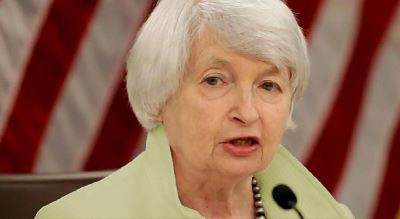
WASHINGTON – While President Joe Biden has called climate change a “code red” crisis, his treasury secretary is poised to resist calls to ask financial regulators to rein in lending to the nations worst greenhouse-gas emitters.
Treasury Secretary Janet Yellen is currently leading a review of what federal banking regulators should do to ensure the financial system is protected from climate-related risks. While the Biden administration pursues separate climate legislation with Congress, environmental groups want Yellen to use the lesser-known financial review process to advance measures to curb or discourage lending from Wall Street banks to companies that produce large amounts of carbon emissions.
These advocates insist that existing federal power to ensure financial stability enables regulators to impose new rules to mitigate climate change. They suggest that unfettered lending to companies responsible for greenhouse gas emissions threatens the broader financial system through economic shocks.
For now, however, Treasury officials appear unlikely to embrace the most dramatic steps pushed by climate advocates, according to interviews with four senior administration officials, who spoke on the condition of anonymity to reflect thinking on a matter not yet finalized.
Yellen has repeatedly emphasized the need to increase mandatory disclosure by banks and public companies of climate-related financial risks, a measure regarded as important but inadequate by an array of liberal groups and climate advocates, who want new limits on fossil-fuel-related lending. Treasury officials say that enacting policy to crack down on such lending is difficult, in part because it requires convincing an array of independent U.S. banking regulators – including three appointed by Republicans – to unite behind an aggressive climate framework.
Additionally, Treasury officials believe mandatory disclosure is a “necessary precursor” to actual restrictions on climate-related lending, one Treasury official said. But the data produced by new disclosure rules could lay the groundwork for more aggressive measures to be enacted in the future, the official said.
ADVERTISEMENT
In the meantime, GOP lawmakers have been calling on regulators to drop any discussion of new rules narrowing lending to companies in the name of helping the environment, suggesting doing so is “beyond the scope” of their purview, according to a letter from Sen. Patrick Toomey, R-Pa., and other leading GOP senators on the Banking Committee to the Federal Reserve earlier this year.
The potential split between the administration and some of its climate allies represents one of the more vexing challenges facing Yellen, who as treasury secretary oversees a vast portfolio of economic issues.
Treasury officials are adamant that they are, in fact, moving swiftly under Yellen to confront climate change, pointing to their reversal of the climate apathy of the Trump administration and a range of steps they have taken on the issue.
Still, some advocates and liberal groups want Yellen to move quickly to back rules that would make it far more difficult for banks to lend to the most egregious fossil fuel producers than Treasury is currently expected to adopt.
“Climate risk impacts all the firms that the financial regulators supervise. As a convener of regulators, Treasury needs to do more than acknowledge it – it should urge each financial regulator to use every tool at its disposal to tackle climate risks,” said Alexis Goldstein, a financial expert at Open Markets, a left-leaning group.
Treasury’s expected hesitancy reflects long-standing reluctance to dictate social policy unilaterally, as well as the complicated bureaucratic structure of U.S. financial oversight.
Treasury convenes and leads meetings of the Financial Stability Oversight Council, a regulatory body composed of banking regulators such as the Office of the Comptroller of the Currency and the Federal Reserve. While Treasury can urge FSOC members to adopt certain policies, it cannot force the group’s independent banking regulators to enact them. If Treasury advances climate rules that other members of FSOC regard as too far-reaching, the council’s membership could fracture. That could invite a legal challenge, or dilute the effectiveness of climate rules.
“If they go out and tell the banks who to lend to – that is rightly seen as very interventionist,” said Eswar Prasad, an economist at Cornell University. “If the insurance industry is very exposed to catastrophic events resulting from climate change – and if that was going to cause problems for the broader financial system – then FSOC might have some role to play. Barring that, it’s not obvious what role they should play because ultimately their job is about financial stability.”
In a sharp reversal from her GOP predecessor, Yellen has taken numerous steps designed to confront climate change, which is unfamiliar territory for Treasury.
Yellen has changed the rules for U.S. guidance for lending by international financial institutions, such as the World Bank, to prioritize clean energy investments and have the United States oppose most fossil fuel projects.
Yellen has also established a climate hub at Treasury to oversee the department’s push to boost climate projects in the United States and abroad. Treasury is working to implement an international climate financing plan with global counterparts. Last Tuesday, officials announced support for an international proposal to limit export credit for coal power.
Treasury is also involved in a massive series of climate-related tax changes as part of Democrats’ $3.5 trillion budget plan over 10 years that would spend hundreds of billions of dollars on clean energy incentives to encourage production in solar, wind and other renewable projects.
But Treasury’s review of “climate-related financial risk” – which comes out of a White House executive order from May – will probably be where Yellen faces the sharpest criticism from climate hawks.
Yellen’s coming report on the financial risks posed by climate change is expected this fall. In a July speech on the matter, she repeatedly emphasized the need for “understanding the risks and opportunities climate change presents.”
“The current financial reporting system is not producing reliable disclosures,” Yellen said, adding the administration is pushing to “advance the disclosure of climate-related financial risks” through FSOC.
Liberal groups say that’s not enough to head off the danger posed by climate change. They would prefer Treasury to push regulators to enact new climate-related capital requirements, which would make it more expensive for banks to lend to companies that drive up emissions, while not outright banning them. Treasury could also change how climate-related assets are “weighted” so they are considered a riskier part of a bank’s portfolio, which would require them to have more capital set aside as protective cushion. These advocates say these changes are squarely within regulators’ purview.
“We’re saying financial regulators should crack down on financing for high-emissions projects, because that activity exacerbates climate change, which is a threat to financial stability,” said Gregg Gelzinis, associate director for economic policy at the Center for American Progress, a center-left think tank. “We’re not saying Treasury should be the EPA,” he said, referring to the Environmental Protection Agency.
A Treasury spokesman declined to comment on the record.
Stacy Coleman, a former Federal Reserve official who is now an independent consultant and member of the Task Force on Climate Related Financial Disclosures, said FSOC could push new lending requirements but that “some work has to be done to understand what that means and how something like that would be put together.”
“I think Treasury is going as far as it can,” she said. “It’s not as simple as putting a charge on lending to fossil fuel companies.”
The tricky politics of financial regulation related to climate change has also ensnared Federal Reserve Chair Jerome Powell. Powell’s renomination to lead the central bank is currently imperiled in part because liberal lawmakers, including Rep. Ayanna Pressley, D-Mass., have said he has done too little about climate change.
Treasury and the Fed could seek to impose liability insurance requirements that would increase the amount of insurance firms and banks would have to purchase for investments that exacerbated climate change, said Bob Hockett, a financial expert at Cornell University who worked for the International Monetary Fund. Those requirements could drive up the costs of – and therefore deter – financing of carbon-intensive projects.
“It would be very easy through finance regulation to require banks and firms to absorb the risks of harm to people through climate change,” Hockett said. “I don’t understand why both the Fed and Treasury are dragging their feet on this.”
More likely on Treasury’s agenda is pushing bank regulators to require companies to disclose their climate-related financial risks. Beyond that, regulators may also subject banks to regular “stress tests” that gauge their ability to handle climate-related financial shocks. Other more probable changes could include guidance from federal regulators to provide advice about how to assess the risk of certain dirty projects, such as a coal mine. Those measures are more likely to be encouraged by FSOC, but face criticism from some climate advocates as inadequate.
“Disclosures and stress tests reveal the problem. They don’t do anything about the problem. It’s not even a job half-done,” said Justin Guay, director of global climate strategy at the Sunrise Project, a climate group.
Conservatives and business groups are far more likely to object to changes that require them to alter their practices.
Doug Holtz-Eakin, president of the conservative American Action Forum and former director of the nonpartisan Congressional Budget Office, said measures to provide greater transparency about climate risks should be welcomed. He cautioned that mandating new climate-related lending rules, however, should be done by Congress through the legislative process.
“Stress tests were enormously helpful in identifying capital risks – this is the same thing in a climate setting and can be very useful,” Holtz-Eakin said. “But if you actually want to cut people off, the government should do it. We shouldn’t pretend the banks are doing it.”
Europes energy ambitions are clear: to shift to a low-carbon future by remaking its power generating and distribution systems. But the present situation is an expensive mess.
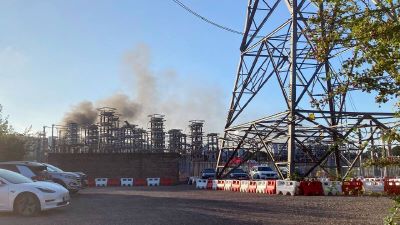
Aglobal supply crunch for natural gas, bottlenecks for renewable energy and wind speeds in the North Sea among the slowest in 20 years, idling turbines, have contributed to soaring electricity prices. As winter approaches, governments are preparing to intervene if needed in volatile energy markets to keep homes warm and factories running.
1. What’s the problem here?
Energy prices skyrocketed as economies emerge from the pandemic — boosting demand just as supplies are falling short. Coal plants have been shuttered, gas stockpiles are low and the continent’s increasing reliance on renewable sources of energy is exposing its vulnerability. Even with mild weather in September, gas and electricity prices were breaking records across the continent and in the U.K. Italy’s Ecological Transition Minister Roberto Cingolani has said he expects power prices to increase by 40% in the third quarter.
2. Why is there a supply shortfall?
Late summer in Europe is usually when natural gas inventories are replenished for winter. This year, storage sites had their lowest levels in more than a decade for this time of year, following an unusually cold winter. Supplies from Russia were limited because it was rebuilding its own inventories, while Norwegian gas flows were lower than average during maintenance work at its giant fields and processing stations. Prices in Europe would need to rise more to attract cargoes of liquefied natural gas away from Asia, where China is stockpiling to power its economy and ensure it has enough reserves for winter.
3. What do gas prices have to do with electricity?
ADVERTISEMENT
Some 23% of European Union electricity was generated from gas in 2019, just behind the 26% that came from nuclear plants. Electricity is very hard to store, which means that big swings in fuel costs translate quickly into price volatility. Large batteries exist, of course, and that technology is developing quickly, but it will be many years before they can offer serious storage capacity for renewable energy. Some European countries have become increasingly dependent on electricity exports from others with an abundance of power.
4. How are power prices set in Europe?
While short-term trading is increasing, utilities and big companies also buy and sell power years in advance. In those trades, views on the economy and long-term fuel cost forecasts play a bigger role. But the broader European power market has traditionally been focused on the price for the following day, with auctions supplying a day-ahead price functioning as the benchmark. Traders submit bids and offers for each hour based on their calculations of supply and demand, and then an average price is calculated by the exchange handling that market. U.S. markets are more regional. Most of the power is also sold a day in advance, with similar arrangements for trading for the same day as in Europe. Consumer prices are set by state regulators after utilities request rate changes based on how much they’ve paid for wholesale power, transmission investments and overall upkeep of their grids.
5. What’s new in the system?
The explosion of renewable energy, which is more intermittent than fossil or nuclear fuel generators. Because weather patterns can create big price shifts, markets for shorter time periods later the same day have also become vital.
6. What’s happening with wind power?
Northern, coastal countries including the U.K., Germany and Scandinavian nations have become leaders in wind generation and technology. Elsewhere, the picture is mixed. In Spain, the growth in wind and solar plants helped send its share of renewable energy to a record 44% of total power in 2020. France is also producing more power from wind, but its electricity generation is still dominated by nuclear plants.
7. Which countries are most at risk of running out of power?
Those with limited cables linking them with their neighbors, because in a crisis they are unable to benefit fully from Europe’s interconnected market. That enables power to flow to where it’s needed the most and where it fetches the highest price. Ireland’s grid operator warned in September that there was a risk of blackouts due to lack of wind. While the U.K.’s supply is a mix of renewable energy, natural gas, nuclear and coal, many of its plants are old and break down from time to time. If big outages coincide with little wind or sun, the nation could be close to running out of electricity.
8. What does this mean for Europe’s climate goals?
Renewable energy brings volatility and that’s going to make it very costly for the continent to reach its targets. Germany is a prime example — Chancellor Angela Merkel’s energy policies have cost its citizens hundreds of billions of euros in subsidies. The EU is unperturbed though. Climate chief Frans Timmermans has said that higher prices mustn’t undermine the bloc’s resolve to expand renewable power and that the industry should speed up instead to make more cheap green energy available.
U.S. Fed expected to announce tapering asset purchases in November: survey
Two-thirds of economists expect the tapering announcement at the Feds Nov. 2-3 meeting, with more than half seeing the tapering starting in December, a Bloomberg survey showed.
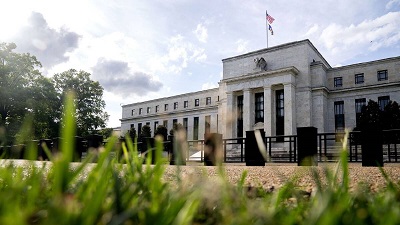
The U.S. Federal Reserve will probably hint at its meeting next week that it is moving toward announcing a reduction in monthly asset purchases in November, according to a Bloomberg survey of economists released Friday.
Two-thirds of economists expect the tapering announcement at the Fed’s Nov. 2-3 meeting, with more than half seeing the tapering starting in December, the survey showed. The Fed will hold its next policy meeting on Sept. 21-22.
ADVERTISEMENT
The survey of 52 economists, which was conducted Sept. 10-15, also showed that the Fed would hold interest rates near zero through 2022 before delivering two quarter-point increases by the end of the following year.
“The delta variant and some moderation in inflation should allow the Fed to be patient in tapering, with an announcement likely in November or December, depending on the economic data,” Scott Brown, chief economist with Raymond James Financial, was quoted as saying in a survey response.
The Fed has pledged to keep its benchmark interest rate unchanged at the record-low level of near zero, while continuing its asset purchase program at least at the current pace of 120 billion U.S. dollars per month until “substantial further progress” has been made on employment and inflation.
Many Fed officials have said in recent interviews and public statements that the central bank could begin reducing asset purchases this year.
The survey also showed that 89 percent of the economists expect U.S. President Joe Biden to renominate Jerome Powell for another four-year term after his current tenure as Fed chair expires in February.
Fed governor Lael Brainard, a Democrat, is seen as the most likely alternative, with 9 percent of economists predicting she will be chosen as chair, according to the survey.
SET Index suffers end-of-week dip after two days of gains
The Stock Exchange of Thailand (SET) Index closed at 1,625.65 on Friday, down 6.05 points or 0.37 per cent. Transactions totalled THB105.67 billion with an index high of 1,635.04 and a low of 1,617.31.
The SET Index fell back on Friday after rising 0.26 and 0.22 per cent on Wednesday and Thursday.
The 10 stocks with the highest trade value today were KCE, PTT, KBANK, HANA, DELTA, GULF, CPALL, AOT, BANPU and TU.
Japan’s Nikkei Index closed at 30,500.05, up 176.71 points or 0.58 per cent.
China’s Shanghai SE Composite Index closed at 3,613.97, up 6.87 points or 0.19 per cent, while the Shenzhen SE Component Index closed at 14,359.36, up 101.23 points or 0.71 per cent.
Hong Kong’s Hang Seng Index closed at 24,920.76, up 252.91 points or 1.03 per cent.
South Korea’s KOSPI closed at 3,140.51, up 10.42 points or 0.33 per cent.
Taiwan’s TAIEX closed at 17,276.79, down 1.91 points or 0.011 per cent.
Export industry making most of FTA, GSP pacts, says trade dept
The ongoing Covid-19 pandemic has not affected Thailand’s free trade agreements (FTAs) or the Generalised System of Preferences (GSP), the Department of Foreign Trade (DFT) said on Thursday.
In the first seven months of this year, deals under the pacts had risen by 36.23 per cent compared to the same period last year, while the industries using the privileges most were agriculture and food, DFT said.
Keerati Rushchano, DFT director-general, said the total value of deals made by Thai exporters under the FTA and GSP pacts between January and July this year stood at US$46.4 billion, up 36.23 per cent from the same period last year.
Between January and July, Thailand has increased its use of trade incentives under various FTA and GSP frameworks in a bid to boost exports. Besides, several markets have started recovering in the wake of the Covid-19 fallout. For instance, export to India has risen by 4.91 per cent, while Thailand’s shipments to Asean and Japan has expanded by 3.89 per cent.
Products benefiting the most from these pacts are industrial goods, food and beverage, as well as agricultural products such as processed coconut, seasonings, water/non-alcoholic beverages, processed food, canned pineapples, fish, rice and aromatics used in the food industry.
The price of gold crashed by THB250 in morning trade on Friday.
AGold Traders Association report at 9.25am said the buying price of a gold bar was THB27,550 per baht weight and selling price THB27,650, while gold ornaments cost THB27,060.60 and THB28,150, respectively.
At close on Thursday, the buying price of a gold bar was THB27,800 per baht weight and selling price THB29,000, while gold ornaments cost THB27,303.16 and THB28,400, respectively.
The Stock Exchange of Thailand (SET) Index fell by 0.46 points, or 0.03 per cent, to 1,631.24 on Friday morning.
The volume of total transactions was THB10.37 billion with an index high of 1,635.04 and a low of 1,630.97 in opening trade.
The 10 stocks with the highest trade value were KCE, PTT, HANA, KBANK, BANPU, SCGP, SIRI, DELTA, PTTGC and TU.
The SET Index closed at 1,631.70 on Thursday, up 3.66 points or 0.22 per cent. Transactions totalled THB79.59 billion with an index high of 1,636.01 and a low of 1,628.57.
The baht opened at 33.12 to the US dollar on Friday, weakening from Thursday’s closing rate of 33.04, the weakest in almost a month.
The Thai currency is likely to move between 33.05 and 33.25 during the day, Krungthai Bank market strategist Poon Panichpibool predicted.
Poon said the baht is still pressured more than strengthening in the short term. Foreign investors might sell more Thai bonds amid concerns that bond issues in the future might be more than expected.
Some investors have stopped speculating that the baht will strengthen, due to worries of a new Covid-19 wave. Foreign investors would sell Thai stocks if the situation clearly worsened.
Meanwhile, the US market is not in a mood for risk. The market is also worried that volatility will increase on Friday, which is the day when both future and options of stock shares and indexes are due. There might be a big change in asset possession, he added.
Chevron CEO warns of high energy prices and supply crunches
The world is facing high energy prices for the foreseeable future as oil and natural gas producers resist the urge to drill again, according to Chevron Corp.s top executive.
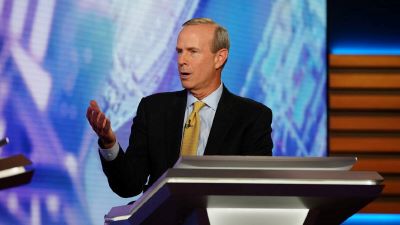
“There are things that are interfering with market signals right now that we haven’t seen before. Eventually things work out, but eventually can be a long time,” Chief Executive Officer Mike Wirth said Wednesday in an interview at Bloomberg News headquarters in New York. He expects strong prices for gas, liquefied natural gas and oil, at least “for a while,” without specifying a time frame.
Even though oil and gas prices have surged this year as the world recovers from the covid-19 pandemic, major producers have been reluctant to invest their cash in new projects, a shift in behavior from previous upswings. That’s leading to concerns of shortages. Already, Europe is facing its worst natural gas crunch in decades, with prices rising to record levels even before winter when demand is typically at its strongest.
One reason executives are wary to plow investment dollars into new supply is shareholders haven’t shown they’re in their corner. They want cash returned to them immediately rather than seeing it re-invested in new developments. Although soaring commodities markets are “signaling we could invest more,” equity prices are sending boardrooms a different sign, Wirth said.
“There are two signals I’m looking for and I’m only seeing one of them” right now, he said. “We could afford to invest more. The equity market is not sending a signal that says they think we ought to be doing that.”
Some investors are unwilling to back new projects after oil and gas companies wasted billions of dollars on low-return operations over the past decade. Others are watching signs of climate change and trying to gauge whether companies are making changes fast enough. The risks are real: Royal Dutch Shell was ordered to reduce carbon emissions by 45% by 2030 by a Dutch court earlier this year, and Exxon Mobil Corp. was forced to backtrack on an aggressive expansion plan amid covid-19 and shareholder unrest.
ADVERTISEMENT
“You’ve got some real new dynamics, whether it’s government policy, efforts to constrain capital into the industry, to make it harder for the industry to access capital markets,” Wirth said. “That in the short term could create some risk for the global economy.”
Chevron, the second-largest Western oil major, is unlikely to buck the trend and chase new production, despite having the strongest financial position among its peers. It slashed its capital spending by almost a third last year and, unusually, pledged to maintain it at low levels right the way through 2025. An announcement earlier this week to boost spending on energy transition technologies reverses just a portion of those cuts.
When new projects do come to the table, their future emissions are “a big part of our decision-making process,” Wirth said. Chevron has pledged to reduce its emissions intensity progressively over the coming decades, suggesting that higher-carbon operations such as oil sands may find it harder to receive the green light.
There may be some relief for oil prices, at least in the short term. OPEC’s ability to bring previously curtailed barrels back to the market will help stabilize prices over the coming months. But with production severely constrained outside of the cartel, medium-term pricing may stay strong, Wirth said. Shale producers, which have kept a lid on prices for much of the last decade with floods of oil, are now focused much more on harvesting profits rather than drilling new wells.
“Looking out for a few years if the global economy continues to grow and recover post covid, is there sufficient reinvestment in the energy that runs the world today?” Wirth said. “Or are we turning so quickly to the energy that runs tomorrow that we created an issue in the short term?”