U.S. stocks swung between gains and losses ahead of tomorrows expiration of options and futures, a quarterly event that usually brings increased volume and volatility. Treasury yields rose and the dollar strengthened.
The S&P 500 fluctuated on either side of unchanged after the index posted its biggest gain since August on Wednesday. The equity market benchmark is down about 1% so far this month amid concern about a broader pullback in the wake of a string of record gains. The Nasdaq Composite turned positive for a second day after halting a five-session slide.
“After seven months of gains, equity markets have been choppier midway through September,” said Keith Lerner, chief market strategist at Truist Advisory Services. “This is actually quite normal from a historical seasonal standpoint, though the ongoing carousel of concerns continues.”
Markets began fluctuating as investors weighed the impact of mixed economic data on the Federal Reserve’s plans to taper stimulus. Fed policymakers meet next week.
Retail sales unexpectedly increase in August, suggesting that demand for goods remains strong. A separate report showed weekly jobless claims increased.
“It remains to be seen if this will reverse the slight downward trend we’ve seen in the market these past few weeks,” said Mike Loewengart, managing director of investment strategy at E*Trade Financial.
Meanwhile, casino stocks with operations in Macao extended drops amid the government’s tightening grip on the gambling hub. Travel and leisure companies led gains in Europe’s Stoxx 600 Index as Ryanair Holdings Plc lifted its growth target.
ADVERTISEMENT
Investors continue to assess the outlook for economic reopening amid the delta virus strain outbreak and rising costs fueled by higher commodity prices and pandemic-related supply snarls. The United Nations said the global economy is expected to undergo its fastest recovery in almost five decades this year, but warned about deepening inequities between advanced and developing nations.
“Investors are really trying to weigh the tug-of-war of concerns between how soon will the Fed taper,” said Art Hogan, chief strategist at National Securities.
While global economic expansion remains above trend, it’s past peak levels and a “deceleration” phase of the market cycle has begun, characterized in part by slowing earnings growth, T.Rowe Price said in its global asset allocation report.
Shares fell in Asia, where the debt crisis at China Evergrande Group and Beijing’s latest push to rein in private industries hurt sentiment. Technology stocks slid as China slowed approvals for video games to enforce stricter criteria for content.
Some of the main moves in markets:
Stocks
The S&P 500 fell 0.2% as of 4:08 p.m. EDT
The Nasdaq 100 was little changed
The Dow Jones industrial average fell 0.2%
The MSCI World index fell 0.2%
Currencies
The Bloomberg Dollar Spot Index rose 0.4%
The euro fell 0.4% to $1.1767
The British pound fell 0.3% to $1.3795
The Japanese yen fell 0.3% to 109.70 per dollar
Bonds
The yield on 10-year Treasurys advanced four basis points to 1.33%
Germany’s 10-year yield was little changed at -0.30%
Britain’s 10-year yield advanced four basis points to 0.82%
British among hardest hit as living costs rise during pandemic
Central bankers worldwide are weighing the probability of higher inflation. Consumers around the world say they are already feeling the pinch.
About 40% of respondents said their living costs have increased since the onset of the pandemic, according to a YouGov survey of 18,983 people conducted in 17 countries. That proportion was closer to half in the U.K. and U.S., compared to just a fifth of Danes and Swedes.
The survey, carried out between Aug. 17 and Aug. 28, underlines the challenges facing policymakers, who must decide whether to act on signs prices are heading higher after years of stability. That’s leading some investors to anticipate an increase in interest rates.
In the U.K., inflation surged more than expected to the strongest pace in more than nine years with consumer prices jumping 3.2% in August from a year ago, the most since March 2012, the Office for National Statistics said on Wednesday. Labor and material shortages may lead to more persistent inflation, with a surge in energy costs due to hit in coming months.
The YouGov survey, whose results were made available to Bloomberg, also examined attitudes to the banking industry. Banks closing branches to save costs can take heart: most customers worldwide prefer their mobile apps anyway.
From East Asia to Latin America, apps are the most popular choice to access banking services, according to the survey. The only outliers were Germany and Denmark, where more customers said websites were their favorite way to bank.
ADVERTISEMENT
Lenders around the world have been shuttering branches since the financial crisis — a trend that saves on running costs but risks widening the wealth gap in some areas. In the U.K., some analysts have said about a third of retail branches could be closed after the covid-19 pandemic pushed more customers to try virtual services.
Many customers still want to visit branches, though. About a quarter of customers in the U.S. said in-person services were their preferred method of banking, compared to 16% in the U.K. and 8% in Denmark, according to the poll.
Telephone banking also has some fans left in Hong Kong, where 13% said it was their favorite method, and the UAE, where 11% prefer to call up.
The rise of online banking doesn’t mean consumers are comfortable with it, with 55% of respondents saying they are very worried or fairly worried about banks’ ability to protect their personal information from cyber criminals. About 51% were worried about the threat cybercriminals posed to their money.
Some of that comes from bitter experience, with 16% of those surveyed saying they had been a victim of some kind of bank account fraud, more than any other type of online scam, according to the survey.
Banks still have plenty of work to do to win the hearts and minds of their customers in most markets, particularly Western Europe. Less than a quarter of respondents held a favorable view of the industry, a proportion that fell to about tenth in the U.K., Germany and Spain.
People, Planet, Profit: Recycling Solutions with Digitalization
The recycling of plastics has remained at low levels for many years, and expanding this activity is key to move toward the circular economy.
Sustainable development is both a major challenge and focus worldwide. Addressing the triple bottom line of People-Plant-Profit to meet community and employee needs; reduce environmental impact; yet also deliver company profits, is a fragile balance. Consumers and businesses alike are rethinking current behaviors to specifically address sustainability.
The production and use of plastics are important considerations in sustainability programs, and awareness has grown during the ongoing COVID-19 pandemic. In fact, all sustainability topics have drawn a lot more focus during this time. There is a greater awareness of risk across businesses, and a growing concern about the environment including plastic waste reduction. At the same time, we have seen greater use of single-use plastics to secure food and health during the pandemic.
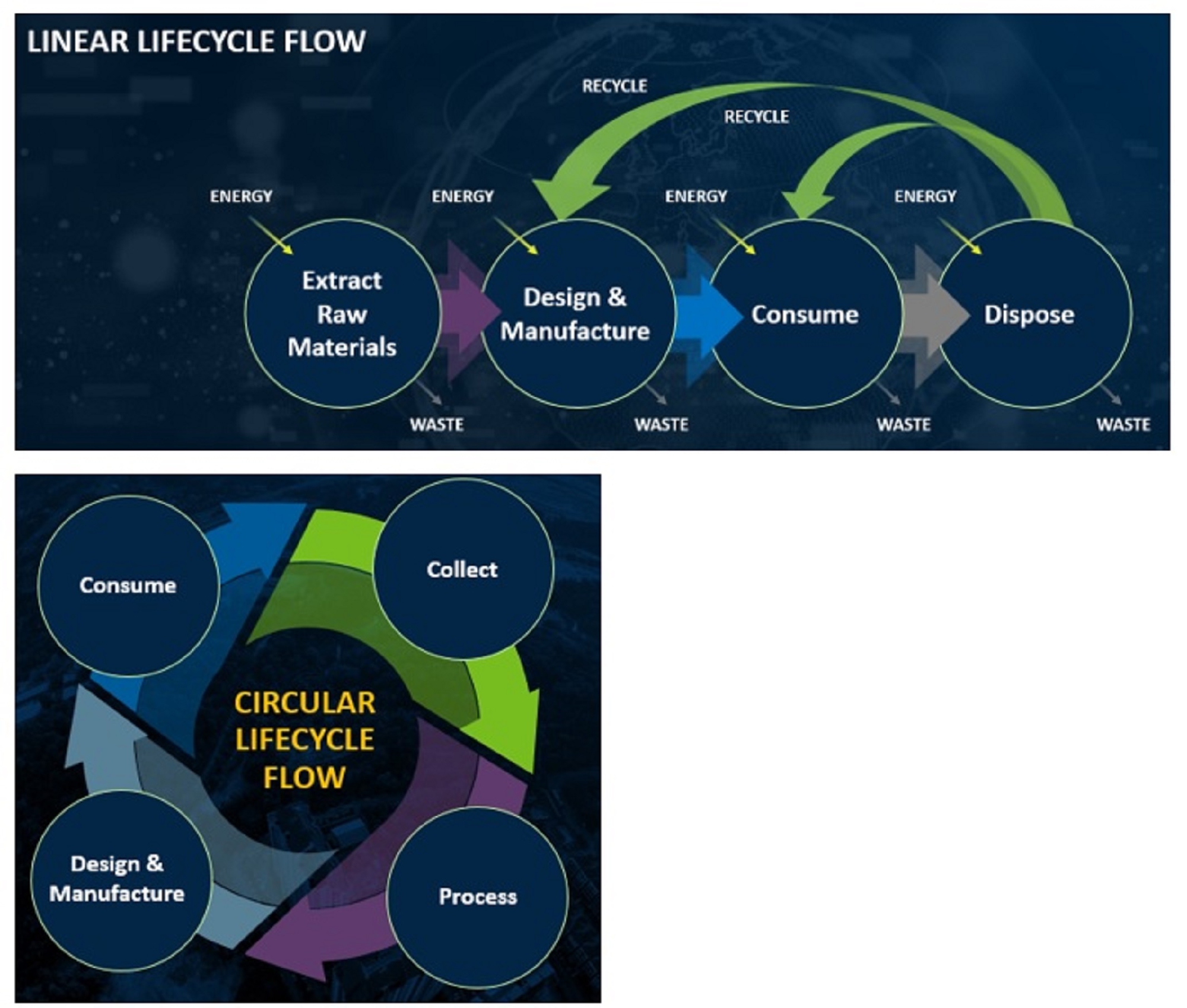
The recycling of plastics has remained at low levels for many years, and expanding this activity is key to move toward the circular economy. This demanding concept is based upon principles that manufacturing processes move from the current linear lifecycle to integrate waste and by-products and eliminate emissions, while overall reducing impact on the natural environment.
People, Planet, Profit: Recycling Solutions with Digitalization
ADVERTISEMENT
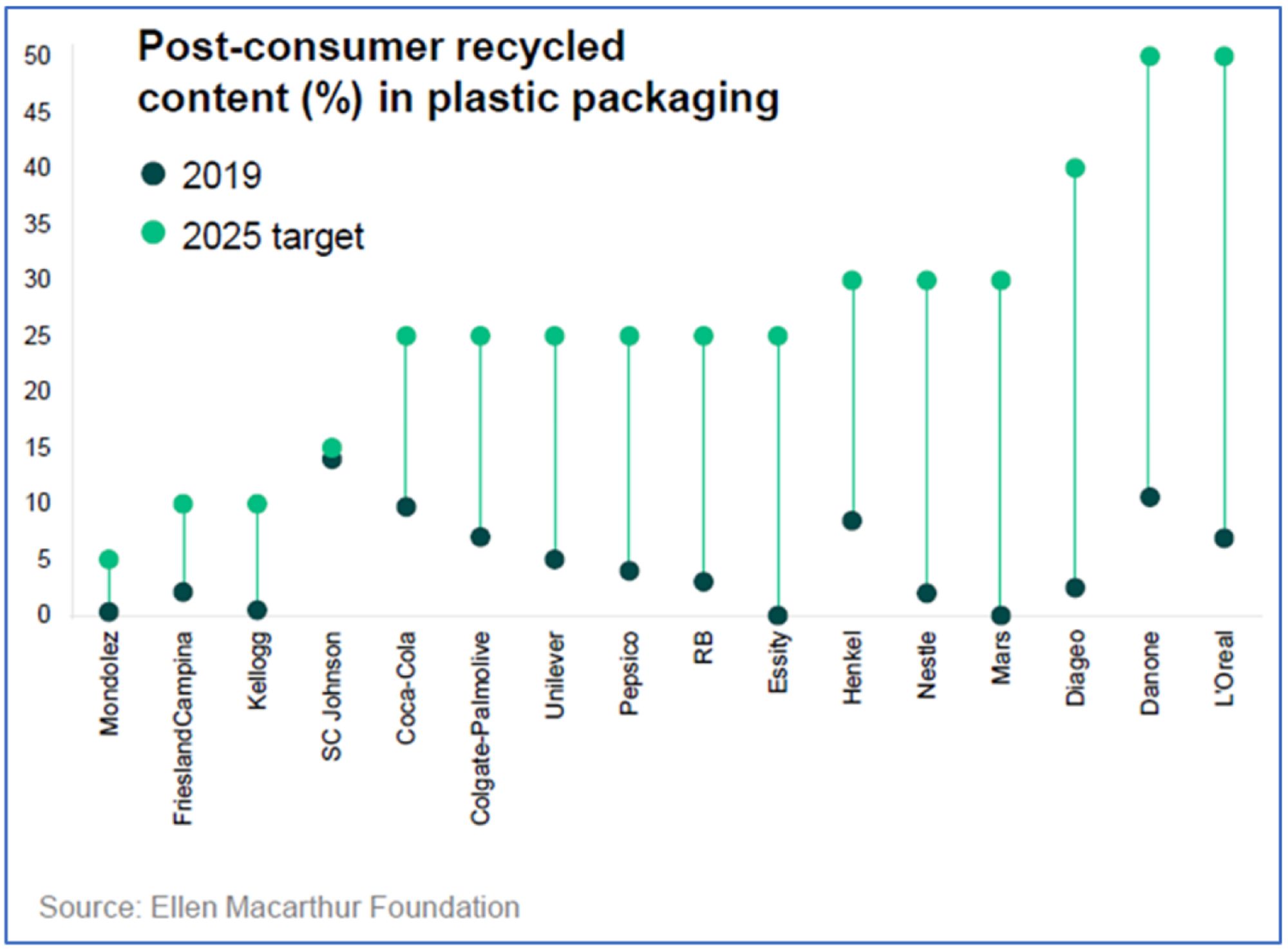
According to the Ellen MacArthur Foundation, only about 14% of plastic packaging is collected for recycling globally and as much as one-third of the volume ends up in the environment. In a recent CERAWeek Conversation, IHS Markit vice president Anthony Palmer estimated that more than 400,000 metrics tons of plastic waste are expected to leak into the environment by 2050.
Consumer companies have ambitious targets to integrate recycled plastic into their final products and packaging, they are challenged to scale recycling and collection processes to address the very large and dispersed volumes.
People, Planet, Profit: Recycling Solutions with Digitalization
The good news is that many companies across the plastic value chain are actively working and collaborating to resolve plastic waste issues. And digital capabilities are helping to solve some of the largest challenges in recycling activities.
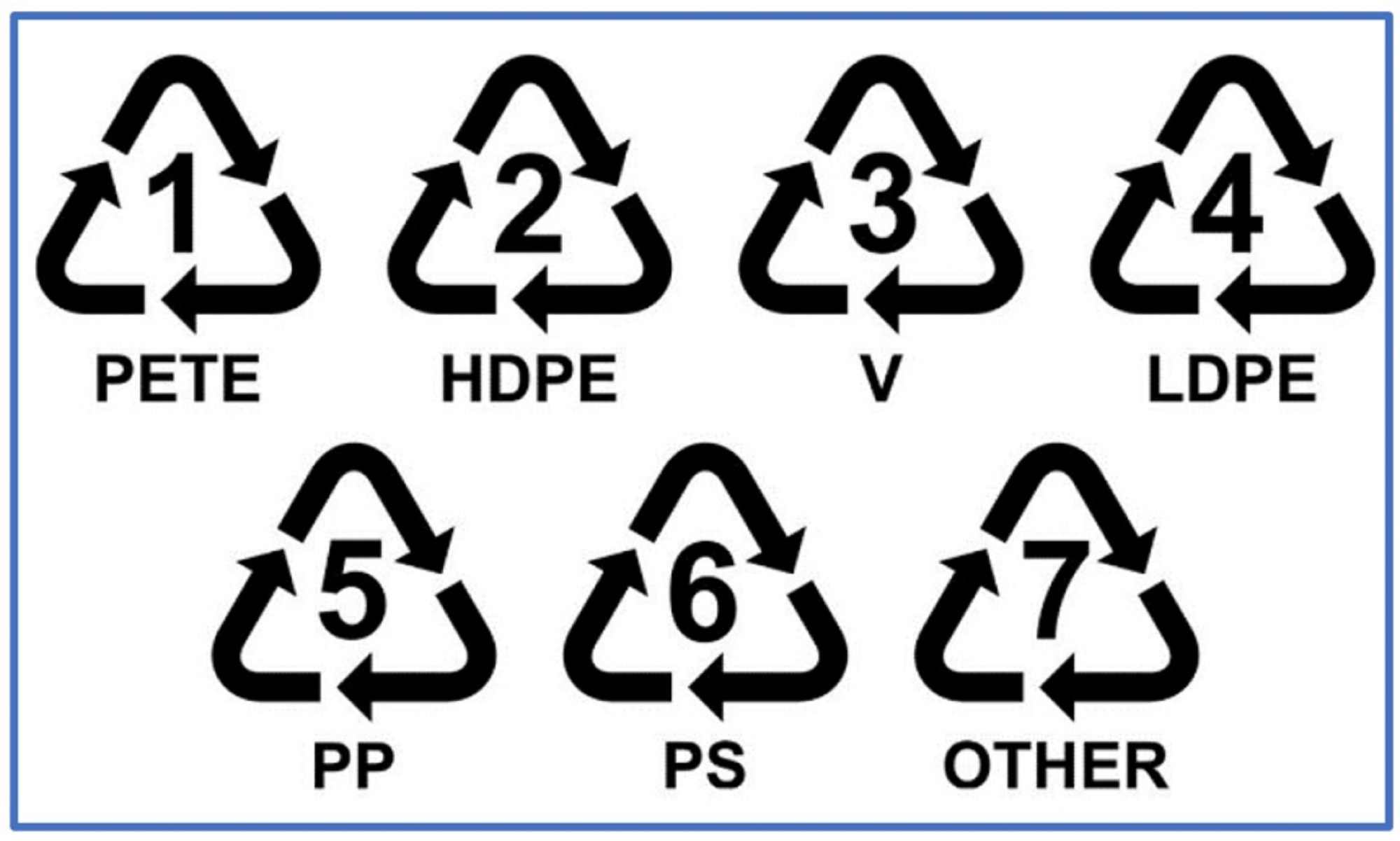
For mechanical recycling processes, when the plastic is melted to create a new plastic article, it can be difficult to re-integrate the material back into value chain. The variety of plastic types typically identified by the recycling symbols #1 – #6 (as shown in figure 3) often demands different solutions requiring labor-intensive sorting. Many packages are composed of a mix of plastics used, typically marked #7, that can require unique approaches.
People, Planet, Profit: Recycling Solutions with Digitalization
Japanese company FP Corporation had complex business and sustainability challenges in its packaging and logistics operations. It successfully applied digital supply chain solutions to optimize its complex production and distribution processes for both profitability and sustainability targets.
Working with partner Time Commerce, the company generates a detailed scheduling plan that integrates its demand plans and warehouse capacity with key cost components for production, inventory and transportation. The plan includes the retrieval of spent containers from consumer locations and the material re-use at production sites, primarily made from polystyrene (PS #6) and polyethylene terephthalate (PET or PETE #1). The company estimates that it reduced landfill waste by 443,000 metric tons and cut carbon emissions by 160,000 metric tons in FY2019, continuing the improvement seen in the previous year.
Digital technologies are also helping to develop and improve new recycling capabilities often referred to as “advanced recycling”. This advanced approach differs from mechanical recycling in that it takes the polymer apart to make the starting monomer or feedstock, or another intermediate that can be used as a feedstock. Advanced recycling provides the opportunity to manage large volumes of plastic waste, and convert it to usable materials. As processes improve, it can also provide more flexibility in the types and variability of plastics that can be recycled.
Pyrolysis is the primary process for advanced recycling of polyethylene (HDPE #2 and LLDPE #4) and polypropylene (#5). Several global companies are working on pyrolysis processes with a focus on digital simulation solutions, such as AspenTech’s Aspen Plus. These solutions model the complex reactions that occur in polymer decomposition so conditions can be optimized for cost and emissions. Pyrolysis can be a helpful first step in a local recycling plan as the liquid product formed is much easier to transport than large volumes of plastic waste.
A recent research study that used Aspen Plus to model the pyrolysis of waste tires highlighted that the simulation model can “serve as a robust tool to respond to market conditions that dictate fuel demand and prices while at the same time identifying optimum process conditions (e.g., temperature) driven by process economics.” Operators can optimize based on local market demand, such as gasoline, diesel and other hydrocarbons. (1)
Digital technology can also aid the next step in the recycling process as the resultant pyrolysis oil is integrated back into operations as a feedstock into steam crackers for olefins production. Scheduling solutions, such as Aspen PIMS, help companies assess unit capability for alternate feed and provide guidance on optimal conditions for processing. As operational experience develops, process analytics can help operators target reliability and maintenance activities, such as furnace decoking, to ensure energy efficiency remains high while balancing operational demands.
The value of plastics in their applications, including increased quality and durability is another focus area across the plastics value chain. Some consumer companies are moving toward more durable packaging that can be re-used while and plastic producers are moving to upgrade the quality of their products, make them easier to recycle, and overall reduce waste in current production.
Simulation of polymer properties and processes accelerates this new product development so producers can deliver new products to the market faster and at lower cost. Dow, for example, was able to speed time to market and reduce batch cycle time for polymer production using dynamic simulation to adjust process conditions. SCG Chemical saved more than $300,000 USD by eliminating plant trials for new HDPE grades.
Plastic value is also tied to production quality, and eliminating the low value material that is often produced in high volume processes. Digital solutions help to optimize current polymer operations to minimize low quality production and reduce energy use. Scheduling solutions can be applied to polymer unit operations to optimize the production schedule and conditions to ensure minimal waste material is produced between high quality products.
Major effort is needed worldwide to resolve plastic waste challenges and make progress toward important sustainability goals. Companies can best target and accelerate their efforts in polymer recycling, optimization and redesign by using digitalization capabilities.
________________________________________
Reference:
(1) “Pyrolysis of waste tires: A modeling and parameter estimation study using Aspen Plus®.” Hamza Y. Ismail, Ali Abbas, Fouad Azizi and Joseph Zeaiter. Waste Management, Vol 60. February 2017.
Circular Economy requires the integration of process to eliminate waste and emissions
Thai stocks defy Asian gloom after govt announces October reopening
The Stock Exchange of Thailand (SET) Index closed at 1,631.70 on Thursday, up 3.66 points or 0.22 per cent. Transactions totalled THB79.59 billion with an index high of 1,636.01 and a low of 1,628.57.
In the morning session, Krungsri Securities expected the day’s index to rise to between 1,635 and 1,640 points before falling back.
It said the index gained positive sentiment from the rising oil price in response to a decline in US oil storage and the Thai government revealing its timeline for reopening the country next month.
“However, we predict that investors will sell shares to curb risks from the FTSE’s move to cut its weighting of Thai stocks by about US$44 million [Bt1.4 billion],” Krungsri Securities said.
The 10 stocks with the highest trade value today were PTT, DELTA, SCGP, GPSC, BANPU, CPALL, PTTEP, PTTGC, KCE and KBANK.
Japan’s Nikkei Index closed at 30,323.34, down 188.37 points or 0.62 per cent.
China’s Shanghai SE Composite Index closed at 3,607.09, down 49.13 points or 1.34 per cent, while the Shenzhen SE Component Index closed at 14,258.13, down 278.18 points or 1.91 per cent.
Hong Kong’s Hang Seng Index closed at 24,667.85, down 365.36 points or 1.46 per cent.
South Korea’s KOSPI closed at 3,130.09, down 23.31 points or 0.74 per cent.
Taiwan’s TAIEX closed at 17,278.70, down 75.30 points or 0.43 per cent.
The price of gold dropped by THB50 in morning trade on Thursday.
AGold Traders Association report at 9.24am said the buying price of a gold bar was THB27,900 per baht weight and selling price THB28,000, while gold ornaments cost THB27,394.12 and THB28,500, respectively.
At close on Wednesday, the buying price of a gold bar was THB27,950 per baht weight and selling price THB28,050, while gold ornaments cost THB27,439.60 and THB28,550, respectively.
The spot gold price on Thursday morning was moving around US$1,796 (THB59,147) per ounce after Comex gold at close on Wednesday dropped by $12.30, slipping from the $1,800 level to $1,794.80 per ounce due to pressure as investors scrambled to profit after the gold price rose sharply.
A US stock market rise was another factor that saw gold sales increase.
The Stock Exchange of Thailand (SET) Index rose by 4.65 points or 0.29 per cent to 1,632.69 on Thursday morning, witnessing a high of 1,634.74 and a low of 1,631.23 in opening trade.
Krungsri Securities expected the day’s index to rise to between 1,635 and 1,640 points before falling.
It said the index gained positive sentiment from the rising oil price in response to a decline in US oil storage and the Thai government’s move to reveal its timeline for reopening the country.
“However, we predict that investors would sell their shares to curb risks from the FTSE’s move to reduce weight in Thai stocks by approximately US$44 million [Bt1.4 billion],” Krungsri Securities said.
It recommended purchasing of the following companies’ shares as an investment strategy:
ADVERTISEMENT
▪︎ PTT, PTTEP, TOP, PTTGC and SPRC, which benefit from the rising oil price.
▪︎ Hana, KCE, TU, CPF, GFPT, Asian, EPG, NER, Sun and APure, which benefit from a weakening baht.
▪︎ Banpu, Lanna, CKP, GPSC, Gulf and BDMS, whose third-quarter profit is expected to rise.
The SET Index closed at 1,628.04 on Wednesday, up 4.20 points or 0.26 per cent. Transactions totalled THB73.18 billion with an index high of 1,630.05 and a low of 1,620.84.
The baht opened at 32.86 to the US dollar on Thursday, strengthening from Wednesday’s closing rate of 32.88.
The Thai currency is likely to move between 32.80 and 32.95 during the day, Krungthai Bank market strategist Poon Panichpibool predicted.
Poon said the baht was testing the key resistance level of 33.00 to the dollar due to a host of risk factors faced by the country.
The Covid-19 situation might take a turn for the worse and usher in a new dreadful wave, causing investors to offload Thai assets.
He also pointed out that investors who have purchased short duration bonds are closing their risks. In the past two days, foreign investors have sold short duration bonds worth THB12 billion in total.
Macau casinos see $18 billion wipeout as China tightens grip
Macaus top gaming stocks lost a record $18.4 billion in combined market value on Wednesday after officials said they would change casino regulations to tighten restrictions on operators, including appointing government representatives to “supervise” companies in the worlds biggest gaming hub.
The Bloomberg Intelligence index of the six big casino operators fell a record 23%. American operators saw the worst selloffs, with Sands China Ltd. sinking as much as 33%, while Wynn Macau Ltd. plunged 34%, both the steepest declines ever. Galaxy Entertainment Group slumped 20%, its sharpest drop in a decade.
The sector also led declines in China’s dollar bond market. A note due 2028 from Wynn Macau sunk 9 cents on the dollar to 91.4 cents, according to Bloomberg-compiled prices, set for its biggest-ever decline. Dollar bonds from SJM Holdings Ltd., MGM China Holdings Ltd. and Melco Resorts and Entertainment dropped at least 3 cents.
Officials in the enclave, the only place in China where gambling is legal, said they would begin a 45-day public consultation period on Sept. 15 to discuss the legal revisions. Among the topics being covered: how many licenses — known locally as “concessions” — will be allowed, how long their terms will be, and the level of supervision by the government.
While license renewals have been expected for some time as the current ones expire next June, the move to tighten regulatory control took the industry by surprise. Besides appointing government representatives, the revisions also propose increasing local shareholdings of casino companies, without elaboration on how these moves will be enacted. Dismay rippled through industry players and analysts after the announcement as China’s ongoing clampdown on sectors from gaming to after-school tutoring appears to have reached Macau at last.
ADVERTISEMENT
“The casino issues are a continuation of what’s been a pretty big crackdown,” said Jason Ader, the chief executive officer of New York-based investment manager SpringOwl Asset Management and a former Las Vegas Sands Corp. board member. “There’s a debate over whether China is even investable right now. You never like to see increased regulation, increased taxes, restrained movement. That all seems to be the status quo.”
JPMorgan Chase & Co. analyst DS Kim downgraded the six operators to sell or neutral weightings in a Wednesday research note. “We think this announcement would have already planted a seed of doubt in investors’ minds, which is probably enough to de-rate these names until clarity emerges on key points,” he wrote.
Read more: Gambling Stocks Tumble as Macau Flags More Government Scrutiny
The tightened scrutiny comes at a time when Macau is still struggling to recover from the Covid-19 pandemic, which prompted the government to restrict travel, cutting off the economy’s lifeblood of Chinese punters. Gaming revenue for the month of August was 82% lower than the same period in 2019.
Among the items officials discussed in a press conference Tuesday were tighter controls on the distribution of dividends, greater participation by locals in the concessions and government representatives directly overseeing the businesses, Kim noted. After the consultation period, a final bill will be tabled to the local legislature.
China has been clamping down on activity by VIP punters in Macau for several years now over concerns that the high-stakes betting there — which takes place in convertible Hong Kong dollars — can sometimes be an illicit channel for currency outflows and money laundering. Beijing has also cracked down on organized gambling trips to Macau and other overseas destinations organized by junkets, companies that service high-rollers and extend them credit, amid a wider effort to discourage casino gaming.
Casino operators catering to high rollers may “face greater pressure to hedge their bets, invest more in non-gaming attractions and work harder to woo the premium mass market,” according to Bloomberg Intelligence gaming analysts Angela Hanlee and Kai Lin Choo.
Despite the market’s panic, some observers said the proposal won’t necessarily have a significant impact on operators. Bernstein analysts led by Vitaly Umansky said that at Tuesday’s press briefing, officials had highlighted the importance of maintaining a scale for the gaming industry, indicating that all six companies are likely to keep their licenses.
“Our view remains that the six operators here today will be here tomorrow,” Umansky said in a note, adding that he didn’t see “any major concerns” over the government’s planned direct supervision as the gaming companies have already been working closely with officials.
While China has been tightening its scrutiny over Macau’s gambling sector for years, Tuesday’s move comes as Beijing undertakes a widespread crackdown on business and society. Initially focused on the growing influence of China’s tech giants, the campaign has taken on a moralistic tone, targeting children’s video-game use to after-school tutoring. The Communist Party has long had a dim view of gambling, citing its impact on families and linking it to social disharmony.
Nonetheless, Chinese are avid gamblers, with the increased oversight of Macau pushing them to less regulated markets like the Philippines and Cambodia, where casinos and online gaming operations were flourishing before the pandemic halted travel.
Ader, too, said it was unlikely a western operator like Sands would lose its license, although the overall climate for foreign companies in the country is deteriorating.
“It’s sort of all going in the wrong direction in China,” he said. “To the extent investors are nervous about China, Macau doesn’t feel like the place it was five years ago for a lot of reasons.”
Stocks rose the most in almost three weeks as the concern that has weighed on investor sentiment about a slowdown in economic growth eased. Crude oil jump and bond yields rose.
Energy shares helped push the S&P 500 up 0.9% and into positive territory for only the second time in eight trading sessions. The tech-heavy Nasdaq 100 rose for the first time in more than a week. Treasuries fell after rallying Tuesday on a lower-than-forecast inflation report, while the dollar weakened against most major peers.
After surging 20% to record highs through the first eight months of the year, the S&P 500 began September on a losing note as concern increased that a pullback in stimulus and the delta variant of the covid 19 virus risked derailing the recovery from the pandemic. The S&P hasn’t closed higher by 1% or more since July 23.
“It is time to reload on equities starting with the North American market,” Sebastien Galy, a senior macro strategist at Nordea Investment, wrote in a note to clients.
Composite volume across all exchanges surpassed 10 billion shares for the third straight day on Tuesday, the longest streak since mid-June, according to data compiled by Frank Cappelleri at Instinet LLC.
ADVERTISEMENT
Oil clung to gains after a U.S. government report showing a bigger-than-expected decline in crude stockpiles signaled a rapidly tightening market. Global benchmark Brent crude rose above $75 a barrel for the first time since early August, while U.S. crude futures surged as much as 3.6% on Wednesday.
While Tuesday’s U.S. inflation print could be seen as reducing pressure on the Federal Reserve to start pulling back on loose monetary policy, investors remain wary of a range of obstacles. These include the impact of the delta virus variant and rising costs on economic reopening, as well as China’s drive to rein in private industries.
Going into the year-end, investors will also have to digest debate around the U.S. debt ceiling, President Joe Biden’s tax package, infrastructure spending and Fed tapering, she added.
Asian stocks dropped after reports showed China’s economy took a knock in August from stringent virus controls and tight curbs on property and as authorities told major lenders to China Evergrande Group not to expect interest payments due next week on bank loans. A debt restructuring could raise the prospect of wider social unrest and contagion in credit markets.
Some of the main moves in markets:
Stocks
– The S&P 500 rose 0.8% as of 4:04 p.m. EDT
– The Nasdaq 100 rose 0.8%
– The Dow Jones industrial average rose 0.7%
– The MSCI World index rose 0.3%
Currencies
– The Bloomberg Dollar Spot Index fell 0.2%
– The euro rose 0.1% to $1.1818
– The British pound rose 0.2% to $1.3844
– The Japanese yen rose 0.3% to 109.36 per dollar
Bonds
– The yield on 10-year Treasurys advanced two basis points to 1.30%
– Germany’s 10-year yield advanced three basis points to -0.31%
– Britain’s 10-year yield advanced four basis points to 0.78%
Commodities
– West Texas Intermediate crude rose 3.1% to $72.65 a barrel
The Stock Exchange of Thailand (SET) Index closed at 1,628.04 on Wednesday, up 4.20 points or 0.26 per cent. Transactions totalled THB73.18 billion with an index high of 1,630.05 and a low of 1,620.84.
In the morning session, Krungsri Securities expected the day’s index to move between 1,615 and 1,620 points, in line with falls in neighbouring stock markets.
It said the SET Index gained positive sentiment from a slight rise in the US Consumer Price Index, which helped allay investors’ concern over the Federal Reserve’s move to taper its quantitative easing programme.
“However, uncertainty over the hike in US corporate tax from 21 per cent to 26.5 per cent will affect investment,” it added.
“Hence, we advise investors to buy shares when prices are cheap, focusing on stocks that have gained positive sentiment.”
The 10 stocks with the highest trade value today were PTT, DELTA, INTUCH, AOT, CPALL, KBANK, SCC, ADVANC, SCGP and PTTGC.
Japan’s Nikkei Index closed at 30,511.71, down 158.39 points or 0.52 per cent.
China’s Shanghai SE Composite Index closed at 3,656.22, down 6.38 points or 0.17 per cent, while the Shenzhen SE Component Index closed at 14,536.31, down 89.77 points or 0.61 per cent.
Hong Kong’s Hang Seng Index closed at 25,033.21, down 469.02 points or 1.84 per cent.
South Korea’s KOSPI closed at 3,153.40, up 4.57 points or 0.15 per cent.
Taiwan’s TAIEX closed at 17,354.00, down 80.90 points or 0.46 per cent.




 People, Planet, Profit: Recycling Solutions with Digitalization
 People, Planet, Profit: Recycling Solutions with Digitalization
 People, Planet, Profit: Recycling Solutions with Digitalization