Biden vaccine push wins cautious business support as political opponents fume #SootinClaimon.Com

#SootinClaimon.Com : ขอบคุณแหล่งข้อมูล : หนังสือพิมพ์ The Nation.

https://www.nationthailand.com/business/40006028

Biden vaccine push wins cautious business support as political opponents fume


WASHINGTON – Bob Harveys phone did not ring.

Biden vaccine push wins cautious business support as political opponents fume

In Washington, a political furor had erupted over President Joe Biden’s new coronavirus vaccine and testing mandate for businesses, with Republicans howling about an unconstitutional power grab and vowing to challenge him in the courts.

But in Houston, where Harvey heads the city’s largest business group, employers took the news in stride.

“I have not heard from my members today, which is interesting. I think the reason is what he announced is so in line with the conversations we’ve been having,” Harvey, the chief executive officer of the Greater Houston Partnership, said Friday. “This will come as a relief to the business community, to have an order that requires all of them to move together.”

The president’s decision to require medium and large companies to subject their employees to mandated vaccination or weekly coronavirus testing represents a sharp expansion of the federal government’s workplace powers, according to political scientists and legal experts.

ADVERTISEMENT

For a leader who has said he is committed to reviving Washington’s bipartisan impulse, it amounted to an unapologetic offensive in the culture wars that have divided the country and inflamed its politics.

Instead of directly mandating Americans take the vaccine, Biden effectively outsourced the job to the business community. But unlike previous White House interventions in the market – notably including President Barack Obama’s 2010 health insurance mandate – Biden’s action was welcomed by many bosses.

Texas Republican Gov. Greg Abbott called Biden’s move “an assault on private businesses,” but businesses in his state’s largest city did not see it that way.

“The context in which this is occurring really matters,” said Harvey, a former energy industry executive. “We’ve been hit hard by this fourth wave [of the virus] . . . and employers simply must play a role in addressing this problem. We’ve tried it every other way.”

In a recent survey, 23% of partnership members already required coronavirus vaccines for some or all employees and an additional 30% were considering doing so. Of the remaining 46% that were not, most said they feared that some workers would quit rather than submit.

The president’s blanket order, applying to all companies with at least 100 employees, eliminated that worry, Harvey said.

Texas is a hotbed of resistance to pandemic health measures. Its vaccination performance – 58.6% of those 12 and older are fully vaccinated – trails the national average, according to state and federal data.

Employers in the Houston area have been talking for weeks about what to do in response to the virulent delta strain of the coronavirus, which has emptied workplaces and filled hospitals, Harvey said. Now, they can get down to it.

“The reality is there are a number of businesses that are wanting the government to step in. This gives them the cover to do what they want to do anyway,” said Charles Shipan, a political scientist at the University of Michigan.

Indeed, the vocal Republican opposition to the president’s initiative threatens to leave the GOP at odds with its traditional business constituency.

Houston is a largely Democratic city. But Harvey’s group has members in 11 counties, nine of which backed former president Donald Trump last year, and includes numerous companies in traditionally conservative industries, such as oil and banking. Among them: ExxonMobil, Chevron, JPMorgan and Wells Fargo.

Biden’s new covid plan also drew backing from some national business groups, such as the Business Roundtable, the National Association of Manufacturers, and the American Apparel and Footwear Association

And the president cited the example of several large companies that already require employees to be vaccinated, including Disney and United Airlines and “even Fox News.” (The cable network actually required employees to disclose their vaccination status, not get vaccinated, according to published reports.)

“We’re going to reduce the spread of covid-19 by increasing the share of the workforce that is vaccinated in businesses all across America,” Biden said, speaking in the State Dining Room.

The president said he was acting, in part, to protect the economic recovery. In recent weeks, the resurgent virus has drained momentum from industries that had been rebounding, such as the airlines.

Employers added just 235,000 jobs last month, well below economists’ expectations, and forecasts for September aren’t much better.

In August, the University of Michigan consumer sentiment gauge fell to its lowest mark since the pandemic’s initial weeks. Wholesale inflation on Friday hit a new annual high of 8.3%. And on Wall Street, stock prices have drifted sideways for two months.

If the need for federal action last week seemed clear, the response in some quarters to Biden’s announcement was hostile.

Several Republican governors, including in Texas, Georgia, and South Dakota, vowed to fight the mandate in court.

South Carolina Gov. Henry McMaster said Biden and the Democrats had “declared war against capitalism” and he pledged to “fight them to the gates of hell to protect the liberty and livelihood of every South Carolinian.”

Even before the president spoke on Thursday afternoon, the Federalist, a right-wing publication, assailed the vaccine-and-testing plan as “a fascist move.”

J.D. Vance, a Republican Senate candidate in Ohio, called for “mass civil disobedience,” urging Americans to refuse to comply with any new requirement or to pay any subsequent fine. And Josh Mandel, another Senate aspirant in Ohio, warned that Biden would use “the Gestapo” to enforce his directive.

Social media chatter about workers quitting their jobs rather than complying with the new federal mandate has left Wall Street economists unimpressed. Michael Feroli of JPMorgan Chase called it “noise,” pointing out that employees who quit are not eligible for unemployment insurance.

Jim O’Sullivan, chief U.S. macro strategist for TD Securities, said the option of weekly testing would offer vaccine skeptics an alternative, thus minimizing any workforce loss. And cautious service-sector workers might be drawn back into the labor force if it appeared that more of their co-workers were likely to be immunized, he said.

Biden’s action is the latest in a long expansion of presidential involvement in business affairs. From a laissez-faire stance in the 19th and early 20th centuries, Washington responded to war and economic crises by increasing its sway over commercial activities.

Numerous White House occupants have battled with powerful industries over their commercial practices. President Theodore Roosevelt broke up John D. Rockefeller’s Standard Oil trust. President John F. Kennedy forced U.S. Steel to roll back price increases at a time of incipient inflation. President Richard M. Nixon went farther in 1971, imposing economy-wide wage and price controls.

Yet Biden’s coronavirus plan tests the limits of presidential power, according to Shipan, who has written on the subject. The president is requiring employers to delve into employees’ personal medical practices, not companies’ market behavior.

“This is a break from what presidential power has done in the past,” said Shipan. “That doesn’t mean it’s necessarily outside the boundaries of what presidents have the power to do.”

Biden has ordered the Labor Department to write an emergency rule requiring employers with more than 100 workers to demand weekly tests or proof of vaccination. Violations are punishable with fines up to $14,000 each.

Up to 80 million Americans could be covered by the action.

In 1970, Congress gave the department’s Occupational Safety and Health Administration (OSHA) authority to write regulations governing workplace safety, including emergency standards that are valid for six months.

In June, the agency issued an emergency rule to prevent the spread of coronavirus in health care settings. But courts have fully or partially struck down five of the nine emergency rules OSHA has promulgated, according to the Congressional Research Service.

Josh Blackman, a constitutional law specialist at the South Texas College of Law, said Biden was attempting to stretch a half-century old law beyond what Congress had intended.

OSHA regulations customarily deal with workplace conditions that directly affect employee health and well-being, such as the handling of hazardous chemicals, slippery floors or dangerous stairs.

“This is completely novel. There’s a credible argument it goes beyond the scope of delegated authority,” he said. “Lawsuits will be filed and inevitably some judge will find this goes too far.”

Published : September 12, 2021
U.K. worker shortage sparks rare blue-collar wage boom #SootinClaimon.Com

#SootinClaimon.Com : ขอบคุณแหล่งข้อมูล : หนังสือพิมพ์ The Nation.

https://www.nationthailand.com/business/40006027

U.K. worker shortage sparks rare blue-collar wage boom


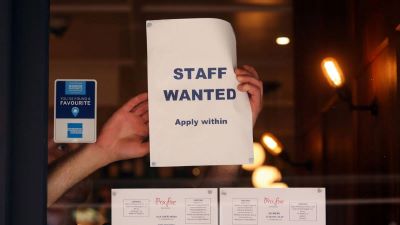
Brexit and Covid are helping to deliver a long-promised blue-collar wage boom in the U.K.

Acombination of the pandemic and new immigration rules after the country left the European Union has left key industries suffering from intense shortages of workers. With the supply of candidates falling at a record pace, that’s fueling a rapid escalation of wages as firms scramble to fill vacancies left by immigrants from EU countries.

But despite pay increases and sign-on bonuses, there isn’t a ready stream of U.K. workers to fill the void. While almost 2 million have either lost their job during the pandemic, left the workforce or are on furlough, there’s a mismatch between those people and the skills needed.

After years of stagnant pay, the situation is a rare moment of leverage for some workers to secure better conditions. Posted salaries for job openings in construction are up almost 7% this year, with those for drivers rising 5.7%, according to data up to July on jobs website Indeed.

Drivers for supermarket chains J Sainsbury Plc and Tesco Plc are considering strike action. The British Meat Producers Association says pay for processors has spiked to as much as 18 pounds an hour, twice the minimum wage.

“Companies have never had any issue saying, well, we can’t get a CEO for a million quid, we will put that up to 1.25 million,” said Andy Prendergast, acting National Secretary for the GMB union. “They’ve always had that reluctance to do that when it comes to shelf stackers or cleaners or laborers on building sites.”

A report from the Recruitment and Employers Confederation Thursday showed vacancies jumped in August, but the supply of candidates plunged. That sent starting salaries up at the fastest pace since it began collecting data in 1997.

ADVERTISEMENT

The shortages are already leading to very public signs of strain. The British summer has been filled with stories of firms in dire need of truck drivers, and pictures of empty shelves at supermarkets.

Warnings about Christmas deliveries have also surfaced, sucking some of the optimism out of the economy’s rebound from successive virus lockdowns. The British Chambers of Commerce says that staff shortages will hamper growth in the coming months.

How the government and businesses deal with the dilemma will help direct the economy toward a smooth recovery or a bumpy ride. A sustained jump in pay rates could add to inflation and worry Bank of England policymakers, who have started already talking about the need for higher interest rates.

The U.K.’s biggest business lobby warned this week that the issue could last for as long as two years, and recent figures point to a worsening situation. Employers added 200,000 job adverts in the last week of August alone, and the REC estimates the total is almost 1.7 million.

About 60 of those vacancies can be found at Corbetts the Galvanizers, a 161-year old steel firm in Shropshire, where Chairman Andy Dodwell has tried to lure workers with higher wages, flexible working hours and other perks.

“There’s just not enough local labor to get on board and bring to work,” he said. “It’s a big, big challenge. And I don’t see it ending until probably very late in 2022.”

That said, there are signs the latest developments don’t mark the start of a new trend in rampant wage growth.

Big increases are confined to very limited number of roles, and many of the incentives are sign-on bonuses that won’t apply to existing staff. The use of that enticement has increased 66% in the past five months.

“On balance, we’re unlikely to see persistent increases, certainly on the scale we’ve seen,” said Reamonn Lydon, an economist at Ireland’s central bank who works with Indeed on labor data. “Some of those increases in the first half of the year are around 7%. It would be very, very hard for the sectors to sustain this.”

The government has so far refused to address the worker shortages by allowing changes to its visa policies.

The irony is the current situation, albeit sharpened by Covid, is exactly what both sides said would happen during the 2016 Brexit referendum. Leave campaigners promised higher wages, while Remainers warned of food left rotting in fields amid a lack of foreign workers.

After trade hassles earlier this year, many businesses see the latest issue as another example of the government “delivering” Brexit, but leaving them to deal with the consequences. The stance could perhaps be summed up by the Twitter page of David Frost, the U.K.’s Brexit minister, which reads: “You can’t have freedom for free.”

“That’s not what was on the table a year ago,” said David Lindars from the British Meat Producers Association. “At the end of the day, there’s no extra people. They can’t come here because of our immigration policy.”

Published : September 12, 2021

BOT sees no need to tap IMF’s Special Drawing Rights facility #SootinClaimon.Com

#SootinClaimon.Com : ขอบคุณแหล่งข้อมูล : หนังสือพิมพ์ The Nation.

https://www.nationthailand.com/business/40005994

BOT sees no need to tap IMF’s Special Drawing Rights facility


The Bank of Thailand (BOT) on Friday said it had no compulsion to utilise the International Monetary Fund (IMF)’s Special Drawing Rights (SDR) as the countrys current foreign exchange reserves were adequate to meet its commitments.

SDRs are international reserve assets created by the IMF to supplement the official reserves of member countries. The value of an SDR is based on a basket of five — the US dollar, the euro, the Chinese renminbi, the Japanese yen, and the British pound sterling. SDRs are allocated to IMF member countries in proportion to their relative share in the IMF. Countries can exchange SDRs for hard currencies with other IMF members.

The IMF on August 23 had allocated a historic budget of $650 billion for the SDR project with the aim of helping countries revive their economies that had been hit by Covid-19.

Related Stories

BOT keeps interest rate at 0.5% amid weak economic recovery

IMF nations approve record $650 billion to aid virus fight

IMF boosts global growth forecast, warns of diverging rebound

“If we use an SDR, we will need to pay interest to the IMF. This interest is based on the five currencies whose value could rise over time,” the BOT said.

“SDRs are suitable for countries that do not have enough foreign reserves to pay for foreign expenditure, such as trade debts, which is not the case with Thailand,” the BOT said.

Published : September 11, 2021

SET Index rebounds to end week on the up #SootinClaimon.Com

#SootinClaimon.Com : ขอบคุณแหล่งข้อมูล : หนังสือพิมพ์ The Nation.

https://www.nationthailand.com/business/40005980

SET Index rebounds to end week on the up


The Stock Exchange of Thailand (SET) Index closed at 1,635.35 on Friday, up 6.23 points or 0.38 per cent. Transactions totalled THB92.05 billion with an index high of 1,639.65 and a low of 1,620.58 as the index rallied after falling 0.69 per cent on Thursday.

In the morning session, Krungsri Securities forecast the index on Friday would fluctuate between 1,620 and 1,640 points amid uncertainty over whether the European Central Bank and US Federal Reserve would taper their quantitative easing programmes to curb rising inflation.

However, it said the index would rebound on news that the government may suspend the emergency decree on Friday, as well as mass buy-ups of shares that gained specific positive sentiment.

The 10 stocks with the highest trade value today were ADVANC, GULF, INTUCH, CPALL, AOT, TEAMG, KCE, EA, PTT and KBANK.

Related stories:

Other Asian indices were on the rise:

Japan’s Nikkei Index closed at 30,381.84, up 373.65 points or 1.25 per cent.

China’s Shanghai SE Composite Index closed at 3,703.11, up 9.98 points or 0.27 per cent, while the Shenzhen SE Component Index closed at 14,771.87, up 73.34 points or 0.50 per cent.

Hong Kong’s Hang Seng Index closed at 26,205.91, up 489.91 points or 1.91 per cent.

South Korea’s KOSPI closed at 3,125.76, up 11.06 points or 0.36 per cent.

Taiwan’s TAIEX closed at 17,474.57, up 170.24 points or 0.98 per cent.

Published : September 10, 2021

Investment experts offer advice on dealing with rising inflation #SootinClaimon.Com

#SootinClaimon.Com : ขอบคุณแหล่งข้อมูล : หนังสือพิมพ์ The Nation.

https://www.nationthailand.com/business/40005976

Investment experts offer advice on dealing with rising inflation


Stock market experts on Friday advised investors to arrange their portfolios to deal with rising inflation.

Phiphat Phisanuwongrak, chief investment officer at Land and Houses Fund Management, advised investors who can tolerate moderate to high risk to diversify their shareholding into two portfolios.

He suggested the main portfolio (80 per cent) should comprise 5 per cent in cash, 35 per cent in Thai shares (focusing on telecom, electronic and logistics, plus retail and tourism benefitting from the country’s reopening), 35 per cent in foreign shares (focusing on Europe, the US and Vietnam) and 5 per cent in commodities.

Meanwhile, a trading portfolio (20 per cent) should focus on funds that invest in stocks related to semiconductors and cybersecurity as their price had risen in line with increasing demand. Investors are also advised to invest in Chinese stocks to take advantage of a recent price drop.

Nattapong Hirunyasiri, MTS Gold chief executive, said the gold price is currently on a short-term downward trajectory as investors monitor the US Federal Reserve’s move to taper quantitative easing and the baht strengthens.

He advised investors to buy gold when its price drops to between THB23,000 and THB25,000 per baht weight, adding that the price would not fall below THB20,000.

“Investing in gold is still generating enough return to curb current inflation at 5 per cent, while its price is likely to rise further,” Nattapong said.

Related stories:

Kavee Chukitkasem, Kasikorn Securities deputy managing director, advised investors to be careful in purchasing shares as uncertainty over Covid-19, the slowdown in Thailand’s economic recovery, decline in foreign tourists and delay in government economic stimulus measures and restructuring would pressure the Stock Exchange of Thailand (SET) Index.

“The SET Index will fall back after surging [recently], so this is an opportunity to buy shares for six months to one-year investment,” Kavee said.

“Investors should pick shares which will benefit from future economic recovery, such as large banks (BBL, SCB and TISCO) retail (CPALL, HMPRO, CPN and CPNREIT) real estate (LH and SPALI), stocks which generate high dividends (MK) and electricity (GPSC).

Published : September 10, 2021

SET expected to gain from likely end to state of emergency #SootinClaimon.Com

#SootinClaimon.Com : ขอบคุณแหล่งข้อมูล : หนังสือพิมพ์ The Nation.

https://www.nationthailand.com/business/40005963

SET expected to gain from likely end to state of emergency


The Stock Exchange of Thailand (SET) Index fell by 5.31 points, or 0.33 per cent, to 1,623.81 on Friday morning, witnessing a high of 1,635.12 and a low of 1,623.02 in opening trade.

The SET Index closed at 1,629.12 on Thursday, down 11.33 points or 0.69 per cent. Transactions totalled THB91.09 billion with an index high of 1,646.07 and a low of 1,626.95.

Krungsri Securities forecast the index on Friday would fluctuate between 1,620 and 1,640 points amid uncertainty over whether the European Central Bank and US Federal Reserve would taper their quantitative easing programmes to curb rising inflation.

However, it said the index would rebound from news that the government may suspend the emergency decree on Friday, as well as mass buy-ups of shares that gained specific positive sentiment.

It recommended buying the following companies’ shares as an investment strategy:

▪︎ HANA, KCE, TU, CPF, GFPT, ASIAN, EPG, NER, SUN and APURE, which benefit from the weakening baht.

▪︎ COM7, SYNEX, SPVI and CPW, which benefit from Apple’s move to launch iPhone 13 in the middle of September.

▪︎ AOT, KBANK, BBL, CPN, CRC, HMPRO, AAV, BA, MINT, AMATA and WHA, which would benefit from the country’s reopening.

Related stories:

Published : September 10, 2021

Gold rebounds as dollar shows signs of weakening #SootinClaimon.Com

#SootinClaimon.Com : ขอบคุณแหล่งข้อมูล : หนังสือพิมพ์ The Nation.

https://www.nationthailand.com/business/40005962

Gold rebounds as dollar shows signs of weakening


The price of gold rose by THB50 in morning trade on Friday.

AGold Traders Association report at 9.27am said the buying price of a gold bar was THB27,750 per baht weight and selling price THB27,850, while gold ornaments were priced at THB27,257.68 and THB28,350, respectively.

At close on Thursday, the buying price of a gold bar was THB27,700 per baht weight and selling price THB27,800, while gold ornaments were THB27,197.04 and THB28,300, respectively.

Spot gold price on Friday morning was moving at around US$1,796 (THB58,640) per ounce after Comex gold at close on Thursday rose by $6.5 to $1,800 per ounce due to support from the depreciation of the US dollar after the price had dropped for two consecutive days earlier.

Related news:

Hong Kong gold price, meanwhile, rose by HK$10 to $16,650 (THB69,961) per tael, the Chinese Gold and Silver Exchange Society reported.

Published : September 10, 2021

SET to launch “Live Exchange” market for SME fundraising #SootinClaimon.Com

#SootinClaimon.Com : ขอบคุณแหล่งข้อมูล : หนังสือพิมพ์ The Nation.

https://www.nationthailand.com/business/40005958

SET to launch “Live Exchange” market for SME fundraising


The Stock Exchange of Thailand (SET) is opening a new market on September 14 called “Live Exchange” to serve as a fundraising platform for small and medium enterprises (SMEs).

“Currently there are about 30 SMEs who have expressed interest in this market by joining SET’s training programme called “Scaling Up Platform”, which will help prepare them for the fundraising,” said Manpong Senanarong, SET senior executive vice president and head of issuer and listing division, on Thursday.

“We expect the fundraising in Live Exchange will actually start at the earliest before the year-end, or in early 2022 at the latest.”

Businesses who join the market before 2023 will be exempted from all the fees for three years, he added.
 

Related Stories

SET surges to 2-year high before falling back

EXIM Bank urges SMEs to ditch fear and surf ‘digital tsunami’ for Thailand’s recovery

Thai stock market highest fundraiser for companies in Asean

“Interested businesses will be allowed to submit their filings after the Securities and Exchange Commission has issued all related regulations of the market,” said Manpong.

“The consideration period of filings for the new market will be shorter compared to the SET and MAI [Market for Alternative Investment].”

Live Exchange will open only to SME operators who meet the asset requirements and not to retail investors. Trading will open one round per day and continuous trading is not allowed. Investors can only sell shares that they actually hold, while buyers of shares must use cash only.

Published : September 10, 2021

Baht stable but sales by foreign investors could trigger volatility #SootinClaimon.Com

#SootinClaimon.Com : ขอบคุณแหล่งข้อมูล : หนังสือพิมพ์ The Nation.

https://www.nationthailand.com/business/40005957

Baht stable but sales by foreign investors could trigger volatility


The baht opened at 32.72 to the US dollar on Friday, unchanged from Thursday’s closing rate.

The Thai currency is likely to move between 32.65 and 32.80 during the day, Krungthai Bank market strategist Poon Panichpibool predicted.

Poon said the baht would drift sideways. The baht might be volatile and weaken during the day while many foreigners were selling Thai assets this week — stocks and bonds.

The key resistance level for the baht would be from 32.90 to 33.00 to the dollar, which is the level at which exporters might sell the US currency, Poon said.

Meanwhile, the baht’s key support level would be from 32.50 to 32.60, the level some importers are waiting for so they can buy dollars, he added.

Related News

Baht could wane today as investors offload Thai assets

Baht could seesaw today: market strategist

Baht expected to move sideways as investors await clarity on various issues

Published : September 10, 2021

Facebook smart glasses put cameras on your face. Everyone around you should be aware #SootinClaimon.Com

#SootinClaimon.Com : ขอบคุณแหล่งข้อมูล : หนังสือพิมพ์ The Nation.

https://www.nationthailand.com/business/40005941

Facebook smart glasses put cameras on your face. Everyone around you should be aware


Facebook is betting that the future of socializing online will involve high-tech face computers foretold by science fiction sages. But when it comes to “smart glasses,” the company isnt quite there yet.

The social media company on Thursday unveiled a $300 pair of specs built in partnership with eyewear company EssilorLuxottica that lets wearers take photos and videos from their perspective. There are no fancy displays or built-in 5G connectivity – just a pair of cameras, a microphone, and some speakers, all wedged into a set of Wayfarer-inspired specs.

Facebook argues that wearing tiny computers with cameras on our faces while we interact with the world and people around us might be fun and will get us one step closer into its metaverse. But devices like these come with serious questions about your privacy, and the privacy of the people around you. They’re also a reflection of Facebook’s further expansion into our lives: Our phones, our computers and our livings rooms weren’t enough.

Facebook isn’t the only tech company with smart glass ambitions, and many early experiments weren’t successful. Google started selling early versions of its Glass headset in 2013, but it quickly flopped as a product for consumers – now it’s just a tool for businesses and software developers. Snap first started selling camera-laden Spectacles in 2016 but it had to write off nearly $40 million because of unsold inventory. (In fairness, later models seemed to fare better.) Within the past two years, Bose and Amazon jumped on the bandwagon with glasses of their own, each using built-in speakers to play music and podcasts. By comparison, Facebook’s first crack at consumer-ready smart glasses doesn’t seem all that novel.

I’ve spent the past few days in New York wearing Facebook’s glasses, and I’ve come to realize the most important thing about these might be that they just aren’t too smart.

– – –

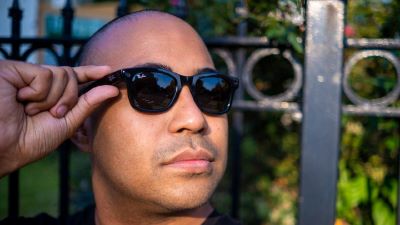
There’s a pretty good chance you wouldn’t be able to identify these as smart glasses at all if you saw them on the street. People will be able to pay extra for different frame styles and even prescription lenses, but the pair I’ve lived with for the past week mostly just look like a pair of standard Ray-Ban sunglasses.

To Facebook and EssilorLuxottica’s credit, they feel like standard sunglasses, too – the arms are much thicker than usual to fit all the sensors and components inside, but they never felt cumbersome or uncomfortable. Even better, they weigh only a few grams more than the Wayfarers you might already own.

Facebook’s grand idea here is that, by putting a device that shoots photos, captures videos, and plays music right on your face, you get to spend more time living the present and less time fiddling with your phone. Ironically though, these glasses aren’t particularly great at any of those things.

Take the pair of 5-megapixel cameras next to each lens, for instance – they’re capable of snapping some decent still images when you’re out in broad daylight, but they pale in comparison to the 12-megapixel photos many common smartphones can capture. I could say the same about the video quality. The results generally look good enough to splash across TikTok and Instagram, but you’re limited to shooting 30-second clips. And since only the right camera records video – and square video, no less – the vantage point seen in your footage often feels a little off-kilter.

So much for capturing the world as you see it.

Facebook says all that imagery remains encrypted on the glasses until you transfer them to the Facebook View app on your smartphone, where you can edit and export them to your social media platform of choice. Facebook’s software offers you a few options for sprucing up your files, like stitching multiple clips together into neat little “montages,” but the offered tools sometimes feel too limiting to produce the results you want.

The fastest way to start taking photos or recording video is by reaching up and clicking a button on the right arm of the glasses. And once you start capturing the world in front of you, people around will know it, thanks to a single, bright white light that fires up when you’re recording. According to Facebook, people will be able to see that indicator from up to 25 feet away, which in theory gives them the opportunity to scoot out of your field of view if they want to.

But that assumes a sort of literacy with Facebook’s design that most people won’t have out of the gate. (These are, after all, pretty niche gadgets.) Word to the wise: If you see part of someone’s glasses light up, you might wind up in someone’s next social media post.

And those speakers? Well, they can’t drown the din of a subway car, but they were pleasant enough to keep me distracted during some long walks. They’re also just loud enough to be usable for phone calls, though you’ll have to deal with the embarrassment of talking aloud to no one in particular. There’s just one rub: These are open-air speakers, so if you can hear your music or the person on the other end of a phone call, chances are someone else might be able to as well. (That said, they’d need to be very close to you to eavesdrop effectively.)

The right arm of the glasses is touch-sensitive, so you can tap it to jump between music tracks. And Facebook’s new voice assistant is baked into the frames, so you can tell your sunglasses to take a photo or start recording a video.

Yes, that’s right: These glasses listen to you.

– – –

I’d be willing to bet that you – or someone you know – have wondered if companies like Facebook tap into your phone’s mic to listen to you. I mean, how else would the ads you get served feel so personal?

The real answer is that these companies don’t need our microphones; the behaviors we offer to them are enough to effectively target ads at us. But here’s a product you’re supposed to wear on your face, built in part by a company with a long, questionable history of privacy protection, with a microphone inside it. How could Facebook reasonably expect someone to buy these, let alone wear them for the five or so hours it takes to drain the battery?

The company’s answer, in a way, was to prevent smart glasses from acting too smart. In the case of the Facebook voice assistant , the company insists it only listens for the “Hey Facebook” wake word. And even then, there are only three things you can ask after that: Take a photo, record a video, and stop recording. Facebook will almost certainly teach its Siri rival new tricks soon enough, but turning off those listening features entirely is plenty simple, and probably a good idea.

The company’s intentional ignorance doesn’t end there. When you take a picture with your smartphone, there’s a pretty good chance your location is embedded into that image. The same can’t be said for these Ray-Bans, since they don’t contain a GPS or any other kind of location-tracking component. I checked the metadata of every photo and video I captured, and my location didn’t appear in any of them. Facebook confirmed that it won’t look at the photos and videos you’ve stored in the Facebook View app to target ads either – that can only happen once you’ve shared that media directly on Facebook.

These glasses also don’t know how to play nice with anything but your smartphone. And even if someone does figure out how to access your files, Facebook says they all stay encrypted until they’re transferred to your phone – and your phone only. For a nerd like me, who’d love to dump those videos onto my computer for editing, that’s a bit of a disappointment. Still, I understand why: More connectivity means more vulnerabilities, and Facebook can’t afford to put any of those in front of your eyes.

Whether these protection features are enough to comfort anyone is a deeply personal choice. If Facebook CEO Mark Zuckerberg’s grand plan is to get us all comfortable wearing powerful, augmented reality glasses, it can’t afford to freak people out this early on.

Published : September 10, 2021