Investing in digital currency may be dangerous, warns Bank of Thailand
The Bank of Thailand (BOT) on Monday warned people to be careful when investing in digital currency as they may be at risk of revealing their personal information and unwittingly have a hand in money laundering.
BOT governor Sethaput Suthiwartnarueput made this remark at “The Future of Financial System”, a second episode of the Thailand Next virtual forum.
He said the central bank does not encourage people to use digital currencies, like Bitcoin, as legal tender as they could face losses due to high volatility in value.
“BOT will supervise the baht-backed Stablecoins under e-money regulations, so it meets each individual’s purpose of possessing digital currency,” he said.
He added that the central bank will play a key role in supporting the following changes in the future:
ADVERTISEMENT
• More Open Data: Utilising data, which is considered a fifth important source, effectively.
• More Open Competition: Allowing new competitors, such as non-banking institutions, to compete in the financial market while enhancing banks’ potential in the competition.
• More Infrastructure: Building infrastructure, such as the Central Web Service (CWS) and Digital Factoring Ecosystem, to support competition as well as develop services and innovations.
The Stock Exchange of Thailand (SET) Index rose by 3.38 points, or 0.21 per cent, to 1,637.14 on Tuesday morning, witnessing a high of 1,640.40 and a low of 1,637.09 in opening trade.
The SET Index closed at 1,633.76 on Monday, down 1.59 points or 0.10 per cent. Transactions totalled THB86.15 billion with an index high of 1,642.63 and a low of 1,627.29.
Krungsri Securities forecast the index on Tuesday would fluctuate between 1,625 and 1,645 points despite positive sentiment of a rise in neighbouring stock markets and oil price, plus a decline in domestic Covid-19 infections.
It predicted uncertainty over volatility in fund flow, and the US Federal Reserve’s move to taper its quantitative easing programme sooner than expected would pressure the index.
It recommended buying the following companies’ shares as an investment strategy:
ADVERTISEMENT
▪︎ PTT, PTTEP, TOP and PTTGC, which benefit from the rising oil price.
▪︎ HANA, KCE, TU, CPF, GFPT, ASIAN, EPG, NER, SUN and APURE, which benefit from the weakening baht.
▪︎ COM7, SYNEX, SPVI and CPW, which benefit from Apple’s move to launch iPhone 13 on Tuesday.
Short-term weakening of baht possible amid new Covid wave worries
The baht opened at 32.86 to the US dollar on Tuesday, strengthening from Monday’s closing rate of 32.91.
The Thai currency is likely to move between 32.80 and 32.95 during the day, Krungthai Bank market strategist Poon Panichpibool predicted.
Poon said the baht was likely to weaken due to the uncertainty in the Covid-19 and political situations in the country.
The Centre for Covid-19 Situation Administration (CCSA) warned that there might be a new Covid-19 wave at the end of this month.
The key resistance level for the baht would be from 32.90 to 33.00 to the dollar, which is the level at which exporters might sell the US currency, Poon said.
He added that the dollar might be volatile and strengthen if US economic data were better than expected, and the US Federal Reserve decreased the quantitative easing faster or higher. The pressure from the dollar will not affect the baht from strengthening in the short term.
U.S. inflation starting to look like a stimulus-led outlier
Covid inflation is everywhere, but some have more of it than others. Among advanced economies, the U.S. is starting to look like the outlier.
That’s probably because it did more fiscal stimulus in the pandemic, economists say. The consensus is that high inflation won’t last long. But even if that’s right, the current elevated level has the potential to cause problems of its own — for President Joe Biden’s most ambitious economic plans at home, and for other countries too.
August data due Tuesday is set to show annual growth in U.S. consumer prices stayed above 5% in August for a third straight month, according to Bloomberg surveys. The median forecast was 5.3%, down from 5.4% the previous month. Most other developed countries have seen a spike too — just not nearly as big.
Much of the current wave of inflation has been driven by stretched global supply-chains. But research by the Institute of International Finance shows that while problems like longer delivery times are affecting all economies, they’re most acute in the U.S. — and price markups by firms are bigger there too. That suggests stronger American demand is a key part of the picture.
“What’s striking is just what an outlier the U.S. is, when you actually put all the countries’ supply-chain statistics next to each other,” says Robin Brooks, the IIF’s chief economist. “It’s pretty clear to me that the fiscal side is what makes the U.S. stand out.”
The gap may in part be a matter of timing.
ADVERTISEMENT
The U.S. rolled out vaccines and reopened for business faster than most, so the rush of post-lockdown demand happened there first, while it’s still gathering pace in other economies. The difference may also narrow if the historic surge in natural gas prices and other commodities drives up inflation faster in Europe in coming months, as some analysts anticipate.
Still, when explaining the U.S.’s current outpacing, “I place much more weight on fiscal stimulus,” says Jason Furman, an economics professor at Harvard. Rescue packages worth roughly one-quarter of GDP, bigger than in almost any other country, pulled the U.S. economy out of its pandemic hole earlier than many thought possible. But Furman says that’s not all they did: “I don’t know how you argue that you got dramatically faster real growth, but you didn’t get any faster price growth.”
Brooks says America’s exceptional recovery may spell trouble for the rest of the world if stimulus-driven inflation leads to earlier monetary tightening. That could pull cash out of emerging markets, like in the 2013 “taper tantrum.”
“The U.S. is emerging from this crisis much faster than others,” he says. “It’s potentially globally destabilizing — because nobody else was able to match that.”
None of this necessarily means the U.S. has made a grave economic error. Lacking strong European-style social safety nets, policymakers were short of options other than discretionary handouts to households — which they did more of than anyone else.
Their approach worked. And many analysts say that even if prices do climb a bit faster as a result, there’s no reason to fear a 1970s-style spiral — because labor isn’t strong enough now to keep pushing wages higher like it did back then — and monetary policy can easily rein inflation in. Meantime, though, there’s a risk that even transitory inflation could derail Biden’s $3.5 trillion program for cleaner energy and better childcare. He needs the votes of centrist Democrats in Congress like Sen. Joe Manchin, D-W.Va., who’s cited surging prices as a reason to scale it back.
Economists reckon Biden’s plan would be less inflationary than the $1.9 trillion stimulus approved in March, because it invests in building the economy’s capacity. But it could get lumped in the same category.
“There’s always a bit of fighting the last war,” says Furman, who generally backs a bigger role for government spending. “If there’s high inflation in the U.S., that could help discredit fiscal policy.”
Higher-for-longer prices may also sap the newly-acquired resolve of the Fed and its global peers to prioritize growth and employment, according to Dario Perkins, chief European economist at TS Lombard. “There is nothing inherently dangerous about inflation settling in, say, a 3-5% range” instead of the 1-2% that’s been normal for the past decade, he wrote last week. The bigger risk is that hitherto dovish central bankers “lose their nerve” and raise interest rates until it causes a recession, like they’ve done in the past.
Put differently: In the developed world, the fear of inflation may ultimately prove more damaging than inflation itself.
U.S. Stocks Snap Slide Before CPI; Crude Oil Jumps: Markets Wrap
U.S. stocks snapped a five-day slide, with energy companies leading the gains as crude oil extended a rally to a six-week high. Bonds yields declined and the dollar was little changed versus its major peers.
The benchmark S&P 500 closed in the green after fluctuating between gains and losses for much of the trading session. A drop in Moderna helped to keep the Nasdaq 100 in negative territory. OPEC predicted stronger demand for its crude on a combination of rising global fuel consumption and output disruptions elsewhere. Industrial metals rose, with aluminum reaching $3,000 a ton in London for the first time in 13 years amid supply disruptions.
“The market is not overvalued, but it is not as undervalued as it once was,” said Brian Wesbury, chief economist at First Trust Advisors. “A slowdown in GDP will likely slow profit growth, while rising inflation will eventually lift long term interest rates. Tax hikes are still a threat, as are tougher Covid-related restrictions that limit a service-sector recovery.”
Traders are marking time ahead of critical inflation data that traders will use to assess expectations about the timing of stimulus withdrawal and interest-rate hikes. A report on Tuesday may show consumer prices in the U.S. moderated in August.
Elsewhere, Chinese technology shares tumbled after a report that officials are seeking to break up Ant Group Co.’s Alipay. The country’s online platforms were also told to protect the rights of workers in the so-called gig economy. MSCI Inc.’s Asia-Pacific index retreated for the third time in four sessions.
Global stocks have been buoyed this year by robust earnings reports and a rapid recovery from the pandemic-induced recession. With valuations becoming stretched, sentiment soured over the past weeks, amid concerns that economic growth may stall as the delta variant of the coronavirus disrupts the anticipated return to normalcy, while inflation remains sticky. Retail and travel stocks declined.
ADVERTISEMENT
“Since the beginning of last week, realism has started to set into global equity markets as a long list of shocks percolate through the markets leading to an accelerated slowdown in economic activity in the U.S., a more subdued rebound in Europe and an unknown slowdown in China where the regulatory crackdown and its impact on investments are yet to be measured.” Sebastien Galy, a senior macro strategist at Nordea Investment, wrote in a note to clients.
Meanwhile, President Joe Biden’s $3.5 trillion tax-and-spending plan faces challenges. Democrat Senator Joe Manchin has cast doubt on the timeline for pushing Biden’s economic agenda through Congress, and proposed tax rates may be watered down to boost the chances of the package being passed.
Some of the main moves in markets:
Stocks
The S&P 500 rose 0.2% as of 4:07 p.m. New York time
The Nasdaq 100 was little changed
The Dow Jones Industrial Average rose 0.8%
The MSCI World index was little changed
Currencies
The Bloomberg Dollar Spot Index was little changed
The euro was little changed at $1.1808
The British pound was little changed at $1.3835
The Japanese yen was little changed at 110.01 per dollar
Bonds
The yield on 10-year Treasuries declined two basis points to 1.32%
Germany’s 10-year yield was little changed at -0.33%
Britain’s 10-year yield declined one basis point to 0.74%
Commodities
West Texas Intermediate crude rose 1.3% to $70.65 a barrel
The Stock Exchange of Thailand (SET) Index closed at 1,633.76 on Monday, down 1.59 points or 0.10 per cent. Transactions totalled THB86.15 billion with an index high of 1,642.63 and a low of 1,627.29.
In the morning session, Krungsri Securities forecast the index on Monday would fluctuate between 1,625 and 1,645 points amid uncertainty over whether the US Federal Reserve’s will taper its quantitative easing programme and raise interest rates sooner than expected after the Producer Price Index rose again in August.
However, it forecast that speculation on stocks with specific positive sentiment, plus the decline in domestic Covid-19 infections, would help boost the index.
The 10 stocks with the highest trade value today were DELTA, EA, KBANK, PTT, AOT, U, ADVANC, JMT, GULF and INTUCH.
Japan’s Nikkei Index closed at 30,447.37, up 65.53 points or 0.22 per cent.
China’s Shanghai SE Composite Index closed at 3,715.37, up 12.26 points or 0.33 per cent, while the Shenzhen SE Component Index closed at 14,705.83, down 66.04 points or 0.45 per cent.
Hong Kong’s Hang Seng Index closed at 25,813.81, down 392.10 points or 1.50 per cent.
South Korea’s KOSPI closed at 3,127.86, up 2.10 points or 0.067 per cent.
Taiwan’s TAIEX closed at 17,446.31, down 28.26 points or 0.16 per cent.
Gold slides in Thailand, Hong Kong as dollar appreciates
The price of gold dropped by THB100 in morning trade on Monday.
AGold Traders Association report at 9.26am said the buying price of a gold bar was THB27,650 per baht weight and selling price THB27,750, while gold ornaments were priced at THB27,151.56 and THB28,250, respectively.
At close on Friday, the buying price of a gold bar was THB27,750 per baht weight and selling price THB27,850, while gold ornaments were THB27,257.68 and THB28,350, respectively.
Spot gold on Monday morning was moving at around US$1,789 (THB58,590) per ounce after Comex gold at close on Friday dropped by $7.9 to $1,792.1 per ounce due to pressure from the appreciation of the US dollar, including selling gold as a safe-haven asset after President Joe Biden had a telephone conversation with Chinese President Xi Jinping, which eased concerns about the conflict between the US and China.
SET expected to gain from improvement in Covid situation
The Stock Exchange of Thailand (SET) Index rose by 3.61 points, or 0.22 per cent, to 1,638.96 on Monday morning, witnessing a high of 1,639.05 and a low of 1,634.25 in opening trade.
The SET Index closed at 1,635.35 on Friday, up 6.23 points or 0.38 per cent. Transactions totalled THB92.05 billion with an index high of 1,639.65 and a low of 1,620.58.
Krungsri Securities forecast the index on Monday would fluctuate between 1,625 and 1,645 points amid uncertainty over the US Federal Reserve’s will to taper the quantitative easing programme and raise interest rate sooner than expected after the rise in Producers Price Index.
However, it predicted that speculations in stocks that gained specific positive sentiment and the decline in domestic Covid-19 case would help boost the index.
It also recommended buying the following companies’ shares as an investment strategy:
ADVERTISEMENT
▪︎ HANA, KCE, TU, CPF, GFPT, ASIAN, EPG, NER, SUN and APURE, which benefit from the weakening baht.
▪︎ COM7, SYNEX, SPVI and CPW, which benefit from Apple’s move to launch iPhone 13 in the middle of September.
▪︎ PTT, PTTEP, TOP and PTTGC, which benefit from rising oil price.
Baht expected to move sideways as market awaits key US data
The baht opened at 32.74 to the US dollar on Monday, weakening from last week’s closing rate of 32.65.
The Thai currency is likely to move between 32.65 and 32.80 during the day and between 32.50 and 32.90 this week, Krungthai Bank market strategist Poon Panichpibool said.
Poon predicted that the baht would drift sideways in the short term. Foreign investors are keeping an eye on the Covid-19 situation in the country after the easing of lockdown measures, including the economic recovery and the Bank of Thailand’s policy. The Monetary Policy Committee will be meeting at the end of this month.
He said the dollar might be pressured if US economic data is worse than expected, especially retail sales and consumer confidence. Investors expect that the US Federal Reserve might not hurry to reduce quantitative easing at the meeting in September if the US economy slows down.
The dollar might still be in demand from the need for safe-haven assets if investors are in risk-off mode due to the economic recovery.
The key resistance level for the baht would be from 32.80 to 33.00 to the dollar, which is the level at which exporters might sell the US currency, Poon said.
Meanwhile, the key support level for the baht is 32.60 to th dollar, the level that some importers are waiting for to buy the US currency.
The problem with Latin Americas rate hikes: They barely work
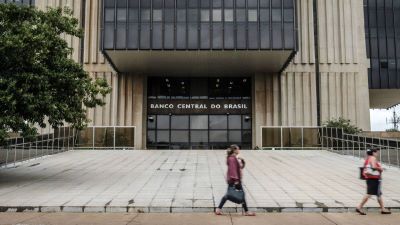
When it comes to raising interest rates to cool off pandemic inflation, Latin Americas central banks have been near the front of the global pack. Theyre also among the worst-equipped for that task.
Half a dozen countries in the region have hiked borrowing costs since March. There’s been more tightening than in most parts of the world because prices are rising faster — a problem highlighted Thursday when the region’s two biggest economies posted new inflation data.
Brazil’s headline number exceeded forecasts and nudged close to 10% — fueling talk of even more rate increases — while in Mexico core inflation accelerated for the ninth straight month.
But economists say there are limits to what rate hikes can achieve, thanks to a backdrop that makes Latin America a uniquely unfavorable place to use monetary policy as a tool to combat inflation. Swaths of its economy are off the books, with low levels of lending — many people don’t even have bank accounts — so raising the cost of credit has less of a dampening effect on demand. Politics tend to be volatile, and its dramas often eclipse central-bank policy tweaks in the eyes of markets.
Plus, there’s often a fairly recent history of high inflation that makes investors and the public ever-wary of rising prices — especially when governments ramp up spending, as Latin America’s mostly have in the pandemic.
Central bankers sometimes have to hit the brakes harder than they might want to when fiscal policies pull in the opposite direction — and some Latin American monetary authorities have a long way to go to convince investors that they’re autonomous from politicians. In any case, much of the current wave of inflation is driven by forces — like pandemic disruptions to supply chains, or rising commodity prices — that are beyond central-bank control.
ADVERTISEMENT
All the region’s monetary authorities face some combination of these problems.
In Mexico, the government has stuck to its austerity plan through the pandemic, and politics are fairly stable. Inflation has surged anyway, pushing the central bank into two rate hikes this year. It doesn’t expect to hit the 3% target until early 2023, and the country’s large informal economy may be one reason why. Less than 40% of Mexicans have access to bank accounts, lagging an overall rate of 55% for the region that’s itself low by world standards. Credit to households and businesses adds up to 45% of Mexico’s GDP; in Thailand, where per-capita incomes are similar, the figure is 131%.
“When you’re working informally, you’re not buying houses left and right,” said Enrique Cardenas, an economic historian at the Iberoamerican University of Puebla. “Modifications to the key rate do not affect you that much. They’re not that relevant.” With limited power to influence the economy via credit, central bankers in Latin America often have to rely on exchange rates. Higher interest rates attract foreign investors, propping up currencies and making imports cheaper. That doesn’t work so well when political tensions or fiscal spending overshadow everything else.
In Brazil, the currency strengthened after the central bank’s surprise 75-point rate-increase in March. But since June it’s declined again even though the bank kept hiking. Investors remain concerned about a possible breach of spending rules, as President Jair Bolsonaro considers expanding social programs. And tensions have only escalated last week, amid street demonstrations orchestrated by Bolsonaro and a fight over the Supreme Court’s powers. “Political noise and the threats to breach the fiscal ceiling are preventing the real from strengthening,” said Jose Julio Senna, a former central banker now in charge of monetary studies at the Institute of Brazilian Economics. “So monetary policy loses a very important transmission channel.”
Peru is another example. For years it’s been among the region’s rare investment-grade credits. But the country has been through weeks of turmoil after a knife-edge election won by a left-wing outsider. The sol currency has plunged, driving inflation to a 12-year high, and analysts expect the central bank’s first rate increase in five years won’t be the last.
Chile, South America’s richest country and usually one of its more tranquil, has been hit by street protests in the last two years. It’s also been a relatively big spender in the pandemic — and congress has been trying another form of stimulus by letting people tap their pension funds early. That’s escalating inflation risks, warns central bank chief Mario Marcel, who surprised markets last week with a bigger-than-expected interest-rate hike.
Consumer prices have exceeded forecasts for the past two months. Many of these problems pre-date the pandemic, which hit the region harder than most. It’s just that they’ve gotten worse. And they leave policy makers walking an especially precarious line. There’s pressure from above, from the financial markets, to keep finances sound — and from below to remedy deep-seated social divides. “When institutions and economic policy foundations are not strong, central banks are forced to hike interest rates before time, like it’s happening today,” said Ernesto Revilla, chief Latin America economist at Citigroup Inc. “We have called this the Latin American dilemma,” he said. “It’s not obvious how it will be solved.”