Baht being squeezed by Covid crisis, slow vaccine distribution’
The baht opened at 32.03 to the US dollar on Thursday, unchanged from Wednesday’s closing rate.
The Thai currency is likely to move between 31.95 and 32.10 during the day, Krungthai Bank market strategist Poon Panichpibool said.
The most important factor influencing the direction of the baht is the Covid-19 situation in Thailand and in other countries, Poon pointed out.
He added that the US economy is recovering and market players are tending to hold more dollars, leading to a strengthening of the US currency.
Poon also noted that Thailand’s vaccine distribution is still not rolling along smoothly, and the Covid-19 crisis in the country has not eased yet. This has led to foreign investors offloading more of their Thai assets, especially stocks, inevitably pressuring the baht to weaken.
He predicted that the Thai currency would weaken to 32.50 per US dollar at the maximum.
The price of gold rose by THB150 per baht weight in morning trade on Thursday, thanks to mass buy-ups of the precious metal after its price fell almost 1 per cent on Tuesday.
AGold Traders Association report at 9.24am showed the buying price of a gold bar at THB26,750 per baht weight and selling price at THB26,850, while gold ornaments cost THB26,272.28 and THB27,350, respectively.
At close on Wednesday, the buying price of a gold bar was THB26,600 per baht weight and selling price THB26,700, while gold ornaments cost THB26,120.68 and THB27,200, respectively.
The spot gold price on Thursday was US$1,772 (THB56,744) per ounce after Comex gold on Wednesday rose by $8 to $1,771.60 per ounce.
Meanwhile, the gold market is keeping an eye on US non-farm payrolls that will be announced on Friday.
U.S. commits to regular talks as Taiwan pushes for trade deal
The U.S. and Taiwan agreed to hold regular talks on issues ranging from technology supply chains to meat imports following their first Trade and Investment Framework Agreement meeting in five years.
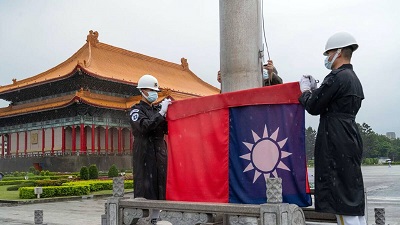
Honor guards wearing protective masks raise a Taiwanese flag at the National Chiang Kai-shek Memorial Hall in Taipei, Taiwan, on June 3, 2021. MUST CREDIT: Bloomberg photo by Billy H.C. Kwok.
The two sides will establish working groups to discuss topics including labor rights and intellectual property, the Office of the U.S. Trade Representative said in a statement following Wednesday’s meeting in Taipei.
Taiwan’s chief trade negotiator John Deng said the meeting was an important step toward eventually signing a full trade deal with the U.S., though that will take time. “A deal cannot happen in just a single meeting,” he said at a briefing. “There will be a lot of conversations going forward.”
A bilateral trade deal would be a coup for President Tsai Ing-wen. While much of Taiwan’s exports to the U.S. are already tariff-free, an agreement with Washington might provide political cover for similar deals with nations that want to boost ties but are wary of a backlash from China, which claims the island as its territory.
That the talks happened so early in U.S. President Joe Biden’s term is a significant indication of how far U.S.-Taiwan and cross-Strait relations have shifted over the past five years, according to Christian Castro, a former director of the State Department’s Taiwan Policy Office.
“The last time TIFA talks were held in 2016, there was still an innate caution underlying U.S. policy towards Taiwan, but the trajectory has clearly changed,” he said. “The TIFA relaunch makes clear that President Biden’s team has accepted the need to continue enhancing U.S.-Taiwan ties along the lines started under the previous administration and give the strengthened relationship as much substantive heft as possible.”
Taiwan only has trade deals with New Zealand and Singapore, signed during a temporary thawing of ties between Taipei and Beijing. The U.S. had held talks with Taiwan regularly since 1994 as way to iron out bilateral trade and investment issues, but they were suspended during the administration of former President Donald Trump.
Taiwan’s refusal to lift a ban on imports of pork products containing the feed additive ractopamine and the White House’s focus on a trade deal with China were widely seen as the reasons those talks were halted. The lack of the meetings over the past few years has held back progress in areas such as the restrictions on U.S. meat imports, according to the American Chamber of Commerce in Taiwan’s 2021 white paper.
While Tsai eased curbs on ractopamine last year, opposition groups have organized a referendum scheduled for August on whether the government should reimpose the ban on food-safety grounds.
The U.S. touched on the matter in its statement Wednesday, saying the two sides had agreed to “intensify engagement” on outstanding trade concerns, including market access barriers facing U.S. beef and pork producers.
The referendum is a potential roadblock to future trade talks, Castro said.
“The issue has derailed U.S.-Taiwan trade talks in the past under both Democratic and Republican administrations,” he said. “President Tsai Ing-wen’s policy initiatives in this area are significant and welcome, but it’s hard to imagine major progress towards a larger bilateral trade agreement if this issue isn’t firmly resolved.”
Beyond planned regular talks, officials provided little detail on how the two sides will collaborate on the supply of chips.
Taiwan Semiconductor Manufacturing Co. said earlier this month that construction of its new chip-making fab in Arizona was “well underway.” The company has pledged to spend $12 billion over the coming decade building and operating the plant.
Taiwanese investment in the U.S. has risen significantly since Trump first imposed tougher import duties on Chinese-made goods as part of his effort to reverse the U.S. trade deficit with the country. The upturn coincided with a steady slowdown in Taiwanese investment in China over the past decade.
“In the past, the U.S. would just come in and just demand that we do things,” Deng said in Wednesday’s briefing. “The biggest difference in today’s meeting was that both sides come with a more collaborative spirit.”
Published : July 01, 2021
By : Syndication Washington Post, Bloomberg · Betty Hou, Samson Ellis
Inflation eats at surging U.S. pay with Biden plans at stake
Americans are enjoying outsized pay boosts this year from desperate employers, but the raises are failing to keep pace with surging prices for everyday goods.
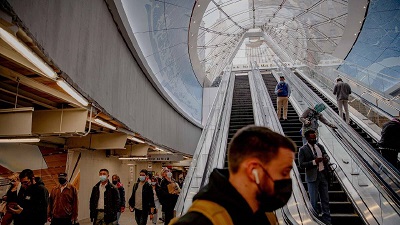
Commuters walk through Pennsylvania Station in New York on May 10, 2021. MUST CREDIT: Bloomberg photo by Amir Hamja.
U.S. wages likely posted a third strong monthly gain to fuel a 3.6% increase in June from a year earlier, according to economists’ forecasts ahead of the Labor Department’s jobs report due Friday. Companies including FedEx and Olive Garden owner Darden Restaurants are raising wages to attract staff.
At the same time, prices for everything from milk to car rentals and gasoline are rising at a rapid clip, eating into those income gains. The Federal Reserve’s preferred consumer-price gauge rose 3.9% in the 12 months through May, the fastest since 2008.
The parallel surges are shaping the debate over President Joe Biden’s proposed $4 trillion economic agenda. The hearty wage gains, particularly for the lowest-paid workers, are a boon to the administration, which argues price pressures will dissipate by next year and more spending over time won’t stoke inflation.
Republicans, meanwhile, have seized on the inflation numbers to argue against Biden’s spending plans and highlighted the pain from price gains: People with low incomes are hit particularly hard by inflation, since they spend a higher proportion of their funds on daily expenses like food and transportation.
“As a company, you’re going to have to pay up to hire,” said James Knightley, ING’s chief international economist. “But the cost of living is going up pretty rapidly. So really at this stage, you’re allowing people to tread water at the very best.”
Higher wages may indeed be helping companies hire. Private employers added a greater-than-expected 692,000 jobs in June, according to a report Wednesday from the ADP Research Institute, which said leisure and hospitality businesses posted the strongest gain.
FedEx is a prime example of how the labor dynamic is fueling inflation. The delivery giant is increasing wages to attract employees as shipping volumes grow and service delays mount. The pay rises are flowing into higher rates and surcharges to customers, which executives say is necessary to sustain profits.
Darden Restaurants said on an earnings conference call last week that hourly labor costs are up about 6% and commodity prices rose 2.5%, though “simplified operations” have boosted profit margins. Darden and other service and hospitality companies have had to boost starting wages as they don’t have enough workers to meet the demand of vaccinated Americans who feel more comfortable dining out and traveling.
According to the Federal Reserve’s Beige Book business survey, some hourly workers in the Boston region recently saw pay rise 30%. In the Philadelphia Fed district, one-third of non-factory companies reported higher employee costs amid signing and retention bonuses.
Service industries tend to be among the lowest paid, indicating that pay gains in the reopening economy are going to the bottom end of the income scale. Yet grocery staples including meat and dairy are seeing some of the biggest price increases.
Even with higher inflation, workers are still coming out on top, according to Rakeen Mabud, chief economist at Groundwork Collaborative, a left-leaning think tank.
“People on the ground know what they’re experiencing” and “their circumstances are improving,” Mabud said, citing other evidence such as bulked-up benefits and more people quitting jobs voluntarily. “Inflation fears at the moment are really just a smokescreen for choosing not to invest.”
It’s not just the wage gains that are fattening wallets. Spending is being bolstered by about $1.6 trillion in pent-up savings from stimulus checks and higher unemployment benefits throughout the pandemic. People are also feeling a lot better about their own economic prospects, with consumer confidence soaring to a new pandemic high in June.
Jared Bernstein, a member of the White House Council of Economic Advisers, said recent price movements are “signals” rather than long-term trends.
Contrast that with the Republican line. “Inflation is raging,” Senate GOP leader Mitch McConnell said Monday. “Now we are confronted with an administration that would like to spend $5 trillion more, on top of the $2 trillion” from the pandemic relief package in March.
Meanwhile, wage pressures are even hitting companies that specialize in helping clients plan costs and hiring. Paychex Inc. boosted pay by about 20% for some of its entry-level payroll specialists to about $18 an hour, an amount that usually took those workers about two years to reach, according to Chief Executive Officer Martin Mucci.
“The biggest issue right now is hiring,” said Mucci, speaking about the broader U.S. labor market. “The pressure is, ‘Can I find the people? I’ll worry about the wages secondarily.'”
Published : July 01, 2021
By : Syndication Washington Post, Bloomberg · Katia Dmitrieva
Markets wrap: Stock euphoria abates at end of big first half
The end of one of the best first halves for stocks since 1998 was marked by small moves and slow trading.
Solid economic data tempered concern about high valuations and the spread of a more contagious coronavirus variant, with the S&P 500 closing slightly higher. The gauge notched its longest streak of monthly gains since August and has rallied 14% in 2021. The Dow Jones Industrial Average outperformed major benchmarks on Wednesday, and the Nasdaq 100 fell. Treasuries, which have surprisingly beaten the world’s biggest bond markets since the Federal Reserve’s hawkish tilt in June, rose.
Investors are assessing hopes for an imminent return to normalcy amid worries that runaway inflation or further Covid-19 restrictions could derail the economic rebound. Interestingly enough, companies that stand to benefit the most from a recovery in activity — like energy, industrial and financial shares — rose on Wednesday, beating the tech giants that had fueled the stay-at-home trade.
“While we expect stock markets will ultimately thrive in the reflationary environment of strong, above-trend growth and ample liquidity conditions, it won’t be a smooth ride,” said Candice Bangsund, vice president and portfolio manager at Montreal-based Fiera Capital Corp. “The next phase of the bull market may exhibit more frequent bouts of volatility.”
Dallas Fed President Robert Kaplan said the tapering of asset purchases, which he hopes will start “soon,” should run smoother this time around as investors already know that a move is being discussed. His Atlanta counterpart Raphael Bostic noted the U.S. has “actually fully recovered” from the pandemic on a gross domestic product basis, but “it is going to take some time to get back” on employment.
Elsewhere, oil advanced, with investors awaiting a key meeting between OPEC+ producers that may reveal a collective output hike as a stalemate in Iranian nuclear talks drags on.
Here are some events to watch in the markets this week:
– China’s President Xi Jinping will deliver a speech as the nation marks the 100th anniversary of the founding of the Chinese Communist Party Thursday
– OPEC+ ministerial meeting Thursday
– ECB President Christine Lagarde speaks Friday
– The U.S. jobs report is due Friday
These are some of the main moves in markets:
– – –
– The S&P 500 rose 0.1%
– The Nasdaq 100 fell 0.1%
– The Dow Jones Industrial Average rose 0.6%
– The MSCI World index fell 0.2%
– – –
– The Bloomberg Dollar Spot Index rose 0.3%
– The euro fell 0.3% to $1.1859
– The British pound was little changed at $1.3833
– The Japanese yen fell 0.5% to 111.08 per dollar
– – –
– The yield on 10-year Treasuries declined two basis points to 1.45%
– Germany’s 10-year yield declined four basis points to -0.21%
– Britain’s 10-year yield declined two basis points to 0.72%
– – –
– West Texas Intermediate crude rose 0.8% to $73.53 a barrel
– Gold futures rose 0.4% to $1,770.60 an ounce
Published : July 01, 2021
By : Syndication Washington Post, Bloomberg · Rita Nazareth, Vildana Hajric
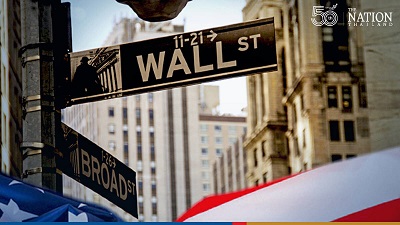
Wall Street powers through the first half of 2021 with U.S. stocks at record highs
Wall Street wrapped up the first half of 2021 at record highs, with investors defying pessimistic projections of a broader pullback and pushing past concerns of rising inflation and potential rate hikes.
The Dow Jones industrial average advanced more than 210.22 points, or 0.6%, to close at 34,502.51 on Wednesday. The S&P 500 edged up 5.70 points, or 0.1%, to settle at 4,297.50 and chalked up its 34th record finish of the year. The tech-heavy Nasdaq dropped 24.38 points, or nearly 0.2%, to end the session at 14,503.95.
Wednesday’s session marked the midway point of a year that saw a new president move into the White House, shift in power on Capitol Hill amid the continuing shocks of the coronavirus pandemic. The three major U.S. indexes are up by double-digit percentages, with the Nasdaq advancing 12.5%, the Dow adding 12.7% and the S&P 500 surging 14.4% since Dec. 31, 2020.
A day earlier, the S&P 500 and the Nasdaq set all-time highs, highlighting Wall Street’s optimism for economic recovery – reinvigorated by widespread vaccinations, businesses ramping up operations and consumers eager to spend after more than a year of restrictions tied to the public health crisis.
“The market action of 2021 is not a surprise to anyone who considered the impact of the vaccine in late 2020,” said David Bahnsen, chief investment officer of the Bahnsen Group, a wealth management firm.
More than half of the U.S. population has now received at least one dose of coronavirus vaccine, according to data from the U.S. Centers for Disease Control and Prevention. As of Wednesday, more than 154.2 million have been fully vaccinated.
Kristina Hooper, the chief global market strategist at Invesco, emphasized the dramatic changes brought on by the vaccines, which have help fuel an economic comeback. Wall Street also has been bolstered by significant spending from Congress and aggressive monetary policy from the Federal Reserve, she said, while corporate earnings are improving.
Investors also appear to be less worried about rising inflation, which had dampened sentiment on Wall Street. Earlier this month, central bankers signaled that rate hikes could arrive in 2023, sooner than previously projected. The Fed offered a more optimistic reading of the economic recovery, estimating growth to hit 7% this year, the fastest calendar-year expansion since 1984.
Although the question of how to contend with rising costs remains a point of political contention, Fed Chair Jerome Powell said he expects prices to simmer down over time, as the covid-inspired mismatch of disrupted supply and pent-up demand eventually evens out.
Many of the biggest names on Wall Street have thrived during the pandemic. The pharmacy chain Walgreens, which is among the companies distributing coronavirus vaccines, has seen its stock soar 32% this year. The tech giants, capitalizing on the nation’s heightened reliance on computing and Web services, also have notched sizable gains. Alphabet shot up nearly 40% in the past two quarters. Facebook is up 27% for the year, boosted this week by the rulings of a federal judge who dismissed two antitrust lawsuits against the social media company and said the federal government did not provide enough evidence it is a monopoly.
Much like last year, the vast wealth flowing into the portfolios of investors contrasts with the plight of those devastated by the pandemic and whose economic prospects remain uncertain or dim. Though efforts to vaccinate people are well underway in rich countries, poorer nations have yet to inoculate a meaningful portion of their populations. The stark disparity in vaccination rates and the sluggish pace of the rollout abroad have raised worries the virus could mutate into more lethal variants, wreaking havoc on public health and threatening the global economic recovery.
Some public health officials are encouraging people, even those who are fully vaccinated, to continue to wearing masks to curb the growing threat posed by the more contagious delta variant of the novel coronavirus.
In a report published Wednesday by the United Nations, analysts projected that the pandemic could slash as much as $2.4 trillion from the global economy this year due to the loss of international tourism. The uneven vaccine rollout has magnified losses for developing countries, which rely on spending from wealthy foreigners.
“Tourism is a lifeline for millions, and advancing vaccination to protect communities and support tourism’s safe restart is critical to the recovery of jobs and generation of much-needed resources, especially in developing countries, many of which are highly dependent on international tourism,” said Zurab Pololikashvili, secretary general of the United Nations World Tourism Organization.
On Wednesday, payroll firm ADP said 692,000 jobs were added in June, a better than expected showing. The Labor Department will release its own report on Friday.
Global indexes closed the last trading day of June down slightly, with the German DAX falling 1%, the Pan-European Stoxx down 0.67% , and Hong Kong’s Hang Seng Index shedding 0.6 percent.
Global tourism crash may cause $4 trillion loss to world economy
The slump in tourism caused by Covid-19 will cost the global economy more than $4 trillion for 2020 and 2021, much worse than anticipated, as an uneven vaccination rollout crushes developing countries that are highly dependent on international visitors.
The losses this year alone could amount to $1.7 trillion to $2.4 trillion, even as international tourism rebounds in the second half in countries like the U.S., the U.K. and France, which have higher vaccination rates, the United Nations Conference on Trade and Development said in a report.
The study highlights the costly impact from an unequal access to vaccines around the world. Developing countries may account for as much as 60% of the estimated losses to global gross domestic product, according to the Unctad.
The report also shows that the tourism crisis is far from over, with travel restrictions and bans still in place in many regions with low vaccination rates. The world may not see a return to pre-pandemic arrivals of international tourists until 2023, according to the study, which was done in collaboration with the UN World Tourism Organization.
Countries such as Thailand and Turkey, which rely on foreign tourists to boost their economies, bore the brunt of the impact. The drop in tourism also threatens closely linked sectors such as food, beverages, retail trade, communications and transport.
Overall, the crash in tourism has led to an average rise of 5.5% in unemployment of unskilled labor, hitting a sector that employs many women and young people.
“Tourism is a lifeline for millions, and advancing vaccination to protect communities and support tourism’s safe restart is critical to the recovery of jobs and generation of much-needed resources, especially in developing countries,” said UN World Tourism Organization Secretary-General Zurab Pololikashvili.
In developed countries, the prospect of a vacation overseas is looking up. A rising number of Americans are planning a trip to a foreign country, according the Conference Board’s June consumer confidence index.
Published : July 01, 2021
By : Syndication Washington Post, Bloomberg · Peyton Forte
Semi-lockdown in 6 provinces to cost at least THB40 billion: Kasikorn
The month-long partial lockdown in six provinces will cost Thailand at least 40 billion baht, according to analysis by Kasikorn Research Centre (KResearch).
From Monday, construction sites were shut and restaurant dining banned in Covid-19 dark-red zone provinces of Bangkok, Nakhon Pathom, Nonthaburi, Pathum Thani, Samut Prakan and Samut Sakhon.
KResearch estimates the 30-day measure will wipe 0.25 per cent off Thailand’s gross domestic product (GDP).
The government has allocated a relief budget of 8.5 billion baht to help businesses and workers affected by the restrictions.
However, KResearch said the partial lockdown would have a spillover effect on other groups in the business and supply chains. Also, construction firms may face legal problems related to contract deadlines, with penalties for delayed work potentially adding to their cost burden.
The research house said the situation ahead is still full of uncertainties. The effects would be limited if the restrictions are lifted after one month, but if daily infections do not decrease, the damage would increase and affect a wider range of people, it added.
The Stock Exchange of Thailand (SET) Index closed at 1,587.79 on Wednesday, down 3.64 points or 0.23 per cent. Transactions totalled THB83.59 billion with an index high of 1,600.57 and a low of 1,584.47.
In the morning session, Krungsri Securities expected Wednesday’s index to rise to 1,600 points on strong US consumer confidence and house price indices.
It said the index also gained positive sentiment from speculation on shares to be listed on the SET50 and SET100 indices on Wednesday.
“However, the index would be under pressure due to volatile foreign fund inflows and higher Covid-19 cases in Thailand,” Krungsri Securities said. Thailand logged a record tally of 53 deaths and 4,786 new cases on Wednesday.
The 10 stocks with the highest trade value today were KCE, SCGP, HANA, RCL, KBANK, PTT, AWC, SCC, NEX and EA.
Other Asian indices were mixed:
Japan’s Nikkei Index closed at 28,791.53, down 21.08 points or 0.073 per cent.
China’s Shanghai SE Composite Index closed at 3,591.20, up 18.02 points or 0.50 per cent, while the Shenzhen SE Component Index closed at 15,161.70, up 161.90 points or 1.08 per cent.
Hong Kong’s Hang Seng Index closed at 28,827.95, down 166.15 points or 0.57 per cent.
South Korea’s KOSPI closed at 3,296.68, up 10.00 points or 0.30 per cent.
Taiwan’s TAIEX closed at 17,755.46, up 157.27 points or 0.89 per cent.
#SootinClaimon.Com : ขอบคุณแหล่งข้อมูล : หนังสือพิมพ์ The Nation.
Ministry speeds up land-reclamation process for airport rail link
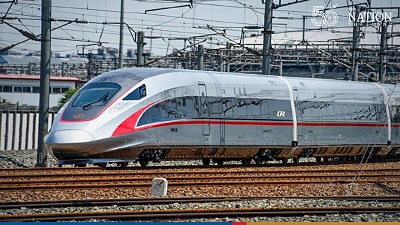
The Transport Ministry said it is accelerating the process of delivering land for the high-speed railway linking Thailand’s three main airports – Don Mueang, Suvarnabhumi and U-Tapao.
The airport rail link is in line with the development of the Eastern Economic Corridor (EEC).
Chayatham Phromsorn, the ministry’s permanent secretary, said the State Railway of Thailand (SRT)’s job of delivering 5,521 rai of land between Suvarnabhumi and U-Tapao airports is more than 88 per cent complete.
He added that he expects all the land required for the project to be reclaimed and delivered by September.
Ministry speeds up land-reclamation process for airport rail link
So far, the following has been completed in the land-reclamation project:
• SRT has completed 634 of its 737 contracts. The completed contracts account for 3.59 billion baht of the total 4.12 billion.
• The process of migrating residents out of the reclaimed land is 100-per-cent complete.
• Public utilities in 257 points have been dismantled, while 396 points are still being worked upon.
Chayatham said the contractor was preparing to kick off construction and the setting up of a management system for the airport rail link.
“We expect the contractor to commence operations by October,” he added.
Separately, Kanit Sangsubhan, secretary-general of the EEC Policy Committee, said the panel will negotiate with the contractor to speed up the Bang Sue-Don Mueang line, so it matches the setting up of the Thailand-China high-speed railway project.






 Ministry speeds up land-reclamation process for airport rail link
