US infrastructure investment plans, oil price lift SET sentiment
The Stock Exchange of Thailand (SET) Index gained 7.16 points, or 0.45 per cent, to 1,592.88 on Friday morning.
Krungsri Securities expected the stock market to move between 1,595 to 1,600, in response to the US government’s resolution to invest in infrastructure in a bid to stimulate the country’s economy. Also, the oil price this time was a related factor.
The securities firm suggested that investors buy PTT, PTTEP and BANPU, due to the current price of oil. It also suggested “buys” for HANA, KCE, TU, CPF and EPG, which will gain from the weakening baht.
With the planned reopening of the country in a few months, Krungsri Securities recommended for buying: BCH, CHG, BDMS, MINT, CENTEL, ERW, AOT, CPALL, HMPRO, CPN, CRC, AAV, AMATA, WHA, BEM and BTS.
Bullish US stock market pushes Thai gold price down
The price of gold in Thailand dropped by THB50 per baht weight in morning trade on Friday due to the rise in the US stock market and strong US economic data.
The Gold Traders Association report at 9.29am showed the buying price of a gold bar at THB26,700 per baht weight and selling price at THB26,800, while gold ornaments were priced at THB26,226.80 and THB27,300, respectively.
At close on Thursday, the buying price of a gold bar was THB26,750 per baht weight and selling price THB26,850, while gold ornaments were priced at THB26,272.28 and THB27,350, respectively.
Spot gold price on Friday was US$1,779 (THB56,643) per ounce after Comex gold on Thursday dropped by $6.7 to $1,776.7 per ounce.
Hong Kong gold price, meanwhile, dropped by HK$70 to $16,420 (THB67,352) per tael, the Chinese Gold and Silver Exchange Society reported.
Baht could quickly slide to 32.50 to the dollar if it breaches 32
The baht opened at 31.90 to the US dollar on Friday, strengthening from Thursday’s closing rate of 31.87.
The Thai currency is likely to move between 31.85 and 32.00 during the day, Krungthai Bank market strategist Poon Panichpibool said.
He said the baht this time was fluctuating due to the Covid-19 situation in Thailand, more than political rallies in the country.
He urged investors to monitor if the baht weakens to 32 to the US dollar on Friday. The strategist explained that the baht could fall to 32.50 if it passes the resistance level at 32.
U.S. initial jobless claims are higher than estimates at 411,000
Applications for U.S. state unemployment insurance fell slightly last week, though were higher than forecast, as the labor market meanders toward a full recovery.
Initial claims in regular state programs decreased by 7,000 to 411,000 in the week ended June 19, Labor Department data showed Thursday. The median estimate in a Bloomberg survey of economists called for 380,000 new applications. The prior week’s claims were revised up to 418,000.
Weekly unemployment claims have fallen considerably since the beginning of the year as health concerns abate and businesses like restaurants return to full capacity. Still, the initial claims remain significantly higher than they were before Covid-19 and many employers say they are having trouble finding workers.
Continuing claims for ongoing state benefits fell by 144,000 in the week ended June 12 to 3.4 million.
Stock futures remained higher after the jobless claims report and other economic data.
States across the county are ending enhanced federal unemployment benefit programs amid an ongoing debate about whether the programs are restraining hiring. Overall, 26 states will end federal programs before their official expiration date in September, which may start to bring continued claims figures down considerably in the coming weeks.
Missouri, Mississippi and Iowa — which ended federal programs on June 12 — all posted declines in claims for pandemic unemployment assistance.
Declines for initial claims were widespread, with states including California, Florida and Ohio posting some of the biggest drops. Pennsylvania posted the biggest gain in applications last week.
Federal Reserve officials are focused on achieving maximum employment, which they define as a “broad and inclusive goal.” In a congressional hearing Tuesday, Chair Jerome Powell said that the labor market has a long way to go and needs continued support.
ADVERTISEMENT
“The very quick job gains of the early recovery essentially involved going back to your old job,” Powell said. “Now it’s actually finding new jobs and that’s a matching function that is more labor intensive and time consuming.”
Published : June 25, 2021
By : Syndication Washington Post, Bloomberg · Olivia Rockeman
BOE warns against tightening too soon as inflation surges
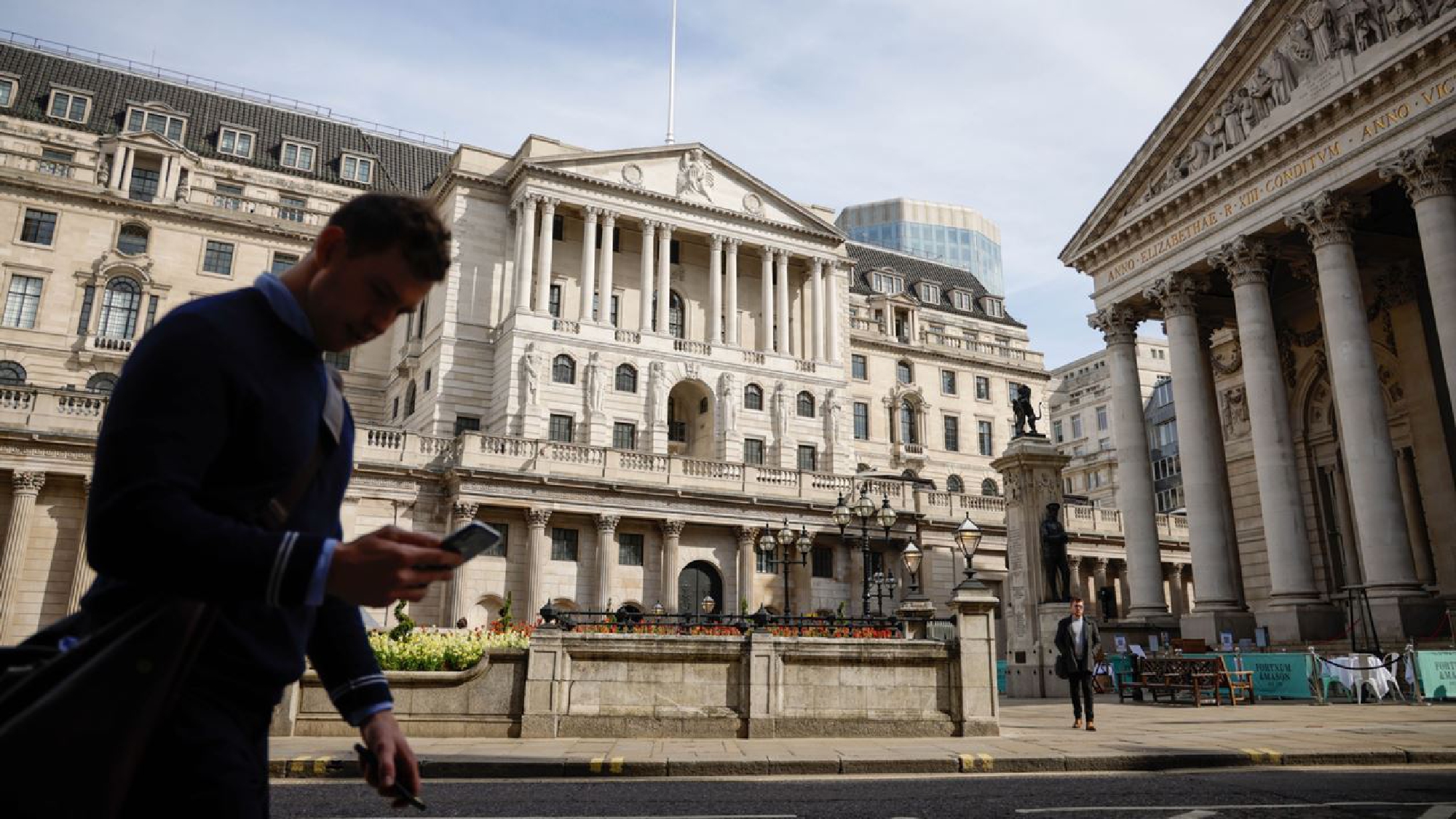
The Bank of England pushed back against speculation that a surge in U.K. inflation means its preparing to boost interest rates, saying the economy still needs support to recover from the pandemic.
The central bank warned against “premature tightening,” toughening its language on the need to maintain stimulus. The remarks contrasted with a sharp increase in the bank’s outlook for inflation, which officials now see peaking at 3%, a half point higher than their forecast just six weeks ago.
The BOE’s sanguine view follows heightened anxiety among investors and economists that consumer price increases may prove sticky. Last week, the U.S. Federal Reserve brought forward its expectations of rate increases, while central banks in Hungary and the Czech Republic already started raising borrowing costs in recent days.
“Today’s decision reinforces our belief that the committee will continue providing monetary support through the economic restart,” said Vivek Paul, U.K. chief investment strategist at BlackRock Investment Institute.
Officials led by Governor Andrew Bailey voted unanimously to keep the benchmark lending rate at 0.1% and by 8-1 to maintain the pace of its bond purchases, targeting a cumulative 895 billion pounds ($1.2 trillion) by the end of this year. Chief Economist Andy Haldane, who steps down from the nine-member Monetary Policy Committee this month, pressed for a reduction in the stimulus.
The pound dipped against the dollar and euro after the decision, and U.K. stocks ticked higher. The yield on U.K. government 10-year bonds fell after the decision. Money-market bets on the BOE raising interest rates were also pushed back by two months to August 2022.
“Financial market measures of inflation expectations suggest that the near-term strength in inflation is expected to be transitory,” the BOE said in a statement on Thursday.
The rest of the MPC said the economy still has plenty of slack built up during lockdowns that forced thousands of businesses to close during the pandemic. The bank reiterated that it does not intend to tighten policy until there’s clear evidence that inflation will stay above target for a sustained period.
“Spare capacity in the economy was expected to be eliminated as activity picked up, and there was expected to be a temporary period of excess demand,” the BOE said. “As these transitory effects faded, conditioned on the market path for interest rates, inflation was expected to return to around 2% in the medium term.”
Inflation leaped above the bank’s 2% target unexpectedly for the first time in almost two years last month, fanning speculation about when policymakers will have to ease off on stimulus. A growing minority of economists is now anticipating an interest rate increase sometime next year.
“Everyone is trying to work out if the inflation increase is temporary or here to stay,” said Alex Maddox, capital markets and digital director for Kensington Mortgages. “By keeping rates constant, the MPC is suggesting it’s the former.”
Some economists who expect rates to rise next year said the bank may have to change its tone in the months ahead despite the relatively relaxed outlook delivered on Thursday.
“Our own view is that inflation will continue to rise well above the Bank of England’s target in the coming months and that not all of this will prove transitory,” said Ambrose Crofton, Global Market Strategest at J.P. Morgan. “We expect current signs of tightness in the labour market to persist. Upward pressures on wages will support medium-term inflation momentum.”
For now, the policymakers both at the BOE and Treasury have been focused on supporting millions of workers either unemployed or on furlough after coronavirus restrictions forced thousands of businesses to close. The BOE expects unemployment to touch 5.4% in the third quarter before falling back below the current level near 5% next year.
Bank staff revised up their expectations for gross domestic product growth to 5.5% in the second quarter from the 4.25% rate they estimated in May. That would be consistent with output in that period being less than 4% below its pre-pandemic level.
Policymakers are due to revise inflation forecasts in August. Their latest outlook published last month suggested a sharp recovery in the second half of the year, leading to inflation peaking around 2.5% at the end of this year. The latest reading for May was 2.1%, above the expectations of both the BOE and economists.
ADVERTISEMENT
Published : June 25, 2021
By : Syndication Washington Post, Bloomberg · Reed Landberg, Lizzy Burden
Airline industry to weigh goal of net-zero emissions by 2050
The airline industrys global trade group will propose eliminating carbon emissions on a net basis by 2050, as pressure builds to improve the climate goals of a segment thats come under increasing criticism for its use of fossil fuels.
The International Air Transport Association will ask carriers to adopt the target at its annual meeting in Boston in October, Willie Walsh, its director general, said in an interview Thursday.
While airlines including British Airways owner IAG, Delta Air Lines and United Airlines Holding have all made net-zero commitments, IATA hasn’t updated its own target since 2009. At that time, airlines pledged to cut CO2 output 50% by mid-century, compared with 2005 levels. But emissions have surged since then, driven by a boom in air travel that was only cut short last year by the coronavirus pandemic.
“I’m very confident that the industry will align with the changed goals,” Walsh said. “But we do have to go through the formal process.”
Aviation has come under a harsher spotlight as industries such as automotive manufacturing make strides toward cutting emissions in line with goals set by the Paris Agreement. Before the pandemic, so-called flight-shaming prompted movements to limit air travel and switch to trains, for example.
Walsh argues that while there’s little that carriers can do on their own, there’s a credible path if governments, oil companies and planemakers pitch in to do their share.
“It’s unacceptable that others in the wider aviation industry just look to airlines to write the big check,” he said. “We don’t build the aircraft or produce the fuel or run the air traffic services.”
One challenge in decarbonizing aviation is the difficulty of getting planes airborne with alternative fuels.
IATA intends to hold planemaker Airbus SE to a pledge to produce a hydrogen-fueled aircraft by 2035 and said the model needs to have the size comparable to the top-selling A320 narrow-body – carrying 150 people – and a range of at least 1,000 kilometers (621 miles).
Governments and oil companies should also increase investment in sustainable aviation fuels, seen as key to cutting emissions over the next decade, and European countries must come together to form a single air-traffic control area that would optimize routes and cut CO2 at a stroke, he said.
The 2015 Paris Agreement committed almost 200 countries to stabilize global warming “well below” 2 degrees Celsius compared with pre-industrial levels, with a stretch target of 1.5 degrees Celsius. It also calls for all man-made emissions to fall to net zero during the second half of this century.
However, aviation as an industry wasn’t specifically covered, and targets were left to individual countries.
Aviation industry CO2 emissions reached about 915 million metric tons in 2019, according to Air Transport Action Group, an industry group focused on environmental issues.
Based on 2005 levels, IATA’s current target is for carriers to reduce carbon emissions to 325 million metric tons by 2050. Walsh said achieving net zero would represent only an incremental change, given the direction already set in 2009.
Walsh spoke in a wide-ranging interview. Other points he addressed:
ADVERTISEMENT
– Industry comeback: Walsh is slightly more optimistic than current IATA estimate for a $48 billion industry loss for 2021. The second half looks better for Europe given pace of vaccine rollouts, but transatlantic routes are reopening slower than expected. He sees the U.S. opening to European visitors “probably during July”
– U.K. government “haven’t done anything specific to the airline industry. So I wouldn’t be optimistic about them doing anything going forward”
– Mideast super-hubs still “very important” and will have higher relevance post-pandemic — becoming more valuable while fewer direct flights are available
– Skeptical that flying taxis can become a viable business, but not dismissing them
– China is “very credible future player” in aircraft manufacturing and “clearly have the determination to get there”; coming Comac C919 probably won’t see much demand outside domestic market.
Published : June 25, 2021
By : Syndication Washington Post, Bloomberg · Christopher Jasper, Jessica Shankleman, Charlotte Ryan
Stocks hit record on bets economy is pushing ahead
Stocks climbed to a record as President Joe Bidens bipartisan $579 billion infrastructure deal added to optimism the economic recovery will keep pushing ahead. The dollar fell.
Companies that stand to benefit the most from a rebound in activity outperformed — with financial and energy shares leading gains in the S&P 500. Caterpillar Inc., the world’s biggest maker of mining and construction equipment, jumped alongside raw-material producers such as U.S. Steel Corp. and Nucor Corp. Banks rallied before the results of the Federal Reserve’s stress tests, while Tesla Inc. extended its three-day advance to almost 10%.
The bipartisan legislation is expected to move through Congress alongside a separate bill that would spend trillions more on what Biden called “human infrastructure” that the GOP opposes. Earlier Thursday, Atlanta Fed President Raphael Bostic and his Philadelphia counterpart Patrick Harker urged more spending on infrastructure investment — noting that it could boost U.S. productivity and growth.
“Infrastructure spending strengthens an already very strong economic growth outlook,” said Jeff Buchbinder, equity strategist at LPL Financial. Those investments will “bolster the outlook for corporate profits and should keep this bull market going strong well beyond 2021,” he added.
Data Thursday showed applications for U.S. state unemployment insurance fell slightly last week, though were higher than forecast, while orders for durable goods rose in May at the fastest pace since January.
Shares of the fastest-growing U.S. companies have stopped moving in lockstep with the cheapest stocks. The shift is evident from the correlation between the S&P 500 Pure Growth and Pure Value indexes during the past 200 trading days, which plummeted after setting an eight-year high in April 2020.
Elsewhere, the pound fell after the Bank of England pushed back against speculation that a surge in inflation means it’s preparing to boost interest rates — saying the economy still needs support.
Stocks hit record on bets economy is pushing ahead
These are some of the main moves in markets:
Stocks
– The S&P 500 rose 0.6% as of 4 p.m. EDT
– The Nasdaq 100 rose 0.6%
– The Dow Jones industrial average rose 1%
– The MSCI World index rose 0.6%
Currencies
– The Bloomberg Dollar Spot Index fell 0.2%
– The euro was little changed at $1.1935
– The British pound fell 0.2% to $1.3936
– The Japanese yen rose 0.1% to 110.84 per dollar
Bonds
ADVERTISEMENT
– The yield on 10-year Treasurys was little changed at 1.49%
– Germany’s 10-year yield declined one basis point to -0.19%
– Britain’s 10-year yield declined four basis points to 0.74%
Commodities
– West Texas Intermediate crude rose 0.2% to $73.26 a barrel
– Gold futures fell 0.5% to $1,774.70 an ounce
Published : June 25, 2021
By : Syndication Washington Post, Bloomberg · Rita Nazareth, Kamaron Leach
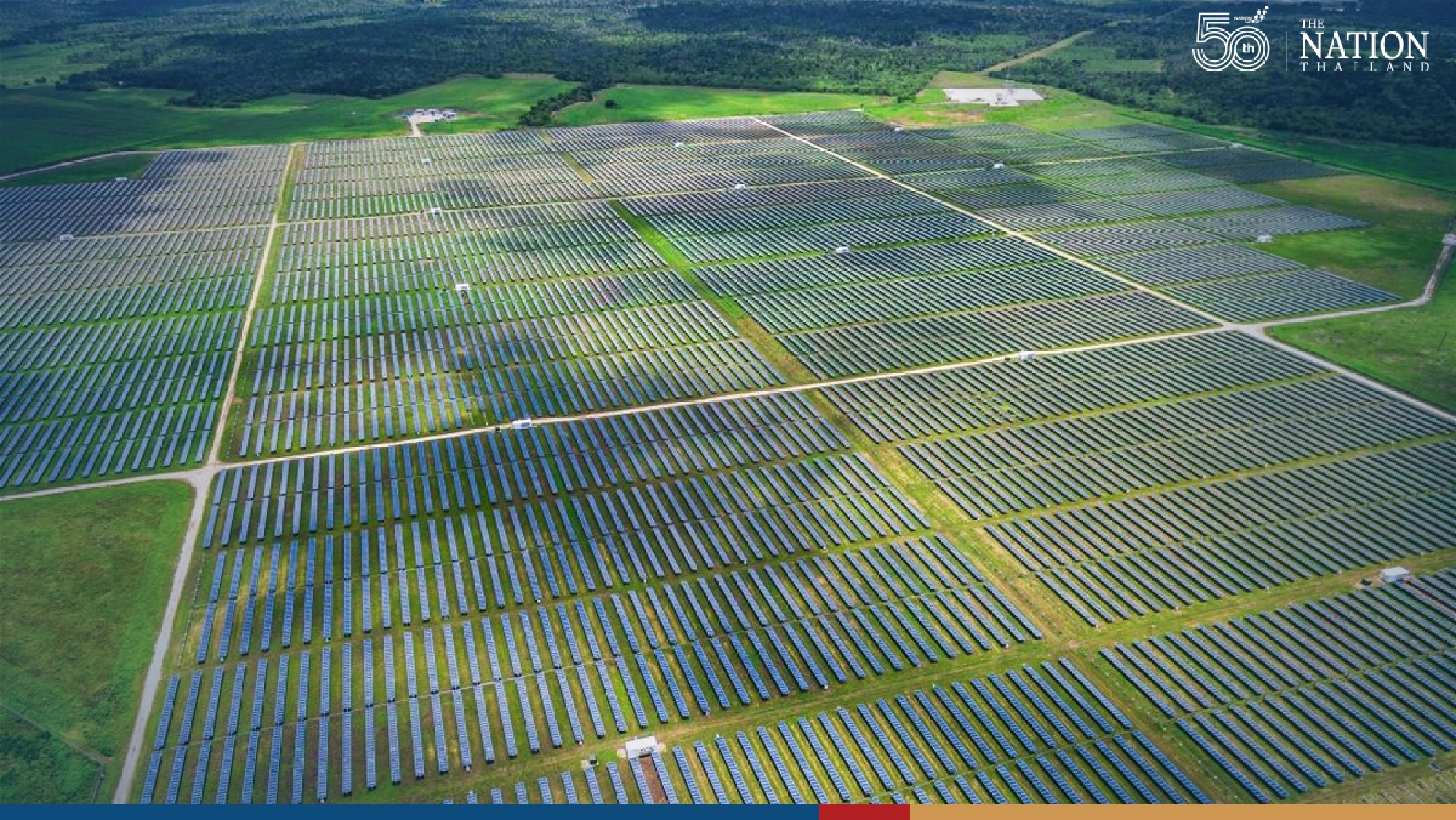
Biden administration bars imports of solar panels linked to forced labor in Chinas Xinjiang region
WASHINGTON – The Biden administration banned the import of solar panels and other goods made with materials produced by a Chinese company that it accused of using forced laborers from Chinas Xinjiang region, a move likely to complicate the U.S. push toward clean energy.
U.S. Customs and Border Protection issued a withhold release order Thursday barring silicon-based products from the company, Hoshine Silicon, which operates from plants in Xinjiang that have been connected to coercive state labor programs targeting Uyghurs and other minorities, as The Post reported on Thursday.
The order will have widespread impact on the solar industry, which is dominated by Chinese suppliers that source materials from Hoshine, the world’s largest producer of metallurgical-grade silicon, a key raw material in solar panels.
“Almost the complete solar industry is affected by Hoshine,” said Johannes Bernreuter, a research analyst in Germany who studies the solar supply chain.
CBP officials confirmed at a news briefing that the ban applies to solar panels containing Hoshine materials. Alejandro Mayorkas, secretary of the Department of Homeland Security, which oversees CBP, suggested that the order could also apply to products beyond solar panels, though CBP officials didn’t immediately provide more detail on that.
“Silica is a raw material that is used to make components for solar panels, electronics and other goods,” Mayorkas said. “This order was issued because CBP has information reasonably indicating that Hoshine uses forced labor to produce its silica-based products.”
CBP officials estimated that the United States has imported more than $150 million in products made with Hoshine materials over the last two and a half years, as well as more than $6 million of direct imports from the company.
Mayorkas said the administration remains committed to renewable energy. “But, and this is very important, we’re going to root out forced labor wherever it exists and we’ll look for alternative products to achieve the environmental impacts that are a critical goal of this administration,” he said.
The order, effective immediately, instructs CBP officers to detain all imports of silicon-based products made by Hoshine as well as goods made in whole or in part with the company’s silicon-based materials.
Ana Hinojosa, head of CBP’s forced labor team, said she couldn’t quantify the percentage of solar-panel imports containing Hoshine materials. “Our initial assessment is that there has been some movement away from this particular manufacturer,” she said.
But industry experts said enforcement could be a challenge given the complexity of the solar supply chain and Hoshine’s dominance in the industry. Hoshine has produced metallurgical-grade silicon for at least eight of the world’s largest polysilicon makers, according to the company’s public statements and annual reports. Analysts say that together these firms account for nearly all of the world’s supply of solar-grade polysilicon, a key material used to make solar panels.
The move could also undermine U.S. hopes of cooperating with China on climate change, one of few areas of potential collaboration between the two countries increasingly at loggerheads over human rights and investigating the origin of the covid-19 pandemic.
Responding to reports of the coming ban, Chinese Foreign Ministry Spokesman Zhao Lijian on Tuesday called allegations of forced labor in Xinjiang “downright lies” whose “real purpose is to restrict and contain” Chinese companies.
“I think that it is very likely that the ban will escalate US-China tensions and slow down solar deployment around the world,” said Joanna Lewis, an associate professor focused on clean energy, climate change and China at Georgetown University.
The U.S.-based Solar Energy Industries Association (SEIA), whose members include installers of solar panels, said it supported the administration’s decision.
“The news of enforcement action on solar products coming from the Xinjiang Uyghur Autonomous Region (XUAR) is not unexpected and we fully support the Biden Administration’s efforts to address any forced labor in the solar supply chain,” said the group, which had previously urged its members to “move their supply chains out of” Xinjiang.
Metallurgical-grade silicon is produced by reacting silica, or quartz, with carbon in giant electric furnaces before being poured into molds, crushed and shipped to polysilicon makers in China and elsewhere. Polysilicon is then sold to ingot or wafer producers and later to factories making photovoltaic cells that go into solar power modules.
Industry experts say it would be safer for U.S. agents to assume all silicon products entering the United States from China contain at least some material sourced from Hoshine, whose metallurgical-grade silicon is used in a wide range of consumer products, including electronics, cars, chemicals and sealants.
“I believe that the Biden administration has acted on the overwhelming evidence that Hoshine is engaged in forced labor in the Uyghur Region,” said Laura Murphy, a professor of human rights and contemporary slavery at Sheffield Hallam University in the United Kingdom and co-author of a recent report that examined Hoshine and forced labor in the solar supply chain. “They are completely aware that this WRO will affect a wide swathe of solar supply chains as well as other industries.”
CBP officials said an agency investigation found two indicators of forced labor in Hoshine’s production process – intimidation and threats toward workers, and restriction of their movement.
A Washington Post story Thursday showed how public documents, including Chinese government propaganda and company statements, detail Hoshine’s participation in state-sponsored employment programs aimed at putting minorities in Xinjiang into factory jobs – measures that researchers and former residents say are a form of forced labor.
ADVERTISEMENT
Chinese state media reports showed Hoshine has benefited from government labor programs, accepting workers who have little choice but to take the jobs, where they are subjected to ideological training. The company operates three plants in Xinjiang, where it described its hiring of minority workers as contributing to “ethnic unity” and “stability maintenance.” Recruits hired through state-organized labor fairs were put through patriotism training and political assessments.
Chinese companies have flocked to Xinjiang for its cheap coal-fired electricity. Chinese polysilicon companies in Xinjiang produce almost half the world’s solar-grade polysilicon used in panels sold in the United States and other markets.
“This will increase the pressure on polysilicon manufacturers to cut ties with Hoshine,” Bernreuter said.
U.S. law prohibits the importation of goods produced with the help of forced labor. When CBP detains goods under a withhold release order, the importer has the opportunity to either export the goods or demonstrate that the goods were not made with forced labor.
The import ban was the most prominent of several measures the Biden administration took Thursday against China’s solar-product suppliers. The Commerce Department also added several Chinese polysilicon producers to an export black list, which bars U.S. entities from exporting technology or other goods to the firms without first obtaining a government license.
The White House said the companies had accepted or utilized forced labor in Xinjiang and contributed to human rights abuses against Uyghurs and other minority groups in Xinjiang.
And the Department of Labor updated its list of goods produced by child labor or forced labor to include certain polysilicon from China.
Published : June 25, 2021
By : The Washington Post · Lily Kuo, Jeanne Whalen
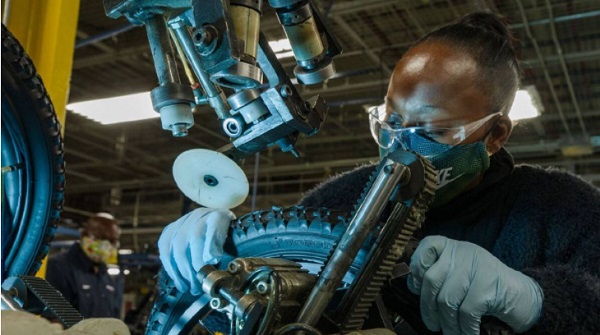
Car production in Thailand rose a whopping 150.14 per cent in May from a year earlier, the Federation of Thai Industries (FTI) reported on Thursday.
Atotal of 140,168 cars rolled off Thai production lines last month as demand rose both at home and abroad. Production for export jumped 126.01 per cent while production for the domestic market surged 193.39 per cent from last year.
EXIM bank wants 100,000 Thai SMEs to target foreign markets
The Export-Import Bank of Thailand (Exim Bank) wants to boost the number of Thai SMEs exporting products abroad from the current level of 30,000 to 100,000 within the next four years.
Thailand has an estimated 6 million small and medium-sized enterprises (SMEs), of which 3.1 million are registered and 2.7 million are informal, according to Exim Bank managing director Rak Vorrakitpokatorn.
These entrepreneurs compete in a market of just 70 million people, where yearly GDP growth is a modest 2 per cent over the past 10 years, Rak said. Also, only 1 per cent of Thai SMEs are exporters, compared to more than 10 per cent in competitor countries.
“The Thai economy is growing at an average of 2 per cent per year, while the country has become an ageing society,” he said.
Compared to neighbours such as Vietnam and Indonesia which have far younger populations, with 60-70 per cent of people of working age, Thailand has little potential because the market is small, said Rak. “Boosting sales is difficult, so what we should do is go to the international market.”
Thai SMEs can plug into the international trade cycle in two ways, Rak said.
The first is to upgrade to an exporter – which may require time in order to build knowledge and experience in various fields.
The second way, which can be done immediately, is via the exporter’s supply chain.
“Many Thai SMEs are already part of the exporter supply chain in one way or another. This is because 70 per cent of Thailand’s total export value relies on domestic raw materials,” said Rak.