Japanese automakers unveil plans for Thai EV production hub
Japanese auto plants in Thailand are powering up to produce electric vehicles while Japan’s business presence in the Kingdom remains strong despite Covid-19, the Japan External Trade Organisation (JETRO) reported on Thursday.
JETRO shared its economic report on the first half of 2021with Energy Minister and Deputy PM Supattanapong Punmeechaow during an online meeting today. It said Japanese business operations in Thailand were still above 66 per cent of pre-Covid levels, indicating investors’ confidence in the Kingdom.
JETRO shared guidelines for EV production Thailand while the two parties also discussed infrastructure development, benefits and taxes, and clean-energy manufacturing.
Supattanapong said Thailand’s investment promotion plan is environmentally friendly in line with the 2022 National Energy Plan to gradually transfer to renewable energy in each sector. The Japanese private sector is interested in producing electric vehicles in Thailand, including HEV, PHEV, BEV, FCEV and others, in order to pilot domestic use of electric vehicles and forge a regional production hub, he added.
Japanese automakers’ push for e-vehicle production is being backed by tax and other incentives offered by the Thai government.
Thai exports surged 41.59 per cent in May from a year earlier, for the highest growth in almost 11 years, the Commerce Ministry reported on Thursday. Exports totalling US$23.057 billion were balanced by a 63-per-cent rise in imports to $22.261 billion, resulting in a positive trade balance of $795 million.
Exports for the first five months (January-May) were valued at $108.635 billion, up 10.78 per cent, while imports were worth $107.141 million, up 21.52 per cent.
Thai exports grew in line with global economic recovery, especially in key markets like the US, China, Japan and Europe, where manufacturers’ demand for raw materials and intermediate products is rising.
The Thai export rise was driven by agricultural and processed food, work-from-home products, and Covid-19 prevention products.
The Commerce Ministry maintained its full-year export growth target at 4 per cent but said the outlook is brightening.
The Stock Exchange of Thailand (SET) Index closed at 1,585.72 on Thursday, down 6.36 points or 0.40 per cent. Transactions totalled THB89.1 billion with an index high of 1,589.33 and a low of 1,569.93, as the SET fell for the sixth consecutive day.
In the morning session, Krungsri Securities expected the index to move between 1,580 and 1,600 points on Thursday despite the US Federal Reserve signalling it was in no hurry to hike the interest rate, and a continued rise in the oil price.
Meanwhile, the index would be pressured by anti-government rallies in Bangkok, the Bank of Thailand cutting the GDP forecast from 3 per cent to 1.8 per cent, and the outflow of foreign funds, Krungsri said.
The 10 stocks with the highest trade value today were KBANK, GUNKUL, RCL, AOT, SAWAD, RATCH, BANPU, PTTGC, PTT and CPALL.
Other Asian indices were up, with one exception:
ADVERTISEMENT
Japan’s Nikkei Index closed at 28,875.23, up 0.34 points or 0.0012 per cent.
China’s Shanghai SE Composite Index closed at 3,566.65, up 0.43 points or 0.012 per cent, while the Shenzhen SE Component Index closed at 14,784.80, down 59.03 points or 0.40 per cent.
Hong Kong’s Hang Seng Index closed at 28,882.46, up 65.39 points or 0.23 per cent.
South Korea’s KOSPI closed at 3,286.10, up 9.91 points or 0.30 per cent.
Taiwan’s TAIEX closed at 17,407.96, up 71.25 points or 0.41 per cent.
Price, condition, after-sales service top priorities for Thai used car buyers: survey
Auto e-commerce platform Carsome has found that Thai buyers of used cars focus on three things – price, condition and after-sales service.
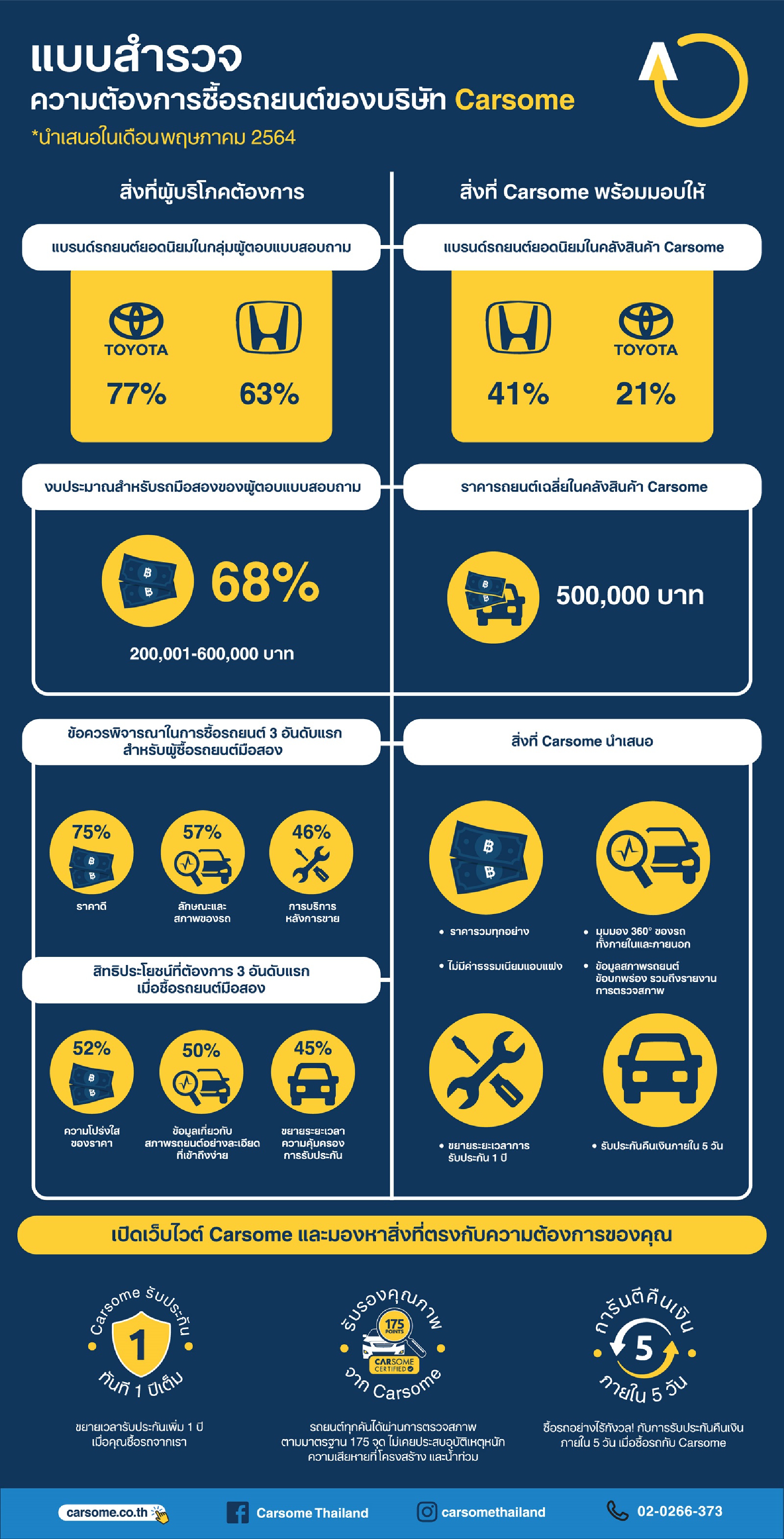
The survey found that 75 per cent of Thai drivers look for the most competitive price, 57 per cent focus on the appearance and condition of the car, while 46 per cent find the after-sales service important.
The Carsome Car Purchase Preference survey also revealed that Thai buyers want price transparency (52 per cent), extended warranty (45 per cent) and a five-day money-back guarantee (34 per cent).
Carsome recently launched its “New Way of Buying Cars” scheme in Thailand to offer a hassle-free car-buying experience. For this, the company has certified cars that it says come with the Carsome Promise, including a five-day money-back guarantee, a professional 175-point car inspection, a one-year warranty and a fixed price with no hidden fees.
“We want to solve customer pain points and improve the car-buying experience for Thai drivers,” said Paphatsarin Siribanlueyot, Carsome’s country head in Thailand.
The survey also found that Japanese brands are the most preferred among new and used car buyers, with Toyota (77 per cent) and Honda (63 per cent) leading the way. The most desired type among used car buyers are SUVs (29 per cent), closely followed by sedans (26 per cent) and pickup trucks (21 per cent).
While buyers of a new car are willing to pay between 800,000 and 2 million baht (54 per cent), used car buyers are only willing to spend between 200,000 and 600,000 baht (68 per cent). More than half of the used car buyers (52 per cent) were found to be earning between 15,001 and 35,000 baht a month.
In line with the work-from-home trend, Carsome has been hosting Facebook Live sessions with flash sales so people can buy their cars from the comfort of their own homes. The company also introduced Test Own, which allows buyers to test the car for five days. If they are not happy with their purchase, they can return it for a full refund.
Buyers can browse for cars on Carsome’s website or look through an e-catalogue at the Carsome Experience Center in Bangkok’s Bang Bon area.
Price, condition, after-sales service top priorities for Thai used car buyers: survey
Reliance on tourism will slow Thailand’s economic recovery: Fitch Ratings
Thailands high reliance on tourism is slowing its economic recovery from the pandemic, according to Fitch Ratings.
The credit rating agency forecasts Thai GDP will grow by 1.8 per cent in 2021 after a sharp 6.1 per cent contraction in 2020. Accelerating recovery in 2022 should lead to a GDP rebound of 4.2 per cent, according to the agency’s Thailand Sovereign and Bank Outlook webinar on Thursday.
Fitch added that sluggish recovery means the operating environment for Thai banks remains challenging, though the risks are mitigated by the banks’ adequate buffers.
However, Thailand’s tourism-dependent economy will recover more slowly than its peers, said Jeremy Zook, a director in Fitch’s Asia-Pacific Sovereigns team.
Fitch expects the recovery to gather pace in the second half of this year as the vaccination rollout progresses and Thailand reopens. The agency also maintained its BBB+/Stable rating for Thailand, citing robust external and public finances that provide buffers against downside risks amid a prolonged economic recovery.
In her presentation on the banking sector, Jindarat Sirisithichote, associate director of Financial Institutions at Fitch Ratings Thailand, highlighted that bank buffers, such as loan-loss reserves and common equity Tier 1 capital, remain a sound cushion against downside risks. The operating environment remains challenging and will lead to continued pressure on Thai banks’ asset quality and earnings performance in 2021. Thai banks’ earnings have weakened significantly since the onset of the pandemic due to high provisioning. Nonetheless, their profitability should still be able to absorb additional provisioning from the slow recovery.
Thai banks have recently supplemented these cushions through the issuance of subordinated and hybrid capital instruments. The recent focus has been on Additional Tier 1 (AT1) capital due to the need for better loss absorption amid the pandemic. Fitch expects that, under current regulatory guidelines, ratings of Tier 2 and AT1 instruments issued in Thailand would be rated two notches and four notches, respectively, below the anchor rating.
The baht opened at 31.84 to the US dollar on Thursday, strengthening from Wednesday’s closing rate of 31.86.
The Thai currency is likely to move between 31.80 and 31.95 during the day, Krungthai Bank market strategist Poon Panichpibool said.
Poon reiterated that the baht was being affected by the Covid-19 situation in Thailand, which has not shown any marked improvement. Meanwhile, vaccine management was slow and not rolling along smoothly. Amid this situation, investors decided to sell their assets in Thailand, pressuring the Thai currency, he said.
Despite the baht closing in on 32 per US dollar, Poon still believed the currency would not reach that point.
Anti-govt rally, lower GDP forecast, foreign fund outflows set to pressure SET
The Stock Exchange of Thailand (SET) Index fell by 14.64 points or 0.92 per cent to 1,577.44 on Thursday morning.
Krungsri Securities predicted the index would move between 1,580 and 1,600 points on Thursday despite the US Federal Reserve signalling it was in no hurry to hike the interest rate, and a continued rise in the oil price.
Meanwhile, the pro-democracy anti-government rallies in Bangkok, the Monetary Policy Committee’s move to lower Thailand’s GDP forecast to 1.8 per cent from 3 per cent and the outflow of foreign funds would pressure the index, Krungsri Securities added.
It recommended investors buy:
▪︎ PTT, PTTEP and Banpu, which benefit from the rising oil price.
▪︎ Hana, KCE, TU, CPF and EPG, which benefit from a weakening baht.
▪︎ BCH, CHG, BDMS, Mint, Centel, ERW, AOT, CPAll, HMPro, CPN, CRC, AAV, Amata, WHA, BEM and BTS, which benefit from the country reopening.
The SET Index closed at 1,592.08 on Wednesday, down 7.15 points or 0.45 per cent. Transactions totalled THB77.7 billion with an index high of 1,606.39 and a low of 1,590.63.
Gold dips despite US Fed signal on no upcoming rate hike
The price of gold in Thailand dropped by THB50 per baht weight in morning trade on Thursday despite the US Federal Reserve signalling it was in no hurry to hike the interest rate amid weak US economic data.
AGold Traders Association report at 9.26am showed the buying price of a gold bar at THB26,750 per baht weight and selling price at THB26,850, while gold ornaments cost THB26,272.28 and THB27,350, respectively.
At close on Wednesday, the buying price of a gold bar was THB26,800 per baht weight and selling price THB26,900, while gold ornaments cost THB26,317.76 and THB27,400, respectively.
The spot gold price on Thursday was US$1,778 (THB56,697) per ounce after Comex gold on Wednesday rose by $6 to $1,783.40 per ounce.
The Hong Kong gold price meanwhile dropped by HK$50 to $16,480 (THB67,688) per tael, the Chinese Gold and Silver Exchange Society reported.
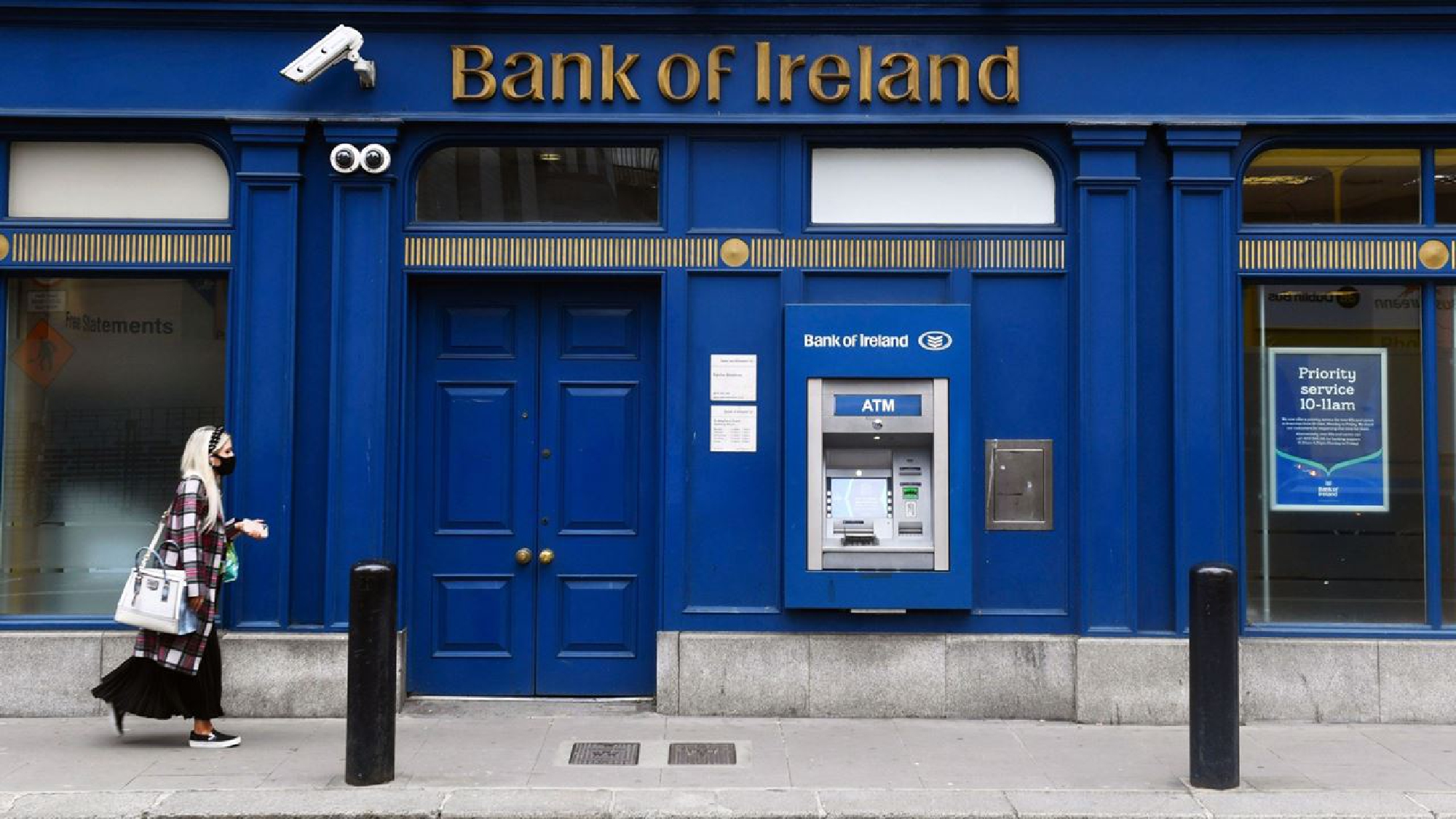
Ireland to sell part of $807 million Bank of Ireland Stake
The Irish government plans to sell part of its 676 million euro ($807 million) stake in Bank of Ireland Group over the next six months or so, the latest stage in its bid to recoup the bank bailout that almost bankrupted the nation.
Part of Ireland’s 13.9% shareholding in the bank will be sold through a pre-arranged trading plan that will be managed by Citigroup, Ireland’s finance ministry said in a statement Wednesday.
Up to 15% of the expected aggregate total trading volume in the company is to be sold over the duration of the trading plan and there will be a minimum share price for those sold. No further details were disclosed.
“Today’s announcement marks the start of a phased exit from the State’s remaining investment in Bank of Ireland,” Finance Minister Paschal Donohoe said. “When all cashflows are taken into account the taxpayer has already recorded a surplus on its investment in and support for the bank, even before the sales of these shares are accounted for.”
Bank of Ireland’s shares fell as much as 6.4% in Dublin.
The state remains a key player in the Irish financial sector, holding majority stakes in AIB Group and Permanent TSB Group Holdings and the minority holding in Bank of Ireland after bailouts during the financial crisis. Overall the state injected about 64 billion euros into Ireland’s banks. About half of that was spent on the former Anglo Irish Bank and Irish Nationwide, both of which were since wound down.
The government will likely still hold a stake in Bank of Ireland after the six-month sale period, Donohoe told RTE Radio. He declined to say how many shares the government intends to sell.
“Over time, I do aim to be in a position that we are no longer a shareholder in the bank but that is the medium-term objective,” he added.
The government has no imminent plans to sell its stakes in Permanent TSB or AIB, Donohoe told reporters at a briefing in Dublin, though said he would like to see the state’s holding in the banks decrease over time. Medium-term plans will “depend on the environment for Irish bank shares and how they begin to change over time,” he added.
Donhoe said today’s announcement would not impact restrictions on bankers’ pay. “They’re separate policy decisions,” he said.
The state could sell about two thirds of its Bank of Ireland holding over the next six months, Goodbody analyst Eamonn Hughes said in a research note. “The stake sale must be seen as an important step in the normalization of the domestic banking system,” he said.
So far, Ireland has recovered 19.2 billion euros of its bank bailout in cash by way of disposals, investment income and liability guarantee fees, the finance ministry said. In the case of Bank of Ireland, the government has already recouped 5.9 billion euros, against 4.7 billion euros invested in the bank.
“State investment in Bank of Ireland over a decade ago should never have been needed, but we will always be grateful for the support we received,” Bank of Ireland CEO Francesca McDonagh said in a separate statement. “We repaid the taxpayer by 2013, and again thank the State and Irish taxpayer for their extraordinary support.”
ADVERTISEMENT
Published : June 24, 2021
By : Syndication Washington Post, Bloomberg · Morwenna Coniam, Peter Flanagan
Stocks traded in a tight range Wednesday as investors assessed prospects for an economic recovery and continued Federal Reserve support amid the threat of inflation. Treasurys fell.
The S&P 500 drifted between gains and losses throughout the day, with companies tied to a broader reopening of the economy — such as retail and financial shares — outperforming. A rally in Tesla Inc. drove the Nasdaq Composite to a fresh record even as the gauge rose just 0.1%. Fannie Mae and Freddie Mac tumbled as the Supreme Court dealt a blow to investors in their challenge to the U.S. collection of more than $100 billion in profits from government-sponsored enterprises.
Equities briefly turned negative after Atlanta Fed President Raphael Bostic said the central bank could decide to slow its asset purchases in the next few months and he favored lifting rates in 2022. Treasury Secretary Janet Yellen said her department may exhaust emergency measures to avoid breaching the U.S. debt limit as soon as August unless Congress acts to avert a potential default that would be “catastrophic.”
Data Wednesday showed U.S. manufacturing activity expanded in June at the fastest pace in records dating back to 2007. Meantime, sales of new homes unexpectedly fell last month as elevated home prices continued to weigh on affordability. The reports came a day after Fed Chair Jerome Powell reiterated his views that policymakers will be patient in waiting to lift rates despite higher inflation.
“You’ve got this inflation issue that has captured the imagination of investors for the first time in a long time,” said David Donabedian, chief investment officer of CIBC Private Wealth Management. “I don’t have a great case for why the market takes another leap forward here over the summer. It’s going to be more of a churn, and we usually do get a little bit more volatility because volumes are down.”
The recent rally in Treasuries has helped bring their relationship with U.S. equities back to more traditional ground. One-month correlations between the Bloomberg Barclays U.S. Treasury Index and the S&P 500 Total Return Index have fallen back below zero. Stocks and bonds moving in lockstep create headaches for fund managers who use fixed-income securities to diversify their portfolios and protect them against a sell-off in equities.
These are some of the main moves in financial markets:
Stocks
– The S&P 500 fell 0.1% as of 4 p.m. EDT
– The Nasdaq 100 was little changed
– The Dow Jones industrial average fell 0.2%
– The MSCI World index was little changed
Currencies
– The Bloomberg Dollar Spot Index was little changed
– The euro fell 0.1% to $1.1925
– The British pound was little changed at $1.3960
– The Japanese yen fell 0.3% to 110.99 per dollar
Bonds
– The yield on 10-year Treasurys advanced two basis points to 1.49%
– Germany’s 10-year yield declined one basis point to -0.18%
– Britain’s 10-year yield was little changed at 0.78%
Commodities
– West Texas Intermediate crude rose 0.6% to $73.26 a barrel
– Gold futures were little changed
Published : June 24, 2021
By : Syndication Washington Post, Bloomberg · Rita Nazareth, Vildana Hajric


 Price, condition, after-sales service top priorities for Thai used car buyers: survey