SET slides towards 1,600 as foreign funds flow out
The Stock Exchange of Thailand (SET) Index closed at 1,601.13 on Monday, down 11.85 points or 0.73 per cent. Transactions totalled THB83.15 billion with an index high of 1,602.66 and a low of 1,590.55.
In the morning session, Krungsri Securities forecast Monday’s index would fall to between 1,600 and 1,605 points after the US Federal Reserve signalled an interest rate hike, triggering a stronger dollar and outflow of foreign funds.
However, it said the index would be buoyed by mass buy-ups of shares gaining positive sentiment from Thailand’s reopening, and stock to be listed on the FTSE, SET50, and SET100.
The 10 stocks with the highest trade value today were GUNKUL, PTT, KBANK, AOT, PTTGC, HANA, CPALL, KCE, SCB and SIRI.
Other Asian indices were mixed:
ADVERTISEMENT
Japan’s Nikkei Index closed at 28,010.93, down 953.15 points or 3.29 per cent.
China’s Shanghai SE Composite Index closed at 3,529.18, up 4.09 points or 0.12 per cent, while the Shenzhen SE Component Index closed at 14,641.29, up 57.62 points or 0.40 per cent.
Hong Kong’s Hang Seng Index closed at 28,489.00, down 312.27 points or 1.08 per cent.
South Korea’s KOSPI closed at 3,240.79, down 27.14 points or 0.83 per cent.
Taiwan’s TAIEX closed at 17,062.98, down 255.56 points or 1.48 per cent.
SET opens low due to uncertainty over US interest hike
The Stock Exchange of Thailand (SET) Index opened the week with an 18.27 points or 1.13 per cent drop to 1,594.71. The volume of total transactions stood at 10.78 billion baht with an index high of 1,601.12 and a low of 1,594.09.
The index closed at 1,612.98 on Friday, down 4.67 points or 0.29 per cent. Transactions totalled 110.18 billion baht with an index high of 1,622.43 and a low of 1,604.44.
Krungsri Securities predicts the SET Index will fall to between 1,600 and 1,605 points due to uncertainty over the US Federal Reserve’s signal on interest rate hike to deal with rising inflation, triggering strong dollar and outflow of foreign funds.
However, the index will be buoyed by mass buy-ups of shares gaining positive sentiment from Thailand’s reopening, and those to be listed on the FTSE, SET50, and SET100 Indices, it said.
Investors are recommended to buy:
▪︎ BCH, CHG, BDMS, MINT, CENTEL, ERW, AOT, CPALL, HMPRO, CPN, CRC, AAV, AMATA, WHA, BEM and BTS, which will benefit from the country reopening.
▪︎ KTC, OR, BEC, DCC, EGCO, JMART, KEX, PTL, PSL, RBF, RCL, SAK, STARK, TTA and TRUE, which will be listed on the FTSE Index from Monday.
▪︎ KCE, IRPC, STA and STGT, which will be listed on the SET50 Index on June 30.
▪︎ AAV, ICHI, NRF, PSL, PTL, SINGER, STGT, SYNEX and TKN, which will be listed on the SET100 Index on June 30.
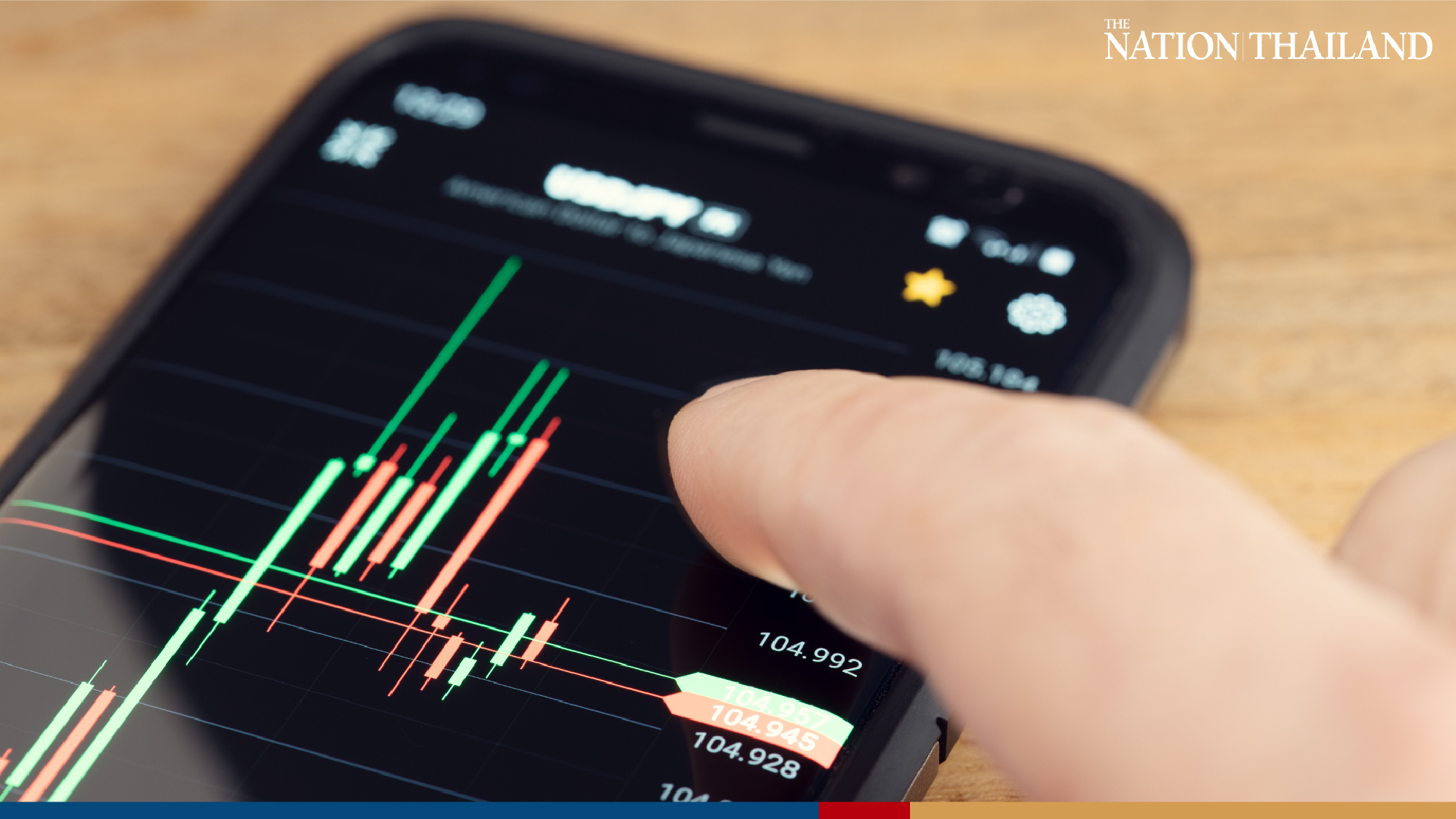
The baht opened at 31.47 to the US dollar on Monday, weakening from 31.45 at close on Friday.
The Thai currency is likely to move between 31.40 and 31.55 during the day and between 31.20 and 31.60 this week, Krungthai Bank market strategist Poon Panichpibool said.
He said the baht would tend to weaken due to the dollar’s direction, gold trade and wariness of foreign investors.
Poon explained that the dollar would strengthen in the short term. He urged investors to watch out for the US Federal Reserve’s statement.
The market strategist said that the distribution of Covid-19 vaccine in Thailand had still not accelerated, raising concerns among foreign investors about Thailand’s economic recovery. This was prompting them to sell their stocks in the Thai market, pressuring the baht to weaken.
To draw the investors back, the Thai government must distribute at least 500,000 doses of vaccine a day, Poon added.
However, the baht would not weaken sharply, as exporters aim to sell dollars when the baht reaches around 31.50 to 31.60 to the US currency, he said.
The price of gold in Thailand rose by THB100 per baht weight in morning trade on Monday despite the strong dollar, due to the US Federal Reserve signalling interest rate hike earlier than expected.
The Gold Traders Association report at 9.28am showed the buying price of a gold bar at THB26,400 per baht weight and selling price at THB26,500, while gold ornaments were priced at THB25,923.60 and THB27,000, respectively.
At close on Saturday, the buying price of a gold bar was THB26,300 per baht weight and selling price THB26,400, while gold ornaments were priced at THB25,832.64 and THB26,900, respectively.
The price had fallen by THB1,250 per baht weight last week.
Spot gold on Monday was US$1,774 (THB55,935) per ounce after Comex gold on Friday dropped by $5.8 to $1,769 per ounce.
Hong Kong gold price on Monday dropped by HK$190 to $16,410 (THB66,644) per tael, the Chinese Gold and Silver Exchange Society reported.
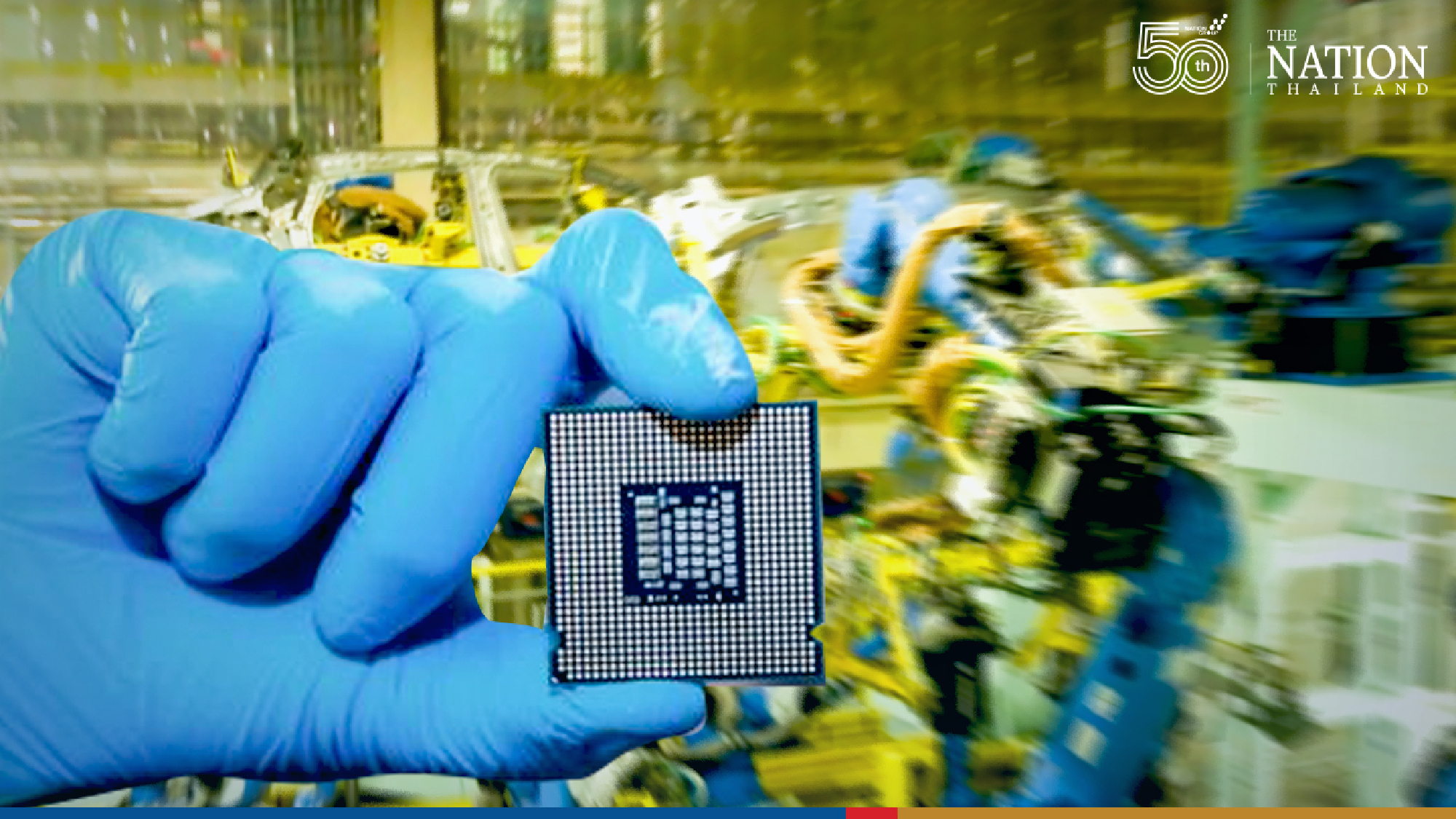
Why the world is short of computer chips, and why it matters
Carmakers slashed production. PlayStations got harder to find in stores. Broadband providers faced monthslong delays for internet routers. All of these phenomena and more had a similar cause: an abrupt and cascading shortage of semiconductors.
Also known as integrated circuits or more commonly just chips, they may be the tiniest yet most exacting product ever manufactured on a global scale. The combination of cost and difficulty in producing them has fostered a worldwide reliance two Asian powerhouses – Taiwan Semiconductor Manufacturing Co. (TSMC) and South Korea’s Samsung Electronics Co. That dependence was brought into stark relief in 2020 when the Covid-19 pandemic and rising U.S.-China tensions made chips scarce. Hundreds of billions of dollars will be spent in the coming years in a global race to expand production, with geopolitical as well as economic implications.
1. Why are there shortages?
Here are some factors:
– The stay-at-home era: This pushed chip demand beyond levels projected before the pandemic. Lockdowns spurred growth in sales of laptops to the highest in a decade. Home networking gear, webcams and monitors were snapped up as office work moved out of the office, and Chromebooks were hot as schools shut. Sales also jumped for home appliances from TVs to air purifiers, all of which now come with customized chips.
– Fluctuating forecasts: Automakers that cut back drastically early in the pandemic underestimated how quickly car sales would rebound. They rushed to re-up orders late in 2020, only to get turned away because chipmakers were stretched supplying computing and smartphone giants like Apple Inc.
– Stockpiling: PC makers began warning about tight supplies early in 2020. Then around mid-year, Huawei Technologies Co. – a Chinese smartphone maker that also dominates the global market for 5G networking gear – began building up inventory to ensure it could survive U.S. sanctions that were set to cut it off from its primary suppliers. Other companies followed suit, hoping to grab share from Huawei, and China’s imports of chips climbed to almost $380 billion in 2020, up from $330 billion the previous year.
– Disasters: A bitter February cold snap in Texas led to power outages that shut semiconductor plants clustered around Austin; it was late March before Samsung’s facilities there were back to normal. A factory in Japan belonging to Renesas Electronics Corp., a major provider of automotive chips, was damaged by fire in March, disrupting production for months.
2. Who is affected?
Chip shortages are expected to wipe out $110 billion of sales for carmakers this year, with production of 3.9 million vehicles lost, or about 4.6% of the projected total. “Never seen anything like it,” Elon Musk, Tesla Inc.’s chief executive officer, tweeted. Samsung warned in March that it saw a “serious imbalance” in supply and demand globally. TSMC forecast in April the shortages could extend into 2022. Broadband providers in Europe were facing delays of more than a year when ordering internet routers. Apple said that supply constraints were crimping sales of iPads and Macs, which it said would knock $3 billion to $4 billion off its third-quarter revenue. Nintendo Co. said in May that shortages were slowing production of its Switch gaming device.
3. What is a chip?
It’s the thing that makes electronic items smart. Made from a conductive material, usually silicon, the chip performs a variety of functions. Memory chips, which store data, are relatively simple and have become cheap commodities. Logic chips, which run programs and act as the brains of a device, are more complex and expensive. These often carry name brands like Apple, Qualcomm or Nvidia, but those companies are actually just the designers of the semiconductors, which are manufactured in factories called foundries.
4. Why is it so hard to compete?
Manufacturing advanced logic chips is a high-volume enterprise that requires incredible precision, along with huge long-term bets in a field subject to rapid change. Plants cost billions of dollars to build and equip, and they have to run flat-out 24/7 to recoup the investment. But it’s not just that. A foundry also gobbles up enormous amounts of water and electricity and is vulnerable to even the tiniest disruptions, whether from dust particles or distant earthquakes.
5. Who are the big manufacturers?
– TSMC pioneered the foundry business – purely manufacturing logic chips for others – with government support in the 1980s and now produces the most-sophisticated chips. Everyone beats a path to its door to get them; its share of the global foundry market is larger than its next three competitors combined.
– Samsung dominates in memory chips and is trying to muscle in on TSMC’s gold mine. It’s been improving its production technology and winning new orders from companies such as Qualcomm Inc. and Nvidia Corp.
– Intel Corp., the last U.S. champion in the field, has more overall revenue than any other chipmaker, but its business is heavily concentrated in manufacturing its own-brand chips that serve as the central processing unit (CPU) for laptops and desktop computers. Production delays have made it vulnerable to rivals, who are winning share using TSMC to produce their designs. Intel unveiled an ambitious bid in March to regain its manufacturing lead and break into the foundry business by spending $20 billion to build two new factories in Arizona.
– Smaller manufacturers include the U.S.’s GlobalFoundries Inc., China’s Semiconductor Manufacturing International Corp. (SMIC) and Taiwan’s United Microelectronics Corp. But they’re at least two to three generations behind TSMC’s technology. Famous names such as Texas Instruments, IBM and Motorola, all U.S. companies, have exited or given up trying to keep up with the most advanced manufacturing.
6. How’s the competition going?
The two giants are spending heavily to cement their dominance: TSMC said in April it would ramp up its capital expenditure over the next three years to $100 billion, including about $30 billion on capacity expansion and upgrades in 2021, from a record $17 billion last year. Samsung is earmarking about $151 billion for a decade-long project to catch its Taiwanese rival, part of a broader plan by South Korean companies including SK Hynix Inc. to spend roughly $450 billion to build the world’s largest chipmaking base.
China is pushing hard to catch up as part of its efforts to reduce the country’s reliance on U.S. technology, spurred by U.S. moves to restrict access to American intellectual property such as software and gear for designing chips. But China has a long way to go. For instance, in the automotive sector, it has developed a large number of chip-design companies, but they still aren’t able to come up with the advanced chips that serve as the brains for today’s ever-smarter cars. In March, China again pledged to boost spending and drive research into cutting-edge chips as part of its new five-year economic blueprint. SMIC has already announced plans for a $2.35 billion plant with funding from the city of Shenzhen. The facility aims to begin production by 2022 and eventually churn out about half a million 12-inch wafers a year. (Wafers are used to fabricate chips.) By comparison, TSMC shipped about 12.4 million such wafers in 2020.
7. What about outside Asia?
ADVERTISEMENT
The U.S., which still leads the world in chip design, is seeking to encourage companies to build or expand advanced factories domestically to address what Commerce Secretary Gina Raimondo called a risk to national and economic security. In a report released in June, President Joe Biden recommended Congress appropriate at least $50 billion to support semiconductor research and production in the U.S. (A bill that easily passed the Senate the same day included $52 billion.) His administration will play a role in formulating tax incentives for a proposed $12 billion TSMC plant in Arizona and a $17 billion facility Samsung is considering, possibly in Texas. Similarly, European Union officials are exploring ways to build an advanced semiconductor factory in Europe, possibly with assistance from TSMC and Samsung, as part of its goal to double chip production to 20% of the global market by 2030. In April the U.K. ordered an investigation on national security grounds into California-based Nvidia’s $40 billion deal to buy British semiconductor designer Arm Ltd.
8. Where’s the technology headed?
As 5G mobile networks proliferate – driving demand for data-heavy video and game streaming – and with many people working from home, the need for more powerful, energy-efficient chips is only going to grow. TSMC and Samsung are thus working to make transistors increasingly microscopic so more can fit into a single chip. Even small improvements can deliver substantial cost savings when multiplied across the full scale of something like Amazon Web Services Inc., a cloud computing provider. The rise of artificial intelligence is another force pushing innovation, since AI relies on massive data processing. More efficient designs also will help develop the so-called internet of things – a universe of smart or connected devices from phones to light switches to refrigerators.
9. How does Taiwan fit into all this?
The island democracy emerged as the dominant player in part because of a government decision in the 1970s to promote the electronics industry, aided by a technology transfer deal with RCA Corp., the former U.S. electronics giant, and the trend in the West toward outsourcing. Matching its scale and skills now would take years and cost a fortune: Boston Consulting Group and the Semiconductor Industry Association estimated it would take more than $1 trillion over 10 years for the U.S. to achieve “complete manufacturing self-sufficiency” in chips. Chinese President Xi Jinping has plans to invest $1.4 trillion through 2025 in key technologies including semiconductors, and tapped a top deputy to lead the initiative. Political tensions could disrupt the race, however. The Biden administration has signaled it will continue efforts to restrict China’s access to American technology — including that used in Taiwan’s foundries. More ominously, the U.S. could face difficulties if it found itself cut off from Taiwan and its foundries. China has long claimed the island as a renegade province and threatened to invade to prevent its independence.
Published : June 21, 2021
By : Syndication Washington Post, Bloomberg · Debby Wu, Sohee Kim, Ian King
Hotel occupancy languishes at 6 per cent, ASQ expected to drop as well
The occupancy rate of Thailand hotels in June is expected to be around 6 per cent, the same as in May, due to the third Covid-19 wave, according to a Thai Hotels Association (THA) survey on Saturday.
THA president Marisa Sukosol Nunbhakdi said the survey was conducted in May on over 234 hotels nationwide.
According to the survey, the occupancy rate of Alternative State Quarantine (ASQ) hotels is expected to drop to 10 per cent compared to 13 per cent in May.
“The occupancy rate of ‘hospitels’ in May was higher than others at 30 per cent, but its revenue is still lower compared to before the Covid-19 era,” she said.
The survey also showed 38 per cent of hotels were open, 41 per cent were partly open and 20 per cent were temporarily closed, while the majority of opened hotels generated revenue less than 10 per cent of the revenue before Covid-19.
“Only 18 per cent of hotels, mostly managed by international hotel chain brands, generated revenue more than half of the revenue generated before the pandemic,” she said.
She expected the majority of Thailand hotels to be open in the fourth quarter of this year.
She urged the government to offer a 50 per cent co-payment subsidy for hotel employees’ salaries, allow foreign tourists to travel to other provinces after seven days in Phuket, and administer Covid-19 vaccines to hotel employees and citizens in other tourism provinces.
NESDC outlines key areas of focus to become the top economy in Asean
The National Economic Development Council (NESDC) aims to make Thailand Aseans biggest economy, suggesting four areas to increase potential.
NESDC secretary-general
Danucha Pichayanan said Thailand’s competitiveness ranking by the Institute of International Institute for Management Development (IMD), Switzerland, was at 28 out of 64 countries, up one place from last year.
Thailand aims to increase its competitiveness, with the long-term goal of becoming No. 1 in Asean, while in the short-term the goal is to surpass Malaysia to become the No. 2 in Asean.
To improve competitiveness, Danucha said Thailand needed to develop in many areas.
1. Upgrading the work of the government sector to be modernised in the digital system, including adjusting the use of government data to keep up with the situation so that the government can use up-to-date information in a timely manner to plan and formulate various policies accurately and quickly.
2. Increase investment in infrastructure to boost investor confidence, and also invest in digital infrastructure faster to prepare for new economic opportunities.
3. Pay attention to human development and enhance the development of labour in accordance with the needs of the labour market and trends of the world economy in the future.
4. Focus on maintaining economic stability, which is something that Thailand is already doing well, especially taking care of household debt and maintaining financial and fiscal discipline in order to continuously maintain economic stability.
Danucha said that in terms of the IMD rankings this year, when looking at various aspects of the score, Thailand’s scores have increased in almost every aspect except in terms of economic performance. In this respect, IMD focuses on foreign investment and international trade, both of which saw a sharp drop in scores, with a 16-place drop in international trade and a three-place drop in international investment due to the impact of Covid-19.
Rating in terms of price level is another factor that dragged the score down. This part is not a result of inflation, but the cost of living that increased compared to income levels during the economic decline amid the pandemic, Danucha said.
Land in Phloenchit-Siam area most expensive in Bangkok
With the highest price of around THB1.32 billion for a rai (0.6 hectares), land in the Phloen Chit to Siam areas are the most expensive in the capital.
Agency for Real Estate Affairs (AREA) said that the price of land in Bangkok would not change till the end of this year. Also, the average price of land in the capital increased by 4.7 per cent.
AREA explained that land from Phloen Chit to Siam became the most expensive, as the areas are available for constructing department stores or office buildings, and were accessible for working people by Skytrain.
In addition, AREA added that Covid-19 did not affect big businesses along the railway areas, as the pandemic was seen as a temporary crisis.
However, the land price near Phloenchit BTS station, or next to Siam station, were less expensive.
AREA predicted that land from the National Stadium station would be more expensive if it was used more commercially.
SET flat as US interest rate signal triggers outflows
The Stock Exchange of Thailand (SET) Index closed at 1,612.98 on Friday, down 4.67 points or 0.29 per cent. Transactions totalled THB110.18 billion with an index high of 1,622.43 and a low of 1,604.44.
In the morning session, Krungsri Securities forecast Friday’s SET Index would fall to a level between 1,605-1,610 points after the US Federal Reserve announced it had begun discussions on asset tapering and expected two interest rate hikes by the end of 2023 to curb rising inflation.
This signal had led to strengthening of the dollar, falling oil and gold prices and outflow of foreign funds, said Krungsri.
However, the index would be buoyed by mass buy-ups of shares gaining positive sentiment from Thailand’s reopening, and those to be listed on the FTSE Index, would help boost the index, it added.
Phuket is scheduled to reopen to foreign tourists on July 1, followed by the rest of the country by October.
The 10 stocks with the highest trade value today were GUNKUL, SCGP, PTT, OR, KBANK, AOT, CPALL, SCB, IVL and PTTEP.
Other Asian indices were mixed:
ADVERTISEMENT
Japan’s Nikkei Index closed at 28,964.08, down 54.25 points or 0.19 per cent.
China’s Shanghai SE Composite Index closed at 3,525.10, down 0.51 points or 0.014 per cent, while the Shenzhen SE Component Index closed at 14,583.67, up 111.30 points or 0.77 per cent.
Hong Kong’s Hang Seng Index closed at 28,801.27, up 242.68 points or 0.85 per cent.
South Korea’s KOSPI closed at 3,267.93, up 2.97 points or 0.091 per cent.
Taiwan’s TAIEX closed at 17,318.54, down 72.07 points or 0.41 per cent.
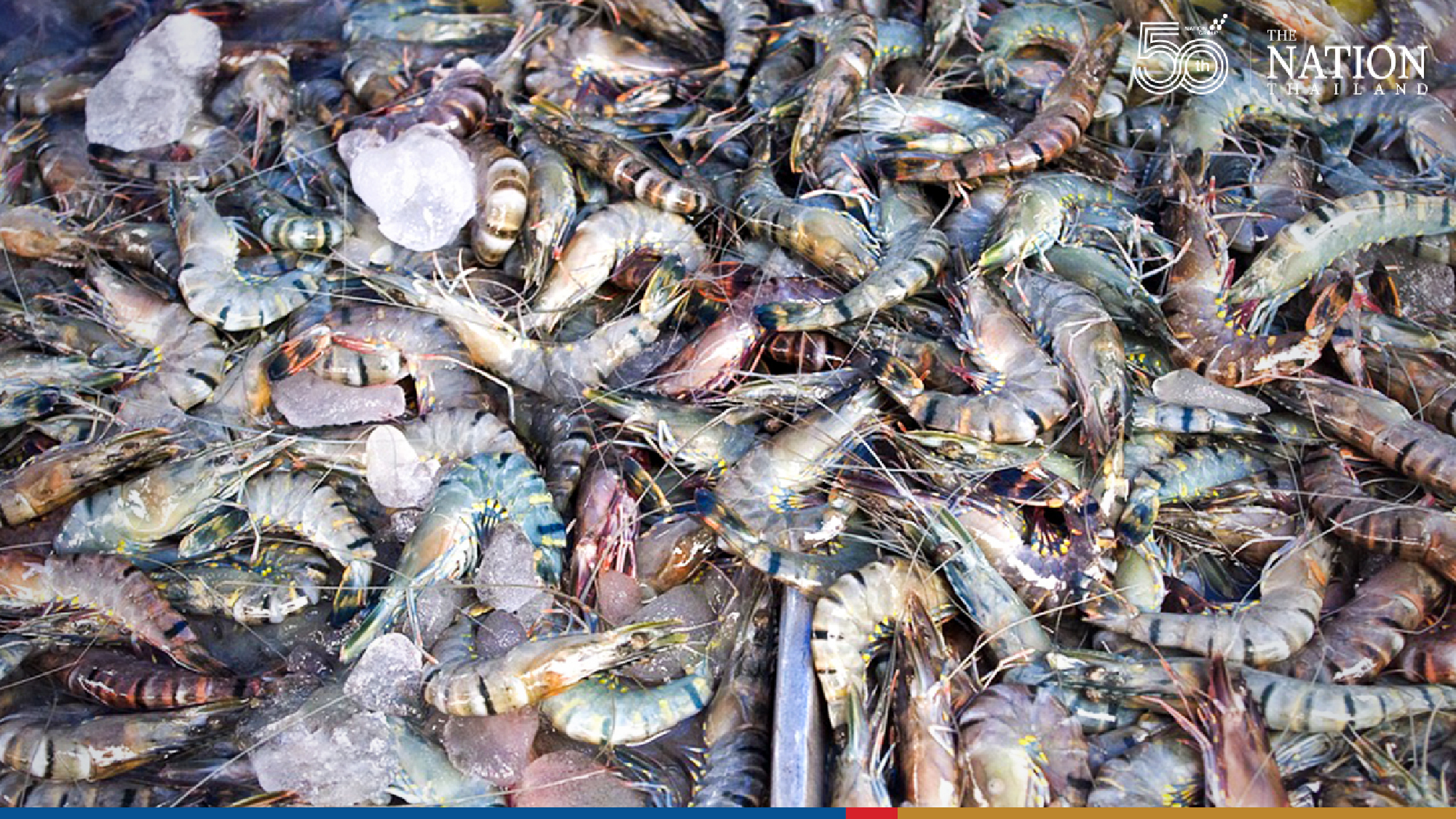
Imported fish, seafood to undergo strict quality check in bid to boost consumption
In a bid to build consumer confidence, the Department of Fisheries has instructed its officials to check all imported fish and seafood products, check final processing steps and block illegal imports.
Mesak Pakdeekong, the department’s director-general, said due to Covid-19, people are not consuming much fish or seafood, which has brought down the prices.
“However, export of processed fish and seafood products is likely to pick up, so this is an opportunity for farmers to improve their processing system,” he said.
In a bid to gain confidence among people, he said the department has appointed the Fish Quarantine and Fishing Vessels Inspection Division and Fish Inspection and Quality Control Division to check imported fish and seafood products. The departments are also tasked with ensuring all processing procedures are done in line with the department’s standards.
He also dismissed rumours that Thailand was importing shrimp from India, saying that the import of shrimp from the subcontinent had been banned since 2017. However, the department is evaluating Indian shrimp exporters.
“We confirm that all processes related to fish and seafood products are done under the department’s supervision. Hence, we call on businesses, farmers and consumers to start selling and buying fish and seafood products in a bid to stimulate the country’s economy,” he added.