Opening of Thai economy expected to offset impact on SET from Fed decisions
The Stock Exchange of Thailand (SET) Index rose by 3.11 points, or 0.19 per cent, to 1,620.76 on Friday morning. The volume of total transactions was THB4.74 billion with an index high of 1,622.43 and a low of 1,619.65.
The SET Index closed at 1,617.65 on Thursday, down 7.14 points or 0.44 per cent. Transactions totalled THB88 billion with an index high of 1,631.69 and a low of 1,615.62.
Krungsri Securities predicted the SET Index would fall to between 1,605-1,610 points after the US Federal Reserve announced that it had begun discussions on asset tapering and expected two interest rate hikes by the end of 2023 amid continuing increase in inflation.
Krungsri said that this signal had led to the strengthening of the dollar, falling oil and gold prices and the outflow of foreign funds.
“Mass buy-ups of shares that gained positive sentiment from Thailand’s reopening, and which will be listed on the FTSE Index, would help boost the index,” Krungsri Securities said.
It recommended that investors buy:
▪︎ BCH, CHG, BDMS, MINT, CENTEL, ERW, AOT, CPALL, HMPRO, CPN, CRC, AAV, AMATA, WHA, BEM and BTS, which will benefit from the country’s reopening.
▪︎ KTC, OR, BEC, DCC, EGCO, JMART, KEX, PTL, PSL, RBF, RCL, SAK, STARK, TTA and TRUE, which will be listed on the FTSE Index on June 21.
Baht opens weaker, but analyst rules out plunge to 32 to the dollar
The baht opened at 31.42 to the US dollar on Friday, weakening from 31.40 at close on Thursday. The Thai currency is likely to move between 31.35 and 31.50 during the day, Krungthai Bank market strategist Poon Panichpibool said.
Poon said the baht tended to weaken in line with the strengthening of the dollar, but the Thai currency was also under pressure from foreign investors’ sales of Thai stocks.
He pointed out that investors were still concerned about the Thai economy as Covid-19 vaccine distribution in the country had hit a snag.
Moreover, Poon added that the baht would not touch 32 to the US dollar, as exporters aimed to sell their dollars when the baht moves between 31.50 and 31.60.
“It is almost impossible for the baht at this time to weaken to 32 to the US dollar,” he said.
The price of gold in Thailand slumped by THB350 per baht weight in morning trade on Friday due to the strengthening dollar after the US Federal Reserve announced it had begun discussions on asset tapering and expected two interest rate hikes by the end of 2023.
Gold price dropped sharply for two consecutive days after falling by THB550 per baht weight at close on Thursday, the biggest drop in a month.
The Gold Traders Association report at 9.25am showed buying price of a gold bar at THB26,450 per baht weight and selling price at THB26,550, while gold ornaments were priced at THB25,969.08 and THB27,050, respectively.
At close on Thursday, the buying price of a gold bar was THB26,800 per baht weight and selling price at THB26,900, while gold ornaments were priced at THB26,317.76 and THB27,400, respectively.
Spot gold on Friday was US$1,783 (THB55,974) per ounce after Comex gold price on Thursday dropped by $86.6 to $1,774.8 per ounce.
Hong Kong gold price on Friday dropped by HK$270 to $16,460 (THB66,552) per tael, the Chinese Gold and Silver Exchange Society reported.
Fed ripples hit hardest in Asia as rates outlook shifts
The Federal Reserves new outlook for interest rates ricocheted through Asian markets as the dollar and Treasury yields surged, easing pressure on some of the regions biggest central banks and complicating the outlook for others.
Expectations for higher U.S. rates tend to suck capital away from Asia, sending local currencies lower and borrowing costs higher. That may be a boon for the likes of the People’s Bank of China and Bank of Japan as it stems unwanted currency gains. But central banks in emerging economies such as India and Indonesia may rue a constraint on their scope to ease policy.
“If dollar appreciation continues, it also exerts pressure on Asian central banks,” said Teresa Kong, a portfolio manager at Matthews International Capital Management in San Francisco. “I see the Fed’s statement today as leaving emerging market central banks with less policy flexibility, shifting probabilities to higher rates to temper inflation even though their economies may benefit from lower rates for longer.”
The dollar rallied the most in a year in the wake of the Fed meeting, disproportionately hitting Asia markets, based on a gauge of risk-adjusted moves. The Philippine peso, Indonesian Rupiah and South Korean won were among the largest underperformers since the policy announcement, as measured by the three-month z-score, which tracks the swings relative to the mean.
At the same time, a sharp sell-off in Treasurys weighed heavily on developed market bonds. New Zealand’s and Australia’s 10-year yields jumped on bullish local data and bets the Fed’s new twist will allow room for others to shift tone without risking too much currency strength.
Markets price a good chance for a Fed rate hike by late 2022 — and overnight swap markets shifted to price in close to 50 basis points of tightening by New Zealand’s central bank by the end of 2022, compared to around 32 basis points on Tuesday.
“We are looking at regional central banks here in Asia and debating which one could move earlier than projections and some of that could be moving ahead of the Fed,” Stephen Chang, a Hong Kong-based portfolio manager at Pacific Investment Management Co. told Bloomberg Television. He cited the Bank of Korea and Australia as possible candidates for a sooner-than-anticipated move.
In a speech Thursday, Reserve Bank of Australia Governor Philip Lowe said requirements for raising the benchmark interest rate could be met in 2024 in some of the scenarios the bank has reviewed, but not in others. The RBA will look at the scenarios again at its meeting next month. Soon after he wrapped up, May labor force data showed a surprising jolt lower in the jobless rate to 5.1%.
Bank Indonesia Governor Perry Warjiyo, who held rates rates steady on Thursday for a fourth straight month, said the reaction to the Fed’s move so far appears to be relatively stable, though he added the bank remains on watch.
“We will continue to be vigilant and ensure the stability of exchange rates and financial markets,” he told reporters after announcing the bank’s policy decision.
For the Bank of Japan, which meets on Friday, the Fed’s move may offer some reprieve, said Tomo Kinoshita, global market strategist at Invesco Asset Management in Tokyo.
“The Fed is sending a big tailwind for the BOJ by adding pressure for the yen to weaken,” Kinoshita said. “All the BOJ has to do is to stick with what they have been doing for a distant inflation target.”
As for the PBOC, it will likely welcome the Fed’s shift too as it grapples with yuan strength, surging inflows of capital and sky-high commodities prices. The central bank has been vocal in warning against expectations for ongoing yuan appreciation.
China’s stock benchmark CSI 300 Index rose as much as 0.8%, the best performer among major Asian equity gauges.
Fed officials sped up their expected pace of policy tightening amid optimism about the labor market and heightened concerns for inflation, and released forecasts that show they anticipate two interest-rate increases by the end of 2023 — sooner than many thought.
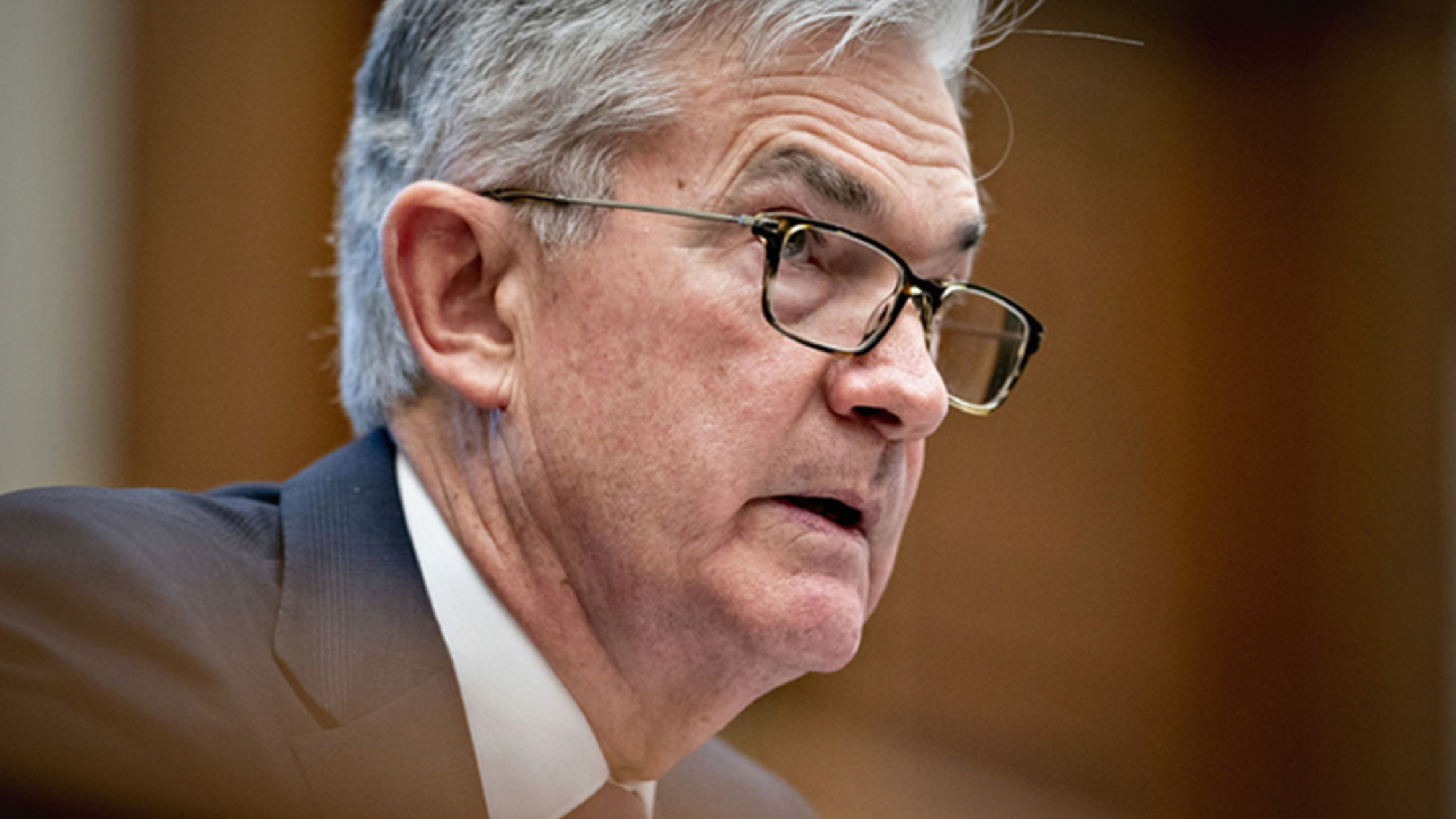
Fed Chair Jerome Powell told a press conference that officials would begin a discussion about scaling back bond purchases used to support financial markets and the economy during the pandemic.
ADVERTISEMENT
That will have knock-on consequences for Asia and other regions, said Marc Chandler, chief market strategist at Bannockburn Global Forex.
“If U.S. rates really do rise in a sustained fashion and the dollar moves higher, many EM countries will be squeezed, especially where interest rates differentials have been an important support,” he said.
Published : June 18, 2021
By : Syndication Washington Post, Bloomberg · Enda Curran, Stephen Spratt
After blowing $300 billion, U.S. shale is finally making money
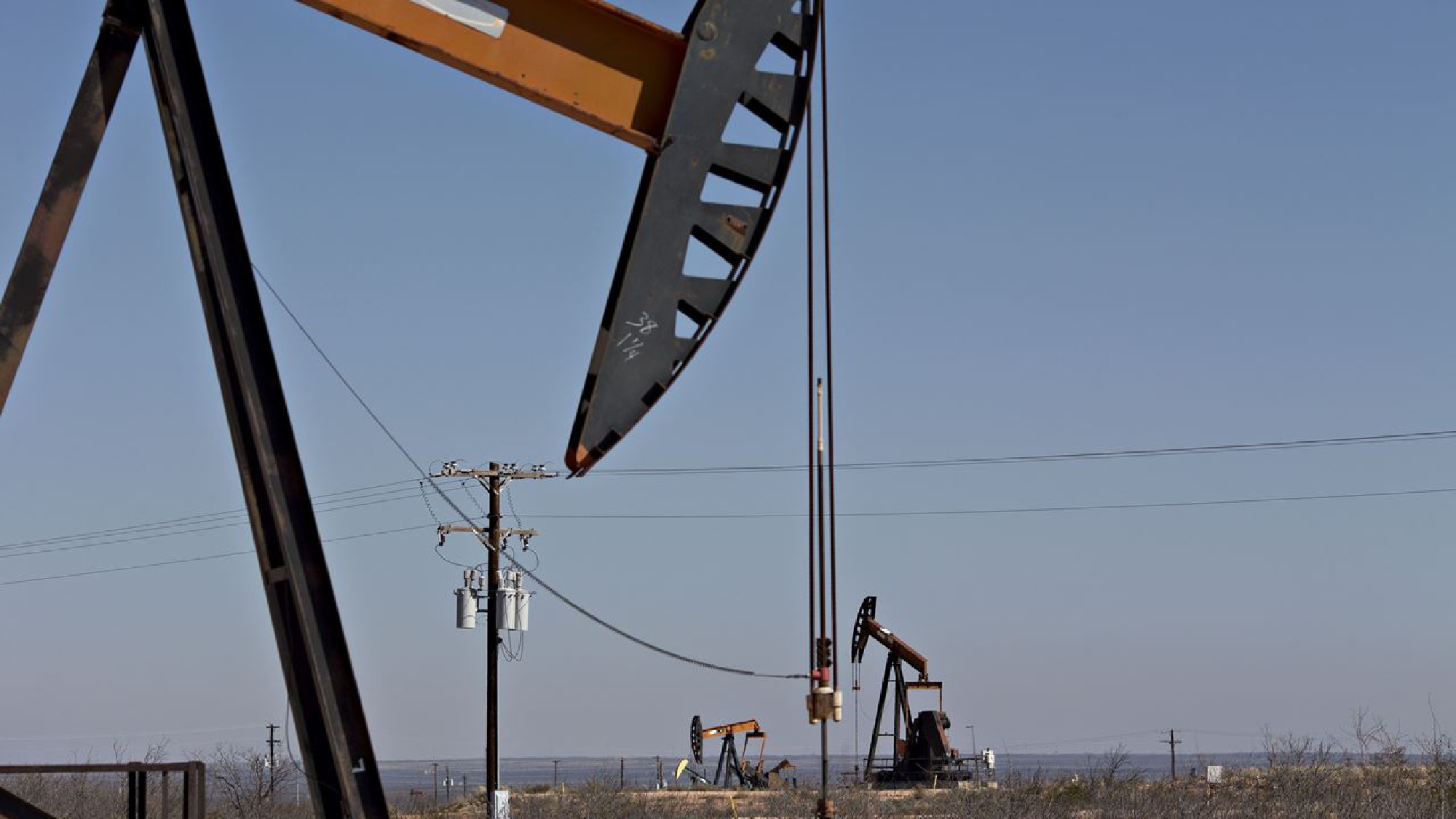
Marathon Oil used to represent everything that was wrong with U.S. shale: enormous debtloads, lavish executive pay and a seeming willingness to spend whatever it took to boost output. The company hemorrhaged money, and the stock plunged 84% from a peak in 2014 through the end of last year.
This year, CEO Lee Tillman took a different tack. He cut his own pay 25%, got rid of its corporate aircraft and with oil output down 20% after the pandemic, pledged to leave it there. The result? The stock doubled this year. Its peers are doing well too. U.S. wildcatters are the second-best performing sector in the S&P 500 Index.
After years of booms and busts that produced astronomical losses along with a whole lot of oil, the fracking industry seems to have found a sweet spot. It’s poised to generate more than $30 billion of free cash this year, a record, according to Bloomberg Intelligence. While that’s just a blip compared with the $300 billion that Deloitte LLP estimates the sector burned over the previous decade, it marks at least a temporary revival for an industry that a year ago had been largely written off by investors.
For sure, frackers have benefited from the 50% run-up in global oil prices this year as demand roars back in places where the pandemic has receded. Just as important to their bottom lines, though, has been the ability to hold back on new supply, to avoid drilling the more marginal wells they would have in years past. They’re saving cash instead of spending money to ramp up output at all costs.
It’s a turnaround from the early days of the shale revolution a decade ago, when new horizontal drilling and hydraulic fracturing techniques unlocked vast oceans of crude from rock previously considered impermeable, loosening the OPEC cartel’s grip on global production.
Back then, with oil trading over $100 a barrel and global concerns of shortages, lenders and stock investors rewarded companies for high production. Profits would naturally flow later, so the thinking went. But the industry was a victim of its own success, pumping more oil than anyone needed.
“The shale boom oversupplied the world and crushed prices,” Dan Pickering, founder and portfolio manager at Pickering Energy Partners in Houston, said in an interview. “Shale is not going to do that in 2022 and 2023. It’s cautious optimism, the feeling that ‘the worst is past.'”
The key to the transformation? A lot less oil. Shale’s first era from 2010 to 2014 was marked by explosive growth fueled by the technology breakthrough, and the second stage from 2015 to 2020 saw prices fall but output soar amid heavy spending. Now Shale 3.0, as some investment banks have called it, is all about free cash flow.
The U.S. is pumping about 1.9 million fewer barrels a day since Covid-19 caused prices to tumble last year, a reduction that’s bigger than Nigeria and Venezuela’s production combined. That’s bad for consumers — creating higher prices at the pump — and is a boon for the producers of OPEC+ as it gives the coalition led by Saudi Arabia and Russia more room for maneuver to bring back their own production. But it’s also set the domestic shale industry on a more sustainable path, directly to the benefit of equity and bond investors.
“From a financial perspective, shale is entering a new, better era, with higher profitability,” said Elisabeth Murphy, ESAI Energy LLC upstream analyst for North America.
For much of the past decade, shale producers spent every dollar they earned and borrowed extra to drill new wells. Producers would typically reinvest 120% to 130% of their operating cash flow in new production, according to Noah Barrett, a Denver-based energy analyst at Janus Henderson. Now, that figure is closer to 70% or lower, leaving plenty of cash for shareholder payouts.
Marathon, for example, expects to generate $1.6 billion of free cash flow from just $1 billion of capital spending, allowing the company to raise its dividend and reduce debt.
The optimism is also apparent in the bond market, where an index of junk-rated independent U.S. oil producers has returned 10% this year — three times the average for high-yield companies — as borrowing costs fell to a record.
Consolidation is also helping the industry. Devon Energy Corp. merged with WPX Energy Inc. earlier this year to cut costs. The combined company is producing 8% less oil than a year earlier and has promised to pay a variable dividend on top of its regular payout. Pioneer Natural Resources Co. has completed two deals this year and says it will cut growth rates from both acquired companies.
There’s a risk that the discipline among shale producers may start to weaken if oil prices remain above $70 a barrel, particularly for companies that have used the last six months to pay down debt. At current prices, drillers may be able to invest a bit more in 2022 while still rewarding investors. IHS Markit Ltd., a consultancy, estimates that the U.S. shale industry is on track to hike spending from $58 billion in 2021 to $80 billion in 2022.
“The early signs are that discipline is holding, but we still need to watch this pretty closely,” said Jeff Wyll, a fund manager at Neuberger Berman, which has about $400 billion of assets under management. “There’s a hyper sensitivity toward any company that’s shifting back toward growth mode.”
An example came in February, when EOG Resources Inc., the biggest independent shale producer, signaled plans to boost production by as much as 12% in 2022. Retribution was swift. The shares tumbled 8.5% the next day, wiping out $3.5 billion of market value.
ADVERTISEMENT
Published : June 18, 2021
By : Syndication Washington Post, Bloomberg · Kevin Crowley, Sheela Tobben, David Wethe
FCC proposes ban on Chinese surveillance cameras, other products
U.S. regulators proposed a ban on products from Huawei Technologies Co. and four other Chinese electronics companies, including surveillance cameras widely used by schools but linked to oppression in western China, stepping up pressure on tech suppliers alleged to be security risks.
Hangzhou Hikvision Digital Technology Co. and Dahua Technology Co., whose cameras can be found in U.S. schools and local government facilities, were targeted in an order the Federal Communications Commission adopted in a 4-0 vote on Thursday. Also named in the order were telecom giant ZTE Corp. and two-way radio maker Hytera Communications Corp.
The order would forbid U.S. sales of specified telecommunications and surveillance equipment from the companies. The action begins a period of review before a final vote on the matter.
“We are taking direct action to exclude untrusted equipment and vendors from communications networks,” said FCC Acting Chairwoman Jessica Rosenworcel.
In the proposal, the FCC said it also may revoke its previous authorization for equipment from the companies, a step that could force schools and other U.S. customers to replace the camera systems.
The FCC action represents another step after “years of Huawei warnings,” said Derek Scissors, a resident scholar at the American Enterprise Institute whose focus includes U.S. economic relations with Asia. “Any recent purchasers of Chinese telecom equipment who have been expecting years of use and now must exchange equipment should have known better.”
In its draft order, the FCC didn’t say how quickly affected gear would need to be removed, and it asked for comments on the “appropriate and reasonable transition period.”
“This could include a transition period for non-conforming equipment,” according to the order.
The FCC, Congress and the White House have pushed to ensure Huawei and ZTE gear isn’t used in U.S. networks, citing risks of cyber-espionage that the companies deny. In 2018 Congress voted to stop federal agencies from buying gear from the five companies now subject to FCC pressure. Last year the agency put the companies on a list of providers whose products are deemed a national security threat.
“The FCC must do all it can within its legal authority to address national security threats,” Rosenworcel, a Democrat, said in a statement before the vote. The move begins a period of review and possible revision before a final vote. There is no date set for that.
Huawei, which markets phones in the U.S., said in a statement that the proposed FCC steps were “misguided and unnecessarily punitive.”
Hikvision in an email said its designation as a threat isn’t substantiated, and it “strongly opposes” the FCC measure. Dahua said it “does not and never has represented any type of threat to U.S. national security.” It called the FCC’s proceeding “unwarranted.”
Hytera said its products “don’t impose any threats to any country’s national security” and called the FCC’s approach inconsistent with the U.S. government’s standard practice for evaluating and mitigating risk.
President Joe Biden has continued to pressure China following tense relations with that country under his predecessor, Donald Trump. In recent weeks Biden has urged allies to confront China on alleged human rights abuses, including at the recently concluded Group of Seven summit in the U.K.
Congress may weigh in, too. The FCC would be prohibited from reviewing or issuing new equipment licenses to companies on the agency’s list of suspect equipment or services under a bill announced June 15 by Rep. Anna Eshoo, D-Calif., and Rep. Steve Scalise, R-La.
The proposed legislation “adds an extra layer of security that slams the door on Chinese actors from having a presence in the U.S. telecommunications network,” the lawmakers said in a news release.
Hikvision and Dahua have been accused by U.S. officials of involvement in China’s crackdown in far western Xinjiang, where as many as a million Uyghur Muslims have been placed in mass detention camps. China has repeatedly denied any accusations of human rights abuses against its Uyghur minority.
Still, the two companies remain leading suppliers of surveillance gear in the U.S., and together may sell about 1 million cameras this year, according to Conor Healy, government director for the surveillance research group IPVM.
“It’s still very widely sold to state and local governments” as well as school districts, Healy said in an interview. IPVM, based in Bethlehem, Pennsylvania, works to expose unethical surveillance. It draws its information from securities filings and purchasing records, Healy said.
School districts have been buying cameras in recent years in a bid to boost physical security following school shootings, said Keith Krueger, chief executive officer of CoSN, the Consortium for School Networking, an association for school technology officials.
Equipment from the targeted companies “is cheap and it’s good, and so people buy it,” said James Lewis, director of the strategic technologies program at the Center for Strategic & International Studies in Washington. “If you don’t know about the risk, it looks like a good deal.”
“If it’s connected over the internet and it goes back to China, you’d have no way to tell if the Chinese government was looking at it,” Lewis said.
Hikvision and Dahua account for about one-fifth of U.S. surveillance camera sales, placing each among the top 10 providers, said Jake Parker, senior director of government relations at the Security Industry Association, a trade group.
ADVERTISEMENT
Parker called it “unprecedented” for the FCC to deny authorizations on grounds not related to technical details, or faults in applications.
The Consumer Technology Association told FCC officials the proposed changes “could be disruptive and impose substantial burdens on manufacturers well beyond the few covered entities,” according to a filing by the technology trade association.
Published : June 18, 2021
By : Syndication Washington Post, Bloomberg · Todd Shields
The reflation trade that has ruled markets for most of 2021 was in retreat Thursday, replaced by a stodgier group of winners that included giant cash-spewing technology companies and longer-dated bonds. The reordering, including a fifth day of losses in commodities, came after Federal Reserve officials signaled theyre preparing to slow stimulus.
Apple, Nvidia and Microsoft helped push the tech-heavy Nasdaq 100 to a record high as investors rotated from cyclical stocks. The benchmark S&P 500 Index finished slightly in the red, while the Dow Jones industrial average slumped. Yields on longer-maturity Treasuries tumbled amid speculation investors were unwinding curve steeping trades. The Bloomberg Dollar Spot Index also rose for a fifth day, the longest winning streak since March 2020, making commodities that are priced in the currency more expensive.
“Money is just rotating from cyclicals and other reopening plays, it’s all about growth now,” said Haris Khurshid, portfolio manager at Fate Capital Management. “We’re seeing money being put back into growth-at-a-reasonable-price related names.”
Federal Reserve Chair Jerome Powell acknowledged the risks of inflation and said Wednesday that policymakers had begun a discussion about scaling back bond purchases. Policymakers’ dot plot showed they anticipate two rate increases by the end of 2023, a faster-than-expected pace of tightening. This marked a turning point in the Fed’s communication to global markets, which had so far been ultra-dovish.
While Powell downplayed the risk of any immediate rate increase, some investors interpreted his comments as preparing markets for a hawkish tilt and an eventual tapering. His remarks followed the Fed’s latest projections, which included upward revisions to its outlook for inflation and interest rates.
“2023 is a long way off and I think we’ve already started to see markets stabilize,” said Chris Gaffney, president of world markets at TIAA Bank. “This economic environment is still an excellent environment for companies.”
Elsewhere, CureVac NV plunged 43% in German trading after a study found that its coronavirus vaccine fell short of targets. The findings, though preliminary, throw the future of the vaccine into question as wealthy nations around the world move swiftly to inoculate their populations with shots already available.
Copper fell in London to the lowest in two months. The rally in metals has stalled in recent weeks and copper has retreated from last month’s record as concerns about cost pressures spurred expectations stimulus that had been supporting the global recovery would be scaled back. Copper producers Freeport-McMoran and Newmont slumped.
These are some of the main moves in markets:
Stocks
– The S&P 500 was little changed as of 4 p.m. EDT
– The Nasdaq 100 rose 1.3% to a record high
– The Dow Jones industrial average fell 0.6%, falling for the fourth straight day, the longest losing streak since Jan. 27
– The MSCI World index fell 0.5%, more than any closing loss since May 19
Currencies
– The Bloomberg Dollar Spot Index rose 0.6%, climbing for the fifth straight day, the longest winning streak since March 23, 2020
– The euro fell 0.8% to the lowest since April 9
– The British pound fell 0.5% to $1.3921
– The Japanese yen surged 0.4%, more than any closing gain since June 4
Bonds
– The yield on 10-year Treasurys declined six basis points, more than any closing loss since June 4
– Germany’s 10-year yield advanced five basis points, more than any closing gain since March 3
– Britain’s 10-year yield advanced four basis points, more than any closing gain since June 3
Commodities
– West Texas Intermediate crude fell 1.6% to $70.97 a barrel
– Gold futures fell 4.7%, the most in about 10 months
Published : June 18, 2021
By : Syndication Washington Post, Bloomberg · Kamaron Leach, Vildana Hajric
Thai trade agency says service sector would benefit from Hong Kong FTA
Forging a free-trade agreement with Hong Kong would bring significant benefits for the Thai service sector, Thai trade negotiators said on Thursday.
AThailand-Hong Kong FTA would attract business and investment for Thai real estate, e-commerce, finance, insurance and logistics businesses, said International Trade Negotiations Department chief Auramon Supthaweethum, citing the results of a preliminary study.
The results showed that a Thai-HK FTA would not give greater access to other markets since tariffs on all goods from Thailand have already been lifted under the Asean-Hong Kong FTA.
The department advised Thai businesses to exploit the existing Asean-Hong Kong FTA as a gateway to markets in mainland China. It highlighted opportunities from the Guangdong-Hong Kong-Macau Cooperation Strategy (Greater Bay Area), an investment zone for development of high-tech cities and industries.
It also promoted a proposed mechanism for economic dialogue, such as a Joint Trade Committee (JTC) between the Thai and Hong Kong governments, and a Thai-HK Business Council that would open Hong Kong’s market to Thai agricultural products and services spanning the entertainment, health and real estate industries.
Hong Kong is Thailand’s 8th largest trading partner, with bilateral trade worth US$13.298 billion last year.
Thailand exported $11.292 billion worth of goods to Hong Kong last year while receiving $2.006 billion in imports from the Chinese territory.
Major exports include computers and components, circuit boards, gems and jewellery, fruits, electrical appliances and components, and rice. Major imports include jewellery, gems, silver and gold bars, fabrics, chemicals, jewellery, electrical machinery, and components.
Expect 1 million electric vehicles on Thai roads by 2028, say researchers
The number of electric vehicles (EV) in Thailand will surpass 1 million by the year 2028, according to Krungthai Banks research arm.
The projection is based on global EV sales of 3.2 million units in 2020, up 43 per cent from 2019, and 30,000 units in Thailand, up 13 per cent, says Krungthai COMPASS Research Centre.
The rise is being driven by government policies worldwide to phase out internal combustion engine (ICE) vehicles and support EV manufacturers and consumers, it added. Meanwhile, leading auto manufacturers are moving into the EV market to meet rising consumer demand. As a result, Compass estimates global EV use will reach 25-45 million units by 2030 from the current 10 million.
The projection is good news for Thai policymakers, who are aiming to leverage Thailand’s existing auto industry to become an EV manufacturing hub for the region.
The EV trend in Thailand is still low when compared to many other countries, with EVs accounting for just 1 per cent (190,000 units) of vehicles on Thai roads last year.
However, Thailand-based Japanese automakers are now focusing on the hybrid EV market.
Domestic production of hybrids should fuel growth of 24 per cent per year, driving Thai EV usage to 1 million units by 2028, Compass said.
Being a hybrid electric vehicle production base will also help maintain the domestic ICE vehicle market and related supply chains in the medium term, the research house added. It would have a positive effect on electric battery manufacturers, electronic components manufacturers and manufacturers of lightweight and strong materials as well.
However, Compass warned the surging proportion of zero-emission vehicles will have a direct impact on auto-parts manufacturers, especially powertrain and engine makers – a market worth nearly 300 billion baht, or about 20 per cent of the auto-parts sector.
SET drops slightly despite PM’s vow to reopen Thailand by Oct
The Stock Exchange of Thailand (SET) Index closed at 1,617.65 on Thursday, down 7.14 points or 0.44 per cent. Transactions totalled THB88 billion with an index high of 1,631.69 and a low of 1,615.62.
In the morning session, Krungsri Securities forecast today’s SET Index would fluctuate between 1,610 and 1,615 points following Prime Minister Prayut Chan-o-cha’s announcement on Wednesday that Thailand will reopen within 120 days, starting with major tourist destinations.
The index would come under pressure from outflow of foreign funds in response to the US Federal Reserve announcing it had begun discussions on asset tapering and expected two interest rate hikes by the end of 2023 as inflation continues to rise, Krungsri Securities added.
The 10 stocks with the highest trade value today were BANPU, IVL, KBANK, GUNKUL, AAV, PTTGC, SCGP, PSL, AOT and PTT.
Other Asian indices were mixed:
ADVERTISEMENT
Japan’s Nikkei Index closed at 29,018.33, down 272.68 points or 0.93 per cent.
China’s Shanghai SE Composite Index closed at 3,525.60, up 7.28 points or 0.21 per cent, while the Shenzhen SE Component Index closed at 14,472.37, up 176.44 points or 1.23 per cent.
Hong Kong’s Hang Seng Index closed at 28,471.18, up 34.34 points or 0.12 per cent.
South Korea’s KOSPI closed at 3,264.96, down 13.72 points or 0.42 per cent.
Taiwan’s TAIEX closed at 17,345.69, up 37.83 points or 0.22 per cent.