Volatile foreign funds likely to temper positive sentiment in Thai bourse
The Stock Exchange of Thailand (SET) Index rose by 7.06 points, or 0.43 per cent, to 1,632.33 on Friday morning. The volume of total transactions was THB14.42 billion with an index high of 1,635.22 and a low of 1,631.17.
The SET Index had closed at 1,625.27 on Thursday, down a point or 0.06 per cent. Transactions totalled THB105.96 billion with an index high of 1,636.22 and a low of 1,623.57.
Krungsri Securities predicted that the SET Index on Friday would fluctuate between 1,615 and 1,635 points amid hopes of a Thai economic revival after the mass vaccination drive took off nationwide.
The index also gained positive sentiment from wide expectations that the US Federal Reserve would not raise its interest rate during the meeting on June 15-16 despite the rise in the country’s Consumer Price Index in May.
“The index, however, would be under pressure due to the volatility in foreign funds flow and signs of overbought stocks,” Krungsri Securities said.
It recommended that investors buy:
▪︎ PTT, PTTEP, PTTGC, TOP, IVL, BANPU, PSL and TTA, which benefit from a global economic recovery.
▪︎ BCH, CHG, BDMS, MINT, CENTEL, ERW, AOT, CPALL, HMPRO, CPN, CRC, AAV, AMATA and WHA, which would benefit from the country’s reopening.
▪︎ KCE, IRPC, STA and STGT, expected to be listed on the SET50 Index in mid-June.
▪︎ AAV, BLA, ICHI, PSL, PTL, SINGER, STARK, STGT and SYNEX, expected to be listed on the SET100 Index in mid-June.
Gold soars by THB200 as Fed expected to maintain interest rate
The price of gold in Thailand surged by THB200 per baht weight in morning trade on Friday, amid expectations that the US Federal Reserve would not raise its policy interest rate despite rise in inflation.
The Gold Traders Association report at 9.24am showed the buying price of a gold bar at THB27,850 per baht weight and selling price at THB27,950, while gold ornaments were priced at THB27,348.64 and THB28,450, respectively.
At close on Thursday, the buying price of a gold bar was THB27,650 per baht weight and selling price THB27,750, while gold ornaments were priced at THB27,151.56 and THB28,250, respectively.
Spot gold price on Friday was US$1,900 (THB59,085) per ounce compared to Thursday when it rose by 90 cents to $1,896.4 per ounce.
Hong Kong gold price on Friday rose by HK$170 to $17,570 (THB70,432) per tael, the Chinese Gold and Silver Exchange Society reported.
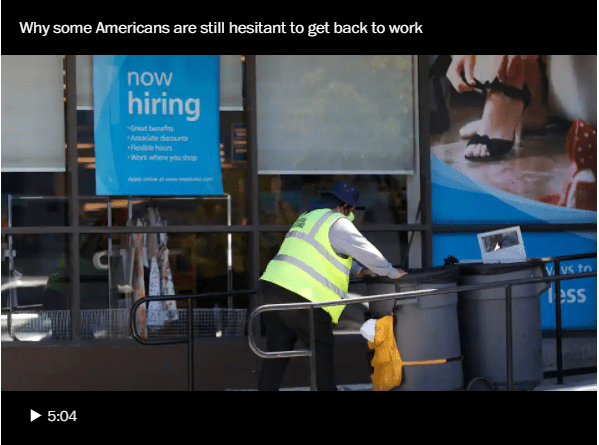
These businesses found a way around the worker shortage: Raising wages to $15 an hour or more
The owners of Klavons Ice Cream Parlor had hit a wall.
For months, the 98-year-old confectionary in Pittsburgh couldn’t find applicants for the open positions it needed to fill ahead of warmer weather and, hopefully, sunnier times for the business after a rough year.
The job posting for scoopers – $7.25 an hour plus tips – did not produce a single application between January and March.
So owner Jacob Hanchar decided to more than double the starting wage to $15 an hour, plus tips, “just to see what would happen.”
The shop was suddenly flooded with applications. More than 1,000 piled in over the course of a week.
“It was like a dam broke,” Hanchar said. Media coverage that followed his decision soon pushed other candidates his way.
Across the country, businesses in sectors such as food service and manufacturing that are trying to staff up have been reporting an obstacle to their success – a scarcity of workers interested in applying for low-wage positions.
The issue has raised concerns about the strength of the country’s recovery as coronavirus cases abate, with the economy still down more than 7.5 million jobs compared with before the pandemic.
Republicans have blamed enhanced unemployment benefits for the shortage; Democrats and most labor economists say the issue is the result of a complicated mix of factors, including many schools having yet to fully reopen, lingering concerns about workplace safety and other ways the workforce has shifted during the pandemic.
The experience of 12 business operators interviewed by The Washington Post who raised their minimum wage in the last year points to another element of the equation: the central role that pay – specifically a $15-an-hour minimum starting wage – plays in attracting or dissuading workers right now.
Nine of the businesses had increased pay to at least $15 an hour since March, amid struggles to hire in the face the tight labor market. The other three increased wages last year.
The business operators spoke about the challenges associated with increased labor costs, with three saying they had to raise prices for consumers. One of those, as well as two that did not raise prices, said they had to reduce some seasonal staffing or staff hours to make up the cost.
Enrique Lopezlira, a labor economist at the University of California at Berkeley and an expert on the low-wage workforce, said the stories were a sign, albeit anecdotal, that the market was functioning as it should in the face of excessive demand for workers.
“The more employers improve the quality of the jobs and the more they think of workers as an asset that needs to be maximized, the better they’re going to be able to find and retain workers long term,” he said.
For Patrick Whalen, co-owner of the 5th Street Group, comprising five restaurants in Charleston and Charlotte, the breaking point came in late March. The restaurants were getting busier as more people started venturing out to eat. But applicants for the dozens of positions the company was trying to hire for were scarce. Understaffed and busy, the company was starting to get shredded with negative reviews online.
After one of his managers told him that a line cook needed to borrow money to get groceries, Whalen was moved to reconsider wages at the company.
“It was just one of those moments where you just kind of stop and you say, ‘Is there a real problem in our industry?'” he said. “We always kind of knew it was there, but we didn’t really know what to do with it.”
The company raised the starting wage for all of its staff to $15 an hour, up from $12 to $13. And it created a “tip the kitchen” program, adding a second line to table checks for gratuity for the back-of-the-house staff, which the restaurant matches up to $500 per night. That move has increased wages for non-tipped employees such as line cooks and dishwashers to an average of $23.80 an hour, Whalen said.
Applicants began pouring in nearly overnight, Whalen said. A manager at one of his restaurants, Tempest, told him that 10 people walked in to drop off résumés over the course of one week after the policy change, compared with just 15 people over the four previous months.
Within three weeks, the restaurant group went from about 50 to 60% staffed to nearly fully staffed.
“There is no one in Charleston or Charlotte that can compete with what my guys are making,” Whalen said.
Aaron Dearing, a sous chef at Whalen’s 5Church Charlotte, said the tipping initiative had raised his pay by about $1,000 a month – the biggest raise he has received in 20 years in the industry.
“It puts everybody in a better position in their home life, so they come to work a lot happier,” he said.
John Puckett, one of the owners of Punch Pizza, a fast-casual restaurant group with about a dozen locations in the Twin Cities area, said the company experienced a similar boom when it made the decision in April to raise the minimum wage to $15 an hour from $11 as the company sought to fill 30 to 40 positions.
“We’ve seen an explosion of interest,” Puckett said. Job applications increased fivefold on its website and were 10 to 15 times higher on the jobs portal Indeed, he said.
Lexington Co-Op, which operates two grocery stores in Buffalo, is another business that found success by raising wages, from $13 an hour to $15, after having trouble filling about 15 positions in February and March.
Applications had been scarce. New hires who had accepted job offers then ghosted, failing to show for orientation or leaving the job after a few days. The company had begun leaning on high-schoolers to fill the positions.
“We’ve definitely been seeing a lot more candidates show up in their application pool and in orientation every week,” general manager Tim Bartlett said.
– – –
Many of the business operators interviewed said that the decision to raise their employees’ starting wage was not motivated primarily by altruism or a desire to do right: It just made good business sense.
ADVERTISEMENT
They said wage increases would help attract stronger candidates, reduce turnover and elevate company morale and culture – important for customer-facing businesses such as restaurants.
“We’re going to see savings in retention and turnover, which is so expensive,” said Nicole Marquis, the founder and chief executive of HipCityVeg, a group of fast-casual vegan eateries with locations in Philadelphia and D.C. that recently announced a $15 starting wage. “And this is going to help with recruiting, which will help with our culture – and is really what drives profit at the end of the day and creates a long-lasting brand.”
Other business owners said that they had raised wages to out-compete other companies for the best workers.
“We said let’s get way out ahead of this,” said Carl Segal, chief enterprise success officer at the “ghost kitchen” and technology company Reef, which raised its starting wage for its kitchen and grocery workers to $20 an hour in June, up from an average of around $16 to $18. “Let’s take care of the people that are on our team and really take them to the next level – just like they’re helping to take Reef to the next level – and do something amazing for them and their families.”
Most employers The Post spoke with acknowledged the challenges that came from increased labor costs, which already make up an outsize portion of the budget in restaurants and bars compared with other industries.
Three of the 12 businesses interviewed said that they had raised prices for consumers to help offset the wage increase. White Castle increased menu prices in the Detroit area after increasing its minimum wage there to $15 an hour, as did another restaurant that raised wages, Brown Sugar Kitchen in Oakland, Calif. The Midwest-based clothing and design store Raygun increased prices by about 1% after raising wages to an average of $15 last year, owner Mike Draper said.
Marquis said that HipCityVeg had not raised prices but that she thought customers would be willing to pay a bit more – 25 cents extra for a burger, for example – knowing employees were paid better.
One of the business owners, Gina Schaefer, who runs A Few Cool Hardware Stores, which has 13 locations in D.C., Maryland and Virginia, said that the wage increases led her company to trim some hours from the staffing schedule – some seasonal positions were left unfilled longer after workers left.
But she credited increasing wages at her stores to $15 an hour with helping her fill 71 positions since March.
“We’re having pretty good success,” she said.
Puckett, of Punch Pizza, said that raising wages had increased labor costs by 10%. Those costs eat up about 40% of sales revenue during normal times, and with a weakened bottom line during the pandemic, that meant that it had wiped out nearly 100% of the company’s profits.
But Puckett said the decision was not about short-term gains, even though the company was operating at a loss for the year.
“We are doing this for long-term competitive advantage through delivering more customer delight through engaged employees doing a great job,” he said. “Our business model to focus on the highest quality and service also makes a best-in-class wage structure for employees a good fit.”
For other businesses, increased costs from rising wages did not mean less profit.
While the staffing costs have gone up for the restaurants in 5th Street Group, overall sales also increased, and by a larger proportion, Whalen said. Customer reviews on sites such as OpenTable have gone up by nearly a half a point, too. Better service has translated to more sales and happier customers.
“Our top line is impacted dramatically because people come back and they talk about us,” Whalen said. “All these restaurants that are trying to figure out how to save money? The best way to save money is to make more, just have a better top line. The way you do that is by investing in your people first.”
Len Morris, owner of the Indiana-based staircase manufacturers Viewrail and StairSupplies, which recently raised starting wages to $25 an hour, said that material shortages – certain steels, aluminum extrusions, molds for plastic and rubber – were a much bigger concern for the company than worker availability.
“Wage increases aren’t necessarily driving price increases. Raw-material shortages are driving price increases,” he said. “It’s absolutely the greatest threat to our business.”
– – –
Most business owners emphasized that money was just one component of creating an appealing work environment for prospective employees, after a brutal year in which workers in sectors such as retail and hospitality faced high levels of job loss, the constant threat of coronavirus infection and other stressors.
“It’s tough if you have a family crisis and you need to deal with that and you have an employer that says, ‘If you leave to deal with that, you’re fired,'” Raygun’s Draper said. His company has emphasized leniency for workers, in addition to policies such as guaranteed sick time and paid time off. “We provide an environment where people don’t find themselves in that situation,” he said. “Work doesn’t have to be intractable.”
After White Castle had trouble hiring at its 37 stores in the Detroit area, its wage increase helped bring in more applicants. That also relieved pressure on its longtime staffers, who had picked up shifts to cover gaps amid shortages and turnover, Vice President Jamie Richardson said.
White Castle, with 362 locations nationwide, has opened only about 50 of its restaurants for dining, sticking instead with drive-through service, after employees reported in internal surveys that they felt safer that way.
“Employees are going to judge the places they worked based on what people did when times were toughest. Did that employer stick to the words they put on a poster in the backroom?” Richardson said. “That compact is always changing because times change, but I think the pressure of a pandemic really accelerated that time frame.”
Most of the owners said the political debate in Washington about the labor shortage seemed to present a simplistic view of business challenges – none said that they believed unemployment insurance was solely to blame for hiring hurdles.
“There’s a shaming that’s happening to working-class people,” said Schaefer, the owner of the D.C.-area hardware stores. “Nobody talks about the fact that the economy is going to fall apart when a tech guy gets a $195,000-a-year salary with a 5% raise every year, or when lawyers are making $300,000. This conversation only happens when you’re talking about the people who make the lowest wages. And I think as a society, that’s just really insulting.”
Cryptos outlook in Washington is darkened by ransomware attacks
Just a few months ago, crypto enthusiasts were hopeful that Washington was warming to digital assets. But cyberattacks demanding bitcoin ransoms, wild trading and rebukes from regulators have eroded their optimism.
The timing couldn’t be worse. Policymakers are poised to make a number of critical rulings on virtual tokens in the coming months — decisions that may reveal how deep of a hole the industry has to climb out of. Potentially under consideration are whether to approve a Bitcoin exchange-traded fund, allow crypto mutual funds and grant banking licenses to financial firms.
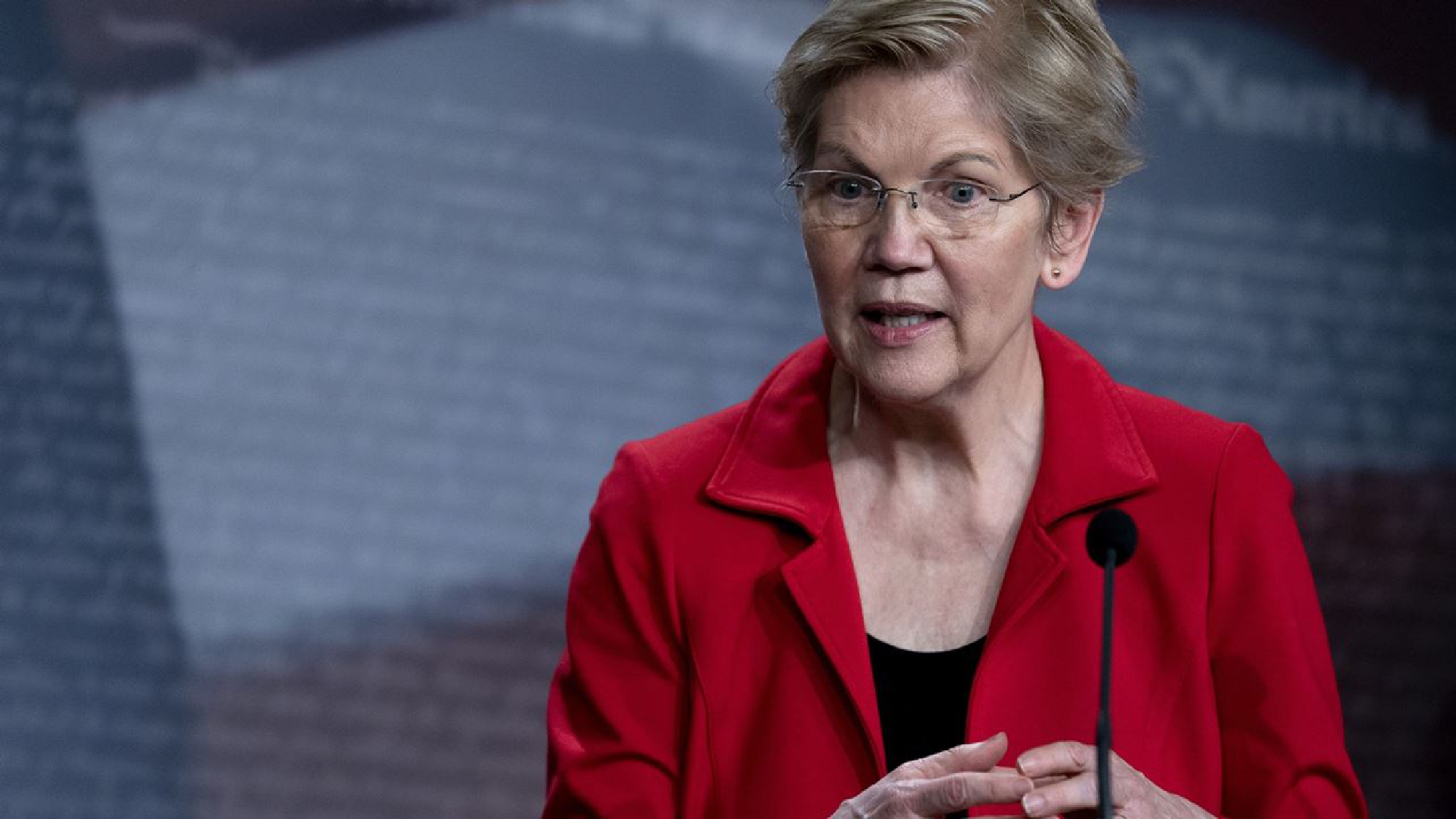
For advocates, the setbacks are fueling anxiety that some of their top priorities will be blocked by federal agencies, and that lawmakers will take take a tougher tack on oversight. Evidence is growing that Capitol Hill is moving in that direction. Sen. Mark Warner, a Virginia Democrat, said last month that cryptocurrencies are “crying out for some level of regulation.” Sen. Elizabeth Warren reiterated that view Wednesday.
“Our regulators, and frankly our Congress, are an hour late and a dollar short,” the Massachusetts Democrat said in a Bloomberg TV interview. “We need to catch up with where these cryptocurrencies are going.”
The rough patch started in May when Securities and Exchange Commission Chairman Gary Gensler urged lawmakers to pass a law regulating crypto exchanges, arguing that the lack of oversight posed a serious threat to U.S. investors. The comments shocked Bitcoin proponents who predicted Gensler would be an ally because, unlike most government officials, he’s well versed in virtual coins.
Then came the Colonial Pipeline Co. hack, which triggered fuel shortages across the Eastern U.S. As in previous breaches, the culprits demanded ransom payments in bitcoin — shining a spotlight on cryptocurrencies’ national security implications. Long gas lines predictably attracted the attention of lawmakers and the scrutiny could make some on Wall Street nervous about further embracing assets that are routinely linked to illicit transactions.
The Justice Department recovered most of the tokens that Colonial paid out by tracking transactions on the public ledger for Bitcoin, showing how the technology can aid law enforcement agencies. Still, Warren said a key feature of cryptocurrencies is that they allow people to secretly move money, making the coins a “haven for criminals.” A reminder of her point came Wednesday when JBS disclosed that it had paid $11 million to hackers who forced the world’s largest meat producer to shut down all its U.S. beef plants.
Another issue: Bitcoin has lost more than a third of its value since early May. A series of negative tweets from Elon Musk has contributed to the plunge, underscoring to crypto critics that token prices are too volatile and easily influenced by social media to be safe for unsophisticated investors. The frenzy tied to nonfungible tokens and dogecoin — a cryptocurrency created as a joke — has amplified those concerns.
“We can’t deny the potential impact that a negative media narrative might have on the regulatory and legislative conversations in D.C. in the short term,” said Kristin Smith, executive director of the Blockchain Association trade group.
Much of high finance’s focus is on Gensler, who previously taught courses on digital currencies at the Massachusetts Institute of Technology, because the SEC will determine whether a Bitcoin ETF can trade on U.S. exchanges.
The product is seen as a game-changer because it would let investors trade in-and-out of the world’s most popular cryptocurrency throughout the day without exposing them to the risks of having to store their tokens. Adding another layer of safety, consumers could buy ETFs from tightly policed brokers instead of purchasing Bitcoin from unregulated exchanges. And mutual funds and other institutional investors could pump a lot more money into crypto-related assets through ETFs.
An SEC spokeswoman declined to comment.
Under Gensler’s predecessor Jay Clayton, the SEC blocked multiple ETF applications, arguing that Bitcoin is too volatile and susceptible to manipulation. Gensler’s comments that crypto exchanges lack investor protections signals he may share some of those concerns, said Stephen Myrow, a former Treasury Department official during George W. Bush’s administration.
“It’s a big shift from four months ago when everyone said, ‘Gensler taught a crypto class at MIT so we’re going to get all our applications approved,”‘ said Myrow, managing partner of Beacon Policy Advisors, a Washington-based firm that tracks regulatory and legislative proposals.
The SEC faces a June 17 deadline on one proposal to list an ETF from VanEck Associates Corp., one of several applications it’s considering. The agency has previously delayed making a decision on VanEck’s plan, and amid Washington’s heightened attention on crypto, it may choose to kick the can down the road again. The regulator may also put off decisions on the five other applications, but the agency needs to respond to each of them by July 16.
The SEC has also expressed worries about mutual funds investing in Bitcoin futures, something that is allowed under existing rules. The agency warned in a May 11 statement that it would be scrutinizing funds’ crypto holdings.
In the next few months, the SEC will consider proposals for four mutual funds that would invest heavily in CME Group Inc.’s bitcoin futures contracts, according to documents filed with the regulator. One instrument, the Stone Ridge Trust NYDIG Bitcoin Strategy Fund II, would use the derivatives to seek an exposure to the cryptocurrency that’s worth as much as 125% of the fund’s net assets, according to its registration statement. The firm wants to start offering the product to investors in July but it could be delayed amid the SEC’s review process.
One impact of the government’s stepped-up focus on cryptocurrencies — largely spurred by the Colonial hack — is that it could prompt lawmakers to overcome gridlock that has thus far stymied legislation, said Patrick McCarty, a former general counsel at the Commodity Futures Trading Commission who now teaches a class on virtual coins at Georgetown University’s law school.
Whatever actions the government might take, the Blockchain Association’s Smith said she hopes regulators and Congress take into account the benefits of cryptocurrencies.
ADVERTISEMENT
“Serious policy makers generally look to the underlying fundamentals of an industry when reviewing statutes, brainstorming new legislation or drafting new regulations,” she said. “It should be the same with the crypto industry, notwithstanding a recent perfect storm of negative headlines.”
Published : June 11, 2021
By : Syndication Washington Post, Bloomberg · Ben Bain, Robert Schmidt
ECB renews pledge on faster buying to ensure crisis rebound
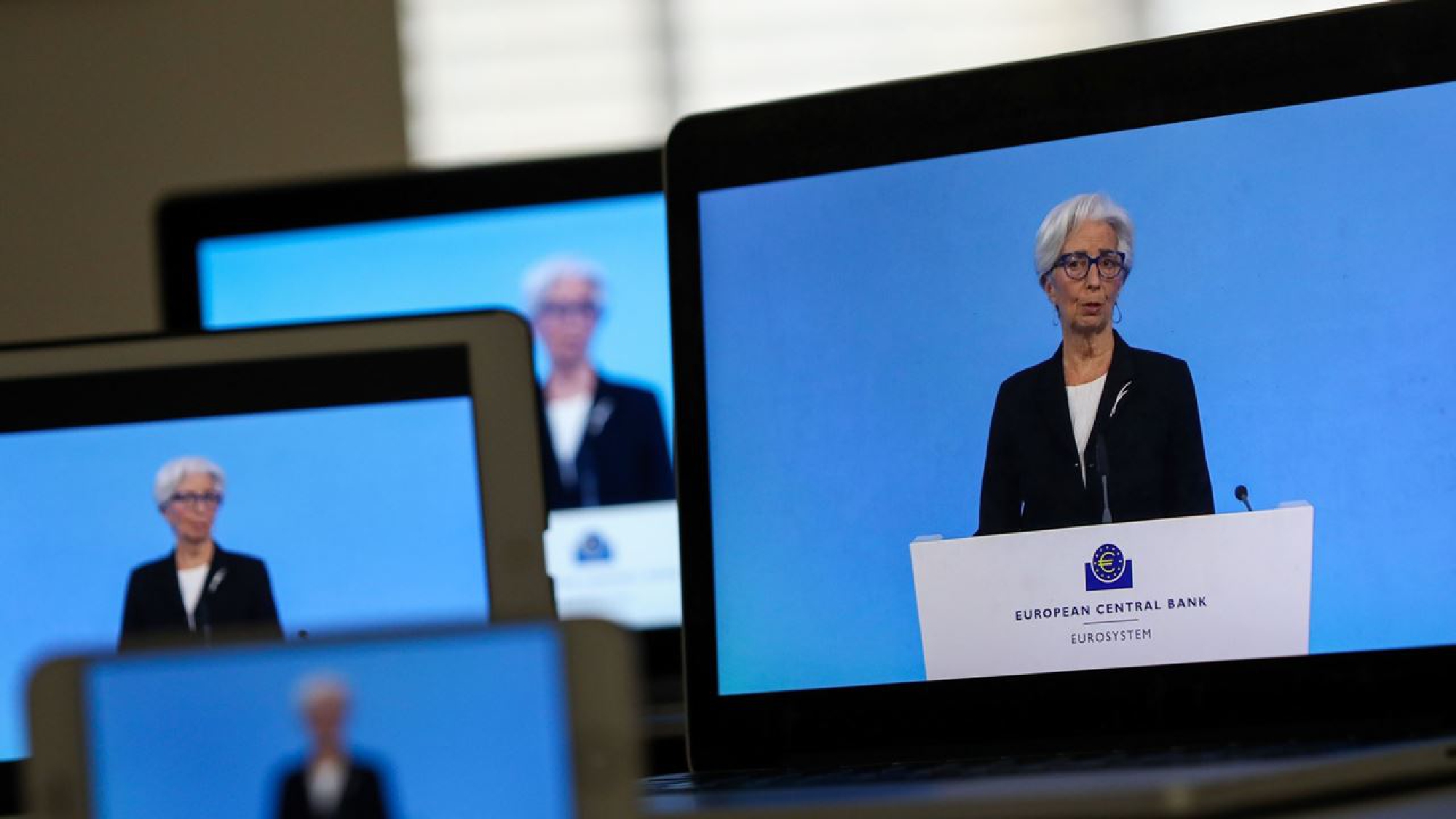
The European Central Bank renewed its pledge to maintain faster emergency bond-buying despite significant upgrades to its outlook for growth and inflation, as it attempts to sustain the euro area after more than a year of debilitating economic crisis.
“Uncertainties remain as near-term economic output depends on the course of the pandemic, and how the economy responds after reopening,” President Christine Lagarde said Thursday after officials pledged to keep asset purchases at a “significantly higher” pace than in the first months of 2021.
The decision underscores the ECB’s determination to allow no let-up in stimulus even as the region’s vaccination campaign and looser lockdown restrictions pave the way for a rebound. Policymakers accelerated the pace of their 1.85 trillion-euro ($2.25 trillion) bond-buying program three months ago to rein in rising borrowing costs, and several have argued since then that the economy isn’t ready for a withdrawal of support.
While Lagarde also unveiled forecasts that showed faster growth an inflation both this year and next, she insisted that price pressures in the economy “remain subdued.”
The ECB’s continued emergency easing is likely to presage a similar move by the Federal Reserve next week not to start winding down stimulus, in a two-pronged policy push to ensure recoveries from the pandemic can be assured.
ECB purchases have been conducted at a pace of roughly 19 billion euros a week since March, up from 14 billion euros earlier in the year. Thursday’s decision suggests they are likely to continue at or close to that higher clip until the recovery firms. Most economists don’t expect a reduction until September.
The ECB’s decision was paired with a more optimistic outlook for growth in 2021 and 2022. Policy makers both in the euro zone and in the U.S. argue that prices are being driven by temporary factors including higher fuel costs and manufacturing bottlenecks that will be resolved before too long.
In the euro area, inflation climbed to 2% in May, technically above the ECB’s target. The institution’s last forecasts, however, showed it missing its goal both next year and in 2023.
Officials have repeatedly warned that it is too early for a debate around winding down pandemic measures. The ECB’s emergency program is currently set to run through March 2022, and most economists don’t expect it to be extended.
Alongside the decision on crisis purchases, officials left interest rates, long-term loans to banks, and an older bond-buying program unchanged.
Published : June 11, 2021
By : Syndication Washington Post, Bloomberg · Carolynn Look
Worlds richest face tax squeeze after 40% run-up in fortunes
Amazon.com founder Jeff Bezos has the resources to launch himself into space. Elon Musk does, too. In many ways, though, the worlds richest people left the rest of us behind long ago.
The world’s wealthiest 500 individuals are now worth $8.4 trillion, up more than 40% in the year and a half since the global pandemic began its devastation. Meanwhile, the economy’s biggest winners, the tech corporations that created many of these vast fortunes, pay lower tax rates than grocery clerks, and their mega-wealthy founders can exploit legal loopholes to pass huge windfalls onto heirs largely tax-free.
Now, a group powerful enough to challenge the supremacy of the tech titans is on the verge of taking action. The leaders of the Group of Seven, including U.S. President Joe Biden and U.K. Prime Minister Boris Johnson, meet in southwestern England this weekend, where they’re expected to endorse a plan to plug holes in the world’s leaky tax system.
While the changes still need approval from a larger group of nations, including China, before becoming reality, the agreement by the G-7 marks a historic turning point after decades of falling levies on multinational corporations.
“It is very easy for multinationals and the richest people to escape tax. What we are seeing with the G-7 is that the time has come for politicians to take back power,” said Philippe Martin, a former adviser to French President Emmanuel Macron who now heads the Conseil d’Analyse Economique. “There is a window of opportunity, a turning point at which they are realizing they need tax power and they need to spend more.”
The deal would bolster Biden’s own plans to boost taxes on corporations and the wealthy by raising rates, making heirs pay more, and equalizing rates between investors and workers.
The proposals are part of a global revival of initiatives to target the rich, from Buenos Aires to Stockholm to Washington, including new taxes on capital gains, inheritances, and wealth that have gained momentum since Covid-19 blew massive fiscal holes in government budgets around the world.
U.S. Treasury Secretary Janet Yellen framed the G-7 deal as a way for governments to protect their national sovereignty to set tax policy.
“For too long there has been a global race-to-the-bottom in corporate tax rates,” Yellen said following the G-7 finance ministers’ meeting in London last week, ahead of this weekend’s gathering.
Amazon and some other tech companies, meanwhile, have endorsed the agreement, believing the global regime will be more manageable than costly alternatives being pursued by individual countries. Bezos has also voiced support for higher U.S. corporate taxes to pay for infrastructure.
Advocates for higher taxes say the steps are necessary to stave off a rise in populism and even for the sustainability of capitalism.
“The most visible and prominent winners of globalization are these big multinationals whose effective tax rates have collapsed,” said University of California at Berkeley economics professor Gabriel Zucman, who tracks wealth and inequality. “That can only lead to a growing rejection of that form of globalization by the people.”
The World Economic Forum, the organizer of the annual conference for the rich and powerful in Davos, Switzerland, issued a white paper this month arguing “taxation systems must be redesigned efficiently to tax capital and multinationals.”
Governments need the revenue and “progressive taxation will be an essential mechanism to compensate for the uneven recovery already under way,” according to the report.
There remain plenty of defenders of low taxes.
Conservative economists such as Douglas Holtz-Eakin, president of the American Action Forum, argue taxing the wealthy and corporations more heavily will damage the economy.
“Higher taxes on capital generally raises the possibility of a slowdown of productivity growth,” said Holtz-Eakin, who was an adviser to President George W. Bush.
That view is losing ground though as resentment grows over the ways that highly profitable corporations reduce their taxes.
Facebook, Apple, Amazon, Netflix, Google and Microsoft collectively skirted approximately $100 billion in U.S. taxes from 2010 to 2019, according to an analysis of regulatory filings from Fair Tax Mark, a progressive think tank. Many of those untaxed profits were shifted into tax havens like Bermuda, Ireland, Luxembourg and the Netherlands.
Amazon paid an effective corporate tax rate of 11.8% in 2020, according to a Bloomberg Economics analysis, and it’s hardly an outlier among highly successful tech companies. Facebook, founded by the world’s fifth-richest person, Mark Zuckerberg, paid 12.2% last year.
Asked to comment for this article, an Amazon spokesperson pointed to some of the company’s prior statements related to its tax bill, including, in part: “Amazon’s taxes, which are publicly reported, reflect our continued investments, employee compensation, and current U.S. tax laws.”
As a mix between a technology company and a retailer with massive physical infrastructure, Amazon is able to use a slew of long-standing, low-profile tax preferences for stock compensation, buildings, research and development. Bezos has pushed to re-invest profits into the company, a strategy that keeps taxable income low and tax breaks high.
Amazon completely avoided federal income taxes in 2017 and 2018 thanks to its savvy use of the tax code. Since then, the company has had to pay some income tax to the Internal Revenue Service, but it’s been far below the 21% headline rate installed under President Donald Trump.
Billionaire tech founders often pay even less personally than their corporations do.
Bezos, for example, got $77 billion richer in 2020, according to the Bloomberg Billionaires Index. But in the U.S., gains on stock are only taxed when they’re sold, at a far lower rate than well-off workers pay, meaning that Bezos owed at most a few billion dollars in taxes to the U.S. Treasury last year.
“This country’s wealthiest, who profited immensely during the pandemic, have not been paying their fair share,” Senate Finance Committee Chairman Ron Wyden said after ProPublica reported on Tuesday that several of the world’s billionaires, including Bezos, didn’t pay any federal income taxes in some years.
The media organization said it obtained confidential tax documents on thousands of the wealthiest Americans, including for Warren Buffett and Michael Bloomberg, owner of Bloomberg LP, the parent company of Bloomberg News. Bloomberg and others told ProPublica they had paid the taxes they owed.
To remove advantages in the U.S. tax code that benefit the ultra-wealthy, Biden has proposed taxing inherited assets that currently escape levies, and boosting the top rate on investment income so that well-paid workers and investors pay the same.
On an international scale, the administration is seeking a global minimum tax of at least 15% for the world’s most profitable companies — the deal expected to be pushed forward at the G-7 meeting this weekend.
The G-7 deal would change other rules for taxing multinationals, in order to undercut efforts to shift profits to low-tax countries. Biden is also advocating to increase the U.S. corporate rate to 28%, partly reversing Trump’s tax overhaul.
Tech companies could see their effective tax rates jump if a global tax deal is reached, according to research from Morgan Stanley. Facebook and Alphabet’s Google could both pay 28% on their profits worldwide, up from 18% and 17% respectively under current rules, the report found.
For all the talk of taxing the rich, Biden’s proposals, and the international tax deal, face serious hurdles before they’re adopted.
While some of his fellow Democrats, who narrowly control Congress, are pushing for more radical changes to the taxes of estates and wealth, others are hesitant.
The next step for the global tax negotiations, which were launched years ago by the Organization for Economic Cooperation and Development and have involved roughly 140 nations, is to win agreement among the Group of 20 countries. Finance ministers for the G-20, which collectively oversee about 90% of the world’s economy, will meet in July in Venice.
Stumbling blocks to reaching a deal by year-end include China, which may seek exemptions from the minimum tax.
Still, there are hopes the global effort “puts an end to the craziness,” said Pascal Saint-Amans, director of the center for tax policy at the OECD. “You had loopholes everywhere and nobody was taking care of that. It’s undermining the very goal of capitalism and a free-market economy.”
Published : June 11, 2021
By : Syndication Washington Post, Bloomberg · Ben Steverman, Laura Davison, William Horobin
Oil drops as sanctions lifted on former Iran official
Oil reversed gains after the U.S. lifted sanctions on a former Iranian oil official and two other Iranians involved in oil trading, potentially paving the way for a further return of the Persian Gulf countrys output.
Futures in New York slid as much as 1.8% on Thursday before paring losses. The market has been watching for signs of developments in talks between Iran and world powers to revive a 2015 nuclear agreement, which could spur more Iranian barrels returning to the market.
Still, prices remain higher this year amid recovering consumption, with the Organization of Petroleum Exporting Countries seeing the global demand recovery gathering steam in the second half of the year. Oil consumption will jump by about 5 million barrels a day — or roughly 5% — in the second half of 2021 versus the first as the world emerges from the pandemic slump, the OPEC forecast in a report.
West Texas Intermediate for July delivery rose 16 cents to $70.12 a barrel at 1:29 p.m. in New York. Brent for August settlement rose 20 cents to $72.42 a barrel.
While headline prices remain driven by the recovery in consumption, a longer-term debate continues to rage about the viability of oil investments. Group of Seven leaders are discussing plans to shift the balance of car-buying away from gasoline to greener vehicles by the end of the decade. That comes just a day after Shell said it would hasten its reduction in carbon emissions.
Published : June 11, 2021
By : Syndication Washington Post, Bloomberg · Andres Guerra Luz
Markets wrap: U.S. stocks, government bonds rally after CPI
U.S. equities rallied toward all-time highs and benchmark Treasury yields extended declines to the lowest since March as investors bet that the Federal Reserve will maintain its ultra-accomodative policies even after data showed consumer prices rose more than forecast last month.
The S&P 500 touched a record as all the main American equity indexes advanced in afternoon trading. The tech-heavy Nasdaq 100 was set for its highest level since late April as megacap technology stocks rallied. The 10-year Treasury yield fell to as low as 1.45% following an initial surge in the wake of the inflation report.
The consumer price index data released Thursday showed that the increase in May was driven largely by categories associated with a broader reopening of the economy as vaccinations bring the pandemic under control. The report comes amid a debate about whether the Fed can maintain the dovish stance that has helped lift markets in the face of a strengthening economy that brings the risk of destabilizing inflation. Rangebound trading in equities and falling yields have characterized the start of June as investors awaited some impetus from progress reports on the recovery. A frenzy in meme stocks and gyrations in cryptocurrencies have been among the few sources of pronounced market volatility.
“The frothiness in CPI continues for now but between base effects and pent-up demand pressures, it is probably not giving a definite answer to the great inflation debate, and you need to read the bond market tea leaves,” said Anu Gaggar, senior global investment analyst at Commonwealth Financial Network. “The 10-year Treasury yield is back at levels last seen in early March, signaling that the bond market is falling in line with the Fed’s thinking that inflation is transitory and does not warrant tapering of monetary stimulus any time soon.”
Eight of the main 11 S&P 500 industry groups climbed, with health-care stocks leading the advance. Financial stocks were the outliers, with large banks including JPMorgan Chase & Co., Bank of America Corp. and Wells Fargo & Co. among the biggest laggards in the broader index. Amazon.com Inc., Microsoft Corp. and Tesla Inc. contributed the most to the Nasdaq 100’s gain. The Dow Jones Industrial Average was around 0.7% below it’s all-time closing high.
GameStop Corp. fell after the company said it planned to offer more shares and disclosed that regulators are investigating trading of its stock. Other retail trader favorites were mixed, with some of the stocks that surged amid the frenzy on Wednesday giving back gains.
European stocks closed little changed at a record high, with defensives rallying after the European Central Bank raised its inflation forecast and renewed its pledge to maintain faster emergency bond-buying to sustain the euro area. The Stoxx Europe 600 Index was up less than 0.1% at the close, with banks outperforming. With European equities notching several fresh records in June, investors are growing increasingly sensitive to data and policy statements on inflation that could signal an earlier end to central-bank largesse than expected.
Commodities, one of the leading reflation plays, resumed gains, with the Bloomberg Commodity Index trading around the highest since 2015.
– – –
Here are key events to watch this week:
– Group of Seven leaders’ summit starts in Cornwall, England Friday.
These are some of the main moves in markets:
– – –
– The S&P 500 rose 0.5% as of 3:16 p.m. New York time
– The Nasdaq 100 rose 1%
– The Dow Jones Industrial Average rose 0.2%
– The MSCI World index rose 0.4%
– – –
– The Bloomberg Dollar Spot Index fell 0.2%
– The euro was little changed at $1.2175
– The British pound rose 0.4% to $1.4173
– The Japanese yen rose 0.2% to 109.37 per dollar
– – –
– The yield on 10-year Treasuries declined four basis points to 1.45%
– Germany’s 10-year yield declined one basis point to -0.26%
– Britain’s 10-year yield advanced two basis points to 0.75%
– – –
– West Texas Intermediate crude rose 0.4% to $70 a barrel
– Gold futures rose 0.2% to $1,899 an ounce
Published : June 11, 2021
By : Syndication Washington Post, Bloomberg · Kamaron Leach
Inflation continued climb in May as prices rose 5% over last year. Policymakers say its temporary.
WASHINGTON – Prices rose by 5% in May compared with a year ago, the largest increase since the Great Recession, continuing a steady climb in inflation even as policymakers insist on staying the course.
Price spikes often coincide with downturns, and officials from the White House and Federal Reserve have predicted that prices will climb over the coming months, especially compared with a year ago, when the economy was reeling from coronavirus pandemic shutdowns. However, the move adds new fuel to criticism from Republicans, and at least one prominent liberal economist, that too much government spending could wreak havoc and lead to an overheated economy.
It could take months before it’s clear whether the current rise in inflation is temporary. But the steady climb is already weighing on numerous policy debates. Republicans pushed back hard on President Joe Biden’s proposal to spend $4 trillion on infrastructure and other proposals, complaining that it amounted to an infusion of too much money at a time when prices on certain products were rising much faster than wages. GOP opposition has led the White House to rethink its spending strategy in recent weeks.
The most recent inflation figures, released Thursday by the Bureau of Labor Statistics, do not seem to have forced any course-correction decisions inside the Biden administration or at the Fed. Both predict that prices will continue to rise until supply chains and consumer demand recalibrate and the economy recovers. The Fed, which is charged with keeping prices stable and unemployment low, says it won’t rush to raise interest rates and tamp down on inflation until the labor market has time to heal.
“As the virus is contained, the economy is improving, step-by-step,” tweeted Heather Boushey of the White House’s Council of Economic Advisers. “Today’s data on inflation is the latest indicator that things are both moving in the right direction and that we have supply-chain hiccups.”
The White House and Democrats in Congress argue that rising inflation is not only temporary, but that it’s also a feature of a rebounding economy. More widespread vaccinations and lower coronavirus case counts are helping Americans return to their old spending habits and unleash months of pent-up savings. The economy added 559,000 jobs in May, and the first four months of Biden’s presidency have seen more than 2 million jobs added back on the payrolls.
Yet Republicans have a much different diagnosis of the economy, and they seized on Thursday’s inflation data to issue their latest warnings. The GOP points to the $1.9 trillion stimulus package Biden signed in March, arguing that such a sprawling bill will overwhelm the economy and put the Fed behind the curve when it comes to reigning in inflation.
“There’s no question that it feeds political narratives,” said Grant Thornton chief economist Diane Swonk of Thursday’s data. “It’s not clear that it solves the political debate.”
Sen. Patrick Toomey, R-Pa., pointed to the Fed’s commitment to keeping interest rates low and not yet dialing back its other economic supports. Toomey told The Post that the Fed “will eventually have to react in a more draconian way because they’re so far behind the curve.”
“How do you know if something’s been transitory until enough time has passed, and it hasn’t been?” Toomey said. “Given especially the fact we have known for a very long time that monetary policy acts with long and unpredictable lags, it’s a very dangerous position we’ve put ourselves in.”
Sen. Mike Crapo, R-Idaho, called out the “explosive spending here in Congress.”
“The correct policy is to control our deficits and start to get back to a much more stable fiscal policy in terms of spending,” Crapo told The Post.
The labor data also showed that prices rose 0.6% in the past month.
A large share of May’s inflation gains came from the car market. The price of used cars and trucks continued to surge, rising 7.3% in May compared with April. That followed a 10% increase in April.
A complicated and unusual range of factors have seized on the market for used cars and rental cars, triggering nationwide shortages. Many rental car companies sold their fleets during the pandemic, leaving them short as Americans start traveling again. On the supply-chain side, a shortage of semiconductors has also made it hard for companies to restock their lots.
Prices for household furnishings and services increased 1.3% in May, its largest monthly increase since January 1976, according to the Bureau of Labor Statistics. The indexes for domestic services, along with categories tracking furniture and bedding, helped drive the increase.
Gas prices have surged 56.2% during the past year, and the energy index overall is up 28.5% compared with May 2020.
The Fed is charged with keeping prices stable and the unemployment rate low. For now, it is not rushing to control inflation until substantial progress has been made in the labor market, which is still down 7 million jobs.
On Saturday, Treasury Secretary Janet Yellen said inflation could rise as high as 3% over the entire year, which would be considered high for the United States. Still, it’s unclear just how high inflation will be allowed to climb, and for how long, before policymakers in the administration and the Fed see cause for concern.
Former treasury secretary Lawrence Summers, a Democrat who has been openly critical of Biden’s economic agenda, said that it is time policymakers “adjust to economic reality.”
“Six months ago, it was reasonable to see continued covid, inadequate demand, a return to a recession and possible deflation as central risks,” Summers told The Post. “That is now not remotely plausible. . . . Ultimately there is more confidence when policymakers are in touch with the reality that people are seeing.”
Michael Strain, director of economic policy studies at the right-leaning American Enterprise Institute, said inflation could eventually simmer back down to more sustainable levels. But Strain said that right now, the Fed could go further in sending a simple yet important message: There’s still plenty of uncertainty ahead.
“I do think the Fed needs to do a better job at convincing markets that it’s at least aware of what’s happening, and that it’s aware that there are risks there,” Strain said. “The blasé attitude the Fed has had toward inflation, and toward these risks, has been really surprising, and I think it’s time for that attitude to change.”
Fed and administration officials point to factors that they say are temporarily driving up prices. Demand for goods and services – including on things such as concert tickets and restaurants – is rebounding as more people are vaccinated and eager to spend. Meanwhile, supply chains are struggling to catch up. Economists say those bottlenecks will smooth out over time – and require patience from consumers and policymakers alike.
“I sort of look at what we’re going through as friction upon reentry,” Swonk said. “We still have a while before parachutes open and we hit the cool waters of splashdown.”
Airline tickets are a prime example. Prices rose 7% in May after surging 10.2% in April.
But in some instances, prices are already starting to cool. Data show prices for hotels and motels rose 7.6% in April. They increased only 0.4% in May.
Some economists are watching the cost of rent, which makes up a large share of many Americans’ budgets. Rental prices didn’t swing wildly during the pandemic and only increased 0.2% in May. But it’s still up 1.8% from last year. Once rent rises and tenant are locked into leases, it may be harder for rent to come back down. Only time will tell.
Generally, policymakers expect inflation figures to taper off in the year to come. That’s in part because the super-low readings from the pandemic’s early days will gradually shift out of the calculation.
ADVERTISEMENT
“While, no doubt, the top-line increase in inflation will command the attention of policymakers at the Federal Reserve, the underlying tone and tenor of the data will not result in any change of policy,” wrote Joe Brusuelas, chief economist at RSM, in an analyst note.
Published : June 11, 2021
By : The Washington Post · Rachel Siegel, Tony Romm
TCC and deputy PM discuss easing access to soft loans for cash-strapped SMEs
The Thai Chamber of Commerce (TCC) said it had discussed its “Connect the Dots” plan to revitalise the economy in 99 days with Energy Minister and Deputy PM Supattanapong Punmeechaow and come up with three strategies to boost business.
The TCC will focus on boosting access to soft loans for liquidity-strapped companies while also easing regulations for doing business and accelerating vaccination in the private sector.
TCC chairman Sanan Angubolkul said many businesses, especially SMEs, have been forced to take high-interest informal loans as they cannot access soft loans from the government.
The chamber has teamed up with Central Retail Corp Plc (CRC) and Kasikornbank (KBank) to create a loan facility worth 5 billion baht for small suppliers of CRC.
Sanan said it had also urged the government to give financial institutions more freedom to exercise their discretion in extending business loans.
The Bank of Thailand should also consider unlocking debtors from credit scores or NPLs so they can access funding sources during the Covid-19 crisis, said Sanan.
The TCC approved two measures to boost SMEs’ liquidity:
1. Reduce the credit term for SME suppliers (farmers, community enterprises, individuals) to 7-15 days, and 30 days for bigger suppliers.
2. First phase of 5-billion-baht soft loan programme covering 6,000 SMEs (1,000 approvals already given) through the Thai Bankers’ Association, Thai Retailers Association and other allies. In the next phase, the TCC has set a target of delivering loans of up to 5 million baht to 500,000 SMEs nationwide within six months.
As for guidelines for economic recovery in the tourism and service sectors, the TCC is working on the “Hug Thais” project to stimulate domestic consumption and prepare for the country’s reopening to tourists next month under the Phuket sandbox scheme. The “Hug Thais Hug Phuket” project is expected to generate more than 270 billion baht over the next 6 months, accounting for 1.6 per cent of national GDP and supporting more than 2 million jobs.
Sanan said he also discussed the Ease of Doing Business Act with Deputy PM Supattanapong, focusing on its pledge of “Easier, Faster, and Cheaper”.