
Powell dashboard shows uneven recovery as Fed plots next steps #SootinClaimon.Com

#SootinClaimon.Com : ขอบคุณแหล่งข้อมูล : หนังสือพิมพ์ The Nation.

https://www.nationthailand.com/business/40002021

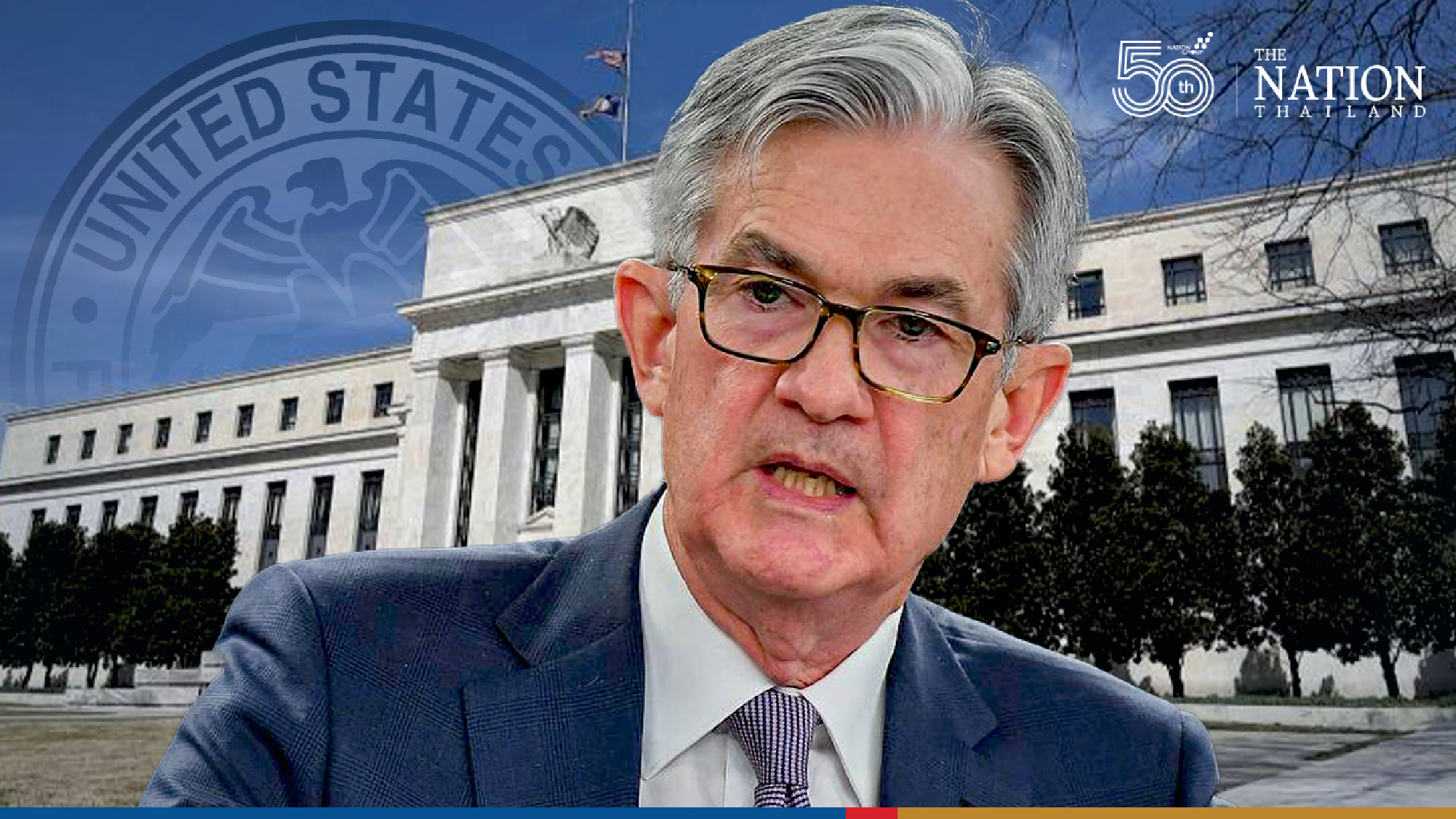
Powell dashboard shows uneven recovery as Fed plots next steps


When Federal Reserve policymakers gather this week to discuss the U.S. economic recovery from the pandemic, theyll see a job market thats improving at a faster pace for some than for others.
Powell dashboard shows uneven recovery as Fed plots next steps

The dashboard of indicators Fed Chair Jerome Powell and his colleagues have said they are watching to determine how far the country is from reaching their maximum employment mandate shows White and Asian Americans with college educations are faring better than everyone else.

The U.S. central bank’s rate-setting Federal Open Market Committee meets Tuesday and Wednesday to discuss where policy is headed next. Last year, Fed officials redefined their goal of full employment as an “inclusive and broad-based” one.

Labor Department reports for the months of April and May, published since the last FOMC meeting, have been disappointing relative to forecasters’ expectations. Fed policymakers have said the figures indicate the job market is still a long way off from the “substantial further progress” they’ve outlined as a condition to begin scaling back monetary support.

Here are some of the data that Powell has pointed to as a gauge of the economy’s strength.

– Unemployment Rates

As of May, despite some improvement across racial and ethnic groups, Black and Hispanic Americans continued to face lower employment rates than White and Asian Americans relative to pre-pandemic levels.

The employment-to-population ratio for White Americans was three percentage points below where it was in February 2020 and for Asian Americans it was down 2.8 percentage points. But for Black Americans, it was 3.9 percentage points lower and for Hispanic or Latino Americans it was 4.5 percentage points below pre-pandemic levels.

The employment disparities between racial and ethnic groups are largely concentrated among women.

– Employment-to-Population

For Black or African American and Hispanic or Latino women, employment-to-population ratios were still more than five percentage points below February 2020 levels — whereas for White American women, the ratio was down just three percentage points.

By comparison, employment-to-population ratios for White and Black American men have rebounded to a similar place — both 3.6 percentage points below pre-pandemic levels in May. The ratio for Hispanic or Latino American men was down 4.3 percentage points.

Women of color are more likely to be employed in customer-facing jobs, which have been hit hardest by the pandemic — and as a result, they’re also less likely to be able to work from home, adding to the child-care puzzle, according to Beth Ann Bovino, chief U.S. economist at S&P Global Ratings.

Employment among women should begin rebounding faster starting in September as schools reopen, Bovino said.

– Wage Growth

So far, wage growth has been holding up well relative to past downturns, especially for Americans in the bottom 25% of the earnings distribution. Wage growth for that group was 4.2% in the 12 months through May, versus 3.4% for the entire workforce, according to a measure compiled by the Atlanta Fed.

Many employers in low-paying industries have been reporting trouble finding workers as the economy reopens, which has fueled an intense political debate over the extent to which expanded unemployment insurance benefits have contributed to the shortage of labor.

But states across the country controlled by Republican governors are moving to discontinue the expanded benefits this month, while in the rest of the country, the expansion will expire in September.

– Education Gap

The recovery in labor-force participation has also been stratified by education levels, and gaps there have widened in recent months.

For those without high-school diplomas, participation in May was 4.9 percentage points below pre-pandemic levels, whereas for those with bachelor’s degrees or higher levels of college education, the participation shortfall was less than one percentage point.

“While the employment gains are solid, we have not seen the ‘string of strong jobs reports’ of more than 1 million job gains that Chair Powell was hoping for and they are not fully inclusive,” Kathy Bostjancic, chief U.S. financial economist at Oxford Economics, wrote Friday in a note.

ADVERTISEMENT

Published : June 15, 2021

By : Syndication Washington Post, Bloomberg · Matthew Boesler, Olivia Rockeman
Stocks stage late rally to set another record high #SootinClaimon.Com

#SootinClaimon.Com : ขอบคุณแหล่งข้อมูล : หนังสือพิมพ์ The Nation.

https://www.nationthailand.com/business/40002020

Stocks stage late rally to set another record high


U.S. stocks turned higher in the last hour of trading to close at another record, while the rally in bond markets lost steam as investors prepared for a key Federal Reserve meeting later in the week. Oil touched the highest in more than two years.

Stocks stage late rally to set another record high

The information technology and communication services sectors pushed the S&P 500 to an all-time high even as three stocks fell for every one that rose. Financials dropped as JPMorgan Chase Chief Executive Officer Jamie Dimon suggested Wall Street’s pandemic-era trading boom could be drawing to a close. The Treasury 10-year yield rose to 1.50% after hitting three-month lows on Thursday amid the biggest weekly slide since December.

Investors are on the lookout for signals from the Fed about a timetable for scaling back emergency monetary stimulus. Expectations are that the central bank will reaffirm the pace of bond purchases this week, even if it delivers projections for interest-rate liftoff in 2023, according to economists surveyed by Bloomberg. The decision is due Wednesday.

“We’re in a tug-of-war between the understanding that we’re having great economic growth and great earnings growth juxtaposed with the fact that we need to get our head wrapped around what inflation looks like and what it will mean both to profit margins and to the Fed,” said Art Hogan, chief strategist at National Securities.

With anxiety about an imminent taper fading, bond yields have fallen to the bottom of recent trading ranges, providing a green light for risk-on sentiment that may last until at least August, according to Mizuho International Plc strategists.

“The overarching theme should be of an environment for investors to put cash to work,” Mizuho’s head of multi-asset strategy Peter Chatwell and colleagues wrote in a note to clients. “With this backdrop most asset classes should be able to at least hold ground, if not rally. We doubt any major change in Fed rhetoric will materialize before” the Jackson Hole symposium in August.

Oil was little changed after three weekly gains on optimism that economic reopenings will boost summer demand in the U.S. and Europe. Hedge funds boosted net-bullish positions to a nearly three-year high, according to the latest Commodity Futures Trading Commission data.

French and German government bond peers also reversed course with yields turning higher. European equities closed mostly higher.

Bitcoin continued to whipsaw investors, climbing above $40,000 after Paul Tudor Jones reiterated his support, only to erase most of its gains later. It had rose over the weekend after Elon Musk said Tesla would resume transactions with the cryptocurrency when mining it is done with more clean energy. Barry Silbert said later that the majority of cryptocurrencies are overpriced. Not just the majority, but 99% of them. Silbert is the founder and chief executive officer of Digital Currency Group, the crypto powerhouse behind the Grayscale Bitcoin Trust among other things.

The dollar was steady in the wake of a Group-of-Seven leadership meeting that emphasized unity.

These are some of the main moves in markets:

Stocks

– The S&P 500 rose 0.2% to a record high as of 4:03 p.m. EDT

– The Nasdaq 100 rose 0.9% to a record high

– The Dow Jones industrial average fell 0.2% to the lowest since May 26

– The MSCI World index rose 0.2% to a record high

Currencies

– The Bloomberg Dollar Spot Index rose 0.1% to the highest since June 3

– The euro was little changed at $1.2121

– The British pound was unchanged at $1.4107

– The Japanese yen slipped 0.4%, more than any closing loss since June 3

Bonds

– The yield on 10-year Treasurys advanced four basis points, more than any closing gain since May 12

– Germany’s 10-year yield advanced two basis points, more than any closing gain since May 27

– Britain’s 10-year yield advanced three basis points, more than any closing gain since June 3

Commodities

– West Texas Intermediate crude rose 0.2% to $71.08 a barrel

– Gold futures fell 0.6% to $1,867.60 an ounce

Published : June 15, 2021

By : Syndication Washington Post, Bloomberg · Vildana Hajric, Claire Ballentine

Some 3,000 food businesses seek loans to tide them over #SootinClaimon.Com

#SootinClaimon.Com : ขอบคุณแหล่งข้อมูล : หนังสือพิมพ์ The Nation.

https://www.nationthailand.com/business/40002018

Some 3,000 food businesses seek loans to tide them over


In a bid to boost the liquidity of small food businesses suffering from the Covid-19 fallout, five financial institutions are offering loans to operators that have registered with the Department of Business Development.

Some 3,000 food businesses seek loans to tide them over

Atotal of 880 million baht has been allocated for loans, which agencies take no more than 14 days to approve or deny. Applications are being accepted until June 20.

Between June 7 and 13, 3,001 applicants filed for loans, with 2,520 submitted to the Government Savings Bank alone. Also, 146 restaurants have applied for loans with SME Bank, 98 with Krungthai Bank, 49 with the Bank for Agriculture and Agriculture Cooperatives and 188 with the Thai Credit Guarantee Corporation.

Published : June 15, 2021

By : The Nation

SET sentiment dampened by hiccup in mass vaccination drive #SootinClaimon.Com

#SootinClaimon.Com : ขอบคุณแหล่งข้อมูล : หนังสือพิมพ์ The Nation.

https://www.nationthailand.com/business/40002014

SET sentiment dampened by hiccup in mass vaccination drive


The Stock Exchange of Thailand (SET) Index closed at 1,633.06 on Monday, down 3.50 points or 0.21 per cent. Transactions totalled THB85.11 billion with an index high of 1,642.80 and a low of 1,629.33.

SET sentiment dampened by hiccup in mass vaccination drive

In the morning session, Krungsri Securities had predicted that the SET Index would fluctuate between 1,630 and 1,650 amid hopes of a Thai economic recovery as a mass vaccination drive commenced nationwide.

The index also gained positive sentiment from expectations that the US Federal Reserve would maintain its interest rate and continue the quantitative easing policy.

However, news of many hospitals in Thailand postponing the vaccination drive and signs of overbought stocks could pressure the index, Krungsri Securities had said.

The 10 stocks with the highest trade value on Monday were: JAS, GUNKUL, KBANK, BANPU, AOT, RCL, OR, CPF, STA and PTTGC.

Other Asian indices were mixed:

ADVERTISEMENT

Japan’s Nikkei Index closed at 29,161.80, up 213.07 points or 0.74 per cent.

South Korea’s KOSPI closed at 3,252.13, up 2.81 points or 0.086 per cent.

The China, Hong Kong and Taiwan bourses were closed for the annual Dragon Boat Festival.

Published : June 14, 2021

By : The Nation

Baht expected to move sideways amid pressure from dollar and foreign fund flow #SootinClaimon.Com

#SootinClaimon.Com : ขอบคุณแหล่งข้อมูล : หนังสือพิมพ์ The Nation.

https://www.nationthailand.com/business/40002005

Baht expected to move sideways amid pressure from dollar and foreign fund flow


The baht opened at 31.08 to the US dollar on Monday, unchanged from its closing rate on Friday. The Thai currency is likely to move between 31.05 and 31.15 during the day and between 30.90 and 31.30 this week, Krungthai Bank market strategist Poon Panichpibool said.

Baht expected to move sideways amid pressure from dollar and foreign fund flow

He predicted that the baht would tend to move sideways.

Poon said the two factors that could weaken the baht were the dollar’s direction and funds flow of foreign investors into Thailand.

The market strategist said the dollar could possibly fluctuate in keeping with the Fed’s viewpoint on quantitative easing.

In addition, he said that the dollar would be supported by the weakening of the pound due to the Covid-19 crisis in the UK.

Regarding foreign funds flow, Poon said that investment by foreign investors would depend on their confidence in Thailand, especially in the mass Covid-19 vaccination drive.

Published : June 14, 2021

By : The Nation

Delays in vaccination drive due to shortages could dampen SET optimism #SootinClaimon.Com

#SootinClaimon.Com : ขอบคุณแหล่งข้อมูล : หนังสือพิมพ์ The Nation.

https://www.nationthailand.com/business/40002004

Delays in vaccination drive due to shortages could dampen SET optimism


The Stock Exchange of Thailand (SET) Index rose by 1.22 points, or 0.07 per cent, to 1,637.78 on Monday morning. The volume of total transactions was THB16.73 billion with an index high of 1,642.80 and a low of 1,636.30.

Delays in vaccination drive due to shortages could dampen SET optimism

The SET Index closed at 1,636.56 on Friday, up 11.29 points or 0.69 per cent. Transactions totalled THB106.11 billion with an index high of 1,636.92 and a low of 1,628.14.

Krungsri Securities predicted the SET Index would fluctuate between 1,630 and 1,650 amid hopes of a Thai economic recovery as a mass vaccination drive commenced nationwide.

The index also gained positive sentiment from expectations that the US Federal Reserve would maintain its interest rate and continue the quantitative easing policy.

However, news of many hospitals in Thailand postponing the vaccination drive and signs of overbought stocks could pressure the index, Krungsri Securities said.

It recommended that investors buy:

▪︎ PTT, PTTEP, PTTGC, TOP, IVL, BANPU, PSL and TTA, which benefit from a global economic recovery.

▪︎ BCH, CHG, BDMS, MINT, CENTEL, ERW, AOT, CPALL, HMPRO, CPN, CRC, AAV, AMATA and WHA, which would benefit from the country’s reopening.

▪︎ KCE, IRPC, STA and STGT, expected to be listed on the SET50 Index in mid-June.

▪︎ AAV, BLA, ICHI, PSL, PTL, SINGER, STARK, STGT and SYNEX, expected to be listed on the SET100 Index in mid-June.

Published : June 14, 2021

By : The Nation

Gold continues last weeks downward trend #SootinClaimon.Com

#SootinClaimon.Com : ขอบคุณแหล่งข้อมูล : หนังสือพิมพ์ The Nation.

https://www.nationthailand.com/business/40002000

Gold continues last weeks downward trend


The price of gold in Thailand dropped by THB100 per baht weight in morning trade on Monday due to the strengthening dollar after the US showed strong improvement in its economic data.

Gold continues last weeks downward trend

Also, the price was pressured by mass sell-offs of the precious metal after its price had risen sharply.

The Gold Traders Association report at 9.25am showed the buying price of a gold bar at THB27,450 per baht weight and selling price at THB27,550, while gold ornaments were priced at THB26,954.48 and THB28,050, respectively.

At close on Saturday, the buying price of a gold bar was THB27,550 per baht weight and selling price THB27,650, while gold ornaments were THB27,060.60 and THB28,150, respectively.

The price had fallen by THB200 per baht weight last week.

Spot gold price on Monday fell further to US$1,866 (THB58,011) per ounce compared to Friday when it had dropped by $18.6 to $1,879.6 per ounce, the lowest in a week.

Published : June 14, 2021

By : The Nation

Thai Credit Retail Bank educates and finances micro SMEs #SootinClaimon.Com

#SootinClaimon.Com : ขอบคุณแหล่งข้อมูล : หนังสือพิมพ์ The Nation.

https://www.nationthailand.com/business/40001975

Thai Credit Retail Bank educates and finances micro SMEs



Thai Credit Retail Bank is pushing its Tang To Know-how programme to equip micro small and medium enterprises (SMEs) with equal and sustainable growth opportunities.

Thai Credit Retail Bank educates and finances micro SMEs

The economic situation and the Covid-19 pandemic are widely affecting all sectors and one of them is the small entrepreneur, or micro SME. Although it is a relatively large group, the individual size of the business is small, hence it is difficult to access financial services, the bank said.

“Illegal lenders” is a solution that small entrepreneurs often choose, paying high interest rates on loans, resulting in growing debt.

Thai Credit Retail Bank educates and finances micro SMEsThai Credit Retail Bank educates and finances micro SMEs

“We were able to see that a large portion of Thailand’s population fell outside the coverage of banking and financial institutions who focused more on targeting less risky customers,” said Roy Agustinus Gunara, managing director of the bank. “But we felt the pain of this segment and Thai Credit focused its efforts towards serving the underserved needs of a relatively large, ignored segment of Thai consumers, in order to help them gain equal access to financial services,”

Thai Credit Retail Bank launched Tang To Know-how, a financial literacy programme for small entrepreneurs, especially merchants’ group. Participants in the Tang To Know-how programme are able to be inspired about their potential and the possibilities for their businesses and actually take the pertinent steps towards making their dreams a reality, Gunara said.

“Thai Credit is working with the University of Thai Chamber of Commerce to ensure that the curriculum is rational, logical and methodical. Our partnership with UTCC also provides participants with peace of mind that the courses they are taking part in, are validated by a respected academic institution,” Gunara said.

In 2021, the programme curriculum has been upgraded to academic standards, accredited by the Faculty of Accountancy, the University of Thai Chamber of Commerce, to solve the problems of household debt and bad debt in businesses, which affect the country’s economic growth.

The content consists of fundamental marketing and management, digital banking, creating and driving sales channels, basics of financial management and record keeping, preparation for applying for a bank loan, working capital and profit management etc.

In the past, more than 98 per cent of over 30,000 participants who joined the programme stayed financially disciplined, enabling them to manage their debt effectively and build strong business credit, Gunara said.

The programme, which is free of charge, has conducted 1,161 sessions in all regions of the country.

Thai Credit Retail Bank educates and finances micro SMEsThai Credit Retail Bank educates and finances micro SMEs

When asked about the next step of the Tang To Know-how programme, apart from organising training sessions every year, Gunara said: “For Thai Credit Retail Bank, it’s not about breadth, it’s about depth. We will indeed grow the Tang To Know-how programme, but more important than simply scaling and trying to spread our reach, we want to do whatever we can to ensure that customers and non-customers alike who go through the programme, ultimately becoming more empowered. Rather than being a crutch, Thai Credit Retail Bank wants to be an enabler for our customers to grow their businesses.

“In the future, we want to be the centre of education and content provider for our customers, and we want to be able to promote their business.”

Published : June 14, 2021

By : The Nation

Maine tries to shift the cost of recycling onto companies instead of taxpayers #SootinClaimon.Com

#SootinClaimon.Com : ขอบคุณแหล่งข้อมูล : หนังสือพิมพ์ The Nation.

https://www.nationthailand.com/business/40001990

Maine tries to shift the cost of recycling onto companies instead of taxpayers


TRENTON, Maine – At the height of tourist season, the recycling bins at this coastal town used to swell with glass and plastic, office paper and piles of cardboard from the local boatyard. But the bins are gone, and their contents now join the trash, destined either for an incinerator to generate electricity or a landfill.

Maine tries to shift the cost of recycling onto companies instead of taxpayers

Trenton is one of many Maine towns that had to cut back or close their recycling operations after events both global and local. In 2018 China, which used to take much of America’s plastic waste, banned most of those imports. Last year, a plant in Hampden, Maine, that promised to provide state-of-the-art recycling for more than 100 municipalities shut down.

With mountains of boxes and bubble wrap from online pandemic shopping now going in the trash, lawmakers are trying to make Maine the first state to shift some of the costs of its recycling onto companies – not taxpayers. If the bipartisan bill passes, Maine will join several Canadian provinces, including neighboring Quebec, and all European countries, which have for decades relied on so-called extended producer responsibility programs, or EPR, for packaging.

“It’s good that the bottom fell out,” said Rep. Nicole Grohoski, D-Ellsworth, the bill’s Democratic sponsor, whose district includes Trenton. She doesn’t believe the old system of shipping products halfway around the world to China made sense as countries try to reduce their carbon footprints.

“We have to face this problem and use our own ingenuity to solve it,” Grohoski said.

The proposed legislation, which is vehemently opposed by representatives for Maine’s retail and food producing industries, would charge large packaging producers for collecting and recycling materials as well as for disposing of non-recyclable packaging. The income generated would be reimbursed to communities like Trenton to support their recycling efforts. EPR programs already exist in many states for a variety of toxic and bulky products including pharmaceuticals, batteries, paint, carpet and mattresses. At least a dozen states, from New York to California and Hawaii, have been working on similar bills for packaging.

“Ten years ago, this would have been unthinkable,” said Dylan de Thomas, vice president of external affairs at the Recycling Partnership, who said he is seeing far more openness to EPR bills from such corporate giants as Coca-Cola and Unilever than in the past.

“It’s a reflection of the pressure they are seeing from corporate investors,” said de Thomas, who anticipates there may be similar shifts in national policies.

“That’s the big enchilada,” he said.

EPR programs for packaging, which accounts for about 40 percent of the municipal waste stream, have worked well in other countries, said Scott Cassel, CEO of the Product Stewardship Institute, who said benefits include new jobs as well as reinforcing the circular economy – or continual reuse of resources.

“These are tried-and-true strategies,” he said. None of these first bills will be perfect. But this is a path that we need to start down in the U.S.”

In Maine, the bill’s opponents raise concerns about the logistics retailers may face policing the new policies and the potential for food costs to rise for consumers who are just emerging from the pandemic. They cite a study from Toronto’s York University, which analyzed New York’s EPR bill and estimated an additional $36 to $57 per month in grocery costs for the average family of four. EPR advocates contest those findings, saying there is little evidence of significant costs ending up with consumers in other countries.

For many rural Mainers who don’t enjoy the benefits of free curbside waste collection, the debate over recycling seems irrelevant. They haul their own trash to transfer stations to avoid the $6 weekly charge for having it collected.

“I’ve never been one to recycle,” said Penny Lyons, a Trenton resident, although her family has a stash of bottles and other beverage containers on a flatbed trailer that can be turned in for cash. Her husband, who works in car sales, is able to dispose of their solid waste at work, she said.

Chocolate maker Kate McAleer, who owns chocolate maker Bixby &. Co, said that to follow federal food safety guidelines her company uses metalized film that is a challenge to recycle but protects against pests, air, sunlight and tampering. Changing that would have an impact on her products’ shelf life.

She doesn’t believe legislators understand the complexity of food safety. “I think they think there are solutions that there aren’t,” Bixby said.

Christine Cummings, executive director of the Maine Grocers and Food Producers Association, said her primary concern is “the unknowns” for businesses in a state that sits at the end of distribution routes and relies heavily on incoming goods.

“What is this going to do on our supply chain?” she asked.

Grohoski dismisses such concerns.

“We won’t be out on a limb for long,” she said, anticipating that if her bill passes, other states will soon follow suit.

In the meantime, some communities are paying a premium to continue recycling programs by shipping materials south to Portland, the state’s biggest city. Others are devising ways to process and sell recyclable materials.

In Unity, Maine, about 90 miles north of Portland, Steve Wright and Jeff Reynolds are running an eight-town sorting operation, feeding paper and plastics into giant green balers and glass into a machine that grinds bottles into a glistening powder that can be used for insulating boxes around lithium batteries or with aggregate to make driveways.

Each of the surrounding towns pays in according to its population – Unity has 2,000 residents – and individuals from further away can join for an annual fee of $30.

The pandemic has increased the piles of cardboard, particularly from pet owners leery of going inside stores, Wright sad..

The operation is powered by 40 solar panels and has room to expand – particularly if the EPR goes through.

“We have to move now,” said Rep Stanley Paige Ziegler, D-Montville, whose district includes Unity and who has worked alongside Grohoski to advance the EPR bill.

Sarah Nichols, Sustainable Maine director at the Natural Resources Council of Maine, sees the bill as the logical next step for a state that has led the way in environmental policies. Maine passed one of the first bottle bills in the 1970s and in 2004 the first laws requiring manufacturers to pay the entire cost of recycling computers and televisions. In 2019, the legislature passed the nation’s first statewide ban on Styrofoam food containers that will soon go into effect.

“Maine is seen as a national leader in environmental policy,” Nichols said. “That’s why people move here and visit. It’s part of our state’s personality.”

Nichols points out that Department of Environmental Protection estimates show it can cost 67 percent more to recycle than dispose of packaging. Taxpayers pay at least $16 million annually to manage packaging material through recycling or disposal – costs they have no control over.

Nichols argues the EPR bill would give manufacturers an incentive to reduce packaging and design packaging that is more easily recycled.

Old recycling habits die-hard at the transfer station in Southwest Harbor, with its stunning views toward the forested slopes of Acadia National Park.

Residents drive up to pitch their waste into bays still bearing green signs reminding them of the old days when they sorted their waste: Glass, tin, aluminum and plastic in one; magazines, catalogues and other paper goods in another.

The baler that used to package up paper hasn’t been used for a couple of years, according to the site’s owner, Mark Worcester. Instead, Worcester is sending out a 25-30 ton container of trash – sometimes two – every day, usually to be incinerated for electricity.

“We get tons and tons of cardboard,” Worcester said.

On a busy Saturday morning, car after car pulled up loaded with packaging materials, folded ready for the recycling that would not happen.

“It’s a reflex,” said Jon Zeitler, as he broke down a box and chucked it into the bay that used to be for paper goods.

“Mentally, I have to,” said Jonathan Quebben as he, in turn, pitched his cardboard in.

Susan Raven, a third-grade teacher, said she has made a point of telling her students how to be responsible custodians of the earth. But it’s hard for them to put that into practice, she said, as she pulled out of her car’s trunk the plastic boxes her family of four always used to sort their recycling and then pitched it all into the trash.

ADVERTISEMENT

“We can’t break the habit,” she said.

Published : June 14, 2021

By : The Washington Post · Frances Stead Sellers

Thai stock market exceeds expectations with 11-point rise #SootinClaimon.Com

#SootinClaimon.Com : ขอบคุณแหล่งข้อมูล : หนังสือพิมพ์ The Nation.

https://www.nationthailand.com/business/40001930

Thai stock market exceeds expectations with 11-point rise


The Stock Exchange of Thailand (SET) Index closed at 1,636.56 on Friday, up 11.29 points or 0.69 per cent. Transactions totalled THB106.11 billion with an index high of 1,636.92 and a low of 1,628.14.

Thai stock market exceeds expectations with 11-point rise

In the morning session, Krungsri Securities expected the SET Index on Friday to fluctuate between 1,615 and 1,635 points amid hopes of a Thai economic recovery after mass vaccination launched nationwide.

The index also gained positive sentiment from expectations that the US Federal Reserve will not raise the interest rate at its June 15-16 meeting despite inflation worries after the US Consumer Price Index rose in May.

“The index, however, will be under pressure due to volatility in foreign fund flows and signs of overbought stocks,” Krungsri Securities said.

The 10 stocks with the highest trade value today were AOT, RCL, BANPU, TIDLOR, KBANK, GUNKUL, TTA, HANA, KCE and CPF.

Other Asian indices were mixed:

ADVERTISEMENT

Japan’s Nikkei Index closed at 28,948.73, down 9.83 points or 0.034 per cent.

China’s Shanghai SE Composite Index closed at 3,589.75, down 21.11 points or 0.58 per cent, while the Shenzhen SE Component Index closed at 14,801.24, down 92.35 points or 0.62 per cent.

Hong Kong’s Hang Seng Index closed at 28,842.13, up 103.25 points or 0.36 per cent.

South Korea’s KOSPI closed at 3,249.32, up 24.68 points or 0.77 per cent.

Taiwan’s TAIEX closed at 17,213.52, up 54.30 points or 0.32 per cent.

Published : June 11, 2021

By : The Nation