Gold price slides in Thailand as dollar gains on strong US economic show
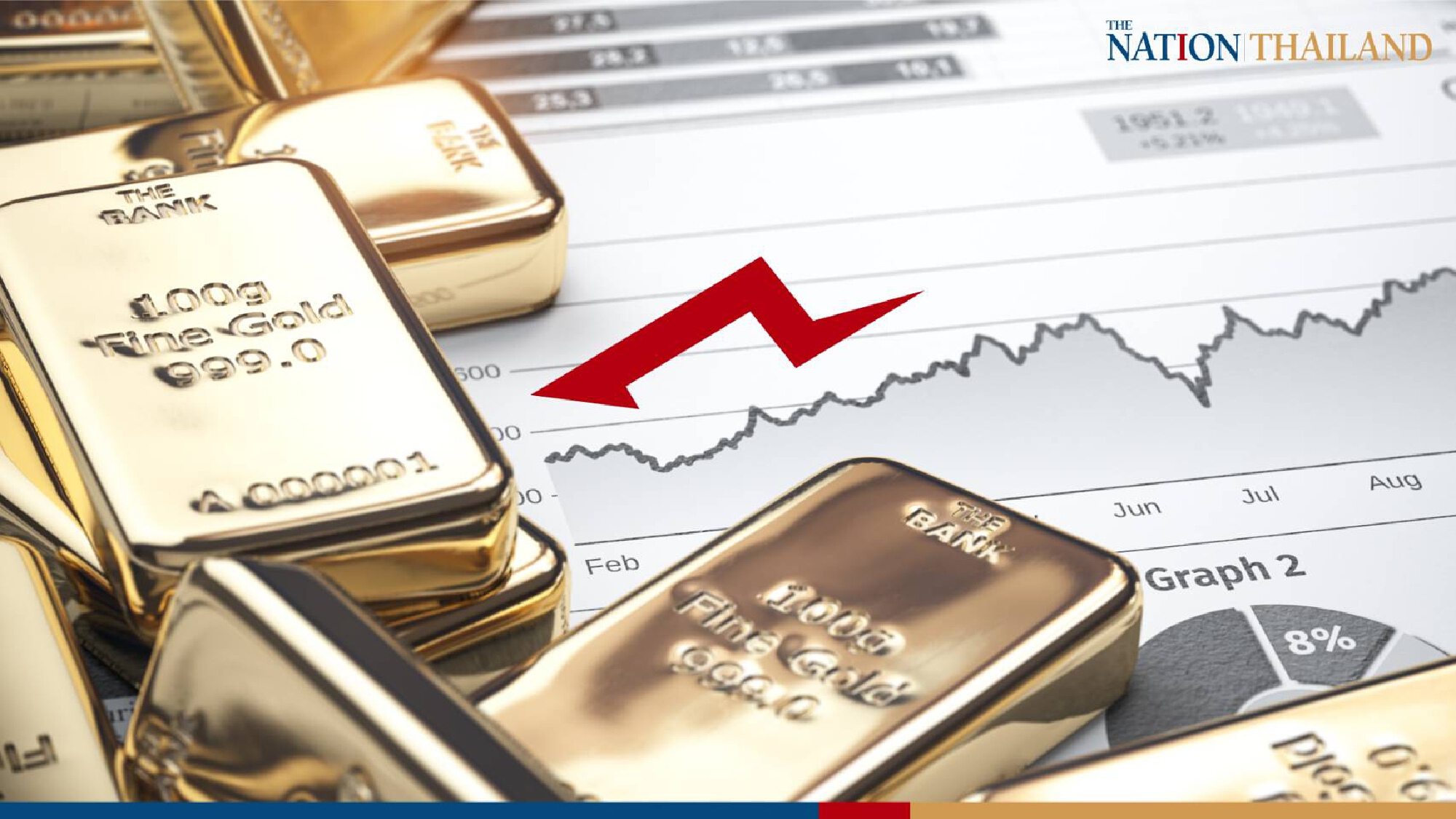
The price of gold in Thailand slumped by THB350 per baht weight in morning trade on Friday due to the strengthening dollar and strong US economic data, triggering mass sell-offs of the precious metal.
The Gold Traders Association report at 9.25am showed buying price of a gold bar at THB27,500 per baht weight and selling price at THB27,600, while gold ornaments were priced at THB26,999.96 and THB28,100, respectively.
At close on Thursday, the buying price of a gold bar was THB27,850 per baht weight and selling price at THB27,950, while gold ornaments were priced at THB27,348.64 and THB28,450, respectively.
Spot gold on Friday was US$1,863 (THB58,197) per ounce compared to Thursday when it dropped by $36.6 to $1,873.3 per ounce.
Hong Kong gold price on Friday dropped by HK$230 to $17,300 (THB69,661) per tael, the Chinese Gold and Silver Exchange Society reported.
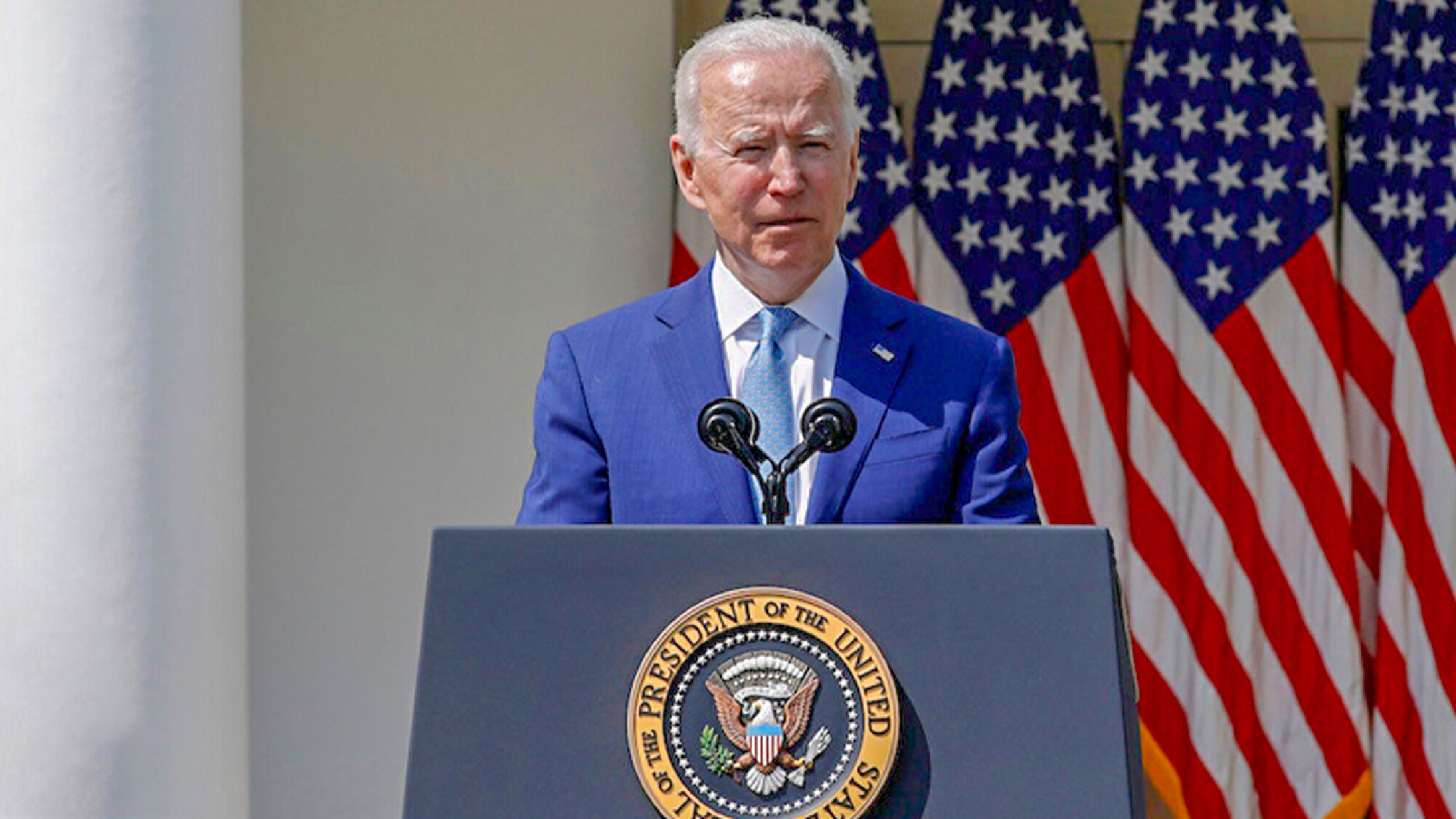
U.S. equities fell Thursday as investors digested a raft of economic data and a report President Joe Biden may be open to a lower corporate tax rate than 28%.
The S&P 500 rose from session lows after Biden was said to have pitched a 15% minimum tax on U.S. corporations as a way to fund a bipartisan infrastructure package. However, the bounce wasn’t enough to erase earlier declines on concerns the Federal Reserve may withdraw its support sooner than expected. An ADP report showed payrolls at U.S. firms gained by the most in nearly a year, while additional figures on the economic health of the services sector rose to the highest on record.
The dollar was stronger. Commodities, including gold and copper, were lower. And Treasuries fell. Meanwhile, the rally in so-called meme stocks including AMC Entertainment Holdings Inc. began to fade.
With U.S. equities locked in a tight range for the past month, investors are on the lookout for any signs that the Fed might start to taper its asset purchases. St. Louis Fed President James Bullard said Thursday the U.S. labor market might be tighter than suggested by the current unemployment rate. Up next, all eyes will be on Friday’s jobs report after separate data Thursday indicated strength was afoot. U.S. jobless claims dipped below 400,000 for the first time during the pandemic last week.
“With seemingly all systems go on the jobs front, the economy is flashing some very real signs that this isn’t just a comeback — expansion mode could be on the horizon,” said Mike Loewengart, managing director of investment strategy at E*Trade Financial. “So what does that translate to? Likely more pressure on the Fed to make a move — perhaps sooner than many thought from the outset.”
The weakness in U.S. trading followed declines in Europe and Asia on the back of mounting geopolitical tensions. Russia said it would eliminate the dollar from its National Wellbeing Fund to reduce exposure to U.S. assets. Meanwhile, the U.S. is set to amend an investment ban on companies linked to the Chinese military.
“The summer of uncertainty is on full display,” Dennis DeBusschere, head of portfolio strategy at Evercore ISI, wrote in a note. “10-year yields remain anchored and there is pressure on the USD, but leading indicators are strong, credit conditions are easy and market volatility remains low. That backdrop favors risk assets.”
These are some of the main moves in markets:
Stocks
– The S&P 500 fell 0.4% at 4 p.m. New York time, the most since May 19 as of 4 p.m. EDT
– The Nasdaq 100 fell 1.1%, more than any closing loss since May 12
– The Dow Jones industrial average fell 0.1%, more than any closing loss since May 25
– The MSCI World index fell 0.5%, more than any closing loss since May 19
Currencies
– The Bloomberg Dollar Spot Index rose 0.7%, more than any closing gain since May 12
– The euro slipped 0.7%, more than any closing loss since April 30
– The British pound slipped 0.5%, more than any closing loss since May 19
– The Japanese yen slipped 0.7%, more than any closing loss since May 12
Bonds
– The yield on 10-year Treasurys advanced four basis points, more than any closing gain since May 12
– Germany’s 10-year yield advanced two basis points to -0.18%
– Britain’s 10-year yield advanced four basis points to 0.84%
Commodities
– West Texas Intermediate crude was little changed
– Gold futures fell 1.9%, the most since March 31
Published : June 04, 2021
By : Syndication Washington Post, Bloomberg · Jennifer Bissell-Linsk
Biden expands Trump order by banning U.S. investment in Chinese companies linked to the military or surveillance technology
WASHINGTON – The Biden administration is expanding a Trump-era order that banned U.S. investment in Chinese companies that support Chinas military to include those selling surveillance technology, calling the entities a threat to U.S. interests and values.
Anew executive order released Thursday broadens prohibitions that Donald Trump’s administration enacted and moves authority for the ban to the Treasury Department from the Defense Department, to give it stronger legal grounding, senior administration officials said. They spoke on the condition of anonymity to preview the order before its release.
The new order “prevents U.S. investment from supporting the Chinese defense sector, while also expanding the U.S. government’s ability to address the threat of Chinese surveillance technology firms that contribute – both inside and outside China – to the surveillance of religious or ethnic minorities or otherwise facilitate repression and serious human rights abuses,” the administration said in a fact-sheet describing the ban, which takes effect on Aug. 2.
The executive order does not provide detail on how the surveillance technology has been used, but U.S. officials have frequently expressed alarm over facial recognition and other surveillance tools that China has employed against its Uyghur minority population, and against pro-democracy protesters in Hong Kong.
Chinese companies also export a range of technology that can be used for surveillance, a development that Secretary of State Antony Blinken has said is contributing to a global competition between “techno-democracies and techno-autocracies.”
The preservation of the Trump ban is another sign that President Joe Biden is continuing his predecessor’s tough approach toward China. Biden has also maintained import tariffs that Trump levied on many Chinese goods, and in March implemented a separate Trump executive order by sending subpoenas to several Chinese companies to seek information on possible national security risks.
“This looks to be another example of the Biden administration taking a Trump policy and improving and expanding it,” said Eric Sayers, a visiting fellow at the American Enterprise Institute.
But some lawmakers were skeptical that the order will be an improvement.
“We know for a fact that Wall Street is helping to finance the Chinese Communist Party’s effort to weaken and ultimately replace American leadership,” Sen. Marco Rubio, R-Fla., said in a statement. “The story of the past two decades has been America’s unwillingness to confront Beijing’s exploitation of our legal, political, and financial systems. While the administration updated the Trump-era policy in important ways, I am very concerned that President Biden’s Treasury Department is too closely aligned with Wall Street to take the actions necessary to prevent American savings from being used to fund the Chinese Communist Party.”
Senior administration officials said it was important to move the program to the Treasury Department because companies included on the Trump administration’s Defense Department list, including smartphone manufacturer Xiaomi, had successfully challenged their inclusion in court.
Treasury has more experience drafting sanctions programs “in a way that meets all the U.S. judicial and legal standards,” said one Biden official.
“Treasury has a regulatory structure to list names and enforce prohibitions. Defense doesn’t,” said Kevin Wolf, a former senior Commerce official who is now a partner at Akin Gump Strauss Hauer & Feld.
The Biden administration did not include Xiaomi on the list of 59 prohibited companies it released Thursday.
David Feith, who was a senior Trump administration official, called the Biden administration’s maintaining and broadening of the order “a welcome thing.”
Former deputy assistant secretary of state for East Asian and Pacific Affairs, Feith said “it reflects the strong degree of bipartisan concern in Washington about U.S. capital flows and U.S. economic ties with China’s military and its sprawling security and surveillance state.” But he also said the shift of enforcement from the Pentagon to Treasury might complicate implementation because “the Department of Defense takes a fundamentally national security-focused perspective on things and Treasury traditionally does not.”
Many of the military-linked companies banned by Biden also appeared on Trump’s list, including the defense contractor China Electronics Technology Group Corp. and the telecom companies China Mobile Communications Group and China Telecommunications Corp.
Biden’s order also bans investment in two companies – Hangzhou Hikvision Digital Technology and Huawei Technologies – on the grounds that they sell surveillance technology and support China’s military. The Trump order banned investment in those firms only on the grounds that they supported China’s military.
A number of the companies on the list are either state-owned or privately held, meaning that they don’t sell stock to outside investors. Yet some of these entities have issued or guaranteed bonds on international markets.
Huawei Investment & Holding Co., Ltd., for instance, acted as guarantor of a $5 billion bond issued in Hong Kong in 2017, according to the company’s website.
Like the Trump order, the Biden ban prohibits investment in Semiconductor Manufacturing International Corp., or SMIC, China’s largest manufacturer of computer chips. The company’s stock trades on the Hong Kong exchange.
The Trump administration last year banned U.S. technology exports to SMIC, saying they could benefit the People’s Liberation Army. Most modern weapons systems are powered by computer chips. SMIC at the time said it has “no relationship with the Chinese military and does not manufacture for any military end-users or end-uses.”
But the administration also failed to include some companies that were on the Defense Department list, notably Sugon, which the Commerce Department in mid-2019 subjected to export controls for “activities determined to be contrary to the national security and foreign policy interests of the United States.” Several lawmakers last year said that Sugon was a “key enabler” of China’s hypersonic glide vehicle testing program to aid Chinese nuclear weapons simulation testing. The New York Times last year reported that Sugon’s supercomputers help power the Urumqi Cloud Computing Center in Xinjiang, where Chinese authorities monitor massive amounts of surveillance footage.
Several other companies that appeared on the Pentagon list are absent from Treasury’s. They include Commercial Aircraft Corporation of China, Advanced Micro-Fabrication Equipment Inc., and China National Chemical Engineering Group Co.
The listed companies either didn’t immediately respond to requests for comment or couldn’t be reached for comment after hours in China.
Asked about the Biden order, details of which were reported earlier by Bloomberg, Chinese Foreign Ministry Spokesman Wang Wenbin told reporters on Thursday: “The U.S. should respect rule of law and the market, correct its mistakes, and stop actions that undermine the global financial market order and investors’ lawful rights and interests. China will take necessary measures to firmly safeguard Chinese enterprises’ legitimate and lawful rights.”
Biden administration officials said any U.S. investment in funds that contain the banned securities also will be prohibited.
The officials said they expect to place additional companies on the list, a move U.S. Sen. Tom Cotton endorsed in a statement to The Post. “The U.S. government must continue to expand this list of CCP-controlled companies, as well as harmonize the various restriction lists maintained by the Pentagon, Commerce, and Treasury departments,” Cotton said. “It’s imperative that the United States stop arming and funding the genocidal regime in Beijing.”
Published : June 04, 2021
By : The Washington Post · Jeanne Whalen, Ellen Nakashima
FPO urges small lenders to help ease borrowers’ burden
The Finance Ministry’s Fiscal Policy Office (FPO) called on pico-finance operators to give borrowers a break, especially since everyone is struggling due to the ongoing third wave of Covid-19.
Kulaya Tantitemit, FPO’s director general and Foreign Ministry’s spokesperson, said this latest wave has hit the economy very hard, affecting jobs and people’s daily lives.
Hence, she said, FPO is urging pico lenders to help ease borrowers’ burden by:
• Cutting down on repayment amount or extending the repayment period
• Turning short-term debts into long-term ones
• Granting debt moratorium or reducing the interest rate
She added that pico lenders have until June 30 to submit their financial statement for the 2019 fiscal year.
“FPO hopes this will help borrowers overcome the Covid-19 crisis,” she said.
Feds beige book reports pickup in recovery, price pressures
The pace of the U.S. recovery picked up somewhat in the past two months, sparking price pressures as businesses contended with worker scarcity and rising costs, the Federal Reserve said.
“The national economy expanded at a moderate pace from early April to late May, a somewhat faster rate than the prior reporting period,” the U.S. central bank said in its “beige book” survey released on Wednesday. “Overall price pressures increased further since the last report. Selling prices increased moderately, while input costs rose more briskly.”
The report was based on information collected by the Fed’s 12 regional banks on or before May 25 and compiled by the Cleveland branch.
Diane Swonk, chief economist at Grant Thornton LLP, wrote in a tweet that the survey shows demand continues to improve faster than supply across the board, which is showing up in prices. “It’s gong to be a hot summer for prices and wages — real test is whether we see shortages persist only 4Q,” she said.
Fed officials are considering how quickly to trim monetary policy support with an increased pace of vaccinations brightening the U.S. outlook. The Federal Open Market Committee will update its quarterly forecasts for interest rates, growth, unemployment and inflation at its June 15-16 gathering.
The beige book reported that some businesses were able to take advantage of stronger demand to pass along higher input costs to customers.
“Looking forward, contacts anticipate facing cost increases and charging higher prices in coming months,” the survey said.
Several policy makers including Vice Chair Richard Clarida have said central bankers may be able to begin discussing the appropriate timing of scaling back their bond-buying program at upcoming policy meetings. Patrick Harker, president of the Philadelphia Fed, said earlier on Wednesday that officials should get that debate underway.
The report cited multiple anecdotes of companies struggling with higher input prices, supply chain disruptions and a shortage of workers. In St. Louis, for example, a group of restaurants held a job fair to fill more than 100 positions — but only a dozen applicants showed up.
Leisure and hospitality firms saw increased business as vaccinated Americans sought to travel more frequently. In New York, hotel occupancy topped 50% for the first time since covid-19 began and nightly room rates rose, while museums and restaurants saw a rebound.
The FOMC has committed to only begin scaling back the $120 billion monthly pace of its asset purchases after there’s “substantial further progress” on inflation and employment.
U.S. central bankers will get a fresh update on the status of the labor market on Friday. The May employment report is expected to show the addition of 653,000 new jobs, with the unemployment rate dropping to 5.9%, according to a Bloomberg survey of economists.
U.S. consumer prices showed hotter-than-expected inflationary pressures in April. Fed officials have largely written them off as owing to transitory factors associated with supply-chain bottlenecks and the reopening of service industries as the pandemic recedes.
The Fed’s forecasts released in March showed officials don’t expect to raise interest rates from near zero before the end of 2023, even as they sharply upgraded projections for growth and employment this year.
Published : June 03, 2021
By : Syndication Washington Post, Bloomberg · Steve Matthews, Payne Lubbers
U.S. equities rose on Wednesday as the tussle between economic optimism and inflation concern continued to play out in markets.
The S&P 500 and Nasdaq 100 faded from early gains as traders awaited fresh catalysts in economic data, including the U.S. jobs report due later this week. AMC Entertainment Holdings Inc., a favorite among retail traders, rallied. Tesla Inc. fell following a reported loss in electric-vehicle market share. And energy stocks were among the best performing after WTI crude futures gained.
As the U.S. economy continues to claw its way back from the pandemic, traders are looking for fresh signals on whether that growth might translate into inflation and ultimately prompt the Federal Reserve to withdraw support.
Treasuries rose and the U.S. dollar erased gains after a trickle of Fed updates. The central bank’s beige book reported the U.S. economy expanded at a moderate pace in April and May. Philadelphia Fed President Patrick Harker said it may be time to “think about thinking about” tapering, and Richmond Fed President Thomas Barkin said he was watching for signs of wage pressures.
Coming up, Friday’s U.S. payrolls data will provide the next hint as to whether the central bank is likely to scale back its monthly asset purchases.
“It seems like they’re starting to lay the ground work for tapering,” Aaron Clark, portfolio manager at GW&K Investment Management, said of the Fed’s recent signaling. “So I think investors are just in a holding pattern right now.”
The last jobs report weighed on Treasuries and dollar, said Emily Roland, co-chief investment strategist at John Hancock Investment Management. “We’ll have to see if that narrative reverses.”
These are some of the main moves in markets:
Stocks
– The S&P 500 rose 0.1%, more than any closing gain since May 26 as of 4:01 p.m. EDT
– The Nasdaq 100 rose 0.2%
– The Dow Jones industrial average rose 0.1%, climbing for the fifth straight day, the longest winning streak since May 7
– The MSCI World index rose 0.1% to a record high
Currencies
– The Bloomberg Dollar Spot Index fell 0%
– The euro was little changed at $1.2208
– The British pound rose 0.1% to $1.4169
– The Japanese yen was little changed at 109.56 per dollar
Bonds
– The yield on 10-year Treasurys declined two basis points, more than any closing loss since May 25
– Germany’s 10-year yield declined two basis points to -0.20%
– Britain’s 10-year yield declined three basis points to 0.80%
Commodities
– West Texas Intermediate crude rose 1.5% to $69 a barrel
– Gold futures rose 0.3% to $1,911 an ounce
Published : June 03, 2021
By : Syndication Washington Post, Bloomberg · Jennifer Bissell-Linsk
The $100 billion market for carbon offsets is struggling to be born
Global warming is the worlds biggest market failure, so the solution might just be better trading. On one side of the trade would be the companies clogging the atmosphere with heat-trapping gases; on the other countless projects to eliminate the problem by planting trees or building machines that capture carbon dioxide.
Create a market that turns a ton of removed carbon into a commodity just like corn or copper, and money will flow from the emitters to the fixers.
That’s the theory behind the new carbon-offset market being conceived by Mark Carney, a former governor of the Bank of England, and Bill Winters, the chief executive of Standard Chartered. The two financial veterans late last year set up a rule-making taskforce populated by hundreds of bankers, airline executives, sustainability experts, commodities traders, scientists and other business leaders.
Carney says the unified market for carbon offsets could be worth $100 billion by the end of the decade, up from about $300 million in 2018. He and Winters plan to use the findings of the private-sector Taskforce on Scaling Voluntary Carbon Markets to help launch a pilot program before November, when the next round of global climate talks will be held in Scotland.
But the taskforce’s closed-door deliberations have dragged on for months. With time running low, there’s sharp debate on fundamental questions.
Interviews with more than a dozen people involved in this new initiative as well as internal emails seen by Bloomberg Green reveal impasses over make-or-break issues such as which companies can use offsets to reach their climate goals and whether credits based on avoiding emissions – the vast majority of offsets currently available – should be part of net-zero plans. (Bloomberg Philanthropies has pledged funding for the initiative.)
“The more time passes, the more pressure there is,” said Eli Mitchell-Larson, an Oxford University environmental scientist helping to develop the rules for this new market. He said some leading members are rushing to start trading without first agreeing on how offsets fit into the climate fight. “People want to buy a product.”
Getting the contours of the market right could create a powerful, standardized weapon in the fight against rising temperatures – a tool that can be embraced by scores of companies that have pledged to reach net-zero emissions. A key objective is to come up with a “core carbon principle” label that could be used to mark offsets that meet its standards, akin to how groceries might be labeled organic. Members have spent months arguing over the criteria for inclusion, with sharp divides over how high to set the bar.
If Carney’s forecast for market demand proves correct, hundreds of companies will soon begin a buying spree for carbon offsets. Just the 18 oil majors that already have net-zero goals will eventually need to erase 3.3 billion metric tons of annual emissions, according to clean-energy researchers at BloombergNEF. That’s nearly 18 times the amount of carbon offsets issued in 2020.
But getting the new market rules wrong could be even more powerful – and deeply damaging. To succeed as a clearinghouse for greenhouse-gas removals, what’s sold on the market has to be beyond doubt. “If they generate a lower carbon benefit than they claim and the company is still emitting, well then you end up with more emissions than you would have otherwise,” said Mitchell-Larson. “We have to be open to the idea that the voluntary market might fail.”
That makes ongoing debates about what can and can’t be traded crucially important, especially if respected corporate participants or climate organizations end up declining to support the taskforce’s nonbinding recommendations. In one email exchange between members, Unilever’s representative, Thomas Lingard, suggested the consumer-product giant would consider withdrawing support if there wasn’t more transparency on decisions.
The job for Carney and Winters now is to resolve disagreements among the 400-plus taskforce participants, even as many important players remain at odds. Interviews and statements from the two taskforce organizers, rank-and-file members and experts, some of whom requested anonymity, show the fault lines that remain with just months left to finish the work.
Here’s a look at the four biggest questions hanging over the taskforce.
–Who gets to buy offsets?
Customers in the U.K. filling up their tanks with Royal Dutch Shell’s gasoline today will see advertisements about the beneficial role of carbon offsets. Pay a small fee at the pump, drivers are told, and their emissions are neutralized by funding a forest program in Peru. There’s more than marketing happening here: Shell is one of a growing group of companies with commitments to zero out emissions by mid-century, and purchasing offsets is a significant part of the solution.
The danger is that cheap offsets can be used to avoid the hard work of actually cutting emissions. The practice is so common that the certificates are often described by critics as “papal indulgences,” reminiscent of the way Catholics in the Middle Ages made payments to the Church to eliminate the stain of sinful deeds.
For weeks, taskforce participants have been mired in a debate over when corporate emitters can tap the offset market to cover their ongoing climate sins. Should companies be allowed to balance their carbon ledgers by purchasing offsets without first exhausting all other options to clean up their business?
“That’s not our job to answer that question,” Winters told Bloomberg Green in an interview on May 19. “The whole subject of corporate claims was one that we always recognized was not part of the core mandate of the taskforce.”
Yet last month organizers of the taskforce appeared to backtrack, proposing a statement that would wade into the debate by suggesting that companies should be able to use offsets to boost their climate credentials. Some taskforce members refused to put their names on the document because it verged on greenwashing. A sizeable faction argued that companies shouldn’t be able to use offsets if they’re not taking direct steps to cut pollution.
Carney has even expressed this view himself: “You can’t buy offsets, as a company, unless you are reducing your absolute emissions, unless you have a high-quality net- zero plan,” he told Bloomberg in April.
The comments from Winters and Carney don’t reflect conflict so much as the complexity of an issue with broad disagreement. Winters as taskforce chair now has more direct involvement in the work; Carney, through a spokesperson, said he’s not a leader or member of the taskforce but an “initiator” who acted as an organizer.
Sonja Gibbs, an official from the International Institute of Finance, which helps oversee the taskforce, acknowledged the difficulty of settling the question of who can access the market. “It is clear that we will not be able to reach 100% consensus,” she wrote in an email to members.
–Will climate players endorse the rules?
To be taken seriously, the taskforce has to gain the endorsement of an influential gatekeeper in the world of corporate climate accounting. The Science-Based Targets initiative, or SBTi, is a group of experts that sets widely respected standards on what it takes for a company to reach net zero. SBTi doesn’t approve the use of carbon offsets for short-term climate plans until a company has tried every other available fix, be that installing wind turbines, boosting efficiency or switching to cleaner fuel.
The issue of whether a global offset market should accommodate all corporate buyers is so sensitive that taskforce adviser Cynthia Cummis from World Resources Institute, an SBTi member group, would only address the topic in general terms. “It’s a company’s responsibility to reduce emissions,” she said, cautioning against “cheap offsets” that would supplant emissions cuts. SBTi might one day support the use of offsets but only for “residual emissions” that can’t be easily cut, Cummis said, citing air travel as an example.
A split could grow into a bigger problem. Companies with the most widely lauded net-zero goals, such as Unilever and Microsoft, have in-house teams that assess potential offset projects. It’s a bespoke approach that many smaller companies can’t afford. If these well-regarded companies continue to vet projects without adopting the common standard, one senior member of the taskforce predicted that the market won’t take off.
–Who governs a global voluntary market?
Financial markets are overseen by government regulators like the U.S. Securities and Exchange Commission, which ensure manipulation and fraud are punished. Carney and Winters are advocating for a voluntary market – and that means no government oversight.
Regulating a carbon-offset market isn’t just about stopping rogue traders. The projects themselves can be a source of fraud and abuse. Researchers at the nonprofit group CarbonPlan recently discovered $400 million worth of offsets had been sold in California without absorbing a single ton of CO₂. The Finland-based nonprofit Compensate found 90% of offsets fail to deliver or come with damaging side effects for local communities.
Verifying that an offset corresponds to a ton of CO₂ removed from the real-world atmosphere is a problem climate experts have been trying to solve for years. The new market would only compound this difficulty by demanding clear answers to thorny questions. Should the market allow trade in forest-protection offsets linked to well-documented failures? For how long should an offset remain valid after the original carbon removal?
The clock is now ticking for Carney and Winters as they prepare to finish the preparatory work and disband the taskforce. The hope is that by the end of June the group will have agreed on a set of recommendations for a smaller and more permanent governance. Winters said it hasn’t been decided who will sit on the governing body.
Climate experts participating on the taskforce have expressed concern that finance veterans don’t necessarily have the skills to deal with all the scientific complexities. “It’s overly simplistic to think we might get better results by requiring the presentation of some kind of return-on-investment analysis,” scientist Derik Broekhoff of the Stockholm Environment Institute wrote in an internal taskforce feedback document. In an interview, he said there’s too much focus on enlarging the market without enough concern for the trade-off between quality and quantity.
Mitchell-Larson, the Oxford scholar, said the taskforce hasn’t sorted out how to screen against poorly managed projects. During discussions he’s participated in, he said members couldn’t agree on whether to allow some projects that claim to prevent deforestation. Large offset brokers such as Gold Standard and Carbon Direct already bar such credits.
–What about all those ‘avoided emissions’?
The multiple roles occupied by Carney point to another hurdle in setting up the carbon-offset market. He currently serves both as British Prime Minister Boris Johnson’s top climate adviser and a convening figure behind the taskforce. Plus, Carney is a vice chair at Toronto-based Brookfield Asset Management, which manages a half-trillion dollar portfolio with an enormous stake in renewable energy.
Brookfield isn’t directly participating in the taskforce but does own Hartree Partners, a commodities-trading firm that is taking part in the process. While Carney has said there’s no conflict of interest, his heavyweight status as leading figure in climate finance means his statements are closely watched by everyone taking part in these debates.
As an organizer of the COP26 climate talks hosted by the U.K., Carney is obliged to remain neutral ahead of negotiations over offsets used by governments and corporations as laid out in Article 6 of the Paris Agreement. Alok Sharma, the U.K. minister in charge of COP26, has said neither Carney nor the taskforce will inform the government’s position on Article 6. But it’s a fine line to tread.
Carney said in an April interview that the private sector will adhere to decisions about offsets made at COP26. The taskforce said early on that Carney wouldn’t participate in talks that overlapped with Article 6, according to a member who asked not to be named. One result, this person said, is that senior figures behind the taskforce haven’t taken a firm stance on crucial issues such as what counts as a credible offset.
Instead, members have looked at Carney’s public statements for clues. In February, he walked back statements claiming Brookfield had used “avoided emissions” from clean-energy projects to cancel out its entire carbon footprint, including ownership stakes in dozens of fossil-fuel assets.
Avoided emissions are widespread – and controversial. Most projects designed to generate carbon offsets seek to prevent trees from being cut down. In other cases a company can claim credit for switching from fossil fuel to cleaner energy. Offsets from avoided emissions made up 96% of all contracts issued last year, according to data compiled by the taskforce.
But to effectively tackle climate change, the majority of offsets sold will have to actually remove CO₂, by planting forests or using technology that can suck carbon out of the air. Groups like SBTi and most climate scientists do not accept avoided emissions. Some companies inside the taskforce are still arguing in favor of avoided-emission credits.
That’s a concern for member Owen Hewlett, chief technology officer of offset broker Gold Standard, which is backed by the World Wildlife Fund for Nature and therefore linked to SBTi. “Pressing others to give recognition to companies for using those credits – it’s like having part of an answer and then demanding a question is made to fit it,” said Hewlett. “You can’t offset your way to net zero.”
Published : June 03, 2021
By : Syndication Washington Post, Bloomberg · Jess Shankleman, Akshat Rathi
The Stock Exchange of Thailand (SET) Index closed at 1,617.55 on Wednesday, down 1.04 points or 0.06 per cent. Transactions totalled THB101.45 billion with an index high of 1,627.67 and a low of 1,612.94.
In the morning session, Krungsri Securities expected the day’s index to rise to between 1,630 and 1,635 points on hopes of economic recovery as mass Covid-19 vaccinations gather strength worldwide.
Stocks also gained positive sentiment from the rising oil price amid expectations of increased demand, it added.
However, the index would be under pressure over signs of overbought stocks, Krungsri Securities said.
The 10 stocks with the highest trade value today were KBANK, PTT, SIRI, OR, HANA, ADVANC, SUPER, KCE, III and PTTGC.
Other Asian indices were mixed:
Japan’s Nikkei Index closed at 28,946.14, up 131.80 points or 0.46 per cent.
China’s Shanghai SE Composite Index closed at 3,597.14, down 27.58 points or 0.76 per cent, while the Shenzhen SE Component Index closed at 14,857.91, down 176.87 points or 1.18 per cent.
Hong Kong’s Hang Seng Index closed at 29,297.62, down 170.38 points or 0.58 per cent.
South Korea’s KOSPI closed at 3,224.23, up 2.36 points or 0.073 per cent.
Taiwan’s TAIEX closed at 17,165.04, up 2.66 points or 0.015 per cent.
SET expected to rise today on economic recovery hopes
The Stock Exchange of Thailand (SET) Index rose by 5.80 points or 0.36 per cent to 1,624.39 at 10am on Wednesday. The volume of transactions was THB8.42 billion with an index high of 1,626.98 points and a low of 1,623.52.
Krungsri Securities expected the day’s index to rise to between 1,630 and 1,635 points on hopes of an economic recovery as mass Covid-19 vaccinations gather strength worldwide.
It added that the index also gained positive sentiment from the rising oil price amid expectations of increased demand.
However, the index would be under pressure due to signs of overbought stocks, Krungsri Securities said.
It recommended investors buy:
▪︎ PTT, PTTEP, PTTGC, Top, IVL and Banpu, which benefit from the global economic recovery.
▪︎ BCH, CHG, BDMS, Mint, Centel, AOT, CPAll, HMPro, CPN and CRC, which benefit from the country’s reopening.
▪︎ KCE, IRPC, STA and STGT, which are expected to be listed on the SET50 Index in the middle of June.
▪︎ AAV, BLA, Ichi, PSL, PTL, Singer, Stark, STGT and Synex, which are expected to be listed on the SET100 Index mid-June.
The SET Index closed at 1,618.59 on Tuesday, up 25 points or 1.57 per cent. Transactions totalled THB116.03 billion with an index high of 1,620.53 and a low of 1,598.66.
Thai consumers are worried about the uncertain economic situation caused by the third Covid-19 wave, but despite a steady decrease in overall spending, they seem to be willing to pay for food and goods such as smartphones that can be used to make money, according to a survey by Hakuhodo Institute of Life and Living Asean (Thailand) in collaboration with Spa-Hakuhodo that studied consumer spending in Thailand as of June 2021.
They tend to enjoy shopping either online or offline as a route to stress relief, Hakuhodo said in a press release announcing the survey results on Tuesday.
Consumers have also become less happy due to the prolonged epidemic situation, having managed to trim unnecessary spending and seeking ways to earn extra income in the future.
“The third wave of Covid-19 has caused Thais intense anxiety, Hakuhodo Institute business director Chutima Wiriyamahakul said.
The institute’s “Thailand Consumption Forecast” online survey of 1,200 male and female respondents aged between 20 and 59 from six regions across the country indicated two key points on consumer spending behaviour:
1. Consumers have braced for the pandemic, but believe life must go on. The third wave has forced people to spend less compared to April 2021. Although overall spending has decreased, basic needs such as those for food, drinks and other necessities appear to have increased. People have to pay for gasoline to get to work and many of them decided to stop dining out to save money and reduce the risk of contracting Covid-19.
The level of demand for spending in Thailand is currently 54 out of 100, dropping 2 points from 56 in the previous survey. Meanwhile, the current happiness level remains unchanged at 65, similar to the previous survey, but has been estimated to decline in the next three months due to increased concerns regarding the spread of Covid-19.
2. Many have delayed big item purchases, but are willing to pay for something smaller to keep them happy. High-priced items, for instance, home appliances and smartphones, are always in demand despite the decrease in spending. Smartphones and related gadgets are considered a necessity since they help people, particularly those selling products and services online. Additionally, as shopping can relieve stress, mid-year sales campaigns launched by several shopping centres have attracted consumers to buy products at cheaper prices. According to the survey, beauty products have also gained greater popularity among Thai consumers.
People have become more cautious in spending as the third Covid-19 wave is nothing short of an unprecedented crisis, where five best-selling products or services amid the pandemic are food (28 per cent), daily necessities (16 per cent), smartphones (8 per cent), household appliances (6 per cent), and beauty products (5 per cent), explained Nattakarn Wattanamongkolsil, strategic planning director, and Nagorn Chotisangasa, associate strategic planning director of Spa-Hakuhodo.
Categorised by region, consumers in Bangkok and its vicinity tend to put on hold spending during the crisis, similar to those living in the central and southern regions. The northern and northeastern regions have also experienced reduced demand in spending. Meanwhile, the spending level in the east has dropped 8 points to 51 from 59 in the previous survey. This resulted from local business people hoarding inventories to support the tourist season in April, but tourism has since been restrained due to the third wave.
When classified by age, consumers aged 30-39 have slowed their spending as most are main earners in their families and have no financial stability compared to those aged 40 and above. People in this age group too have limited spending on clothes, travel and eating out, the survey showed.
It also found that the third wave is still the most-discussed subject, increasing to 83 per cent from 59 per cent in the previous survey. Some people enjoy talking about political issues, especially those related to the coronavirus pandemic, with 4 per cent of the level of interest.
The survey also revealed that Thai consumers are eager to seek new opportunities to survive in the future, where interesting topics vary from vaccine distribution to new ways to earn more money, including investing in stocks and even bitcoin.
Projections on consumer spending in Thailand are surveyed every two months by Hakuhodo Institute and its affiliates with the objective to keep monitoring spending trends in the kingdom.








 Thais worried about uncertain economic situation, limit overall spending: Hakuhodo survey
 Thais worried about uncertain economic situation, limit overall spending: Hakuhodo survey
 Thais worried about uncertain economic situation, limit overall spending: Hakuhodo survey
