Thailand offers extra incentives to foreign filmmakers
The pandemic has hit Thailand’s tourism sector very badly, with revenue plummeting sharply from the lack of foreign tourists.
However, the country has managed to generate 1.21 billion baht from 31 foreign films made in the country from January to April.
On Friday, the Department of Tourism revised the eligibility requirements for foreign filmmakers in Thailand and is now offering them up to 20 per cent cash rebate.
To be eligible for the rebate, foreign filmmakers and crew should have:
• Received permission from the department to make films in Thailand;
• Should be spending at least 50 million baht on Thai-registered businesses and individuals.
Eligible filmmakers and crew will get an extra rebate if they can do any of the following:
• Employ Thais in key creative positions and as crew;
• Represent Thailand in a positive manner;
• Promote local destinations in line with the Department of Tourism’s policy;
• Spend at least 100 million baht in Thailand and commence production before December 31, 2022.
The department is in the process of welcoming three filmmakers and crew to produce films in Thailand, with the expectation of generating 200 million to 500 million baht per film.
SET buoyant amid hopes of economic recovery, mass vaccinations
The Stock Exchange of Thailand (SET) Index rose by 9.60 points, or 0.60 per cent, to 1,621.13 at 10am on Monday. The volume of total transactions was THB8.98 billion with an index high of 1,623.88 and a low of 1,618.17.
Krungsri Securities expected the index to rise to 1,620 and 1,625 points on hopes of an economic recovery as mass Covid-19 vaccinations gather strength worldwide and the price of oil continues to rise.
However, it predicted that the uncertainty over increasing inflation and volatility in foreign funds flow would pressure the index.
It recommended that investors buy:
▪︎ PTT, PTTEP, PTTGC, TOP, IVL and BANPU, which benefit from the global economic recovery.
▪︎ BCH, CHG, BDMS, MINT, CENTEL, ERW, AOT, CPALL, HMPRO, CPN and CRC, which would benefit from the country’s reopening.
▪︎ KCE, IRPC, STA and STGT, expected to be listed on the SET50 Index in mid-June.
▪︎ AAV, BLA, ICHI, PSL, PTL, SINGER, STARK, STGT and SYNEX, expected to be listed on the SET100 Index in mid-June.
The SET Index closed at 1,611.53 on Friday, down 6.02 points or 0.37 per cent. Transactions totalled THB106.35 billion with an index high of 1,622.89 and a low of 1,611.34.
As mass vaccination drive begins, baht expected to move sideways
The baht opened at 31.16 to the US dollar on Monday, strengthening from 31.28 at close on Friday.
The Thai currency is likely to move between 31.10 and 31.20 during the day and between 31.05 and 31.35 this week, Krungthai Bank market strategist Poon Panichpibool said.
He predicted that the baht would move sideways due to the dollar’s status and funds inflows from foreign investors in Thailand.
Poon said the dollar could fluctuate and strengthen if the market shows concern about inflation.
However, the dollar has limited upward potential, as other currencies would tend to strengthen as well if economic information from each region shows evident recovery.
Poon explained that one factor that could impact the baht was the Covid-19 vaccination drive in Thailand. If the operation goes smoothly, foreign investors would be confident to invest in Thailand.
In the initial phase of the mass vaccination drive, there could be hiccups hence the market strategist believes the Thai currency will move sideways.
Gold opens steady after dropping by THB250 last week
The price of gold in Thailand in morning trade on Monday was unchanged from Saturday close despite mass buy-ups of the precious metal after the US non-farm payroll in May was lower than expected.
The Gold Traders Association report at 9.25am showed buying price of a gold bar at THB27,750 per baht weight and selling price at THB27,850, while gold ornaments were priced at THB27,257.68 and THB28,350, respectively.
The price had dropped by THB250 per baht weight last week..
Spot gold price on Monday was US$1,886 (THB58,877) per ounce compared to Friday when it rose by $18.7 to $1,892 per ounce.
Hong Kong gold price on Monday rose by HK$210 to $17,490 (THB70,385) per tael, the Chinese Gold and Silver Exchange Society reported
2020 tourism revenue of 10 pilot provinces to be reopened this year
Along with the mass vaccination campaign from June 7, the government is also working on reopening the country for tourism.
Recently, the Centre for Economic Situation Administration approved the road map to reopen 10 pilot provinces to vaccinated tourists, without quarantine, from October.
The Nation Thailand looks at tourism revenue of the 10 pilot provinces last year:
Bangkok: THB133.76 billion (down 65.22 per cent)
Chiang Mai: THB42.47 billion (down 36.82 per cent)
Prachuap Khiri Khan: THB16.10 billion (down 43.49 per cent)
Phetchaburi: THB13.54 billion baht (down 49.63 per cent)
Container shortage a bigger worry for shippers council than factory Covid clusters
The Thai National Shippers Council (TNSC) has revised upward its forecast for Thai exports in 2021, from 4-6 per cent growth to 6-7 per cent.
Chaichan Charoensuk, chairman of TNSC, said in an exclusive interview that the export sector was the main engine to help drive the Thai economy towards positive growth this year.
In 2020, Thailand’s gross domestic product (GDP) contracted by 6 per cent.
Thai exports grew 8.4 per cent in May, valued at $24 billion, the highest in terms of value in 28 months. The boost comes from the recovery in the global economy and trade, especially the US and China.
Thai exports that continued to expand well were rubber and related products, automobile products, electrical appliances, electronic devices, plastic pellets, etc.
Excerpts from the interview with Chaichan:
Do you think the Ministry of Commerce will adjust the export target from the previously estimated 4 per cent?
Of course, they set it too low. We in the private sector had a meeting with the Department of International Trade Promotion on May 18 to assess the situation together. The private sector confirmed that the number was probably around 6-7 per cent.
Part of the risk factors are the lack of containers for exports and the high freight rates?
Yes, the problem is still there. Also, there is the problem of labour shortage and electronic chip shortage in the automotive industry. Steel prices continued to rise and basic raw materials are all higher — plastic, steel, paper or oil. However, they do not affect trade competitiveness because every country is going up the same way. Therefore, entrepreneurs have to adjust the price, and they have to plan well the production, competing on cost, price and quality.
Are you worried about the Covid-19 cluster in many factories?
Yes, I’m worried. Here, we need to speed up the vaccination process. I leave the state to accelerate the vaccination to cover the population quickly, so that our main engine of growth is not affected. Export is the country’s last engine that still works well.
Covid factors and other factors — what are you most concerned about?
I’m worried [about Covid], but less worried compared to other factors, such as the shortage of high freight containers and shortage of raw materials, such as a shortage of chips in the automotive industry and used in other industries, as well as labour shortage.
Is there still competition for containers with other countries, such as China and Vietnam?
Yes, with Vietnam. China is still the main one. They offer containers a high price because their exports are going well. Now, it’s a seller’s market. They will set the price and the quantity. The industry in Vietnam is also hot now with more exports than Thailand.
Will you have to work together with the Ministry of Commerce to create an export push plan for the rest of this year?
We talk to them periodically. In the short term, it is necessary to come up with a joint plan after the post-Covid crisis to expand our exports. We may have to discuss a strategic plan after economic recovery in the third or fourth quarter.
Will the government’s THB500 billion loans be enough to deal with the third round of Covid?
Mostly enough. I would say enough. It depends on what are the plans to make it more tangible than in the past because we have already spent trillions. For the THB500 billion to be issued, I hope there will be a plan to use it to truly stimulate the economy or to put it in the hands of those affected, the real victims. We are worried that they will not reach those who are truly affected, the root of the problem.
Yellen says inflation could reach 3% this year as recovery continues
WASHINGTON – Treasury Secretary Janet Yellen said Saturday that inflation could climb as high as 3% this year as the economy recovers from the depths of the covid recession.
For months, the White House and Federal Reserve have expected prices to rise as consumer demand rebounds, supply chains struggle to catch up and Biden’s $1.9 trillion stimulus package infuses through the economy.
Yellen, Fed Chair Jerome Powell and other top policymakers insist the price pops are temporary and that the current uptick doesn’t reflect a dangerously persistent new trend.
Still, Saturday appeared to be the first time the Biden administration projected what inflation could be through 2021.
“We have in recent months seen some inflation, and we — at least on a year-over-year basis — will continue, I believe through the rest of the year, to see higher inflation rates, maybe around 3 percent,” Yellen said following a meeting of G-7 finance ministers in London. “But I personally believe that this represents transitory factors.”
The Fed, which is charged with keeping prices stable and employment low, strives for a 2% annual inflation target. But the central bank has sent a clear message that it will not rush to combat inflation and raise interest rates until there has been substantial progress in the labor market. The economy is still down 7.5 million jobs since the pandemic took hold.
The Fed’s commitment will be tested depending on how long prices continue to climb – and how high they go. Prices were up by 3.6% in April compared with a year ago.
Powell and others give a few reasons for why inflation is on the upswing, and why the Fed isn’t worried about bringing it down too soon. Consumer demand for goods and services – from airline tickets to restaurant reservations – is rebounding as people unleash pent-up savings. Meanwhile, the supply side of the equation is taking longer to pick up. Those bottlenecks are expected to ease as factories ramp back up to full capacity and workers come back on the payrolls. But it won’t happen right away.
Economists also expect inflation figures to taper off in the year to come, as the super-low readings from the pandemic’s early days shift out of the calculation.
Meanwhile, many Republican lawmakers and some prominent economists warn that steadily rising inflation is cause for alarm. Among the most vocal Democrats on the issue is Lawrence H. Summers, a treasury secretary under President Bill Clinton and top economic adviser to President Barack Obama. Late last month, Biden privately called Summers to talk about Summers’ concerns around overheating the economy.
Interest rate policy falls squarely to the Fed, and the central bank’s independence is supposed to cushion it from political influence in Washington. For now, though, the administration and Fed are aligned on letting the economy run hot and emphasizing that the recovery still has a long way to go.
“We will watch this very carefully,” Yellen said. “I don’t want to say this is ‘mind absolutely made up and closed.’ We’ll watch this very carefully, keep an eye on it and try to address issues that arise if it turns out to be necessary.”
G-7 countries reach agreement on 15% minimum global tax rate
The G-7 group of advanced economies announced an historic accord to set a minimum global corporate tax rate on Saturday, taking a first step to reverse a four-decade decline in the taxes paid by multinational corporations.
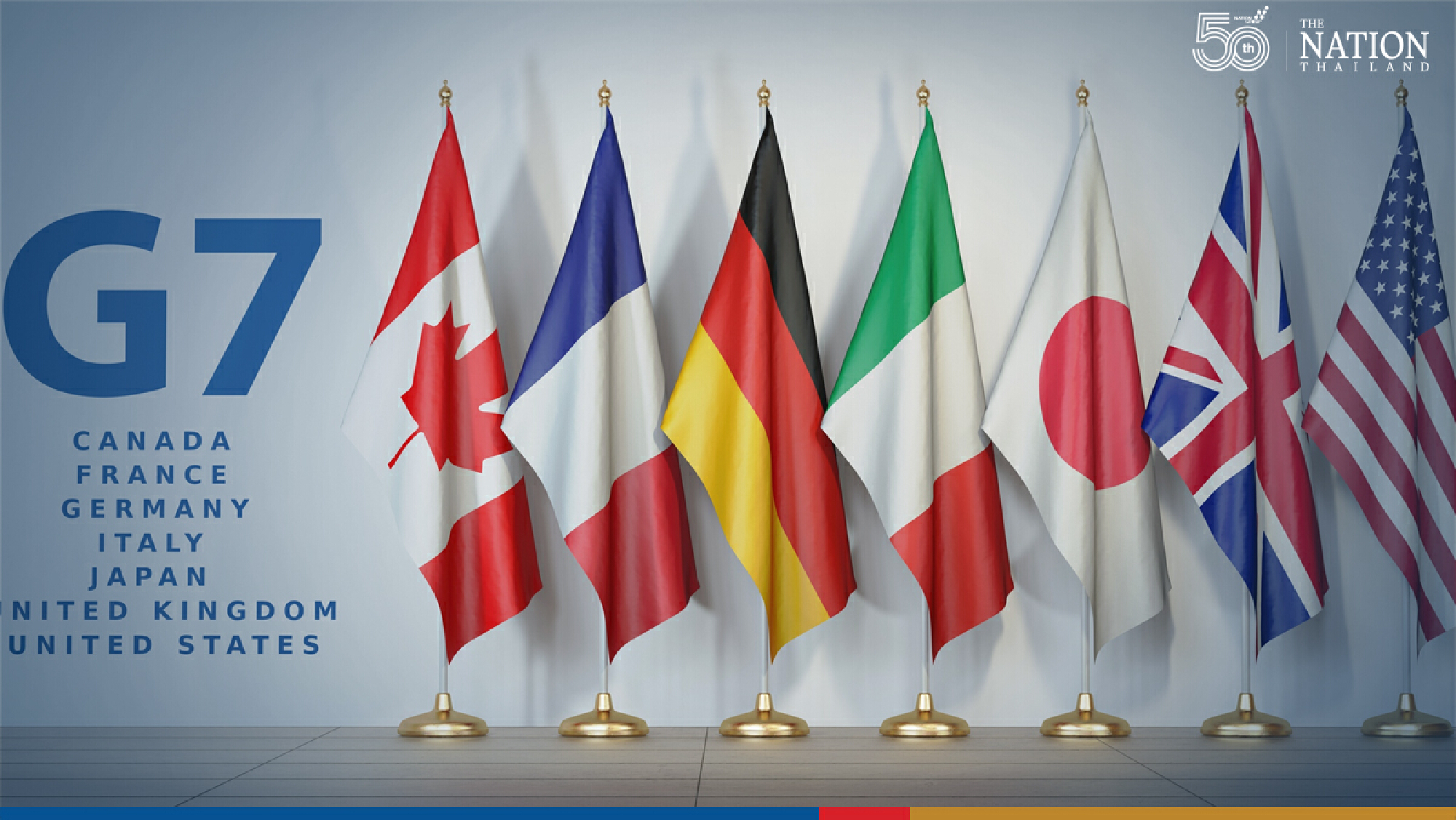
The deal reached at the G-7 meeting in London by Canada, France, Germany, Italy, Japan, the United Kingdom, and the U.S. is a major breakthrough for the Biden administration’s efforts to enact a floor on the taxes paid by corporations worldwide.
Treasury Secretary Janet Yellen has been adamant that the U.S. needs to work with other countries to prevent firms seeking lower tax obligations from simply moving elsewhere. Corporate tax rates across the globe have fallen dramatically over the last four decades.
“The G-7 Finance Ministers have made a significant, unprecedented commitment today that provides tremendous momentum toward achieving a robust global minimum tax at a rate of at least 15 percent,” Yellen said in a statement.
“That global minimum tax would end the race-to-the-bottom in corporate taxation, and ensure fairness for the middle class and working people in the U.S. and around the world.”
In remarks at the close of the meeting, Yellen told reporters that the agreement represented the revival of multilateral cooperation after years of strain under former president Donald Trump.
Under the deal, the U.S. is expected to give up some taxing rights on overseas profits of U.S.-based tech giants.
The deal enables countries to tax 20% of the profits of “the largest and most profitable multinational enterprises” that have profit margins of at least 10%.
While the agreement does not explicitly name tech companies, the line is a nod to the push by European countries to levy taxes on the operations in their countries of firms such as Apple and Amazon, which are headquartered in the U.S. but reap significant revenue abroad. The Europeans insist that it is unfair for the Internet behemoths to collect revenue in their countries without paying more in taxes.
The U.S. objected to singling out tech companies in the deal. Yellen said that as a compromise the G-7 finance ministers agreed to apply the change to a broader set of multinational firms that the tech firms “would qualify by [under] any definition.” The deal does not define which firms would be affected. That pact will move in tandem with the deal for a global minimum tax.
“The timing remains to be worked out, exactly, but there is broad agreement that these two things go hand in hand,” Yellen told reporters.
The Biden administration is seeking to raise the domestic corporate tax rate from 21% to 28% to pay for its spending priorities, such as infrastructure and education.
Republican critics have charged that the move would lead American firms to relocate abroad, hurting domestic jobs and investment. The international tax agreement helps the White House argue that it can lift domestic tax rates without pushing multinationals abroad, because under the agreement they would still face a minimum level of taxation.
Republican lawmakers have been skeptical about granting European countries additional taxing rights over the tech giants. The debate between Europe and the U.S. over taxing digital firms led to several major trade clashes under the Trump administration, with America threatening retaliatory tariffs over European attempts to tax the tech firms.
But the U.S. changed course after last year’s presidential election, with Yellen telling the Group of 20 nations in February that the U.S. has dropped demands to allow firms to opt out of new global digital taxes. That helped pave the way toward Saturday’s deal.
The deal starts what is expected to be a long and arduous process toward changing international tax laws. Negotiators hope to advance progress toward a binding agreement at a meeting of leaders of the Group of 20 in Italy in July.
Yellen told reporters that negotiators then hope to move toward a final deal this fall. But there are a number of sticking points. The deal faces opposition from countries, including Ireland, which rely on revenue by acting as tax havens, and the new U.S. tax rules have to be approved by Congress.
International treaties require passage by a two-thirds majority in the Senate, meaning GOP votes will be necessary to ratify changes pushed by the Biden administration. Republicans have criticized the effort, with Sen. Mike Crapo, R-Idaho, the top Republican on the Senate Finance Committee, warning that the U.S. “should not be willing to accept an agreement that continues to target American companies.”
“Republicans are unlikely to go along with this – you’re ceding tax authority and doing so in a way that disproportionately hurts U.S. companies,” said Donald Schneider, who served as chief economist to Republicans on the House Ways and Means Committee.
It is unclear how much support the new tax floor has in parts of the European Union and other low tax countries. Irish finance minister Paschal Donohoe has said he has “significant reservations” about the U.S. plan and said the country will maintain its 12.5% corporate tax rates for years to come.
Donohoe said Saturday that Ireland expects to lose up to a fifth of its corporate tax revenue under the plan – amounting to roughly 2 billion euros a year. The country’s relatively low tax rate is credited with helping to attract major corporations like Apple, Facebook and Google to Ireland in recent years, and Donohoe told the Irish Times that he plans to continue to “make the case for legitimate tax competition within certain boundaries.”
Any agreement that is approved by the Organization for Economic Cooperation and Development will have to take the needs of smaller countries into account, he said.
But French Finance Minister Bruno Le Maire hailed the agreement as a “historic step” in a video posted to Twitter on Saturday and has made clear in previous statements that he sees a 15% rate as the bare minimum. Other wealthy European nations celebrated the deal, saying that it would ensure that corporations fulfill their obligations and that governments receive adequate funding. Olaf Scholz, Germany’s finance minister, said that the agreement was “very good news for tax justice and solidarity and bad news for tax havens around the world.”
Spain, which is not part of the G-7, endorsed the plan on Friday by signing onto a letter in The Guardian along with the finance ministers of Italy, Germany and France. The show of support from the European Union’s fourth-largest economy was viewed as a sign that the agreement could draw wider support across the bloc. Spanish newspaper El Pais has estimated that a 15% tax rate would almost double the revenue that the country receives from corporations each year.
Some major tech companies welcomed the news. Many firms are willing to pay slightly more in taxes in exchange for more certainty, particularly given the lack of clarity in international tax regimes in recent years, according to Daniel Bunn, an international tax expert at the Tax Foundation, a right-leaning think-tank.
“Facebook has long called for reform of the global tax rules and we welcome the important progress made at the G-7,” said Nick Clegg, a Facebook spokesman, on Twitter. “Today’s agreement is a significant first step toward certainty for businesses and strengthening public confidence in the global tax system.”
José Castañeda, a Google spokesman, added: “We strongly support the work being done to update international tax rules. We hope countries continue to work together to ensure a balanced and durable agreement will be finalized soon.”
The Biden administration earlier floated a 21% global tax on U.S. firms. The 15% rate will make it easier for countries to join the accord but may reduce its effectiveness. If the U.S. domestic rate is raised to 28% but the global minimum tax is 15%, firms may still have strong incentives to move overseas. Yellen stressed that the world needs more tax revenue from the wealthiest corporations.
“G-7 economies came together to agree The Post-pandemic world must be fairer, especially with regard to international taxation,” Yellen said. “We need to have stable tax systems that raise sufficient revenue to invest in essential public goods and respond to crises and ensure that all citizens and corporations fairly share the burden of financing government.”
Others downplayed the significance of the accord. G-7 countries all already have corporate tax rates above 15%, said Kyle Pomerleau, a tax expert at the American Enterprise Institute, a conservative-leaning think-tank.
“It’s rather simple that countries that have statutory tax rates of 15 percent agree that other countries should also have that,” Pomerleau said. “This is step one, and from Yellen’s perspective that’s good, but it’s step one of 1,000.”
Yellen said in remarks to reporters that the agreement does not depend on voluntarily compliance by tax havens. Instead, she said it will enable countries to levy taxes on the overseas earnings of firms headquartered in those havens, putting pressure on them to raise their domestic tax rates.
“I think this is an agreement that when you understand all the details you see it does not require absolute agreement across the board,” Yellen said. “It has a way of bringing holdouts into it.”
Global tax negotiations have been ongoing at the G-7 and the OECD for the better part of a decade. But some experts said the speed with which the U.S. made major progress Saturday was striking nonetheless.
Alarm has grown among international tax experts about declining taxation. The average corporate tax rate globally was about 40% in 1980, falling to about 23% in 2020, according to the Tax Foundation, a conservative-leaning think-tank. As much as $700 billion in taxes from the world’s largest multinational firms was stashed in tax havens in 2017, research by a team of economists found.
“It’s an early and quick win for Yellen and Treasury, and it’s sort of remarkable,” said Steve Rosenthal, a tax expert at the nonpartisan Tax Policy Center, a think-tank. “This has been lingering for years and years – though of course Trump did not believe in multinationalism – and to start these negotiations in January and have a tentative agreement in June is pretty impressive.”
Others stressed the obstacles that loomed ahead. Douglas Holtz-Eakin, a Republican former director of the Congressional Budget Office, has raised concerns about whether the U.S. will give up too much of its tax base in search of a deal with Europeans. He also stressed how many questions were left unresolved by Saturday’s statement, including the structure of the 15% minimum tax and how it would function or be approved.
“It’s easy to set at a table and agree, ‘Yes we should have a 15 percent minimum tax.’ It’s another thing to pass through the U.S. Congress, and the U.K. parliament, and everyone else,” Holtz-Eakin said. “We can agree on the concepts – I’m sure – but will we actually have a law enforced in every country?
Published : June 06, 2021
By : The Washington Post · Jeff Stein, Antonia Noori Farzan
SET loses ground amid fear of inflation, overbought stocks
The Stock Exchange of Thailand (SET) Index closed at 1,611.53 on Friday, down 6.02 points or 0.37 per cent. Transactions totalled THB106.35 billion with an index high of 1,622.89 and a low of 1,611.34.
In the morning session, Krungsri Securities forecast Friday’s SET Index would fluctuate between 1,605 and 1,625 points amid hopes of economic recovery as mass Covid-19 vaccinations gather strength worldwide and the price of oil continues to rise.
The index would be under pressure due to uncertainty over rising inflation and signs of overbought stocks, Krungsri Securities added.
The 10 stocks with the highest trade value today were KBANK, PTT, RCL, BANPU, STGT, SCC, ROJNA, CPN, CPALL and BBL.
Other Asian indices were on the fall, except in mainland China:
Japan’s Nikkei Index closed at 28,941.52, down 116.59 points or 0.40 per cent.
China’s Shanghai SE Composite Index closed at 3,591.84, up 7.63 points or 0.21 per cent, while the Shenzhen SE Component Index closed at 14,870.91, up 109.78 points or 0.74 per cent.
Hong Kong’s Hang Seng Index closed at 28,918.10, down 47.93 points or 0.17 per cent.
South Korea’s KOSPI closed at 3,240.08, down 7.35 points or 0.23 per cent.
Taiwan’s TAIEX closed at 17,147.41, down 98.75 points or 0.57 per cent.
Rising inflation, overbought stocks could rein in SET
The Stock Exchange of Thailand (SET) Index dropped by 0.07 points, or 0.36 per cent, to 1,616.36 at 10am on Friday. The volume of total transactions amounted to THB9.52 billion with an index high of 1,616.91 and a low of 1,613.13.
Krungsri Securities forecast that the SET Index would fluctuate between 1,605 and 1,625 points despite hopes of an economic recovery as mass Covid-19 vaccinations gather strength worldwide, and the price of oil continues to rise.
The index would be under pressure due to uncertainty over rising inflation and signs of overbought stocks, Krungsri Securities said.
It recommended that investors buy:
▪︎ PTT, PTTEP, PTTGC, TOP, IVL and BANPU, which benefit from the global economic recovery.
▪︎ BCH, CHG, BDMS, MINT, CENTEL, AOT, CPALL, HMPRO, CPN and CRC, which will benefit from the country’s reopening.
▪︎ KCE, IRPC, STA and STGT, expected to be listed on the SET50 Index in mid-June.
▪︎ AAV, BLA, ICHI, PSL, PTL, SINGER, STARK, STGT and SYNEX, expected to be listed on the SET100 Index in mid-June.
The SET Index closed at 1,617.55 on Wednesday, down 1.04 points or 0.06 per cent. Transactions totalled THB101.45 billion with an index high of 1,627.67 and a low of 1,612.94.
The market was closed on Thursday to mark HM the Queen’s birthday.