The baht opened at 31.28 to the US dollar on Friday, strengthening from Thursday’s close of 31.31.
The Thai currency is likely to move between 31.25 and 31.35 during the day, Krungthai Bank market strategist Poon Panichpibool said.
He said the baht was still fluctuating between 31.20 and 31.40 to the US dollar, as the dollar’s direction was not clear. Also, the Thai currency was supported by gold trade, the market strategist added.
Poon said that exporters aimed to sell their dollars when the baht moves between 31.40 and 31.50.
Gold stays firm despite sell-offs triggered by higher US bond yield
The price of gold in morning trade on Friday was unchanged from Thursdays close due to higher US bond yield and strong US economic data, triggering mass sell-offs of the precious metal.
The Gold Traders Association report at 9.23am showed buying price of a gold bar at THB27,950 per baht weight and selling price at THB28,050, while gold ornaments were priced at THB27,439.60 and THB28,550, respectively.
Spot gold on Friday was US$1,894 (THB59,338) per ounce compared to Thursday when it had dropped by $5.3 to $1,898.5 per ounce.
Hong Kong gold price on Friday dropped by HK$30 to $17,550 (THB70,861) per tael, the Chinese Gold and Silver Exchange Society reported.
Stocks that stand to benefit the most from an economic rebound rallied after solid data spurred a decline in pandemic darlings such as technology companies. Treasuries retreated.
Industrial, financial and commodity shares led gains in the S&P 500. The Russell 2000 of small caps outperformed major equity benchmarks, while the tech-heavy Nasdaq 100 dropped. A news report that President Joe Biden will unveil a budget that would see federal spending jump to $6 trillion in the coming fiscal year also helped sentiment. The KBW Bank Index posted a back-to-back advance as the chief executive officers of the largest lenders testified before Congress.
Equities headed toward their fourth straight monthly rally as prospects for an economic rebound tempered inflation worries. Treasury Secretary Janet Yellen said she sees the burst in prices as temporary, though likely to last through the end of 2021. Data showed jobless claims dropped to a fresh pandemic low, while orders for business equipment climbed more than forecast. Pending home sales fell, but analysts highlighted underlying buyer interest that could translate into a pickup in contract signings.
“We’re seeing that kind of economic data underscore what we keep calling the recovery trade — a move back into cyclical and defensive stocks, companies that are poised to do better with a reopening of the economy,” said Greg Bassuk, chief executive officer at AXS Investments. “Value has a much stronger path for gains going forward.”
The Russell 2000 has lost ground to the Nasdaq 100 this quarter, but it has valuation on its side. The forward price-earnings spread between the small-cap and tech-heavy gauges has narrowed to below the five-year average. And while the Russell 2000 value/growth ratio has ebbed in the latter half of May, the relative strength of value suggests that small-cap stocks can continue to be big beneficiaries of the reopening recovery.
These are some of the main moves in markets:
Stocks
– The S&P 500 rose 0.1% as of 4 p.m. EDT
– The Nasdaq 100 fell 0.3%
– The Dow Jones industrial average rose 0.4%
– The Russell 2000 Index rose 1.1%
Currencies
– The Bloomberg Dollar Spot Index was little changed
– The euro was little changed at $1.2198
– The British pound rose 0.6% to $1.4203
– The Japanese yen fell 0.6% to 109.79 per dollar
Bonds
– The yield on 10-year Treasuries rose three basis points to 1.60%
– Germany’s 10-year yield advanced three basis points to -0.17%
– Britain’s 10-year yield advanced six basis points to 0.81%
Commodities
– West Texas Intermediate crude rose 0.9% to $67 a barrel
– Gold futures fell 0.2% to $1,901 an ounce
Published : May 28, 2021
By : Syndication Washington Post, Bloomberg · Rita Nazareth, Claire Ballentine
U.S., China trade chiefs hold candid talks in first call
U.S. Trade Representative Katherine Tai and Chinas Vice Premier Liu He had a “candid” first conversation as the two sides try to resolve some of their differences on trade.
The trade chiefs spoke Thursday morning in Beijing, China’s Ministry of Commerce said in a statement, and “conducted candid, pragmatic and constructive exchanges in an attitude of equality and mutual respect.”
In a separate statement, the USTR said “Ambassador Tai discussed the guiding principles of the Biden-Harris administration’s worker-centered trade policy and her ongoing review of the U.S.-China trade relationship, while also raising issues of concern.”
The phone call is one of the few top-level meetings between the two sides since President Joe Biden took office in January and comes after top diplomats had an acrimonious meeting in Alaska in March. While both nations agreed on a partial trade deal in 2020, China and the U.S. still have tariffs on billions of dollars in trade in place, and China has never met the purchase commitments it made in that deal.
The U.S. administration is reviewing its stance toward China and hasn’t made any major changes to the policies it inherited from former President Donald Trump, although there are increasing signs of the direction it will take. The White House’s top official for Asia said this week that the U.S. is entering a period of intense competition with China as its government becomes ever more tightly controlled by President Xi Jinping.
“The period that was broadly described as engagement has come to an end,” Kurt Campbell, the U.S. coordinator for Indo-Pacific affairs on the National Security Council, said Wednesday. U.S. policy toward China will now operate under a “new set of strategic parameters,” Campbell said, adding that “the dominant paradigm is going to be competition.”
In contrast with much of the rest of the bilateral relationship, trade has been one of the less contentious issues recently. Ties have deteriorated over the past year or more on almost every other topic, with clashes over human-rights concerns including allegations of forced labor in China’s western Xinjiang region; Taiwan; the crackdown in Hong Kong; Beijing’s purchases of oil from sanctioned Iran; and the long-running disputes over the South China and East China Seas.
The trade deal should be seen in the context of “the overall U.S.-China trade, and economic relationship which is very, very challenging,” Tai told Reuters in an interview Wednesday. “The overall challenges that we have with China are also still there and they are very large.”
A blog affiliated with Chinese state media said that “there are still many differences between China and the United States and a breakthrough from the current situation requires more in-depth communication.” Still, the “stabilizing role of economic and trade cooperation in Sino-U.S. relations remains important,” according to Taoran Notes, which is a blog linked to the Economic Daily and was seen as an authoritative commentator on the trade talks in 2019.
The Liu-Tai call followed a staff-level phone discussion that took place Tuesday night Washington time, according to a person familiar with the planning for the meeting. During the call, the Chinese stressed the importance of tariff rollbacks as a necessary component of next steps in the relationship, the person said.
The Biden administration so far has left in place tariffs affecting billions of dollars in trade that were imposed under Trump. Tai has pledged to build on the January 2020 trade pact, saying on May 5 that she respects the continuity of U.S. policy.
However, despite the tariffs that the U.S. and China have in place, trade is actually growing, with Chinese imports from the U.S. hitting a record in March. China’s exports to the U.S. have been strong due to the pandemic, U.S. stimulus payments and an economic rebound.
Neither side has any interest in “initiating a trade-off that would end the Trump-era tariffs,” according to Hosuk Lee-Makiyama, director of the European Centre for International Political Economy in Brussels. “China sees the tariffs as illegal and hostile acts, while the Biden administration sees tariffs as a topic where they have nothing to win in terms of approval ratings, but everything to lose.”
Tai has previously said she expects China to live up to the commitments it made in the trade deal reached under the Trump administration and that the Biden government is focused on enforcing existing trade agreements and rules.
Although those purchase targets look out of reach, agricultural goods may still prove a bright spot, with China purchasing corn for delivery later in the season to meet a domestic shortfall and a banner year for U.S. imports still on the cards.
The stock market initially gained on the news of the call but that didn’t last. The benchmark Chinese stock index was steady at the lunchtime break after rising as much as 1.1% in the morning session, while the offshore yuan was little changed at around the strongest level since 2018.
Liu was the senior negotiator for the deal and served as the USTR counterpart during the tenure of former trade chief Robert Lighthizer. Under the agreement’s Trade Framework Group, the USTR and the Chinese counterpart are due to meet every six months to discuss implementation. The last time that happened was August 2020.
Published : May 28, 2021
By : Syndication Washington Post, Bloomberg · No Author
Investment of THB15 billion sweetens Thailand’s growing bioplastics sector
The Board of Investment (BOI) has approved Nature Works Asia Pacific Co’s 15-billion-baht investment to produce Polylactic Acid (PLA), a biodegradable polymer used to make tea bags, coffee capsules and food packaging. PLA is also used to make biodegradable face masks, cleaning cloths and diapers.
BOI chief Duangjai Asawajintajit said the investment is the latest step in Thailand’s bio-circular-green (BCG) economic model, which focuses on cost-effective use of biological resources.
He added that the BOI had approved 31 billion baht of investment in Thailand’s bioplastics business in the six years up to March.
Nature Works Asia Pacific expects to produce 75,000 tonnes of PLA per year, using domestic agricultural raw materials including about 110,000 tons of sugar.
Duangrai said the bioplastics industry will play an increasingly important role in Thailand’s future as economic development goes hand in hand with environmental stewardship.
This trend will be a foundation for Thailand to create a bioplastics cluster industry in line with the BCG concept and the UN’s sustainable development goals (SDGs), he added.
The Stock Exchange of Thailand (SET) Index closed at 1,582.96 on Thursday, up 14.38 points or 0.92 per cent. Total transactions leapt to THB175.27 billion, from their normal level below THB100 billion, with an index high of 1,587.54 and a low of 1,568.89.
In the morning session, Krungsri Securities expected the day’s index to fluctuate between 1,550 and 1,580 points amid hopes of global economic recovery after an improvement in US economic data and the Federal Reserve’s assurance that it was able to deal with rising inflation.
The 10 stocks with the highest trade value today were KBANK, KTC, SCGP, PTT, CPALL, CBG, AOT, OR, BANPU and INTUCH respectively.
Other Asian indices dropped, except in mainland China:
Japan’s Nikkei Index closed at 28,549.01, down 93.18 points or 0.33 per cent.
China’s Shanghai SE Composite Index closed at 3,608.85, up 15.49 points or 0.43 per cent, while the Shenzhen SE Component Index closed at 14,897.19, up 103.51 points or 0.70 per cent.
Hong Kong’s Hang Seng Index closed at 29,113.20, down 52.81 points or 0.18 per cent.
South Korea’s KOSPI closed at 3,165.51, down 2.92 points or 0.092 per cent.
Taiwan’s TAIEX Index closed at 16,601.61, down 42.08 points or 0.25 per cent.
Strict safety standards will help boost Thai food exports: DITP
The Department of International Trade Promotion (DITP) expects food exports to grow this year thanks to Thailand’s strict safety standards and full cooperation from food producers.
Along with supervisory measures, DITP has also launched the “Thailand Delivers with Safety” campaign to boost confidence among importers.
Somdet Susomboon, DITP’s director-general, said the overall value of Thai food exports in January and February stood at 164.15 million baht.
The top five agricultural products exported were cassava; rice; fresh, chilled, frozen and dried fruit; processed chicken; fresh, cold and frozen chicken. The top five agro-industrial products exported included canned and processed seafood; wheat and other processed food; pet food; beverages; and canned and processed fruit.
The market for Thai food products is expected to grow 7.1 per cent, fetching 1.05 billion baht, mainly driven by surging demands in the global market following the Covid-19 vaccine rollout in many countries.
Also, the rising price of agricultural and food products, especially chicken, sugar, cassava and pineapple products, complemented with the compliance of Covid-19 prevention measures in food exports, will contribute to this anticipated growth.
Strict safety standards will help boost Thai food exports: DITP
“The latest wave of Covid-19 in Thailand continues to rage, affecting not only the lives of people but also striking all economic sectors. Therefore, it is crucial that Thailand launch drives to boost the confidence of trading partners. Thus, DITP is joining forces with both public and private sectors to intensify safety measures in food manufacturing by launching the Covid-19 prevention best practices for food export among manufacturers, exporters, business operators, raw material suppliers, as well as logistics operators to strictly follow,” Somdet said.
To ensure safety, business operators and suppliers must strictly adhere to the following practices:
• Reduce the risk of contamination: Operators and suppliers shipping fruits and vegetables must control access to the premises, screen and manage employee data as well as data on freight vehicles, ensure surfaces are cleaned after each use and employees wear facemasks at all times.
• Strict safety control in manufacturing: Businesses must implement quality and safety controls throughout the production line, from receiving fruits and vegetables to processing and packing in compliance with Good Manufacturing Practice (GMP) and Hazard Analysis Critical Control Point (HACCP). Employees must maintain personal hygiene by wearing an apron, gloves and a face mask at all times. This also includes cleaning and disinfecting the interior of vehicle containers.
• Controlling personal hygiene and work environment:
1. Buildings: All exits and entrances must be controlled while the manufacturing building, meeting room, cafeteria, changing room and toilets remain free of congestion. Efficient ventilation systems and air filters should be installed in the building.
2. Sanitation: Personal hygiene equipment must be readily available at work stations, including a sink, liquid soap, disinfectant, disposable paper towels and auto lid pedal waste bins, with clear instructions provided.
3. Cleaning: Machinery, manufacturing buildings, floors, walls, as well as common areas which are prone to contact such as doorknobs, handrails, elevator buttons, chairs, dining tables, etc., must be regularly cleaned and disinfected.
4. Workers’ hygiene: Workers must be screened daily before entering the building, tracing information collected and they must wear a mask at all times. They are also required to wear gloves, shoes, wash hands regularly, maintain social distancing and prevent any contaminations during operation.
5. Training: Employees must be trained on protecting themselves from Covid-19.
Strict safety standards will help boost Thai food exports: DITP
Meanwhile, Thai food exports last year generated 980.7 million baht, dropping about 5.1 per cent compared to the year before. Thailand’s global market share also dropped to 2.32 per cent from 2.49 per cent in 2019, while Thailand took 13th place among top food exporters, dropping from No 11 in the previous year.
Japanese investors eye clean energy projects in Thailand’s EEC
Several companies from Japan have expressed interest in investing in clean energy projects in the Eastern Economic Corridor (EEC), especially at Smart Park Industrial Estate in Rayong province, said Industrial Estate Authority of Thailand (IEAT) governor Weerit Amrapal on Thursday.
Weerit was speaking after a videoconference with representatives from Toyota Daihatsu Engineering & Manufacturing (TDEM), Toyota Motor, Toyota Tsusho M&E, Kansai Electric Power, Kansai Energy Solution, and Osaka Gas Ltd.
“Japanese investors are especially interested in establishing power plants fuelled by solar power and hydrogen at Smart Park Industrial Estate,” he said. “IEAT promised to appoint a committee dedicated to studying the possibility of establishing a carbon neutral industrial estate in Thailand. The study is expected to be complete within this year.”
The meeting also discussed other alternative and renewable energy projects in EEC to support expansion of industrial zones in the area while preserving the environment of surrounding communities.
Earlier this year, Japan declared a target to become carbon neutral (emit net-zero carbon dioxide) by 2050, following the United States and China’s vow to achieve the same goal by 2050 and 2060 respectively.
“Japan has been employing financial, taxation and stimulus policies to reduce the emission of carbon dioxide, and Thailand can benefit by following these models to reduce its own emissions and prepare for the future global energy trend,” said Weerit.
Exporters breathe sigh of relief as 23,000 empty containers returned to Thailand
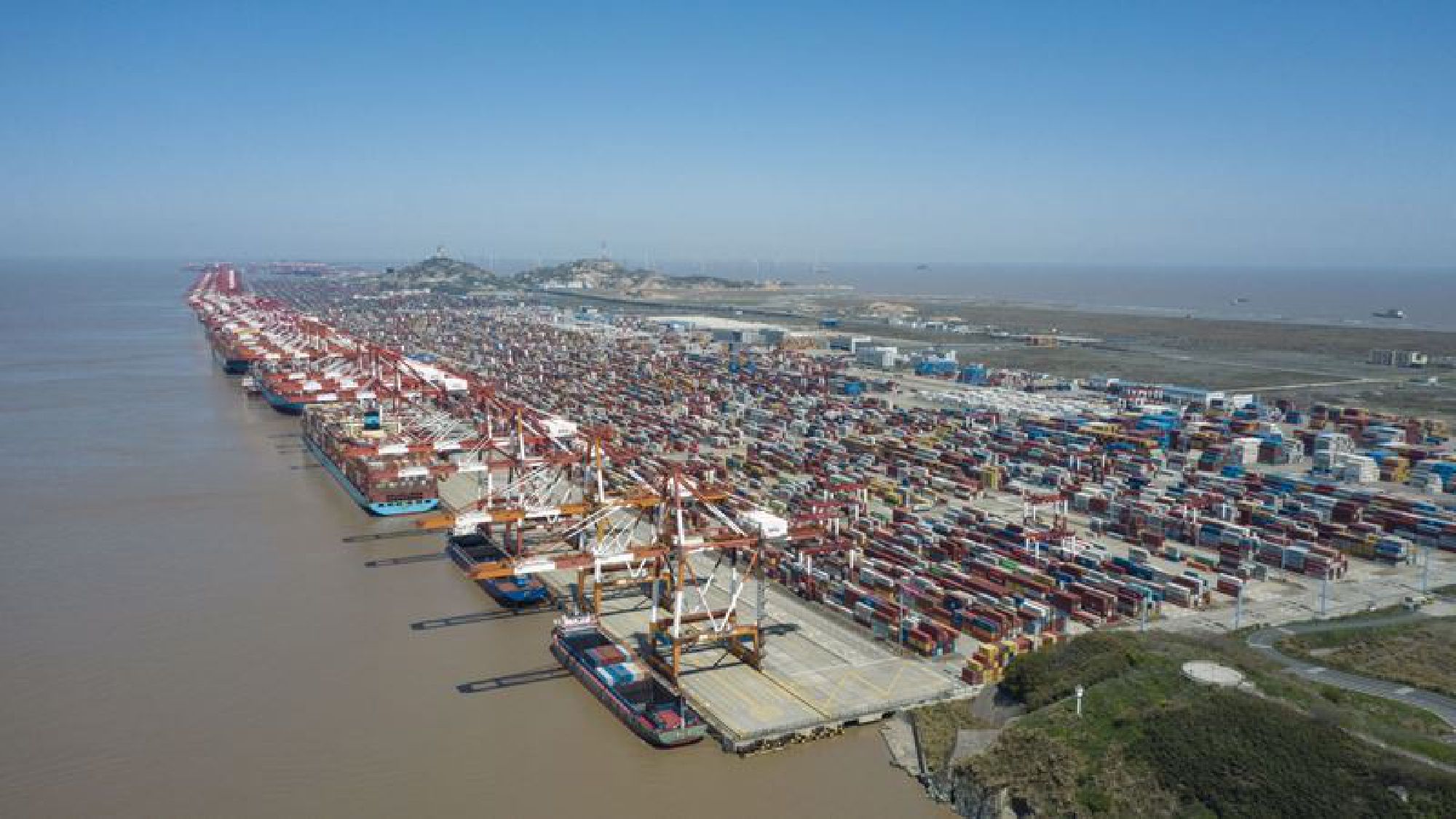
More than 23,000 empty containers have been returned to Thailand since February, enabling the export of 458,000 tonnes of products worth over THB35 billion, Thai Chamber of Commerce vice chairman Phot Aramwatthananont said on Wednesday.
“The return of the empty containers have helped alleviate the shortage problem Thai exporters have been facing due to lockdown measures in some countries in this Covid-19 situation. This prevented cargo ships from returning with empty containers,” he said.
In December last year the government courtesy of the Commerce Ministry ordered the Marine Department to amend docking regulations, allowing cargo ships 300-400 metres long to dock in Thailand for up to two years to attract ship operators so their vessels could return empty containers.
“Since then seven cargo ships of less than 400 metres have docked at Laem Chabang Port in Chonburi, returning over 23,000 empty containers to Thai exporters,” Phot said.
“We would like to thank the government, especially Deputy PM and Commerce Minister Jurin Laksanawisit who helped coordinate with foreign countries to solve the container shortage problem in time so the export sector could help contribute to the nation’s economic growth during this time of crisis,” he added.
SET under pressure over MSCI move, foreign fund outflows
The Stock Exchange of Thailand (SET) Index rose by 0.97 points or 0.06 per cent to 1,569.55 at 10am on Thursday. The volume of transactions was THB3.93 billion with an index high of 1,571.45 points and a low of 1,568.89.
Krungsri Securities predicted that the day’s index would fluctuate between 1,550 and 1,580 points amid hopes of a global economic recovery after an improvement in US economic data, plus Federal Reserve confidence that it would be able to deal with rising inflation.
However, uncertainty over the MSCI’s move to reduce investment in Thai shares by 0.1 per cent on Thursday and the outflow of foreign funds would pressure the index, Krungsri Securities said.
It recommended investors buy:
▪︎ BDMS, BCH and CHG, which would gain positive sentiment from mass vaccinations.
▪︎ SCGP and CBG, which will be listed on the MSCI Index.
▪︎ OSP, KTC, STGT, BH Ace, PSL, RCL, SCC, Singer, Synex, TTA and TOA, which the MSCI will increase investment in.
Meanwhile, it advised investors to avoid buying:
▪︎ KBank-F and Dtac, which will be delisted from the MSCI Index.
▪︎ PTT, KBank, Intuch, CPN, SCC, CPAll, EGCO and TU, which the MSCI will reduce investment in.
The SET Index closed at 1,568.58 on Tuesday, up 16.73 points or 1.08 per cent. Total transactions amounted to THB88.95 billion with an index high of 1,572.03 and a low of 1,560.13.
The index was closed on Wednesday for Visakha Bucha Day.





 Strict safety standards will help boost Thai food exports: DITP
 Strict safety standards will help boost Thai food exports: DITP