The Stock Exchange of Thailand (SET) Index fell by 6.52 points, or 0.54 per cent, to 1,201.45 in the morning session on Tuesday.
An analyst at Krungsri Securities expected the day’s index to fall to 1,200 points due to uncertainty over rising Covid-19 cases in the US and Europe, the delay in the rollout of US economic stimulus measures, and falling oil price.
“The number of Covid-19 cases in US hit a new high at 73,700 people last Friday,” he said.
“Meanwhile, there is a possibility that the rollout of US economic stimulus measures will be made after the presidential election because there is no sign that House Speaker Nancy Pelosi and Treasury Secretary Steven Mnuchin will reach an agreement.”
However, he said the index would rebound from the Thai Parliament’s extraordinary session to ease political tensions.
As an investment strategy, he recommended that investors buy TU, STGT, STA, CBG, SCC, IVL, COM7, SYNEX, ASIAN, DELTA, HANA, SVI and TVO, whose third-quarter performance is expected to improve.
The SET Index closed at 1,207.97 points on Monday, down 5.64 points or 0.46 per cent. Transactions totalled Bt41.59 billion with an index high of 1,215.79 and a low of 1,205.81.
The price of gold rose by Bt100 per baht weight in morning trade on Tuesday, the Gold Traders Association reported.
As of 9.22am, the buying price of a gold bar was Bt28,150 per baht weight and selling price Bt28,250, while gold ornaments were priced at Bt27,636.68 and Bt28,750, respectively.
At close on Monday, the buying price of a gold bar was Bt28,050 per baht weight and selling price Bt28,150 while gold ornaments were Bt27,545.72 and Bt28,650, respectively.
Spot gold price moved to US$1,909 (Bt59,641) per ounce in the morning after the price rose by 50 cents to $1,905.7 per ounce at close on Monday after investors’ mass purchases of the precious metal as the US stock market dropped sharply due to uncertainty over rising Covid-19 cases.
Hong Kong gold price rose to HK$17,610 (Bt70,990) per tael on Tuesday morning, the Chinese Gold and Silver Exchange Society reported.
Thai export revenue from January-July under free trade agreements (FTAs) and the generalised system of preferences (GSP) dropped 14.77 per cent year on year to US$35.421 billion, said Department of Foreign Trade director-general Keerati Rushchano.
Exports under FTAs were worth $32.875 billion, down 15.88 per cent.
Thailand’s top five FTA export markets were China (exports worth $11.152 billion), Asean ($10.798 billion), Japan ($3.890 billion), Australia ($3.426 billion) and India ($1.784 billion).
Thai exports under GSP to the US, Switzerland, Russia and the Commonwealth of Independent States, and Norway during the same period rose 2.61 per cent to $2.546 billion.
The Energy Regulatory Commission (ERC) will draw up new regulations to prevent a recurrence of the gas pipe explosion, which took place on Thursday last week, ERC secretary-general Komkri Tantravanich said on Monday.
A PTT gas pipe exploded in Samut Prakan’s Bang Bo district last week killing three people and leaving many injured. The explosion also damaged houses and vehicles in the vicinity.
He added that the current rules will also be adjusted in compliance with the changing environment of places nearby, as more new communities, roads and buildings continue popping up.
The regulator is waiting for experts to find the real cause of the incidence and will use this information to draw up the new regulations.
He said this explosion will not affect national power security.
The share price of PTT on Monday dropped sharply by Bt0.50 or 1.55 per cent to Bt31.75 per share with transactions tallying at Bt121 million after a natural gas pipe exploded in Samut Prakan’s Bang Bo district on Thursday afternoon.
PTT informed the Securities and Exchange Commission that the company had cut the natural gas pipeline network to control the fire in line with safety standards.
“After initial damage assessment, the company was still able to procure and deliver natural gas to consumers in the area. PTT also has insurance coverage to compensate for damages, business interruption and third-party liabilities in line with international standards,” PTT said.
The Stock Exchange of Thailand (SET) Index fell by 3.07 points, or 0.25 per cent, to 1,210.54 in the morning session on Monday.
An analyst at Krungsri Securities expected the index to fluctuate between 1,205 and 1,220 due to uncertainty over rising Covid-19 cases in US, the rollout of US economic stimulus measures and falling oil price.
However, he said the index would rebound from Thailand Parliament’s extraordinary session to ease political tensions.
As an investment strategy, he recommended that investors buy TU, STGT, STA, CBG, SCC, IVL, COM7, SYNEX, ASIAN, DELTA, HANA, SVI and TVO, whose third-quarter performance is expected to improve.
The SET Index closed at 1,213.61 on Thursday, down 2.87 points or 0.24 per cent, while transactions amounted to Bt66 billion with an index high of 1,223.48 and a low of 1,204.73. The index was closed on Friday for Chulalongkorn Memorial Day.
The price of gold was unchanged in morning trade on Monday, the Gold Traders Association reported.
As of 9.27am, the buying price of a gold bar was Bt28,100 per baht weight and selling price Bt28,200, while gold ornaments were priced at Bt27,591.20 and Bt28,700, respectively.
At close on Saturday, the association announced a change in the precious metal’s price once, causing the price to drop by Bt50 per baht weight.
Spot gold price moved to US$1,900 (Bt59,533) per ounce in the morning after the price rose by 60 cents to $1,905.2 per ounce at close on Friday due to the weakening dollar and uncertainty over the rollout of US economic stimulus measures.
SLIDING market prices, lowering demand and healthy output projections are set to hit the single product, oil-rich economies of the Middle East, the International Monetary Fund (IMF) said in its report last week.
All this was anticipated.
Oil-rich Gulf states are now expected to see a six per cent real GDP contraction this year, the report said. Real GDP growth for the Gulf Cooperation Council (GCC) states averaged 4.7pc from 2000 to 2016. “On average, we will see growth going negative by 6.6pc for oil-exporting countries,” Jihad Azour, director of the IMF’s Middle East and Central Asia department told CNBC, last week.
While oil prices have recovered from their historic plunge in March, international benchmark Brent crude is still trading nearly 40pc below pre-pandemic levels. And the IMF doesn’t see oil prices staging a dramatic recovery anytime soon. IMF projections say prices would stay in the $40 to $50 range in 2021. That’s still half the $80 per barrel figure Saudi Arabia – the Organisation of the Petroleum Exporting Countries (Opec) – needs to balance its budget.
Future projections are not rosy too. IMF sees the oil prices to stay between $40 to $45 until at least early next year, adding it could “be between $40 to $50 next year overall.”
As per the IMF while demand remains a key variable, yet “addition to global supplies that could come from alternative energies” would also play a significant role in determining the direction of the crude markets.
Further, amid the second wave of the pandemic gripping the world, for the time, the oil demand outlook remains grim too. The International Energy Agency in September cut its outlook for worldwide oil demand to 91.7 million barrels per day (bpd) for the year, a daily contraction of 8.4m barrels, year-on-year, and more than the contraction of 8.1m predicted in the agency’s August report. With the second pandemic wave already in play, it could go even further down.
The Opec is projecting an even worse outlook for 2020, slashing its view for global oil demand last month to an average of 90.2m bpd in 2020, a contraction of 9.5m bpd year-on-year, CNBC reported. The Opec described crude outlook as “anemic,” warning, risks remain “elevated and skewed to the downside”.
All these carry significant connotations to the almost single-product economies of the oil-rich Gulf states. In line with the IMF projections, the World Bank also believes the economies in the Middle East and North Africa are set to contract more deeply than initially estimated.
The bank revised its estimate to a 5.2pc shrinkage this year versus an April forecast of a 1.1pc contraction, the updated regional economic outlook published last week reported.
Plagued by sanctions and the growing pandemic, the IMF says that the Iranian GDP is also projected to decline by about 6pc in 2020. This would be the third consecutive annual decline in Iran’s GDP. In a report released on April 14, the IMF had put Iran’s GDP decline in 2019 at 7.6pc and in 2018 at 5.4pc.
Updating the net debt owed by the Iranian government, as per the IMF estimates, it is set to touch the $260 billion marks by 2020 — equivalent to 44pc of Iran’s gross domestic product.
Before the re-imposition of US sanctions on Tehran in 2018, Iran’s net debt amounted to less than $118bn.
Ever since Iran’s oil exports have declined by around 90pc when compared to the period before the US re-imposed sanctions on Iranian crude exports. The pandemic has also hit Iran and its economy badly, killing thousands and infecting tens of thousands of people.
The emerging scenario has significant ramifications for Pakistan and its economy. Pakistan is deeply connected to that part of the world. On the pretext of a growing budgetary deficit, already Saudi Arabia had to ask Pakistan to pay back $1bn, which was deposited in Pakistan’s treasury to stabilise its economy.
Ominous clouds on the Gulf horizon may also put the jobs of thousands of Pakistanis employed in that part of the world in jeopardy.
In a contracting economic scenario, thousands of overseas Pakistanis employed in the oil-rich Gulf states may now find it difficult to hold on to their jobs. Many amongst them may have to return, sooner rather than later.
This would also impact the flow of remittance — the lifeline of the Pakistani economy in these turbulent times. For Pakistan to manage its economy in the emerging scenario, would be extremely difficult if not impossible.
Strong recovery in capital flows to Asia-6 in 2021
EconOct 26. 2020Further contributions to the overall drop in non-resident flows to Asia-6 stem from South Korea (-US$12bil) and Malaysia (US$5bil), while Thailand is projected to see a small increase in inflows, the IIF says.
By The Star
Among emerging-market (EM) economies, six Asian countries have stood out as major benefactors of foreign capital flows in recent years.
Calling these countries the Asia-6, comprising Malaysia, Indonesia, Thailand, India, South Korea and the Philippines, the Institute of International Finance (IIF) says they are taking up an increasingly important place on the EM investment map.
The global association of the financial industry attributes this to the region’s financial opening and the role it has played in the globalisation of goods and services trade over the past three decades.
Reflecting the increasing appeal of Asia-6, it notes, non-resident capital flows to these countries accounted for 28% of total EM flows last year, compared with 20% in 2010 and 12% in 2000.
According to the IIF, as Asia-6 emerge from the Covid-19 crisis, non-resident capital flows to the region are projected to recover in 2021, increasing to US$275bil from the estimated US$210bil this year.
“The Asia-6 are benefiting from better growth prospects, solid macro fundamentals, the advancement of reforms, and strong external positions, ” the IIF explains.
“A new wave of Covid-19 infections, similar to current developments in Europe and the United States, and the potential need for renewed lockdowns (however) represents the main downside risk to the outlook, ” it adds.
The IIF’s projection for this year is that foreign capital flows to Asia-6 would decline about 25% this year amid a damped economic outlook because of the Covid-19 pandemic.
It expects foreign flows to the region to come in at US$210bil in 2020, compared with US$282bil in 2019, with the decline largely attributable to sharply lower portfolio capital inflows as well as weaker foreign direct investment (FDI).
Specifically, foreign capital flows to the region is expected to come in lower in the second half of this year, following a temporary pickup during the three months to June 2020.
“With China and the Asia-6 experiencing the first wave of Covid-19 much earlier than other regions, the capital flows picture deteriorated primarily in the first quarter of 2020 as a result of large portfolio investment outflows of US$38bil (US$25bil in stocks and US$13bil in bonds), but also showed strong signs of a rebound in the second quarter of the year when most countries around the world experienced the worst lockdown effects, ” the IIF explains.
“The significantly weaker picture in the last six months of 2020 is a result of sharply lower other investment and still-muted portfolio investment, while recovering FDI plays a supportive role, ” it adds.
Within the Asia-6, dynamics vary between countries, largely reflecting idiosyncratic risks, the IIF says.
India, which ranks second in the world in total Covid-19 infections, and for which it forecasts an unprecedented economic contraction of 11.3% this year, is responsible for roughly half of the total decline in flows to the Asia-6 from 2019-2020, that is, a drop of US$38bil.
The Philippines, where pandemic-related lockdowns were the most stringent in the region, are expected to experience the largest drop in percentage terms, that is, down 41% or US$7bil.
Indonesia, on the other hand, is in a somewhat better position, benefitting from stronger foreign purchases of domestic bonds and timely fiscal and monetary responses, the IIF says.
Nonetheless, it expects, non-resident flows to Indonesia to fall 28% year-on-year to US$15bil in 2020.
Further contributions to the overall drop in non-resident flows to Asia-6 stem from South Korea (-US$12bil) and Malaysia (US$5bil), while Thailand is projected to see a small increase in inflows, the IIF says.
Meanwhile, FDI has been an important source of external financing for EM Asia.
“Inflows are attracted by the region’s critical role in global supply chains as well as large home markets.
“However, we expect FDI inflows to decline to US$90bil in 2020, ” the IIF says.
“2021 will see a full recovery of FDI to the Asia-6 as a result of improving economic fundamentals and diminishing effects of Covid-19 – coming in 10% higher than in 2019 at US$119bil, ” it adds.
In the medium term, the region’s positive growth outlook and a potential diversification of global supply chains away from China will continue to drive robust increases, it says.
Turning to foreign holdings of domestic government debt, the IIF projects reductions in all except in the case of South Korea.
“We expect foreign investors to continue to differentiate within the region on the basis of macroeconomic fundamentals, reform steps taken, and assessments of political stability, ” the IIF says.
In general, the outcome of the US presidential election will be a significant determinant of the financial account outlook for Asia-6 in 2021, with trade and investment policies as the most important factor, it adds.
The Public Health Ministry will make a list of low-risk countries for the Covid-19 pandemic, which will be submitted to the Interior Ministry to draw up criteria for further easing restrictions on entry of foreigners into the country.
Government Spokesman Anuchai Burapachaisri said that the list would also be used to consider reduction of the quarantine period from the current mandatory 14 days.
Danucha Pichayanan, secretary-general of the National Economic and Social Development Council, said that it was important to set up clear criteria to grant foreigners entry.
The Centre for Economic Situation Administration at a recent meeting reportedly discussed the private sector’s proposal to ease restrictions on the entry of foreign investors and business persons, including a shorter quarantine period.
The Public Health, Tourism and Sports and Foreign ministries are jointly drawing up clearer rules on this.


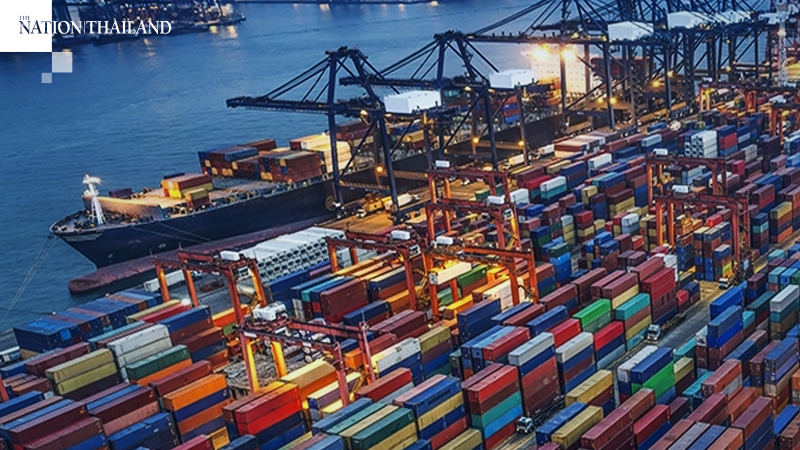
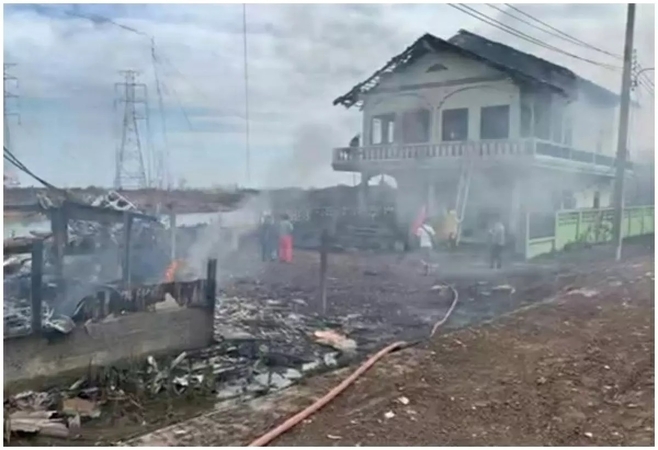

 Photo Credit: Dawn
  Further contributions to the overall drop in non-resident flows to Asia-6 stem from South Korea (-US$12bil) and Malaysia (US$5bil), while Thailand is projected to see a small increase in inflows, the IIF says.