The share price of BTS Group Holdings and Bangkok Expressway and Metro (BEM) dropped sharply on Monday due to uncertainty over the suspension of train services in response to pro-democracy protests.
BTS shares dropped by 3.74 per cent to Bt9 per share, while BEM dropped by 4.12 per cent to Bt8.15 per share. BTS and BEM shares hit their lowest point on Monday at Bt8.85 and Bt7.95, respectively.
Train services were suspended around the protest site in downtown Bangkok from the afternoon of October 16, the day police used water cannons to disperse protesters.
The pro-democracy movement then announced that rallies will be held nationwide, especially near BTS and MRT stations.
An analyst at KTB Securities said if the protests continue unabated, then BTS and BEM’s daily profit will drop by 0.5 per cent and 0.6 per cent respectively every time they suspend services.
The Stock Exchange of Thailand (SET) Index rose by 7.67 points, or 0.63 per cent, to 1,216.42 in the morning session on Tuesday.
An analyst at Krungsri Securities expected the index to fall below 1,200 points, as the market did not expect the US economic stimulus measures to be launched before the presidential election after House speaker Nancy Pelosi set up a 48-hour deadline to launch the stimulus bill.
“Also, uncertainty over Thailand’s political unrest, as protesters held rallies in many places nationwide, would pressure the market,” he said.
However, he expected that the special parliamentary meeting would help relieve political tension.
As an investment strategy, he recommended that investors buy:
▪︎ PTTGC, IVL and TOP that will benefit from the rising oil price.
▪︎ TU, STGT, CBG, SCC, IVL, COM7, ASIAN, DELTA and HANA, whose third-quarter performance is expected to grow.
The SET Index closed at 1,208.75 on Monday, down 24.93 points or 2.02 per cent. The volume of total transactions was Bt54 billion, with an index high of 1,223.15 and a low of 1,205.61.
The price of gold dropped by Bt100 per baht weight in morning trade on Tuesday, the Thai Gold Traders Association reported.
As of 9.21am, the buying price of a gold bar was Bt28,000 per baht weight and selling price Bt28,100 while gold ornaments were priced at Bt27,500.24 and Bt28,600, respectively.
At close on Monday, the buying price of a gold bar was Bt28,100 per baht weight and selling price Bt28,200 while gold ornaments were Bt27,591.20 and Bt28,700, respectively.
Spot gold price moved to US$1,903 (Bt59,460) per ounce in the morning after the price rose by $5.3 to $1,911.7 per ounce at close on Monday from the weakening dollar. Meanwhile, the market is keeping an eye on the rollout of US economic stimulus measures.
Hong Kong gold price dropped by HK$60 to $17,590 (Bt70,918) per tael on Tuesday morning, the Chinese Gold and Silver Exchange Society reported.
By Syndication Washington Post, Bloomberg · Vildana Hajric · BUSINESS
U.S. stocks fell to the lowest in almost two weeks as Congress remained apart on a fresh government spending deal, denting hopes for a breakthrough before the election. Treasurys slipped with the dollar.
The S&P 500 Index fell more than 1.5% as opposition to a sizable aid package hardened in the Republican-controlled Senate and the House Speaker told her caucus negotiators are still trying to reach a deal. Data showed key parts of the American economy are slowing two weeks ahead of the vote, while Federal Reserve officials warn the growth will slow without additional federal spending.
Futures had advanced overnight on signs of progress toward a deal and the latest data from China showing its economy continues to rebound. The 10-year Treasury yield rose above 0.76% and the dollar weakened versus major peers.
“As the hope for stimulus before the election fades, the market kind of fades with it,” said Christopher Grisanti, chief equity strategist at MAI Capital Management. “The market was pricing in some kind of stimulus and without it there’s disappointment.”
In Europe, stock slumped while the pound jumped by the most since August as British officials signaled they were ready to water down controversial lawbreaking Brexit legislation, a move which could reopen talks with the European Union over future trading relationships.
Elsewhere, oil dropped before an OPEC+ meeting to assess the state of the market as demand comes under pressure from the threat of new virus restrictions.
These are some of the main moves in markets:
Stocks
– The S&P 500 Index slipped 1.6% at 4 p.m. EDT.
– The Nasdaq 100 lost 1.8% while the Dow Jones industrial average fell 1.4%.
– The Stoxx Europe 600 Index lost 0.3%.
– The MSCI Asia Pacific Index rose 0.8%.
– The MSCI Emerging Market Index rose 0.5%.
Currencies
– The Bloomberg Dollar Spot Index decreased 0.1%.
– The euro climbed 0.4% to $1.1769.
– The British pound increased 0.2% to $1.2942.
– The onshore yuan strengthened 0.2% to 6.685 per dollar.
– The Japanese yen was flat at 105.42 per dollar.
Bonds
– The yield on 10-year Treasurys climbed one basis point to 0.76%.
– The yield on two-year Treasurys climbed one basis point to 0.145%.
– Germany’s 10-year yield gained one basis point to -0.61%.
– Japan’s 10-year yield jumped less than one basis point to 0.026%.
– Britain’s 10-year yield climbed two basis points to 0.201%.
Commodities
– West Texas Intermediate crude fell 0.7% to $40.59 a barrel.
– Brent crude dropped 1.1% to $42.43 a barrel.
– Gold futures slipped 0.1% to $1,904.20 an ounce.
Political processes needed to deal with ongoing protests, DPM says
EconOct 20. 2020Deputy Prime Minister Supattanapong Punmeechaow
By The Nation
Deputy Prime Minister Supattanapong Punmeechaow said on Monday that the ongoing protests are a political problem that needs to be solved using political means.
He made this remark while delivering a keynote speech on the economy at an annual meeting with the Thai-Chinese Chamber of Commerce and related business associations.
The minister also clarified that he was making this comment as a normal citizen, not as a Cabinet member.
He went on to say that the best way of resolving the current unrest is through political processes, adding that everyone should come together to steer the country out of an economic crisis.
He believes the protests may disrupt the economy for a short period and the authorities need to be patient in tackling this problem.
Supattanapong also said people should focus on spending to keep the economy afloat.
In his speech, he said the government has injected Bt1 trillion via its stimulus measures to help revive the economy hit by the Covid-19 pandemic and is taking every step to prevent a possible second wave of infections.
Should a second wave arrive, the government will have to spend massive sums, which will have a negative impact on the country’s financial stability, he said.
The chamber’s president Narongsak Putthapornmongkol said that both Thailand and China aimed to boost bilateral trade to US$140 billion next year.
He added that Thailand is still one of China’s top investment destinations, with Chinese foreign direct investment increasing 4.9 per cent this year.
He said that more Chinese investors and tourists will come to Thailand once the country eases entry restrictions.
Meanwhile Federation of Thai Industries chairman Supant Mongkolsuthree said the private sector wants Parliament to hold an extraordinary session to address ongoing political conflict.
EconOct 20. 2020Bank of Thailand governor Sethaput Suthiwartnarueput
By The Nation
Getting to know Sethaput Suthiwartnarueput, a globe-trotting financial expert fluent in 3 languages – and tennis
Born into a diplomat family, Sethaput spent his early childhood being whisked from one country to another thanks to his father’s job at the Foreign Ministry.
“When I was just two months old, my parents moved to Australia,” Sethaput said during an interview with BOT Magazine.
The family was then posted to India, Poland, France, Switzerland and the United Kingdom.
Sethaput said his favourite place to live was France, where he attended high school and was old enough to appreciate the charming culture and beautiful landscapes. He also became fluent in French and English during his travels.
“Moving from one country to another meant I had to make new friends and adapt [to new surroundings],” he said.
Asked what inspired him to study economics to PhD level, Sethaput admitted he couldn’t remember where he caught the finance bug.
As a boy he preferred sport to academic study, though he was interested in science and mathematics. But he recalled how a teacher at his French school made European history classes fun by encouraging students to analyse the topic for themselves rather than learn by rote.
The social sciences caught his interest and, armed with a strong mathematics background, he chose economics when the time came to enrol in university.
After graduating, he got a job in New York at prestigious management consultancy McKinsey and Co, where he cultivated the approach and working style that he still uses today.
McKinsey is known for its flexible work culture and open debate. Even junior staffers are encouraged to express their views, while inter-departmental collaboration generates a rich cross-fertilisation of ideas.
Sethaput gained further experience while working at the World Bank.
“Staff at the World Bank and the central bank do similar jobs: we are technocrats, digging deeply into specific issues, but we have limited time and limited information to deliver results, so the work is not 100 per cent perfect,” he said.
So the most important thing is “getting the ‘right things’ right”, he added.
Sethaput was a member of the Finance Ministry team that dealt with the Asian financial crisis in 1997; he has also served on the central bank’s monetary policy committee and its central board
However, the Covid-19 fallout is even more serious than the 1997 crisis since it has affected every economy in the world and hit businesses and ordinary people alike.
“While people may have high expectations of the central bank, some issues are beyond our capacity,” said Sethaput, alluding to the virus’s impact.
“There is no formula for solving the current crisis. We need to understand the issues and gain cooperation from many parties. It will take time to overcome this challenge.”
Sethaput also revealed his secrets for work success.
First, step back and look at the big picture. Before starting on any project, he takes time to think about the desired outcome. He also looks at the work from alternative perspectives to discover how others would tackle it.
Second on his list is teamwork. He likes to recall Garry D Brewer’s warning against the fragmentary approach to problem-solving. “The world has problems, but universities have departments,” Brewer wryly observed.
In his leisure time, Sethaput likes to read, paint and play sports. He lists his favourite sport as tennis and his favourite player as the Swiss maestro and former No 1 Roger Federer.
The Stock Exchange of Thailand (SET) Index closed at 1,208.75 on Monday, down 24.93 points or 2.02 per cent. The volume of total transactions was Bt54 billion, with an index high of 1,223.15 and a low of 1,205.61.
In the morning session, an analyst at Krungsri Securities expected the day’s index to fluctuate between 1,225 and 1,245 despite hopes that US economic stimulus measures will be launched before the presidential election on November 3.
“Uncertainty over Thailand’s political unrest, as anti-government protesters prepare to hold rallies across the country, will pressure the index,” he said.
The 10 stocks with the highest trade value today were AOT, KBANK, CPALL, STGT, SCB, PTT, CBG, BBL, IVL and ADVANC.
As of 4.30pm, the price of oil dropped by US$0.14 or 0.34 per cent to $40.74 per barrel, while gold rose by $7.80 or 0.41 per cent, to $1,914.20 per ounce.
Other Asian indices were mixed:
Japan’s Nikkei Index closed at 23,671.13, up 260.50 points or 1.11 per cent.
China’s Shang Hai SE Composite Index closed at 3,312.67, down 23.69 points or 0.71 per cent, while Shenzhen SE Component Index closed at 13,421.19, down 111.54 points or 0.82 per cent.
Hong Kong’s Hang Seng Index closed at 24,542.26, up 155.47 points or 0.64 per cent.
South Korea’s KOSPI Index closed at 2,346.74, up 5.21 points or 0.22 per cent.
Taiwan’s TAIEX Index closed at 12,908.34, up 157.97 points or 1.24 per cent.
The Stock Exchange of Thailand (SET) Index fell by 11.80 points, or 0.96 per cent, to 1,221.88 in the morning session on Monday.
An analyst at Krungsri Securities expected the index to fluctuate between 1,225 and 1,245 despite hopes of US economic stimulus measures being launched before the presidential election.
“Uncertainty over Thailand’s political unrest, as anti-government protesters plan to hold rallies in many places nationwide, would pressure the index,” he said.
As an investment strategy, he recommended that investors buy:
▪︎ PTTGC, IVL and TOP that will benefit from the rising oil price.
▪︎ TU, STGT, CBG, SCC, IVL, COM7, ASIAN, DELTA and HANA, whose third-quarter performance is expected to grow.
The SET Index closed at 1,233.68 on Friday, down 9.28 points, or 0.75 per cent. The volume of total transactions was Bt44 billion with an index high of 1,247.89 and a low of 1,226.95.
The price of gold rose by Bt50 per baht weight in morning trade on Monday, the Gold Traders Association reported.
As of 9.25am, the buying price of a gold bar was Bt28,000 per baht weight and selling price Bt28,100 while gold ornaments were priced at Bt27,500.24 and Bt28,600, respectively.
At close on Saturday, the buying price of a gold bar was Bt27,950 per baht weight and selling price Bt28,050 while gold ornaments were Bt27,439.60 and Bt28,550, respectively.
Spot gold price moved to US$1,902 (Bt59,326) per ounce in the morning after the price dropped by $2.5 to $1,906.4 per ounce on Friday’s close due to strong US economic data.
Hong Kong gold price dropped by HK$90 to $17,560 (Bt70,680) per tael on Monday morning, the Chinese Gold and Silver Exchange Society reported.
The price of gold dropped by Bt100 per baht weight in morning trade on Saturday, the Gold Traders Association reported.
As of 9.25am, the buying price of a gold bar was Bt27,950 per baht weight and selling price Bt28,050, while gold ornaments were priced at Bt27,439.60 and Bt28,550, respectively.
At close on Friday, the buying price of a gold bar was Bt28,050 per baht weight and selling price Bt28,150, while gold ornaments cost Bt27,545.72 and Bt28,650, respectively.
Comex (Commodity Exchange) gold price to be delivered in December dropped by US$2.5, or 0.13 per cent, closing at $1,906.4 (Bt59,487) per ounce on Friday. The precious metal price dropped by 1 per cent this week.
Gold price closed in negative territory due to strong US economic data, causing interest in gold as a safe-haven asset to fade.
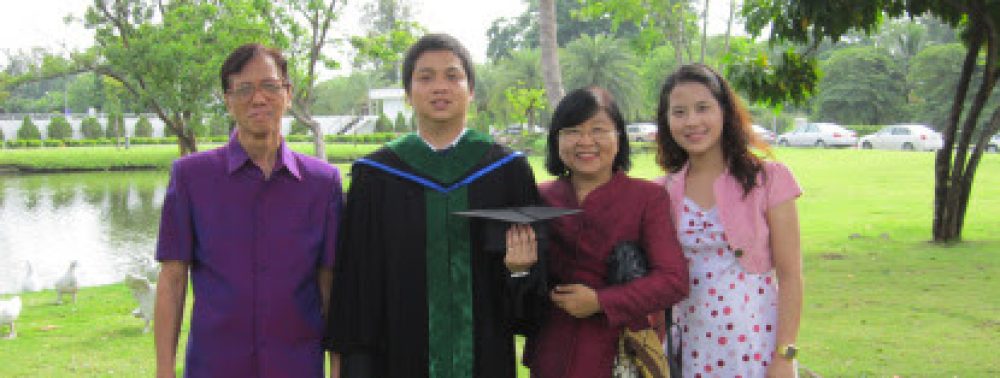



 Deputy Prime Minister Supattanapong Punmeechaow
  Bank of Thailand governor Sethaput Suthiwartnarueput