The price of gold dropped by Bt50 per baht weight in morning trade on Wednesday, the Gold Traders Association reported.
As of 9.28am, the buying price of a gold bar was Bt28,550 per baht weight and selling price Bt 28,650, while gold ornaments cost Bt28,030.84 and Bt29,150, respectively.
At close on Tuesday (August 25), the buying price of a gold bar was Bt28,600 per baht weight and selling price Bt28,700 while gold ornaments cost Bt28,091.48 and Bt29,200, respectively.
Spot gold price moved to US$1,928 (Bt60,449.38) per ounce on Wednesday morning after the price had dropped by $16.1 to $1,923.1 (Bt60,295.75) per ounce at close on Tuesday.
Gold price dropped for two consecutive days from mass sell-offs of the metal after there were signs of progress in US-China trade talks, while US new home sales hit their highest level in almost 13 years.
Meanwhile, Hong Kong gold price rose by HK$10, opening at $17,820 (Bt72,070.14) per tael this morning.
The Stock Exchange of Thailand (SET) Index fell by 2.46 points, or 0.19 per cent, to 1,313.53 in morning session on Wednesday (August 26).
A stock analyst at Krungsri Securities expected the index to fluctuate between 1,310 and 1,325 despite the rising oil price and ongoing progress of US-China trade talks.
“The price of oil rose after the US cut oil production in the Gulf of Mexico due to a hurricane,” he explained.
“However, investors would delay trading to follow US Federal Reserve’s speech on Thursday to seek signs of economic direction and monetary policy.”
He recommended that investors buy:
▪︎ Energy stocks that benefit from the rising oil price, such as PTTEP, TOP, PTTGC, IVL and SPRC.
▪︎ Stocks whose third-quarter performance will improve, such as CPF, GFPT, TU, Asian, KCE, Hana, Delta, HMPro, Global, DoHome, Com7, JMT, CHG, BCH, PTG, PlanB and CBG.
The SET Index closed at 1,315.99 on Tuesday (August 25), down 1.12 points or 0.08 per cent. Total transactions amounted to Bt56.355 billion with an index high of 1,327.42 and a low of 1,315.13.
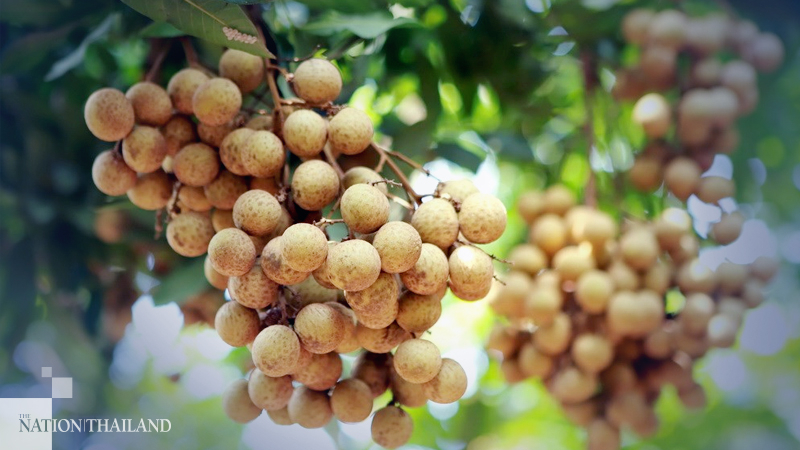
The Cabinet on August 25 approved the Fruit Board’s proposal to provide Bt3.44 billion in aid to longan farmers this year, said Minister of Agriculture and Cooperatives Chalermchai Sri-on.
The farmers will be paid Bt2,000 per rai per household for up to 25 rai.
Thailand produced 1 million tonnes of longan last year of which 583,000 tonnes were exported. The key export markets are China, Vietnam and Indonesia but demand has dropped during the Covid-19 pandemic.
The price of automotive stocks rose significantly on Tuesday (August 25) over hopes of the government’s moves to offer personal income tax reductions for new car buyers, experts said.
With this belief, the Stock Exchange of Thailand (SET)’s automotive group index rose by 4.92 points or 1.51 per cent to 329.98 with transactions totalling more than Bt113 million at Tuesday’s closing.
However, the tax incentive was not on the Cabinet’s agenda on Tuesday.
Automotive stocks that have risen sharply were Ingress Industrial (Thailand) (INGRS), which rose by Bt0.05 or 12.82 per cent to Bt0.44 with transactions totalling Bt1.94 million, followed by Somboon Advance Technology (SAT), which rose by Bt0.50 or 4.55 per cent to Bt11.50 with transactions worth Bt49.21 million, and AAPICO Hitech (AH) that rose by Bt0.35 or 4.22 per cent to Bt8.65 with transactions of Bt39.01 million.
Amnart Ngosawang, senior director at KTB Securities (KTBST), said the price of automotive stocks rose due to mass buy-ups among investors on hopes over the government’s move to issue personal income tax reduction measures for new car buyers.
“Automotive stocks gained from this factor because it will help boost automobile production this year to 1.3 million vehicles, though it is still lower than last year’s 2 million vehicles,” he said.
However, he added that his company’s research department has evaluated that these measures will not help boost the stock price by much.
“For example, if a car is priced at Bt1 million and the tax base is 20 per cent, the buyer will only get a tax reduction of Bt40,000, accounting for 4 per cent of the car’s price. This amount is already granted by car dealers in discounts,” he explained.
“However, if the government issues more measures to help the automotive industry, the price of automotive stocks may rise further.”
He said he expects the automotive industry’s performance in the second-half to recover gradually.
“In the third quarter of this year, the automotive industry’s production is expected to recover after many factories were closed in the second quarter to contain the spread of Covid-19, causing the industry’s performance to fall to its lowest this year,” he said.
He added that the securities company still gives a lower weight to automotive stocks because they will not generate much profit this year.
“If the government issues these measures, the price of these shares will not increase much because its price already responded to the news,” he added.
Meanwhile, Pasakorn Wangvivatchareon, research director at Asia Plus Securities said, said offering personal income tax reduction to new car buyers will help stimulate the demand for cars in the country and benefit automotive industry entrepreneurs.
“However, the details are still unclear, and it may not boost domestic sales much because the economy is still in its recovery period,” he said.
His securities company is also giving automotive stocks lower weight than the market because the industry’s production is pressured by the state of the economy.
The Stock Exchange of Thailand (SET) Index closed at 1,315.99 on Tuesday (August 25), down 1.12 points or 0.08 per cent. Total transactions amounted to Bt56.355 billion with an index high of 1,327.42 and a low of 1,315.13.
In the morning session, a stock analyst at Krungsri Securities expected the index to rise between 1,325 and 1,330 points after the US Food and Drug Administration approved the use of blood plasma to treat Covid-19 patients, which it said would reduce the death rate by as much as 35 per cent.
“Also, the market gained positive sentiment from the rising oil price after two storms in the Gulf of Mexico resulted in suspension of oil production,” the analyst said.
The 10 stocks with the highest trade value today were MINT, STGT, AOT, KBANK, CPALL, PTT, CPF, PTTEP, BAM and TKN.
As of 4.30pm, the price of oil had dropped US$0.05 or 0.12 per cent to $42.57 per barrel, while gold fell by $6.50 or 0.34 per cent, to $1,932.70 per ounce.
Other Asian indices were mixed:
Japan’s Nikkei Index closed at 23,296.77, up 311.26 points or 1.35 per cent.
China’s Shang Hai SE Composite Index closed at 3,373.58, down 12.06 points or 0.36 per cent, while the Shenzhen SE Component Index closed at 13,669.41, up 2.71 points or 0.020 per cent.
Hong Kong’s Hang Seng Index closed at 25,486.22, down 65.36 points or 0.26 per cent.
South Korea’s KOSPI Index closed at 2,366.73, up 36.90 points or 1.58 per cent.
Taiwan’s TAIEX Index closed at 12,758.25, up 111.12 points or 0.88 per cent.
The Cabinet on Tuesday (August 25) resolved to maintain value-added-tax (VAT) at the current rate of 7 per cent for another year as proposed by the Finance Ministry.
Finance Minister Predee Daochai said the 7 per cent rate covers all products and services subject to VAT from October 1, 2020 to September 30, 2021.
He said rate is being maintained to help ease the burden on people until the economy can be revived.
The Stock Exchange of Thailand (SET) Index on Monday (August 24) climbed by 17 points after the US approved the use of blood plasma to treat Covid-19 patients, US-Europe trade talks showed positive signs and the FTSE boosted Thai stock weight, experts said.
During the afternoon session, SET index hit the highest at 1,138.20 before falling to 1,317.11, up 17.85 points or 1.37 per cent at Monday’s close, while total transactions amounted to Bt57.078 billion.
Institutional investors and brokerage accounts made net buys of Bt1.517 billion and Bt732.04 million respectively, while foreign and domestic investors made net sales of Bt126.49 million and Bt2.122 billion, respectively.
Koraphat Vorachet, director of research and investment at Capital Nomura Securities, said the SET Index rose sharply in yesterday’s afternoon session after the US approved the use of blood plasma to treat Covid-19 patients and US-Europe trade talks showed signs of resulting in tax cuts.
“Also, FTSE boosted Thai stock weight which will be effective on September 18, so we expect about US$119 million or Bt3.7 billion to flow into Thai stocks,” he said.
He added that Thai stocks listed in FTSE All World Index (Large-Mid Cap), namely Central Retail Corporation (CRC), Bangkok Bank, (BBL) and Carabao Group (CBG) would gain $90.5 million, $76 million and $32 million, respectively.
“Meanwhile, FTSE will decrease the weight of PTT, CP All [CPALL], Siam Cement [SCC], Airports of Thailand [AOT], Advanced Info Services [ADVANC], Bangkok Dusit Medical Services [BDMS], Siam Commercial Bank [SCB], Gulf Energy Development [GULF] and PTT Exploration and Production [PTTEP] by about $3 million each,” he added.
The Industrial Estate Authority of Thailand (IEAT) is accelerating its Smart Park Industrial Estate plan as part of the Map Ta Phut Port Project so it can open for business in 2026, expecting to create more than 7,400 jobs with over Bt1.3 billion circulating in the system per year.
It aims to start reclaiming land in early 2021 and begin construction in 2024, with service commencing in 2026.
After visiting Map Ta Phut Industrial Estate and Map Ta Phut Industrial Port with Industry Minister Suriya Jungrungreangkit, IEAT governor Somchint Pilouk said the Smart Park project focuses on using modern technology and is environmentally friendly. It will be a commercial centre, supporting the growth of marine business services.
Smart Park Industrial Estate has an area of approximately 1,383 rai. On July 10, the National Economic and Social Development Council approved investment in the project and prepared to ask the Cabinet for the go-ahead to commence construction.
The project is expected to generate 7,459 jobs, with roughly Bt1.34 billion circulating in the area per year (based on a minimum salary of Bt15,000 per worker per month).
Initial investment is valued at Bt2.48 billion, divided into the concept design, EIA preparation, and construction costs.
Smart Park Industrial Estate has an advantage in terms of connecting transportation systems – U-Tapao Airport, land routes and high-speed rail.
The Map Ta Phut Industrial Port project is divided into three phases, with phase 1 and 2 having an area of approximately 2,870 rai and phase 3 being 1,000 rai.
The port currently has 12 decks for service – three public and nine specialised berths, handling some 4,258 ships. The volume of cargo as of July 31 was 41.97 million tonnes, a 6.8 per cent drop compared to the same period last year due to the Covid-19 pandemic.
Map Ta Phut Industrial Estate and Map Ta Phut Industrial Port are important production bases for one-fifth of the petrochemical industry in the Asean region.
There are five industrial estate complexes – Map Ta Phut Industrial Estate, WHA Eastern Industrial Estate, Asia Industrial Estate, RIL Industrial Estate, Padaeng Industrial Estate – and Map Ta Phut Industrial Port, with 151 factories employing 30,000 workers. The investment value of Bt1 trillion supports the petrochemical, gas and chemical sectors, as well as power plants, refineries,steel and other industries.
By Syndication Washington Post, Bloomberg · Claire Ballentine, Sarah Ponczek · BUSINESS, US-GLOBAL-MARKETS U.S. stocks rose to record highs and bonds fell on signs that the Trump administration may fast-track vaccines and treatments for coronavirus.
The S&P 500 notched another all-time high as optimism mounted that the virus wouldn’t hamper growth. The Nasdaq Composite also closed a record for a second consecutive session. Companies that benefit from a more robust economic restart led the gains. Carnival Corp. and United Airlines Holdings Inc. surged more than 9%, while Kohl’s Corp. and Gap Inc. jumped at least 7%. Casinos, carmakers and home builders joined the rally. Of the 11 S&P industry sectors, only health care finished lower.
“The market is now working out well into next year — expecting a vaccine or several, a couple of important therapeutic remedies as well, probably continued government aid, and people going back to work and children going back to school,” said David Rainey, co-portfolio manager of the Hennessy Focus Fund.
Market sentiment was supported by news over the weekend that the U.S. Food and Drug Administration is working to expand access to a virus treatment involving blood plasma from recovered patients. Separately, the Financial Times reported that the Trump administration is considering whether to bypass regulatory standards to accelerate an experimental vaccine.
European shares ended higher, with AstraZeneca Plc climbing 2%. Treasury yields rose and the dollar strengthened, while gold traded near $1,950 an ounce.
Elsewhere, Asian stocks got a boost after a report that White House officials have reassured American businesses that a ban on its WeChat app won’t be as broad as feared. WeChat owner Tencent Holdings Ltd. jumped the most in a month, gaining $37 billion.
Investors will be focused this week on the Federal Reserve’s annual Economic Policy Symposium, typically held in Jackson Hole, Wyo. Chair Jerome Powell is scheduled to speak on Thursday about the Fed’s long-awaited monetary policy framework review, which has focused on a new inflation strategy.
Meanwhile, storms Marco and Laura are rolling toward the U.S. Gulf Coast, where they’ll come ashore as hurricanes as soon as Monday. Almost 58% of crude output in the U.S. Gulf of Mexico production has been shut down as the threat prompted evacuations of offshore energy platforms and set residents and officials on edge from Texas to Florida.
These are the main moves in markets:
Stocks
The S&P 500 Index climbed 1% to 3,431.41 as of 4 p.m. EDT, the highest on record with the largest increase in more than a week.
The Dow Jones industrial average surged 1.4% to 28,309.08, the highest in six months on the biggest jump in almost three weeks.
The Nasdaq Composite Index climbed 0.6% to 11,379.72, the highest on record.
The Stoxx Europe 600 Index jumped 1.6% to 370.85, the highest in more than a week on the biggest surge in almost two weeks.
Currencies
The Bloomberg Dollar Spot Index increased 0.1% to 1,174.51, the highest in more than a week.
The euro decreased 0.1% to $1.179, the weakest in more than a week.
The Japanese yen weakened 0.2% to 105.97 per dollar.
Bonds
The yield on 10-year Treasurys rose two basis points to 0.65%, the biggest rise in more than a week.
Germany’s 10-year yield increased two basis points to -0.49%, the first advance in more than a week.
Britain’s 10-year yield climbed one basis point to 0.213%.
Commodities
West Texas Intermediate crude increased 0.2% to $42.41 a barrel, the first advance in a week.
Gold depreciated 0.7% to $1,927.26 an ounce, the weakest in more than a week.
Silver depreciated 1.3% to $26.45 per ounce, the weakest in more than a week.
The price of gold dropped by Bt100 per baht weight in morning trade today (August 25), the Gold Traders Association reported.
As of 9.28am, the buying price of a gold bar was Bt28,750 per baht weight and selling price Bt28,850, while gold ornaments cost Bt28,227.92 and Bt29,350, respectively.
At close yesterday, the buying price of a gold bar was Bt28,850 per baht weight and selling price Bt28,950, while gold ornaments cost Bt28,334.04 and Bt29,450, respectively.
The Hong Kong gold price dropped by HK$160, opening at $17,830 (Bt72,371.85) per tael this morning, the Chinese Gold and Silver Exchange Society said.
The Comex (Commodity Exchange) gold price to be delivered in December dropped by US$7.80, or 0.4 per cent, to $1,939.2 (Bt61,000) per ounce compared to the price at yesterday’s close, the lowest since July 27 this year.
The gold price closed in negative territory as investors sold the precious metal to hold risk assets that generate higher returns, after stock markets soared from positive news of US Covid-19 treatment.




 Finance Minister Predee Daochai