U-Tapao stays on course to becoming aviation hub in future #ศาสตร์เกษตรดินปุ๋ย

#ศาสตร์เกษตรดินปุ๋ย : ขอบคุณแหล่งข้อมูล : หนังสือพิมพ์ The Nation.

U-Tapao stays on course to becoming aviation hub in future

Econ

Jun 22. 2020

By The Nation

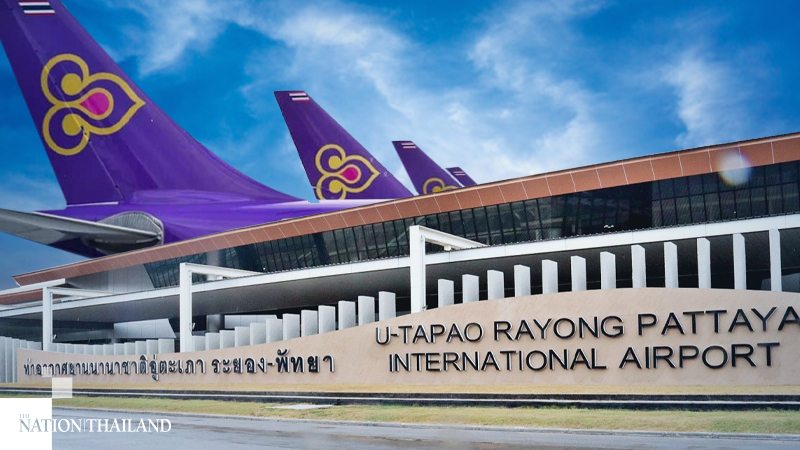
The development of U-Tapao Airport and Eastern Aviation City is set to take off after U-Tapao International Aviation Co Ltd (BBS Group) signed a joint investment agreement with Eastern Economic Corridor Office of Thailand (EECO) on June 19, with the goal of making U-Tapao an aviation hub.

EECO has revealed that the Covid-19 outbreak has had only a slight impact on the aviation city project. Experts in the aviation industry who are advising the office said that regardless of what people say travel is an inevitability.

Many parties estimate that within two years from now, air travel will return to normal. At the same time, transportation is becoming more important and air transportation will return soon, so the aviation city is still important.

The development of the U-Tapao Airport will take four years. When the construction is completed, it will be a time when air travel would be expanding, an important opportunity for the aviation city.

The crisis of Covid-19 will make the aviation business model change from using very large aircraft to the use of medium-sized jets with more flying frequency. So, the airport’s detailed design may be adjusted based on the frequency, the size of the plane and changing customer behaviour.

Meanwhile, there have been no bids for the proposed maintenance, repair and overall centre in the first round yet, but Thai Airways International plc has to build this aircraft repair centre since it has demolished the old Map Ta Phut to enlarge the runway area of the airport.

However, in the EEC, there will be other aircraft repair centres that will be open for bidding. There are still many private companies interested. From the analysis, it is seen that air travel must return to normal and Thailand will be an important aviation link in the region. The growth of the aviation industry in the Asia-Pacific region will make maintenance in the region more valuable than returning to Europe or the United States. However, the plan may be somewhat delayed due to the virus.

In terms of attracting investment in high-tech industries, although Thailand has many strengths such as infrastructure, communications infrastructure in technology, 5G network that will be used in 50 per cent of the EEC in 2021 and accelerating the development of highly skilled personnel, there is a weakness in international trade and investment agreements that are less than competitive, especially the Comprehensive and Progressive Agreement of Trans-Pacific Partnership and the Thai-European Free Trade Area.

The EECO officer said that Investors asked a lot about the time frame of action, especially on the EU FTA because it is a very important market and Vietnam has already signed these agreements

According to discussions between EECO and investors coming into the target industry, they want to know about highly skilled workers to support advanced technology. Thailand has started to develop skilled labour to support future investments. The free trade area is a secondary issue that investors asked about.

The 4-5 industries that came to consult with EECO are mostly in the biological industry and the new advanced material technology industry, such as the use of sugarcane to produce fibres for durable use in the high-tech industry, which involves high technology..

In addition, EECO has worked with Japanese high-tech companies who are going to move out of China while the Board of Investment has constantly revised the package to pull more investment.

AOT to cut costs at Suvarnabhumi after THAI downsizing #ศาสตร์เกษตรดินปุ๋ย

#ศาสตร์เกษตรดินปุ๋ย : ขอบคุณแหล่งข้อมูล : หนังสือพิมพ์ The Nation.

AOT to cut costs at Suvarnabhumi after THAI downsizing

Econ

Jun 22. 2020

By The Nation

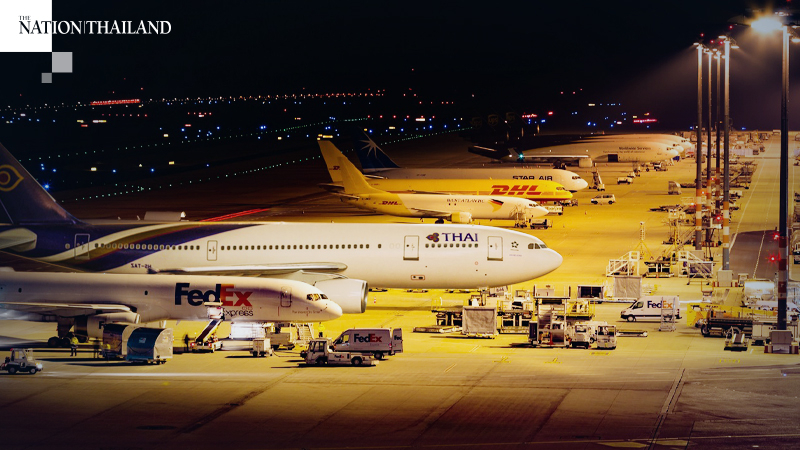
Suvarnabhumi Airport plans to reduce the number of check-in counters and hangar space to cut cost following the downsizing by national flag carrier Thai Airways (THAI).

Airports of Thailand Pcl (AOT), which runs Suvarnabhumi Airport, is preparing to close about 50 per cent of the check-in area as THAI has now entered into business rehabilitation through the Central Bankruptcy Court. Under the rehabilitation plan, THAI will also reduce the size of its fleet and flights, requiring fewer check-in counters and hangar space.

“In the past, Thai Airways used to be a large service user due to the number of flights, accounting for up to 20 per cent of traffic at Suvarnabhumi Airport.

AOT said it would use the additional check-in counters to manage other airlines, a source said.

AOT is also preparing to retake possession of parts of the aircraft hangar as THAI would need less space due to the reduction of aircraft by the airline.

AOT said the concourse will be managed to maximise efficiency and reduce management costs.

The source said that the pandemic had a direct impact on the administration of Suvarnabhumi Airport as commercial airlines are not able to fly on international routes while the number of passengers and tourists from around the world is decreasing. It is estimated that by 2021 Suvarnabhumi Airport will see 126,000 flights, down 66 per cent, compared to 370,000 in 2019.

TAT plans campaigns to woo premium foreign tourists #ศาสตร์เกษตรดินปุ๋ย

#ศาสตร์เกษตรดินปุ๋ย : ขอบคุณแหล่งข้อมูล : หนังสือพิมพ์ The Nation.

TAT plans campaigns to woo premium foreign tourists

Econ

Jun 22. 2020

By THE NATION

The Tourism Authority of Thailand (TAT) plans to launch two campaigns targeting premium foreign tourists, said TAT Governor Yuthasak Supasorn.

The two campaigns are: “Thailand, Medical and Wellness Resort of the World” and “Thailand, World’s Shopping Paradise”.

Foreign tourists reportedly account for 60 per cent of the country’s tourism income.

TAT will also launch a two-month Amazing Thailand Grand Sales 2020 from July 15 to September 15 in five provinces — Bangkok, Chiang Mai, Phuket, Hat Yai and Pattaya — featuring 10,000 offline and online businesses, to encourage local and foreign tourists to part from their money.

The campaign will also bolster Thailand’s image as a shopping destination.

He added that the fair is expected to generate cash flow of Bt1.5 billion into the economic system, higher than last year’s Bt1.4 billion.

Govt trailing critics of trans-Pacific partnership in the communications game #ศาสตร์เกษตรดินปุ๋ย

#ศาสตร์เกษตรดินปุ๋ย : ขอบคุณแหล่งข้อมูล : หนังสือพิมพ์ The Nation.

Govt trailing critics of trans-Pacific partnership in the communications game

Econ

Jun 22. 2020

By Preechapak Tekasuk

Special to The Nation

More than half a decade after abandoning the US-led multilateral programme, Trans-Pacific Partnership (TPP), Thailand has finally got back on track to joining the grouping again.

On the initiative of Deputy Prime Minister Somkid Jatusripitak, Thailand began the negotiations in early 2020. The new TPP, however, was remodelled as the Comprehensive and Progressive Agreement on Trans-Pacific Partnership (CPTPP) spearheaded by US  ally, Japan, in March 2018. 

The hope is that it might offer Thailand a broader economic and strategic opportunity, and most importantly grant Bangkok an ability to compete with its rising neighbours — Malaysia and Vietnam — who joined the talks in 2008 and 2010 respectively.

Unfortunately, the move by the Thai government has faced a chronic backlash from the public since the end of April 2020. Prominent civil-society groups interpret the CPTPP as benefiting only a small circle of Thai elites and their business conglomerates. But it grants almost zero benefits to those from the middle-class and the working class who form the majority of the country. Built on a hashtag campaign in early June, “#NoCPTPP”, on Twitter, the opposition has successfully managed to instill and flood various types of colourful infographic images into the hashtag, which has resulted in a large public disagreement on social media on joining the controversial trade deal for more than a week. This immediately led to Bangkok’s decision to stall the move and pass it to the legislative body in order to avoid popular protests.

The secret sauce to this success was undeniably simple. Thai civil-society groups used a down-to-earth strategy of making every information consumable. They converted all the scattered information about CPTPP into provocative, straightforward and reader-friendly messages, and spread them on social media platforms. When the messages are already over-simplified, it is a plain-sailing task for the groups to broaden their audiences across the board. Thus, the problem lies not with the audiences, but the messages themselves. The groups took advantage of their widespread trend of CPTPP and manipulated the public to rage on the issue, by emphasising only a few life-threatening agendas:  patents on plants and seeds, pharmaceutical patents, and small and medium-sized enterprises.

Though a handful of agendas could not fully represent the entire CPTPP package, it was more than enough for the civil-society groups to whip up  public opinion against the government as it was deemed that Thai society still remains largely dependent on the  agricultural and farming sector. Those agendas were cunningly made to be seen as jeopardising the old and prosperous livelihoods of all Thais. Hence, it was not too hard for the public to automatically believe in the civil-society groups’ provocative narrative. And, that is essentially where the information war began, and the government is likely to lose its ability to shape public opinion. Obviously, the government is not putting enough effort into advocating the trade deal.

The reasons why the government and its decision-making bodies appear to be non-responsive to the CPTPP issue remain unclear. Nevertheless, one thing that is utterly clear is that it did not effectively arrange a proper channel of communication to transparently persuade the public into trusting it. Therefore, it could not make the masses feel secure enough about its ambitious scheme. The Department of Trade Negotiations, and its parent organisation, the Ministry of Commerce, who have direct responsibility in dealing with the CPTPP issue, did not prove to be adequately proactive in communicating with the public.

A coalition of civil-society groups has its glowing infographic, leaflets spread throughout both Twitter and Facebook platforms in which most of them are online-based, by far the simplest approach to reaching its audiences. In contrast, the governmental bodies’ approach relies on limited channels of communication, paper-based leaflets, press conferences, press releases, official website-based reports, and information-overloaded conference papers. Such channels are seen either as too traditional or too informative which is not highly applicable for mass mobilisation and public support on social media.

To be fair, the government has its own social media channels too, but an old-fashioned method of communication with the public remains a major obstacle. The infographic pamphlets provided on their Facebook pages and official websites are often criticised as uninspiring, and unimaginative, since they roughly put all the information into the template at once. And that does not appear to be sufficiently persuasive. On the contrary, it drives the audiences away as the information published within the pamphlets is too incomprehensible and not reader-friendly. The masses definitely prefer messages that are easy to understand. The government has to basically understand that in order to better communicate with the public, it needs to consider the comprehension of its audiences. This is where the Thai civil-society holds its high ground over the government.

As a matter of fact, the government is strategically the sole actor who holds most of the information about the CPTPP. It had previously hired a consulting firm, Bolliger & Company, to conduct an intensive research about both costs and benefits of the CPTPP to the Thai nation. 

Apart from a 500-page research report produced by the prestigious consulting powerhouse, the government, during the past years, also had obtained a wide-ranging view from several like-minded agencies. For example, public policy-oriented Thailand Research Development Institute (TDRI), the Thai Ministry of Foreign Affairs, the Thai Ministry of Agriculture and Cooperatives, Singapore-based ISEAS-Yusof Ishak Institute, as well as leading Thai university scholars.

The public policy community, stated above, had often organised straightforward  conferences, and published newspaper commentaries about the nationwide benefits and advantages of the CPTPP, in support of the government’s move. To this extent, it could be said that the government is absolutely holding a greater power of knowledge to shape public opinion, but it is signalling the failure to do so. It need not rely merely on an old-fashioned communication approach, and should make more attempts to educate the public about the issue. The inadequacy in public relations will certainly cost the government more of its future moves should it fail to demonstrate the brighter side of that troublesome trade deal. The government must soon readjust its domestic strategy in order to bridge the gap between itself and the public, or else all the endorsements from the policy community will be worthless

Debtors hit by Covid-19 get relief from second slew of BOT measures #ศาสตร์เกษตรดินปุ๋ย

#ศาสตร์เกษตรดินปุ๋ย : ขอบคุณแหล่งข้อมูล : หนังสือพิมพ์ The Nation.

Debtors hit by Covid-19 get relief from second slew of BOT measures

Econ

Jun 20. 2020Ronadol Numnonda, BOT Deputy Governor of Financial Institutions StabilityRonadol Numnonda, BOT Deputy Governor of Financial Institutions Stability

By The Nation

The Bank of Thailand (BOT) has issued the second phase of measures to help debtors suffering from the Covid-19 impact, Ronadol Numnonda, BOT deputy governor of Financial Institutions Stability, said on Friday (June 19).

He explained that the BOT had discussed with financial service providers to implement the second phase of measures to help debtors:

1 Reducing the interest rate ceiling for credit cards and personal loans by 2 to 4 per cent per year, starting from August 1.

The interest rate ceiling for credit cards will be cut to 16 per cent per year from 18 per cent per year; 25 per cent per year from 28 per cent per year for revolving loans and instalment loans; and 24 per cent per year from 28 per cent per year for car cash.

2 Increasing credit card, revolving loan, and instalment loan limit from 1.5 times of debtors’ income to two times of debtors’ income for debtors who have shown good behaviour and have income lower than Bt30,000 per month, starting from August 1 this year to December 31 next year.

3 Provide alternative measures to help debtors hit by the Covid-19 who do not have non-performing loans.

Financial service providers must provide alternatives to debtors, such as reducing the minimum payment rate depending on debtors’ ability to pay debt, changing term loan, reducing instalment rate, and postponing the payment.

In addition, financial service providers must provide information for debtors, such as debt repayment plan, number of instalments, and additional interest that debtors have to pay after the postponement.

Moreover, financial service providers cannot call for prepayment fee or other charges on debtors because alternative measures are not considered a default in payment.

Debtors who are interested can contact financial services providers via smartphone application, website, call centre, or SMS message from July 1 to December 31 this year.

4 Financial service providers must restructure debt, focusing on their ability to pay debt in order to relieve debtors’ burden, such as extending the repayment period, changing the term loan, postponing payment, cutting interest, and delaying confiscation.

“The BOT believes that the second phase of measures will help relieve debtors’ burden and reduce the cases of default in payment,” Ronadol said.

“Meanwhile, this measure will help financial services providers to manage risks and treat debtors equally.”

He added that BOT will monitor the situation closely.

Covid-19 second wave leads to surge in demand for safe-haven assets #ศาสตร์เกษตรดินปุ๋ย

#ศาสตร์เกษตรดินปุ๋ย : ขอบคุณแหล่งข้อมูล : หนังสือพิมพ์ The Nation.

Covid-19 second wave leads to surge in demand for safe-haven assets

Econ

Jun 20. 2020

By The Nation

Investors are likely to shift from risk assets to safe-haven assets due to uncertainty following the second wave of Covid-19 pandemic, experts said.

The baht this week moved between 30.94 and 31.24 against the dollar.

The dollar strengthened due to uncertainty following rising Covid-19 cases in the US and China, pushing up demand for the dollar and yen, which are low-risk currencies.

A currency analyst at CIMB Thai Bank expected the baht next week to move at between 30.80 and 31.30 against the dollar.

“We advise investors to follow the Covid-19 impact on the economy and the results of Thailand’s Monetary Policy Committee [MPC] meeting on June 24,” the analyst said.

The Stock Exchange of Thailand (SET) Index on Friday (June 19) closed at 1,370.82, down 2.16 points or 0.16 per cent, while transactions totalled Bt63.320 billion.

A stock analyst at Capital Nomura Securities expected the index next week to fluctuate between 1,330 and 1,404 due to the Bank of Thailand (BOT)’s move to order commercial banks and non-banking entities to cut the interest rates they charge for credit cards, personal credit and hire purchase.

“We advise investors to follow the MPC’s meeting on June 24 whether the interest rate will be adjusted or not,” the analyst said.

The price of gold stood at US$1,729 per ounce, while the price in Thailand stood at Bt25,400 per baht weight.

A gold stock analyst at YLG Bullion International said that tensions between the US and China had led to increase in demand for gold as a safe-haven asset.

“We advise investors who are able to take risks to buy gold when the price drops to the support line between $1,712 and $1,717 per ounce,” the analyst said. “Investors can sell some gold to take profit when the price is unable to rise over the resistance line between $1,735 and $1,737 per ounce.”

FTI comes up with ideas to boost economy #ศาสตร์เกษตรดินปุ๋ย

#ศาสตร์เกษตรดินปุ๋ย : ขอบคุณแหล่งข้อมูล : หนังสือพิมพ์ The Nation.

FTI comes up with ideas to boost economy

Econ

Jun 20. 2020FTI chairman Supant Mongkolsuthree, left, with PM Prayut Chan-o-cha. (Photo credit: Royal Thai Government)FTI chairman Supant Mongkolsuthree, left, with PM Prayut Chan-o-cha. (Photo credit: Royal Thai Government)

By THE NATION

The Federation of Thai Industries (FTI) submitted a proposal to boost the subdued economy to Prime Minister Prayut Chan-o-cha on Friday (June 19).

Prayut had called on the FTI to make proposals as part of his announcement last week that every party would be given an opportunity to hand in their ideas for driving the country towards a better future.

FTI has proposed that the first step would be to allow the joint public-private committee tasked with solving economic problems to meet, FTI chairman Supant Mongkolsuthree said, pointing out that it has been a long time since the committee last convened. He added that the committee should hold a meeting next month.

The federation also proposed that its members deploy technology to help farmers reduce their production costs by Bt1,500 per rai. It plans to pilot this scheme on 2 million rai of land.

It will also promote “made-in-Thailand” concept as part of the national agenda as well as campaign for the country to become a regional centre for ethanol production.

FTI has also proposed that the government waive corporate income tax for the 2019-2021 fiscal years for small and medium-sized enterprises. Almost all types of withholding tax for the current 2020 fiscal year should also be cut to a flat rate of 1.5 per cent.

BOT orders commercial banks to hold off on interim dividends, bans share buy back #ศาสตร์เกษตรดินปุ๋ย

#ศาสตร์เกษตรดินปุ๋ย : ขอบคุณแหล่งข้อมูล : หนังสือพิมพ์ The Nation.

BOT orders commercial banks to hold off on interim dividends, bans share buy back

Econ

Jun 20. 2020BOT governor Veerathai Santiprabhob/ File photoBOT governor Veerathai Santiprabhob/ File photo
By The Nation

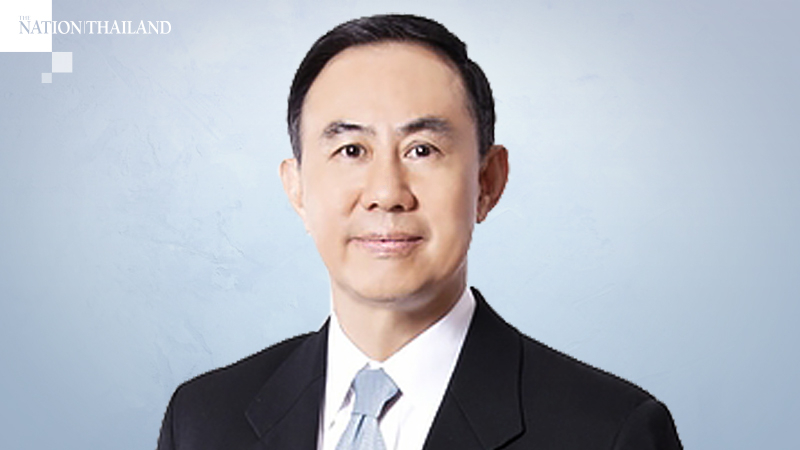
The Bank of Thailand (BOT) has told commercial banks to strengthen their capital ratio in response to the Covid-19 fallout and banned them from paying interim dividends for this year or buying back bank shares.

BOT governor Veerathai Santiprabhob said on Friday (June 19) that the impact of the Covid-19 pandemic has been deep and widespread, affecting both consumers and businesses. The situation at present is highly uncertain and this may have an impact on the quality of commercial banks’ assets.

“Hence, the Bank of Thailand is telling commercial banks to come up with a plan on their capital ratio for the next one to three years, by taking into account economic trends and the potential of debtors to run their businesses in the post-Covid era,” he said in a statement released on Friday.

During this period, banks have been told to not pay interim dividends for 2020 or buy back banks’ shares. These actions aim to strengthen the bank’s capital, allowing them to continue doing business continually. The actions are in line with steps taken by other central banks to stem risks from uncertainty created by the pandemic, he added. 

Meanwhile, Pipat Luengnaruemitchai, assistant managing director at Phatra Securities, told the Nation that the BOT statement reflects belief that risks from the impact of Covid-19 will rise. 

“Before novel coronavirus arrived, Thai banks were resilient with a solid capital base, but now we don’t know for sure. So far, we don’t know the reality of bad debts, as many debtors are being given the option of delaying their debt payments,” he said. 

Bank profit is inflated by practice, so the central bank insisting that interim dividend not be paid is reasonable. The order prohibiting the buying back of share aims to prevent banks from circumventing the no-dividend payment order, he said. 

The central bank’s latest measures are expected to have a seriously adverse impact on bank shares in Monday’s trading, after banks have already been hit by the contraction of the economy. 

According to Phatra Security’s forecast, the Thai economy will fall by 9 per cent this year, and unemployment hit 10 per cent. 

“We are pessimistic about the economic outlook as tourists have almost all gone, while consumption, investment and exports are all being impacted by the outbreak,” he said.

EXIM Bank helps buffer impact of Covid-19 for exporters #ศาสตร์เกษตรดินปุ๋ย

#ศาสตร์เกษตรดินปุ๋ย : ขอบคุณแหล่งข้อมูล : หนังสือพิมพ์ The Nation.

EXIM Bank helps buffer impact of Covid-19 for exporters

Econ

Jun 20. 2020

Pisit Serewiwattana

Pisit Serewiwattana

By THE NATION

Customers of the Export-Import Bank of Thailand have started seeing a delay in payments from importers, who are suffering from the Covid-19 fallout, the bank’s president Pisit Serewiwattana said.

The outbreak has disrupted the receiving of orders by importers and the distribution of goods.

The bank is helping ease its clients’ financial problems by extending the period of export guarantee and debt suspension.

He suggested that exporters purchase export credit insurance facilities against the risk of non-payment by importers. He also said that subscribing to the insurance will help cover exporters’ costs and ensure they get payment from their regular foreign customers.

He added that despite the outbreak, the bank’s export credit lending has continued growing, with up to Bt20 billion given in loans since the beginning of the year. This has increased its outstanding loans to Bt130 billion.

He said he expects new loans worth another Bt15 billion in the second half.

Oil’s rise above $40 comes as demand recovers, shale reawakens #ศาสตร์เกษตรดินปุ๋ย

#ศาสตร์เกษตรดินปุ๋ย : ขอบคุณแหล่งข้อมูล : หนังสือพิมพ์ The Nation.

Oil’s rise above $40 comes as demand recovers, shale reawakens

Econ

Jun 19. 2020Oil tankers are seen anchored in the Pacific Ocean above Long Beach, Calif., on May 1, 2020. MUST CREDIT: Bloomberg photo by Patrick T. Fallon.Oil tankers are seen anchored in the Pacific Ocean above Long Beach, Calif., on May 1, 2020. MUST CREDIT: Bloomberg photo by Patrick T. Fallon.

By Syndication Washington Post, Bloomberg · Hailey Waller · BUSINESS, US-GLOBAL-MARKETS 

Oil eclipsed $40 a barrel in New York on Friday, extending a slow but relentless rise that’s been fueled by a pick-up in demand and could signal a reawakening for U.S. shale production.

Two of the world’s biggest commodity trading houses, Vitol Group and Trafigura Group, said global oil demand is recovering at a rapid pace this month, while Saudi Energy Minister Prince Abdulaziz bin Salman also said he sees encouraging signs of a consumption recovery.

The rally allows the industry some breathing room on its high debt burden, giving confidence to lenders and investors as U.S. shale seeks to rebuild after the worst price collapse in a generation. But with producers planning to turn on the taps once again, it could also be short-lived.

“To a certain degree producers will come back,” said Bob Yawger, director of the futures division at Mizuho Securities USA. “It’s not the sweet spot by any stretch of the imagination,” he added, but “people will come back.”

U.S. producer Continental Resources Inc. said this week it will start bringing back some of its shut-in oil production next month following EOG Resources Inc.’s pledge to accelerate output in the second half of the year.

West Texas Intermediate crude prices for 2021 have traded above $40 for much of this week, a level that could entice producers to hedge their output.

Timespreads are also showing strength. Brent crude’s prompt spread is rallying after settling in backwardation — a bullish indicator that points to tighter supply conditions — on Thursday for the first time since early March. WTI’s front-month spread also rose Friday.

OPEC’s deal with allies including Russia to curb production has also helped spur the price recovery. Even OPEC’s habitual quota cheat, Iraq, said it will implement its cuts in full this month. UBS Group AG said it expects an under-supplied market in the second half of this year and in 2021.

OPEC+ is “on the right track” to re-balance the global oil market but still has “a long way to go,” Prince Abdulaziz bin Salman said on Thursday at the group’s Joint Ministerial Monitoring Committee. He said the next two weeks will be “critical” for OPEC+ to demonstrate all countries are adhering to the cuts.

Meanwhile, U.S. oil production has a ways to go to regain the momentum it had earlier this year when output topped 13 million barrels a day. Data from the Energy Information Administration this week showed output declined for an eleventh straight week to just above 10 million barrels a day last week.

Though the outlook for crude has brightened in recent days, a potential resurgence of the virus is clouding the long-term outlook. Traffic in Beijing has plunged as authorities battle a fresh outbreak, while some U.S. states are still seeing cases surge.

Crude also got a boost Friday from equity markets in Europe and the U.S., which gained following the latest breakthrough in trade negotiations between America and China and stimulus talks in Europe. Crude has been embroiled in equity-market sentiment for much of this week.

“Oil prices find a lot of support in line with equity markets,” said ABN Amro’s senior energy economist, Hans van Cleef. “Risk-on mode is supportive for commodities.”