Shrinking pool of bad debts is a good sign for emerging markets #ศาสตร์เกษตรดินปุ๋ย

#ศาสตร์เกษตรดินปุ๋ย : ขอบคุณแหล่งข้อมูล : หนังสือพิมพ์ The Nation.

Shrinking pool of bad debts is a good sign for emerging markets

Econ

Jun 23. 2020

 Photographer: Qilai Shen/Bloomberg

Photographer: Qilai Shen/Bloomberg

By Syndication Washington Post, Bloomberg · Ezra Fieser · BUSINESS, US-GLOBAL-MARKETS 
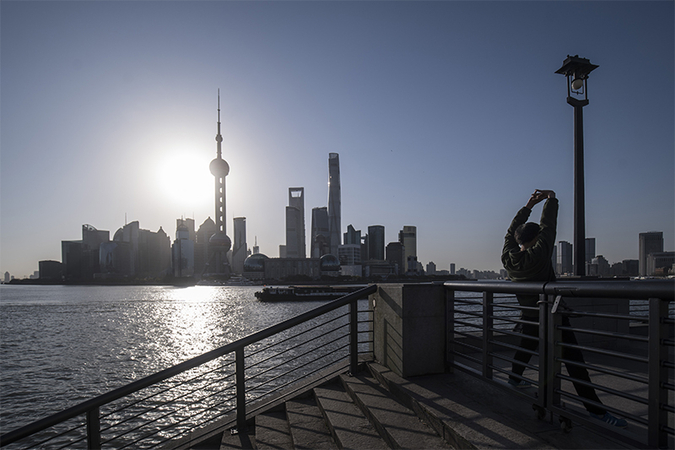
The pile of distressed debt in emerging markets that ballooned in March is quickly shrinking, suggesting to some investors that fears of a wave of corporate collapses are overblown.

Despite warnings that default rates will rise to double digits, investors have turned more bullish on the riskiest debt sold by companies in markets from Latin America to China, resulting in falling levels of distressed debt.

Since peaking on March 19 at $121.6 billion, the pool of high-yield, emerging-market corporate debt trading at distressed levels has shriveled to $28.6 billion, according to JPMorgan Chase & Co. The spread between high-yield bonds and a broader index of developing-nation debt has tightened 140 basis points over that time.

“The level of hysteria we saw in March for corporates was somewhat unprecedented,” said Steve Cook, co-head of emerging markets fixed income at PineBridge Investments, which has $96.2 billion in assets under management. “There will be some weak links, but to say that you’re going to see 10% to 12% default rates, we don’t see it.”

PineBridge expects the default rate for those corporates to reach 3% to 4% by the end of the year, he said.

A global recession caused by the coronavirus lockdown and worsened by a crash in oil prices has heightened the risks corporations won’t be able to meet obligations. Moody’s Investors Service said this week it expects the default rate to at least triple by the end of the year for speculative-grade companies in Latin America and that it may top 10%. The ratings firm previously said as much as 13.7% of speculative-grade corporate bonds in emerging markets will sour in the year to March 2021. The rate at the end of March was 2.2%.

Yet, high-yield, developing-market debt has gained 15% so far in the quarter starting in April, compared to 12% for high-yield U.S. corporate debt, according to data compiled by Bloomberg.

To be sure, the downturn has taken a toll on the government debt side of emerging markets, with countries including Argentina, Ecuador and Lebanon already defaulting.

The situation is not entirely rosy for companies either, especially if economies recover more slowly than expected. Yet, many corporations went into the downturn with relatively strong balance sheets and have benefited as governments poured stimulus into banking systems and, in some cases, instituted moratoriums on principal and interest payments, said Omotunde Lawal, head of emerging market corporate debt at London-based Barings U.K. Ltd.

Lawal expects a legion of companies to start to benefit when economies do reopen, earning just enough revenue to meet obligations, but not enough to continue cutting debt levels.

“Balance sheets will be weaker and we’ll see a growth of zombie corporates,” she said. Many companies will “muddle through with a slower path to deleveraging, but it will not cause a spike in defaults.”

With many sectors continuing to suffer, notes sold by companies such as Brazilian air carrier Gol Linhas Aereas Inteligentes SA and Chinese property manager China Evergrande Group are still distressed. But the rally has pushed down yields for many bonds that were distressed in March, such as debt from companies as varied as Chilean mobile services company WOM to Mexican concrete giant Cemex SA, according to data compiled by Bloomberg.

Companies across the globe have piled into debt markets since the financial crisis, with the total stock of outstanding bonds reaching $2.4 trillion this year, a four-fold increase from 2009, according to JPMorgan data.

The sheer size of the universe of such debt means even if defaults start to rise, the percentage is unlikely to hit double digits as it did during the financial crisis, PineBridge’s Cook said.

“We need to be careful not to compare it to the financial crisis,” he said.

Stocks rise on tech advance; gold and oil climb #ศาสตร์เกษตรดินปุ๋ย

#ศาสตร์เกษตรดินปุ๋ย : ขอบคุณแหล่งข้อมูล : หนังสือพิมพ์ The Nation.

Stocks rise on tech advance; gold and oil climb

Econ

Jun 23. 2020

By Syndication Washington Post, Bloomberg · Michael Hunter · BUSINESS, PERSONAL-FINANCE 

U.S. stocks rose, with technology leading the advance, as investors continued to bet on companies with strong balance sheets and better prospects in an economy where work-from-home remains part of the norm.

The Nasdaq 100 jumped more than 1%, with Adobe, Amazon.com and Square ending at all-time highs. The Nasdaq Composite capped a seventh straight advance in its longest rally of the year. The S&P 500 lagged behind, with some sectors under pressure as investors weighed the economic impact of virus flare-ups in some states.

“There’s absolutely a big tug-of-war going on right now,” JJ Kinahan, the chief market strategist at TD Ameritrade, said by phone. “Everyone is trying to figure out who is going to be the winners and losers when things get quote-unquote back to normal. That to me shows that everybody is trying to figure out which way to go.”

Gold tested a seven-year high, while the dollar weakened. European stocks slumped, with Wirecard AG plunging after more than $2 billion in assets went missing. The yield on Germany’s 30-year government debt fell below zero for the first time since May. Crude oil settled above $40 a barrel in New York.

The comments from Texas’s governor come with a dozen states reporting sharp increases in virus cases over the weekend, even as others move forward with phased reopening. There were also new scares in Germany and Australia. But investors are wagering that policymakers will be unwilling to stop business activity or slow progress toward a recovery.

At the same time, risk appetite is being supported by historic stimulus programs by central banks around the world. Equity markets have steadied in recent weeks and the S&P 500 is within 10% of its pre-pandemic peak.

“The market doesn’t believe that we will see such draconian lockdowns even if there is a resurgence of the virus. The politics have moved on,” said James Athey, a money manager at Aberdeen Standard Investments. “Rightly or wrongly, there’s also a pretty widespread feeling that riskier assets won’t go down too far because the Federal Reserve won’t let them.”

These are the main moves in markets:

Stocks

The S&P 500 Index increased 0.7% to 3,118 as of 4 p.m. EDT.

The Dow Jones industrial average added 0.6% and the Nasdaq composite rose 1.2%.

The Nasdaq Composite Index gained 0.8%, hitting the highest in more than a week with its seventh consecutive advance.

The MSCI All-Country World Index was little changed at 527.04.

Currencies

The Bloomberg Dollar Spot Index decreased 0.5% to 1,213.48, hitting the lowest in a week with the first retreat in a week and the largest dip in three weeks.

The euro increased 0.7% to $1.1259, the first advance in a week and the biggest climb in more than two weeks.

The Japanese yen was little changed at 106.83 per dollar, hitting the strongest in more than six weeks with its sixth straight advance.

Bonds

The yield on 10-year Treasurys rose one basis point to 0.70%, the lowest in more than a week.

Germany’s 10-year yield fell three basis points to -0.44%, the lowest in a week on the largest fall in more than a week.

Britain’s 10-year yield fell four basis points to 0.2%, the biggest fall in more than a week.

Commodities

West Texas Intermediate crude advanced 1.8% to $40.46 a barrel.

Gold futures strengthened 0.8% to $1,765.90 an ounce.

Rayong ‘smart park’ expected to generate over Bt1.3bn per year #ศาสตร์เกษตรดินปุ๋ย

#ศาสตร์เกษตรดินปุ๋ย : ขอบคุณแหล่งข้อมูล : หนังสือพิมพ์ The Nation.

Rayong ‘smart park’ expected to generate over Bt1.3bn per year

Econ

Jun 23. 2020

By THE NATION

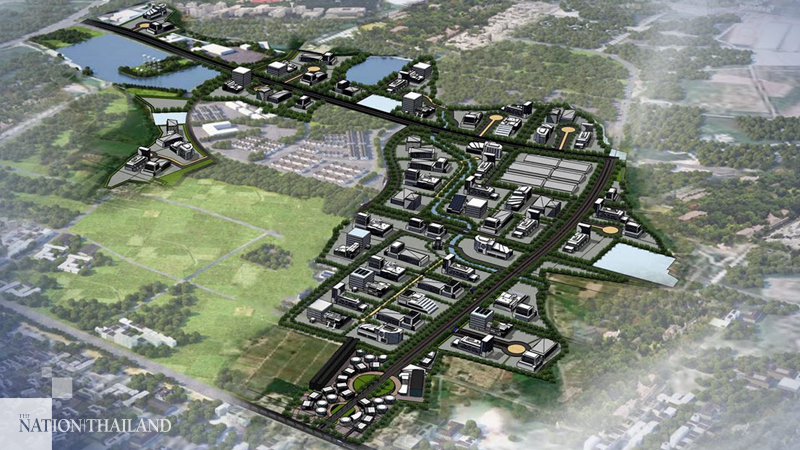
The Industrial Estate Authority of Thailand (IAET) is expected to begin construction of a Bt2.37 billion “smart park” industrial zone in Rayong early next year, said governor Somchint Pilouk.

The project is part of the government’s flagship Eastern Economic Corridor infrastructure programme and is scheduled for completion in three years.

The IEAT board approved the project in January this year, and it will be submitted to the National Economic and Social Development Council next month.

Somchint said the venue will be a role model for modern industrial parks thanks to its adoption of advanced industrial technology, communications, and transport and energy systems.

The project occupies 1,383 rai, of which 621 will be set aside as industrial zones and 238 as a “green” buffer zone.

The park is designed to host four new S-curve industries: aviation and logistics in a 299-rai zone, medical industry (180 rai), robotics (over 74 rai) and digital industry (over 66 rai). The venue will bring an estimated 7,459 new jobs and cash flow of Bt1.342 billion per year. It is expected to draw industrial investment of Bt53 billion.

Central bank soothes investors, saying new measures aim to avoid a repeat of 1997 #ศาสตร์เกษตรดินปุ๋ย

#ศาสตร์เกษตรดินปุ๋ย : ขอบคุณแหล่งข้อมูล : หนังสือพิมพ์ The Nation.

Central bank soothes investors, saying new measures aim to avoid a repeat of 1997

Econ

Jun 23. 2020BOT deputy governor Ronadol NumnondaBOT deputy governor Ronadol Numnonda

By The Nation

The Bank of Thailand (BOT) has launched pre-emptive measures to prevent a financial crisis like the one in 1997, BOT deputy governor Ronadol Numnonda said in response to investors’ concerns about the resilience of local commercial banks in the Covid-19 fallout. 

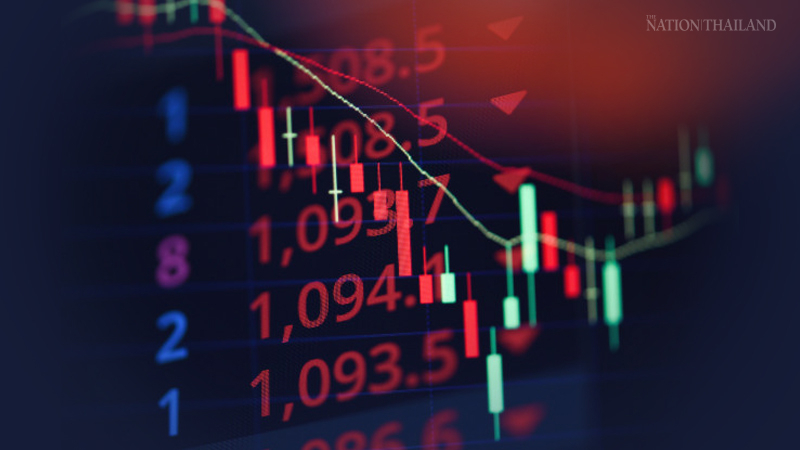
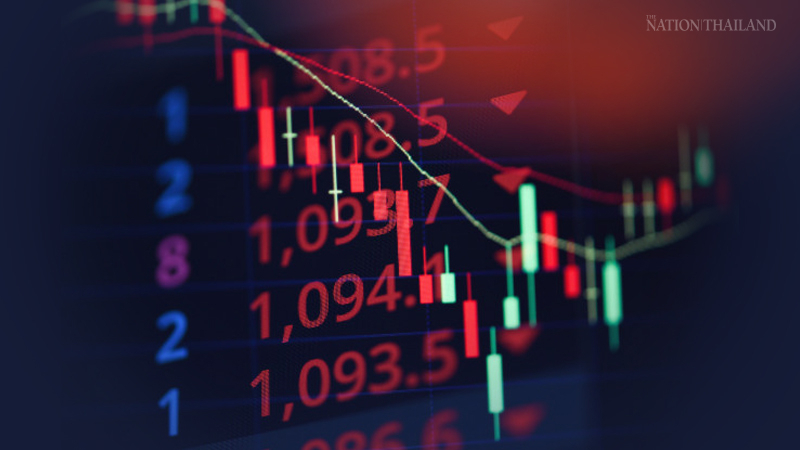
The Stock Exchange of Thailand (SET) Index closed at 1,352.18 on Monday (June 22), down 18.64 points or 1.36 per cent. Total transaction volume was Bt65.772 billion with an index high of 1,367.98 and a low of 1,347.60. Stock analysts are blaming the central bank’s measures for pulling down the index. 

BOT on Friday ordered commercial banks to hold off on paying interim dividends and also stopped them from buying back shares to strengthen their capital ratio in response to the pandemic. 

To clarify this move, Ronadol said the central bank was only taking pre-emptive measures. 

“We have learned from the 1997 crisis that we should not let the situation get out of hand. At that time, bad loans skyrocketed to 50 per cent of total bank loans because no pre-emptive measures had been taken. Today, we are implementing preventive measures and bad debts are just 3.05 per cent of total bank loans,” he said. 

Bad debts stood at Bt490 billion at the end of this year’s first quarter. 

BOT has also called on commercial banks to conduct a stress test on the management of their capital in the next one to three years. 

Bank capital adequacy ratio is at the heart of the banking business, as it underpins bank lending and reserves against risk assets in case debtors get into trouble in the future. 

Banks are expected to submit results of their stress test to BOT as of late July. 

Ronadol, meanwhile, reassured investors that banks have strong capital. As of the end of the first quarter, the average BIS capital adequacy ratio was 18.7 per cent, which can be considered relatively high compared to the minimum requirement of 8.5 per cent, he said. 

During the 1997 financial crisis, the BIS ratio was 8.1 per cent. 

“After consulting with bankers, we believe that when  BIS ratio is between 11.5 and 12.5 per cent, banks could handle the Covid-19 fallout,” he said. 

If the BIS ratio falls below that level, banks will have to conduct capitalisation through different methods, such as holding off on paying dividends or buying back shares. Banks can also increase their Tier 1 capital by selling shares or raise Tier 2 capital by issuing debentures, he said.

Master plan for Bt6.5-tn circular economy unveiled #ศาสตร์เกษตรดินปุ๋ย

#ศาสตร์เกษตรดินปุ๋ย : ขอบคุณแหล่งข้อมูล : หนังสือพิมพ์ The Nation.

Master plan for Bt6.5-tn circular economy unveiled

Econ

Jun 23. 2020

Minister Suvit Maesincee

Minister Suvit Maesincee

By THE NATION

The Ministry of Higher Education, Science, Research and Innovation has unveiled its plan to boost the gross domestic product of the country’s bio-circular green (BCG) economy, to strengthen Thailand’s economic sustainability.

Minister Suvit Maesincee said that if things go as planned, the BCG sector’s GDP will surge to Bt4.4 trillion in next five years from the current Bt3.4 trillion. The value could reach Bt6.5 trillion in 2030, he added.

The ministry has joined with related state agencies and private firms in drawing up plans to promote BCG in the following seven fields.

1. Agriculture: This includes the development of smart farmers and tax incentives to encourage smart farming. The goals are to make Thailand one of the world’s top 10 exporters and boost farming income to Bt240,000 per household per year. It aims to boost the GDP of the farm sector to Bt400 billion in the next five years.

2. Food sector: The development will focus on the functional food industry and functional food ingredient industry as well as medical food. It aims to boost GDP in the food sector to Bt300 billion in the next five years and reduce food industry waste to 15 per cent from the current 30 per cent by 2024 and to 10 per cent by 2030.

3. Energy and biochemical sectors: The plan will promote the use of ethanol, the use of a smart national electricity grid, and the introduction of a Green tax. It will set up the centre and fund for the bio-refinery industry and integrated bio-products. These will add value to farm products and stabilise the price of sugar cane and palm oil.

4. Medical supplies and vaccines. The ministry will set up a fund to support R&D of medicines and vaccines. It will also promote the Genomics Thailand project. It aims to boost GDP in the medicine and vaccine sector to Bt90 billion in next five years from the present Bt40 billion and cut public healthcare costs by Bt70 billion per year. To achieve these goals, the government will support R&D ranging from work in labs to clinical trials, and amend some vaccine procurement rules.

5. Medical equipment: The ministry will set up a fund to develop equipment standards and an institute to certify the standards of the medical technology and medical equipment innovations.

6. The tourism sector and creative economy sector: The plan includes the support of Thai digital platforms to promote tourism.

The plan will promote northern provinces as the “luxury retirement centre of Asia” to draw long stay-tourists and high-income, aged tourists worldwide.

It will also promote Thailand as Asia’s creative-content production hub.

The plans aims to boost GDP in these two sectors to Bt300 billion in the next five years.

7. Circular economy: It will draw up a law to recycle waste and plastic packaging, promote knowledge of the circular economy and waste separation, and promote the use of farm waste such as rice straw and sugar cane leaves.

Prayut urges greater tax incentives to lure investors for new S-curve sectors in EEC #ศาสตร์เกษตรดินปุ๋ย

#ศาสตร์เกษตรดินปุ๋ย : ขอบคุณแหล่งข้อมูล : หนังสือพิมพ์ The Nation.

Prayut urges greater tax incentives to lure investors for new S-curve sectors in EEC

Econ

Jun 23. 2020Prime Minister Prayut Chan-o-cha orders related state agencies to consider offering additional tax incentives to woo investors for the new S-curve sectors.Prime Minister Prayut Chan-o-cha orders related state agencies to consider offering additional tax incentives to woo investors for the new S-curve sectors.

By THE NATION

Prime Minister Prayut Chan-o-cha has instructed related state agencies and the Board of Investment (BoI) to consider offering additional tax incentives to attract investment in the five new “S-curve” sectors in the Eastern Economic Corridor, EEC Office secretary-general Kanit Sangsuban said on Monday (June 22).

The five new S-curve industries are medicine, aviation, automation and robotics, digital and bio-technology industries. Most of the initial EEC investment concentrated on S-curve businesses such as auto parts, agriculture and processed food.

An S-curve is derived from S-like shape of a sector’s growth – it is flatter at the beginning and end and steeper in the middle.

According to the BoI, the value of projects applying to invest in EEC during the first five months of this year was Bt32 billion, versus Bt53 billion over the same period last year.

SET dips after BOT orders banks to delay dividend payments #ศาสตร์เกษตรดินปุ๋ย

#ศาสตร์เกษตรดินปุ๋ย : ขอบคุณแหล่งข้อมูล : หนังสือพิมพ์ The Nation.

SET dips after BOT orders banks to delay dividend payments

Econ

Jun 22. 2020

By The Nation

The Stock Exchange of Thailand (SET) Index closed at 1,352.18 today (June 22), down 18.64 points or 1.36 per cent. Total transaction volume was Bt65.772 billion with an index high of 1,367.98 and a low of 1,347.60.

In the morning session, a stock analyst at Krungsri Securities projected the index would fall to 1,350-1,355 points before rebounding.

“Commercial banks and non-banking-entity stocks were under pressure from the Bank of Thailand’s order to hold off payment of interim dividends and buyback of shares to strengthen their capital ratio in response to the Covid-19 fallout,” the analyst said.

“Meanwhile, investors were worried about a second wave of Covid-19 after the number of new cases rose sharply, especially in Brazil, the US and India.”

He said the index would rebound as energy and petroleum stocks gained positive sentiment from the rising crude oil price and mass buy-offs in super savings funds for tax deduction.

“The price of crude oil rose almost US$40 [Bt1,238.82] per barrel after the number of active oil rigs in the US dropped by 10 to 189, while the Opec+ grouping is working on cutting oil production,” the analyst said.

The 10 stocks with the highest trade value today were KBANK, BBL, SCB, PTTEP, BAM, CPF, CPALL, AOT, PTT, and STA.

As of 4.30pm, the price of crude oil was unchanged at US$39.75 per barrel, while gold rose by $9.10 or 0.52 per cent, to $1,762.10 per ounce.

Changes in other Asian indices were as follows:

Japan’s Nikkei Index closed at 22,437.27, down 41.52 points, or 0.18 per cent.

China’s Shang Hai SE Composite Index closed at 2,965.27, down 2.36 points, or 0.08 per cent, while Shenzhen SE Component Index closed at 11,702.44, up 34.31 points, or 0.29 per cent.

Hong Kong’s Hang Seng Index closed at 24,511.34, down 132.55 points, or 0.54 per cent.

South Korea’s KOSPI Index closed at 2,126.73, down 14.59 points, or 0.68 per cent.

Taiwan’s TAIEX Index closed at 11,572.93, up 23.07 points, or 0.20 per cent.

SET expected to rebound ‘June-end’ as investors go in for ‘window dressing’ #ศาสตร์เกษตรดินปุ๋ย

#ศาสตร์เกษตรดินปุ๋ย : ขอบคุณแหล่งข้อมูล : หนังสือพิมพ์ The Nation.

SET expected to rebound ‘June-end’ as investors go in for ‘window dressing’

Econ

Jun 22. 2020

By The Nation

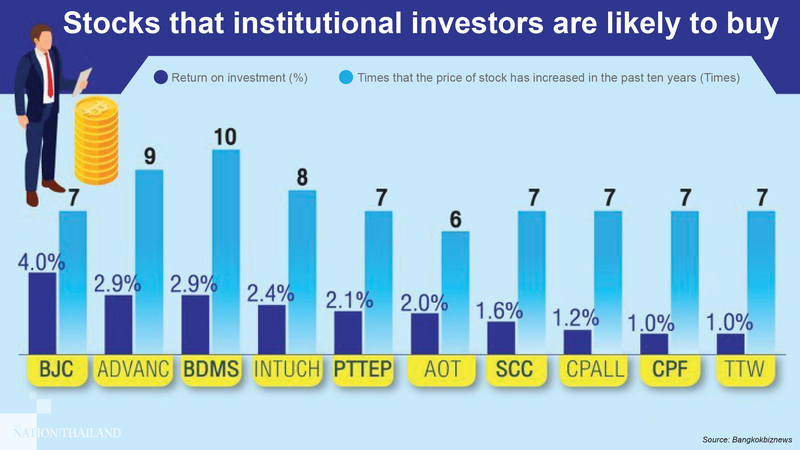
The Stock Exchange of Thailand (SET) Index is expected to rebound by the end of June as institutional investors are likely to buy up stocks as “window dressings”, experts said.

Window dressing is a strategy used by mutual-fund and other portfolio managers close to the year end or quarter end to improve the appearance of a fund’s performance before presenting it to clients or shareholders.

Asia Plus Securities research manager Paradorn Tiaranapramote said that in the past ten years, the SET Index has risen approximately 0.63 per cent during the last ten days of June, predicting that the index will rise to 1,380 points by the end of this month.

“In the past ten years, institutional investors have bought stocks as window dressings at the end of June and December,” he said. “Capital approximately worth Bt8.4 billion and Bt14 billion have flowed into the stock market in June and December, respectively,” Paradorn said.

He expected more capital to flow into the market because from June 1 to 18, institutional investors bought stocks totalling Bt1.48 billion, lower than the previous five months and lower than the original average of Bt8.4 billion.

“The market would gain positive sentiment from mass buy-offs in super saving funds for tax deduction, sales of which will end on June 30,” he said. “Meanwhile, we expect institutional investors to buy large-cap stocks, with prices rising more than the market.”

He recommended ten stocks institutional investors would buy – Berli Jucker (BJC), Advanced Info Service (Advanc), Bangkok Dusit Medical Services (BDMS), Intouch Holdings (Intuch), PTT Exploration and Production (PTTEP), Airports of Thailand (AOT), Siam Cement (SCC), CP All (CPAll), Charoen Pokphand Foods (CPF), and TTW.

Meanwhile, Tisco Securities senior strategist Apichat Poobunjirdkul said that according to a study on the movement of the Thai stock market at the end of every quarter since the global financial crisis in 2009, the chance that institutional investors will go in for a window dressing in the first quarter is 67 per cent, and 64 per cent in the second, third, and fourth quarters.

“Returns from window dressing in the first quarter are approximately 1.2 per cent and 1.4 per cent in the second quarter, contracting 0.5 per cent in the third quarter, and 0.0 per cent in the fourth quarter,” he said.

Gold price boosted amid second Covid-19 wave abroad #ศาสตร์เกษตรดินปุ๋ย

#ศาสตร์เกษตรดินปุ๋ย : ขอบคุณแหล่งข้อมูล : หนังสือพิมพ์ The Nation.

Gold price boosted amid second Covid-19 wave abroad

Econ

Jun 22. 2020

By The Nation

The price of gold rose by Bt150 per baht weight in morning trade today (June 22), the Gold Traders Association reported.

As of 9.27am, the buying price of a gold bar was Bt25,600 per baht weight and selling price Bt25,700, while gold ornaments were priced at Bt25,135.28 and Bt26,200, respectively.

At close on Saturday (June 20), the buying price of a gold bar was Bt25,450 per baht weight and selling price Bt25,550, while gold ornaments were priced at Bt24,998.84 and Bt26,050, respectively.

The Gold Spot Index price this morning moved to around US$1,755 (Bt54,389) per ounce after the price rose by $21.9 to $1,753 per ounce at close on Friday.

Investors bought gold as a safe haven asset due to uncertainty following the second wave of Covid-19 infections in the US and China.

BOT move, second virus wave cast shadow on SET #ศาสตร์เกษตรดินปุ๋ย

#ศาสตร์เกษตรดินปุ๋ย : ขอบคุณแหล่งข้อมูล : หนังสือพิมพ์ The Nation.

BOT move, second virus wave cast shadow on SET

Econ

Jun 22. 2020

By The Nation

The Stock Exchange of Thailand Index dropped by 10.61 points, or 0.77 per cent, to 1,360.21 this morning (June 22).

A stock analyst at Krungsri Securities expected the index to fall between 1,350 and 1,355 points before rebounding.

“Commercial banks and non-banking entity stocks were under pressure from the Bank of Thailand’s order to hold off paying interim dividends and buying back shares to strengthen their capital ratio in response to the Covid-19 fallout,” the analyst said.

“Meanwhile, investors were worried about a second wave of Covid-19 after the number of new cases rose sharply, especially in Brazil, the US and India.”

He said the index would rebound as energy and petroleum stocks gained positive sentiment from the rising crude oil price and mass buy-offs in super savings funds for tax deduction.

“The price of crude oil rose almost US$40 [Bt1,238.82] per barrel after the number of active oil rigs in the US dropped by 10 to 189, while the Opec+ grouping is working on cutting oil production,” the analyst said.

He recommended investors buy the following stocks:

▪ Energy stocks that benefit from the rising crude oil price, such as PTT, PTTEP, TOP, PTTGC, IRPC, SPRC, and IVL.

▪ Stocks whose second-quarter performance will improve, such as CKP, Tasco, STA, and RS.

▪ Marine shipping stocks that benefit from the rising freight rate, such as PSL, TTA, AMA, and PRM.

The SET Index dropped by 2 points on Friday (June 19), or 0.16 per cent, closing at 1,371 due to the FTSE All World move to reduce the weight on Thai stocks. Total transactions amounted to Bt63 billion.

Net sale by foreign investors amounted to Bt4.037 billion in stocks and Bt2.131 billion in bonds. There were 9,418 net short TFEX SET50 contracts.