BOT may focus on rising bad debts and leave key policy rate untouched #ศาสตร์เกษตรดินปุ๋ย

#ศาสตร์เกษตรดินปุ๋ย : ขอบคุณแหล่งข้อมูล : หนังสือพิมพ์ The Nation.

BOT may focus on rising bad debts and leave key policy rate untouched

Econ

Jun 24. 2020

By The Nation

The Bank of Thailand (BOT) is likely to leave the key policy rate unchanged during the Monetary Policy Meeting (MPC) today (June 24), analysts say, but warn about rising bad debts.

The MPC has cut key policy rates three times this year, from 1.25 per cent to 0.5 per cent, though most analysts expect the central bank to maintain its key policy rate. 

Somprawin Manprasert, chief economist at Krungsri Bank, believes the MPC will today unanimously vote to leave the key policy rate unchanged at 0.5 per cent. 

“It will be more interesting to watch how the central bank assesses the economic outlook and the quality of banks’ assets instead,” he said.  

The central bank’s assessment on the quality of banks’ assets may lead to more measures to address rising bad debts, he said.

BOT implemented pre-emptive measures on Friday telling commercial banks to hold off on paying interim dividend and buying back shares. 

Somprawin said the current economic situation has not changed and the inflation rate is not putting pressure on the monetary policy, adding that Krungsri Research has been monitoring the economy’s recovery route. He said he expects the economy and people’s income to recover gradually. 

He also said it is important for businesses to be resilient, and for them to have adequate capital to resume operations as the government relaxes lockdown restrictions, he said. 

Pipat Luengnaruemitchai, assistant managing director at Phatra Securities, shared similar views, saying that the rate will be left unchanged because the economic situation has not changed much compared to the previous time MPC met. Also, the rate cut in the committee’s last meeting went through with a narrow 4:3 vote. 

He said he expects the central bank to revise downwards its economic projection of 5.3 per cent contraction, because the pandemic has had a greater impact on tourism than previously thought. Phatra Securities, meanwhile, predicts an economic contraction of 9 per cent this year. 

“There are no foreign tourists now. Revenue from foreign arrivals accounted for about 12 per cent of the GDP. We don’t know when they will start returning to Thailand, so it has had a huge impact on the Thai economy,” he said. 

He also warned that the Bt1 trillion government stimulus, representing just 5 to 6 per cent of the GDP, may not help much.

Naris Sathapholdeja, head of TMB Analytics, also does not think the MPC will cut the rate today. 

He said the economy has bottomed out and will take time to recover. The central bank’s greatest worry now is financial stability. If the rate is far too low, then people will be driven to seek high yields and be willing to take higher risks, he said. 

The MPC may also want to keep its ammunition for use later in case there is a second-wave of Covid-19 infections. 

He said TMB has forecast a 5 per cent contraction this year, adding that though large revenue from foreign tourists is gone, domestic tourists may partially compensate for the shortfall.

Last year, revenue from foreign tourists came in at Bt1.9 trillion, domestic tourists Bt1.1 trillion, while Thai outbound tourists spent about Bt440 billion overseas. 

If the local big-spenders who go overseas choose to travel domestically, then domestic tourism may generate additional revenue for the country, he said. This way, he added, domestic tourism may stop the economy from shrinking further.

Market exuberance faces biggest test yet from confluence of risk #ศาสตร์เกษตรดินปุ๋ย

#ศาสตร์เกษตรดินปุ๋ย : ขอบคุณแหล่งข้อมูล : หนังสือพิมพ์ The Nation.

Market exuberance faces biggest test yet from confluence of risk

Econ

Jun 24. 2020

By Syndication Washington Post, Bloomberg · William Shaw, Michael Msika, Vassilis Karamanis · BUSINESS, US-GLOBAL-MARKETS 
Markets may be headed for a wake-up call as scenarios that investors brushed aside to fuel a global rally move closer to reality.

These include seeing the rate of covid-19 infections pick up in nations that have eased lockdowns, growing tension between the U.S. and China and corporate finances faltering. The number of defaults in China’s dollar bond market is climbing and second-quarter earnings are just around the corner.

“I would add the growing realization that the official stimulus pipeline that has been feeding the risk rally is drying up,” said Valentin Marinov, head of Group-of-10, foreign-currency strategy at Credit Agricole. “It’s a matter of critical mass of bad news that could tip the rally over and investors turn defensive again.”

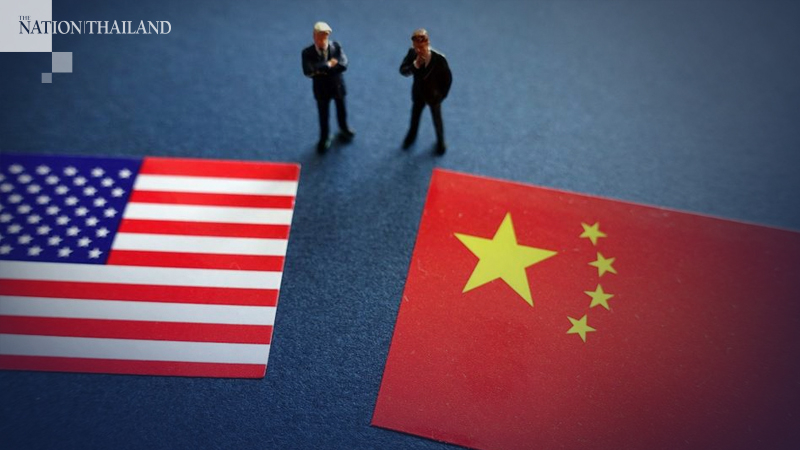
The brief but sudden drop in stocks in Asian trading on Tuesday after White House adviser Peter Navarro sowed confusion over the U.S.-China trade deal is evidence that, despite the trillions of dollars in stimulus being pumped into global markets, risk sentiment may be fragile. Rabobank’s Michael Every described the jolt as a “a taste of things to come.”

“It’s concerning how few tail risks are priced stemming from a second wave, the U.S. presidential election and a hard Brexit,” said Jordan Rochester, a Group-of-10 currency strategist at Nomura International in London.

Before Tuesday’s knee-jerk reaction in markets, stock and currency volatility had fallen to levels last seen before the virus, and the Japanese yen — a globally recognized haven — dropped below its five-year average, having underperformed almost all its Group-of-10 peers this quarter.

The gap between the Stoxx Europe 600 index and profit forecasts for its members is near the widest on record. Markets are on tenterhooks for second-quarter results, which will indicate how badly lockdowns have hurt companies. And bears have been retreating from the British pound, even as the prospect of a no-deal Brexit looms.

But the big risk that isn’t priced in “is policymakers potentially slowing down the stimulus,” Rochester said. Those measures have helped high-yielding assets advance despite a plethora of negative data this quarter.

Bank of England Governor Andrew Bailey said in a Bloomberg Opinion article on Monday that the financial system mustn’t become reliant on these extraordinary levels of reserves, with some monetary stimulus needing to be withdrawn as economies recover.

The BOE last week announced it would complete its asset-purchase program around the turn of the year, which could put further pressure on financial markets. Meanwhile, Federal Reserve data showed that its balance sheet contracted 1%, the first drop since late February.

Markets may be starting to acknowledge a slower recovery, with stocks of companies that benefit from workers staying at home — such as Netflix and Amazon.com — doing well on Monday, and gold prices rising for a third day Tuesday.

The pick up in euro-area economic activity after the lifting of lockdowns in June is doing little to change the picture of a long, slow recovery and rising unemployment.

“We have been taking profit,” said John Taylor, who manages $6.6 billion at AllianceBernstein in London and bought corporate bonds in April. “I wouldn’t only worry about a second wave of Covid and any reversal of lockdown, but also how the economy holds up as governments start to ease back on the support.”

U.S. stocks gain for second day; oil extends rally #ศาสตร์เกษตรดินปุ๋ย

#ศาสตร์เกษตรดินปุ๋ย : ขอบคุณแหล่งข้อมูล : หนังสือพิมพ์ The Nation.

U.S. stocks gain for second day; oil extends rally

Econ

Jun 23. 2020

By Syndication Washington Post, Bloomberg · Robert Brand · BUSINESS 

U.S. stocks rose amid a report that President Donald Trump supports sending another round of checks to Americans and data that showed American manufacturing nearing expansion. Oil climbed and the dollar retreated.

The S&P 500 pushed to a two-week high with investors continuing to focus on signs the American economy is bouncing back from the shutdown. Investors remain on edge over tension with China after a wild overnight session that saw futures plunge after a White House adviser said the trade deal was over. They rebounded when after President Donald Trump contradicted the statement.

Treasurys were little changed, with the 10-year yielding around 0.71%, while the dollar dropped for a second day. Equities rose in Europe and in Asia. Gold continued its push toward the highest level since 2012 and oil topped $41 a barrel in New York.

Carmakers and banks led a broad advance in the Stoxx Europe 600 index after positive economic data in the euro area. Bayer AG rose more than 7% after a report that the company is close to resolving the litigation over its Roundup weedkiller. The euro strengthened and yields ticked higher on core European bonds.

Investors are betting that trillions of dollars in stimulus by central banks and governments around the globe will shield economies from a resurgence in virus breakouts. PMIs for June, due Tuesday, may show business activity in the world’s largest economy continuing a rebound that started in May.

While euro-area PMI gauges earlier fueled a risk-on mood, they also underlined some of the pressures that a long and slow recovery would impose on companies struggling with weak demand.

Anthony Fauci, the U.S.’s top infectious-disease doctor, warned Tuesday that the coronavirus isn’t taking a summer break, judging from its persistent spread in the U.S. Sun Belt. A German state locked down a municipality where 1,553 workers tested positive at a single meat factory.

These are the main moves in markets:

Stocks

– The S&P 500 gained 0.8% as of 10:17 a.m. EDT.

– The Nasdaq 100 added 0.5%.

– The Euro Stoxx 600 Index climbed 1.2%.

– MSCI Asia Pacific Index rose 0.9%.

Currencies

– The Bloomberg Dollar Spot Index dipped 0.4%.

– The Japanese yen fell 0.1% to 106.99 per dollar.

– The euro gained 0.5% to $1.1315.

Bonds

– The yield on 10-year Treasurys was little changed at 0.72% after dropping as much as three basis points earlier.

– Germany’s 10-year yield climbed three basis points to -0.41%

Commodities

– West Texas Intermediate crude gained 2% to $41.54 a barrel.

– Gold gained 0.2% to $1,758 an ounce.

Schwarzman sees ‘big V’ economic rebound in next few months #ศาสตร์เกษตรดินปุ๋ย

#ศาสตร์เกษตรดินปุ๋ย : ขอบคุณแหล่งข้อมูล : หนังสือพิมพ์ The Nation.

Schwarzman sees ‘big V’ economic rebound in next few months

Econ

Jun 23. 2020

By Syndication The Washington Post, Bloomberg · Heather Perlberg, Hema Parmar 

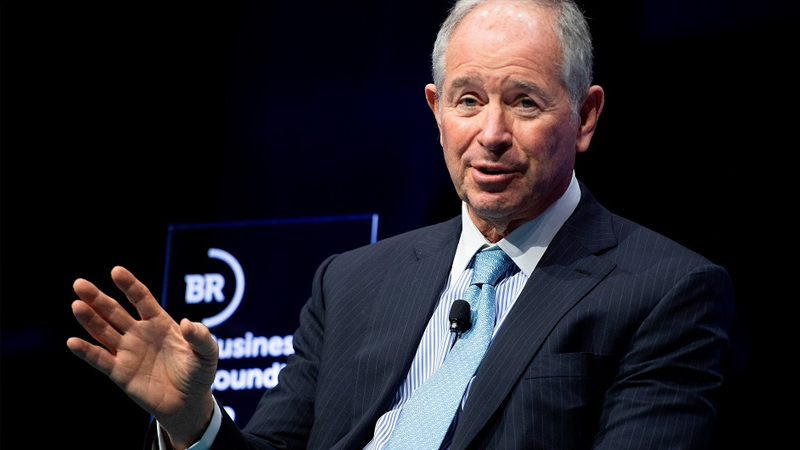
Steve Schwarzman, chief executive officer of Blackstone Group, said the economy is likely to benefit from a V-type recovery in the next few months.

“You’ll see a big V in terms of the economy going up for the next few months because it’s been closed,” Schwarzman, co-founder of the world’s biggest alternative asset management firm, said Monday in an interview during the Bloomberg Invest Global virtual event.

While markets are benefiting from both liquidity and optimism that the coronavirus crisis can eventually be contained, Schwarzman said the economy will “take quite a while before we sync up and get back to 2019 levels.”

Also at the event, hedge fund manager Bill Ackman said he believes the recovery will begin by year-end and a normalization of the economy in the second half of 2021. Ackman said he sees gradual improvement on all fronts with so many resources poured into the health-care crisis.

The spread of the pandemic seized up credit markets and put an end to Wall Street’s longest-ever bull market earlier this year. The damage pushed the Federal Reserve to flood the markets with trillions of dollars in stimulus, which, combined with the easing of lockdown restrictions and hopes for a fast economic recovery, have helped the S&P 500 index rally almost 40% since its March low.

Blackstone has been “aggressively” looking to put some of its $150 billion in dry powder to use, Schwarzman said in April. He also said that while all companies, including Blackstone, will be affected by the pandemic, the pain will be temporary, citing the U.S. government’s stimulus efforts. The New York-based firm saw asset values across most of its business segments plunge in the first quarter because of the economic fallout from the virus, but its long-term focus should put it in a position to hang on to companies as they regain strength.

China will continue to grow at double or triple the rate of developed countries, Schwarzman said at Monday’s event. It could internalize its markets and depend less on exports, he said.

Schwarzman has strong ties to China. He started a school in the country and has traveled there frequently — at times functioning as an intermediary between the Washington and Beijing governments. The billionaire has also previously advised President Donald Trump and was present in the White House when he announced the first part of the China-U.S. trade deal.

China’s rising debt, residential real estate issues and uneconomic state-owned large cap companies have put a damper on Chinese equity returns for the past decade, legendary short-seller Jim Chanos said at Bloomberg’s virtual conference.

“It’s just not been, in aggregate, a great place for Western investors to put their money,” he said.

The Kynikos Associates founder also said that U.S.-based casino operators in Macau, such as Wynn Resorts or Las Vegas Sands, have an additional risk that’s not being priced in to their shares, as their concession renegotiations are coming up.

“The majority of their cash flows of Wynn comes from the Macau concession and if that were to be negotiated downwards, which is a real possibility, particularly if the trade wars continue, that would have a material effect on their cash flow and profit,” he said.

Chanos also said that the current low-interest-rate environment is providing “easy money,” helping companies “that are not playing by the rules to keep the game going for a while.”

He said he’s giving a lecture Tuesday on 300 years of financial fraud, and one of his key themes is that the fraud cycle follows the business and financial cycle with a lag. As markets roar on, people drop their sense of disbelief and begin to believe things that are actually too good to be true, he said. That’s why companies with questionable business models still get funded, he said.

It’s not until the markets “turn down that people get a lot more conservative with their money and begin to question business models,” Chanos said. “People don’t realize they are being defrauded until they want their money back. So I think that wave of realization is still ahead of us.”

SET rebounds after US launches stimulus measure, though fears of second-Covid wave still cloud horizon #ศาสตร์เกษตรดินปุ๋ย

#ศาสตร์เกษตรดินปุ๋ย : ขอบคุณแหล่งข้อมูล : หนังสือพิมพ์ The Nation.

SET rebounds after US launches stimulus measure, though fears of second-Covid wave still cloud horizon

Econ

Jun 23. 2020

By The Nation

The Stock Exchange of Thailand (SET) Index rose 4.25 points or 0.31 per cent, closing at 1,356.43 today (June 23). Total transactions stood at Bt49.101 billion with an index high of 1,361.84 and a low of 1,351.92.

A stock analyst at Krungsri Securities said during the morning session that he expected the index to rebound between 1,360 and 1,365 points before falling in response to the US Congress’s approval of a US$1 trillion (Bt30.94 trillion) bill for infrastructure development in a move to boost economic recovery.

“Energy and petroleum stocks also won positive sentiment from rising price of crude oil, which rose to more than $40 per barrel,” the analyst said.

However, he said, bank stocks were under pressure after the Bank of Thailand ordered commercial banks to conduct stress tests on their capital management by next month.

“The index will also come under pressure following uncertainty amid a second wave of Covid-19 in Brazil, the US and India,” he noted.

The top 10 stocks with the highest trade value today were KBANK, CPF, STA, BBL, MINT, PTTEP, CPALL, SAWAD, AOT and SCB.

As of 4.30pm, the price of crude oil rose by $0.24 or 0.59 per cent to $40.97 per barrel, while gold rose by $4.80 or 0.27 per cent, to $1,771.20 per ounce.

Asian indices rose as follows:

Japan’s Nikkei Index closed at 22,549.05, up 111.78 points, or 0.50 per cent.

China’s Shanghai SE Composite Index closed at 2,970.62, up 5.35 points, or 0.18 per cent, while Shenzhen SE Component Index closed at 11,794.01, up 91.57 points, or 0.78 per cent.

Hong Kong’s Hang Seng Index closed at 24,907.34, up 396.00 points, or 1.62 per cent.

South Korea’s KOSPI Index closed at 2,131.24, up 4.51 points, or 0.21 per cent.

Taiwan’s TAIEX Index closed at 11,612.36, up 39.43 points, or 0.34 per cent.

5G subscriptions to hit 190 million this year #ศาสตร์เกษตรดินปุ๋ย

#ศาสตร์เกษตรดินปุ๋ย : ขอบคุณแหล่งข้อมูล : หนังสือพิมพ์ The Nation.

5G subscriptions to hit 190 million this year

Econ

Jun 23. 2020Nadine Allen, head of Ericsson ThailandNadine Allen, head of Ericsson Thailand

By THE NATION

The number of global 5G subscriptions is expected to hit 190 million this year and 2.8 billion by the end of 2025, according to Ericsson’s latest mobility report.

In Southeast Asia and Oceania, ultra-fast 5G will surpass 270 million subscriptions and be used by 21 per cent of mobile consumers by 2025, second only to LTE technology.

The forecasts come from June’s Ericsson Mobility Report, along with projections for data traffic growth, and regional subscriptions.

Nadine Allen, head of Ericsson Thailand, said: “People all over the world have had to change their daily lives as a result of the spread of Covid-19. The move to working or studying from home has seen network traffic rapidly shift from business to residential areas. The latest Ericsson Mobility Report shows that mobile and fixed networks are increasingly playing an even bigger part of critical national infrastructure.”

While 5G subscription growth in some markets has slowed as a result of the pandemic, this is outweighed by other markets where it is accelerating, prompting Ericsson to raise its year-end 2020 forecast for global 5G subscriptions.

“Beyond measuring the success of 5G in subscriptions, 5G will bring enormous benefits to people and enterprises,” Allen added. “5G was made for innovation and this crisis has highlighted the true value of connectivity and the role it can play in rebuilding economies.”

The data traffic per smartphone in Southeast Asia and Oceania is expected to reach 25 gigabytes (GB) by 2025, growing at a compound annual growth rate (CAGR) of 33 per cent.

Traffic growth is driven by coverage build-out and continued adoption of 4G, linked to a rise in smartphone subscriptions and increases in average data usage per smartphone. The total mobile data traffic in Southeast Asia is expected to reach 25 exabyte (EB)/month from 3.2 EB/month growing at a CAGR of 40 per cent.

Changes in behaviour due to lockdown restrictions have caused measurable changes in the usage of both fixed and mobile networks. The largest share of the traffic increase has been absorbed by fixed residential networks, which has experienced a 20-100 per cent growth. But many service providers also noticed a spike in demand on their mobile network.

In a recent study by Ericsson Consumer Lab, 83 per cent of the respondents from 11 countries claim that ICT significantly helped them to cope with the lockdown. The results show an increased adoption and usage of ICT services, such as e-learning and wellness apps, that have helped consumers adapt to new realities, underpinned by connectivity.

Looking ahead, while 57 per cent say they will save money for financial security, one-third plan to invest in 5G and an improved broadband at home to be better prepared for a potential second wave of Covid-19.

The pandemic has also highlighted the importance of digitalisation for businesses worldwide. Connectivity has enabled companies to continue engaging with customers as well as conduct business transactions online. Additionally, the combination of 5G and digitalisation creates new opportunities for service providers to extend their businesses beyond connectivity into a variety of sectors ranging from healthcare, automotive to manufacturing.

Wuttichai Wutti-Udomlert, head of Network Solutions, Ericsson Thailand, said: “At Ericsson, we have the right 5G portfolio in place to enable our customers to deploy 5G networks in all main frequency bands globally in the fastest and most efficient way. Over time, new exciting innovation in 5G for business will come with IoT use cases as 5G opens up opportunities for operators.”

Wuttichai Wutti-Udomlert, head of Network Solutions, Ericsson Thailand

Wuttichai Wutti-Udomlert, head of Network Solutions, Ericsson Thailand

Thailand is the first country in Southeast Asia to commence commercial deployment of 5G, in March this year.

In Southeast Asia, 5G-enabled digitalisation revenues are projected to top US$41 billion (Bt1.27 trillion) by 2030.

Big drop in bank stock prices walloped SET Index yesterday #ศาสตร์เกษตรดินปุ๋ย

#ศาสตร์เกษตรดินปุ๋ย : ขอบคุณแหล่งข้อมูล : หนังสือพิมพ์ The Nation.

Big drop in bank stock prices walloped SET Index yesterday

Econ

Jun 23. 2020

By The Nation

The Stock Exchange of Thailand Index on Monday (June 22) fell by 18 points due to a 6.37 per cent drop in the price of bank stocks, experts said. Investors sold bank stocks after the Bank of Thailand (BOT) ordered banks to hold off paying interim dividends and buying back shares to strengthen their capital to deal with risks in the future.

Also, bank stocks were under pressure from the central bank’s measures to cut the interest rates charged for credit cards, personal credit and hire purchases to help people struggling with debt due to the Covid-19 crisis.

These factors caused the price of bank stocks to drop 6.37 per cent, while the SET Index fell by 18 points to 1,352 at yesterday’s close. Foreign and institutional investors made net sales in stocks of Bt3.106 billion and Bt3.695 billion, respectively.

Bangkok Bank’s stock dropped the most, by 9.09 per cent, followed by Siam Commercial Bank (7.44 per cent), Kasikorn Bank (6.79 per cent), Tisco Financial Group (5.78 per cent), and Kiatnakin Bank (5.68 per cent).

A Capital Nomura Securities stock analyst said BOT’s order caused negative sentiment for bank stocks, although the banks’ capital adequacy ratio is currently 19.6 per cent, higher than the central bank’s minimum criteria of 12 per cent.

“The central bank’s announcement showed that the Covid-19 impact on the economy and asset quality may be worse than they expected,” he said. “BOT’s intervention always lends negative sentiment to bank stocks.”

The analyst also said BOT’s move has impacted banks that pay interim dividends more than banks that pay dividends only once a year as investors expect dividends as promised.

“However, banks’ dividends are expected to decrease due to a decline in profits,” he added.

Theerasate Prompong, an analyst at Maybank Kim Eng Securities (Thailand), said interim dividends totalling Bt14.3 billion have been held back, causing banks’ and stock market dividend yields this year to drop to 4.38 per cent and 3.46 per cent, respectively.

“The price of bank stocks dropped sharply due to uncertainty among foreign and institutional investors following BOT’s intervention,” he said. “Therefore, we advise investors to avoid investing in bank stocks.”

Principal Asset Management chief investment officer Win Phromphaet said BOT’s move would impact bank stocks only in the short term because bank fundamentals are still strong.

“Currently, we are still investing in bank stocks at a moderate level, but our fund is still interested because we have other stocks that can escape the impact from Covid-19,” he said.

Trump walks back senior aide’s claim that U.S.-China trade deal is ‘over’ #ศาสตร์เกษตรดินปุ๋ย

#ศาสตร์เกษตรดินปุ๋ย : ขอบคุณแหล่งข้อมูล : หนังสือพิมพ์ The Nation.

Trump walks back senior aide’s claim that U.S.-China trade deal is ‘over’

Econ

Jun 23. 2020

By The Washington Post · Josh Dawsey, Jeff Stein · NATIONAL, BUSINESS, WORLD, WHITEHOUSE, ASIA-PACIFIC 

WASHINGTON – President Donald Trump took to Twitter late Monday to quell an international incident caused by one of his aides hours earlier as White House officials struggled to convey a consistent China strategy.

White House trade adviser Peter Navarro, an unabashed China hawk, said in a Fox Business interview Monday evening that the trade deal Trump signed with Beijing in January was “over.”

The comments triggered a sell-off in stock futures, an index the president watches closely.

Shortly after 10 p.m., Trump tweeted that “The China Trade Deal is fully intact. Hopefully they will continue to live up to the terms of the Agreement!”

As part of Navarro’s provocative Fox Business interview, he also alleged without offering any evidence that China had sent hundreds of thousands of people “to spread that virus” in the U.S.”

“It’s over, yes,” Navarro said when asked about the status of the trade deal during that interview.

Navarro has a special status in the White House; he often goes on television shows and says what he likes, discarding administration talking points. His comments on Monday, however, clearly upset other White House officials and prompted a swift rebuttal.

Soon after Navarro made his comments, White House National Economic Council Director Larry Kudlow told the Washington Post that “The China trade deal is still intact.”

A senior administration official, speaking on the condition of anonymity to frankly discuss internal matters, said Navarro was not speaking for the administration when he made the comments about the deal being over.

Navarro later told Reuters his comments had been “wildly” taken out of context and did not pertain to the trade deal with China. 

“They had nothing at all to do with the Phase 1 trade deal, which continues in place. I was simply speaking to the lack of trust we now have of the Chinese Communist Party after they lied about the origins of the China virus and foisted a pandemic upon the world,” Navarro said.

The mixed signals from the White House come as factions within the administration jockey over how the U.S. should respond to China’s role in the pandemic. Navarro has blamed Beijing for allowing its representatives to visit the U.S. in January, when the coronavirus was beginning to spread rapidly across China. He told Fox Business that the moment amounted to a “turning point” in relations between the superpowers.

The president repeatedly has cited the trade deal as one of the top economic policy accomplishments of his administration, and other senior advisers have urged a more cautious approach. But Trump appears to have soured on the trade deal recently, and last week he wrote on Twitter that the option of a “complete decoupling” between the U.S. and China was on the table.

Gold price up #ศาสตร์เกษตรดินปุ๋ย

#ศาสตร์เกษตรดินปุ๋ย : ขอบคุณแหล่งข้อมูล : หนังสือพิมพ์ The Nation.

Gold price up

Econ

Jun 23. 2020

By The Nation

The price of gold rose by Bt50 per baht weight in morning trade today (June 23), the Gold Traders Association reported.

As of 9.23am, the buying price of a gold bar was Bt25,600 per baht weight and selling price Bt25,700, while gold ornaments cost Bt25,135.28 and Bt26,200, respectively.

At close yesterday (June 22), the buying price of a gold bar was Bt25,550 per baht weight and selling price Bt25,650, while gold ornaments were priced at Bt25,089.80 and Bt26,150, respectively.

The Gold Spot Index price this morning moved to around US$1,753 (Bt54,324) per ounce after the price rose by $13.40 to $1,766.40 per ounce at yesterday’s close.

Investors bought gold as a safe haven asset due to the rising number of new Covid-19 cases worldwide, weak economic data and a weakening dollar.

SET up after rise in crude oil price, US Congress move to boost economy #ศาสตร์เกษตรดินปุ๋ย

#ศาสตร์เกษตรดินปุ๋ย : ขอบคุณแหล่งข้อมูล : หนังสือพิมพ์ The Nation.

SET up after rise in crude oil price, US Congress move to boost economy

Econ

Jun 23. 2020

By The Nation

The Stock Exchange of Thailand Index opened at 1,360.62, up 8.44 points, or 0.62 per cent, this morning (June 23).

A stock analyst at Krungsri Securities expected the index to rebound between 1,360 and 1,365 points before falling in response to expected US Congress approval of a US$1-trillion (Bt30.94 trillion) bill for infrastructure development, which will boost economic recovery.

“Energy and petroleum stocks also gained positive sentiment from the increasing crude oil price, which rose more than $40 per barrel,” the analyst said.

He said bank stocks would be under pressure after the Bank of Thailand ordered commercial banks to conduct stress tests on capital management by July.

“Also, the index will come under pressure following uncertainty amid a second wave of Covid-19 in Brazil, the US and India,” he noted.

He recommended investors buy the following stocks:

▪ Energy stocks that benefit from the rising crude oil price, such as PTT, PTTEP, Top, PTTGC, IRPC, SPRC and IVL.

▪ Food stocks that benefit from rising pork and chicken prices, such as CPF, GFPT and TFG.

▪ Stocks whose second-quarter performance will improve, such as CKP, Tasco, STA and RS.

The SET Index fell by 19 points yesterday (June 22), or 1.36 per cent, closing at 1,352, mainly due to mass sell-offs in bank and financial stocks.

Total transactions amounted to Bt65.7 billion. Foreign investors made net sales of Bt3.106 billion in stocks, while net bond purchases amounted to Bt1.692 billion. There were 1,361 net short TFEX SET50 contracts.