Stocks climb amid earnings, data; crude oil jumps #ศาสตร์เกษตรดินปุ๋ย

#ศาสตร์เกษตรดินปุ๋ย : ขอบคุณแหล่งข้อมูล : หนังสือพิมพ์ The Nation.

https://www.nationthailand.com/business/30387473?utm_source=category&utm_medium=internal_referral

Stocks climb amid earnings, data; crude oil jumps
May 07. 2020
By Syndication Washington Post, Bloomberg · Sam Potter, Claire Ballentine · BUSINESS, US-GLOBAL-MARKETS

U.S. equities climbed, with the Nasdaq Composite Index briefly turning positive for the year, as investors sift through the latest company earnings and data showing another surge in the number of out-of-work Americans. Oil jumped.

All three of the main U.S. equity benchmarks were higher after a mixed session on Wednesday. News that top U.S. and Chinese negotiators will speak as soon as next week on trade helped boost sentiment. The number of new claimants for unemployment benefits surged by about 3.2 million, though a bad number was expected by investors and the market took it in stride. Treasuries edged higher.

“You ask the question, are things likely to be better six months from now than they are today?” said Randy Frederick, vice president of trading and derivatives at Charles Schwab & Co. “Most people would say yes, and the market is looking ahead. Right now the market thinks the future looks better.”

The tech-heavy Nasdaq briefly wiped out losses that reached as much as 24% at the depths of the pandemic-fueled sell-off. The Nasdaq 100 is positive in 2020, a feat it first accomplished in mid-April. Both posted their best monthly gains in April in at least 18 years.

In the latest corporate news:

– ViacomCBS Inc. rallied after reporting a surge in streaming subscribers.

– Raytheon Technologies jumped after results beat expectations.

– Moderna surged after saying its experimental vaccine for the new coronavirus would be in late-stage studies by early this summer.

The Stoxx Europe 600 Index gained as most national gauges and industry sectors climbed. Crude jumped to more than $26 a barrel in New York after Saudi Arabia raised prices. The pound swung between losses and gains after the Bank of England kept its policy settings unchanged and signaled it may expand monetary stimulus as soon as next month.

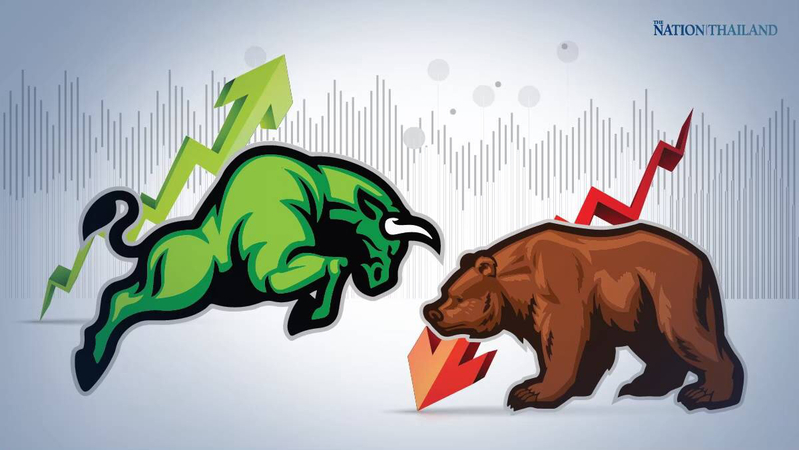
Risk assets rebounded swiftly in April following a dramatic sell-off in the first quarter, but stocks have struggled for direction this month as bulls and bears duel over the outlook. Optimists point to efforts to reopen economies, a slowing rate of new infections and unprecedented stimulus. Pessimists fret over the mounting economic toll, with payrolls data from the largest economy on Friday expected to be dire.

“We remain concerned about the potential for the pandemic to have lasting effects on growth,” wrote Ron Temple, co-head of multi-asset and head of U.S. equity at Lazard Asset Management. “Countries and companies are likely to exit the crisis with significantly higher debt, curtailing their ability to invest and innovate.”

Worries about rising tension between the U.S. and China have added an extra headache for investors lately; the planned call between the two countries may signal an effort to de-escalate the situation.

Most Asian stocks slipped earlier, including in Japan where exchanges opened for the first time this week following a holiday. The yen weakened. China’s yuan advanced offshore after the country reported a surprise gain in exports, even as the virus pandemic damaged global demand.

Stocks:

– The S&P 500 Index climbed 1.4% to 2,881.29 as of 10:49 a.m. New York time.

– The Dow Jones Industrial Average gained 1.3% to 23,932.51.

– The Nasdaq Composite Index rose 1.3% to 8,936.43, the highest in two months.

– The MSCI All-Country World Index increased 0.9% to 481.52.

Currencies:

– The Bloomberg Dollar Spot Index was little changed at 1,255.60, hitting the highest in more than a week with its fifth straight advance.

– The Japanese yen weakened 0.4% to 106.56 per dollar, the first retreat in a week.

– The euro declined 0.1% to $1.0777, the weakest in more than a week.

– The British pound fell 0.4% to $1.2285, reaching the weakest in almost two weeks on its fifth consecutive decline.

Bonds:

– The yield on 10-year Treasuries sank three basis points to 0.67%.

– Germany’s 10-year yield dipped four basis points to -0.55%.

– Britain’s 10-year yield gained less than one basis point to 0.233%.

Commodities:

– West Texas Intermediate crude rose 7.1% to $25.69 a barrel, the highest in almost three weeks.

– Gold strengthened 0.6% to $1,697.57 an ounce.
Renewed US-China trade war hammers SET #ศาสตร์เกษตรดินปุ๋ย

#ศาสตร์เกษตรดินปุ๋ย : ขอบคุณแหล่งข้อมูล : หนังสือพิมพ์ The Nation.

https://www.nationthailand.com/business/30387458?utm_source=category&utm_medium=internal_referral

Renewed US-China trade war hammers SET

May 07. 2020
By THE NATION

The Stock Exchange of Thailand (SET) Index closed at 1,257.98 today (May 7), down 20.65 points or 1.62 per cent.

The volume of total transactions was Bt56.253 billion with an index high of 1,277.36 and a low of 1,252.20, while an analyst at Krungsri Securities expects the index to fluctuate between 1,265 and 1,290 owing to the lack of new factors to stimulate investment.

“The index will remain under pressure now that the US has threatened to punish China for the spread of Covid-19 by imposing new tariffs on its imports,” he said.

“This move is having a severe impact on the US economy, especially in terms of unemployment, which is expected to rise higher than 20 percent.”

He also said that uncertainty following the drop in companies’ first quarter performance will further bring down the index, “though it is likely to rebound once the price of crude oil price rises to US$24 per barrel and the number of new Covid-19 cases in Thailand drops to near zero”.

The top 10 stocks with the highest trade value today were BAM, CPALL, PTT, PTTEP, INTUCH, BBL, KBANK, AOT, ADVANC and GPSC.

As of 5pm, the price of crude oil rose by $1.35 or 5.63 percent to $25.34 per barrel, while gold rose by $8 or 0.47 percent, to $1,696.50 per ounce.

Meanwhile, US and Europe indices were on the rise, but Asian indices had a mixed day:

Japan’s Nikkei Index closed at 19,674.77, up 55.42 points, or 0.28 percent.

China’s Shanghai SE Composite Index closed at 2,871.52, down 6.62 points, or 0.23 percent, while Shenzhen SE Component Index closed at 10,863.28, down 19.93 points, or 0.18 percent.

Hong Kong’s Hang Seng Index closed at 23,980.63, down 156.85 points, or 0.65 percent.

South Korea’s KOSPI Index closed at 1,928.61, down 0.15 points, or 0.0078 percent.

Taiwan’s TAIEX Index closed at 10,842.92, up 67.94 points, or 0.63 percent.

Very few small businesses able to access soft-loan offer from central bank #ศาสตร์เกษตรดินปุ๋ย

#ศาสตร์เกษตรดินปุ๋ย : ขอบคุณแหล่งข้อมูล : หนังสือพิมพ์ The Nation.

https://www.nationthailand.com/business/30387457?utm_source=category&utm_medium=internal_referral

Very few small businesses able to access soft-loan offer from central bank

May 07. 2020
Ronadol Numnonda, Bank of Thailand’s deputy governor

Ronadol Numnonda, Bank of Thailand’s deputy governor
By The Nation

Few small businesses are being able to utilise the central bank’s offer for soft loans because commercial banks are demanding more collaterals.

Ronadol Numnonda, Bank of Thailand’s deputy governor, said on Thursday (May 8) that a great deal of funds earmarked to support small businesses hit by the Covid-19 fallout is still available.

Two weeks after launching the Bt500-billion aid scheme, the central bank has only approved Bt36 billion worth of loans, he said.

So far, 22,000 small businesses have taken loans of Bt1.6 million on average, and up to 74 percent were micro-businesses from provinces beyond the capital and those adjacent to Bangkok.

The commercial banks that have sought loans from the central bank are Bangkok Bank, Bank for Agriculture and Agricultural Cooperatives, Krung Thai Bank and Siam Commercial Bank.

Ronadol said the small number of soft loans taken so far may have had something to do with the fact that there have been many public holidays over the past two weeks and also because commercial banks take far too long to register loan collaterals.

He said the central bank wants commercial banks to speed up the loan application process and not impose additional fees or require borrowers to purchase insurance policies.

Businesses facing the slow process of loan approval are advised to call their banks or call the BOT 1213 hotline, he said.

These soft loans are being granted at an annual interest rate of just 2 percent, with a six-month grace period and a repayment period of two years.

Thailand opens first chilled poultry market in Singapore #ศาสตร์เกษตรดินปุ๋ย

#ศาสตร์เกษตรดินปุ๋ย : ขอบคุณแหล่งข้อมูล : หนังสือพิมพ์ The Nation.

https://www.nationthailand.com/business/30387439?utm_source=category&utm_medium=internal_referral

Thailand opens first chilled poultry market in Singapore

May 07. 2020
Photo credit: Centre fpr food safety

Photo credit: Centre fpr food safety
By The Nation

The Ministry of Agriculture and Cooperatives is pushing a new policy for the export of new agricultural products.

The Department of Livestock Development has been continuously coordinating with the Singapore Food Agency until they agreed to expand the scope of Thai products to include chilled poultry meat.

In the past, Thailand was able to export only frozen poultry meat, said Sorawit Thaneto, director-general of the Department of Livestock Development.

Singapore classifies chilled poultry products as high-risk products since the product is chilled, stored at 0-4 degrees Celsius, can be cooked immediately, had good taste and is fresh but has a short shelf life, while frozen products are stored at temperatures not less than minus 18 degrees Celsius and have a long shelf life.

“Singapore is a country with confidence in the safety of poultry products and has accepted the Department of Livestock Production overseeing poultry meat production, which has measures to control Salmonella. There is the monitoring of veterinary drug residues and contaminants in the chicken/duck meat raising system and animal feed that is used in raising. This expansion in export will help generate jobs in poultry production with an expected export volume of not less than 1,000 tons, worth Bt100 million,” said the director.

Thai chamber studying ramifications of Kingdom joining trans-pacific partnership #ศาสตร์เกษตรดินปุ๋ย

#ศาสตร์เกษตรดินปุ๋ย : ขอบคุณแหล่งข้อมูล : หนังสือพิมพ์ The Nation.

https://www.nationthailand.com/business/30387436?utm_source=category&utm_medium=internal_referral

Thai chamber studying ramifications of Kingdom joining trans-pacific partnership

May 07. 2020
By THE NATION

The Thai Chamber of Commerce has set up a taskforce with the University of the Thai Chamber of Commerce to conduct a study on the pros and cons of Thailand joining the Comprehensive and Progressive Agreement for Trans-Pacific Partnership.

Kalin Sarasin, chairperson of the Thai Chamber of Commerce, said the study is expected to be completed in one month.

Sanan Angubolkul, vice-chairman of the Thai Chamber of Commerce, who chairs the taskforce, said they will hold the first meeting on May 8. It has also invited the opinions of the trade sector.

Strengthening dollar pulls gold price down #ศาสตร์เกษตรดินปุ๋ย

#ศาสตร์เกษตรดินปุ๋ย : ขอบคุณแหล่งข้อมูล : หนังสือพิมพ์ The Nation.

https://www.nationthailand.com/business/30387429?utm_source=category&utm_medium=internal_referral

Strengthening dollar pulls gold price down

May 07. 2020
By THE NATION

The price of gold dropped by Bt100 per baht weight in morning trade on Thursday (May 7), the Gold Traders Association reported.

As of 9.28am, the buying price of a gold bar was Bt25,800 per baht weight and selling price Bt26,000, while gold ornaments cost Bt25,332.36 and Bt26,500, respectively.

At close on Wednesday (May 6), the buying price of a gold bar was Bt25,900 per baht weight and selling price Bt26,100, while gold ornaments were priced at Bt25,438.48 and Bt26,600, respectively.

The Gold Spot Index price this morning moved to around US$1,692 per ounce after the price dropped by $22.1 to $1,788.50 per ounce at close on Wednesday.

Gold price is still under pressure from the strengthening dollar, while investors were selling gold after there was a news report that many US states had resumed economic activities.

Meanwhile, the Hong Kong gold price dropped by HK$100 (Bt418) to $15,640 per tael.

SET falls over worries of a looming US-China trade war #ศาสตร์เกษตรดินปุ๋ย

#ศาสตร์เกษตรดินปุ๋ย : ขอบคุณแหล่งข้อมูล : หนังสือพิมพ์ The Nation.

https://www.nationthailand.com/business/30387428?utm_source=category&utm_medium=internal_referral

SET falls over worries of a looming US-China trade war

May 07. 2020
By THE NATION

The Stock Exchange of Thailand (SET) Index dropped 5.55 points, or 0.43 per cent, to 1,273.08 in morning trade on Thursday (May 7).

A stock analyst at Krungsri Securities expected the index to fluctuate between 1,265 and 1,290 due to lack of new factors to stimulate investment.

“The index will remain under pressure after the US indicated its intent to punish China for the spread of Covid-19 by imposing new tariffs on imported goods,” the stock analyst said.

“This move has caused a severe impact on the US economy, especially as the unemployment rate is expected to be higher than 20 per cent.”

He said that uncertainty following the decline in companies’ first quarter performance would plunge the index.

“However, the index would likely rebound after crude oil price rose to over US$24 per barrel and the number of new Covid-19 cases in Thailand dropped to near zero,” the stock analyst said.

He suggested that investors make selective buys from these four groups of stocks:

● Energy stocks that would benefit from rising oil prices after Opec-plus began to cut production, such as PTT, PTTEP, TOP and PTTGC.

● Stocks that would benefit after the Thai Meteorological Department announced the rainy season would arrive in the middle of May, such as EASTW, CKP, GPSC, GULF and BGRIM

● ICT and food stocks that have escaped the severe impact of the outbreak, such as ADVANC, INTUCH, DTAC and CPF.

● Stocks whose first-quarter performances are expected to improve, such as CPF, IVL, BCPG, GPSC and RS.

Gap, Nordstrom prepare to reopen hundreds of stores with new protocols for workers and shoppers #ศาสตร์เกษตรดินปุ๋ย

#ศาสตร์เกษตรดินปุ๋ย : ขอบคุณแหล่งข้อมูล : หนังสือพิมพ์ The Nation.

https://www.nationthailand.com/business/30387417?utm_source=category&utm_medium=internal_referral

Gap, Nordstrom prepare to reopen hundreds of stores with new protocols for workers and shoppers

May 07. 2020
Photo credit:Racked

Photo credit:Racked
By The Washington Post · Abha Bhattarai, Taylor Telford · BUSINESS, RETAIL 

Nordstrom and Gap are among a growing group of national retailers that will gradually reopen their stores in the coming weeks as states emerge from coronavirus lockdowns, even as the U.S. death toll from covid-19 continues to rise.

Dozens of U.S. shopping malls – in Alaska, Indiana, Texas and others states – reopened this weekend, though many of the stores inside remained shut. But that is beginning to change: Macy’s resumed operations at 68 stores Monday. Best Buy, Coach and Kate Spade stores have announced plans to come back online as more states and localities lift lockdown restrictions.

Gap, meanwhile, says it will reopen as many as 800 North American stores – which include Old Navy, Banana Republic, Janie and Jack, Athleta and Intermix – this month, starting with a “small selection” of locations in Texas this weekend.

But the company said stores will look and feel a bit different: Restrooms and fitting rooms will be closed, and returned items will be quarantined for 24 hours before being placed back on shelves. Employees will be wearing face masks, and hand sanitizer dispensers will be added near front doors and cash registers.

Shopping hours will be reduced, and the flow of customers will be “actively” monitored in stores. It also plans to expand curbside pickup, which currently is available at 75 stores.

“Our top priority remains the health and safety of our employees, customers and communities,” Gap said in a statement Wednesday. “As customers’ lives have shifted, so have the ways we’re meeting their needs.”

Much of the industry is struggling to make ends meet after widespread shutdowns brought in-store sales to a halt in March. Gap was among dozens of retailers that didn’t pay rent in April. Others have canceled orders and cut executive pay in a bid to save cash. More than 200,000 stores have been temporarily closed since March, cutting into retailers’ profits and straining their finances.

Nordstrom said this week that it will permanently close 16 stores and will gradually reopen the rest. It will limit the number of customers and employees at its 100 namesake department stores and 247 Nordstrom Rack outlets, and will provide facial coverings for workers, vendors and shoppers. Its stores have been closed since March 17.

“We’ve been investing in our digital and physical capabilities to keep pace with rapidly changing customer expectations,” chief executive Erik Nordstrom said in a Tuesday news release. “The impact of COVID-19 is only accelerating the importance of these capabilities in serving customers. More than ever, we need to work with flexibility and speed.”

The company did not identify which stores would close permanent as part of a broader restructuring that is expected to save the company $150 million a year.

Public companies received $1 billion in stimulus funds meant for small businesses #ศาสตร์เกษตรดินปุ๋ย

#ศาสตร์เกษตรดินปุ๋ย : ขอบคุณแหล่งข้อมูล : หนังสือพิมพ์ The Nation.

https://www.nationthailand.com/business/30387153?utm_source=category&utm_medium=internal_referral

Public companies received $1 billion in stimulus funds meant for small businesses

May 02. 2020
By The Washington Post · Jonathan O’Connell, Steven Rich, Peter Whoriskey · NATIONAL, BUSINESS, POLITICS, CONGRESS, WHITEHOUSE, US-GLOBAL-MARKETS

WASHINGTON – Publicly traded companies have received more than $1 billion in funds meant for small businesses from the federal government’s economic stimulus package, according to data from securities filings compiled by The Washington Post.

Nearly 300 public companies have reported receiving money from the fund, called the Paycheck Protection Program, according to the data compiled by The Post. Recipients include 43 companies with more than 500 workers, the maximum typically allowed by the program. Several other recipients were prosperous enough to pay executives $2 million or more.

After the first pool of $349 billion ran dry, leaving more than 80% of applicants without funding, outrage over the millions of dollars that went to larger firms prompted some companies to return the money. As of Thursday, public companies had reported returning more than $125 million, according to a Post analysis of filings.

Other companies have said they plan to keep the funds, saying the loans had been awarded according to the program’s rules and that they would use most of it to pay workers, as required, in order for the loans to be forgiven.

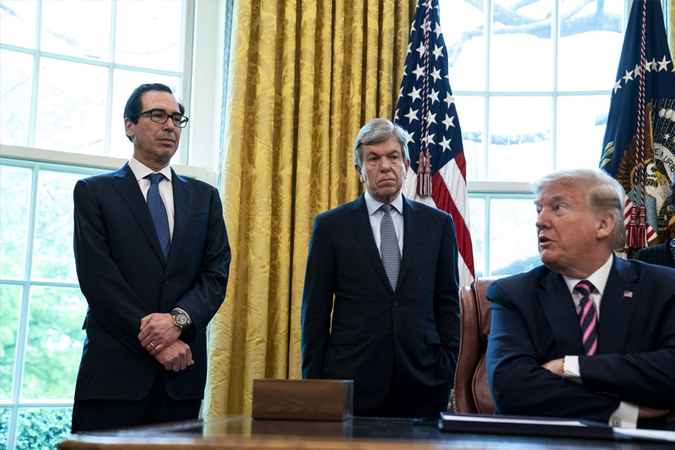
Treasury Secretary Steven Mnuchin has defended the program as a success, saying three-quarters of the loans were for totals of under $150,000. But after the first batch of loans was issued, the administration also scrambled to release new guidance for the program to discourage large public companies from applying.

Officials have urged publicly traded firms with access to other capital to return the money by May 7. Mnuchin said this week that all loans of more than $2 million would be audited with potential penalties for those who don’t comply.

“I want to be very clear it’s the borrowers who have criminal liability if they made this certification,” of being a small business he said on CNBC.

The Small Business Administration has refused to release the names of companies that have received the loans, despite having released such information on its loan programs for years.

Some of the companies that received the loans were large in another way: Their CEOs have been making millions.

Veritone, a company based in Costa Mesa, California, that provides artificial intelligence technology, paid chief executive Chad Steelberg $18.7 million in total compensation in 2018, the last year for which data is available. His brother, Ryan Steelberg, the company’s president, made $13.9 million. The company received $6.5 million in funding from the program. The company did not respond to a request for comment.

At least two other companies with highly paid CEOs have said they will return the money. Each changed its stance on the loans after the Treasury Department issued guidelines discouraging companies “with substantial market value and access to capital markets” from accepting the money.

Aquestive Therapeutics, a New Jersey pharmaceutical company, paid CEO Keith J. Kendall $2.6 million in 2019. That company received $4.8 million from the program but has said it will return it.

“As a small business, we were happy to qualify for a PPP loan, as it was originally written and intended, to continue to employ and provide health coverage to our 219 employees located around the country and provide important medicines to these patients during this period of crisis,” the company said in a statement. “However, the new guidance issued on April 23 by the Federal Government appears to change the criteria for small businesses to qualify for the PPP loans.”

Wave Life Sciences, a genetic medicine company, paid CEO Paul B. Bolno $5.8 million in total compensation in 2018. The company received $7.2 million from the program but has decided to return it, too.

“We made this decision after the SBA issued new guidance that states, in effect, that public companies are not appropriate recipients of these loans,” the company said in a statement.

Chain restaurants and hotels were able to obtain tens of millions of dollars from the first pool of $349 billion in forgivable loans because Congress and the administration allowed multiple subsidiaries of large owners to each apply separately.

Those recipients include a group of hotel companies chaired by Monty Bennett, a Dallas executive and Republican donor, including Ashford Hospitality Trust and Braemar Hotels & Resorts. The companies used more than 100 filings to seek $126 million total and received $76 million.

On Friday, Senate Minority Leader Charles Schumer, D-N.Y., questioned how companies such as Ashford had received so much funding, writing to Jovita Carranzak, administrator of the Small Business Administration, to say that such companies “may be exploiting the Program to the detriment of small businesses around the country currently struggling to survive the COVID-19 pandemic.”

Some chains that have returned funds have done so at the expense of their workers. AutoNation, the Fortune 500 network of auto dealers, said last week that it would return the $77 million it received. The same day of the announcement, employees there said AutoNation put some workers back on furlough and rescinded wage guarantee deals to commission-based employees.

Marc Cannon, AutoNation executive vice president, issued a statement to The Post saying the pandemic had reduced sales by half and stores had rehired employees based on commitments of the federal program.

“It is regrettable that we must continue to mitigate the financial impact of COVID-19,” the company said. “Those employees who were being funded by PPP are being re-furloughed. There is no FORGIVABLE loan available anywhere to rehire 7,000 employees.”

Lindblad Expeditions, an operator of high-end cruises, also returned its PPP funds. The company initially said it planned to keep the money because it qualified for the loan and planned to use it to retain employees. On an earnings conference call Friday, chief executive Sven-Olof Lindblad repeated that the company met the application requirements, but said it would return the $6.6 million loan.

“We wanted to protect our employees for as long as possible,” he said, but added there had been “much negativity” around public companies that received the loans.

While much of the program’s criticism has focused on the relatively large companies that received the money intended for small businesses, there is some evidence that the program missed its target in other ways, too.

Research by academics at the University of Chicago and MIT indicates that the areas where small businesses have been most affected – New York and New Jersey, for example – were less likely to see loans from the program. The authors defined “most affected” using small-business employment data, cases of covid-19, the disease caused by the novel coronavirus, and other factors.

According to the research, only about 15% of businesses in the congressional districts most affected by business losses were able to obtain PPP help; by contrast, in the least affected congressional districts, 30% were able to obtain them.

“The loans were disproportionately allocated to areas least affected by the crisis,” according to authors Joao Granja, Christos Makridis, Constantine Yannelis and Eric Zwick.

Boris Johnson pledges lockdown exit plan with U.K. past peak #ศาสตร์เกษตรดินปุ๋ย

#ศาสตร์เกษตรดินปุ๋ย : ขอบคุณแหล่งข้อมูล : หนังสือพิมพ์ The Nation.

https://www.nationthailand.com/business/30387137?utm_source=category&utm_medium=internal_referral

Boris Johnson pledges lockdown exit plan with U.K. past peak

May 01. 2020
By Syndication The Washington Post, Bloomberg · Tim Ross, Alex Morales, Joe Mayes

Prime Minister Boris Johnson pledged a “comprehensive plan” to lift the lockdown that has crippled the economy, as he declared the U.K. has now passed the peak of the coronavirus outbreak.

In his first press conference since recovering from covid-19, Johnson promised to set out details next week on how businesses can get back to work, suggesting that people will be encouraged to wear face masks as the restrictions are lifted.

“For the first time we are past the peak of this disease,” Johnson said. “We are past the peak, and we are on the downward slope.”

The prime minister’s words show the government is preparing the pathway for the swathes of the economy that have been shuttered to begin operating again, amid concern that millions of people are facing the loss of their jobs and companies are collapsing. Ministers are due to review the restrictions — unprecedented in peacetime — on May 7.

“I will be setting out a comprehensive plan next week to explain first how we get our economy moving, how we can get our children back to school, back into childcare, second, and thirdly how we can travel to work and how we can make life in the workplace safer,” Johnson said. “In short, how we can continue to suppress the disease and at the same time restart the economy.”

The premier, who hasn’t held a press conference since before he tested positive for coronavirus on March 26, predicted the economy “will bounce back strongly,” but also repeatedly stressed the need to avoid a second spike in virus cases that overwhelms the National Health Service while lifting the curbs.

“We’ve come through the peak, or rather we have come under what could have been a vast peak, as though we have been going through some huge alpine tunnel,” Johnson said. “And we can now see sunlight and the pasture ahead of us, and so it is vital that we do not now lose control and run slap into a second and even bigger mountain.”

Official figures released Thursday showed the total number of deaths in the U.K. rising to 26,771 from 26,097, up 674 on the previous day.

England’s Chief Medical Officer Chris Whitty cautioned that, while the first phase of the outbreak is coming to an end, there remains “a very long way to run” in the fight against the virus.

The prime minister promised a “menu of options” for the lockdown, which will be deployed at different times, depending on the development of the outbreak.

“As part of coming out of the lockdown, I do think face coverings will be useful both for epidemiological reasons and giving people confidence it’s safe to go back to work,” Johnson said. “We will be saying a lot more next week and in the coming weeks about how and when we propose to unlock the various parts of the U.K. economy.”

Johnson’s spokesman, James Slack, on Friday told reporters ministers are “still considering” what advice they give the public on face coverings, adding that scientific evidence suggests a “weak but positive effect in reducing the transmission of coronavirus from asymptomatic members of the public, where social distancing isn’t possible.”

Speaking on LBC Radio on Friday, Communities Secretary Robert Jenrick said the government is taking scientific advice on easing the lockdown, which could be done on a regional basis if transmission rates vary across the country — though he said the “strong preference” is for the whole country to move together. Officials have regularly talked up the benefits of a unified approach.

Jenrick also said construction and building firms should resume operations.

The government has announced more than 60 billion pounds ($75 billion) of direct aid to companies and individuals to help them weather the pandemic, and offered 330 billion pounds of loan guarantees. The Office for Budget Responsibility on Thursday said the government’s virus response has cost almost 105 billion pounds in the current fiscal year.

Asked whether the government would need a new period of austerity, including cuts to public services in order to restore the country’s finances, Johnson rejected the approach.

“I think the economy will bounce back strongly, I think that this government will want to encourage that bounce back in all kinds of ways,” he said. He added that he’d “never particularly liked” the term “austerity,” saying “it will certainly not be part of our approach.”

The Treasury is considering allowing companies to claim support from the government’s furlough program for staff returning to work part-time once lockdown measures are eased, the Financial Times reported on Friday, citing a person familiar with the matter.

Earlier Thursday, Johnson’s spokesman, James Slack, shot down Justice Secretary Robert Buckland’s earlier comments to Sky News that it’s “probable” the government would miss a goal to carry out 100,000 coronavirus tests per day by the end of April, saying the target remained. Johnson said 81,611 tests had been carried out Wednesday.

Ministers are under fire for abandoning the tracing and testing of contacts of positive cases in March, as capacity was overrun by the rate of infections.

Now, they’re working to develop a program to test track and trace contacts that’s seen as vital to containing the virus as the country comes out of lockdown. Similar systems are credited with reducing the pandemic’s spread in countries including South Korea, Taiwan and Vietnam.

Work is ongoing to recruit 18,000 contact tracers, 15,000 of whom will do tasks like staffing telephones and giving advice, and 3,000 who will work in the field, Slack said. The government is also working on developing its contact-tracing app, he said. It is due to be trialed next week.

Another measure that’s under consideration is quarantining U.K. arrivals, according to Transport Secretary Grant Shapps. He said that at current transmission rates of the virus in the U.K., such a policy “makes no great difference,” but as the domestic caseload becomes lower, it could be a useful policy.

“It’s something that very much as we get to the smaller numbers and not wanting to see a repeat of the infection, it’s something very much there’s a live discussion” about, Shapps told BBC’s ‘Question Time’ program late Thursday.