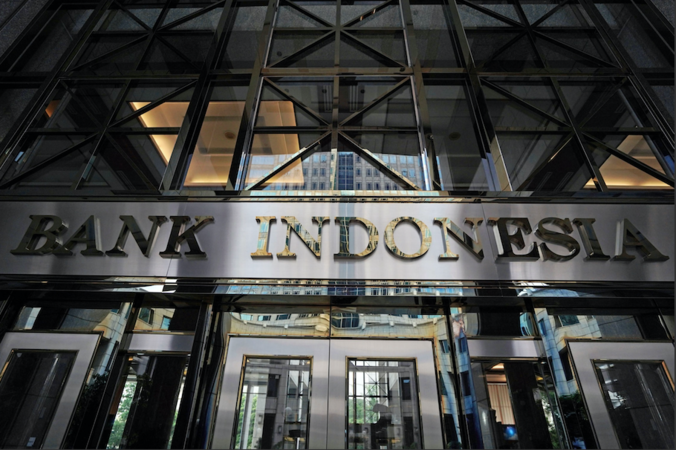
Fed unbound: all the U.S. central bank’s corona-related moves #ศาสตร์เกษตรดินปุ๋ย

#ศาสตร์เกษตรดินปุ๋ย : ขอบคุณแหล่งข้อมูล : หนังสือพิมพ์ The Nation

https://www.nationthailand.com/business/30384840?utm_source=category&utm_medium=internal_referral

Fed unbound: all the U.S. central bank’s corona-related moves

Mar 26. 2020
By Bloomberg · Christopher Condon · NATIONAL, BUSINESS

The Federal Reserve has taken unprecedented steps to lessen the impact of the coronavirus pandemic on global financial markets and the U.S. economy.

Beginning with an emergency interest-rate cut announced March 3, the Fed has run through its 2008-09 crisis playbook and leapt into uncharted territory.

The steps include massive bond purchases, a slew of emergency facilities to bolster credit markets, actions with foreign central banks to ease the supply of dollars world wide and programs for lending directly to American businesses.

Here is a summary of those steps:

Rate Cuts: After a half-point cut on March 3, the Federal Open Market Committee held another unscheduled meeting on March 15 and lowered the target range for the benchmark federal funds rate to 0%-0.25% — matching the near-zero rates of the financial crisis. They also pledged to keep rates there until the economy is “on track to achieve its maximum employment and price stability goals.”

Bank Regulations: Starting March 9, the Fed began giving banks new guidance and new rules designed to free them to lend more to businesses and households. These eventually included lower capital and liquidity requirements, an elimination of reserve requirements and clearance to modify loan terms without consequence.

Repo Expansion: In three steps starting March 9, the New York Fed began offering additional liquidity to short-term funding markets. They are currently offering $1 trillion a day in overnight repurchase agreements and plan approximately $4 trillion in term repo during the cycle that ends April 13.

Quantitative Easing (QE): On March 12 the central bank returned to broad Treasury bond purchases, using $60 billion a month that was previously directed to Treasury bills to help boost bank reserves. Purchases were aggressively expanded on March 15 to at least $500 billion in Treasuries and $200 billion in mortgage-backed securities.

Then on March 23 the Federal Open Market Committee declared QE unlimited, agreeing to purchase assets “in the amounts needed to support the smooth functioning of markets.” They also added commercial MBS to the buying list.

Swap Lines: The Fed has expanded the agreements it has with foreign central banks that allow it to exchange currencies, in this case pumping U.S. dollars out across the world to ease access to the world’s most important currency.

On March 15 and March 20, the Fed enhanced existing swap lines with five major central banks, including the ECB, BOJ and BOE, and on March 19 it created new, temporary swap lines with nine additional central banks, including those in Brazil, South Korea, Mexico and Sweden.

Commercial Paper Funding Facility (CPFF): Fed announces an emergency facility on March 17 to purchase short-term company IOUs directly from U.S. corporate and municipal issuers. The total of eligible securities exceeds $1 trillion. The program is backstopped with $10 billion from the Treasury.

Primary Dealer Credit Facility (PDCF): Operational on March 20, this emergency facility buys a wide range of securities, including investment-grade corporate debt, municipal debt, and mortgage- and asset-backed securities from primary dealers — the big banks and broker-dealers licensed to transact with the Fed.

Money Market Fund Liquidity Facility (MMFLF): Up and running on March 23, this emergency facility finances the purchase of of high-quality assets from U.S. money market mutual funds, including government debt, commercial paper and municipal debt. Eligible securities are estimated at $600 billion to $700 billion, according to Fed officials, backstopped with $10 billion from the Treasury.

Primary Market Corporate Credit Facility (PMCCF): Announced March 23, this emergency facility will buy investment-grade corporate debt directly from U.S. issuers. Fed gives no size total program. Backstopped with $10 billion from the Treasury.

Secondary Market Corporate Credit Facility (SMCCF): Announced March 23, this emergency facility will purchase investment-grade corporate debt from U.S. issuers in the secondary market, and in ETFs that invest in that debt. Fed gives no size total program. Backstopped with $10 billion from the Treasury.

Term Asset-Backed Securities Loan Facility (TALF): Announced March 23, this emergency facility will use $100 billion to purchase securities backed by credits to consumers and small businesses, including credit-card receivables, student loans, auto loans and leases, equipment loans and some small business loans. Backstopped with $10 billion from the Treasury.

Oil’s 60% crash is the tip of an iceberg. The reality is worse. #ศาสตร์เกษตรดินปุ๋ย

#ศาสตร์เกษตรดินปุ๋ย : ขอบคุณแหล่งข้อมูล : หนังสือพิมพ์ The Nation

https://www.nationthailand.com/business/30384833?utm_source=category&utm_medium=internal_referral

Oil’s 60% crash is the tip of an iceberg. The reality is worse.

Mar 26. 2020
An oil pump jack operates near U.S. Route 285 outside Loving, New Mexico, on Aug. 6, 2019. MU ST CREDIT: Bloomberg photo by Steven St John

An oil pump jack operates near U.S. Route 285 outside Loving, New Mexico, on Aug. 6, 2019. MU ST CREDIT: Bloomberg photo by Steven St John
By Syndication Washington Post, Bloomberg · Alex Longley, Javier Blas · BUSINESS 

As oil crashes due to the impact of the coronavirus, it’s easy to overlook an even more dismal reality for producers: the real prices they’re getting for their barrels are worse still.

Having collapsed by about 60% this year, Brent and West Texas Intermediate crude have stabilized at around $25 a barrel, but the price rout is far deeper for actual cargoes, which are changing hands at large and widening discounts to the global benchmarks. The discounts mean that in the physical market, some crude streams are trading at $15, $10 and even as little as $8 a barrel.

“The physical market is in pain, and there is more pain to come,” said Torbjorn Tornqvist, the co-founder of Gunvor Group Ltd., a large trading house. “We will see the full weight of the oversupply in a couple of weeks.”

Crude oil in the physical market trades at a premium or discount to Brent, West Texas Intermediate and other benchmarks. At times of surplus, premiums narrow and discounts widen. But the current situation is almost unprecedented, with discounts in some cases at multi-decade highs.

Examples abound from Africa to the Middle East to Latin America.

Nigeria, the biggest oil producer in Africa, is selling its flagship Qua Iboe crude at a discount of $3.10 a barrel below the Dated Brent benchmark, the largest in at least two decades. Colombia is selling its Vasconia crude at a discount $7.75 a barrel to Brent, a 4 1/2-year low. “The physical oil market looks horrific,” said Kit Haines, an analyst at consultant Energy Aspects Ltd.

Oil prices in the physical market are weakening as the economic impact of the coronavirus on oil demand cascades through every part of the petroleum industry. “Demand clearly is off, in some parts of the world, very dramatically,” Chevron CEO Mike Wirth told Bloomberg TV on Tuesday.

With fuel consumption in some countries, including France and Italy, down by a third or more, refiners are being forced to reduce the amount of crude they process. For example, Phillips 66, the world’s 11th-largest oil refiner by capacity, said on Tuesday it was operating its plants at “minimum crude processing rates” — traditionally seen in the industry as running a refinery at between 60% and 80% of nameplate capacity. With refiners cutting runs, their demand for barrels has fallen commensurately.

“Up to now the sharp market imbalances have mostly existed as a spreadsheet exercise,” Roger Diwan, an oil analyst at consultant IHS Markit Ltd. told clients in a note. “In the next two to three weeks, we will see those physical imbalances manifest in physical markets.”

With refiners scaling down their crude purchases, traders are buying the cargoes to store them. The oil market has flipped into what the industry calls a contango: spot prices are lower than forward prices. The contango allows traders to buy physical crude, store it, and make a profit by selling forward.

“The oversupply is going to be stored, and for that you need a deep contango,” Tornqvist said. “Clearly, everyone, us and other trading houses, is going to take advantage going forward. It’s the only game in town.”

The Brent six-month contango widened on Wednesday to $9.70 a barrel, fast approaching the $11 to $12 reached during the global financial crisis in 2008-09. The contango deepened despite small gains in headline Brent prices.

The pain in the physical market is clearly visible in the North Sea. Forties crude, which is the largest grade that helps set the global Brent benchmark, traded on Monday at its weakest since 2008. The financial instruments traders use to hedge their actual barrels are also mirroring the physical crude market’s weakness. In the North Sea, the Dated-to-Frontline swap, which helps traders to cover the gap between the futures and physical market, was at -$3.29, the widest discount in at least a decade.

In other markets, from Asia to the Mediterranean to the Middle East, actual barrels of key crude streams are trading at similar discounts. Central Asian crude CPC Blend, for example, changed hands at an 8-year low earlier this month.

The widening discounts, together with the collapse in the benchmarks, means that producers are seeing ultra-low prices. In Hardisty Alberta, a small town in Canada that’s the delivery point of the heavy Canadian crude benchmark, oil traded at a record low of just $7.47 a barrel last week. In central Montana, oil traded near $8 last week, having been above $30 at the start of the month.

Even Saudi Arabia is going to suffer. With record discounts to European refiners, state-owned Saudi Aramco is set to sell its flagship Arab Light at around $15 a barrel in Rotterdam by the beginning of April if the benchmark Brent holds at current levels.

“When you take into account the physical differentials, the market is saying we are getting close to the area where production cuts occur,” said Olivier Jakob, managing director of consultant Petromatrix GmbH.

U.S. stocks rise following Senate, White House agreement on $2 trillion stimulus bill #ศาสตร์เกษตรดินปุ๋ย

#ศาสตร์เกษตรดินปุ๋ย : ขอบคุณแหล่งข้อมูล : หนังสือพิมพ์ The Nation

https://www.nationthailand.com/business/30384832?utm_source=category&utm_medium=internal_referral

U.S. stocks rise following Senate, White House agreement on $2 trillion stimulus bill

Mar 26. 2020
By The Washington Post · Rachel Siegel, Thomas Heath · BUSINESS 

U.S. markets continued their rise Wednesday, one day after Wall Street racked up one of its best finishes and hours since the Senate and White House reached a $2 trillion economic rescue deal.

The Dow Jones industrial average rose more than 700 points, or 3.4%, shortly after the open. The Standard & Poor’s 500 and Nasdaq composites posted gains of 2.15 and 1.7%, respectively.

Senate leaders and the White House came to an agreement on a $2 trillion stimulus deal after midnight, paving the way for quick passage. The emergency package is the largest bailout in history. It provides $1,200 checks to many Americans, a $367 billion loan program for small businesses and a $500 billion fund for industries, cities and states. It also covers $150 billion for state and local stimulus funds, $130 billion for hospitals and additional assistance for the unemployment insurance program.

“We view this package as a turning point in this crisis because it also shows a political willingness to do more later on if needed,” wrote Torsten Slok, chief economist at Deutsche Bank Securities, in an email to The Post. “This package will flatten the recession curve and we now need to see a flattening of the virus curve.”

Five days of negotiations had sent markets in all directions – stocks tanked Monday after the Senate twice failed to advance the coronavirus stimulus bill, then surged as a deal appeared imminent. On Tuesday, Wall Street saw a massive rally in anticipation of an agreement, with the Dow Jones industrial average climbing nearly 11.4% to its best finish since 1933. The Standard & Poor’s 500 Index jumped 9.4% and the tech-heavy Nasdaq composite climbed 8.1%.

Still, the U.S. economy will still face a slew of hurdles after the bill’s passage, noted Lauren Goodwin, economist and portfolio strategist at New York Life Investments. There are looming questions about how to save jobs already lost and how quickly the government can send cash straight to households and businesses in urgent need.

“How much will be ‘wasted’ on companies that don’t need it as much, such as those with larger cash reserves or online sales?” Goodwin said. “What ‘unknown unknowns’ lie ahead in terms of implementation, which could create market stress?”

In Europe, Britain’s FTSE 100 was up 0.66%, and Germany’s DAX was down 1.39%. The benchmark Stoxx 600 inched up 0.15%. The continent’s public health crisis intensifies by the day: The coronavirus death toll in Spain now stands at 3,400, surpassing China’s, making it the hardest-hit country behind Italy. Prince Charles, heir to the British throne, has tested positive for coronavirus.

Asian markets flashed green across the board. The Nikkei 225 surged to finish 8%, even after the Tokyo Games were postponed until 2021. Hong Kong’s Hang Seng was 3.8% positive. The Shanghai composite popped 2.17%.

Ed Yardeni, president of Yardeni Research, said the country needs to get the virus under control before the economy can breathe on its own, especially as numerous industries have shut down.

“This is a world war against the virus,” he said. “While we spend money to soften the blow on workers and companies, we need to mobilize resources to fight the war. There is a desperate need for millions of masks, ventilators and a Manhattan Project for finding a cure.”

The Manhattan Project was secret and massive undertaking by the United States during World War II that resulted in the creation of the atomic bomb.

Worldwide dollar crunch raises red flags in Asia debt market #ศาสตร์เกษตรดินปุ๋ย

#ศาสตร์เกษตรดินปุ๋ย : ขอบคุณแหล่งข้อมูล : หนังสือพิมพ์ The Nation

https://www.nationthailand.com/business/30384830?utm_source=category&utm_medium=internal_referral

Worldwide dollar crunch raises red flags in Asia debt market

Mar 26. 2020
By Syndication Washington Post, Bloomberg · Michelle Jamrisko, Lilian Karunungan · BUSINESS, CAREER-WORKPLACE 

As the shortage of dollars sweeps the globe, cracks are starting to show up in Asia’s emerging markets, despite the hefty foreign-reserve cushions built up over the years.

The squeeze on U.S. currency is putting pressure on emerging Asia debt. Southeast Asian and Indian government and corporate payments are set to jump 67% in 2022 to $41.9 billion, according to data compiled by Bloomberg. Dollar payments are expected to peak at $44.4 billion in 2024.

While the Federal Reserve has ventured into unchartered territory to fight a slowdown in the world’s largest economy, Indonesia, Malaysia, and India are raising red flags for analysts as the coronavirus outbreak shutters large parts of their economies, currencies plunge and governments push to widen their fiscal deficits. It’s all a wakeup call for emerging Asia, which has been seen as relatively sheltered compared to peers globally, given flush foreign reserves, current-account surpluses in many countries and regional swap lines to tap on in crisis.

“No one is facing imminent balance of payments pressure here,” said Christian de Guzman, senior vice president at Moody’s Investors Service in Singapore. “But given the way markets are right now the option of refinancing for them may be a bit difficult. There’s already some pressure on their local currencies. The cost of funding may have actually increased.”

Indonesia and India are of particular concern, given the twin deficits on their budget and current accounts, which make them more reliant on foreign inflows than peers.

– Indonesia: Fiscal pressures are building in Indonesia, where the government is considering lifting its deficit cap to 5% of GDP from 3%. The central bank is predicting the current account deficit will come in at 2.5%-3% of GDP this year, and foreigners own 35% of Indonesian local-currency government bonds, among the highest in Asia based on available data.

The rupiah has taken a beating, weakening about 16% against the dollar so far this year, making it the worst-performing currency in Asia. That will put pressure on companies refinancing their dollar debt, said Xavier Jean, senior director for corporate ratings, at S&P Global Ratings in Singapore.

“The credit quality of Indonesian companies as a whole has been steadily declining over the past three years because of steady capital spending, growing debt, intense competitive pressure and more challenging operating conditions, especially in the real estate sector,” he said.

Almost one-third of the credit ratings in the Indonesian corporate sector, excluding state-owned firms, are on negative outlook — signaling further deterioration in their credit profile over the next three to 12 months, Jean said. That’s the highest level since the global financial crisis, he added.

The yield on Indonesian state oil and gas firm PT Pertamina Persero’s dollar bonds due July 2029 surged 205 basis points this month to 5.21%. Similarly, the rate on Malaysia’s Petroliam Nasional Bhd’s dollar debt due October 2026 jumped 132 basis points to 3.29%.

Among the eight local sovereign bond markets in emerging Asia tracked by Bloomberg, Indonesia and Malaysia have the biggest losses so far this month at 19% and 10% in dollar terms, respectively. The yield on Indonesia’s benchmark 10-year bond has climbed to 8.38%, the most since 2018, while that on Malaysia rose to 3.58%, near an eight-month high.

– India: In India, similar pressures are building. Global funds have sold net $7 billion of rupee-denominated debt so far this month through March 23, based on data compiled by Bloomberg. The rupee has plunged to an all-time low and stocks fell by a record Monday after the government moved to lock down the country of 1.3 billion people.

The market sell-offs show both Indonesia and India as being the “most, and increasingly, troubled,” said Vishnu Varathan, head of economics and strategy at Mizuho Bank in Singapore. Currency plunges and external debt servicing are problems that could compound one another, he said.

The central banks in both countries have been accelerating steps to shield the economy from the market fallout. Indonesia has cut interest rates twice this year, increased intervention in the currency market and purchased bonds from the secondary market. The Reserve Bank of India has pumped liquidity into the banking system.

– Malaysia: Natixis highlights risks around Malaysia, assessing it as one of the least liquid of 11 economies in the region, according to a March 18 note by chief Asia-Pacific economist Alicia Garcia Herrero and emerging Asia senior economist Trinh Nguyen.

Malaysia’s high reliance on foreign income — including commodities exports that account for 15% of GDP, and shipments of intermediate goods that are 49.5% of GDP — make it particularly vulnerable, according to Natixis.

By industry sector, oil and gas as well as metals and mining are under greater pressure right now, and account for a higher share of dollar credit in South Asia than in North Asia, said Ek Pon Tay, senior portfolio manager at BNP Paribas Asset Management in Singapore.

“Beyond the immediate liquidity squeeze coming from the global credit crunch via the capital account, the decline of commodity prices is adding another pressure,” the Natixis analysts wrote. For commodity-reliant economies like Malaysia, “the contraction of earnings and USD will impact these exporters and the economy.”

SET, Asian markets stay on upward trend #ศาสตร์เกษตรดินปุ๋ย

#ศาสตร์เกษตรดินปุ๋ย : ขอบคุณแหล่งข้อมูล : หนังสือพิมพ์ The Nation

https://www.nationthailand.com/business/30384820?utm_source=category&utm_medium=internal_referral

SET, Asian markets stay on upward trend

Mar 25. 2020
By The Nation

The Stock Exchange of Thailand (SET) Index closed at 1,080.03 today (March 25) for an increase of 46.19 points or 4.47 per cent from Tuesday’s close.

Transactions amounted to a total of Bt74.952 billion with an index high of 1,099.94 and a low of 1,050.72.

A stock analyst at Krungsri Securities expected the index would move upside between 1,055 and 1,065 before weakening as regional stocks sharply rebounded after the US Federal Reserve launched an unlimited quantitative easing bond purchase programme and increased the credit line by $300 billion, allowing businesses to borrow at lower interest cost.

“Recently, the US Congress reached an agreement to relieve the burden of the American people and businesses affected by the Covid-19 impact worth US$2 trillion, which will be a positive sentiment for risk asset investment,” the stock analyst said.

“However, uncertainty inside the country following Prime Minister Prayut Chan-o-cha declaring a state of emergency to contain the Covid-19 pandemic, starting from March 26 to the end of April, will pressure the economy. Besides, foreign investors have made net sales continuously. This month alone, they have made net sales of Bt73 billion, which would pull the index down”,

As of 4.54pm, global stocks were rising . Crude price rose by US$0.53 or2.21 per cent to $24.54 per barrel, while gold price fell by $5.20 or 0.31 per cent to $1,655.60 per ounce.

The top ten stocks with the highest trade values today were BAM, PTT, ADVANC, PTTEP, CPALL, GULF, AOT, SCC, GPSC, and CPF.

Elsewhere in Asia, Japan’s Nikkei Index closed at 19,546.63, up 1,454.28 points, or 8.04 per cent.

China’s Shanghai SE Composite Index closed at 2,781.59, up 59.15 points, or 2.17 per cent, while Shenzhen SE Component Index closed at 10,241.08, up 319.39 points, or 3.22 per cent.

Hong Kong’s Hang Seng Index closed at 23,527.19, up 863.70 points, or 3.81 per cent.

South Korea’s KOSPI Index closed at 1,704.76, up 94.79 points, or 5.89 per cent.

Taiwan’s TAIEX Index closed at 9,644.75, up 359.13 points, or 3.87 per cent.

Senate, White House reach $2 trillion stimulus deal to blunt coronavirus fallout #ศาสตร์เกษตรดินปุ๋ย

#ศาสตร์เกษตรดินปุ๋ย : ขอบคุณแหล่งข้อมูล : หนังสือพิมพ์ The Nation

https://www.nationthailand.com/business/30384817?utm_source=category&utm_medium=internal_referral

Senate, White House reach $2 trillion stimulus deal to blunt coronavirus fallout

Mar 25. 2020
By The Washington Post · Erica Werner, Mike DeBonis, Paul Kane, Jeff Stein · NATIONAL, BUSINESS, POLITICS, CONGRESS, WHITEHOUSE, US-GLOBAL-MARKETS 
WASHINGTON – Senate leaders and the Trump administration reached agreement early Wednesday on a $2 trillion stimulus package to rescue the economy from the coronavirus assault, setting the stage for swift passage of the massive legislation through both chambers of Congress.
.

https://www.washingtonpost.com/video/c/embed/049f2b95-31ec-4e83-967b-65d679ac0ca3

Senate Majority Leader Mitch McConnell, R-Ky., and Minority Leader Chuck Schumer, D-N.Y., announced the breakthrough on the Senate floor around 1:30 a.m., after a long day of talks with Treasury Secretary Steven Mnuchin and other administration officials.

“At last we have a deal,” McConnell said. “After days of intense discussion, the Senate has reached a bipartisan agreement on a historic relief package for this pandemic. … I’m thrilled that we’re finally going to deliver for the country that has been waiting for us to step up.”

“Help is on the way, big help and quick help,” Schumer said. “We’re going to take up and pass this package to care for those who are now caring for us, and help carry millions of Americans through these dark economic times.”

The agreement capped five straight days of intensive negotiations that occasionally descended into partisan warfare as the nation’s economy reeled from the deadly pandemic, with schools and businesses closed, mass layoffs slamming the workforce and tens of thousands falling ill.

The legislation, unprecedented in its size and scope, aims to flood the economy with capital by sending $1,200 checks to many Americans, creating a $367 billion loan program for small businesses and setting up a $500 billion fund for industries, cities and states.

Other provisions include a massive boost to unemployment insurance, $150 billion for state and local stimulus funds and $130 billion for hospitals.

McConnell said the Senate would pass the legislation later Wednesday. With the House out of session, action there could take longer, depending on whether lawmakers can agree to pass the bill by “unanimous consent,” which would require agreement from all members of the chamber.

Tuesday began with all parties predicting a deal would be imminent, along with a vote by Tuesday evening. But as the hours dragged on multiple disputes arose and legislative language required close review.

Finally, as midnight neared Tuesday, the pace of shuttle diplomacy picked up on the second floor of the Capitol, as Mnuchin, White House legislative affairs director Eric Ueland and newly named White House chief of staff, Rep. Mark Meadows, R-N.C., met alternately with McConnell and Schumer, who was in frequent contact with House Speaker Nancy Pelosi, D-Calif.

“You know, I wouldn’t say there were any thorny, any particular thorny issues. This is a very complicated piece of legislation. It’s a very large investment in the U.S. economy,” Mnuchin told reporters after the deal was struck. “And people worked tirelessly around the clock going through the documents. So, again, couldn’t be more pleased.”

Mnuchin said President Donald Trump would “absolutely, absolutely, absolutely” sign the bill.

The package would extend extraordinary taxpayer assistance to potentially millions of American and companies that have been hammered by the fast-moving economic crisis. The bill is being rushed through Congress without public hearings or formal review, and it’s unclear how effective the measures would be in arresting the economy’s sudden fall.

The stock market rose sharply Tuesday in anticipation of the deal, with the Dow Jones industrial average surging more than 2,100 points, or 11.4 percent. The government is dealing with a number of competing pressures, though, as Trump declared that he’d like much of the country to be up and running by April 12, even though the number of people testing positive for the novel virus in the United States continues to climb.

The Senate bill would direct payments of $1,200 to most American adults and $500 to most children, create a $500 billion lending program for companies, states and cities, and extend an additional $367 billion to help small companies deal with payroll problems. It would bolster the unemployment insurance system and pump $150 billion into U.S. hospitals. The bill more than doubled in size in just a few days.

“In effect this is a wartime level of investment into our nation,” McConnell said.

White House National Economic Council Director Larry Kudlow called it the “single largest Main Street assistance program in the history of the United States.”

The delay in finalizing a deal came, in part, because aides launched a painstaking scrub of the bill’s text, to make sure that one of the most ambitious pieces of legislation ever attempted by Congress – thrown together in little over a week – actually said what lawmakers wanted it to say.

Senate Republicans were being extra meticulous because they felt an earlier and much smaller coronavirus relief bill, which Mnuchin negotiated in a rush with Pelosi this month, turned out to have provisions related to paid sick leave that GOP senators opposed – but which they reluctantly accepted. Now, they wanted to double- and triple-check Mnuchin’s work in brokering a deal with Schumer, given the enormous stakes.

As lawmakers neared a deal, the White House made a significant concession to Democrats’ demands, agreeing to allow enhanced scrutiny over the massive loan program that is a centerpiece of the Senate’s $2 trillion coronavirus economic package.

This pertains to the $500 billion loan and loan guarantee program that the Treasury Department would be tasked with administering for companies, states and cities. Of that amount, $425 billion is supposed to go to businesses, cities and states. An additional $50 billion would go to passenger airlines, as well as $8 billion for cargo airlines, and $17 billion for firms that are deemed important to national security.

Trump has already said he wants some of the money to go to the cruise ship industry, and he also wants assistance for hotels. When he was asked Monday evening who would perform oversight of the program, Trump responded, “I’ll be the oversight.”

But during closed-door negotiations on Capitol Hill, White House officials agreed to allow an independent inspector general and an oversight board to scrutinize the lending decisions, senators said.

The most recent precedent for this is the $700 billion Troubled Asset Relief Program that was created during the 2008 financial crisis. To oversee TARP, Congress created an independent inspector general, a regulatory oversight board and a congressional oversight panel. Over the course of several years, investigations uncovered numerous cases of fraud at large and small companies as firms sought to obtain taxpayer money through various programs.

Democrats welcomed the new oversight mechanisms.

“We got better oversight, better oversight,” Sen. Joe Manchin, D-W.Va., said Tuesday. “The oversight basically is saying that you know you can’t just … exempt everybody and give all your corporate executives, based on the backs of the taxpayers, free carnival.”

Manchin has been critical of the bill being weighted more toward Wall Street than average America. Trump took a shot at the lawmaker when asked about his criticism during an interview Tuesday on Fox News.

“Does Joe Manchin want all of these, or many of these companies to go out of business? We’ll have an unemployment rate the likes of which nobody’s ever seen before,” Trump said. “We have to save these companies. These are companies that weren’t in trouble three weeks ago, and now they’re in trouble because of what happened. These are great companies, they’re in some cases triple A companies.”

On Twitter Tuesday morning, Trump called on Congress to “approve the deal, without all of the nonsense, today.”

The legislation would also significantly boost unemployment insurance, expanding eligibility and offering workers an additional $600 a week for four months, on top of what state unemployment programs pay.

Lawmakers of both parties are under extreme pressure from their constituents and health-care providers in their districts and states to act to provide desperately needed money and supplies amid widespread shortages and waves of layoffs. As of Tuesday night there were more than 55,000 confirmed cases of the coronavirus in the United States, and the numbers were rising by the hour.

Sen. Marco Rubio, R-Fla., who negotiated the small business portion, said it had grown to $367 billion, with inclusion of six months of loan forbearance for all small businesses adding $17 billion to the original $350 billion price tag.

All parties would like to act swiftly, so if the Senate passes the bipartisan package quickly the expectation is that the House would follow suit. House Democrats released their own larger and more generous stimulus package on Monday, stuffed with provisions that would be non-starters for Republicans such as a $15 minimum wage requirement for airlines and businesses that receive funds. But that legislation would be set aside and Pelosi would attempt to move the Senate bill through the House.

Final issues included a push by Democrats for a dramatic increase in food stamp benefits in exchange for accepting billions more in funding for the administration’s farm bailout that Republicans have included in the stimulus bill. Sen. John Hoeven, R-N.D., said in a news release that the legislation would increase the amount the Department of Agriculture can spend on its bailout program from $30 billion to $50 billion.

Democrats were also seeking more money for Native American tribes. And there was dispute about whether Planned Parenthood affiliates and other non-profits offering reproductive services would be able to access the small business loans. It was not immediately clear how that issue had been resolved.

The House of Representatives is currently out of session, and it would be tricky for House members to return en masse to Washington to vote. Democratic aides said they were optimistic that a strong bipartisan Senate vote would make it possible to pass the bill by unanimous consent in the House – a process requiring only two members present in the House chamber. But that would require every lawmaker to agree – a tall order for a $2 trillion bill touching every part of the U.S. economy.

“The easiest way for us to do it is to put aside our concerns for another day and get this done,” Pelosi said Tuesday on CNBC. “My goal always has been to bring this bill to the floor under unanimous consent.”

However, any lawmaker of either party could object, and in an early warning sign Tuesday, Rep. Alexandria Ocasio-Cortez, D-N.Y., voiced concern about the legislation over Twitter, writing that despite “vague statements” no one had seen text of the legislation that “seems to give a *HALF TRILLION DOLLARS* away to big corporations, w/ few worker protections.”

Among House Republicans, there is similar reluctance to commit to approving a still-unseen bill, according to GOP aides familiar with internal conversations. Besides potential policy objections inherent in a $2 trillion bill, members might also resist passing a bill of that magnitude without a formal vote, the aides said – thus requiring most lawmakers to return to Washington.

If unanimous consent is not possible, aides of both parties said the most likely scenario would be a day-long vote where members would be encouraged to spread out their trips to the floor and not congregate as the vote is taken.

At least two House members and one senator have tested positive for the coronavirus, while others remained quarantined, and multiple lawmakers have voiced trepidation about returning to the Capitol.

Wednesday morning’s breakthrough on the massive legislation followed five straight days of negotiations on Capitol Hill, with a deal seemingly in reach each day only to elude completion. Tempers flared on the Senate floor Monday as senators got into a near shouting match over the delays.

Congress has already passed two much smaller coronavirus relief bills: an $8.3 billion emergency supplemental for the health-care system, and a $100-billion-plus bill to boost paid sick leave and unemployment insurance and provide free coronavirus testing.

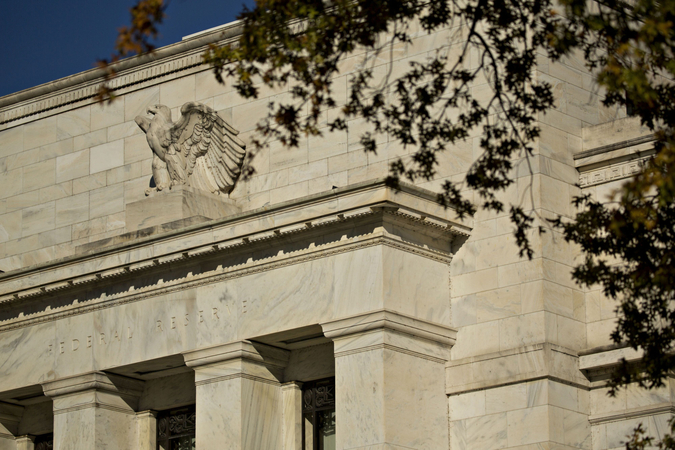
Gold retreats Bt300/baht at close on Wednesday #ศาสตร์เกษตรดินปุ๋ย

#ศาสตร์เกษตรดินปุ๋ย : ขอบคุณแหล่งข้อมูล : หนังสือพิมพ์ The Nation

https://www.nationthailand.com/business/30384816?utm_source=category&utm_medium=internal_referral

Gold retreats Bt300/baht at close on Wednesday

Mar 25. 2020
By The Nation

Gold price dropped by Bt300 per baht weight at the close of trade on Wednesday (March 25), the Gold Traders Association reported.

As of 3.03pm, buying price of a gold bar stood at Bt24,200 per baht weight and selling price Bt24,500, while gold ornament was Bt23,770.88 per baht weight to buy with selling price at Bt25,000.

Prices increased from morning trade when a gold bar cost Bt24,500 to buy and Bt24,800 to sell, while gold ornaments cost Bt24,058.92 to buy and Bt25,300 to sell.

As of 4.54pm, Gold contracts in COMEX to be delivered in April dropped by US$5.20 or 0.31 per cent to $1,655.60 per ounce.

5.3 per cent contraction seen for Thai economy 2020 #ศาสตร์เกษตรดินปุ๋ย

#ศาสตร์เกษตรดินปุ๋ย : ขอบคุณแหล่งข้อมูล : หนังสือพิมพ์ The Nation

https://www.nationthailand.com/business/30384811?utm_source=category&utm_medium=internal_referral

5.3 per cent contraction seen for Thai economy 2020

Mar 25. 2020
Don Nakornthab, senior director at Bank of Thailand’s economic & policy department

Don Nakornthab, senior director at Bank of Thailand’s economic & policy department
By The Nation

The Thai economy is expected to sharply contract by 5.3 per cent this year as the Covid-19 pandemic continues to weigh on global financial markets, economy and people, says the Bank of Thailand.

The BOT’s Monetary Policy Committee forecast the Thai economy to contract 5.3 per cent this year before rebounding to a growth of 3 per cent next year, said Don Nakornthab, senior director at Bank of Thailand’s economic & policy department, on Wednesday (March 25).

The MPC voted to maintain benchmark rate at 0.75 per cent earlier on the same day.

The coronavirus outbreak has been impacting Thai tourism and exports to a large extent , he said.

Don said the number of tourist arrivals was expected to contract by 60 per cent this year while the economies of our trading partners would slow down or enter into recessiion if the Covid-19 pandemic persists for a prolonged period.

The virus fallout have been adversely affecting businesses and people worldwide.

Government stimulus packages, businesses and people’s adaptations to the situation hold the key to the direction of the local economy, he added.

Before the Covid-19 outbreak, the Thai economy was already on a path of slow growth. GDP growth last year stood at a low 2.4 per cent, lagging behind many countries in the region.

Govt relief package falls far short, say economists

Central bank won’t cut rate again, nods to govt #ศาสตร์เกษตรดินปุ๋ย

#ศาสตร์เกษตรดินปุ๋ย : ขอบคุณแหล่งข้อมูล : หนังสือพิมพ์ The Nation

https://www.nationthailand.com/business/30384809?utm_source=category&utm_medium=internal_referral

Central bank won’t cut rate again, nods to govt

Mar 25. 2020
Committee secretary Titanun Mallikamas

Committee secretary Titanun Mallikamas
By The Nation

The Bank of Thailand has decided to leave the benchmark policy rate unchanged at 0.75 per cent, saying it’s the government’s turn to take the lead role after the central bank in recent days cut the rate and introduced credit facilities for the bond market.

The bank’s Monetary Policy Committee on Wednesday (March 25) voted 4-2 to maintain the policy rate at 0.75 per cent, with the two objectors suggesting it come down further, to 0.5 per cent.

Committee secretary Titanun Mallikamas said a seventh member was unable to attend the meeting.

The 4-2 vote carried on the fact that the policy rate cut on March 20 by 25 basis points to 0.75 per cent has returned financial stability to a market disrupted by the Covid-19 virus, Titanun said.

The central bank and government have been addressing the issue of market liquidity and helping people affected by the virus outbreak with urgent measures, including debt restructuring for households and businesses, especially small and medium-sized enterprises, he pointed out.

The government has also extended a financial aid package to laid-off workers.

Most committee members agreed that the virus crisis will continue for a while longer, so resources should be directed at resolving liquidity issues and restructuring debt. The two dissenters warned of a severe economic downturn unless there is a further rate cut.

The committee expects the economy to contract sharply this year because tourism and exports have been hit hard by the global slowdown and supply-chain disruption. As Thai businesses suffer, private investment and private consumption are also withering.

“Given this current situation, fiscal measures should take the lead role in shoring up the economy and supporting those affected by the Covid-19 outbreak,” the committee said in a formal statement.

Debt restructuring should help borrowers and the economy could begin to grow again next year, it said. Meanwhile lower oil prices will keep the inflation rate negative this year.

Liquidity in the bond market improved after the central bank announced credit facilities on Sunday.

The baht has weakened against major competitors’ currencies and remains subject to high volatility, but Thailand has substantial international reserves.

Titanun said the committee must continue monitoring the financial and exchange markets closely because of high lingering uncertainty.

Gold gains on hopes of massive stimulus package #ศาสตร์เกษตรดินปุ๋ย

#ศาสตร์เกษตรดินปุ๋ย : ขอบคุณแหล่งข้อมูล : หนังสือพิมพ์ The Nation

https://www.nationthailand.com/business/30384796?utm_source=category&utm_medium=internal_referral

Gold gains on hopes of massive stimulus package

Mar 25. 2020
By The Nation

The selling price of gold rose by Bt300 per baht weight on Wednesday morning (March 25), the Gold Traders Association reported.

As of 10.29am, buying price of a bar of gold was Bt24,500 per baht weight and selling price Bt24,800, while buying price of gold ornaments was Bt24,058.92 per baht weight and selling price Bt25,300.

Buying price rose by Bt100 per baht weight, while selling price rose by Bt300 per baht weight from Tuesday’s close (March 18) when a gold bar cost Bt24,400 to buy and Bt24,500 to sell, while gold ornaments cost Bt23,967.96 to buy and Bt25,000 to sell.

Gold contracts in COMEX (Commodity Exchange) to be delivered in April spiked by US$93.2, or 5.95 per cent, to $1,660.8 per ounce on Tuesday’s close (March 24), marking a new high in 11 years since 2009.

The gold market has responded to the US Federal Reserve’s massive stimulus package which includes using unlimited quantitative easing bond purchase programme and increasing credit line by $300 billion, allowing businesses to borrow at lower interest cost to deal with economic impact caused by Covid-19 outbreak.

Gold price also gained support from the closure of three gold production plants in Switzerland due to the spread of Covid-19 virus which affected the supply of gold in the market.

Meanwhile, SPDR Gold Trust, the world’s largest gold Exchange Traded Fund increased gold holdings by 1.8 per cent to 923.99 tonnes.

Investors are keeping an eye on the US Congress in reaching an agreement on the White House’s measures to relieve the burden of the American people and business sectors affected by the Covid-19 disease.

Other metal prices are as follows:

Silver contracts to be delivered in May rose by 99.6 cents or 7.51 per cent, closing at US$14.257 per ounce.

Platinum contracts to be delivered in April rose by US$74.2 or 11.82 per cent, closing at US$701.7 per ounce.

Palladium contracts to be delivered in June rose by US$230 or 14.8 per cent, closing at US$1,786.90 per ounce.